
Market Report · May 18, 2026

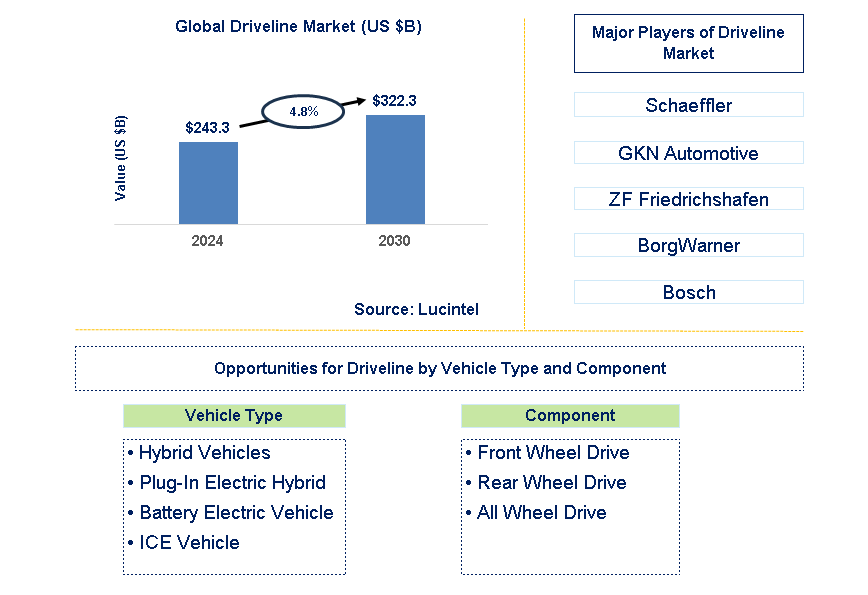
Key data points: The market size in 2030 = $322.3 billion, growth forecast = 4.8% annually for the next 6 years. Scroll below to get more insights. This market report covers trends, opportunities, and forecasts in the global driveline market to 2030 by vehicle type (hybrid vehicles, plug-in electric hybrid, battery electric vehicle, and ICE vehicle), component (front wheel drive, rear wheel drive, and all wheel drive), and region (North America, Europe, Asia Pacific, and the Rest of the World)
We'll send your sample report shortly.
• Use of Lightweight Materials: Manufacturers now utilize lightweight materials such as carbon fiber and reinforced plastics to achieve improved fuel efficiency and performance. The overall weight of the car is reduced due to these materials, which provide better handling and acceleration. This creates a strong case for including lightweight rear spoilers in OEM and aftermarket products for performance-oriented customers.
• Smart and Adjustable Spoilers: There has been an increase in the development of intelligent, adjustable spoilers that optimize aerodynamics for specific driving conditions. These innovations can enhance vehicle performance and fuel efficiency. As increasingly competitive automobile industries look toward technology for diverse solutions, consumers with specific interests will appreciate the aesthetic variability offered by adjustable spoilers.
• Customization and Personalization: Consumer demand for personalized cars drives the growth of customization options for rear spoilers. As consumers become more particular about their needs, manufacturers now offer a variety of designs, colors, and finishes. Particularly in the aftermarket segment, enthusiasts interested in unique styling for their cars enjoy this trend.
• Key Issue: Sustainability: With growing environmental concerns, manufacturers are focusing on sustainable materials and production methods. The use of recyclable and ecologically sensitive materials in spoiler design reflects the automotive industry's shift toward sustainability. Not only do eco-friendly consumers appreciate this, but companies are also bound by regulations to achieve such standards.
• Integration with Electric Vehicles: The increasing presence of electric and hybrid vehicles has impacted spoiler design. Aerodynamics play a critical role in extending range on a single charge, thereby improving efficiency. Manufacturers are now specifically designing spoilers for EVs, recognizing their importance in optimizing airflow around the vehicle and reducing drag. This trend reshapes the design landscape, with performance becoming a key growth area for the EV market. Trends are disrupting the rear spoiler market by influencing innovation in materials, design, and functionality. Consumer preferences may evolve in the public psyche, and manufacturers must keep track of shifting perceptions among modern automotive consumers.
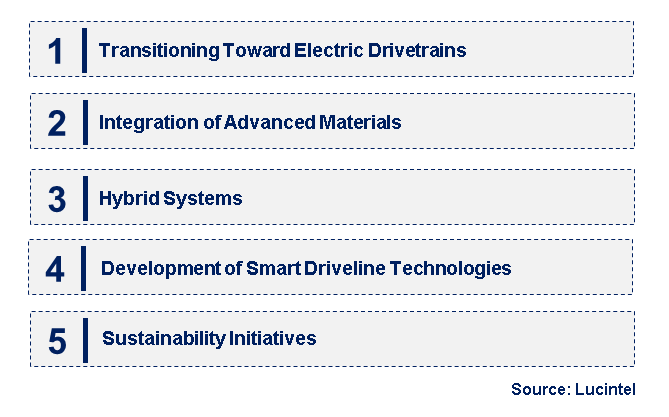
• Advancements in Material Technology: Manufacturers are increasingly utilizing lightweight materials, such as carbon fiber and reinforced plastics, to enhance performance and fuel efficiency. These materials not only reduce vehicle weight but also improve handling and acceleration.
• Smart and Adaptive Spoilers: The development of intelligent, adjustable spoilers that can optimize aerodynamics based on driving conditions is gaining traction. These spoilers enhance vehicle performance and fuel efficiency while providing aesthetic variability for consumers.
• Customization Trends: Rising consumer demand for personalized vehicles has led to an expansion of customization options in rear spoilers. Manufacturers are offering a wider range of designs, colors, and finishes, particularly in the aftermarket segment.
• Sustainability Initiatives: With increasing environmental concerns, manufacturers are prioritizing sustainable materials and production methods. This shift aligns with consumer preferences for eco-friendly products and regulatory pressures for sustainable practices.
• Integration with Electric Vehicles: The growing market for electric and hybrid vehicles is prompting manufacturers to design rear spoilers specifically for these models. Optimized aerodynamics play a crucial role in extending range and improving efficiency.
• Collaboration with Tech Companies: Partnerships between automotive manufacturers and technology firms are driving innovation in rear spoiler design. These collaborations focus on integrating advanced features that enhance both functionality and aesthetics. The rear spoiler market is evolving rapidly, driven by technological advancements, consumer preferences, and sustainability efforts. As manufacturers adapt to these trends, they are not only enhancing vehicle performance and aesthetics but also positioning themselves for future growth in an increasingly competitive landscape. This ongoing evolution highlights the importance of innovation in meeting the diverse needs of modern consumers and maintaining regulatory compliance in the automotive industry.
• Integration with Electric Vehicles: Electric cars present a great opportunity for manufacturers to design distinctive rear spoilers for EVs, improving aerodynamics and energy efficiency. Companies will compete in the market by appealing to eco-conscious consumers.
• Aftermarket Customization: Increased consumer demand for vehicle customization opens new opportunities in the aftermarket rear spoiler market. The potential to offer various designs, materials, and finishes is highly appealing to enthusiasts looking to personalize their vehicles. Thus, the aftermarket sector is poised to find impressive opportunities.
• Smart Spoiler Technology: Automakers can become pioneers by developing intelligent, variable rear spoilers that enhance aerodynamics based on driving conditions. With such features integrated into vehicles, performance can improve, and fuel efficiency can increase, creating a compelling blend of functionality and aesthetics.
• Sustainability Efforts: Manufacturers can attract consumers by focusing on the production processes and materials used in eco-friendly rear spoilers. Aligning with industry trends and regulations will enhance their brand reputation, given the growing demand for sustainable solutions in the automotive sector.
• Relationship with OEMs: Partnering with OEMs to integrate high-end rear spoiler designs into new models opens up significant growth opportunities. This collaboration increases brand visibility and fosters long-term relationships in the automotive industry. The rear spoiler market is being transformed by growth opportunities arising from innovation, customization options, and consumer needs. As manufacturers capitalize on these trends, they will be strategically positioned to navigate and lead in an increasingly competitive market.
• Consumer Demand for Performance: With increased consumer demand for vehicle performance, rear spoilers have become popular for enhancing aerodynamics and stability. This interest is particularly significant among sports car enthusiasts and owners focused on high-performance features, prompting manufacturers to innovate and expand their production lines.
• Aesthetic Appeal: Growing demand for stylish designs drives consumers to seek attractive rear spoilers. Consequently, manufacturers have broadened their range of designs and finishes to accommodate diverse consumer tastes. This ability to provide aesthetically appealing elements has significantly contributed to growth in both OEM and aftermarket segments.
• Technological Advancements: New materials and design technologies allow manufacturers to create more effective and lighter spoilers. Advanced materials like carbon fiber enhance performance, meet consumer demands for fuel efficiency and sustainability, and contribute to market growth.
• Emergence of Electric Vehicles: This trend challenges traditional rear spoiler designs, aiming to maximize aerodynamics to optimize the range of electric vehicles. As electric vehicle popularity soars and the automotive industry emphasizes energy efficiency, there is a growing need for bespoke rear spoilers that enhance performance.
• Legal Requirements: Stricter regulations regarding vehicle safety and emissions compel manufacturers to invest in quality testing and certification of their products. Consequently, the push for compliance drives innovation toward more efficient rear spoiler designs and production processes, ensuring that new products meet safety standards while improving performance. Challenges in the rear spoiler market include:
• High Competition: The rear spoiler market is highly competitive, with numerous manufacturers vying for market share. This environment can lead to price wars and pressure on profit margins, necessitating companies to differentiate themselves while maintaining quality and profitability.
• Shifting Consumer Trends: Manufacturers may struggle to keep up with rapid changes in consumer preferences. Balancing needs for style, performance, and sustainability requires constant innovation and adaptation, which could strain resources and disrupt production timelines.
• Supply Chain Disruptions: Global supply chain challenges, especially in sourcing materials, can diminish production efficiency. This may trigger delays and pressure manufacturers to maintain product quality amid prevailing market demands, particularly challenging in the current economic climate. Understanding these drivers and challenges is crucial for rear spoiler stakeholders to develop strategies that exploit opportunities and mitigate risks. This insight will shape the dynamics of the market moving forward.
• Schaeffler
• GKN Automotive
• ZF Friedrichshafen
• BorgWarner
• Bosch
• Melrose Industries
• Ford Motor Company
• KNL Driveline Parts
• MSL Driveline Systems
• Toyota Motor Corporation
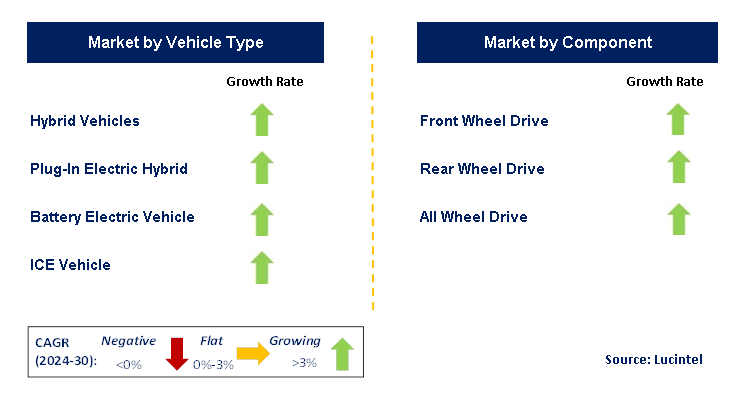
• Hybrid Vehicles
• Plug-In Electric Hybrid
• Battery Electric Vehicle
• ICE Vehicle
• Front Wheel Drive
• Rear Wheel Drive
• All Wheel Drive
• North America
• Europe
• Asia Pacific
• The Rest of the World
• United States: Manufacturers in the U.S. are investing heavily in electric driveline technologies, with a strong emphasis on integrating electric motors and advanced transmission systems. Major automakers are partnering with technology companies to create more efficient driveline architectures that accommodate both traditional combustion engines and electric powertrains. Stricter emissions regulations are also driving the industry toward more sustainable solutions. Consequently, innovations in hybrid and fully electric driveline configurations are emerging.
• China: The Chinese driveline market is rapidly growing due to government initiatives promoting electric vehicles and encouraging domestic manufacturers to invest in electric driveline systems. Significant improvements in battery integration and energy recovery technologies are underway. Furthermore, government support for intelligent transportation is leading to the development of connected driveline systems that enhance vehicle performance and safety. Industry partnerships between automotive manufacturers and technology giants are accelerating progress and positioning China at the forefront of the autonomous driveline vehicle sector.
• Germany: Germany is a key player in the driveline system market, engineering high-performance solutions for both conventionally powered and electrified vehicles. The automobile industry is investing in lightweight materials and advanced production techniques to increase driveline efficiency and reduce emissions. Simultaneously, German manufacturers are exploring radical hybrid driveline architectures to enhance both electric and hybrid combustion capabilities, striving to keep pace with more technologically advanced partners globally.
• India: Growth in the Indian driveline market is primarily driven by increasing demand for fuel-efficient vehicles and government support for electric mobility. Local manufacturers are developing cost-effective solutions tailored to domestic market requirements. Collaborations between international firms and local companies facilitate knowledge transfer and technological advancements. Rising consumer awareness about environmental issues is prompting a shift toward more sustainable driveline technologies, such as electric and hybrid vehicles.
• Japan: The Japanese driveline market is highly focused on advanced engineering and innovation. Japanese automobile companies are leading in hybrid and electric driveline technologies, integrating cutting-edge solutions like regenerative braking and energy-efficient motors. The industry is also exploring cross-collaboration with global technology firms to optimize driveline performance in electric vehicles. Commitment to sustainability and efficiency drives Japan's driveline market toward global competitiveness.


• Schaeffler
• GKN Automotive
• ZF Friedrichshafen
• BorgWarner
• Bosch
• Melrose Industries
• Ford Motor Company
• KNL Driveline Parts
• MSL Driveline Systems
• Toyota Motor Corporation Q6. Which driveline market segment will be the largest in future? Answer: Lucintel forecasts that front wheel drive is expected to witness the highest growth over the forecast period. Q7. In driveline market, which region is expected to be the largest in next 5 years? Answer: APAC is expected to witness highest growth over the forecast period because of expanding consumer base and rising per capita income have all contributed to the favorable climate in the area, as has the region's heavy manufacturing and sales of hybrid and electric cars. Q.8 Do we receive customization in this report? Answer: Yes, Lucintel provides 10% customization without any additional cost.


Choose a license that fits your team. Instant PDF delivery.
Prices exclude taxes. Instant delivery. Custom licensing available on request.
Market Report · May 18, 2026
Market Report · May 18, 2026
Market Report · May 18, 2026
Trusted partner for strategic intelligence and business growth


Receive a complimentary market analysis tailored to your industry. Our analysts will identify key growth opportunities and competitive dynamics specific to your business.

Market size, growth rate, and key trend analysis for your specific sector.

Top competitor positioning and market share analysis.

Strategic recommendations backed by data-driven insights.
Get curated market intelligence and competitive moves straight to your inbox.
By subscribing, you agree to receive our monthly insights. Unsubscribe anytime.
Receive a complimentary market analysis tailored to your industry. Our analysts will identify key growth opportunities and competitive dynamics specific to your business.
Market size, growth rate, and key trend analysis for your specific sector.
Top competitor positioning and market share analysis.
Strategic recommendations backed by data-driven insights.
Get curated market intelligence, emerging trends, and competitive moves straight to your inbox each month.
By subscribing, you agree to receive our monthly insights. Unsubscribe anytime.
We'll send your sample report shortly.