
Market Report · July 29, 2026

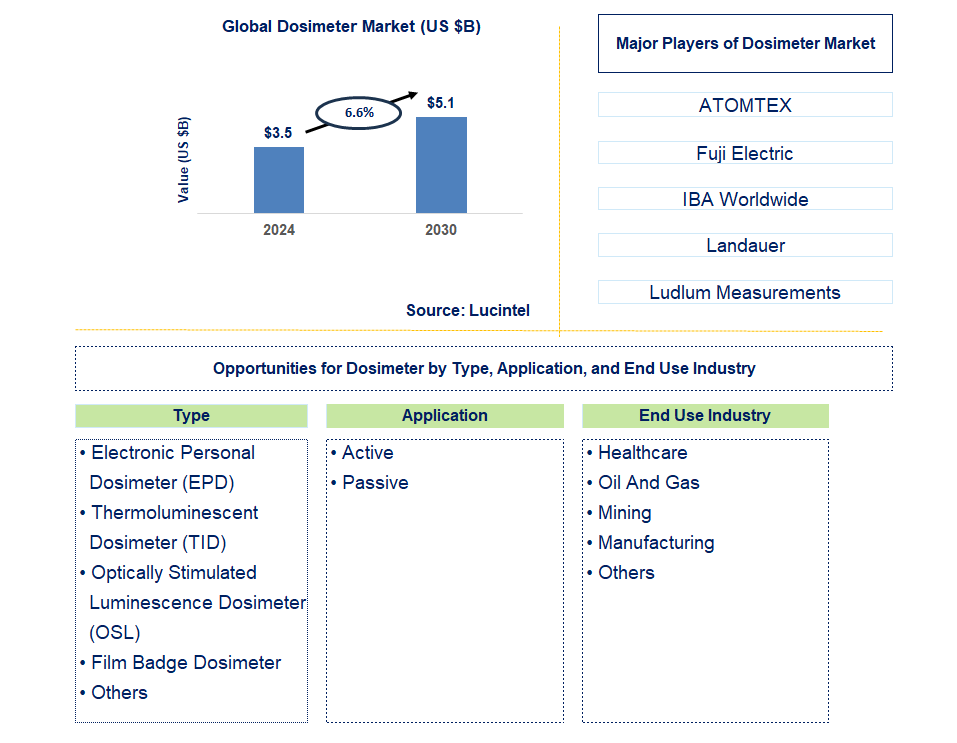
Key data points: The market size in 2030 = $5.1 billion, growth forecast = 6.6% annually for the next 6 years. Scroll below to get more insights. This market report covers trends, opportunities, and forecasts in the global dosimeter market to 2030 by type (electronic personal dosimeter (EPD), thermoluminescent dosimeter (TLD), optically stimulated luminescence dosimeter (OSL), film badge dosimeter, and others), application (active and passive), end use industry (healthcare, oil and gas, mining, manufacturing, and others), and region (North America, Europe, Asia Pacific, and the Rest of the World)
We'll send your sample report shortly.
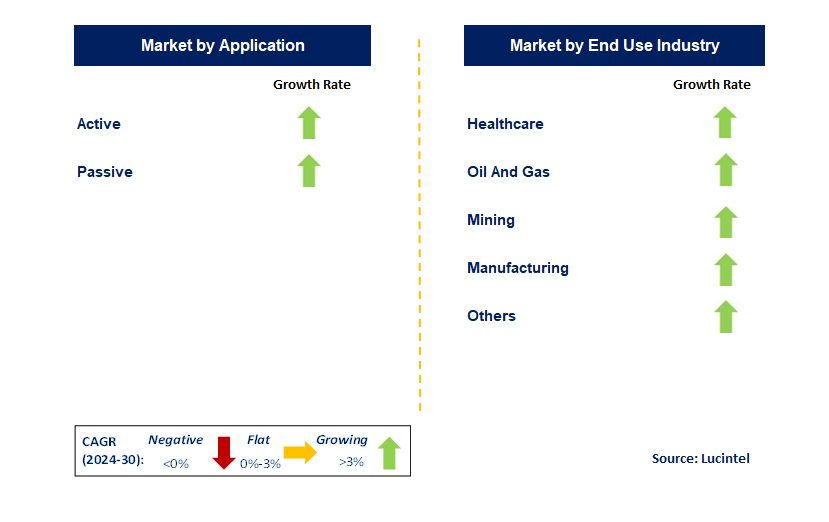
• Lucintel forecasts that, within the application category, active dosimeters will remain the higher growing segment over the forecast period because they offer information in real-time, serving as a significant tool for industries and end users, along with its increasing usage in a hazardous environment, such as a nuclear reactor or other places where exposure to higher radiation levels is possible.
• Within the end use category, healthcare will remain the highest-growing segment over the forecast period due to research and development endeavors in the field of cancer treatments and related medical equipment utilized in chemotherapy.
• In terms of regions, APAC will remain the largest region over the forecast period due to increasing emphasis on nuclear power as a means of generating electricity to meet the escalating energy needs, accompanied by stringent safety regulations in emerging nations like China, Japan, and India. A more than 150-page report is developed to help in your business decisions.
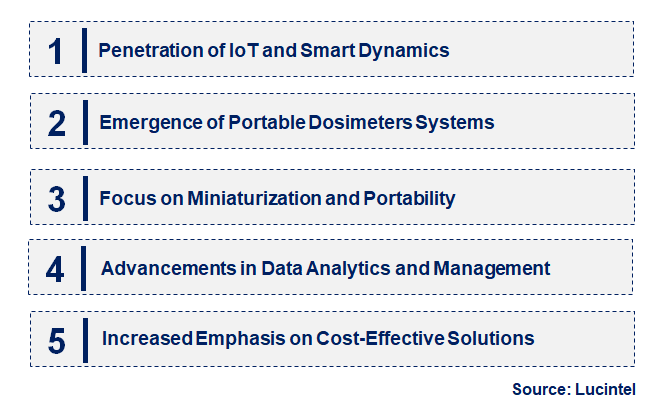
• Penetration of IoT and Smart Dynamics: The penetration of IoT and smart dynamics in dosimeters is changing the specter of the radiation monitoring sector by providing mechanisms for both real-time data collection and data analysis. Smart dosimeters equipped with wireless functionality have a feature where they can send the information to central systems for immediate alerts and monitoring. This trend adds to safety because it allows people to know in real time when the level of radiation exposure changes, enhances the quality of data presented, and enables rad-safety levels to be jealously safeguarded from a distance. It also facilitates the combination of such information with other systems, further enhancing safety control measures for radiation leaks.
• Emergence of Portable Dosimeters Systems: Because of their portability and real-time monitoring features, wearable dosimeters are expected to experience utilization boom in years to come. Such types of devices are worn on the body and are capable of directly sensing radiations adhering on real time in relation to the activity of the individual to which the devices are attached. The dosimeter has additional advantage of being worn by the users in the regions where there is a continuous requirement for such monitoring. With these individual monitoring devices, the personal safety of users is enhanced while the safe working limits of various radiation safety programs are maintained in very dangerous areas like medical related activities, nuclear power and related fields.
• Focus on Miniaturization and Portability: There are two trends emerging associated with droplet multiplication an ease of use that have been noted in dosimeter market as the makers continue to devise less bulky modalities for the device that are more fitting for carriage and use in different places. User discomfort is eliminated with the small sized instruments making the instruments applicable in a wider scope of usage. Such tendencies are in line with the outcry for portable radiation detection systems in the medical as well as the industrial establishments that are on the rise.
• Advancements in Data Analytics and Management: Progress in data analysis and management is also increasing the functionality of dosimeters through the provision of vivid exposure trends and deep radiation analysis. Data analytics is useful in assessing radiation exposure hence enhancing safety measures. Access to sophisticated techniques in data interpretation improves decision-making in-patient safety from radiation, buffering activities.
• Increased Emphasis on Cost-Effective Solutions: The development of new low cost dosimeters is a major focus currently, fundamentally with a view to widening the user access to radiation monitoring devices in developing economies. Solutions that do not cut cost have mitigated the expensive radiation monitoring extend in industries and areas where it is barely affordable. This trend enables even further geographical reach and ensures that more entities are able to put in place effective radiation protection measures. These emerging trends are certainly shaping the dosimeter market by triggering new device innovations, making them available to many and making it safe to use dosimeters. The development of IoT, smart technology, Wearable Technology, miniaturization, advanced data analytics and low-cost solutions has seen the dosimeter market evolve towards meeting the need of efficient and effective radiation monitoring.
• Development of Real-Time Digital Dosimeters: New real-time digital dosimeters have been developed, featuring improved sensors and connectivity. These devices provide real-time information on radiation exposure and can link to other platforms for data processing. Real-time digital dosimeters enhance safety by sending immediate alerts and providing detailed exposure data, facilitating better risk management and safety compliance.
• Wearable Radiation Monitors and Their Availability: Wearable radiation monitors are now available, offering continuous monitoring and real-time alerts. These devices are convenient as they can be worn on the body, enhancing individual protection by providing continuous tracking of exposure and immediate warnings when radiation levels exceed safe thresholds. They are especially useful in hazardous environments.
• Creation of Small-Sized Dosimeters for Medical Uses: Miniaturized dosimeters have been developed for specific medical applications. These devices offer high accuracy and are well-suited for clinical settings. Miniaturized dosimeters help accurately measure radiation doses during medical procedures, contributing to improved patient safety and better radiation management.
• The Ion Mobility Systems Movement Towards IoT Integration: Dosimeter systems are increasingly incorporating IoT capabilities, enabling remote monitoring and data processing. These devices can communicate with other networks, instantly exchanging data, leading to better access to data management and expanded utilization of dosimeters in IoT mode. This integration allows for broader application and informed decision-making on health and safety.
• Simpler, Lower-Cost Dosimeter Models: The emergence of more affordable dosimeter models is helping extend radiation monitoring accessibility. These models still provide essential radiation monitoring capabilities but at a lower cost. This development reduces the risk of over-budgeting and extends radiation protection coverage. These developments mark significant progress in the dosimeter market, driven by technological innovations such as Claymore designs and IoT integration, making dosimeters more affordable, user-friendly, and efficient in improving radiation safety.
• Expansion in Healthcare Applications: The increasing use of radiation in medical imaging and treatments is prompting dosimeter manufacturers to introduce advanced products for use in hospitals. Advances in dosimeter technology can improve patient safety and monitoring. The demand for high-accuracy dosimeters is rising, as precise radiation dose measurements are critical for improving health and safety during medical procedures.
• Growth in the Nuclear Power Industry: The growing number of nuclear power plants worldwide is driving the need for effective dosimeters for industrial radiation monitoring. The nuclear power sector requires highly efficient detectors, and the expanding nuclear industry creates a strong market for dosimeter producers, offering opportunities to provide cutting-edge radiation monitoring technologies.
• Development of Consumer-Oriented Dosimeters: There is increasing demand for consumer dosimeters used for self-monitoring radiation exposure in domestic and travel settings. These dosimeters cater to the rising consumer interest in radiation protection, opening new markets outside of traditional industrial and medical sectors.
• Compatibility with Smart Technologies: Integrating dosimeters with smart technologies, such as the Internet of Things (IoT) and artificial intelligence (AI), enhances data capture, monitoring, and analysis. This integration improves radiation safety management, offering unique radiation exposure monitoring services and supporting better safety protocols and decision-making processes.
• Targeting New Markets: There are growth prospects in emerging markets, particularly in regions such as Asia and Africa, where industrial growth is increasing and radiation safety awareness is improving. Providing affordable, innovative dosimeter solutions in these areas can open new opportunities for market expansion and increased adoption. Growth opportunities in the dosimeter market are driven by advancements in healthcare, nuclear power, consumer demand, smart technology integration, and expansion into new regions. Seizing these opportunities can help market players strengthen their position and meet the evolving radiation protection needs.
• Technological Developments: Innovations such as real-time digital dosimetry and IoT monitoring are driving market growth. These technologies improve accuracy, data handling, and ease of use, enhancing radiation safety by providing real-time data and supporting safety compliance.
• Expansion of Nuclear Power and Medical Imaging: The increased use of nuclear power and medical imaging technologies is creating demand for more advanced dosimeters. The rise in nuclear power plants and medical imaging applications is benefiting dosimeter manufacturers who can offer the latest radiation monitoring technologies.
• Growing Consumer Awareness: As consumers become more aware of radiation risks, demand for personal dosimeters is increasing. Home and travel dosimeters are in high demand, expanding the market beyond traditional industrial and medical applications. Challenges in the dosimeter market include:
• Economics of Advanced Dosimeters: High costs remain a barrier to the widespread adoption of advanced dosimeters in the low-end market. Smaller organizations or areas with limited budgets may find it difficult to invest in advanced dosimeter technologies.
• Regulatory Compliance and Approval: The regulatory process for new dosimeter technologies can be lengthy and complex, varying by region. Regulatory obstacles may delay market entry for new devices and increase costs, presenting challenges for manufacturers aiming for international expansion.
• Need for Skilled Personnel: Operating and maintaining advanced dosimeters requires skilled personnel. A shortage of qualified experts can hinder device effectiveness and prevent organizations from fully utilizing advanced dosimeters in radiation safety programs. Technological advancements, radiation safety needs, and industry growth are driving dosimeter market trends, while high costs, regulatory challenges, and a shortage of skilled labor pose significant obstacles. Stakeholders must address these challenges to succeed in the market and capitalize on growth opportunities.
• ATOMTEX
• Fuji Electric
• IBA Worldwide
• Landauer
• Ludlum Measurements
• Mirion Technologies
• Polimaster
• Radiation Detection Company
• S.E. International
• Thermo Fisher Scientific
• Electronic Personal Dosimeter (EPD)
• Thermoluminescent Dosimeter (TID)
• Optically Stimulated Luminescence Dosimeter (OSL)
• Film Badge Dosimeter
• Others
• Active
• Passive
• Healthcare
• Oil And Gas
• Mining
• Manufacturing
• Others
• North America
• Europe
• Asia Pacific
• The Rest of the World
• United States: The U.S. dosimeter market is experiencing growth with the addition of improved digital formats for real-time radiation assessment. Leading companies like Landauer and Mirion Technologies are developing next-generation dosimeters with enhanced precision and data analytics capabilities, providing real-time alerts for healthcare and industrial users.
• China: The Chinese dosimeter market has grown significantly, driven by increased industrial activities and radiation use in medical and manufacturing sectors. The demand for cost-effective and accurate dosimeters in healthcare and nuclear power is expected to rise as the country continues to expand its healthcare and energy infrastructure.
• Germany: As a key player in nuclear energy, Germany's dosimeter market is increasing, particularly in industrial settings. Strong regulations regarding radiation protection are driving demand for advanced dosimeter technology. Local manufacturers and global players are providing smart dosimeters to meet the stringent standards set by German authorities.
• India: With its expanding healthcare and nuclear energy sectors, India is also seeing increased demand for radiation monitoring devices. The Indian government is encouraging the adoption of safety measures in medical centers and industrial plants, promoting growth in the dosimeter market.
• Japan: Japan remains at the forefront of dosimeter development, particularly following the Fukushima nuclear disaster. The country has heavily invested in radiation safety technologies, including wearable dosimeters for workers in the nuclear and industrial sectors. The dosimeter market varies by region, with countries taking unique approaches to integrating dosimeter technology. These countries’ efforts to improve radiation safety and expand the use of dosimeters are shaping the global market outlook, creating numerous opportunities for manufacturers and innovators in the radiation monitoring industry.


• ATOMTEX
• Fuji Electric
• IBA Worldwide
• Landauer
• Ludlum Measurements
• Mirion Technologies
• Polimaster
• Radiation Detection Company
• S.E. International
• Thermo Fisher Scientific Q6. Which dosimeter market segment will be the largest in future? Answer: Lucintel forecasts that active dosimeters will remain the higher growing segment over the forecast period because it offers information in real-time, serving as significant tool for industries and end users, along with its increasing usage in a hazardous environment, such as a nuclear reactor or other places where exposure to higher radiation levels is possible. Q7. In dosimeter market, which region is expected to be the largest in next 5 years? Answer: APAC will remain the largest region over the forecast period due to increasing emphasis on nuclear power as a means of generating electricity to meet the escalating energy needs, accompanied by stringent safety regulations in emerging nations like China, Japan, and India. Q.8 Do we receive customization in this report? Answer: Yes, Lucintel provides 10% customization without any additional cost.


Choose a license that fits your team. Instant PDF delivery.
Prices exclude taxes. Instant delivery. Custom licensing available on request.
Market Report · July 29, 2026
Market Report · July 20, 2026
Market Report · July 20, 2026
Trusted partner for strategic intelligence and business growth


Receive a complimentary market analysis tailored to your industry. Our analysts will identify key growth opportunities and competitive dynamics specific to your business.

Market size, growth rate, and key trend analysis for your specific sector.

Top competitor positioning and market share analysis.

Strategic recommendations backed by data-driven insights.
Get curated market intelligence and competitive moves straight to your inbox.
By subscribing, you agree to receive our monthly insights. Unsubscribe anytime.
Receive a complimentary market analysis tailored to your industry. Our analysts will identify key growth opportunities and competitive dynamics specific to your business.
Market size, growth rate, and key trend analysis for your specific sector.
Top competitor positioning and market share analysis.
Strategic recommendations backed by data-driven insights.
Get curated market intelligence, emerging trends, and competitive moves straight to your inbox each month.
By subscribing, you agree to receive our monthly insights. Unsubscribe anytime.
We'll send your sample report shortly.