
Market Report · July 22, 2026

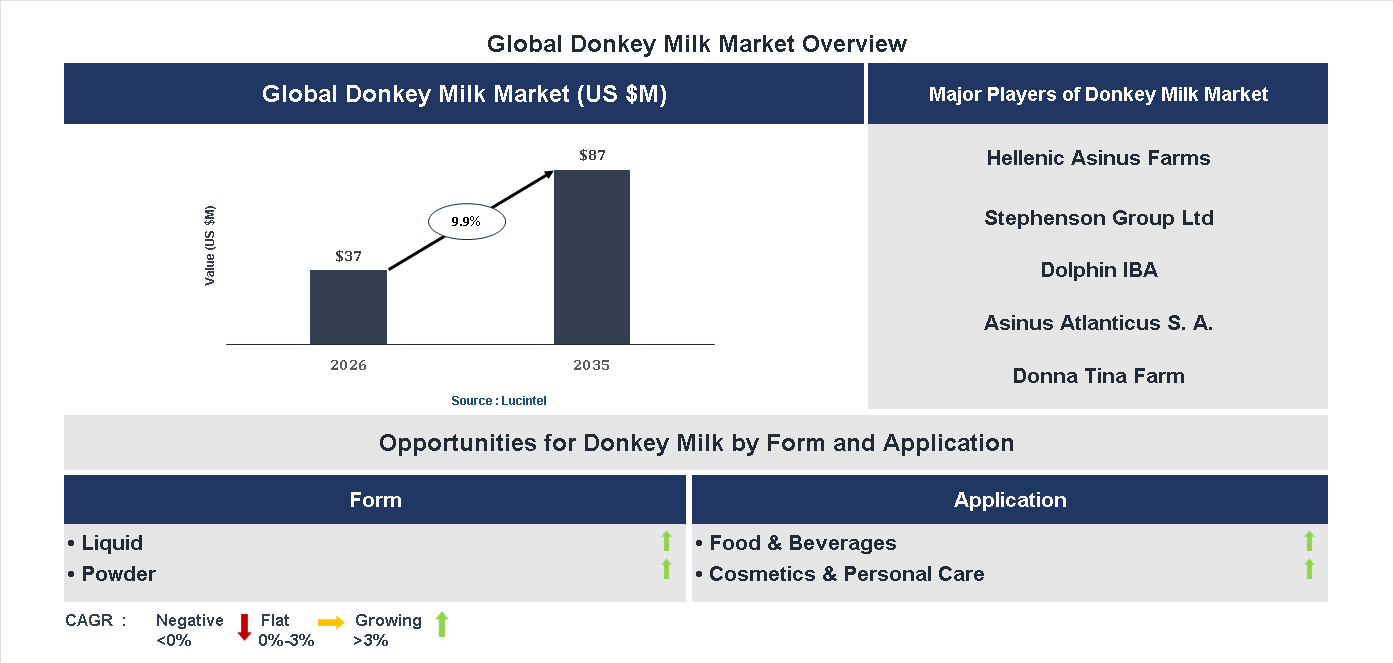
Key data points: The market size in 2035 = $87 million, growth forecast = 9.9% annually for the next 8 years. Scroll below to get more insights. This market report covers trends, opportunities and forecasts in donkey milk market to 2035 by form (liquid and powder), application (food & beverages and cosmetics & personal care), and region (North America, Europe, Asia Pacific, and the Rest of the World)
We'll send your sample report shortly.
• Lucintel forecasts that, within the form category, liquid is expected to witness higher growth over the forecast period.
• Within the application category, cosmetic & personal care is expected to witness higher growth.
• In terms of region, APAC is expected to witness the highest growth over the forecast period. Gain valuable insights for your business decisions with our comprehensive 150+ page report. Sample figures with some insights are shown below.
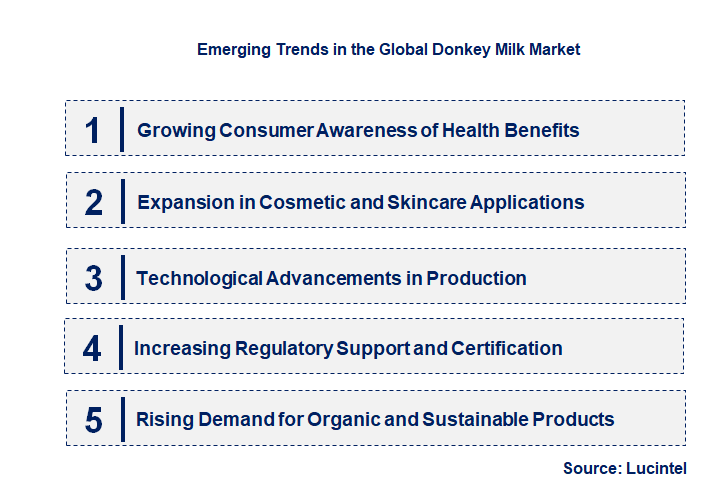
• Growing Consumer Awareness of Health Benefits: Consumers are increasingly recognizing donkey milk as a nutritious, hypoallergenic alternative to cows milk. Its rich composition of vitamins, minerals, and bioactive compounds appeals to health-conscious individuals, especially those with allergies or intolerances. This awareness is driven by scientific research, social media, and health campaigns, leading to higher demand in both food and cosmetic sectors. As a result, producers are focusing on educating consumers about its benefits, which is expanding market reach and encouraging product innovation.
• Expansion in Cosmetic and Skincare Applications: Donkey milks gentle, nourishing properties make it highly desirable in cosmetics and skincare products. Its natural antimicrobial and anti-inflammatory qualities are used in creams, soaps, and lotions targeting sensitive and aging skin. The trend is supported by increasing consumer preference for natural beauty products and the rising popularity of organic skincare. Companies are investing in R&D to develop specialized formulations, which are boosting market growth and opening new revenue streams beyond traditional food applications.
• Technological Advancements in Production: Innovations in milking, processing, and preservation techniques are improving the efficiency and quality of donkey milk production. Automated milking systems and better storage methods help maintain nutritional integrity and extend shelf life. These technological improvements reduce costs and enable larger-scale production, making donkey milk more commercially viable. Enhanced processing also allows for the development of value-added products like powders and concentrates, broadening market options and meeting diverse consumer needs.
• Increasing Regulatory Support and Certification: Governments and health authorities are recognizing donkey milks potential, leading to clearer regulations and quality standards. Certification processes ensure product safety, authenticity, and traceability, which build consumer trust. Regulatory support facilitates market entry for new producers and encourages investment in quality assurance. This trend helps standardize products, reduce fraud, and promote international trade, ultimately fostering a more organized and credible market environment.
• Rising Demand for Organic and Sustainable Products: Consumers are prioritizing organic, ethically sourced, and environmentally friendly products. Donkey milk, often produced through sustainable practices, aligns with these values. Producers are adopting eco-friendly farming methods and transparent supply chains to meet this demand. The trend enhances brand reputation and appeals to niche markets seeking natural wellness solutions. As sustainability becomes a key purchasing criterion, the market is likely to see increased innovation and investment in eco-conscious production methods. These trends are collectively reshaping the donkey milk market by emphasizing health benefits, expanding applications, improving production technology, ensuring quality standards, and aligning with sustainability values. This evolution is driving market growth, diversifying product offerings, and positioning donkey milk as a valuable natural resource in health, beauty, and wellness industries.
• Growing Consumer Awareness of Donkey Milk Benefits: Increased health consciousness and demand for natural, hypoallergenic products are driving market growth. Consumers are seeking alternatives to traditional dairy, especially those with allergies or sensitivities, boosting sales. This trend encourages producers to enhance product quality and expand distribution channels, ultimately broadening market reach and fostering innovation in product formulations.
• Expansion of Donkey Milk in Cosmetic Applications: The use of donkey milk in skincare and cosmetic products is rising due to its moisturizing and anti-aging properties. Cosmetic companies are incorporating donkey milk into creams, soaps, and serums, which appeals to consumers seeking natural beauty solutions. This diversification enhances market value, encourages research into new formulations, and opens avenues for premium product segments, thereby strengthening the market’s overall growth trajectory.
• Innovations in Donkey Milk Production and Processing: Advances in farming techniques and processing technologies are improving yield and quality. These innovations reduce costs and ensure product safety, making donkey milk more accessible. Enhanced preservation methods extend shelf life, facilitating wider distribution. Such technological progress supports scaling production, meeting increasing demand, and establishing a more reliable supply chain, which collectively bolster market stability and growth prospects.
• Rising Investments and Strategic Collaborations: Market players are forming partnerships and investing in donkey milk farms and processing facilities. These collaborations aim to increase production capacity and improve product quality. Investment influx fosters innovation, marketing, and distribution expansion, which enhances competitiveness. Strategic alliances also facilitate entry into new markets, driving overall industry growth and positioning the market as a key player in health and beauty sectors.
• Increasing regulatory support and standardization: Governments and industry bodies are developing standards and regulations for donkey milk production and labeling. This ensures product safety and quality, boosting consumer confidence. Regulatory clarity encourages new entrants and supports export opportunities. Standardization efforts also facilitate international trade, promote sustainable practices, and foster market credibility, ultimately contributing to a more organized and expanding market environment. The recent developments in the donkey milk market are significantly enhancing its growth potential. Increased consumer awareness, product diversification, technological innovations, strategic investments, and regulatory support are collectively expanding market size and improving product quality. These factors are attracting new players and consumers, fostering sustainable growth, and positioning the market for long-term success in health, beauty, and specialty food sectors.
• Growing Demand for Natural and Hypoallergenic Dairy Products: The increasing prevalence of allergies and sensitivities has driven consumers toward natural, hypoallergenic alternatives like donkey milk. Its rich nutrient profile and gentle properties make it ideal for infants, children, and sensitive adults. Market expansion is supported by rising awareness of its health benefits, including immune support and skin health. Companies are investing in scalable production methods to meet this demand, creating opportunities for new product development and regional market penetration.
• Expansion of Donkey Milk in Skincare and Cosmetic Applications: Donkey milk’s moisturizing, anti-aging, and skin-healing properties have made it a sought-after ingredient in premium skincare and cosmetic products. Brands are leveraging its natural composition to develop creams, lotions, and serums targeting consumers seeking clean, effective beauty solutions. The trend toward organic and cruelty-free products further boosts this segment. Innovation in formulation and marketing strategies can help brands differentiate themselves and tap into the growing luxury and natural beauty markets.
• Increasing Adoption in Infant Nutrition and Specialty Foods: Donkey milk’s nutritional profile, resembling human milk, makes it suitable for specialized infant formulas and dietary supplements. Its high digestibility and bioactive compounds appeal to parents seeking safe, nutritious options for infants with allergies or intolerances. The market is also expanding into functional foods and health supplements for adults. Strategic partnerships with healthcare providers and regulatory approvals are critical to expanding acceptance and distribution in this segment.
• Rising Interest in Sustainable and Ethical Dairy Alternatives: Consumers are increasingly prioritizing sustainability and animal welfare, favoring plant-based and alternative dairy options like donkey milk. Its production, which requires fewer resources than traditional dairy, aligns with eco-conscious values. Market players are exploring sustainable farming practices and transparent supply chains to appeal to environmentally aware consumers. This trend opens avenues for branding, certification, and storytelling that emphasize ethical sourcing, boosting market growth and consumer loyalty.
• Technological Innovations in Donkey Milk Production and Processing: Advances in milking technology, preservation, and processing techniques are enhancing product quality, safety, and shelf life. Automation and improved hygiene standards reduce costs and increase scalability. Innovations such as freeze-drying and encapsulation enable new product formats like powders and capsules, expanding application possibilities. These technological developments facilitate broader distribution, meet regulatory standards, and support market expansion into new regions and applications, ultimately strengthening the industry’s growth trajectory. These growth opportunities collectively position the donkey milk market for substantial expansion across health, beauty, and specialty food sectors. Innovation, sustainability, and consumer awareness are key drivers shaping future market dynamics. Companies that capitalize on these trends through strategic investments and product development will be well-positioned to capture emerging demand and establish a competitive edge in this evolving industry landscape.
• Technological Advancements: The development of innovative milking and processing techniques has improved yield efficiency and product quality. These advancements enable producers to meet increasing demand while maintaining safety standards. Enhanced preservation methods extend shelf life, making donkey milk more accessible to global markets. Additionally, research into nutritional enhancements and product diversification, such as creams and powders, broadens market applications. Such technological progress reduces operational costs over time and fosters product innovation, attracting health-conscious consumers seeking natural, hypoallergenic alternatives.
• Rising Consumer Awareness and Preference for Natural Products: Consumers are increasingly seeking natural, organic, and hypoallergenic products due to rising awareness of food allergies and sensitivities. Donkey milk, known for its nutritional benefits and gentle properties, appeals to this demographic. The trend towards clean-label and functional foods boosts demand for donkey milk in skincare, dietary supplements, and infant nutrition. As consumers become more health-conscious, they prefer products with minimal processing and chemical additives, positioning donkey milk as a premium, health-oriented choice.
• Growing Demand in Healthcare and Cosmetic Industries: The unique properties of donkey milk, including its antimicrobial and anti-inflammatory benefits, make it highly desirable in healthcare and cosmetic sectors. It is used in dermatology for treating skin conditions like eczema and psoriasis, and in anti-aging skincare products. The rising prevalence of skin disorders and the shift towards natural remedies drive demand. Moreover, donkey milk’s nutritional profile supports its use in specialized dietary formulations, further expanding its application scope and fueling market growth.
• Increasing Investment and Market Penetration by Key Players: Major companies are investing in donkey milk production, branding, and distribution channels to expand their market share. Strategic partnerships, acquisitions, and product launches are common strategies to penetrate new markets and increase consumer base. These investments facilitate better supply chain management, quality assurance, and marketing efforts, which enhance product visibility and consumer trust. As key players focus on innovation and regional expansion, the market experiences accelerated growth and diversification of product offerings.
• Regulatory Support and Certification Standards: Governments and industry bodies are establishing clear standards for donkey milk production, processing, and labeling. Certification schemes ensure product authenticity, safety, and quality, which build consumer confidence. Regulatory support also encourages farmers and producers to adopt best practices, ensuring sustainable supply chains. These standards facilitate international trade by meeting export requirements and reducing trade barriers, thereby expanding market reach and fostering industry credibility. The challenges facing this Market include:
• High Production Costs: Donkey milk production involves significant expenses related to animal care, specialized milking equipment, and processing. Donkeys produce relatively low quantities of milk, necessitating larger herds to meet demand, which increases operational costs. Additionally, maintaining the health and nutrition of donkeys requires specialized feed and veterinary care, further elevating costs. These high expenses make donkey milk products more expensive for consumers, potentially limiting market growth to niche segments and hindering mass adoption.
• Limited Supply and Breeding Challenges: The natural low yield of donkey milk constrains supply, creating a supply-demand imbalance. Breeding donkeys for milk production is complex and time-consuming, with challenges related to animal health, reproductive rates, and herd management. The limited number of dairy donkeys restricts scalability and geographic expansion. This supply constraint hampers consistent product availability, affecting market stability and discouraging large-scale commercial investments.
• Stringent Regulatory and Certification Requirements: While regulations ensure safety and quality, they also pose barriers for producers, especially small-scale farmers. Compliance with diverse international standards can be costly and complex, requiring significant investment in testing, documentation, and certification processes. These regulatory hurdles may delay product launches and restrict market entry, particularly in emerging markets with less developed regulatory frameworks. Navigating these requirements is a challenge for new entrants and can limit industry growth. The donkey milk market is driven by technological innovations, increasing consumer preference for natural products, expanding healthcare and cosmetic applications, strategic investments by key players, and supportive regulatory standards. However, high production costs, limited supply, and regulatory complexities pose significant challenges. These factors collectively influence market dynamics, with growth potential tempered by operational and regulatory hurdles. Stakeholders must focus on sustainable supply chain development, cost management, and regulatory compliance to capitalize on emerging opportunities and ensure long-term market stability.
• Hellenic Asinus Farms
• Stephenson Group Ltd
• Dolphin IBA
• Asinus Atlanticus S. A.
• Donna Tina Farm
• Eurolactis Italia Srl,
• Golden Donkeys Farm
• The Donkey Dairy PTY LTD
• The White Sea & Baltic Company Limited
• Vro Enterprises
• Liquid
• Powder
• Food & Beverages
• Cosmetics & Personal Care
• North America
• Europe
• Asia Pacific
• The Rest of the World
• United States: The US market has seen increased interest in donkey milk for its potential health benefits, especially in niche segments like skincare and specialty foods. Several startups are investing in sustainable farming practices and innovative processing methods. Regulatory agencies are working to establish clear guidelines for quality standards, boosting consumer confidence. E-commerce platforms are expanding access to donkey milk products, and collaborations with wellness brands are enhancing market visibility. Overall, the US market is characterized by a focus on health, sustainability, and premium product positioning.
• China: China’s donkey milk market is rapidly expanding, driven by rising health consciousness and demand for natural products. Local companies are investing in large-scale dairy farms and advanced processing technologies to meet domestic demand. The government is supporting the industry through favorable policies and subsidies, encouraging innovation and quality control. Consumer awareness campaigns highlight donkey milk’s benefits, especially for skincare and infant nutrition. E-commerce and social media marketing are playing crucial roles in market penetration. The Chinese market is poised for significant growth, with a focus on affordability and product diversification.
• Germany: Germany’s market emphasizes high-quality, organic donkey milk products, catering to health-conscious consumers. The country has seen a rise in boutique farms and artisanal producers focusing on sustainable and ethical practices. Regulatory standards are strict, ensuring product safety and transparency. Germany is also investing in research to explore donkey milk’s therapeutic properties, particularly in dermatology and allergy treatments. The market is characterized by premium pricing and a strong emphasis on natural, eco-friendly branding. Consumer demand for clean-label and ethically sourced products continues to drive innovation in this sector.
• India: The Indian donkey milk market is in its nascent stages but shows promising growth potential. Local farmers are beginning to explore donkey farming as a sustainable livelihood option. The focus is on small-scale production to meet regional demand, especially in rural areas. Awareness about donkey milk’s health benefits is gradually increasing through government initiatives and health campaigns. Challenges include limited infrastructure and high production costs, but the market is expected to expand with increased investment and technological adoption. The emphasis remains on affordability and accessibility for broader consumer segments.
• Japan: Japan’s market for donkey milk is characterized by a focus on skincare and cosmetic applications, driven by consumer interest in natural beauty products. Innovative formulations incorporating donkey milk are gaining popularity in high-end salons and retail outlets. The country’s strict quality standards ensure premium product offerings. Japanese companies are investing in research to explore additional health benefits, including immune support and anti-aging properties. The market is relatively small but growing steadily, with a strong emphasis on luxury, purity, and scientific validation. Consumer preferences favor organic and ethically sourced products, shaping ongoing product development.


• Hellenic Asinus Farms
• Stephenson Group Ltd
• Dolphin IBA
• Asinus Atlanticus S. A.
• Donna Tina Farm
• Eurolactis Italia Srl,
• Golden Donkeys Farm
• The Donkey Dairy PTY LTD
• The White Sea & Baltic Company Limited
• Vro Enterprises Q6. Which donkey milk market segment will be the largest in future? Answer: Lucintel forecasts that, within the form category, liquid is expected to witness higher growth over the forecast period. Q7. In donkey milk market, which region is expected to be the largest in next 5 years? Answer: In terms of region, APAC is expected to witness the highest growth over the forecast period. Q8. Do we receive customization in this report? Answer: Yes, Lucintel provides 10% customization without any additional cost.


Choose a license that fits your team. Instant PDF delivery.
Prices exclude taxes. Instant delivery. Custom licensing available on request.
Market Report · July 22, 2026
Market Report · July 22, 2026
Market Report · July 22, 2026
Trusted partner for strategic intelligence and business growth


Receive a complimentary market analysis tailored to your industry. Our analysts will identify key growth opportunities and competitive dynamics specific to your business.

Market size, growth rate, and key trend analysis for your specific sector.

Top competitor positioning and market share analysis.

Strategic recommendations backed by data-driven insights.
Get curated market intelligence and competitive moves straight to your inbox.
By subscribing, you agree to receive our monthly insights. Unsubscribe anytime.
Receive a complimentary market analysis tailored to your industry. Our analysts will identify key growth opportunities and competitive dynamics specific to your business.
Market size, growth rate, and key trend analysis for your specific sector.
Top competitor positioning and market share analysis.
Strategic recommendations backed by data-driven insights.
Get curated market intelligence, emerging trends, and competitive moves straight to your inbox each month.
By subscribing, you agree to receive our monthly insights. Unsubscribe anytime.
We'll send your sample report shortly.