Close Lucintel Chat
Didn't Find What You're Looking for?
Call us at +1972 636 5056 or write at helpdesk@Lucintel.com
Ask an Expert Provide Custom Requirements Download Sample Report Search Available Reports
  • helpdesk@Lucintel.com
  • |
  • Call Lucintel +1 972 636 5056
  • |
  • Login
  • |
  • Register
  • |
  • Search
  • |
'
...

The Impact of COVID-19 is included in Dome Regulator Market Report. Buy it today to get an advantage.

Request the impact of COVID-19 on your product or industry


Dome Regulator Market Trends and Forecast

The future of the global dome regulator market looks promising with opportunities in the oil and gas, chemical, and beverage markets. The global dome regulator market is expected to grow with a CAGR of 3.5% from 2025 to 2031. The major drivers for this market are the increasing demand for pressure regulation, the natural gas infrastructure expansion, and the integration with digital control systems.

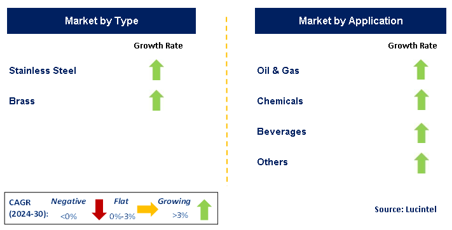
• Lucintel forecasts that, within the type category, stainless steel is expected to witness higher growth over the forecast period due to durability and strength, corrosion resistance.
• Within the application category, oil and gas is expected to witness the highest growth due to high demand for pressure regulation, stringent safety and efficiency standards.
• In terms of region, North America is expected to witness the highest growth over the forecast period due to the strong presence of the oil and gas and chemical industries.
Gain valuable insights for your business decisions with our comprehensive 150+ page report. Sample figures with some insights are shown below.
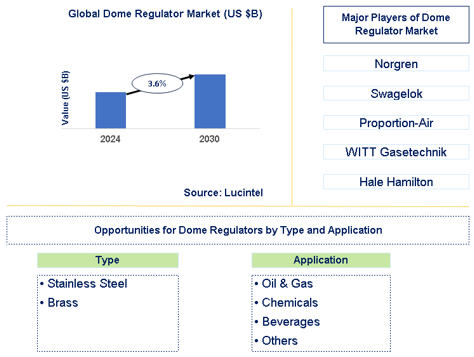
Dome Regulator Market Trends and Forecast

Dome Regulator Market by Segment

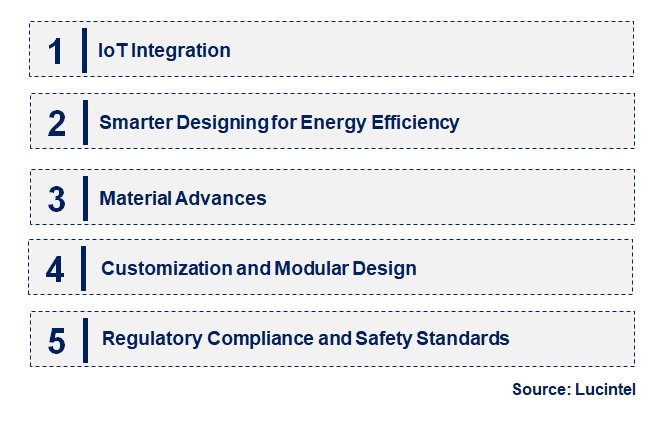
Emerging Trends in the Dome Regulator Market

As the global demand for natural gas rises and industries look for efficient energy solutions, the dome regulator market is undergoing several emerging trends. Innovations in technology, growing environmental concerns, and regulatory pressures are shaping the market. These trends are driving the evolution of dome regulators, making them smarter, more efficient, and adaptable to a wide range of applications. The following are key emerging trends in the dome regulator market.
• Integration of IoT and Smart Technologies: The integration of IoT and smart technologies is one of the most significant trends in the dome regulator market. These advancements allow for remote monitoring, real-time data analytics, and predictive maintenance, improving the performance and efficiency of gas flow regulation. This trend is particularly important in industries where precision and safety are paramount, such as oil and gas. With real-time monitoring, operators can detect anomalies, reduce downtime, and enhance system reliability, driving the demand for smart dome regulators across various sectors.
• Energy Efficiency and Environmental Compliance: As governments around the world implement stricter regulations on energy efficiency and carbon emissions, industries are increasingly adopting dome regulators that help optimize gas distribution systems. The push for cleaner energy and sustainability is driving the demand for regulators that can efficiently control gas flow and reduce waste. With a focus on reducing emissions, companies are seeking regulators that not only comply with environmental regulations but also contribute to cost savings by improving system efficiency and minimizing energy losses.
• Rise in Adoption of Natural Gas: The growing adoption of natural gas as a cleaner alternative to coal and oil is influencing the demand for dome regulators. Natural gas requires reliable flow regulation in pipelines and distribution systems, making dome regulators essential. This trend is particularly noticeable in countries like China and India, where natural gas consumption is rising rapidly. As the infrastructure for natural gas continues to expand, the need for high-quality dome regulators that can ensure safety and efficiency in gas transmission and distribution is increasing.
• Focus on Automation and Control Systems: The increasing shift toward automation in industrial sectors is transforming the dome regulator market. Automation allows for the regulation of gas flow without human intervention, making systems safer and more efficient. This is especially valuable in large-scale industrial operations and facilities where maintaining a constant gas pressure is critical. With the adoption of automation, regulators are becoming more sophisticated, offering features like digital control systems, remote operation, and integrated safety mechanisms to minimize risks and improve operational efficiency.
• Demand for Customization: As industries require more tailored solutions for their specific gas distribution needs, there is a growing demand for customized dome regulators. Customization enables regulators to meet specific pressure requirements, handle different types of gases, and be compatible with unique industrial applications. This trend is particularly evident in sectors like oil and gas, where varied operating conditions necessitate specialized regulators. Manufacturers are offering a wider range of customization options, enhancing the adaptability of dome regulators to meet the diverse needs of different industries.
These emerging trends in the dome regulator market are reshaping the landscape, making systems smarter, more efficient, and more aligned with global sustainability goals. The integration of IoT, automation, and focus on energy efficiency are the key factors influencing growth. As industries demand more tailored solutions, the market will continue to innovate to meet new challenges and opportunities.
Emerging Trends in the Dome Regulator Market

Recent Development in the Dome Regulator Market

The dome regulator market has seen several key developments that are changing the way gas distribution systems operate. These developments are being driven by advances in technology, increasing demand for natural gas, and a push for more efficient and sustainable energy solutions. This section highlights five key recent developments in the market and their impact.
• Smart Dome Regulators with Digital Controls: The introduction of smart dome regulators equipped with digital controls is a significant development in the market. These regulators are equipped with sensors and connectivity that allow for remote monitoring and real-time data analysis. This has led to better performance, enhanced safety, and lower operational costs. The widespread adoption of these smart regulators is transforming industries such as oil and gas, where real-time monitoring is crucial for safety and efficiency.
• Advances in Pressure Control Technology: Dome regulators have evolved to include advanced pressure control technologies that offer better precision and responsiveness. New models are able to handle a wider range of pressures and provide more consistent flow regulation, even under fluctuating demand conditions. These advances are particularly important for industries requiring high reliability, such as chemicals and petrochemicals. The increased accuracy and performance of modern dome regulators help reduce energy waste and improve system efficiency.
• Integration with SCADA Systems: The integration of dome regulators with SCADA (Supervisory Control and Data Acquisition) systems has become a notable development. This allows operators to control and monitor the entire gas distribution network from a central location, making it easier to manage large-scale operations. SCADA systems help optimize the performance of dome regulators by providing detailed data and enabling quick responses to operational changes, improving overall system efficiency and safety.
• Environmentally Friendly Dome Regulators: In response to growing environmental concerns, manufacturers have developed more environmentally friendly dome regulators. These regulators are designed to minimize gas leakage, reduce energy consumption, and comply with stringent environmental standards. The focus on sustainability is especially relevant in countries with strict emissions regulations, such as Germany and Japan, where the market is shifting towards regulators that align with green energy initiatives and low-emission goals.
• Growth of the Natural Gas Market: The rapid growth of the natural gas market, particularly in emerging economies like China and India, has led to increased demand for dome regulators. As these countries expand their natural gas infrastructure, the need for efficient and reliable gas regulation systems has surged. This development is creating opportunities for manufacturers to supply advanced dome regulators to meet the specific needs of large-scale gas distribution networks, which are expanding at a fast pace.
These developments are significantly impacting the dome regulator market by improving performance, enhancing safety, and contributing to sustainability efforts. Technological advancements in digital controls, pressure management, and automation are reshaping the way industries manage gas flow and distribution, while environmental concerns are driving innovations in eco-friendly solutions.

Strategic Growth Opportunities in the Dome Regulator Market

As industries and governments push toward more sustainable and efficient energy solutions, there are several strategic growth opportunities in the dome regulator market. These opportunities span across various sectors, including oil and gas, utilities, and industrial applications, where advanced gas regulation is crucial. The following section outlines five key growth opportunities for dome regulators.
• Growth in Natural Gas Infrastructure: As countries like China, India, and the U.S. expand their natural gas infrastructure, there is a significant opportunity for dome regulator manufacturers to provide advanced solutions for gas distribution systems. Natural gas is increasingly seen as a cleaner energy source, and the need for reliable and efficient gas regulation is expected to rise with the growth of this sector. This offers a major opportunity for companies to cater to expanding natural gas networks.
• Renewable Energy Integration: As the world transitions toward renewable energy sources, there is an opportunity to integrate dome regulators with renewable energy systems, such as biogas plants. Dome regulators that can handle renewable gases are in demand as industries shift to more sustainable energy solutions. By offering adaptable regulators that are compatible with both conventional and renewable gas sources, manufacturers can tap into the growing market for green energy infrastructure.
• Industrial Automation: The increasing adoption of industrial automation presents growth opportunities for dome regulators with integrated digital controls and remote monitoring capabilities. These advanced systems improve the efficiency and safety of gas regulation in large-scale industrial applications, such as chemical processing and manufacturing. The demand for automated solutions that can reduce human error and improve operational efficiency will continue to drive growth in the dome regulator market.
• Upgrading Existing Infrastructure: There is a substantial opportunity to upgrade older gas distribution infrastructure with advanced dome regulators that offer better performance, energy efficiency, and compliance with modern regulations. Governments and industries in developed economies, particularly in Europe and North America, are focusing on upgrading aging infrastructure to meet higher safety and efficiency standards, driving demand for advanced dome regulators.
• Emerging Markets Adoption: Emerging markets, particularly in Asia and Africa, present significant growth opportunities for dome regulator manufacturers. As these regions continue to develop their energy infrastructure, the demand for reliable and cost-effective gas regulation systems is growing. By providing affordable and high-quality solutions tailored to the specific needs of these markets, manufacturers can expand their reach and capture a larger share of the market.
These strategic growth opportunities highlight the potential for expansion in the dome regulator market, driven by natural gas infrastructure growth, renewable energy integration, and industrial automation. As emerging markets continue to develop, there will be significant demand for advanced dome regulators that improve energy efficiency, safety, and performance across various sectors.

Dome Regulator Market Driver and Challenges

The Dome Regulator market is shaped by several drivers and challenges, influenced by technological, economic, and regulatory factors. As industries rely more on natural gas and other fuels, the demand for efficient, reliable, and safe gas regulation systems, such as dome regulators, continues to grow. Key drivers include advances in technology, the expansion of natural gas infrastructure, and increasing environmental regulations. However, challenges such as high installation costs, regulatory compliance, and the need for system upgrades may hinder market growth. Understanding these factors is crucial for stakeholders aiming to navigate the evolving market dynamics.
The factors responsible for driving the Dome Regulator market include:
1. Technological Advancements: The integration of IoT, digital controls, and automation in dome regulators is transforming the market. These innovations allow for real-time monitoring, predictive maintenance, and enhanced performance. Smart regulators enable more efficient gas distribution by offering data-driven insights, leading to improved safety and reduced operational costs. This trend is especially important for industries with large-scale, complex gas networks, including oil and gas, power generation, and chemicals.
2. Expansion of Natural Gas Infrastructure: As countries transition to cleaner energy sources, the global demand for natural gas is rising, prompting the expansion of gas distribution infrastructure. This shift increases the need for efficient and reliable dome regulators to manage gas flow in pipelines and storage systems. With natural gas seen as a cleaner alternative to coal and oil, regulators play a critical role in ensuring consistent and safe pressure regulation, driving demand in both developed and emerging markets.
3. Environmental Regulations and Sustainability Goals: Growing environmental concerns and stricter regulatory frameworks are forcing industries to adopt greener and more efficient technologies. Dome regulators that minimize leakage, improve energy efficiency, and comply with emissions regulations are becoming increasingly essential. In countries like Germany and Japan, where sustainability goals are prioritized, the adoption of eco-friendly dome regulators is expected to accelerate as part of broader efforts to reduce carbon footprints and improve energy consumption.
4. Safety and Regulatory Compliance: The safety of gas transmission and distribution systems is a major concern for industries that rely on stable gas flow and pressure control. Stringent safety regulations require the implementation of advanced pressure regulation solutions like dome regulators to prevent accidents, explosions, or leaks. As regulatory bodies tighten safety standards, the need for high-quality dome regulators that meet these requirements continues to drive market growth, particularly in high-risk sectors such as petrochemicals and mining.
5. Increase in Industrial Automation: The growing trend toward automation across industries is another key driver for the dome regulator market. Automated systems can offer improved control over gas flow and pressure regulation, reducing human error and enhancing operational efficiency. The integration of dome regulators with SCADA systems and other automation technologies allows for remote monitoring, real-time adjustments, and better energy management, which is especially critical in large-scale industrial applications such as power generation and chemical manufacturing.
Challenges in the Dome Regulator market are:
1. High Initial Investment Costs: One of the primary challenges in the dome regulator market is the high initial investment required for installation and setup. Advanced dome regulators with digital controls, automation, and IoT integration come with a higher price tag compared to traditional models. Smaller enterprises or those in emerging markets may find these costs prohibitive, limiting their ability to adopt such technologies. This challenge is particularly acute in price-sensitive regions, where cost optimization remains a top priority.
2. Regulatory Compliance Complexity: While stringent regulations drive the demand for better dome regulators, compliance with these regulations can also pose a challenge. Manufacturers must ensure their products meet varying standards across different regions and industries, such as pressure control, material durability, and safety features. Navigating these complex and ever-evolving regulatory requirements can lead to increased costs, longer product development cycles, and operational delays, hindering the overall market growth.
3. Technological Integration and System Compatibility: As industries transition to smarter, more integrated systems, dome regulators need to be compatible with existing infrastructure and technologies. Integration with SCADA systems, sensors, and automation platforms can be complex, especially in older systems that require significant retrofitting. The challenge lies in ensuring that new dome regulators can work seamlessly with legacy equipment, which may involve additional costs and operational challenges.
The dome regulator market is being propelled by technological advancements, the expansion of natural gas infrastructure, and stricter environmental and safety regulations. However, challenges such as high installation costs, regulatory compliance complexities, and integration with existing systems may impede growth. Manufacturers must innovate to address these challenges while leveraging the drivers to unlock new opportunities. Balancing the need for efficiency, safety, and regulatory compliance will be essential for stakeholders navigating the evolving landscape of the dome regulator market.

List of Dome Regulator Companies

Companies in the market compete on the basis of product quality offered. Major players in this market focus on expanding their manufacturing facilities, R&D investments, infrastructural development, and leverage integration opportunities across the value chain. With these strategies dome regulator companies cater increasing demand, ensure competitive effectiveness, develop innovative products & technologies, reduce production costs, and expand their customer base. Some of the dome regulator companies profiled in this report include-
• Norgren
• Swagelok
• Proportion-Air
• WITT Gasetechnik
• Hale Hamilton
• Premier Industries
• Equilibar
• Parker
• Emerson
• Amico Corporation

Dome Regulator Market by Segment

The study includes a forecast for the global dome regulator market by type, application, and region.

Dome Regulator Market by Type [Value from 2019 to 2031]:


• Stainless Steel
• Brass

Dome Regulator Market by Application [Value from 2019 to 2031]:


• Oil And Gas
• Chemical
• Beverage
• Others

Dome Regulator Market by Region [Value from 2019 to 2031]:


• North America
• Europe
• Asia Pacific
• The Rest of the World

Country Wise Outlook for the Dome Regulator Market

The dome regulator market plays a vital role in managing gas flow and pressure regulation across various industries, such as oil and gas, chemicals, and utilities. Dome regulators are widely used to ensure stable and efficient gas flow in pipeline systems. As global demand for energy increases and industries continue to innovate, the demand for advanced dome regulators has surged. Countries like the United States, China, Germany, India, and Japan are making notable strides in the development and deployment of dome regulators, driven by technological advancements and a focus on energy efficiency and regulatory compliance. This report examines recent developments across these key markets.
• United States: The U.S. market for dome regulators has experienced significant growth, driven by the increasing demand for natural gas and the need for enhanced safety and efficiency in gas distribution systems. In recent years, several manufacturers have introduced advanced dome regulators with integrated digital controls and real-time monitoring capabilities. This trend is being supported by regulatory measures that focus on improving energy efficiency and safety in the oil and gas sector. Additionally, increased shale gas production has created a greater demand for gas flow and pressure regulation, propelling the market for dome regulators in the U.S.
• China: China’s rapid industrialization and energy consumption growth have driven the demand for reliable and efficient gas regulation systems, including dome regulators. With the government’s emphasis on natural gas adoption as a cleaner energy source, the demand for dome regulators in the energy sector is growing. Recently, Chinese manufacturers have also been focusing on producing more durable and cost-effective dome regulators. Furthermore, there has been a rise in the integration of IoT and automation in dome regulators, enabling better monitoring and control of gas flow, which is particularly important in large-scale industrial applications.
• Germany: Germany’s commitment to sustainability and energy efficiency has spurred significant advancements in the dome regulator market. The country has invested in highly efficient gas distribution systems, and manufacturers are integrating advanced technologies such as smart sensors and digital monitoring systems into dome regulators. Germany is also focusing on reducing carbon emissions, which is leading to a greater adoption of natural gas as a cleaner fuel. This shift is driving the demand for innovative dome regulators that can handle varied pressures and ensure optimal efficiency in both residential and industrial applications.
• India: In India, the growing demand for natural gas, especially in urban areas, has increased the need for reliable dome regulators to manage gas flow efficiently. The country is experiencing rapid infrastructure development, and the government’s initiatives to expand the use of compressed natural gas (CNG) have spurred investments in dome regulators. Additionally, there is a push towards upgrading aging infrastructure, with new dome regulators designed to handle high pressure and diverse applications. Manufacturers in India are focusing on improving the quality and durability of these regulators to meet international standards.
• Japan: Japan’s energy infrastructure modernization has led to the increasing adoption of dome regulators. Following the Fukushima disaster, the country has been working toward energy diversification, with natural gas becoming a key player. To improve safety and energy efficiency, Japan’s industrial sector has been using more advanced dome regulators with real-time monitoring and automated pressure control features. The demand for gas-related products in the residential and commercial sectors has also seen an uptick as energy-efficient systems are sought to reduce costs and emissions.
Lucintel Analytics Dashboard

Features of the Global Dome Regulator Market

Market Size Estimates: Dome regulator market size estimation in terms of value ($B).
Trend and Forecast Analysis: Market trends (2019 to 2024) and forecast (2025 to 2031) by various segments and regions.
Segmentation Analysis: Dome regulator market size by type, application, and region in terms of value ($B).
Regional Analysis: Dome regulator market breakdown by North America, Europe, Asia Pacific, and Rest of the World.
Growth Opportunities: Analysis of growth opportunities in different type, application, and regions for the dome regulator market.
Strategic Analysis: This includes M&A, new product development, and competitive landscape of the dome regulator market.
Analysis of competitive intensity of the industry based on Porter’s Five Forces model.

Lucintel Consulting Services

FAQ

Q1. What is the growth forecast for dome regulator market?
Answer: The global dome regulator market is expected to grow with a CAGR of 3.5% from 2025 to 2031.
Q2. What are the major drivers influencing the growth of the dome regulator market?
Answer: The major drivers for this market are the increasing demand for pressure regulation, the natural gas infrastructure expansion, and the integration with digital control systems.
Q3. What are the major segments for dome regulator market?
Answer: The future of the dome regulator market looks promising with opportunities in the oil and gas, chemical, and beverage markets.
Q4. Who are the key dome regulator market companies?
Answer: Some of the key dome regulator companies are as follows:
• Norgren
• Swagelok
• Proportion-Air
• WITT Gasetechnik
• Hale Hamilton
• Premier Industries
• Equilibar
• Parker
• Emerson
• Amico Corporation
Q5. Which dome regulator market segment will be the largest in future?
Answer: Lucintel forecasts that stainless steel is expected to witness higher growth over the forecast period due to durability and strength, corrosion resistance.
Q6. In dome regulator market, which region is expected to be the largest in next 5 years?
Answer: North America is expected to witness the highest growth over the forecast period due to the strong presence of the oil and gas and chemical industries.
Q7. Do we receive customization in this report?
Answer: Yes, Lucintel provides 10% customization without any additional cost.

This report answers following 11 key questions:

Q.1. What are some of the most promising, high-growth opportunities for the dome regulator market by type (stainless steel and brass), application (oil and gas, chemical, beverage, and others), and region (North America, Europe, Asia Pacific, and the Rest of the World)?
Q.2. Which segments will grow at a faster pace and why?
Q.3. Which region will grow at a faster pace and why?
Q.4. What are the key factors affecting market dynamics? What are the key challenges and business risks in this market?
Q.5. What are the business risks and competitive threats in this market?
Q.6. What are the emerging trends in this market and the reasons behind them?
Q.7. What are some of the changing demands of customers in the market?
Q.8. What are the new developments in the market? Which companies are leading these developments?
Q.9. Who are the major players in this market? What strategic initiatives are key players pursuing for business growth?
Q.10. What are some of the competing products in this market and how big of a threat do they pose for loss of market share by material or product substitution?
Q.11. What M&A activity has occurred in the last 5 years and what has its impact been on the industry?

For any questions related to Dome Regulator Market, Dome Regulator Market Size, Dome Regulator Market Growth, Dome Regulator Market Analysis, Dome Regulator Market Report, Dome Regulator Market Share, Dome Regulator Market Trends, Dome Regulator Market Forecast, Dome Regulator Companies, write Lucintel analyst at email: helpdesk@lucintel.com. We will be glad to get back to you soon.
                                                            Table of Contents

            1. Executive Summary

            2. Global Dome Regulator Market : Market Dynamics
                        2.1: Introduction, Background, and Classifications
                        2.2: Supply Chain
                        2.3: Industry Drivers and Challenges

            3. Market Trends and Forecast Analysis from 2019 to 2031
                        3.1. Macroeconomic Trends (2019-2024) and Forecast (2025-2031)
                        3.2. Global Dome Regulator Market Trends (2019-2024) and Forecast (2025-2031)
                        3.3: Global Dome Regulator Market by Type
                                    3.3.1: Stainless Steel
                                    3.3.2: Brass
                        3.4: Global Dome Regulator Market by Application
                                    3.4.1: Oil and Gas
                                    3.4.2: Chemical
                                    3.4.3: Beverage
                                    3.4.4: Others

            4. Market Trends and Forecast Analysis by Region from 2019 to 2031
                        4.1: Global Dome Regulator Market by Region
                        4.2: North American Dome Regulator Market
                                    4.2.1: North American by type: stainless steel and brass
                                    4.2.2: North American by application: oil and gas, chemical, beverage, and others
                        4.3: European Dome Regulator Market
                                    4.3.1: European by type: stainless steel and brass
                                    4.3.2: European by application: oil and gas, chemical, beverage, and others
                        4.4: APAC Dome Regulator Market
                                    4.4.1: APAC by type: stainless steel and brass
                                    4.4.2: APAC by application: oil and gas, chemical, beverage, and others
                        4.5: ROW Dome Regulator Market
                                    4.5.1: ROW by type: stainless steel and brass
                                    4.5.2: ROW by application: oil and gas, chemical, beverage, and others

            5. Competitor Analysis
                        5.1: Product Portfolio Analysis
                        5.2: Operational Integration
                        5.3: Porter’s Five Forces Analysis

            6. Growth Opportunities and Strategic Analysis
                        6.1: Growth Opportunity Analysis
                                    6.1.1: Growth Opportunities for the Global Dome Regulator Market by Type
                                    6.1.2: Growth Opportunities for the Global Dome Regulator Market by Application
                                    6.1.3: Growth Opportunities for the Global Dome Regulator Market by Region
                        6.2: Emerging Trends in the Global Dome Regulator Market
                        6.3: Strategic Analysis
                                    6.3.1: New Product Development
                                    6.3.2: Capacity Expansion of the Global Dome Regulator Market
                                    6.3.3: Mergers, Acquisitions, and Joint Ventures in the Global Dome Regulator Market
                                    6.3.4: Certification and Licensing

            7. Company Profiles of Leading Players
                        7.1: Norgren
                        7.2: Swagelok
                        7.3: Proportion-Air
                        7.4: WITT Gasetechnik
                        7.5: Hale Hamilton
                        7.6: Premier Industries
                        7.7: Equilibar
                        7.8: Parker
                        7.9: Emerson
                        7.10: Amico Corporation
.

Buy full report or by chapter as follows

Limited Time Offer

Price by License Type:
[-] Hide Chapter Details
[Chapter Number] [Chapter Name] [Chapter Number Of Pages] [Chapter Price]
Title/Chapter Name Pages Price
Full Report: Dome Regulator Market Report: Trends, Forecast and Competitive Analysis to 2031 Full Report $ 2,990
A 150 Page Report
Lucintel has been in the business of market research and management consulting since 2000 and has published over 1000 market intelligence reports in various markets / applications and served over 1,000 clients worldwide. This study is a culmination of four months of full-time effort performed by Lucintel's analyst team. The analysts used the following sources for the creation and completion of this valuable report:
  • In-depth interviews of the major players in this market
  • Detailed secondary research from competitors’ financial statements and published data 
  • Extensive searches of published works, market, and database information pertaining to industry news, company press releases, and customer intentions
  • A compilation of the experiences, judgments, and insights of Lucintel’s professionals, who have analyzed and tracked this market over the years.
Extensive research and interviews are conducted across the supply chain of this market to estimate market share, market size, trends, drivers, challenges, and forecasts. Below is a brief summary of the primary interviews that were conducted by job function for this report.
 
Thus, Lucintel compiles vast amounts of data from numerous sources, validates the integrity of that data, and performs a comprehensive analysis. Lucintel then organizes the data, its findings, and insights into a concise report designed to support the strategic decision-making process. The figure below is a graphical representation of Lucintel’s research process. 
 

Please sign in below to get report brochure - Dome Regulator Market Report.

At Lucintel, we respect your privacy and maintain the confidentiality of information / data provided by you
(Please enter your corporate email. * These fields are mandatory )

Follow us on