
Market Report · May 18, 2026

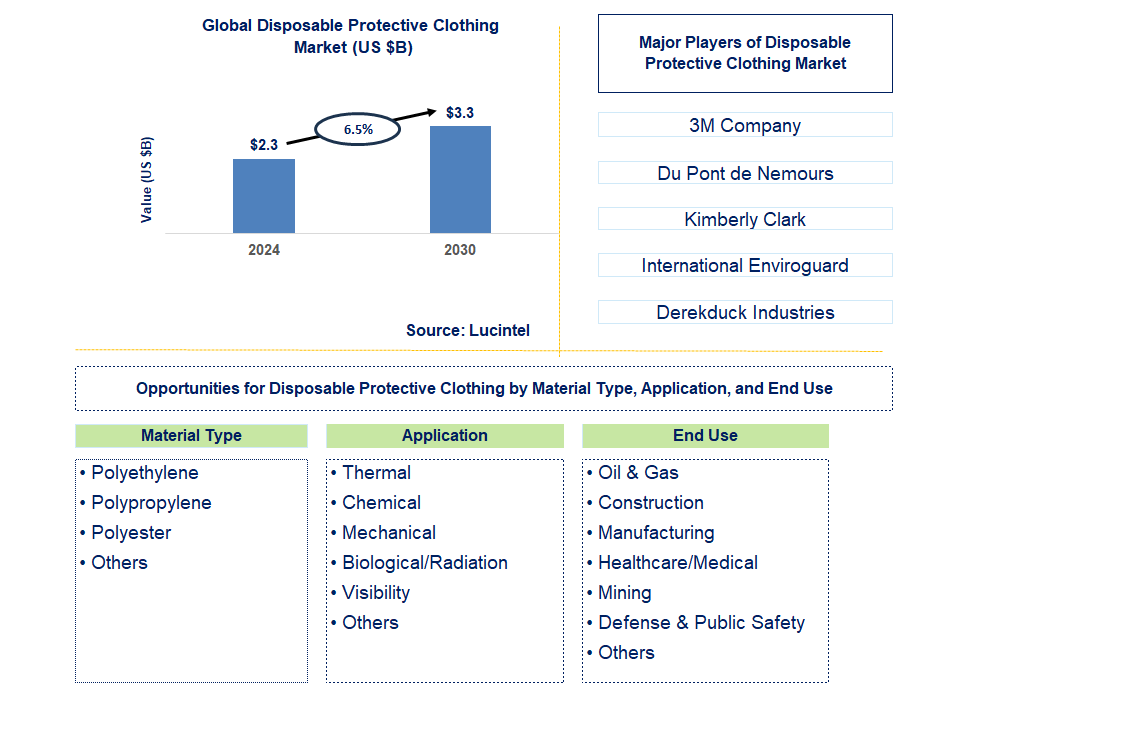
Key data points: The market size in 2030 = $3.3 billion, growth forecast = 6.5% annually for the next 6 years. Scroll below to get more insights. This market report covers trends, opportunities, and forecasts in the global disposable protective clothing market to 2030 by material type (polyethylene, polypropylene, polyester, and others), application (thermal, chemical, mechanical, biological/radiation, visibility, and others), end use (oil & gas, construction, manufacturing, healthcare/medical, mining, defense & public safety, and others), and region (North America, Europe, Asia Pacific, and the Rest of the World)
We'll send your sample report shortly.
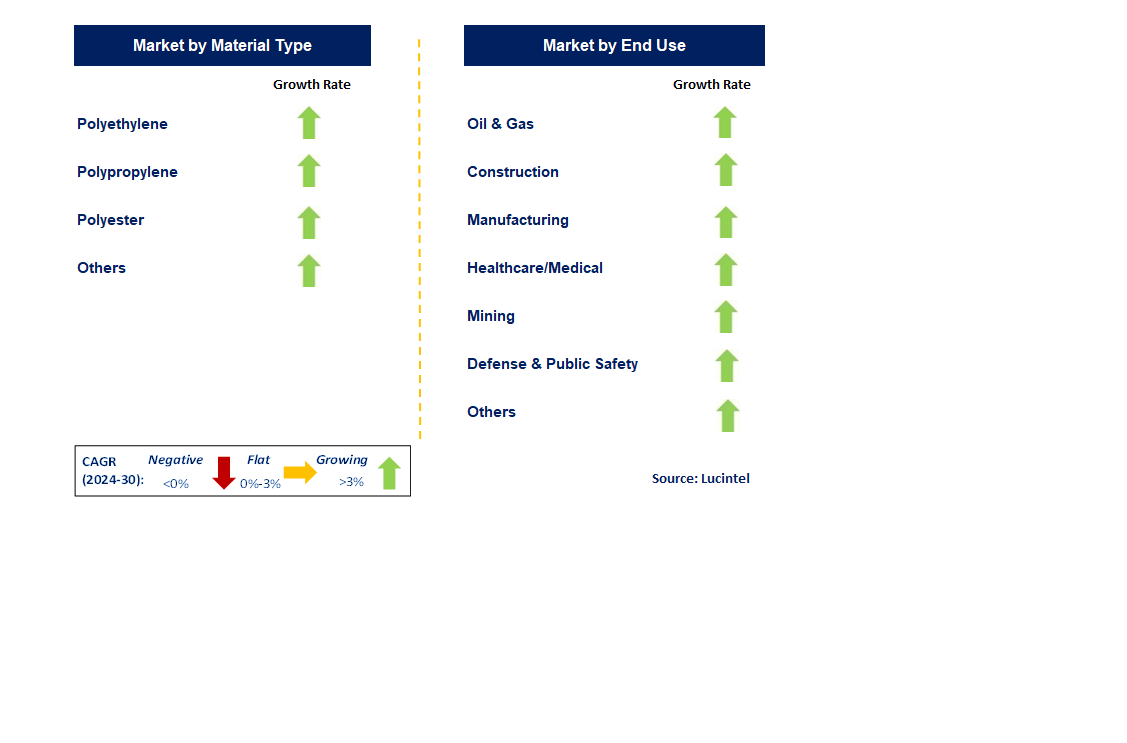
• Lucintel forecasts that, within the material type category, polyethylene is expected to witness the highest growth over the forecast period as it provides a strong line of defense for workers and reduces the cost of preventing accidents or injuries.
• Within the end use category, manufacturing will remain the largest segment due to the fact that several nations' governments have imposed safety laws on the manufacturing sector.
• In terms of regions, North America will remain the largest region over the forecast period due to rising awareness towards healthy practices and their growing desire for non-woven clothing that provides better protection against contamination. Gain valuable insights for your business decisions with our comprehensive 150+ page report.
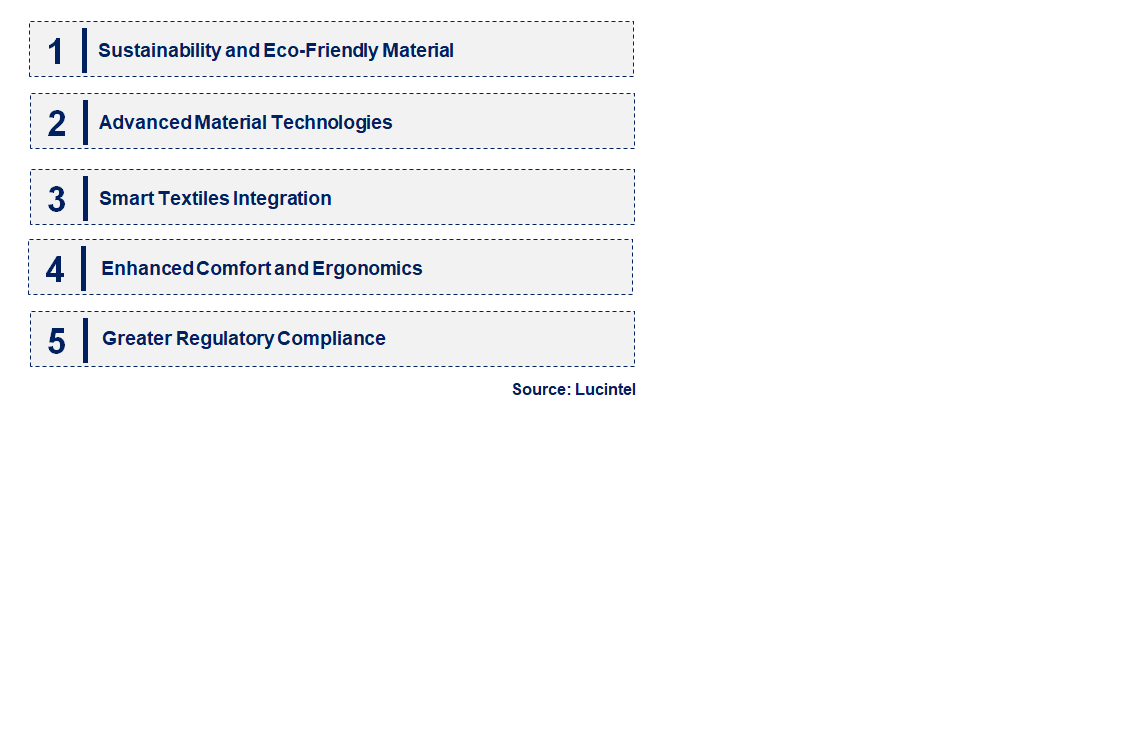
• Sustainability and Eco-Friendly Materials: Disposable protective clothing increasingly uses biodegradable and recyclable materials. This shift aims to minimize environmental impact and address regulatory and consumer demands for greener products.
• Advanced Material Technologies: Innovations in material technology are enhancing the performance of disposable protective clothing. New fabrics offer improved protection, breathability, and comfort, catering to various industries ranging from healthcare to industrial applications.
• Smart Textiles Integration: The integration of smart textiles is becoming more prevalent. These textiles feature temperature control, antimicrobial properties, and enhanced durability, catering to high-tech and specialized applications in sectors such as healthcare and aerospace.
• Enhanced Comfort and Ergonomics: There is a growing focus on improving the comfort and ergonomics of disposable protective clothing. Innovations aim to enhance wearability, reduce fatigue, and improve user experience, which is crucial for prolonged use in various industries.
• Greater Regulatory Compliance: Stricter regulatory requirements set higher performance and safety standards. Consequently, various types of disposable protective wear are under development to meet regulations and ensure compliance with international safety standards. These trends have reshaped the disposable protective clothing market toward sustainability, the integration of smart materials and technologies, comfort enhancement, and regulatory compliance. These drivers are fostering innovative ideas and addressing emerging industrial demands.
• Material Technology Advances: Developments are enhancing the protective capabilities of disposable clothing. Some of the latest innovations involve improved barrier properties and increased breathability for industries such as healthcare and manufacturing.
• Sustainability: The industry is focused on sustainability by using biodegradable and recyclable materials in disposable protective clothing. These efforts aim to reduce environmental impact and align with the global movement for sustainability.
• Changes in Regulation: Recent changes in legislation from various countries aim to improve the quality of protective clothing. Numerous manufacturing firms are adjusting their products to meet these new standards, ensuring safety and effectiveness.
• Medical Growth: With high demand in the healthcare sector, emphasis is placed on comfort and protection. Products are designed to meet stringent safety standards, enhancing protection for patients and personnel.
• Integration of Technology: Advanced functionalities in disposable protective clothing are made possible through smart textiles. Such technologies offer additional features like temperature control and antimicrobial functions for specific needs. These factors drive the disposable protective clothing market through material development, sustainability concerns, compliance issues, and technological integration. Thus, product performance and the fulfillment of emerging requirements across different industries are being enhanced.
• Healthcare: The healthcare segment presents a significant opportunity for investment and growth. The industry faces increased demand due to rising health and safety standards, providing a solid market for disposable protective clothing that enables companies to expand their portfolios and develop innovative, high-performance products.
• Industrial Applications: Protection against specific hazards presents opportunities for growth in protective clothing across industries. Efforts may focus on developing products with longer lifespans and improved durability, catering to various industrial applications and providing better protection for workers.
• Sustainability Emphasis: A focus on sustainability opens growth opportunities in disposable protective clothing. Incorporating eco-friendly raw materials and processes aligns with global trends and increasing pressure from regulatory bodies, making the product appealing to environmentally conscious consumers and businesses.
• Technological Innovations: Other opportunities within the market involve technological innovations made possible through smart textiles. Integrated products with value-added features, such as temperature regulation and antimicrobial properties, find specialized applications and enhance user experience.
• Emerging Markets: Emerging markets that prioritize safety and quality will serve as growth areas. In these markets, affordable yet high-quality solutions can lead to market penetration and expansion. These are just a few potential growth areas in healthcare, industrial applications, sustainability, technological innovations, and emerging markets. By catering to these specific sectors, businesses can spur growth while meeting changing industry requirements.
• Technological Advancements: The demand for value-added disposable protective clothing continues to be triggered by innovative materials and manufacturing processes. New technologies have improved protection and comfort, offering higher functionality to serve specific industry needs.
• Increased Safety Awareness: Increasing safety awareness and hygiene standards, especially in healthcare and industrial sectors, is driving the demand for quality disposable protective clothing. This, in turn, is an excellent factor that improves product adoption and market growth.
• Regulatory Compliance: The imposition of high-level regulatory requirements associated with protective clothing products accelerates the development of higher-quality products. Their compliance ensures safety and efficiency, commanding market demand and ensuring product innovation.
• Medical Sector Growth: Growth in the healthcare industry expands demand for disposable protective clothing. Increased innovations to meet specific healthcare needs in terms of protection and comfort drive the market in this sector. Challenges in the disposable protective clothing market are:
• High Production Costs: The costs associated with the development and manufacturing of sophisticated disposable protective wear can be substantial. This adds to pricing, potentially hindering the prospects of smaller companies and new entrants in the market.
• Regulatory Complexity: Navigating the complex and multifaceted regulations of different regions poses challenges. Compliance with diverse standards increases the burden when developing and distributing protective clothing. The growth of the disposable protective clothing market is attributed to technological development, heightened safety awareness, adherence to regulatory compliance, sustainability trends, and growth in the healthcare sector. High production costs, regulatory complexities, and market competition present significant challenges. Balancing these drivers and challenges will facilitate successful navigation and growth in the market.
• 3M Company
• Du Pont de Nemours
• Kimberly Clark
• International Enviroguard
• Derekduck Industries
• Polyethylene
• Polypropylene
• Polyester
• Others
• Thermal
• Chemical
• Mechanical
• Biological/Radiation
• Visibility
• Others
• Oil & Gas
• Construction
• Manufacturing
• Healthcare/Medical
• Mining
• Defense & Public Safety
• North America
• Europe
• Asia Pacific
• The Rest of the World
• United States: Demand for disposable protective clothing has increased due to higher safety standards and enhanced regulatory needs in industries such as healthcare and manufacturing. Innovations include the development of higher-performance materials and improved comfort features.
• China: In China, production capacity for disposable protective clothing is expanding, with efforts directed toward enhancing the protective quality of garments. The adoption of advanced non-woven fabrics and improved protective features in line with domestic and international standards marks recent progress.
• Germany: Germany leads in the development of environmentally friendly disposable protective wear. Recent advancements focus on biodegradable materials or those with low environmental impact, reinforcing the nation's commitment to sustainability.
• India: In India, there is an increased emphasis on affordable, high-quality disposable protective clothing for healthcare and industrial applications. Innovations aim to provide budget-friendly solutions while enhancing material technology for better protection and comfort in various environments.
• Japan: Japan is enhancing its disposable protective clothing by integrating smart textiles into the fabric. New products featuring high-performance materials with temperature regulation and antimicrobial functions are being introduced, targeting high-tech and healthcare applications.


• 3M Company
• Du Pont de Nemours
• Kimberly Clark
• International Enviroguard
• Derekduck Industries Q6. Which disposable protective clothing market segment will be the largest in future? Answer: Lucintel forecasts that polyethylene is expected to witness the highest growth over the forecast period as it provides a strong line of defense for workers and reduces the cost of preventing accidents or injuries. Q7. In disposable protective clothing market, which region is expected to be the largest in next 5 years? Answer: North America will remain the largest region over the forecast period due to rising awareness towards healthy practices and their growing desire for non-woven clothing that provides better protection against contamination. Q.8 Do we receive customization in this report? Answer: Yes, Lucintel provides 10% customization without any additional cost.


Choose a license that fits your team. Instant PDF delivery.
Prices exclude taxes. Instant delivery. Custom licensing available on request.
Market Report · May 18, 2026
Market Report · May 18, 2026
Market Report · May 18, 2026
Trusted partner for strategic intelligence and business growth


Receive a complimentary market analysis tailored to your industry. Our analysts will identify key growth opportunities and competitive dynamics specific to your business.

Market size, growth rate, and key trend analysis for your specific sector.

Top competitor positioning and market share analysis.

Strategic recommendations backed by data-driven insights.
Get curated market intelligence and competitive moves straight to your inbox.
By subscribing, you agree to receive our monthly insights. Unsubscribe anytime.
Receive a complimentary market analysis tailored to your industry. Our analysts will identify key growth opportunities and competitive dynamics specific to your business.
Market size, growth rate, and key trend analysis for your specific sector.
Top competitor positioning and market share analysis.
Strategic recommendations backed by data-driven insights.
Get curated market intelligence, emerging trends, and competitive moves straight to your inbox each month.
By subscribing, you agree to receive our monthly insights. Unsubscribe anytime.
We'll send your sample report shortly.