
Market Report · May 18, 2026

This market report covers trends, opportunities, and forecasts in the global display controller market to 2031 by technology (digital display controller, smart display controller, touch screen controller, multi-display controller, and others), application (medical equipment, office automation, mobile communication devices, industrial control, entertainment & gaming, and others), and region (North America, Europe, Asia Pacific, and the Rest of the World)
We'll send your sample report shortly.
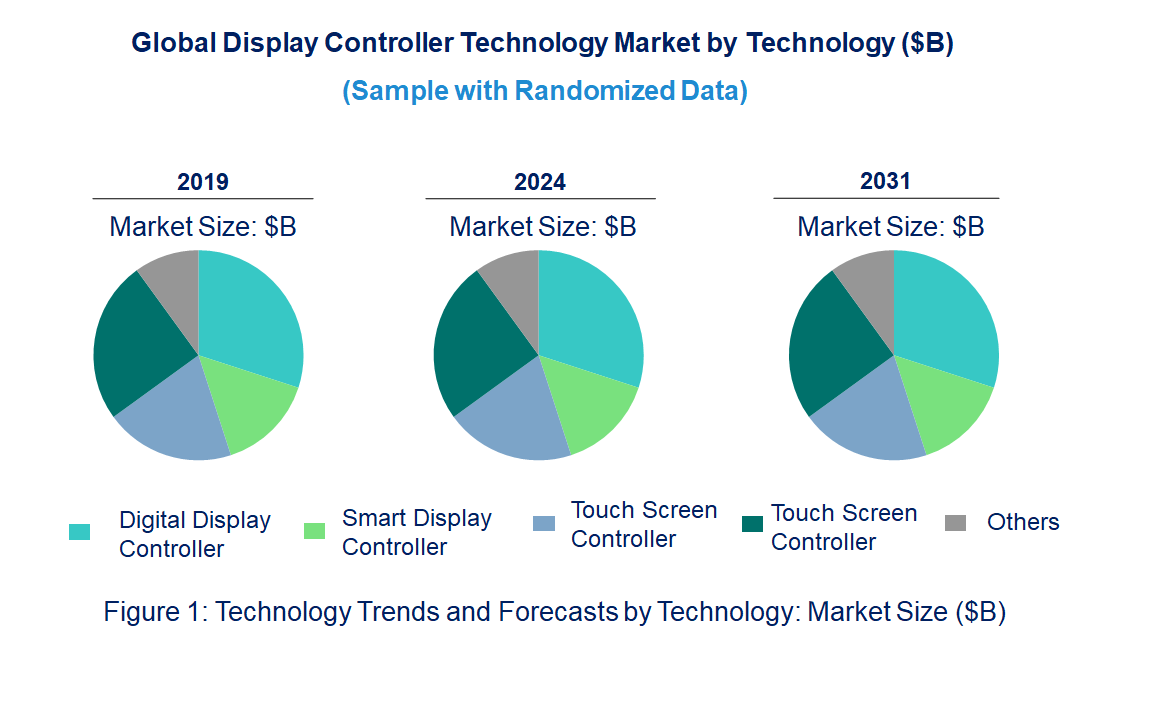
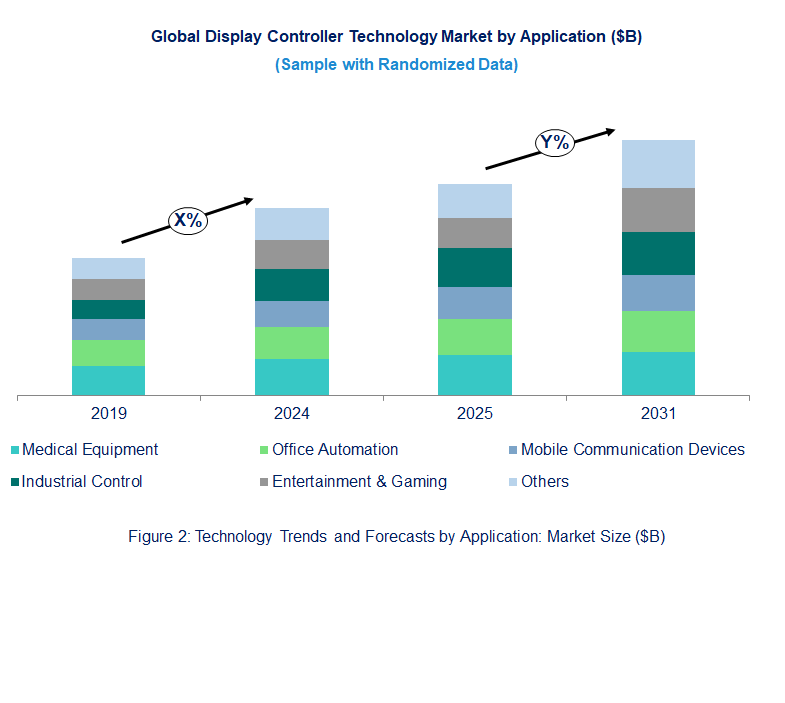
• Utilization of Smart Display Controllers: More devices are being incorporated with smart display controllers to achieve more interactive and user-friendly interfaces. Smart display controllers use elements like AI and ML to enhance user experience by optimizing lighting and display performance for power savings.
• Changes in Control Focus from Active Buttons to Touch Control: There is a marked trend moving away from buttons towards touch. Classic touchscreen controllers were limited to simple gestures, but modern ones feature multi-touch, advanced gesture recognition, and are significantly faster, allowing for easier use of mobile devices and consumer electronics.
• Development of Multi-Display Emerging Trends: Simultaneous multi-display viewing is becoming a required trend for various applications such as gaming, surveillance, and control systems. The use of multi-display controllers increases productivity and enhances visuals by eliminating the need for switching between multiple screens, which is beneficial in entertainment and industrial control environments.
• Integration for Higher Resolution and 4K/8K Support: High-resolution displays are witnessing demand, and display controllers now support 4K and even 8K displays. This is evident in the medical imaging and entertainment industries, where high-quality images are required for diagnosis and immersion.
• Energy-Efficient and Eco-Friendly Solution: As sustainability becomes a stronger concern across industries, display controller vendors are under pressure to innovate. New display technologies like OLED and microLED, combined with energy-efficient controllers, help reduce energy consumption and increase the operating duration of devices, making them suitable for long-term use. All these trends are driven by the need and growth of smarter, better-performing, and more advanced display technologies for multiple uses. Such trends are likely to define the future of display technologies by driving the evolving market across a wide range of industries and positively transforming consumer experiences.
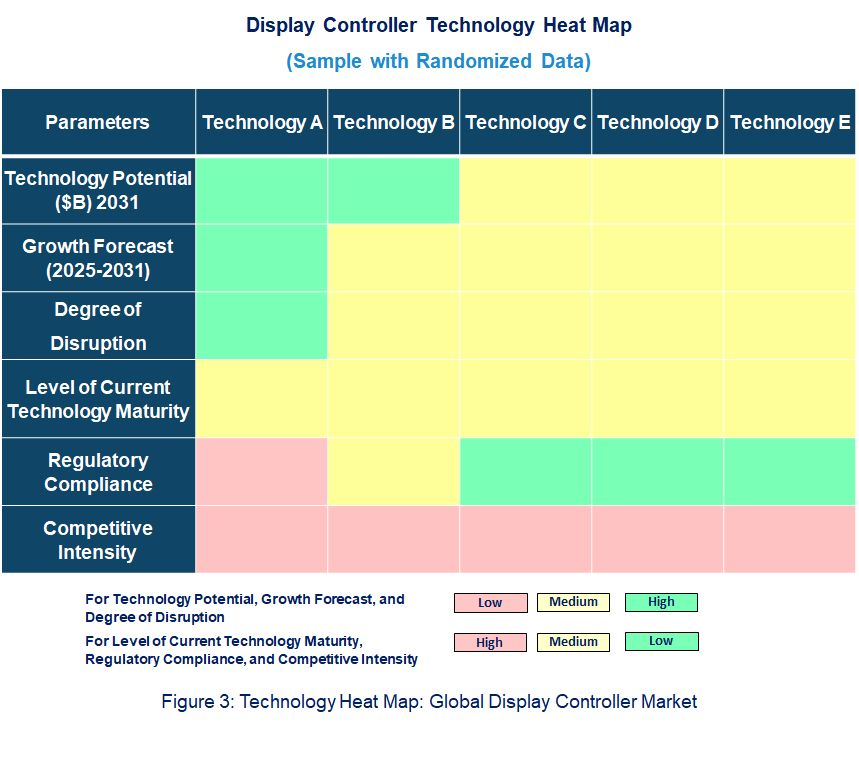
• Potential in Technology: These technologies provide new opportunities for various sectors, especially medical devices, entertainment, and mobile phones, to create more engaging and effective display systems. For example, smart display controllers respond to user needs in real time, making the device smart and intuitive. The shift to high-definition TVs capable of resolutions as high as 4K or 8K greatly improves visual quality in applications like imaging systems.
• Degree of Disruption: Disruption potential can occur when multi-display technologies, such as solid pixel production, become more common. These technologies have the potential to be highly disruptive due to the relative ease of production and the increasing focus on energy efficiency. Industry trends are shifting rapidly, with the focus on energy efficiency becoming more pronounced.
• Current Technology Maturity Level: As of now, technological maturity levels vary across these innovations. Despite touchscreen and digital display controller technologies being fully mature, the advanced AI integration in many multi-display solutions is still in the early stages of deployment.
• Regulatory Compliance: Compliance with regulatory requirements is also critical, especially in medicine and industry, where strict rules exist regarding safety and efficiency testing. Manufacturers must ensure their devices comply with regulatory requirements to be accepted in markets such as the EU and the US, which have high levels of regulatory compliance.
• Samsung Electronics: To enhance user display quality and interaction in the company’s smart TVs and mobile devices, Samsung has incorporated AI and machine learning techniques into its smart display controllers.
• LG Display: LG has shifted focus to OLED and microLED display technologies, with controllers offering better energy efficiency and image quality, which are expected to disrupt the consumer appliances sector, particularly televisions.
• Texas Instruments: Texas Instruments has improved its DLP (Digital Light Processing) technology, expanding the scope of display controllers for projectors and high-definition visual systems in both professional and consumer markets.
• Toshiba: Toshiba has focused on extending its display controller solutions for automotive applications, particularly in the development of ADAS, and improving embedded display interfaces in connected cars.
• Novatech Microelectronics: Novatech has broadened its custom display controller offerings for industrial and medical device markets, focusing on higher resolution displays and real-time image processing.
• Intersil: Intersil has launched low-power display controllers for mobile and wearable devices, optimizing battery life while delivering high-quality images, crucial in today’s mobile-centric world.
• Seiko Epson: Seiko Epson has been researching advanced controllers for inkjet and digital signage display applications, utilizing its microdisplay technologies to create efficient business solutions. Industry leaders are proactively working to improve the efficiency and quality of display controllers while meeting new consumer and industrial requirements, driving the development of the display controller market in the future.
• Increased Use of 4K and 8K Displays in the Consumer Market: The trend toward 4K and 8K displays has created a huge demand for display controllers capable of processing high-resolution content. This will propel further development of display controller technologies as the demand for better image and performance quality rises.
• Increased Demand for Advanced Display Controllers for Portable Smartphones, Tablets, and Smart TVs: The continued growth in the number of these devices drives growth in the display controller market. Trends like better screen resolution, touchscreen capabilities, and low power consumption are critical for handheld devices.
• Progress with Touch-Screen Technology and Smart Screens: These technologies make devices more interactive, flexible, and customizable, thus paving the way for several industries like consumer electronics, automotive, and healthcare. The integration of AI, machine learning, and IoT in display controllers for smart displays and touchscreens is expanding application possibilities.
• Increase in Automotive Display Systems: The growing penetration of advanced driver-assistance systems (ADAS) and in-vehicle infotainment systems is increasing the demand for advanced display controllers in the automotive sector. The need for multi-display systems and energy-efficient solutions is strong in mainstream industries.
• Increase in Industrial and Medical Usage: The demand for display controllers is growing due to the need for precision, reliability, and performance in high-quality displays for medical devices, industrial control systems, and other niche applications. Challenges:
• Considerable Development and Production Costs: Research and development for display controller technology can be costly. Smaller companies may struggle to compete effectively due to these high costs, which may affect their market presence.
• Regulations and Compliance Issues: Rigorous regulatory requirements, especially in sectors like healthcare, automotive, and aerospace, make product development cumbersome and lengthen time to market.
• Complexity of Multi-Display Systems: The increasing use of multi-display systems in various industries requires intricate design and integration, presenting challenges in efficiency and reliability.
• Supply Chain Disruptions and Component Shortages: Global chipset shortages and supply chain disruptions have had significant impacts on manufacturing companies, hindering their ability to meet the growing demand for improved display systems.
• Rapid Technological Change: As display technologies evolve, older gadgets and controllers can become outdated. Companies must innovate to retain their competitiveness, which can be challenging for established firms. These drivers and challenges have created a turbulent state in the display controller market. However, new growth opportunities are emerging in consumer electronics, automotive, and medical sectors, alongside challenges like high costs and legal considerations. The market is expected to continue advancing with more energy-efficient and interactive display systems.
• Samsung Electronic
• LG display
• Texas Instrument
• Toshiba
• Novatech Microelectronics
• Intersil
• Digital Display Controller: Fully adopted in recreational devices with moderate or low regulatory impediments.
• Smart Display Controller: Developing rapidly with the incorporation of AI, subject to legal regulations within medical applications.
• Touch Screen Controllers: Well-developed, commonly used in consumer electronics, and regulated for safety and functionality.
• Multi-Display Controller: Moderately mature, increasingly used in professional and entertainment industries, with regulatory compliance focusing on interoperability and safety.
• Others: Technologies like OLED and microLED are under development but have a strong likelihood of being game-changers, with regulatory concerns regarding energy consumption and environmental impact. Competitive Intensity and Regulatory Compliance:
• Digital Display Controller: Moderately competitive, as many firms have already established themselves in this market segment. The regulatory environment is mostly related to consumer devices.
• Smart Display Controller: Fierce competition from both large and small companies, with rigorous regulations, especially in medical and automotive areas.
• Touch Screen Controller: Highly competitive due to the popularity of this technology. Regulations focus on strength and reliability.
• Multi-Display Controller: An increasingly competitive market in industrial and entertainment sectors, subject to safety and interoperability requirements.
• Others: Small market segments with strong competition in specific applications, such as medical displays, which have dense standards for precision and dependability. Disruption Potential by Technology Type:
• Digital Display Controller: Although widely used, it has moderate disruption potential due to competition from more efficient and interactive technologies.
• Smart Display Controller: It has high disruption potential due to the integration of AI and machine learning, which enhances the user experience and dynamic content coverage.
• Touch Screen Controller: It has high disruption potential, changing the way user interfaces are used in all types of devices from smartphones to industrial machines, leading to enhanced control and increased demand.
• Multi-Display Controller: It is bringing radical changes to industries like gaming, surveillance, and control rooms, improving effectiveness and providing a richer visual experience.
• Others: New technologies like microLED and OLED controllers could disrupt the market with higher energy efficiency and improved image quality, but they are still in the nascent stage.
• Digital Display Controller
• Smart Display Controller
• Touch Screen Controller
• Multi-Display Controller
• Others
• Medical Equipment
• Office Automation
• Mobile Communication Devices
• Industrial Control
• Entertainment & Gaming
• Others
• North America
• Europe
• Asia Pacific
• The Rest of the World
• Latest Developments and Innovations in the Display Controller Technologies
• Companies / Ecosystems
• Strategic Opportunities by Technology Type


Choose a license that fits your team. Instant PDF delivery.
Prices exclude taxes. Instant delivery. Custom licensing available on request.
Market Report · May 18, 2026
Market Report · May 18, 2026
Market Report · May 18, 2026
Trusted partner for strategic intelligence and business growth


Receive a complimentary market analysis tailored to your industry. Our analysts will identify key growth opportunities and competitive dynamics specific to your business.

Market size, growth rate, and key trend analysis for your specific sector.

Top competitor positioning and market share analysis.

Strategic recommendations backed by data-driven insights.
Get curated market intelligence and competitive moves straight to your inbox.
By subscribing, you agree to receive our monthly insights. Unsubscribe anytime.
Receive a complimentary market analysis tailored to your industry. Our analysts will identify key growth opportunities and competitive dynamics specific to your business.
Market size, growth rate, and key trend analysis for your specific sector.
Top competitor positioning and market share analysis.
Strategic recommendations backed by data-driven insights.
Get curated market intelligence, emerging trends, and competitive moves straight to your inbox each month.
By subscribing, you agree to receive our monthly insights. Unsubscribe anytime.
We'll send your sample report shortly.