
Market Report · July 22, 2026

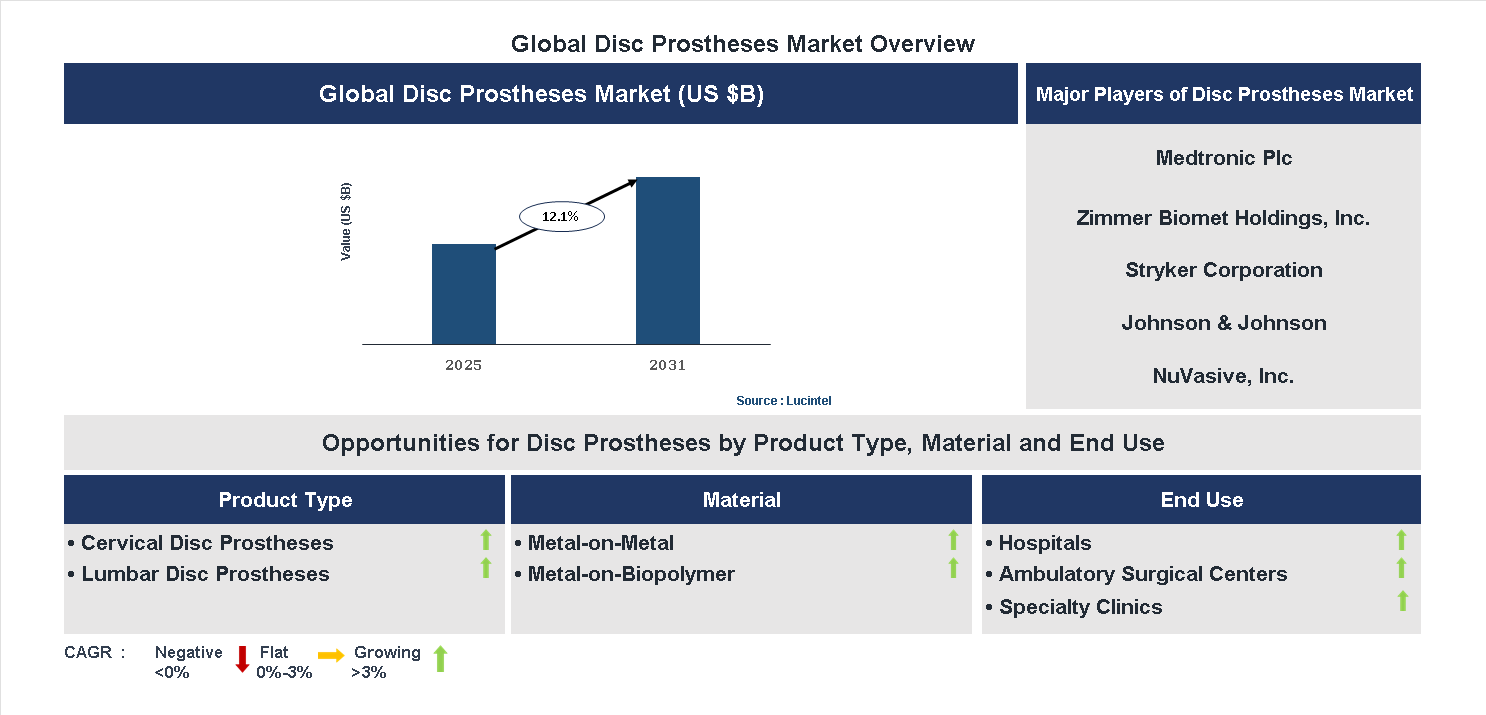
Key data points: The growth forecast = 12.1% annually for the next 7 years. Scroll below to get more insights. This market report covers trends, opportunities and forecasts in disc prostheses market to 2031 by product type (cervical disc prostheses and lumbar disc prostheses), material (metal-on-metal and metal-on-biopolymer), end use (hospitals, ambulatory surgical centers, and specialty clinics), and region (North America, Europe, Asia Pacific, and the Rest of the World)
We'll send your sample report shortly.
• Lucintel forecasts that, within the product type category, cervical disc prostheses is expected to witness higher growth over the forecast period.
• Within the end use category, hospital is expected to witness the highest growth.
• In terms of region, North America is expected to witness the highest growth over the forecast period. Gain valuable insights for your business decisions with our comprehensive 150+ page report. Sample figures with some insights are shown below.
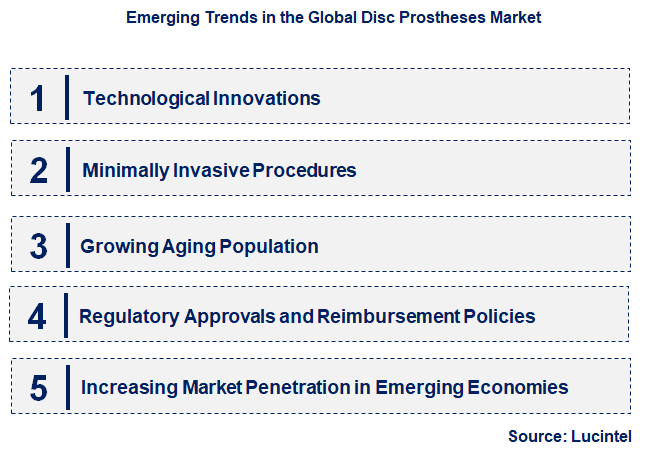
• Technological Innovations: Advancements in materials and design are leading to more durable, biocompatible, and customizable disc prostheses. Innovations such as 3D printing and smart implants enable personalized solutions, improving fit and function. These developments reduce complications, enhance patient recovery, and expand indications for use, thereby driving market growth and competitiveness.
• Minimally Invasive Procedures: The shift towards minimally invasive surgical techniques is reducing patient recovery time, minimizing scarring, and lowering complication rates. These procedures are increasingly preferred by surgeons and patients alike, leading to higher adoption rates. The market benefits from increased demand for outpatient surgeries and faster patient turnover, fostering innovation in device design and surgical tools.
• Growing Aging Population: An aging demographic worldwide is experiencing higher incidences of degenerative disc diseases, fueling demand for effective treatment options like disc prostheses. This demographic shift is expanding the patient base, prompting manufacturers to develop age-specific solutions and invest in research to improve long-term outcomes, thus propelling market expansion.
• Regulatory Approvals and Reimbursement Policies: Evolving regulatory landscapes and improved reimbursement frameworks are facilitating market entry for new products. Clearer approval pathways and insurance coverage encourage adoption among healthcare providers and patients. This trend accelerates innovation, supports commercialization, and enhances market stability by reducing barriers to access.
• Increasing Market Penetration in Emerging Economies: Rising healthcare infrastructure, increasing awareness, and economic growth are driving market penetration in developing regions. Companies are expanding distribution channels and establishing local manufacturing units to cater to these markets. This trend broadens the global footprint of disc prostheses, offering significant growth opportunities and diversifying revenue streams. In summary, these emerging trends are collectively transforming the disc prostheses market by fostering innovation, expanding access, and improving patient outcomes. They are reshaping industry strategies, encouraging technological breakthroughs, and opening new markets, ultimately leading to a more dynamic and patient-centric landscape.
• Technological Integration: New materials and design improvements have enhanced device durability and biocompatibility, leading to better patient outcomes and increased adoption rates.
• Regulatory Approvals: Recent approvals by health authorities have expanded the availability of advanced disc prostheses, facilitating market growth and encouraging innovation.
• Minimally Invasive Procedures: The shift towards less invasive surgical techniques has increased demand for disc prostheses, reducing recovery times and improving patient satisfaction.
• Customization and Personalization: Advances in imaging and manufacturing enable tailored implants, improving fit and function, and boosting market competitiveness.
• Market Expansion in Emerging Regions: Growing healthcare infrastructure and awareness in developing countries are opening new markets, contributing to global growth. These developments are collectively driving the disc prostheses market towards increased innovation, broader accessibility, and improved patient care, ultimately fostering sustained growth and competitive advantage.
• Minimally Invasive Procedures: Adoption of minimally invasive disc prostheses is increasing, reducing recovery times and surgical risks. This growth enhances patient acceptance and broadens the scope of treatment options, leading to higher adoption rates and expanding market reach.
• Customizable Prostheses: Development of customizable disc prostheses allows for tailored solutions based on patient anatomy, improving surgical outcomes. This innovation boosts confidence among surgeons and attracts more patients seeking personalized treatment options.
• Biocompatible Materials: Advancements in biocompatible and durable materials improve prosthesis longevity and reduce complications. These developments increase device reliability, encouraging wider acceptance and fostering market growth.
• Regenerative Technologies: Integration of regenerative medicine with disc prostheses offers potential for biological repair and regeneration of spinal discs. This approach could revolutionize treatment, reducing the need for revision surgeries and expanding market opportunities.
• Regional Market Expansion: Growing healthcare infrastructure in emerging markets presents significant growth potential. Increased awareness, improved access, and government initiatives are driving adoption, making these regions key growth areas. In summary, these growth opportunities are significantly impacting the disc prostheses market by fostering innovation, expanding access, and improving patient outcomes. As technological and regional developments continue, the market is poised for substantial growth, driven by the increasing demand for effective spinal treatment solutions.
• Technological Advancements: The development of innovative materials and minimally invasive surgical techniques has significantly improved the safety, efficacy, and durability of disc prostheses. These advancements enable better patient outcomes, reduce recovery times, and expand the applicability of disc replacement procedures. As research continues, new designs and materials are expected to further enhance performance, making the procedures more accessible and appealing to both surgeons and patients. This ongoing innovation fuels market growth by increasing acceptance and adoption worldwide.
• Rising Prevalence of Spinal Disorders: The increasing incidence of degenerative disc disease, herniated discs, and other spinal conditions, especially among aging populations, is a major driver. As the global population ages, the demand for effective, long-term solutions, such as disc prostheses, grows. This trend is further supported by sedentary lifestyles and rising obesity rates, which contribute to spinal issues. The growing patient pool creates a substantial market opportunity for manufacturers and healthcare providers, encouraging investment and development in disc replacement technologies.
• Increasing Awareness and Acceptance: Growing awareness among patients and healthcare professionals about the benefits of disc prostheses over traditional treatments, such as spinal fusion, is boosting market growth. Educational campaigns, clinical research, and positive patient outcomes have contributed to increased acceptance. Surgeons are more confident in recommending disc replacement procedures, which are associated with preserving spinal mobility and reducing adjacent segment degeneration. This shift in perception is expanding the market reach and encouraging adoption across various regions.
• Favorable Reimbursement Policies: The expansion of insurance coverage and reimbursement policies for disc replacement surgeries in many countries has made these procedures more financially accessible. Improved reimbursement frameworks reduce out-of-pocket expenses for patients, thereby increasing procedure volumes. Governments and private insurers, recognizing the long-term cost benefits of disc prostheses over more invasive or recurrent treatments, further support market growth. These policies are crucial in driving adoption, especially in emerging markets where cost barriers previously limited access. The challenges in the disc prostheses market are:-
• High Procedural Costs: The cost of disc replacement surgeries remains a significant barrier to widespread adoption. Advanced prosthetic devices, specialized surgical techniques, and postoperative care contribute to high expenses. These costs can limit access for patients in low- and middle-income countries and may deter healthcare providers from offering these procedures routinely. Additionally, the lack of standardized pricing and reimbursement disparities across regions further complicate market expansion, necessitating efforts to reduce costs and improve affordability.
• Regulatory and Approval Hurdles: Stringent regulatory requirements and lengthy approval processes for new disc prosthesis devices pose challenges for manufacturers. Ensuring safety, efficacy, and quality standards involves extensive clinical trials and documentation, which can delay product launches and increase costs. Variability in regulatory frameworks across countries complicates international market entry. These hurdles can slow innovation, limit product availability, and impact the overall growth trajectory of the market.
• Technological Limitations and Complications: Despite advancements, some disc prostheses face issues such as device wear, migration, or failure over time. Complications like infection, nerve damage, or adverse reactions can also occur, affecting patient outcomes and confidence in the technology. Ongoing research aims to address these limitations, but technological challenges remain a barrier to widespread acceptance. Ensuring long-term durability and safety is critical for market sustainability and patient trust. In summary, the disc prostheses market is driven by technological innovations, increasing disease prevalence, and supportive policies, which collectively foster growth. However, high costs, regulatory complexities, and technological limitations pose significant challenges. Balancing these factors will be crucial for market stakeholders to optimize opportunities and mitigate risks. Overall, the markets future depends on continued innovation, cost reduction, and streamlined regulatory pathways, which will determine its ability to meet the growing demand for effective spinal solutions worldwide.
• Medtronic Plc
• Zimmer Biomet Holdings, Inc.
• Stryker Corporation
• Johnson & Johnson
• NuVasive, Inc.
• Globus Medical, Inc.
• B. Braun Melsungen AG
• Orthofix Medical Inc.
• Centinel Spine, LLC
• Spineart SA
• Cervical Disc Prostheses
• Lumbar Disc Prostheses
• Metal-on-Metal
• Metal-on-Biopolymer
• Hospitals
• Ambulatory Surgical Centers
• Specialty Clinics
• North America
• Europe
• Asia Pacific
• The Rest of the World
• United States: The US market has seen rapid adoption of advanced disc prostheses due to high healthcare expenditure, technological innovation, and a favorable regulatory environment. Key players are focusing on developing motion-preserving devices, and there is a growing preference for minimally invasive surgeries. The aging population and increasing cases of degenerative disc disease further propel market growth. Reimbursement policies and clinical research are also supporting market expansion, making the US a leader in disc prostheses innovation and adoption.
• China: China’s market is expanding due to rising healthcare infrastructure, increasing awareness of spinal disorders, and a large patient pool. Government initiatives to improve healthcare access and investments in medical device manufacturing are driving growth. Local companies are increasingly involved in R&D, and international players are entering the market through partnerships. The adoption of disc prostheses is growing, especially in urban centers, supported by a shift towards minimally invasive procedures and technological advancements.
• Germany: Germany’s market benefits from a well-established healthcare system, high healthcare expenditure, and a focus on innovative medical solutions. The country emphasizes evidence-based practices and clinical research, which supports the adoption of advanced disc prostheses. Growing geriatric populations and increasing cases of spinal degenerative conditions are key drivers. Additionally, Germany’s strong regulatory framework and collaboration with European markets facilitate the introduction of new products and technologies.
• India: India’s disc prostheses market is witnessing rapid growth due to increasing awareness, rising prevalence of spinal disorders, and expanding healthcare infrastructure. The government’s focus on improving healthcare access and affordability is encouraging adoption. Local manufacturers are emerging, offering cost-effective solutions, while international companies are expanding their presence. The trend towards minimally invasive surgeries and technological innovations is boosting market growth, especially in urban and semi-urban areas.
• Japan: Japan’s market is characterized by a high prevalence of degenerative spinal conditions linked to an aging population. The country’s focus on advanced medical technology and research supports the adoption of innovative disc prostheses. Government initiatives to promote minimally invasive procedures and improve healthcare infrastructure are contributing to market growth. Japan’s emphasis on quality and safety standards ensures the integration of cutting-edge devices, making it a significant market for disc prostheses in the Asia-Pacific region.


• Medtronic Plc
• Zimmer Biomet Holdings, Inc.
• Stryker Corporation
• Johnson & Johnson
• NuVasive, Inc.
• Globus Medical, Inc.
• B. Braun Melsungen AG
• Orthofix Medical Inc.
• Centinel Spine, LLC
• Spineart SA Q5. Which disc prostheses market segment will be the largest in future? Answer: Lucintel forecasts that, within the product type category, cervical disc prostheses is expected to witness higher growth over the forecast period. Q6. In disc prostheses market, which region is expected to be the largest in next 5 years? Answer: In terms of region, North America is expected to witness the highest growth over the forecast period. Q7. Do we receive customization in this report? Answer: Yes, Lucintel provides 10% customization without any additional cost.


Choose a license that fits your team. Instant PDF delivery.
Prices exclude taxes. Instant delivery. Custom licensing available on request.
Market Report · July 22, 2026
Market Report · July 22, 2026
Market Report · July 22, 2026
Trusted partner for strategic intelligence and business growth


Receive a complimentary market analysis tailored to your industry. Our analysts will identify key growth opportunities and competitive dynamics specific to your business.

Market size, growth rate, and key trend analysis for your specific sector.

Top competitor positioning and market share analysis.

Strategic recommendations backed by data-driven insights.
Get curated market intelligence and competitive moves straight to your inbox.
By subscribing, you agree to receive our monthly insights. Unsubscribe anytime.
Receive a complimentary market analysis tailored to your industry. Our analysts will identify key growth opportunities and competitive dynamics specific to your business.
Market size, growth rate, and key trend analysis for your specific sector.
Top competitor positioning and market share analysis.
Strategic recommendations backed by data-driven insights.
Get curated market intelligence, emerging trends, and competitive moves straight to your inbox each month.
By subscribing, you agree to receive our monthly insights. Unsubscribe anytime.
We'll send your sample report shortly.