
Market Report · July 22, 2026

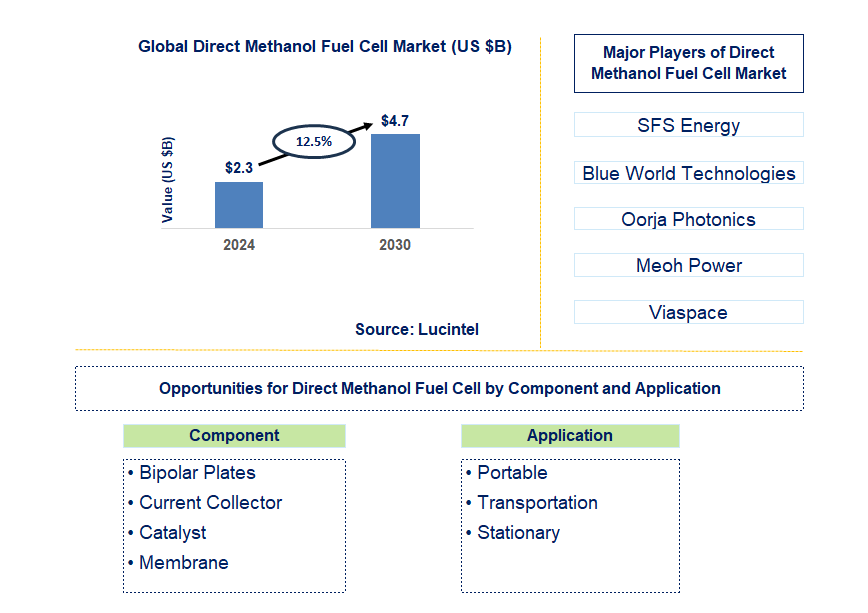
Key data points: The market size in 2030 = $4.7 billion, growth forecast = 12.5% annually for the next 6 years. Scroll below to get more insights. This market report covers trends, opportunities, and forecasts in the global direct methanol fuel cell market to 2030 by component (bipolar plates, current collector, catalyst, and membrane), application (portable, transportation, and stationary), and region (North America, Europe, Asia Pacific, and the Rest of the World)
We'll send your sample report shortly.
• Lucintel forecasts that, within the component category, bipolar plate will remain the largest segment over the forecast period because they conduct current between the cells and helps with water and heat control within the cell.
• In terms of regions, APAC will remain the largest region over the forecast period. Gain valuable insight for your business decisions with our comprehensive 150+ page report
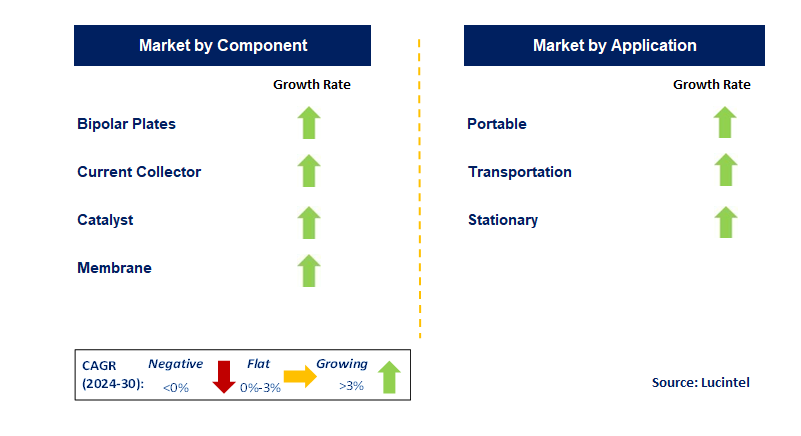
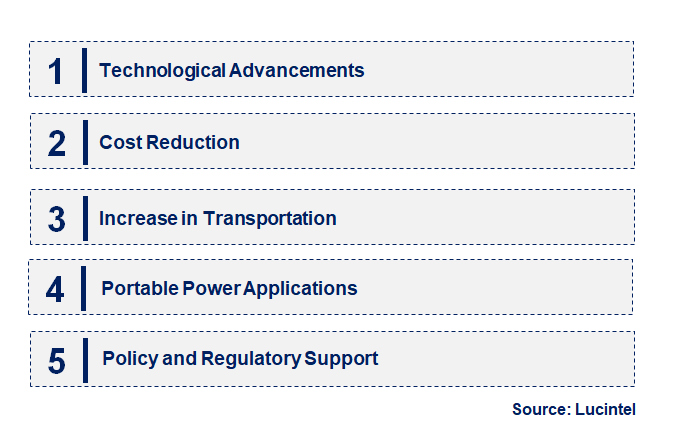
• Technological Advancements: Technological innovation is a dominant factor in DMFC market trends. Recent developments include improvements in catalyst materials and membrane technology for enhanced efficiency and durability. Miniaturization and integration are advancing to extend applications from portable electronics to larger power systems, enabling broader adoption and improved performance.
• Cost Reduction: Cost reduction is a key trend in DMFCs. Efforts include optimizing manufacturing processes and using lower-cost materials without performance loss. Cost reductions make DMFCs more competitive with other energy technologies, enabling wider adoption in commercial and consumer applications and scalability in DMFC systems.
• Increase in Transportation: DMFCs are increasingly used in transportation, from fuel cell vehicles to public transport. This growth is driven by the demand for cleaner alternatives to fossil fuels and infrastructure development supporting DMFCs in transport networks. Integration supports environmental objectives and enhances DMFC viability.
• Portable Power Applications: The demand for portable power is boosting DMFC use in consumer electronics and portable devices. Advances in miniaturization and efficiency allow longer-lasting, reliable power sources for mobile applications, driven by the growing need for high-performance portable energy.
• Policy and Regulatory Support: Government policies and regulations are increasingly supporting DMFC technology development and commercialization. Incentives, subsidies, and emission reduction targets stimulate investment and innovation, accelerating technological progress and market growth, thus making DMFCs competitive with other clean energy solutions. These emerging trends are transforming the Direct Methanol Fuel Cell market into a more advanced, affordable, and widely applied field. As the DMFC market evolves, these trends promise to shape the future of DMFCs and expand their application across sectors.
• Improved Fuel Cell Efficiency: Recent improvements have significantly enhanced DMFC efficiency. New catalyst materials and membrane technologies have boosted fuel cell performance and power output, improving energy conversion rates and operational lifespan, which makes DMFCs competitive across applications.
• Cost Reduction Initiatives: Efforts to reduce DMFC costs have made substantial progress. Manufacturing techniques have improved, and lower-cost materials are increasingly used, reducing production costs. This enhances DMFC accessibility and affordability, opening broader market applications.
• Increased Investment in R&D: Investment in DMFC research and development has surged. Both public and private sectors are funding projects to explore new materials and improve fuel cell design and system performance, accelerating technological innovation in the DMFC market.
• Expansion into New Markets: DMFC technology is expanding into new market areas like portable power sources and backup energy systems. Applications in consumer electronics, military equipment, and remote power generation are being explored, creating new revenue streams and applications that drive market growth.
• Strategic Partnerships and Collaborations: Partnerships among tech firms, research institutions, and government agencies foster DMFC innovation. These collaborations facilitate knowledge and resource sharing, accelerating the development and commercialization of DMFC systems. These developments are advancing the DMFC market by improving efficiency, reducing costs, and expanding applications. This wave of innovation and investment is setting the stage for further DMFC growth across various sectors.
• Portable Electronics: The high demand for portable electronics, such as laptops and smartphones, offers significant growth potential for DMFCs. Advancements in miniaturization and fuel cell efficiency allow extended usage times, enhancing performance in portable electronic systems.
• Backup Power Systems: DMFCs are increasingly used in backup power systems for critical infrastructure and remote locations, providing reliable power during outages or in off-grid areas. Rising demand for uninterruptible power supplies is boosting DMFC-based backup systems.
• Transportation: The transportation sector offers major growth opportunities for DMFCs. Integrating DMFCs in fuel cell vehicles and public transport systems aligns with the push for cleaner energy alternatives. DMFCs are a promising solution for emission reduction and sustainability in transport networks.
• Military and Defense: Military and defense applications are a significant DMFC market segment, where DMFCs provide portable and reliable power for equipment and field operations. The efficiency and long lifespan of DMFCs make them suitable for remote and challenging environments.
• Remote Power Generation: DMFC technology is valuable for remote power generation in off-grid areas and isolated research stations. In areas lacking conventional power grids, DMFCs offer a dependable and efficient energy source, driving demand for sustainable solutions in remote locations. These growth opportunities underscore the diverse applications and potential for DMFCs. With advancing technology and rising demand, DMFCs are expected to make a lasting impact across various sectors, driving market growth and innovation.
• Technological Advances: Ongoing improvements in DMFC technology, such as advancements in catalysts and membranes, drive market growth. Enhanced efficiency, durability, and miniaturization make DMFCs increasingly competitive with other energy technologies, broadening their potential applications and markets.
• Environmental Concerns: Growing environmental awareness and pressure to reduce carbon emissions have increased the demand for DMFCs. As a clean energy alternative, DMFCs are being adopted by governments and organizations aiming to meet sustainability objectives, supporting market growth.
• Government Incentives: Government incentives for clean energy technologies and subsidies support DMFC adoption. Policies promoting research and development, along with financial incentives for DMFC deployment, reduce technology costs and attract investment.
• Growing Demand for DMFC Technology: Rising global energy demand has fueled interest in alternatives like DMFCs. The need for reliable and portable power sources drives innovation and implementation of DMFC technology across applications, from portable electronics to backup power sources.
• Strategic Partnerships: Collaborations among technology companies, research institutions, and governments accelerate DMFC development. These partnerships facilitate knowledge sharing, resource exchange, and joint research, promoting market innovation and growth. Challenges in the DMFC market include:
• High Production Costs: High production costs remain a major challenge for DMFC systems due to the expensive materials and complex manufacturing processes involved. Reducing production costs is essential for making DMFCs more affordable and competitive.
• Fuel Supply Issues: The availability and cost of methanol fuel impact DMFC adoption. Supply chain constraints and fuel price fluctuations affect DMFC feasibility and reliability. Efficient fuel management strategies and infrastructure are necessary to address this issue.
• Competition from Alternative Technologies: DMFCs face competition from other clean energy technologies, such as hydrogen fuel cells and advanced batteries. To stand out, DMFC technology must highlight its unique benefits and applications. In summary, drivers such as technological advancements and supportive policies promote DMFC growth, while challenges like high production costs and competition from other technologies pose barriers. Addressing these challenges is critical for advancing DMFC technology and broadening its adoption.
• SFS Energy
• Blue World Technologies
• Oorja Photonics
• Meoh Power
• Viaspace
• Roland Gumpert
• Fujikura Limited
• Antig Technology
• Treadstone Technologies
• Horizon Fuel Cell Technologies
• Bipolar Plates
• Current Collector
• Catalyst
• Membrane
• Portable
• Transportation
• Stationary
• North America
• Europe
• Asia Pacific
• The Rest of the World
• United States: The DMFC market in the U.S. is growing due to increased investment in renewable energy and government incentives. Improvements in fuel cell efficiency and cost reductions have enhanced commercial viability. Partnerships between tech firms and research institutions support innovation, aiming to improve DMFC performance in portable electronics and backup power.
• China: China is accelerating DMFC development as part of its strategy to reduce fossil fuel reliance and combat air pollution. Substantial investments in research and development aim to improve fuel cell performance and reduce costs. Chinese manufacturers are expanding production for sectors like transportation and portable power, driven by domestic and international demand.
• Germany: The German DMFC market benefits from strong government support for green technology and a robust R&D infrastructure. Recent developments in fuel cell catalysts and membrane technology enhance efficiency and durability. DMFC integration into the renewable energy grid and transport systems supports Germany’s carbon reduction goals.
• India: In India, the DMFC market is attracting attention due to rising energy demand and government initiatives for clean energy. Targets focus on developing cost-effective and efficient DMFC systems for remote areas. Collaboration between Indian startups and international firms addresses challenges like high production costs and fuel availability.
• Japan: Japan is a leader in DMFC technology, focusing on miniaturization and efficiency. Japanese companies are incorporating DMFCs in sectors like portable electronics and public transportation. Government policies and funding for clean energy research support these advancements, positioning Japan as a key player in the global DMFC market.


• SFS Energy
• Blue World Technologies
• Oorja Photonics
• Meoh Power
• Viaspace
• Roland Gumpert
• Fujikura Limited
• Antig Technology
• Treadstone Technologies
• Horizon Fuel Cell Technologies Q6. Which direct methanol fuel cell market segment will be the largest in future? Answer: Lucintel forecasts that bipolar plate will remain the largest segment over the forecast period because they conduct current between the cells and helps with water and heat control within the cell. Q7. In direct methanol fuel cell market, which region is expected to be the largest in next 5 years? Answer:
• In terms of regions, APAC will remain the largest region over the forecast period. Q.8 Do we receive customization in this report? Answer: Yes, Lucintel provides 10% customization without any additional cost.


Choose a license that fits your team. Instant PDF delivery.
Prices exclude taxes. Instant delivery. Custom licensing available on request.
Market Report · July 22, 2026
Market Report · July 22, 2026
Market Report · July 17, 2026
Trusted partner for strategic intelligence and business growth


Receive a complimentary market analysis tailored to your industry. Our analysts will identify key growth opportunities and competitive dynamics specific to your business.

Market size, growth rate, and key trend analysis for your specific sector.

Top competitor positioning and market share analysis.

Strategic recommendations backed by data-driven insights.
Get curated market intelligence and competitive moves straight to your inbox.
By subscribing, you agree to receive our monthly insights. Unsubscribe anytime.
Receive a complimentary market analysis tailored to your industry. Our analysts will identify key growth opportunities and competitive dynamics specific to your business.
Market size, growth rate, and key trend analysis for your specific sector.
Top competitor positioning and market share analysis.
Strategic recommendations backed by data-driven insights.
Get curated market intelligence, emerging trends, and competitive moves straight to your inbox each month.
By subscribing, you agree to receive our monthly insights. Unsubscribe anytime.
We'll send your sample report shortly.