
Market Report · July 22, 2026

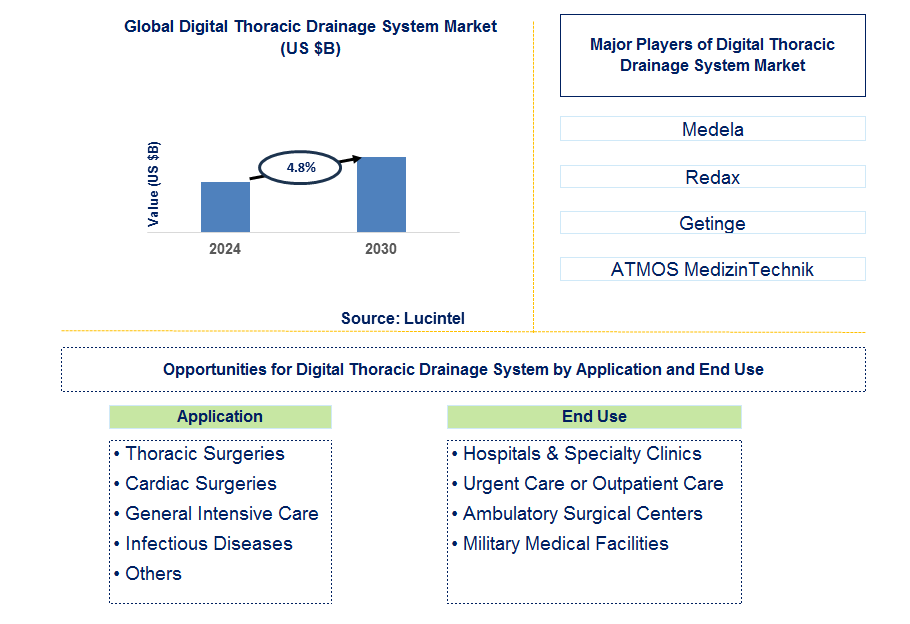
Key data points: The growth forecast = 4.8% annually for the next 6 years. Scroll below to get more insights. This market report covers trends, opportunities, and forecasts in the global digital thoracic drainage system market to 2030 by application (thoracic surgeries, cardiac surgeries, general intensive care, infectious diseases, and others), end use (hospitals & specialty clinics, urgent care or outpatient care, ambulatory surgical centers, and military medical facilities), and region (North America, Europe, Asia Pacific, and the Rest of the World)
We'll send your sample report shortly.
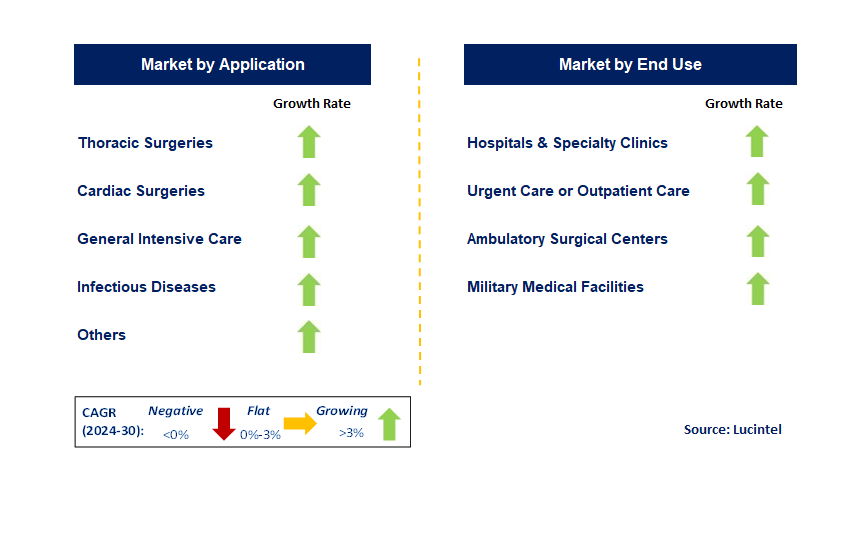
• Lucintel forecasts that, within the application category, thoracic surgery will remain the largest segment over the forecast period as it helps in improving drainage management and reducing risk of complications.
• Within the end use category, hospitals & specialty clinics will remain the largest segment due to wider range and higher volume of patients compared to other healthcare settings.
• In terms of regions, North America will remain the largest region over the forecast period due to growing prevalence of respiratory diseases and high adoption rate of advanced medical technologies in the region. A more than 150-page report is developed to help in your business decisions.
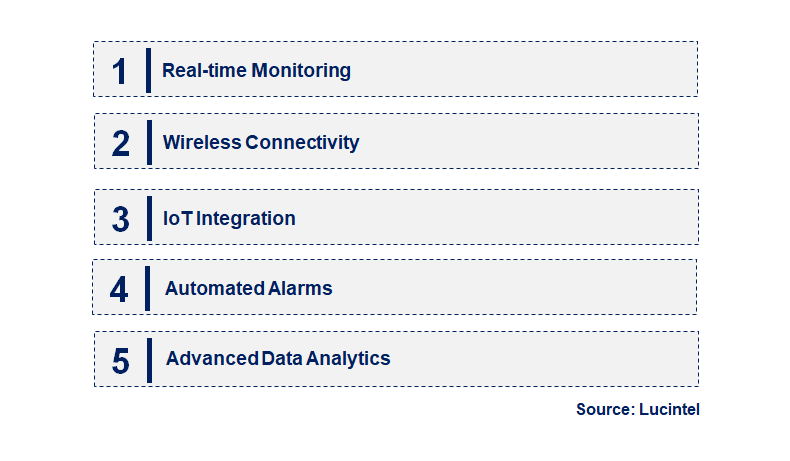
• Real-time Monitoring: Creation of systems in which the drainage volume and internal cavity pressure can be controlled, with feedback provided to the clinician in real time.
• Wireless Connectivity: Provision of a wireless monitoring link over the internet to assist in transmitting data easily and improving usage.
• IoT Integration: Use of IoT to improve data collection and control, as the thoracic drainage systems will be managed remotely.
• Automated Alarms: The system generates alarms by means of a specialized automated process in case there are critical changes in the health of a patient, which are accessible to healthcare providers.
• Advanced Data Analytics: This is done with the support of advanced data analytics, helping to improve clinical decision-making and the quality of patient services offered.
• User-friendly Interfaces: Interface design and further development of the tool have focused on ease of interaction and understanding, especially for training purposes.
• AI and Machine Learning: Investigation into the use of AI and machine learning technologies has revealed potential for patient-centered treatment practices through predictive analysis. The trend observed in the digital thoracic drainage system market highlights the increase in technology, as well as the adoption of digital health solutions to deliver better patient care and enhance workflow.
• Technological Enhancements: Provision of advanced digital systems with embedded capabilities to monitor drainage volume and pressure.
• Improved Accuracy: Development of more reliable and accurate systems to solve problems caused by traditional drainage systems.
• Cost-effective Solutions: New, more affordable digital drainage system designs have been developed to reach out to developing regions.
• Integration of IoT: Incorporation of IoT features for better clinical management through remote tracking and data provision.
• Regulatory Approvals: Recently, various regulatory bodies have approved a new range of digital thoracic drainage devices in unprecedented volumes.
• Enhanced Training: There has been an effort to provide exhaustive education to healthcare personnel in handling revolutionary digital drainage systems.
• Collaborative R&D: This is characterized by partnership models between technology companies and the medical sector for innovation and development of newer products. The competitive dynamics emerging in the digital thoracic drainage system market point to a more efficient and cost-effective embrace of technological evolution, which is beneficial for care delivery and market growth.
• Technology Integration: Commitment to next-generation, non-invasive digital drainage systems through the incorporation of technologies like the Internet of Things (IoT), AI, and machine learning.
• Emerging Markets: Seeking expansion in emerging markets with current or potential growth in healthcare expenditure and increasing demand for advanced medical devices.
• Product Customization: Offering tailored solutions to meet the particular needs of patients explains the shift in market developments.
• Partnerships and Alliances: Collaborative models with stakeholders, such as healthcare providers and other technology industries, to spur innovation and increase market availability.
• Regulatory Compliance: Achieving satisfactory levels of international regulatory compliance to facilitate the acceptance of products in the global market.
• Training and Support: Providing effective training and support to healthcare practitioners to facilitate the incorporation and proper utilization of digital systems.
• Sustainability Initiatives: Addressing both environmental concerns and market demands through sustainable design and product features. In the digital thoracic drainage system market, key aspects of strategic growth opportunities to be explored include technology adoption and integration, market penetration, and enhancement of product effectiveness to meet changing healthcare needs.
• Technological advancements: Expansion in product and operational capabilities enabled by improvements in digital technology and integration.
• Rising healthcare needs: An increase in the number of patients with respiratory diseases that require advanced thoracic drainage techniques.
• Government support: Favorable government policies and capital for the development and implementation of medical technologies.
• Market expansion: The expansion of the market in developing countries due to growing demand in the healthcare sector and increased awareness.
• Product innovation: The ability to improve product design and features in a bid to enhance a product’s accuracy and ease of use. Challenges in the digital thoracic drainage system market include:
• Cost constraints: The development and incorporation of more advanced digital systems lead to unaffordability and unavailability in some regions.
• Regulatory hurdles: Navigating the strict and extensive backend requirements of any product.
• Market competition: There is cutthroat competition among manufacturers that results in squeezed prices and product differentiation.
• Product integration: The challenge is the application of new technologies into existing healthcare systems and practices.
• Training needs: There is also a need for training and significant assistance for clinical personnel so they can properly utilize the advanced systems. Factors such as technological advancements and healthcare requirements have been major drivers of growth in the digital thoracic drainage system market. However, challenges related to cost, regulation, and competition, if not addressed, could compromise the market. To achieve sustainable growth and success, it will be important to resolve these issues while taking advantage of the market drivers.
• Medela
• Redax
• Getinge
• ATMOS MedizinTechnik
• Thoracic Surgeries
• Cardiac Surgeries
• General Intensive Care
• Infectious Diseases
• Others
• Hospitals & Specialty Clinics
• Urgent Care or Outpatient Care
• Ambulatory Surgical Centers
• Military Medical Facilities
• North America
• Europe
• Asia Pacific
• The Rest of the World
• USA: The demand for digital thoracic drainage systems in the USA is continuously evolving, driven by high technological advancements and increased adoption of digital health systems. Recent developments include the addition of real-time monitoring systems to provide accurate data regarding drainage volume and pressure, enhancing patient safety and treatment effectiveness. New devices with features such as wireless connectivity and automated alarms are also being introduced to optimize clinical outcomes and improve daily operations. Additionally, there is a growing focus on creating compositional designs and utilizing data analytics to offer thoracic drainage systems more effectively.
• China: In China, the digital thoracic drainage system market is rising due to significant investment in medical infrastructure and technology. Innovations include complex digital drainage devices with sensors and specialized recording systems for automatic data capture. Manufacturers in China are also focusing on affordable solutions to meet the growing demand for high-end thoracic drainage systems. The government’s encouraging investment in medical technology and the increasing incidence of respiratory diseases are fostering market growth. Additionally, there is an increasing demand for improved reliability and accuracy in these systems to meet healthcare supplier needs.
• India: The market for digital thoracic drainage systems in India is evolving, with increased attention to affordability and availability. There has been the launch of advanced digital drainage systems with affordable, efficient monitoring and control features. Indian companies are channeling funds into R&D to develop cost-effective products suited to the Indian healthcare system. There is also an increase in the use of digital systems in both urban hospitals and rural healthcare facilities, driven in part by government efforts to improve health facilities. Furthermore, there is a rising demand for training healthcare practitioners in the appropriate use of digital thoracic drainage systems.
• Japan: Japan, with its advanced level of digital thoracic drainage system technology, has achieved deep market penetration and concentration. Recent trends include the introduction of innovative and integrative digital drainage systems with superior data analytics functions. Japanese companies are focusing on developing highly accurate and dependable systems that can meet the needs of advanced healthcare systems. The market is supported by strong R&D programs and partnerships with health institutions to ensure product quality and performance. Additionally, there is an increasing incorporation of AI and machine learning into digital drainage systems to improve patient outcomes.


• Medela
• Redax
• Getinge
• ATMOS MedizinTechnik Q5. Which digital thoracic drainage system market segment will be the largest in future? Answer: Lucintel forecasts that thoracic and pulmonary surgery will remain the largest segment over the forecast period as it helps in improving drainage management and reducing risk of complications. Q6. In digital thoracic drainage system market, which region is expected to be the largest in next 5 years? Answer: North America will remain the largest region over the forecast period due to growing prevalence of respiratory diseases and high adoption rate of advanced medical technologies in the region. Q.7 Do we receive customization in this report? Answer: Yes, Lucintel provides 10% customization without any additional cost.


Choose a license that fits your team. Instant PDF delivery.
Prices exclude taxes. Instant delivery. Custom licensing available on request.
Market Report · July 22, 2026
Market Report · July 22, 2026
Market Report · July 22, 2026
Trusted partner for strategic intelligence and business growth


Receive a complimentary market analysis tailored to your industry. Our analysts will identify key growth opportunities and competitive dynamics specific to your business.

Market size, growth rate, and key trend analysis for your specific sector.

Top competitor positioning and market share analysis.

Strategic recommendations backed by data-driven insights.
Get curated market intelligence and competitive moves straight to your inbox.
By subscribing, you agree to receive our monthly insights. Unsubscribe anytime.
Receive a complimentary market analysis tailored to your industry. Our analysts will identify key growth opportunities and competitive dynamics specific to your business.
Market size, growth rate, and key trend analysis for your specific sector.
Top competitor positioning and market share analysis.
Strategic recommendations backed by data-driven insights.
Get curated market intelligence, emerging trends, and competitive moves straight to your inbox each month.
By subscribing, you agree to receive our monthly insights. Unsubscribe anytime.
We'll send your sample report shortly.