
Market Report · July 22, 2026

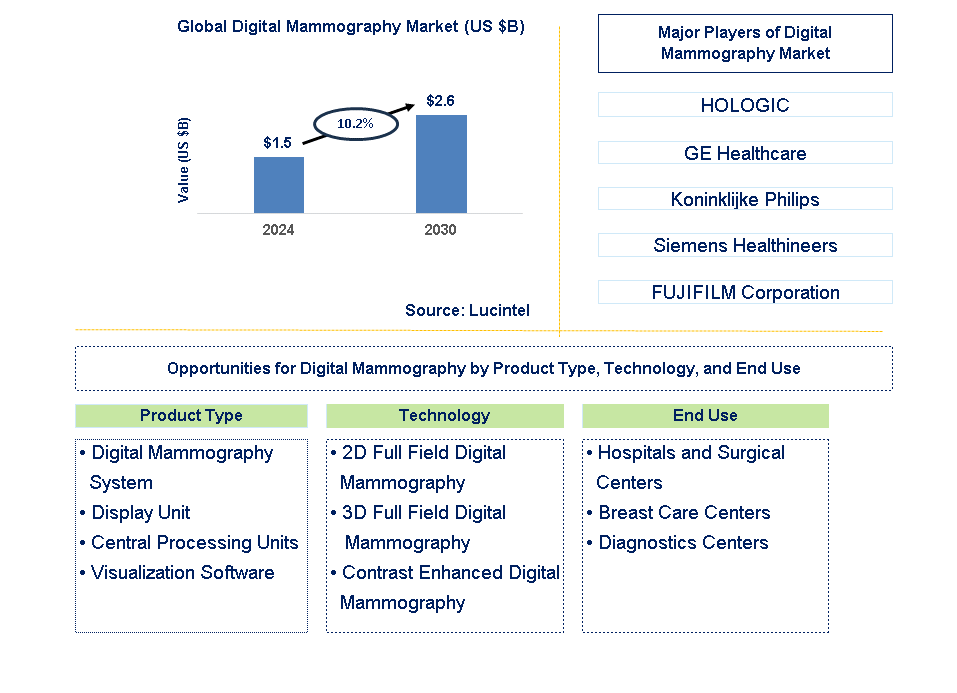
Key data points: The market size in 2030 = $2.6 billion, growth forecast = 10.2% annually for the next 6 years. Scroll below to get more insights. This market report covers trends, opportunities, and forecasts in the global digital mammography market to 2030 by product type (digital mammography system, display unit, central processing units, and visualization software), technology (2D full field digital mammography, 3D full field digital mammography, and contrast enhanced digital mammography), end use (hospitals and surgical centers, breast care centers, and diagnostics centers), and region (North America, Europe, Asia Pacific, and the Rest of the World)
We'll send your sample report shortly.
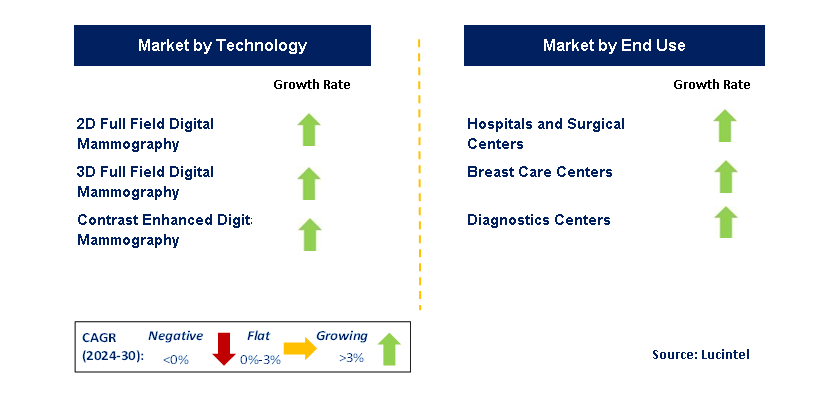
• Lucintel forecasts that, within the technology category, 2D full-field digital mammography will remain the largest segment over the forecast period because it is cost- effective and provides professionals with enhanced outcomes and clear images.
• Within this end use category, hospitals will remain the largest segment as it consists of well-equipped and advanced 2D and 3D mammography systems.
• In terms of regions, North America will remain the largest region over the forecast period due to a surge in the prevalence of breast cancer, growing R&D in breast cancer therapies, and ongoing advancements in breast imaging modalities. A more than 150-page report is developed to help in your business decisions.
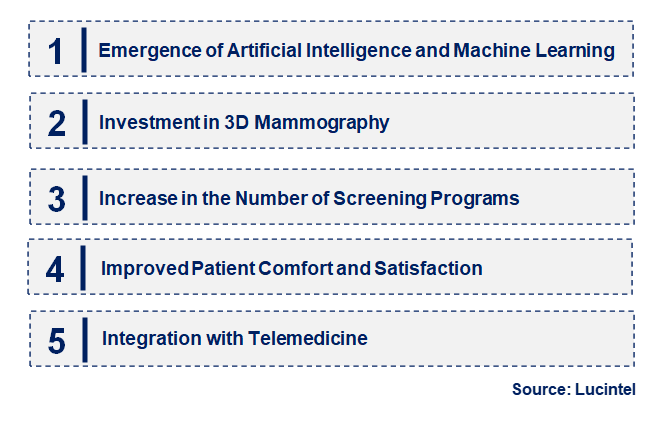
• Emergence of Artificial Intelligence and Machine Learning: With the help of AI and machine learning, the process of evaluating mammograms becomes more effective by pinpointing the specific areas where radiologists fail to perceive accurate patterns. These technologies address the issue of false positives and negatives, increase the rates of patients being diagnosed at an early stage, and build more trust in the diagnoses made.
• Investment in 3D Mammography: With the use of 3D mammography, a volumetric perspective of breast tissue can be achieved, unlike the common 2D imaging, which is prone to tissue overlap that can mask small tumors. This shift increases the quality of diagnosis and may facilitate the diagnosis of breast cancer at earlier stages than previously possible.
• Increase in the Number of Screening Programs: More screening programs, especially in developing areas, enable early detection of breast cancer and improve health services for women who are likely to develop breast cancer. Increased outreach and mobile mammography units enable access to services for populations who do not have regular access to screening centers.
• Improved Patient Comfort and Satisfaction: The latest digital mammography systems are produced with design strategies to minimize pain effects during the examination, including softer compressive paddles and ergonomic shapes. The better experience for patients encourages them to participate in the screening process and comply with mammography guidelines.
• Integration with Telemedicine: The incorporation of telemedicine allows breast cancer screening to be safe, convenient, and affordable, with remote consultation and second-opinion services available. This trend encourages better management and follow-up care of mammography results, especially in areas that have few radiologists specializing in mammography. There is a gradual migration of trends such as artificial intelligence integration, 3D mammography, expanded screening programs, improved patient comfort, and telemedicine incorporation into the digital mammography market. These trends will influence the development of new technologies, diagnoses, and access to breast cancer screening in the future.
• AI-Enhanced Diagnostic Tools: Diagnostic aids that use AI improve the accuracy of mammogram readings by detecting small features and contours. This advancement minimizes misdiagnosis and aids in the quick identification of breast cancer, thus improving patient health.
• Introduction of 3D Mammography Systems: 3D mammography allows for clearer visualization of breast tissue compared to the conventional 2D approach. This advancement helps visualize small growths while reducing the number of imaging sessions required, leading to more accurate diagnoses.
• Expansion of Mobile Mammography Units: Mobile mammography units improve accessibility to breast cancer screening services for populations that live in remote or underserved areas. Such expansion helps enhance screening rates and early detection, improving breast cancer management.
• Advancements in Patient Comfort Options: New comfort features, such as softer and better-applied compression plates and ergonomic designs, reduce discomfort during mammography. These changes increase the number of women who seek regular screening and comply with recommended schedules.
• Interfacing with Electronic Health Record (EHR) Systems: Patient EHR platforms streamline the processes of capturing mammography results and managing patient information more seamlessly. Enhancing this aspect of development fosters better care coordination, improves screening history, and ensures prompt follow-up care. The most current trends, such as AI-driven diagnostic tools, mobile mammography units, comfort improvements, and EHR integration, have a significant impact on the digital mammography market. The quality of care provided increases in value by offering high levels of accuracy in diagnosis, broadening screening reach, and improving the patient experience.
• Development of Advanced AI Algorithms: Advanced AI algorithms help improve the effectiveness and efficiency of interpreting mammograms by identifying microscopic features. A strong utilization of AI technology can provide new methods for increasing diagnostic efficiency and minimizing errors in diagnostics.
• Expansion into Emerging Markets: Emerging markets are highly attractive for future growth due to rising education levels and the development of healthcare systems. Expanding services in these regions can address the need for breast cancer screening and provide services to underserved populations.
• Adoption of 3D Mammography Systems: 3D mammography systems offer better imaging capabilities and diagnostic accuracy compared to conventional 2D systems. Due to the greater efficiency of these systems, early detection rates may increase, and fewer imaging studies may be required, resulting in market expansion.
• Enabling Connections with Remote Doctor Appointment Setting Apps: Telehealth services enhance the quality of radial tele-mammography services by providing remote consultations, follow-ups, and monitoring of patient health. This reduces the handling of mammography results, improving patient care overall.
• Designing Solutions to Modify Patients’ Needs: Developing tele-mammography systems focused on user needs, such as comfort and social usability improvements, enhances the mammography experience and compliance with regular screenings. A few design changes focused on patient needs can lead to better patient adherence and satisfaction, improving the overall screening experience. The advancements in AI algorithms, market expansion into new countries, the transition to 3D mammography, telehealth integration, and patient-centered solutions are transforming the digital mammography industry. Embracing these practices will enhance performance, diagnostic efficacy, and access to breast cancer care.
• Technological Advancements: The impact of technological developments, such as 3D imaging and AI, enhances efficiency and accuracy in diagnosis. These factors contribute to market growth by increasing early detection and providing improved tools for radiologists.
• Increasing Incidence of Breast Cancer: The rising incidence of breast cancer has increased the demand for screening measures and diagnostic approaches. This growing demand drives the adoption of improved digital mammography systems for better early detection and clinical outcomes.
• Expanding Screening Programs: The expansion of breast cancer screening programs increases the demand for digital mammography systems. These programs help enhance early detection, contributing to market growth by reaching more patients.
• Supportive Regulatory Environment: A favorable regulatory environment facilitates the development and acceptance of new digital mammography technologies. Policies that cut through bureaucratic red tape and reward innovation will promote market expansion and create advanced products.
• Focus on Early Detection and Prevention: The emphasis on early cancer detection and preventive healthcare activities has led to a rise in demand for digital mammography systems. Early diagnosis improves patient outcomes and promotes the use of modern imaging systems. Challenges in the digital mammography market are:
• High Cost of Advanced Systems: High costs may limit the use or accessibility of these systems, especially in resource-scarce areas. It is essential to address cost challenges to widen the distribution of advanced technologies.
• Regulatory and Compliance Issues: Regulatory requirements may slow down the introduction of products to the market. Companies must comply with regulations to avoid missing opportunities to launch new technologies and enter new markets.
• Limited Access in Underserved Areas: Limited access to screening and diagnostic services delays early detection and treatment. It is necessary to extend infrastructure and services to underserved areas to address existing problems in healthcare distribution and improve breast cancer screening, prevention, and management. The digital mammography market is shaped by the increasing breast cancer trend, the introduction of new technologies, extended coverage policies, the development of screening programs, and the emphasis on early detection. However, challenges such as high costs, regulatory barriers, and limited coverage must be addressed to expand the market and improve care delivery.
• HOLOGIC
• GE Healthcare
• Koninklijke Philips
• Siemens Healthineers
• FUJIFILM Corporation
• PLANMED OY
• Toshiba Medical Systems
• Digital Mammography System
• Display Unit
• Central Processing Units
• Visualization Software
• 2D Full Field Digital Mammography
• 3D Full Field Digital Mammography
• Contrast Enhanced Digital Mammography
• Hospitals and Surgical Centers
• Breast Care Centers
• Diagnostics Centers
• North America
• Europe
• Asia Pacific
• The Rest of the World
• United States: Over the years, digital mammograms in the United States have seen strong advances with the involvement of Artificial Intelligence (AI) technologies for effective cancer diagnosis. The latest development in this direction is the FDA-approved AI algorithms, which not only increase the sensitivity of mammogram readings but also help radiologists interpret the mammograms better, enhancing early diagnosis and reducing false positives.
• China: The rise in breast cancer incidences has prompted China to adopt digital mammography technologies quickly. Recent developments include better digital mammography systems and the expansion of screening program coverage, especially in cities and towns.
• Germany: Germany has made several improvements in digital mammography, some of which enhance image quality and patient comfort. Other advances include the latest 3-dimensional imaging systems that further facilitate diagnosis and minimize the need for additional imaging.
• India: The digital mammography market in India is expanding with initiatives aimed at adoption in certain population segments. Recent developments include the creation of affordable, low-cost digital mammography systems for urban and rural hospitals.
• Japan: Japan seeks to promote digital mammography technology with a greater focus on accuracy and patient experience. New developments include the implementation of AI-based diagnosis systems to improve the early detection of breast cancer.


• HOLOGIC
• GE Healthcare
• Koninklijke Philips
• Siemens Healthineers
• FUJIFILM Corporation
• PLANMED OY
• Toshiba Medical Systems Q6. Which digital mammography market segment will be the largest in future? Answer: Lucintel forecasts that 2D full field digital mammography will remain the largest segment over the forecast period because it is cost effective and provides professionals with enhanced outcomes and clear images. Q7. In digital mammography market, which region is expected to be the largest in next 5 years? Answer: North America will remain the largest region over the forecast period due to surge in prevalence of breast cancer, growing R&D in breast cancer therapies, and on-going advancements in breast imaging modalities. Q.8 Do we receive customization in this report? Answer: Yes, Lucintel provides 10% customization without any additional cost.


Choose a license that fits your team. Instant PDF delivery.
Prices exclude taxes. Instant delivery. Custom licensing available on request.
Market Report · July 22, 2026
Market Report · July 22, 2026
Market Report · July 22, 2026
Trusted partner for strategic intelligence and business growth


Receive a complimentary market analysis tailored to your industry. Our analysts will identify key growth opportunities and competitive dynamics specific to your business.

Market size, growth rate, and key trend analysis for your specific sector.

Top competitor positioning and market share analysis.

Strategic recommendations backed by data-driven insights.
Get curated market intelligence and competitive moves straight to your inbox.
By subscribing, you agree to receive our monthly insights. Unsubscribe anytime.
Receive a complimentary market analysis tailored to your industry. Our analysts will identify key growth opportunities and competitive dynamics specific to your business.
Market size, growth rate, and key trend analysis for your specific sector.
Top competitor positioning and market share analysis.
Strategic recommendations backed by data-driven insights.
Get curated market intelligence, emerging trends, and competitive moves straight to your inbox each month.
By subscribing, you agree to receive our monthly insights. Unsubscribe anytime.
We'll send your sample report shortly.