
Market Report · July 31, 2026

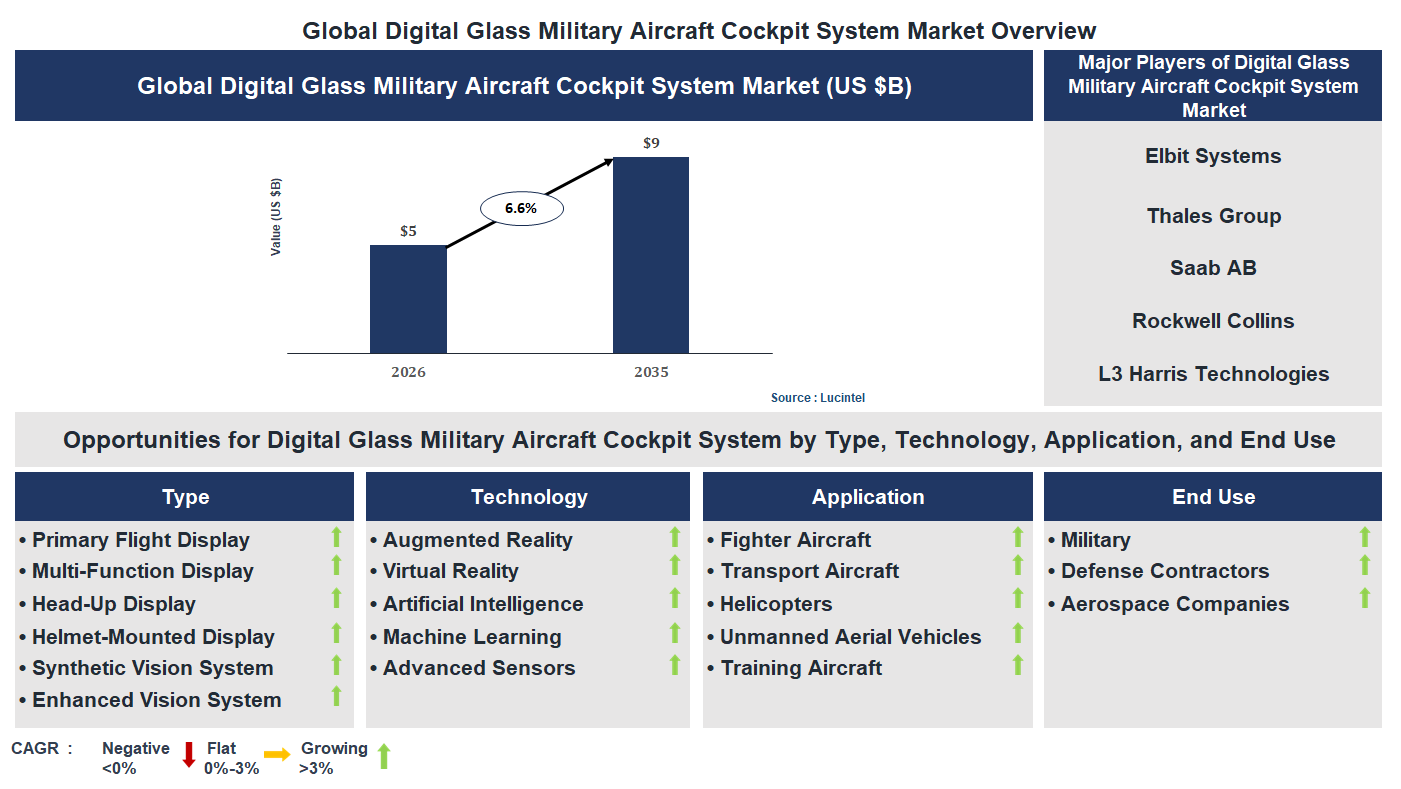
Key data points: The market size in 2035 = $9 billion, growth forecast = 6.6% annually for the next 8 years. Scroll below to get more insights. This market report covers trends, opportunities and forecasts in digital glass military aircraft cockpit system market to 2035 by type (primary flight display, multi-function display, head-up display, helmet-mounted display, synthetic vision system, and enhanced vision system), technology (augmented reality, virtual reality, artificial intelligence, machine learning, and advanced sensors), application (fighter aircraft, transport aircraft, helicopters, unmanned aerial vehicles, and training aircraft), end use (military, defense contractors, and aerospace companies), and region (North America, Europe, Asia Pacific, and the Rest of the World)
We'll send your sample report shortly.
• Lucintel forecasts that, within the type category, helmet-mounted display is expected to witness the highest growth over the forecast period.
• Within the application category, unmanned aerial vehicles is expected to witness the highest growth.
• In terms of region, North America is expected to witness the highest growth over the forecast period. Gain valuable insights for your business decisions with our comprehensive 150+ page report. Sample figures with some insights are shown below.
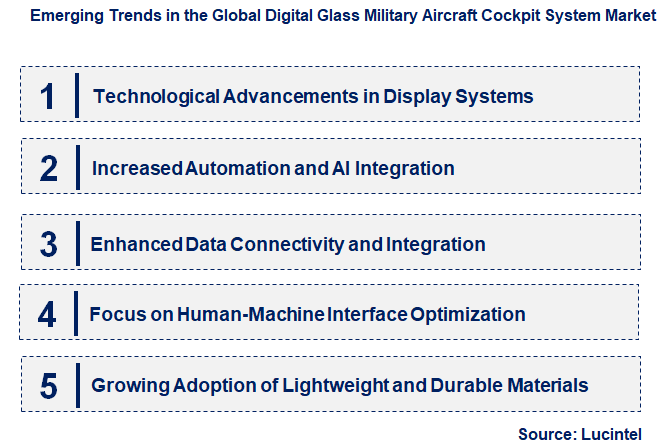
• Technological Advancements in Display Systems: The integration of high-resolution, multi-functional display screens, such as head-up displays (HUDs) and helmet-mounted displays (HMDs), is revolutionizing pilot interaction. These systems provide real-time data, enhanced situational awareness, and intuitive control interfaces, reducing pilot workload and increasing safety. Advances in OLED and AMOLED technologies enable clearer visuals even in challenging lighting conditions. The trend toward augmented reality (AR) overlays further enhances targeting and navigation capabilities. As display technology becomes more sophisticated and affordable, military aircraft are increasingly adopting these systems, leading to improved operational efficiency and mission success rates.
• Increased Automation and AI Integration: Modern cockpit systems are incorporating artificial intelligence (AI) and automation to assist pilots in decision-making, threat detection, and system management. AI-driven analytics can predict system failures, optimize flight paths, and provide tactical recommendations, reducing cognitive load on pilots. Automation features such as auto-land, auto-takeoff, and adaptive flight controls enhance safety and operational flexibility. This trend is driven by the need for faster response times and reduced human error in complex combat scenarios. As AI becomes more integrated, cockpit systems are evolving into intelligent command centers, significantly transforming pilot roles and aircraft capabilities.
• Enhanced Data Connectivity and Integration: The ability to seamlessly connect various aircraft systems and external data sources is a key trend shaping the market. Digital glass cockpits now feature integrated data management platforms that aggregate information from sensors, satellites, and other assets. This connectivity enables real-time situational awareness, collaborative mission planning, and rapid decision-making. The trend toward network-centric warfare emphasizes the importance of secure, high-speed data links. As data integration improves, pilots gain comprehensive battlefield insights, leading to more coordinated and effective military operations, while also raising cybersecurity considerations that must be addressed.
• Focus on Human-Machine Interface Optimization: Improving the interaction between pilots and cockpit systems is a critical trend. User-friendly interfaces, customizable displays, and ergonomic controls enhance pilot comfort and reduce fatigue. Voice recognition and gesture controls are increasingly incorporated to facilitate hands-free operation. HMI optimization aims to create intuitive systems that require minimal training and allow pilots to focus on mission-critical tasks. As these interfaces become more sophisticated, they contribute to faster response times and better decision-making, ultimately increasing aircraft safety and operational effectiveness in high-stress environments.
• Growing Adoption of Lightweight and Durable Materials: The push for lighter, more durable cockpit components is driven by the need to improve aircraft performance and survivability. Advanced materials such as composites and high-strength alloys are used in display housings, control panels, and structural elements. These materials reduce weight, enhance durability, and resist environmental stresses like vibration, heat, and moisture. The trend supports the development of more agile, fuel-efficient aircraft with longer service lives. As material science advances, cockpit systems become more resilient and easier to maintain, contributing to overall fleet readiness and cost-effectiveness. These emerging trends are fundamentally reshaping the digital glass military aircraft cockpit system market by enhancing technological capabilities, improving pilot interaction, and increasing operational efficiency. The integration of advanced displays, AI, data connectivity, user-centric interfaces, and durable materials is driving a new era of modern military aviation. These developments are enabling aircraft to perform more complex missions with greater safety, precision, and adaptability, ensuring that military forces remain at the forefront of technological innovation and tactical advantage.
• Growing Adoption of Digital Cockpit Technologies: The shift from analog to digital cockpit systems is accelerating, driven by the need for real-time data integration, improved display clarity, and enhanced pilot interface. This trend is enabling faster decision-making, reducing pilot fatigue, and increasing safety during complex missions. The integration of AI and augmented reality further enhances operational capabilities, making digital cockpits indispensable for modern military aircraft.
• Increased Focus on Situational Awareness and Safety: Recent developments emphasize advanced sensors, multi-function displays, and integrated threat detection systems to improve pilot situational awareness. These innovations help pilots identify threats quickly, navigate complex environments, and respond effectively. Enhanced safety features reduce accidents and operational risks, ensuring mission success and crew safety, which are critical in high-stakes military operations.
• Integration of Artificial Intelligence and Automation: AI-driven systems are now being incorporated into cockpit displays for predictive analytics, autonomous decision support, and mission planning. Automation reduces pilot workload, allowing focus on strategic tasks. These advancements lead to faster response times, improved accuracy, and operational efficiency, positioning AI as a key enabler in next-generation military aircraft cockpit systems.
• Development of Lightweight and Energy-Efficient Components: Innovations in materials and miniaturization are producing lighter, more energy-efficient cockpit components. These developments contribute to overall aircraft weight reduction, increased fuel efficiency, and extended operational range. They also facilitate the integration of more advanced systems without compromising aircraft performance, supporting the modernization of existing fleets and the development of new, more capable platforms.
• Expansion of Network-Centric Warfare Capabilities: Modern cockpit systems are increasingly interconnected with other military assets, enabling real-time data sharing and coordinated operations. This network-centric approach enhances battlefield awareness, improves command and control, and facilitates seamless communication across units. The integration of secure communication channels and data links is transforming military aviation into a more agile, responsive force. These developments are significantly transforming the digital glass military aircraft cockpit system market by enhancing aircraft capabilities, safety, and operational efficiency. The integration of advanced technologies like AI, improved safety features, and network connectivity is driving modernization efforts worldwide. As a result, military forces are better equipped to meet evolving threats, ensuring strategic superiority and operational readiness in a competitive defense landscape.
• Enhanced Situational Awareness Through Advanced Display Technologies: The adoption of digital glass cockpit systems offers pilots real-time data visualization, reducing cognitive load and improving decision-making. High-resolution displays, heads-up displays (HUDs), and augmented reality overlays enable pilots to access critical information swiftly. This technology enhances safety, operational efficiency, and mission success, making it a key driver for modernization programs worldwide. Continuous innovation in display quality and integration with sensor data is expected to further boost market growth.
• Increasing Adoption of Artificial Intelligence for Autonomous Operations: AI integration in cockpit systems enables predictive maintenance, threat detection, and autonomous decision-making capabilities. AI-powered systems can analyze vast data streams to assist pilots in complex scenarios, reducing workload and increasing mission accuracy. As defense agencies prioritize automation and AI-driven solutions, the market for intelligent cockpit systems is poised for significant expansion, especially in next-generation military aircraft and unmanned aerial vehicles (UAVs).
• Growing Demand for Lightweight and Energy-Efficient Systems: Modern military aircraft require lightweight, energy-efficient cockpit systems to enhance aircraft performance and fuel efficiency. Advances in materials and miniaturization of electronic components are facilitating the development of compact, low-power systems without compromising functionality. This trend aligns with the need for increased payload capacity and extended operational range, driving innovation in system design and fostering market growth in defense modernization efforts.
• Integration of Augmented Reality for Enhanced Pilot Training and Mission Execution: Augmented reality (AR) overlays provide pilots with immersive training experiences and real-time operational data, improving situational understanding. AR systems facilitate complex mission planning, target identification, and navigation, reducing training time and increasing operational effectiveness. The deployment of AR in cockpit systems is expected to grow as defense forces seek more effective training tools and operational enhancements, creating new avenues for market expansion.
• Strategic Collaborations and Technological Innovations Accelerate Market Development: Partnerships between defense contractors, technology firms, and government agencies are fostering rapid innovation in digital cockpit systems. These collaborations enable the integration of cutting-edge technologies such as 5G, machine learning, and advanced sensors. Government initiatives and defense modernization programs further support market growth, encouraging investments in research and development. This collaborative environment is crucial for delivering next-generation cockpit solutions that meet evolving military requirements. The overall impact of these opportunities is a robust expansion of the digital glass military aircraft cockpit system market, driven by technological innovation, strategic partnerships, and evolving defense needs. These developments will enhance aircraft capabilities, improve pilot safety, and support modernization initiatives globally, ensuring the market remains a vital component of future military aviation strategies.
• Technological Innovation: The continuous evolution of digital display technologies, augmented reality, and integrated avionics systems enhances pilot situational awareness and operational efficiency. These innovations enable real-time data visualization, reducing pilot workload and improving decision-making in combat scenarios. As defense organizations prioritize modernization, manufacturers invest heavily in R&D to develop advanced cockpit systems, fueling market growth. The integration of AI and machine learning further personalizes and optimizes cockpit functionalities, making systems more intuitive and responsive. This technological progression ensures the market remains dynamic and competitive, attracting significant investments from defense agencies worldwide.
• Increasing Defense Budgets: Governments across the globe are allocating substantial funds toward modernizing their military fleets, including upgrading aircraft cockpits with digital glass systems. This financial commitment is driven by the need to maintain technological superiority and respond to emerging threats. Enhanced defense budgets facilitate procurement of advanced cockpit systems, supporting research, development, and deployment activities. Countries with rising military expenditure are more likely to adopt cutting-edge cockpit solutions, creating a robust demand pipeline. This financial backing accelerates innovation and adoption, positioning the market for sustained growth amid geopolitical tensions and strategic defense priorities.
• Regulatory Standards and Certifications: Stringent safety, interoperability, and cybersecurity standards set by international and national regulatory bodies influence market dynamics. Compliance with these standards ensures system reliability and operational security, which are critical in military applications. Certification processes, although complex and time-consuming, guarantee that cockpit systems meet rigorous performance criteria, fostering trust among defense stakeholders. Regulatory frameworks also drive manufacturers to innovate within defined parameters, ensuring compatibility with existing platforms and future upgrades. Adherence to these standards is essential for market entry and expansion, shaping product development cycles and influencing competitive positioning.
• Growing Demand for Enhanced Situational Awareness: Modern military operations demand superior situational awareness to ensure mission success and personnel safety. Digital glass cockpit systems provide real-time data, advanced sensors, and integrated displays that improve pilot perception of the battlefield environment. This demand is driven by the increasing complexity of threats and the need for rapid decision-making. As military forces seek to reduce pilot workload and improve operational effectiveness, the adoption of advanced cockpit systems becomes imperative. This trend encourages manufacturers to develop more sophisticated, user-friendly interfaces, thereby expanding market opportunities and fostering technological innovation.
• Strategic Collaborations and Partnerships: Collaborations between defense contractors, technology firms, and government agencies facilitate the development and deployment of advanced cockpit systems. These partnerships enable sharing of expertise, resources, and technological innovations, accelerating product development cycles. Joint ventures also help navigate regulatory challenges and reduce costs, making cutting-edge solutions more accessible. Strategic alliances often lead to customized solutions tailored to specific military needs, enhancing system performance and interoperability. Such collaborations are vital for maintaining competitive advantage and expanding market reach, especially in a landscape characterized by rapid technological change and evolving defense requirements. The challenges facing the digital glass military aircraft cockpit system market include:
• High Development and Integration Costs: Developing advanced digital cockpit systems involves significant investment in R&D, testing, and certification. These costs are compounded by the need for seamless integration with existing aircraft platforms and future upgrades. The high capital expenditure can be a barrier for smaller defense contractors and may slow down innovation cycles. Additionally, the expense of retrofitting older aircraft with new systems can deter procurement, limiting market penetration. Managing these costs while maintaining system performance and reliability remains a critical challenge for manufacturers and defense agencies alike.
• Stringent Certification and Regulatory Processes: Achieving compliance with military standards and obtaining necessary certifications is a complex, time-consuming process. It involves rigorous testing for safety, cybersecurity, and interoperability, which can delay product deployment and increase costs. Regulatory hurdles may also restrict rapid adoption of new technologies, hindering market agility. Navigating these processes requires substantial expertise and resources, often leading to extended development timelines. This regulatory environment, while essential for safety and security, poses a significant challenge to timely market entry and technological innovation.
• Cybersecurity Threats and Data Security: As cockpit systems become more digital and interconnected, they are increasingly vulnerable to cyberattacks. Ensuring the security of sensitive military data and system integrity is paramount, yet challenging. Cyber threats can compromise mission-critical operations, leading to potential security breaches and operational failures. Developing robust cybersecurity measures adds complexity and cost to system design. The evolving nature of cyber threats necessitates continuous updates and vigilance, making cybersecurity a persistent challenge that could impact system reliability and trustworthiness in military applications. The digital glass military aircraft cockpit system market is driven by rapid technological advancements, increased defense spending, regulatory standards, and the need for superior situational awareness. However, high development costs, regulatory hurdles, and cybersecurity concerns pose significant challenges. These factors collectively influence the pace of innovation, adoption, and market growth. Stakeholders must strategically navigate these drivers and challenges to capitalize on emerging opportunities, ensuring the development of secure, reliable, and technologically advanced cockpit systems that meet evolving military needs. The markets future will depend on balancing innovation with regulatory compliance and cybersecurity resilience, fostering sustainable growth in a competitive defense landscape.
• Elbit Systems
• Thales Group
• Saab AB
• Rockwell Collins
• L3 Harris Technologies
• Leonardo S.p. A.
• Garmin Ltd
• BAE Systems
• Honeywell Aerospace
• Northrop Grumman
• Primary Flight Display
• Multi-Function Display
• Head-Up Display
• Helmet-Mounted Display
• Synthetic Vision System
• Enhanced Vision System
• Augmented Reality
• Virtual Reality
• Artificial Intelligence
• Machine Learning
• Advanced Sensors
• Fighter Aircraft
• Transport Aircraft
• Helicopters
• Unmanned Aerial Vehicles
• Training Aircraft
• Military
• Defense Contractors
• Aerospace Companies
• North America
• Europe
• Asia Pacific
• The Rest of the World
• United States: The US leads in digital cockpit technology, with significant investments from defense agencies like DARPA and the Pentagon. Recent developments include the integration of augmented reality displays and AI-powered decision support systems, enhancing pilot situational awareness and operational efficiency. The US military is also focusing on interoperability and cybersecurity within cockpit systems to ensure resilience against cyber threats. Major defense contractors such as Lockheed Martin and Boeing are pioneering next-generation cockpit solutions, emphasizing automation and user-centric interfaces to maintain technological superiority.
• China: China is rapidly advancing its military aviation technology, with notable progress in digital cockpit systems for its fighter jets and military aircraft. Recent developments include the deployment of integrated digital displays and sensor fusion technologies that improve target tracking and threat detection. The Chinese military is also investing in AI and machine learning to enhance pilot assistance and aircraft performance. Domestic companies are increasingly involved in developing these systems, aiming for self-sufficiency and technological independence. These advancements reflect Chinas strategic focus on modernizing its air force to challenge Western dominance.
• Germany: Germany is emphasizing the integration of digital cockpit systems into its Eurofighter Typhoon fleet and other military aircraft. Recent innovations include enhanced pilot interface designs, improved data fusion, and real-time communication capabilities. Germany is also exploring the use of augmented reality to improve pilot situational awareness during complex missions. The country collaborates closely with European partners to develop interoperable cockpit systems that meet NATO standards. Germanys focus remains on upgrading existing platforms with cutting-edge digital solutions to maintain operational readiness and technological edge within the European defense landscape.
• India: India is making significant strides in adopting digital cockpit systems for its military aircraft, including the Tejas fighter and other platforms. Recent developments involve the integration of advanced digital displays, sensor fusion, and electronic warfare systems to enhance combat capabilities. India is also working on indigenous development of cockpit technologies to reduce reliance on foreign suppliers, aligning with its "Make in India" initiative. The country is investing in AI and automation to improve pilot situational awareness and decision-making. These advancements are part of broader efforts to modernize the Indian Air Force and strengthen its strategic capabilities regionally.
• Japan: Japan is focusing on upgrading its military aircraft with state-of-the-art digital cockpit systems, emphasizing automation and pilot safety. Recent developments include the integration of advanced HUDs (Heads-Up Displays), sensor fusion, and secure communication systems. Japan is also exploring augmented reality applications to improve pilot situational awareness during complex operations. The country collaborates with US defense firms to incorporate cutting-edge technology and ensure compatibility with allied systems. Japans efforts aim to modernize its air force, enhance operational efficiency, and maintain technological parity with regional competitors, especially amid rising security concerns in the Asia-Pacific region.


• Elbit Systems
• Thales Group
• Saab AB
• Rockwell Collins
• L3 Harris Technologies
• Leonardo S.p. A.
• Garmin Ltd
• BAE Systems
• Honeywell Aerospace
• Northrop Grumman Q6. Which digital glass military aircraft cockpit system market segment will be the largest in future? Answer: Lucintel forecasts that, within the type category, helmet-mounted display is expected to witness the highest growth over the forecast period. Q7. In digital glass military aircraft cockpit system market, which region is expected to be the largest in next 8 years? Answer: In terms of region, North America is expected to witness the highest growth over the forecast period. Q8. Do we receive customization in this report? Answer: Yes, Lucintel provides 10% customization without any additional cost.


Choose a license that fits your team. Instant PDF delivery.
Prices exclude taxes. Instant delivery. Custom licensing available on request.
Market Report · July 31, 2026
Market Report · July 31, 2026
Market Report · July 22, 2026
Trusted partner for strategic intelligence and business growth


Receive a complimentary market analysis tailored to your industry. Our analysts will identify key growth opportunities and competitive dynamics specific to your business.

Market size, growth rate, and key trend analysis for your specific sector.

Top competitor positioning and market share analysis.

Strategic recommendations backed by data-driven insights.
Get curated market intelligence and competitive moves straight to your inbox.
By subscribing, you agree to receive our monthly insights. Unsubscribe anytime.
Receive a complimentary market analysis tailored to your industry. Our analysts will identify key growth opportunities and competitive dynamics specific to your business.
Market size, growth rate, and key trend analysis for your specific sector.
Top competitor positioning and market share analysis.
Strategic recommendations backed by data-driven insights.
Get curated market intelligence, emerging trends, and competitive moves straight to your inbox each month.
By subscribing, you agree to receive our monthly insights. Unsubscribe anytime.
We'll send your sample report shortly.