
Market Report · July 31, 2026

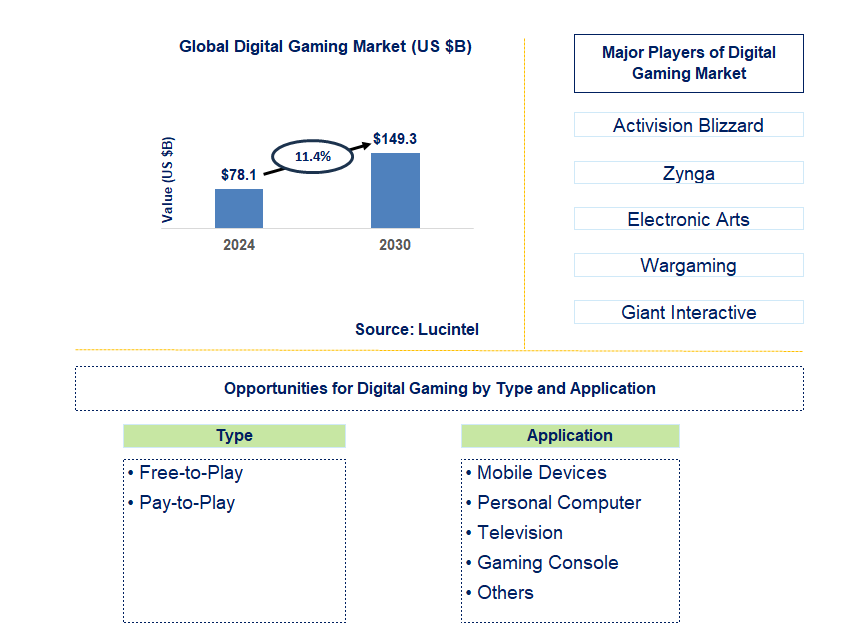
Key data points: The market size in 2030 = $149.3 billion, growth forecast = 11.4% annually for the next 6 years. Scroll below to get more insights. This market report covers trends, opportunities, and forecasts in the global digital gaming market to 2030 by type (free-to-play and pay-to-play), application (mobile devices, personal computer, television, gaming console, and others), and region (North America, Europe, Asia Pacific, and the Rest of the World)
We'll send your sample report shortly.
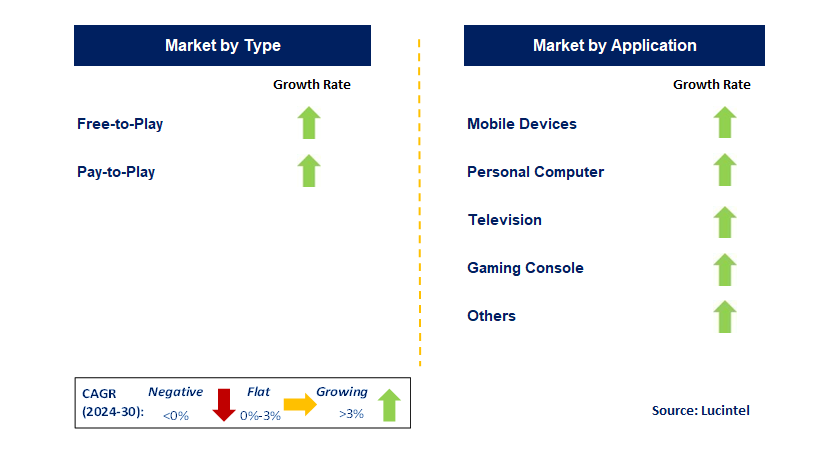
• Lucintel forecasts that, within the type category, free-to-play is expected to witness the higher growth over the forecast period.
• Within the application category, mobile device is expected to witness the highest growth.
• In terms of region, APAC will remain the largest region over the forecast period due to the region's expanding player base, rising disposable income, and technological developments. Gain valuable insights for your business decisions with our comprehensive 150+ page report.
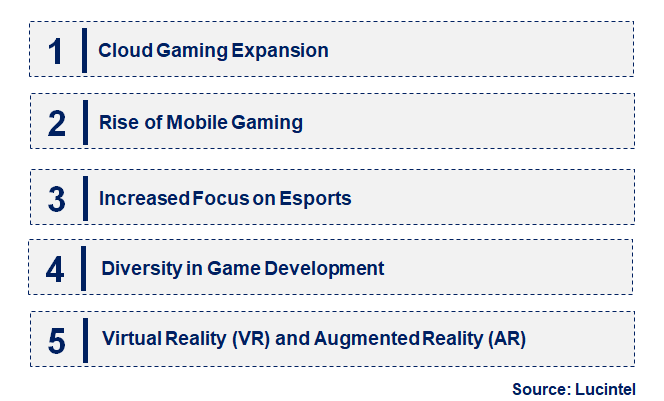
• Cloud Gaming Expansion: Cloud gaming services enable access to high-quality gaming from less powerful devices; therefore, democratized access to play games is likely to spur increases in the overall player base while encouraging developers to create more content.
• Rise of Mobile Gaming: Mobile gaming and utilization continue to grow significantly due to the penetration of smartphones and apps. Now, casual game developers focus on games that a wider audience can play, generating revenue through microtransactions and in-app purchases.
• Increased Focus on Esports: This trend increases interest in esports, transforming how people play games into a spectator sport with professional leagues and tournaments that attract enormous viewership and sponsorship. This shift brings investments and opens new opportunities for professional careers in game development and event management.
• Diversity in Game Development: Diversity in the game development process is slowly gaining prominence in terms of narrative variety and representation. This means more content that caters to a larger audience, thereby increasing player involvement and satisfaction.
• Virtual Reality (VR) and Augmented Reality (AR): The introduction of VR and AR technologies brings more immersive gaming experiences, attracting users seeking new ways to interact with games. It compels developers to create alternative gameplay mechanics and new forms of storytelling. These trends are transforming the digital gaming landscape as well as how games are developed, distributed, and experienced by global consumers.
• Cloud Gaming Innovations: Google, Microsoft, and others are heavily investing in the development of cloud gaming platforms that will allow users to experience high-definition graphics in games without necessarily requiring powerful hardware. This makes games much more accessible and can lead to a significant increase in the number of players entering the market.
• Growth of Esports Ecosystems: The esports ecosystems are growing. Major events attract millions of viewers and bring high-value sponsorships. As the industry expands, game developers create titles specifically catered to competitive play, opening a new market and generating additional revenue.
• Innovative Monetization Models: Many games are now shifting towards free-to-play models supported by in-game purchases and battle passes. This provides access to gaming without initial charges and generates recurring income for developers.
• Focus on Sustainability: Businesses, as well as the operations of game companies, are becoming much greener through practices such as biodegradable packaging and energy-efficient servers. This aligns with the overall social conscience and brings greater accountability to the companies.
• Expansion of Cross-Platform Play: Cross-platform capabilities increase competition and collaboration among different devices. This enhances engagement among players and builds larger gaming communities, thereby helping developers increase the longevity of their games. Such innovations are proving to be game-changers for the digital gaming market while propelling innovation and unlocking future gaming experiences.
• Mobile Gaming Applications: The mobile gaming industry has significant growth potential since the user base is increasing each day, particularly among those with smartphones. Developers can create interactive mobile games that represent various demographics by capitalizing on the casual gaming wave.
• Esports and Competitive Gaming: The popularity of esports allows more game developers to create competitive titles. Investments in esports infrastructure and sponsorships will attract viewers while gamers engage in tournaments.
• Subscription Services: Subscription-based gaming services such as Xbox Game Pass and PlayStation Now open many opportunities for companies to create bundled content. This model may help companies retain more customers while generating steady revenue.
• Virtual Reality/Augmented Reality: Future gamers will experience virtual and augmented reality in their games. Creating immersive experiences will attract a new generation of players seeking innovative gameplay and storytelling.
• Narrative-Driven Content: There is a growing demand for games with quality narratives and character development in story-based content. Companies that specialize in creating story-driven experiences will find it easier to distinguish themselves in the market for players who seek immersive experiences. These strategic growth opportunities highlight the flexibility of the digital gaming market, where innovation and expansion are essential to meet shifting consumer needs.
• Technological Advancements: Improved developments in hardware and software technologies enhance game quality and accessibility. This advancement encourages more players to engage with digital games.
• Growing Mobile Usage: Increased usage of mobile devices enhances mobile gaming, as the rapid adoption of smartphones creates significant growth in the user base. Developing mobile-friendly content opens up the marketplace for developers and sponsors.
• Increased Investment in Esports: The number of investments in esports is rising, with major companies providing sponsorship and advertisement. The revenue generated from these investments supports game development and competitive gaming, thus boosting the market.
• Multiple Monetization Strategies: Developers have employed various monetization strategies, such as in-app purchases and subscriptions, to tap into a broad spectrum of revenue streams.
• Social Connectivity: Online gaming is increasingly becoming a social platform, fostering interconnection among players around the world. Enhanced online features and engagement programs are propelling player retention and attracting new audiences. Challenges in the digital gaming market include:
• Regulatory Hurdles: Stringent guidelines regarding data privacy and content adequacy hinder game development and launch. Companies must navigate these barriers successfully.
• Market Saturation: The digital games market is saturated with numerous titles, making it extremely challenging for new releases to gain publicity. Developers need effective marketing strategies to stand out in the crowded landscape.
• Cybersecurity Issues: With growing interconnectivity, cybersecurity threats pose significant risks. Ensuring the protection of player data and maintaining trust is a priority for game engagement. Overall, while technological advancement and increasing mobile usage drive growth within the digital gaming market, regulatory hurdles and market saturation must be carefully managed to achieve long-term success.
• Activision Blizzard
• Zynga
• Electronic Arts
• Wargaming
• Giant Interactive
• GungHo Online
• NCSOFT
• Smilegate
• Microsoft
• Riot Games
• Free-to-Play
• Pay-to-Play
• Mobile Devices
• Personal Computer
• Television
• Gaming Console
• Others
• North America
• Europe
• Asia Pacific
• The Rest of the World
• United States: In the U.S., key game companies and innovative indie game developers have attracted and sustained players in the digital gaming market. The recent expansion of cloud gaming services, allowing users to play games without heavy hardware, shows promise. Examples include Xbox Cloud Gaming and NVIDIA GeForce NOW, which have grown in popularity, highlighting the convenience of accessing games. More importantly, there is an increasing interest in cross-platform play, leading to greater community engagement and retention. The U.S. has also emerged as one of the most significant esports investment hotspots as professional leagues and tournaments attract hundreds of thousands of viewers and millions of sponsorship dollars.
• China: China remains one of the most significant markets for digital gaming, mainly due to a strong mobile gaming segment. Regulatory restrictions, including limits on minors' gaming hours and extended delays in game approval periods, continue to influence the market. However, despite these challenges, homegrown champions like Tencent and NetEase are leading the pack, focusing on creative titles and expanding their reach into international territories. Esports also thrives with huge investments in infrastructure and tournaments, making China the hub for competitive gaming.
• Germany: Germany's digital gaming market is growing steadily, supported by a lively gaming community and quality content. Recent activities include further investment in local game development studios, which has led to a rise in varied genres and narratives. The German government is also activating schemes through funding and tax reductions to aid game development, particularly for titles not typically characterized by interactive storylines. Of particular interest is the level of VR gaming that companies are developing, enhancing immersive gameplay across all aspects of entertainment.
• India: The Indian digital gaming market is growing rapidly due to the use of low-cost smartphones and widespread internet access. Local companies have recently started to gain success in this market, producing content that appeals to the general public. Esports is a developing phenomenon, with an increasing number of tournaments and participants. The government has launched various schemes, such as "Make in India," to support this industry and promote innovation and foreign investments. Casual games are popularizing the market among wider demographics.
• Japan: Japan remains one of the prime digital gaming markets, rooted in a strong console culture and unique original mobile titles. Old franchises that had been dormant are being revived under new concepts to appeal to both old and new gamers. A growing number of indie games are being produced in the country, building unique and creative content. This is complemented by the introduction of AR gaming, which has gained traction following the success of titles like Pokémon GO, enhancing user engagement and providing meaningful gameplay experiences.


• Activision Blizzard
• Zynga
• Electronic Arts
• Wargaming
• Giant Interactive
• GungHo Online
• NCSOFT
• Smilegate
• Microsoft
• Riot Games Q6. Which digital gaming market segment will be the largest in future? Answer: Lucintel forecasts that free-to-play is expected to witness the higher growth over the forecast period. Q7. In digital gaming market, which region is expected to be the largest in next 6 years? Answer: APAC will remain the largest region over the forecast period due to the region's expanding player base, rising disposable income, and technological developments. Q.8 Do we receive customization in this report? Answer: Yes, Lucintel provides 10% customization without any additional cost.


Choose a license that fits your team. Instant PDF delivery.
Prices exclude taxes. Instant delivery. Custom licensing available on request.
Market Report · July 31, 2026
Market Report · July 31, 2026
Market Report · July 31, 2026
Trusted partner for strategic intelligence and business growth


Receive a complimentary market analysis tailored to your industry. Our analysts will identify key growth opportunities and competitive dynamics specific to your business.

Market size, growth rate, and key trend analysis for your specific sector.

Top competitor positioning and market share analysis.

Strategic recommendations backed by data-driven insights.
Get curated market intelligence and competitive moves straight to your inbox.
By subscribing, you agree to receive our monthly insights. Unsubscribe anytime.
Receive a complimentary market analysis tailored to your industry. Our analysts will identify key growth opportunities and competitive dynamics specific to your business.
Market size, growth rate, and key trend analysis for your specific sector.
Top competitor positioning and market share analysis.
Strategic recommendations backed by data-driven insights.
Get curated market intelligence, emerging trends, and competitive moves straight to your inbox each month.
By subscribing, you agree to receive our monthly insights. Unsubscribe anytime.
We'll send your sample report shortly.