
Market Report · July 29, 2026

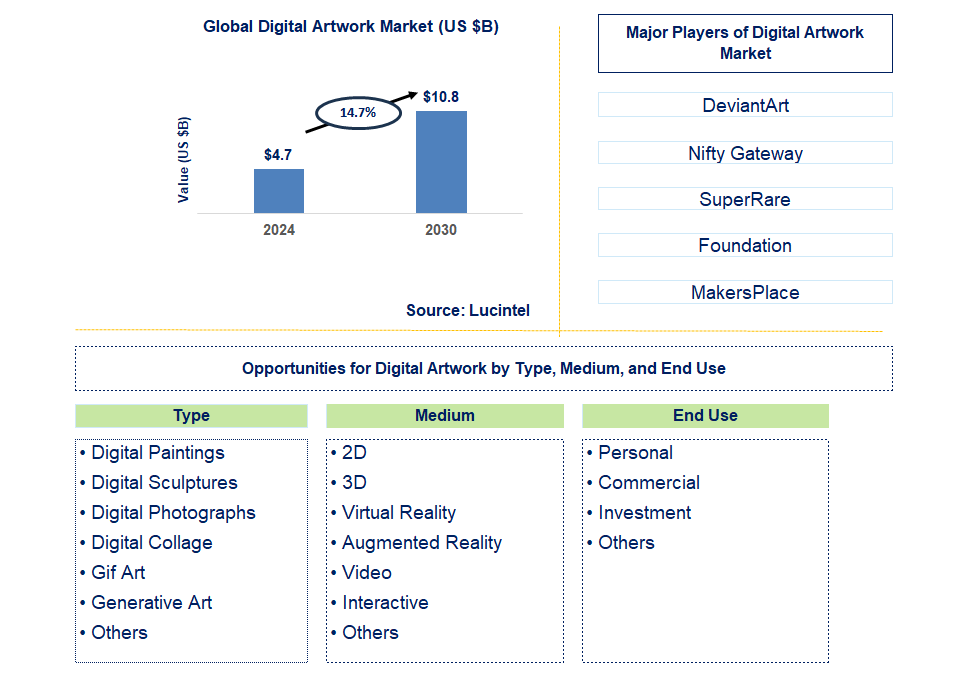
Key data points: The market size in 2030 = $10.8 billion, growth forecast = 14.7% annually for the next 6 years. Scroll below to get more insights. This market report covers trends, opportunities, and forecast in the global digital artwork market to 2030 by type (digital paintings, digital sculptures, digital photographs, digital collage, gif art, generative art, and others), medium (2d, 3d, virtual reality, augmented reality, video, interactive, and others), end use (personal, commercial, investment, and others), and region (North America, Europe, Asia Pacific, and the Rest of the World)
We'll send your sample report shortly.
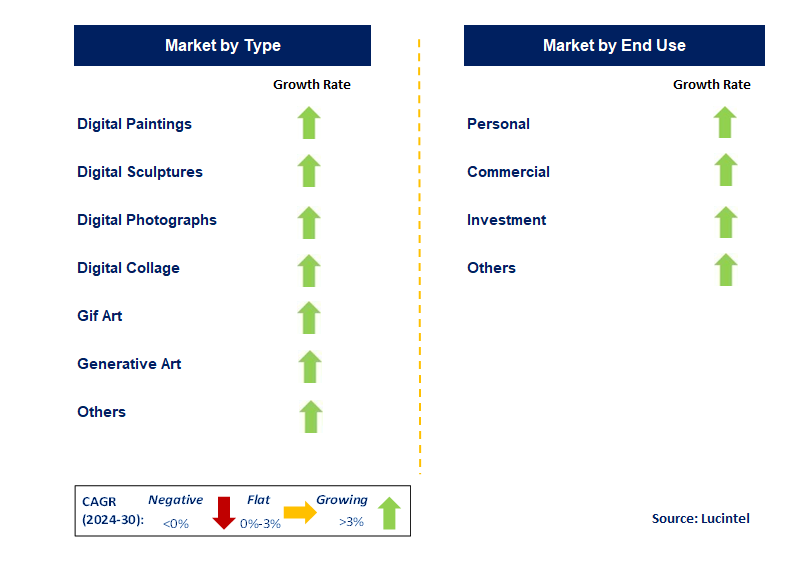
• Lucintel forecasts that, within the type category, digital painting is expected to witness the largest growth over the forecast period due to its distinct appeal and distributability among art enthusiasts.
• Within the end-use category, personal is expected to witness the highest growth.
• In terms of regions, North America is expected to witness the largest growth over the forecast period due to the area's dense population of well-known museums, galleries, auction houses, and art fairs. A more than 150-page report is developed to help in your business decisions.
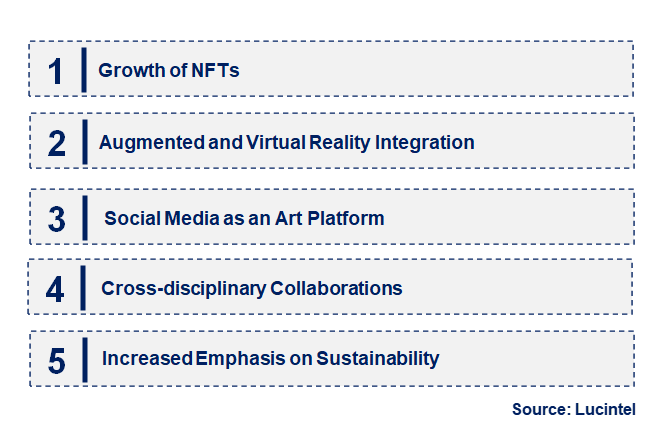
• Growth of NFTs: The NFT has made drastic changes in the manner in which digital art is bought and sold. It is now possible for an artist to tokenize his or her work, ensuring authenticity and ownership of the artwork. This development has greatly fascinated both collectors and investors who are keenly interested in the democratization of access to art and the revolution of revenue channels for artists.
• Augmented and Virtual Reality Integration: Artists are taking their digital creations to the next level with the help of augmented reality (AR) and virtual reality (VR). This integration expands the experience of something new. These digital creations attract more patrons from diverse backgrounds since the demand for interactive art is growing due to advanced technology.
• Social Media as an Art Platform: Social media is becoming extremely important for the exposure of artists as well as for people to view their work. For example, with the help of platforms such as Instagram and TikTok, artists can receive immediate feedback and stay in touch with the community, thus helping them build their brand and market their products. This innovation has also altered the way art is conveyed and celebrated.
• Cross-disciplinary Collaborations: There is an increasing trend of cross-pollination between artistic collaborations and partnerships between artists and professionals in other fields, such as technology, science, and fashion. This interdisciplinary approach leads to innovative digital artworks that challenge traditional boundaries, creating unique experiences that push the limits of creativity.
• Increased Emphasis on Sustainability: As environmental concerns grow, digital artists are going to the drawing board to create themes related to sustainability and eco-friendly practices. This shift changes the methods of making digital art as well as the marketing processes attached to it, reaching consumers who are conscious of their environment and initiating discussions on the role of the arts in social change. These changes are redefining the concept of digital artwork, introducing new paths and opportunities for artists. By adopting approaches that utilize new technologies, interdisciplinary collaboration, and a responsive attitude to cultural transformation, the digital art sector is likely to experience significant growth and self-evolution.
• Growth of the NFT Market: The NFT market has grown rapidly, with artists and brands launching their own collections and exploring innovative ways to engage collectors. Major auction houses have also begun holding NFT sales to further legitimize the medium. This trend enables artists to monetize their digital work directly and gain recognition in a competitive market.
• Technological Innovations: Increased creative freedom through software and hardware advancements, such as more precise graphic tablets and design software, has expanded the possibilities for exploration. This has led to improved overall quality of work produced and attracted new artists to the digital art medium.
• Development of Online Art Platforms: Online art platforms facilitate the hosting of digital art by anyone and make direct communication between artists and collectors regarding the sale of their work easier. This development has eliminated traditional barriers to such transactions, further empowering artists to set their prices and target international markets, adding an energetic dimension and diversity to the art market.
• Online Virtual Exhibitions and Galleries: The growth of virtual exhibitions and galleries provides avenues for artists to sell their work across geographical boundaries. These digital mediums create spaces for vibrant displays that attract larger audiences and provide services that are easily accessible. This trend is particularly beneficial for emerging artists, as the competitive landscape requires visibility.
• Emphasis on Diversity and Inclusion: The digital art community places emphasis on diversity and inclusion, fostering efforts to support underrepresented artists, which brings balance to the artistic ecosystem. This focus enhances the cultural dialogue surrounding digital art, offering a greater diversity of viewpoints. These new trends in digital art point to significant changes catalyzed by technological and market factors. As artists and platforms respond to these trends, the digital art landscape continues to expand, offering prospects for creativity and diversity
• E-commerce for Digital Art: Expanding e-commerce sites focused on selling digital art gives artists an opportunity to showcase their work to a wider audience globally. Consequently, this maximizes their exposure and potentially increases sales since they reach a larger market. This is a vital opportunity for them to continue their careers in the digital space.
• Interactive and Immersive Experiences: The demand for interactive and immersive digital experiences is ever on the rise. The integration of AR and VR elements opens new audiences to artists' work and amplifies engagement through exhibits and installations. Opportunities for innovative exhibitions are emerging along with further collaborations with tech companies.
• Access to Training Resources and Workshops: As digital art becomes the new haven for many creative minds, there is a corresponding increasing need for education and training programs. Artists can harness this trend by teaching classes, holding workshops, and offering mentoring opportunities to build a new generation of digital creatives. This will not only serve as a source of revenue but also strengthen the community.
• Corporate Collaborations: There is an increasing number of businesses seeking partnerships with digital artists for branding and marketing purposes. This provides artists with a chance to work for well-known brands and gain exposure while establishing credibility and broadening their income streams. These collaborations develop innovative projects that build brand narratives.
• Global Art Festivals and Competitions: Participation in international art festivals and contests provides opportunities for wide exposure and networking for artists. These events are often focused and preferred by industry leaders, collectors, and media, thereby giving artists a high profile. Participation in such platforms is crucial for career advancement and community building. These strategic growth opportunities outline growth prospects for the digital artwork industry. E-commerce, interactivity, and educational initiatives can help artists and organizations in the fast-paced environment continue their growth and innovations.
• Technological Advancement: The availability and acceptance of digital artwork for artists will increase due to the rapid advancement in software and hardware. Moreover, innovations in graphics tablets, design software, and online platforms introduce wider opportunities for creativity, likely enhancing market trends.
• Increased Adoption of Digital Art: As digital art gains proper recognition within the traditional artistic community, more collectors will invest in digital pieces. This encouragement is important for the validation of digital artwork and for urging artists to take their work further.
• Emergence of NFTs: NFTs have changed how the world buys and sells digital art in the marketplace. They offer artists a vast platform for monetizing their work while interacting with collectors, thus increasing this industry.
• Increased Online Interaction: Digital platforms are increasingly used for interaction, fostering greater engagement with digital art. Social media, online galleries, and virtual exhibitions are channels through which artists can reach wider audiences, driving further demand for their work.
• Focus on Sustainability: As consumers become more environmentally conscious, artists are incorporating themes of sustainability into their pieces. This trend appeals to a broader audience and aligns well with global movements toward responsible consumption. Challenges in the digital artwork market include:
• Market Saturation: The growth of digital art has led to increased competition and market saturation. Artists must find unique ways to differentiate their work in a marketplace overwhelmed by competition.
• Digital Artwork Copyright and Ownership Problems: The digital nature of artwork raises concerns regarding copyright and ownership, particularly with online sharing. Thus, copyright and ownership issues present challenges for artists as they navigate these legal complexities to safeguard their intellectual rights.
• Accessibility and Inclusiveness: While digital art provides wider audience access, exclusions still exist for some artists and audiences. Technological and platform provisions must ensure equal accessibility for all to prevent exclusion from this art form. These significant drivers and challenges in the digital artwork market outline the complexities of this developing sector. The apparent opportunities provided by technological advances and growing acceptance will, however, be matched by the challenges of market saturation and copyright.
• DeviantArt
• Nifty Gateway
• SuperRare
• Foundation
• MakersPlace
• KnownOrigin
• Async Art
• ArtBlocks
• OpenSea
• Rarible
• Digital Paintings
• Digital Sculptures
• Digital Photographs
• Digital Collage
• Gif Art
• Generative Art
• Others
• 2D
• 3D
• Virtual Reality
• Augmented Reality
• Video
• Interactive
• Others
• Personal
• Commercial
• Investment
• Others
• North America
• Europe
• Asia Pacific
• The Rest of the World
• United States: In the U.S., digital art continues to boom, mainly with the concept of NFTs or non-fungible tokens. Artists utilize platforms like OpenSea and Rarible to sell unique pieces of digital art, further transforming how ownership is viewed regarding art. Major auction houses like Christie's are heavily promoting digital art, effectively stamping it with a seal of approval across the art market. Meanwhile, tech companies and artists collaborate to produce new tools that improve creativity and accessibility for even more artists in this fast-changing landscape.
• China: China is fast emerging as one of the major market players in digital artwork with significant investments in digital technologies and platforms. The nation is experiencing the expansion of indigenous NFT marketplaces capable of earning revenue from works of art directly. Government encouragement of digital creativity allows room for innovation, and backup platforms such as Weibo become essential for communicating work. Tech giants collaborate with artists to create unique digital experiences, marking China as a hotbed of experimentation in digital art.
• Germany: The country continues to be a land that proudly holds some of the best art history in the world. In fact, digital art has crossed new thresholds as artists learn and digest various new technologies. Berlin is emerging as the center of festivals and exhibitions that honor contemporary practices in the digital field. The country is also uncovering digital art collectives and group projects focused on the theme of technology and society. In the same breath, institutions of learning are embracing digital art in their curricula, promoting a new generation of artists who work within this medium and aspire toward creativity.
• India: The digital artwork market is gaining momentum in India, as digital platforms have become an opportunity for artists to express themselves and make sales. Indian artists now have access to a more expansive global audience as online art galleries and social media gain traction. Additionally, there are efforts to improve digital literacy among artists, bridging the gap between traditional and digital art. As more people become familiar with the concept of digital art in Indian society, the fusion of the old with the modern enriches the art scene.
• Japan: One of the world's leading countries in combining technology and art is Japan. This country ranks number one in the presentation of digital artwork. Japan has a vibrant culture of anime and video game art that has merged into the digital art space. Artists have begun experimenting with interactive installations and augmented reality, essentially creating immersive experiences. This trend, alongside the rise of NFT art, will lead to innovative platforms for artists to showcase their work. This movement, apart from fueling artistic expression, also amplifies cultural exchange on a global level.


• DeviantArt
• Nifty Gateway
• SuperRare
• Foundation
• MakersPlace
• KnownOrigin
• Async Art
• ArtBlocks
• OpenSea
• Rarible Q6. Which digital artwork market segment will be the largest in the future? Answer: Lucintel forecasts that digital painting will remain the largest segment over the forecast period due to its distinct appeal and distributability among art enthusiasts. Q7. In the digital artwork market, which region is expected to be the largest in the next 5 years? Answer: North America will remain the largest region over the forecast period due to the area's dense population of well-known museums, galleries, auction houses, and art fairs. Q.8 Do we receive customization in this report? Answer: Yes, Lucintel provides 10% customization without any additional cost.


Choose a license that fits your team. Instant PDF delivery.
Prices exclude taxes. Instant delivery. Custom licensing available on request.
Market Report · July 29, 2026
Market Report · July 20, 2026
Market Report · July 20, 2026
Trusted partner for strategic intelligence and business growth


Receive a complimentary market analysis tailored to your industry. Our analysts will identify key growth opportunities and competitive dynamics specific to your business.

Market size, growth rate, and key trend analysis for your specific sector.

Top competitor positioning and market share analysis.

Strategic recommendations backed by data-driven insights.
Get curated market intelligence and competitive moves straight to your inbox.
By subscribing, you agree to receive our monthly insights. Unsubscribe anytime.
Receive a complimentary market analysis tailored to your industry. Our analysts will identify key growth opportunities and competitive dynamics specific to your business.
Market size, growth rate, and key trend analysis for your specific sector.
Top competitor positioning and market share analysis.
Strategic recommendations backed by data-driven insights.
Get curated market intelligence, emerging trends, and competitive moves straight to your inbox each month.
By subscribing, you agree to receive our monthly insights. Unsubscribe anytime.
We'll send your sample report shortly.