
Market Report · July 31, 2026

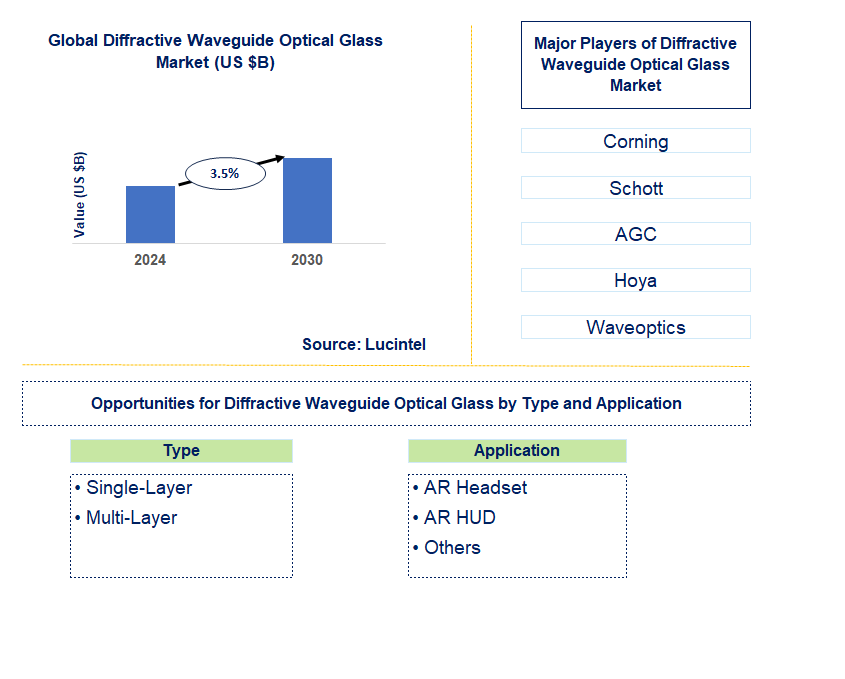
Key data points: The growth forecast = 3.5% annually for the next 6 years. Scroll below to get more insights. This market report covers trends, opportunities, and forecasts in the global diffractive waveguide optical glass market to 2030 by type (single-layer and multi-layer), application (AR headset, AR HUD, and others), and region (North America, Europe, Asia Pacific, and the Rest of the World)
We'll send your sample report shortly.
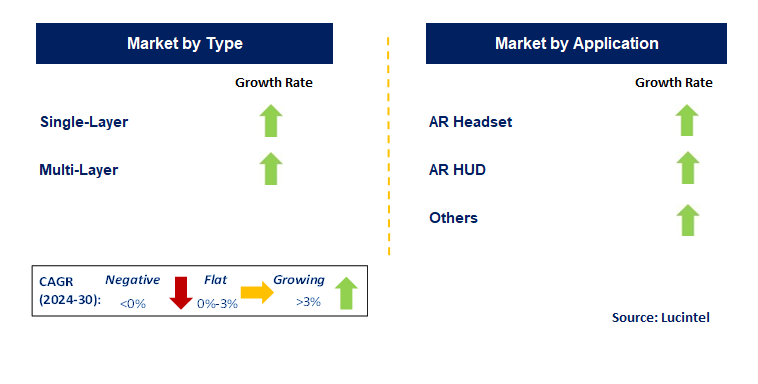
• Lucintel forecasts that, within the type category, single-layer is expected to witness higher growth over the forecast period.
• Within the application category, AR headset is expected to witness higher growth.
• In terms of regions, APAC is expected to witness the highest growth over the forecast period. A more than 150-page report is developed to help in your business decisions.
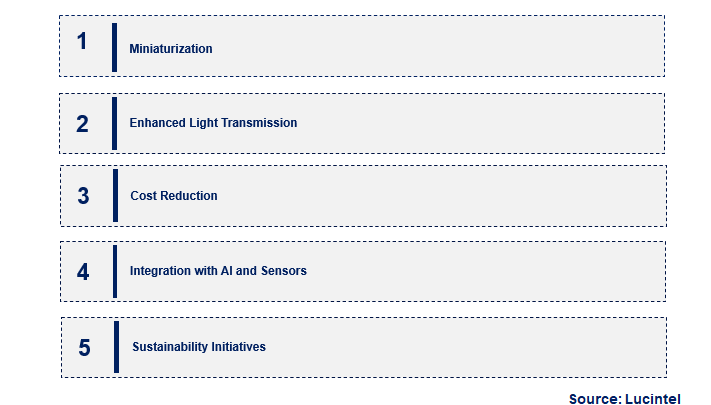
• Miniaturization: Miniaturization is driven by the need for devices that are more compact and lighter. Improved fabrication and advances in materials science are facilitating the manufacture of smaller, more efficient waveguides. This trend helps bring AR/VR into everyday consumer devices like smartphones and smart glasses, making it more accessible and useful to users.
• Enhanced Light Transmission: Improving light transmission efficiency is a key focus area, where coating technology developments and material enhancements have contributed to improved performance. Increased light transmission leads to less loss and better image quality in AR/VR displays, resulting in more vibrant and accurate visual experiences. This is vital for high-definition applications, driving the development of next-generation optical components.
• Cost Reduction: Cost reduction remains an important trend as manufacturers seek to make diffractive waveguide optical glass more affordable. Companies aim to lower the cost of waveguide technologies by optimizing production processes and using low-cost materials. Such moves are crucial for expanding market reach and spurring wider adoption of AR/VR systems in both consumer and industrial sectors.
• Integration with AI and Sensors: Integrating AI with advanced sensor technologies into diffractive waveguide optical glass has transformed how these technologies communicate with users. By using AI-powered adjustments alongside sensor integration, user experience can be made adaptive, offering responsive functionalities. For example, smart glasses or even AR systems may require real-time data analysis and interaction activities.
• Sustainability Initiatives: There is a growing emphasis on sustainability, including efforts to develop environmentally friendly materials and production techniques. Manufacturers strive to reduce the environmental impact during production while increasing the recyclability of waveguide parts. This reflects a larger industry movement toward sustainable practices that influence the design and manufacturing of optics. These emerging trends are driving innovation and shaping the future of diffractive waveguide optical glass, pointing to the industry’s move toward more compact, efficient, and cost-effective solutions that address sustainability and advanced technology integration. Such trends are crucial in redefining the capabilities and applications of waveguide optical technologies as they continue to evolve.
• Advanced Coating Techniques: Diffractive waveguide optical glass has witnessed substantial improvement from new coating technologies. Anti-reflective and anti-abrasive coating innovations lead to higher light transmittance, thus increasing the durability of optical components and making them clearer and more reliable. This is important for display applications where high definition and robustness are required under different environments.
• Integration of Nano-Optics: The integration of nano-optics with waveguides revolutionizes the industry. Nano-scale structures can manipulate light more precisely, resulting in improved efficiency and functionality of waveguides. This enables displays with higher resolution and more diverse optical functions, leading to advances in AR/VR and other high-tech appliances.
• Development of Flexible Waveguides: The trend is toward flexible diffractive waveguide optical glass, allowing for more versatile and adaptable optical systems. The development of flexible materials and manufacturing processes expands the use of waveguides in wearable devices and other innovative form factors. This trend supports increased demand for integrated, wearable technology.
• Cost-Effective Manufacturing Processes: Improvements in manufacturing processes are reducing costs associated with the production of diffractive waveguide optical glass. Techniques such as automation and scalable production methods have made it possible to produce high-quality waveguides at lower costs. This development is essential for increasing market accessibility and supporting widespread adoption.
• Enhanced Durability and Reliability: Recent advancements focus on improving the durability and reliability of waveguide optical glass. Innovations in materials science and engineering have led to stronger, longer-lasting parts. Enhancing durability addresses challenges related to wear and tear, making it suitable for demanding applications and extending its lifecycle. Performance gains, cost reductions, and broader usage characterize recent developments, with implications for the diffractive waveguide optical glass industry. These developments indicate an industry driven by innovation aimed at meeting emerging market needs, providing the foundation for the growth and evolution of technology involving waveguides.
• Augmented Reality (AR) Headsets: There is significant potential for growth in diffractive waveguide optical glass through AR headsets. The incorporation of waveguide technology enhances the visual experience and functionality of AR headsets, making them more attractive to both individual buyers and businesses. This application is set to grow as AR becomes more integrated into everyday life and industry.
• Automotive Displays: Waveguide technology has found a new market in automotive displays such as head-up displays (HUDs) and advanced driver-assistance systems (ADAS). Better waveguides with higher resolutions that can withstand harsh conditions are facilitating clearer and more informative vehicle displays, improving safety and driving experiences. This application is expected to see increased adoption as automotive technology evolves.
• Wearable Technology: Wearable technology is another key growth area in the technology sector. Diffractive waveguide optical glass is being integrated into smart glasses, fitness trackers, and more. Technological advancements have made these wearables more functional and user-friendly by enhancing their flexibility and miniaturization.
• Consumer Electronics: Consumer electronics like smartphones and tablets are increasingly coming with waveguide technologies for enhanced displays and interactive features. Opportunities in this market involve improving optical functionality and integrating waveguides into new device form factors. This sector is growing due to increasing demand for high-quality immersive displays.
• Medical Devices: Recent advancements have seen medical diagnostic equipment, including surgical visualization systems, benefit from waveguide technology. The development of highly accurate and durable waveguides enhances medical imaging and diagnostic accuracy. This application represents a growing niche with potential for significant impact. These strategic growth opportunities underscore the wide range of uses possible with diffractive waveguide optical glass, which could dramatically increase market size. These areas are expected to drive innovation and growth in the industry due to continued advancements in technology, opening new possibilities for both firms and consumers alike.
• Technological Advancements: The rapid development of optical technology is contributing to the expansion of diffractive waveguide optical glass. The development of flexible materials for nano-optics and innovative coating techniques enhances performance and widens applications, enabling next-generation AR/VR systems and other high-tech devices.
• Increasing Demand for AR/VR: High demand for waveguide optical glass is driven by the growing adoption of augmented reality (AR) and virtual reality (VR) technologies. The need for high-quality immersive displays in AR/VR headsets and devices drives the utilization of advanced waveguides. This trend will continue as more industries adopt AR and VR applications.
• Manufacturing Advancements: Improved manufacturing processes, such as automation and scalability, have made diffractive waveguide optical glass more affordable and accessible. These advancements support increased production volumes at lower costs, encouraging growth in markets using waveguide technology.
• More R&D Investments: Significant investments in research and development activities by many organizations are leading to innovations in waveguide optical glass. These investments lead to advancements in performance, capabilities through new materials and fabrication methods, resulting in better-performing products. This engagement supports cutting-edge technology developments across various industry sectors.
• Diversifying Consumer Electronics Markets: The expanding consumer electronics sector, including smartphones, tablets, and wearable devices, is increasing demand for diffractive waveguide optical glass due to innovations in optical displays and interactive features, contributing to market growth. Challenges in the diffractive waveguide optical glass market are:
• High Production Costs: The high production cost of advanced waveguide materials and manufacturing processes presents a challenge. Although costs are dropping, they remain an obstacle to mass adoption, especially in cost-sensitive markets. To mitigate this issue, companies must continue innovating and optimizing their production methods.
• Competitive Market: The diffractive waveguide optical glass market is characterized by intense competition, with many players involved and rapidly developing technologies. To survive, organizations must embark on innovative practices, attain top performance, and enhance cost efficiency. The pace of technological change requires businesses to constantly adapt and improve.
• Regulatory Compliance with Standards: Complying with industry guidelines is a challenge for manufacturers of waveguide optical glass products, particularly from a regulatory standpoint. Maintaining product safety, quality, and environmental standards requires continuous dedication and investment. Navigating regulations and obtaining certifications are necessary steps for entering new markets and being accepted. The forces driving and impeding growth in diffractive waveguide optical glass capture its highly dynamic nature. Technology advancements, growing demand, and manufacturing improvements are driving growth, while high production costs, market competition, and regulatory compliance present challenges. These factors should be considered when planning strategies for this emerging marketplace.
• Corning
• Schott
• AGC
• Hoya
• Waveoptics
• Mitsui Chemicals
• SVG Tech
• Nedplus
• AAC Technologies
• Zhejiang Crystal-Optech
• Single-Layer
• Multi-Layer
• AR Headset
• AR HUD
• Others
• North America
• Europe
• Asia Pacific
• The Rest of the World
• United States: In the US recent achievements include innovative manufacturing techniques that enhance efficiency and resolution of waveguide displays. Companies are working on incorporating advanced materials and better production methods towards supporting high-definition AR/VR systems. Research investments continue to yield new solutions aimed at reducing optical losses and improving robustness of waveguide systems making them more suitable for consumer electronics as well as professional applications.
• China: China is fast advancing into commercializing diffractive waveguide optical glass. Massive investments in high-tech factories coupled with partnerships with tech firms have accelerated progress here. Some of the most recent initiatives involve adoption of advanced coating technologies alongside cost-effective manufacture processes which enable mass production thereby making waveguide technology accessible. This move aims at supporting a growing domestic market for AR devices besides giving China an upper hand against global tech markets.
• Germany: Germany has made strides in integrating diffractive waveguide optical glass into automotive and industrial applications. German companies focus on optimizing waveguide performance for augmented reality head-up displays (AR HUDs) and driver assistance systems. Advancements in precision engineering and material science have resulted in high performance, durable waveguides that meet the stringent requirements of automotive and industrial environments thus reflecting Germany’s strength as an engineering and automotive technology power house.
• India: India’s steps towards diffractive waveguide optical glass has been driven by increased local production capabilities and cost reductions. Indian companies are investing in research to develop cheap but with high quality waveguide solutions aimed at expanding AR/VR markets. Recent developments have centered on creating affordable waveguide components for educational purposes as well as consumer electronics whose aim is to bring advanced optical technologies nearer to the region while supporting the Indian growing tech ecosystem.
• Japan: Japan uses its expertise in precision optics and nanotechnology to move diffractive waveguide optical glass forward. Examples of these include the use nano-coatings that enhance light transmission and reduce distortion. Also, Japanese companies are looking into new materials and fabrication techniques to improve the performance of waveguides once they are integrated into compact electronic devices. These innovations place Japan at the forefront of cutting-edge optical technologies which assist in developing future AR and VR generations.


• Corning
• Schott
• AGC
• Hoya
• Waveoptics
• Mitsui Chemicals
• SVG Tech
• Nedplus
• AAC Technologies
• Zhejiang Crystal-Optech Q5. Which diffractive waveguide optical glass market segment will be the largest in future? Answer: Lucintel forecasts that single-layer is expected to witness higher growth over the forecast period. Q6. In diffractive waveguide optical glass market, which region is expected to be the largest in next 5 years? Answer: APAC is expected to witness the highest growth over the forecast period. Q.7 Do we receive customization in this report? Answer: Yes, Lucintel provides 10% customization without any additional cost.


Choose a license that fits your team. Instant PDF delivery.
Prices exclude taxes. Instant delivery. Custom licensing available on request.
Market Report · July 31, 2026
Market Report · July 31, 2026
Market Report · July 31, 2026
Trusted partner for strategic intelligence and business growth


Receive a complimentary market analysis tailored to your industry. Our analysts will identify key growth opportunities and competitive dynamics specific to your business.

Market size, growth rate, and key trend analysis for your specific sector.

Top competitor positioning and market share analysis.

Strategic recommendations backed by data-driven insights.
Get curated market intelligence and competitive moves straight to your inbox.
By subscribing, you agree to receive our monthly insights. Unsubscribe anytime.
Receive a complimentary market analysis tailored to your industry. Our analysts will identify key growth opportunities and competitive dynamics specific to your business.
Market size, growth rate, and key trend analysis for your specific sector.
Top competitor positioning and market share analysis.
Strategic recommendations backed by data-driven insights.
Get curated market intelligence, emerging trends, and competitive moves straight to your inbox each month.
By subscribing, you agree to receive our monthly insights. Unsubscribe anytime.
We'll send your sample report shortly.