
Market Report · May 18, 2026

This market report covers trends, opportunities, and forecasts in the global differential pressure instruments market to 2031 by technology (range 15-0-15"wc differential pressure gauge, range 0-5 psi differential pressure gauge, range 0-2.5""w.c. digital differential pressure, and others), application (contamination, level measurement, overpressure measurement, flow measurement, and others), and region (North America, Europe, Asia Pacific, and the Rest of the World)
We'll send your sample report shortly.
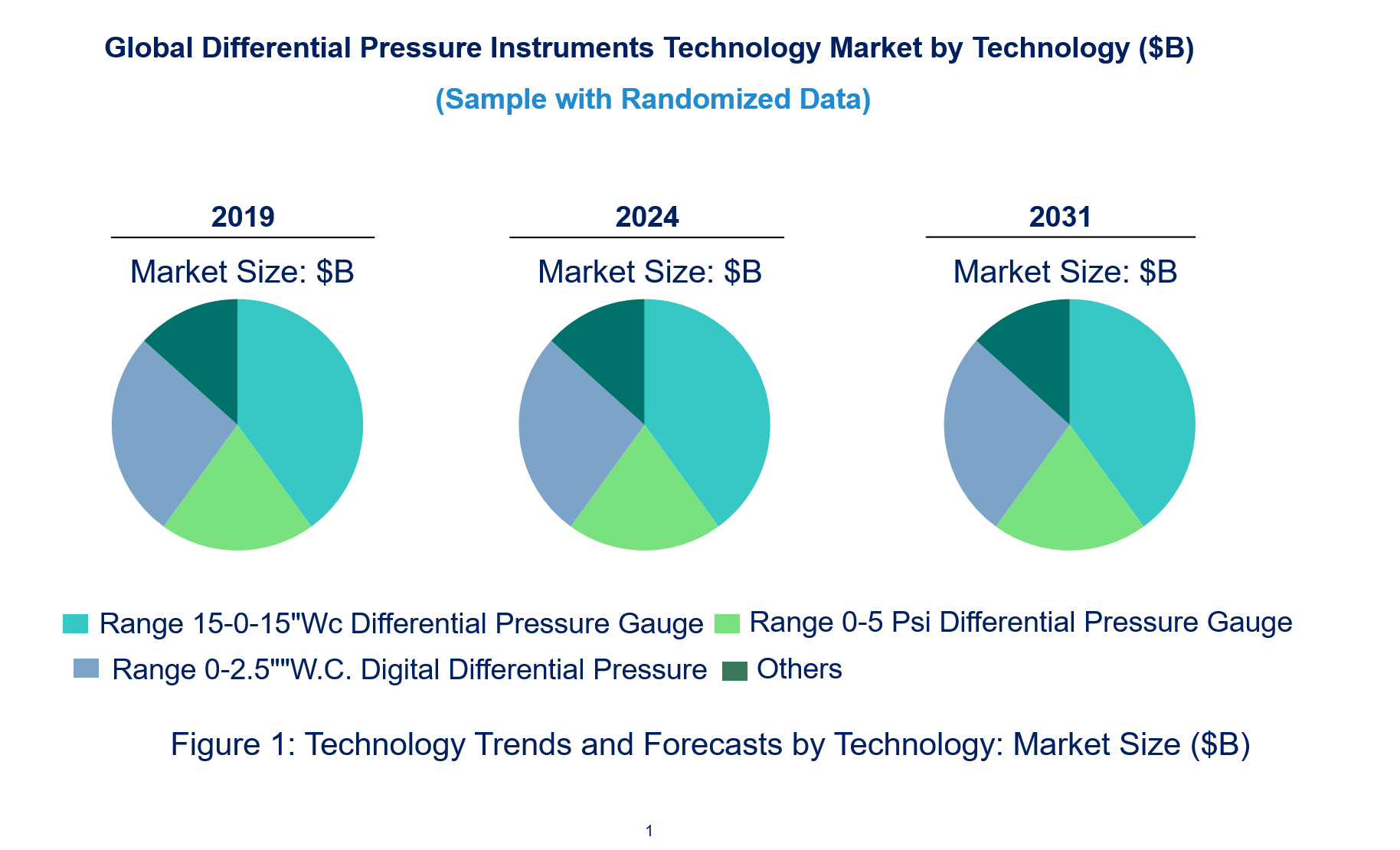
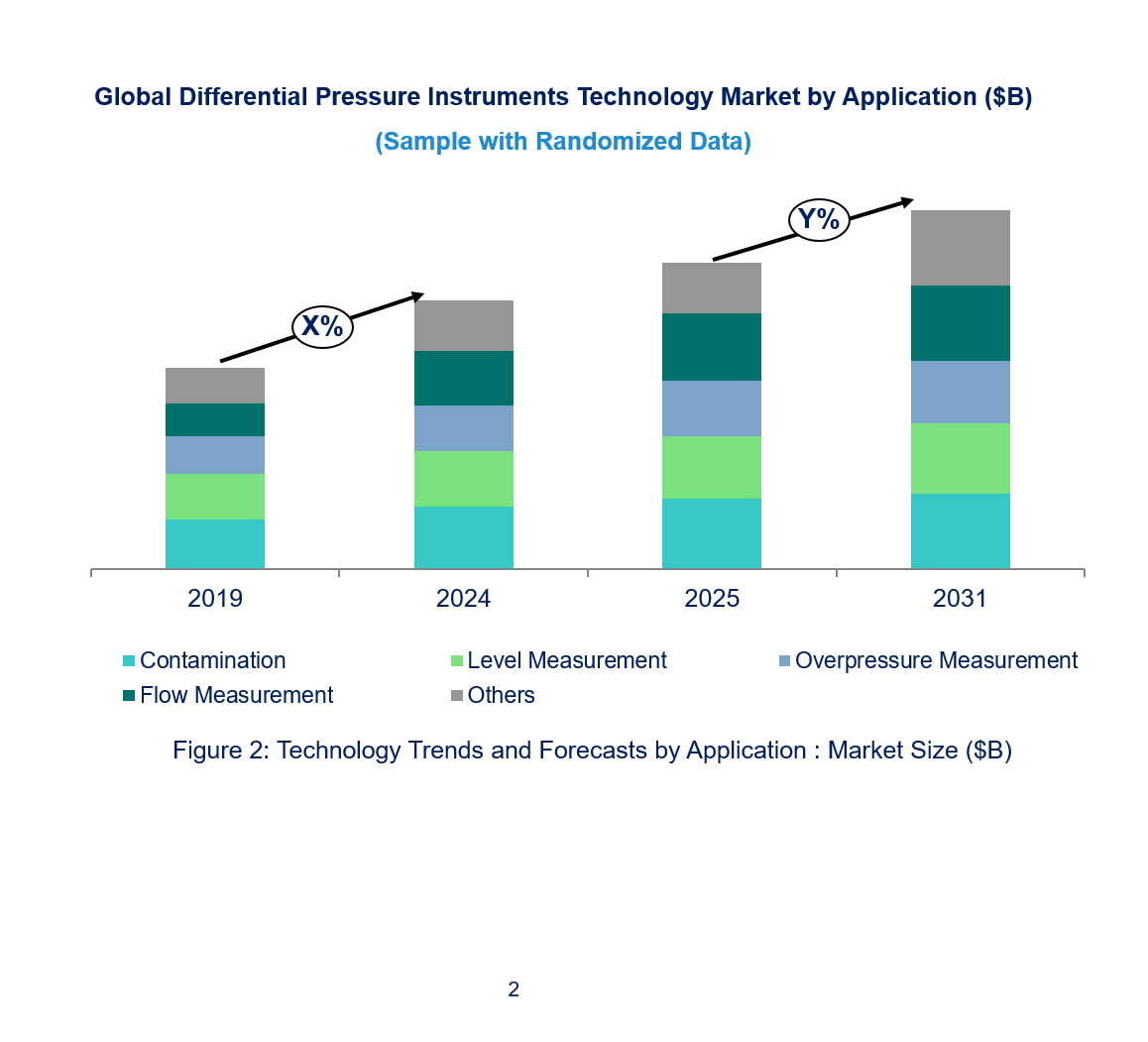
• Shift to Digital and Smart Sensors: There is a growing adoption of digital differential pressure gauges and wireless sensors, replacing traditional mechanical and analog systems. This transition enhances measurement accuracy, provides real-time data, and enables remote monitoring, which increases operational efficiency and reduces maintenance costs.
• Integration of IoT and Wireless Technologies: The integration of IoT with differential pressure instruments is a game-changer, enabling devices to communicate with cloud-based platforms. This allows for real-time monitoring, predictive maintenance, and improved data analytics, leading to more efficient systems and lower operational costs.
• Miniaturization and Compact Designs: Advances in sensor technology have led to the development of smaller, more compact differential pressure instruments. These miniaturized devices are capable of measuring a wider range of pressures with higher precision, making them ideal for applications in space-constrained environments like medical devices, automotive systems, and portable instruments.
• Automation and Process Control: The increasing use of microprocessor-based systems and automation in differential pressure instruments is enhancing their precision and control capabilities. Automated systems can adjust settings based on real-time data, optimizing industrial processes and improving safety and efficiency in sectors like oil and gas, pharmaceuticals, and water treatment.
• Energy Efficiency and Sustainability: As industries focus on reducing energy consumption and increasing sustainability, there is a trend toward developing more energy-efficient pressure measurement devices. This includes the use of low-power sensors and energy-saving features, particularly in industries such as HVAC, water treatment, and renewable energy. These technology trends ranging from digitalization and miniaturization to automation and sustainability are reshaping the differential pressure instruments market companies are increasingly adopting these innovations to meet the demands for higher precision, reliability, and efficiency, while ensuring compliance with evolving industry standards. These advancements are driving the market toward more intelligent, connected, and energy-efficient pressure measurement solutions.
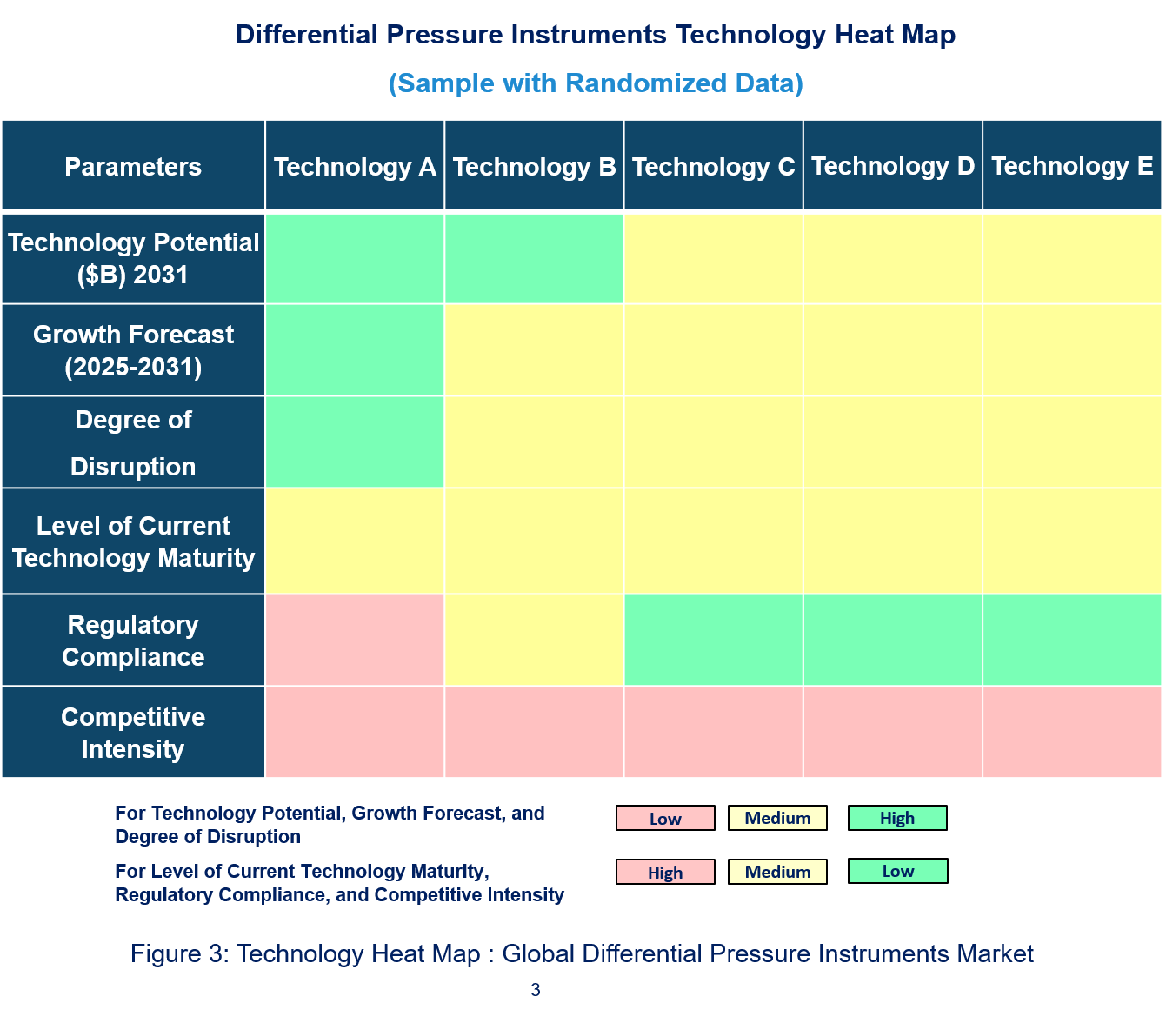
• Potential in Technology: The potential for technologies such as digital pressure gauges, wireless sensors, and IoT integration is enormous. These innovations can significantly enhance measurement accuracy, real-time data processing, and remote monitoring capabilities. As the demand for more compact, efficient, and cost-effective solutions grows, these technologies have the potential to revolutionize industries such as oil and gas, healthcare, and manufacturing.
• Degree of Disruption: The disruption caused by technologies like digitalization, automation, and IoT is substantial. Traditional mechanical systems are being replaced by more flexible, accurate, and scalable digital solutions. This shift improves operational efficiency and provides real-time analytics for predictive maintenance, transforming operational practices across various sectors.
• Current Technology Maturity Level: While digital and wireless technologies are already well-established in many sectors, the integration of IoT and AI is still maturing. Regulatory frameworks are catching up, especially in highly regulated industries like healthcare and oil and gas. The level of technology maturity varies, with some technologies already mainstream and others still evolving to meet industry demands.
• Regulatory Compliance: Differential pressure instruments must comply with strict industry standards, including ISO, IEC, and ATEX, to ensure safety, performance, and environmental protection. The regulatory compliance for technologies such as wireless sensors and IoT integration is evolving to ensure they meet required standards, particularly in critical sectors.
• Dwyer Instruments: Dwyer Instruments has introduced several new products to its line of differential pressure instruments, focusing on wireless and smart technology solutions. Their recently launched wireless pressure sensors are designed to offer real-time data collection and remote monitoring capabilities, making them ideal for applications in HVAC systems, industrial control, and environmental monitoring. These advancements help users increase operational efficiency, reduce maintenance costs, and improve system performance.
• Reed-Direct: Reed-Direct has focused on improving the versatility and accuracy of its differential pressure instruments by integrating advanced digital technologies. Their new line of digital pressure gauges provides highly precise measurements with enhanced data processing capabilities. These instruments are designed for easy integration into industrial control systems, offering better monitoring and troubleshooting for systems in sectors such as water treatment, HVAC, and manufacturing.
• UEI (Universal Enterprises Inc.): UEI has made significant strides in developing compact and rugged differential pressure instruments that meet the demanding conditions of fieldwork. Their new portable pressure testers are designed to provide accurate readings in a wide range of applications, including residential, industrial, and HVAC systems. By enhancing the portability and durability of its products, UEI has made it easier for technicians to perform on-site testing without compromising on measurement accuracy.
• Omega Engineering: Omega Engineering has recently introduced a new range of digital differential pressure gauges and transmitters with enhanced connectivity and integration features. These devices are equipped with advanced digital displays and offer multiple communication options, including Modbus and analog outputs. Omega’s solutions are being increasingly adopted for industrial automation, environmental monitoring, and process control, providing real-time data that enhances operational efficiency and predictive maintenance capabilities.
• Fluke: Fluke has expanded its offerings in the differential pressure instruments market by introducing innovative products that cater to the needs of industries requiring precise calibration and troubleshooting. Their recently launched handheld differential pressure meters are designed for use in critical applications, including HVAC and process monitoring. The instruments feature advanced diagnostic capabilities, offering on-site pressure testing with high accuracy, thus improving operational efficiency and ensuring compliance with industry standards. Key players in the differential pressure instruments market, such as Dwyer Instruments, Reed-Direct, UEI, Omega Engineering, and Fluke, are responding to market demands by incorporating advanced digital, wireless, and IoT technologies into their product offerings. These innovations are enhancing the accuracy, efficiency, and versatility of differential pressure measurement solutions, making them increasingly critical for industrial, environmental, and healthcare applications. As a result, these developments are reshaping the market by enabling smarter, more efficient monitoring systems and paving the way for the integration of predictive maintenance and real-time data analysis.
• Technological Advancements: The adoption of digital pressure gauges, wireless sensors, and IoT integration is driving the market. These technologies improve accuracy, and real-time monitoring, and enable remote diagnostics, making them ideal for industries that require high precision, such as healthcare, oil and gas, and manufacturing.
• Growing Demand for Automation: Industries across various sectors are increasingly adopting automated systems for process control. This demand for automation is pushing the development of smart, automated differential pressure instruments that can adjust settings based on real-time data, improving operational efficiency and reducing downtime.
• Focus on Industrial Efficiency: The need to improve operational efficiency, reduce downtime, and minimize maintenance costs is driving the adoption of advanced pressure instruments. Digital and wireless sensors enable real-time data collection, predictive maintenance, and remote monitoring, helping industries reduce inefficiencies and optimize systems.
• Rising Applications in Energy and HVAC: The rising demand for energy-efficient systems and smart building solutions in the HVAC sector is driving the need for advanced differential pressure instruments. In energy sectors, these instruments are essential for ensuring system optimization, measuring fluid dynamics, and improving energy efficiency.
• Miniaturization and Compact Designs: Advancements in sensor technology are enabling the development of smaller, more compact differential pressure instruments that are ideal for space-constrained environments like medical devices and automotive systems. This miniaturization trend is opening new markets and broadening the application scope of differential pressure instruments. Challenges in the differential pressure instruments market are:
• High Cost of Advanced Systems: Although digital and wireless sensors offer superior performance, their high upfront costs can be a barrier for smaller companies and those operating in cost-sensitive industries. The adoption of these advanced technologies requires significant capital investment, which can be challenging for some sectors.
• Regulatory Compliance: With increasing regulatory scrutiny in industries like healthcare, oil and gas, and pharmaceuticals, differential pressure instruments must comply with stringent standards like ISO, IEC, and ATEX. Meeting these compliance requirements can increase the complexity and cost of product development and certification, potentially limiting market growth.
• Integration with Legacy Systems: Many industries are still operating with legacy systems that may not be compatible with the latest differential pressure technologies. Integrating new technologies into existing systems can be a significant challenge, requiring additional time, resources, and expertise. The differential pressure instruments market is being driven by technological advancements, increased automation, and a growing demand for efficiency across industries. While growth opportunities are abundant, challenges like high implementation costs, regulatory compliance, and competition from alternative technologies remain significant hurdles. However, the continued development of smart, efficient, and compact pressure measurement solutions is reshaping the market, making it essential for companies to innovate and adapt to these emerging trends. The industry is moving toward more intelligent, automated, and energy-efficient systems that cater to the diverse needs of various sectors, ensuring growth and sustainability in the long term.
• Dwyer Instruments
• Reed-Direct
• Uei
• Omega Engineering
• Fluke
• Technology Readiness by Technology Type: The technology readiness of different differential pressure instruments varies across the range 15-0-15" W.C. differential pressure gauge, range 0-5 Psi differential pressure gauge, and range 0-2.5" W.C. digital differential pressure gauge. The range 15-0-15" W.C. gauges are mature and widely used in HVAC, gas monitoring, and general industrial applications. These gauges are highly reliable but less adaptable to digital integration, limiting their potential in emerging smart environments. The range of 0-5 Psi gauges, commonly used in the oil and gas and water treatment industries, are also well-established but are increasingly being replaced by digital or wireless solutions that offer more versatility in handling complex industrial needs. The range 0-2.5" W.C. digital differential pressure gauges, which integrate advanced features like real-time monitoring, wireless connectivity, and IoT integration, are the most technologically advanced. These devices are highly competitive, particularly in sectors demanding high precision, real-time data processing, and predictive maintenance capabilities. Regulatory compliance is a critical factor across all technology types, with digital gauges and wireless sensors facing evolving standards related to safety and data privacy, particularly in regulated sectors like healthcare, pharmaceuticals, and energy. The growing readiness of digital solutions is transforming the market by offering smarter, more efficient, and highly automated measurement solutions for modern industrial applications.
• Competitive Intensity and Regulatory Compliance: The competitive intensity in the differential pressure instruments market is high, with key players offering a range of technologies such as range 15-0-15" W.C. Differential pressure gauges, range 0-5 Psi differential pressure gauges, and range 0-2.5" W.C. digital differential pressure gauges. The range 15-0-15" W.C. gauges are commonly used in HVAC and gas applications, where precise measurements are critical, creating significant competition among manufacturers. The range of 0-5 Psi gauges, used in industries like oil and gas and water treatment, also face competition due to their widespread utility and necessity in challenging environments. Digital differential pressure gauges (Range 0-2.5" W.C.), with their advanced features like real-time data and wireless connectivity, face intense competition as companies adopt these more sophisticated solutions. Regulatory compliance plays a crucial role in the market, as these instruments must meet stringent industry standards such as ISO, IEC, and ATEX. These regulations ensure safety, performance, and environmental protection, especially in sectors like oil and gas, pharmaceuticals, and healthcare, where non-compliance can result in safety hazards and legal implications. As a result, market players must continuously innovate while ensuring that their products meet regulatory requirements to stay competitive.
• Disruption Potential of Different Technologies: The differential pressure instruments market is witnessing significant disruption with the advent of technologies like the range 15-0-15" W.C. Differential pressure gauge, range 0-5 Psi differential pressure gauge, and range 0-2.5" W.C. Digital differential pressure gauge. The range 15-0-15" W.C. gauges offer a high level of precision, improving performance in industries requiring sensitive measurements, such as HVAC and gas monitoring. The range of 0-5 Psi gauges is expanding the range of pressure measurement, making them ideal for applications in oil and gas and water treatment. Meanwhile, the range 0-2.5" W.C. digital gauges provide advanced features such as real-time data processing, enhanced accuracy, and IoT connectivity, driving a shift toward automation and remote monitoring. These digital solutions are revolutionizing industries by providing more reliable and timely data, which is critical for predictive maintenance and minimizing downtime. The increasing integration of wireless sensors further enhances flexibility and ease of use, allowing for seamless integration into industrial IoT ecosystems. As these technologies advance, they are reshaping the market by enabling smarter, more efficient, and cost-effective systems for a variety of applications, thereby transforming traditional differential pressure measurement systems.
• Range 15-0-15"Wc Differential Pressure Gauge
• Range 0-5 Psi Differential Pressure Gauge
• Range 0-2.5""W.C. Digital Differential Pressure
• Others
• Contamination
• Level Measurement
• Overpressure Measurement
• Flow Measurement
• Others
• North America
• Europe
• Asia Pacific
• The Rest of the World
• Latest Developments and Innovations in the Differential Pressure Instruments Technologies
• Companies / Ecosystems
• Strategic Opportunities by Technology Type




Choose a license that fits your team. Instant PDF delivery.
Prices exclude taxes. Instant delivery. Custom licensing available on request.
Market Report · May 18, 2026
Market Report · May 18, 2026
Market Report · May 18, 2026
Trusted partner for strategic intelligence and business growth


Receive a complimentary market analysis tailored to your industry. Our analysts will identify key growth opportunities and competitive dynamics specific to your business.

Market size, growth rate, and key trend analysis for your specific sector.

Top competitor positioning and market share analysis.

Strategic recommendations backed by data-driven insights.
Get curated market intelligence and competitive moves straight to your inbox.
By subscribing, you agree to receive our monthly insights. Unsubscribe anytime.
Receive a complimentary market analysis tailored to your industry. Our analysts will identify key growth opportunities and competitive dynamics specific to your business.
Market size, growth rate, and key trend analysis for your specific sector.
Top competitor positioning and market share analysis.
Strategic recommendations backed by data-driven insights.
Get curated market intelligence, emerging trends, and competitive moves straight to your inbox each month.
By subscribing, you agree to receive our monthly insights. Unsubscribe anytime.
We'll send your sample report shortly.