
Market Report · July 22, 2026

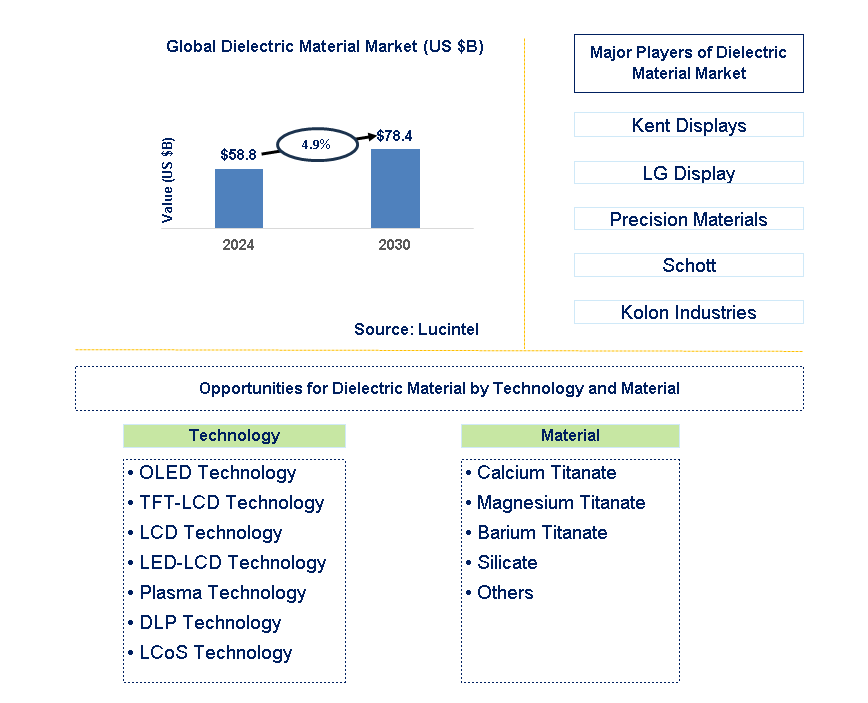
Key data points: The market size in 2031 = $82.3 billion, growth forecast = 4.9% annually for the next 7 years. Scroll below to get more insights. This market report covers trends, opportunities, and forecasts in the global dielectric material market to 2031 by technology (OLED Technology, TFT-LCD Technology, LCD Technology, LED-LCD Technology, PLASMA Technology, DLP Technology, and LCoS Technology), material (calcium titanate, magnesium titanate, barium titanate, silicate, and others), and region (North America, Europe, Asia Pacific, and the Rest of the World)
We'll send your sample report shortly.
• Lucintel forecasts that, within the technology category, OLED technology will remain the largest segment over the forecast period as it provides improved color reproduction, quicker response time, and also possesses the ability to develop flexible and even transparent displays.
• Within the material category, calcium titanate will remain the largest segment as it is a ceramic compound with dielectric properties, which makes it ideal for various electronic applications.
• In terms of regions, North America will remain the largest region over the forecast period due to the growing adoption of advanced electronic devices, along with the significantly increasing telecommunications industry and ongoing technological innovation in the region. Gain valuable insights for your business decisions with our comprehensive 150+ page report.
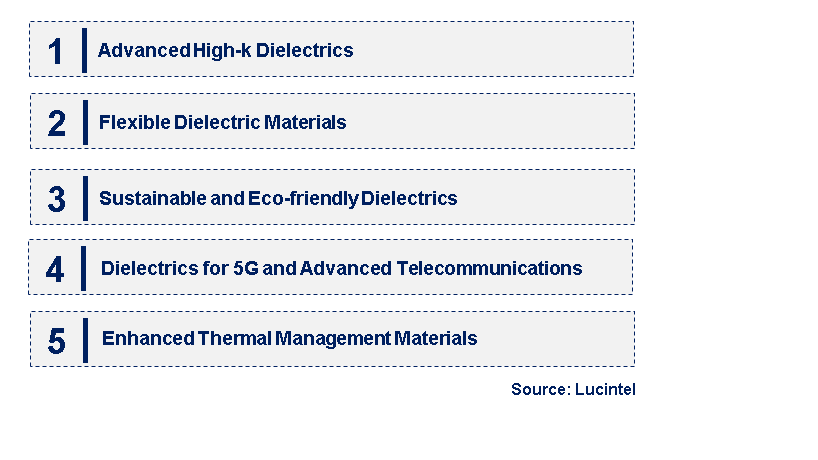
• Advanced High-k Dielectrics: The shift toward high-k dielectrics is driven by the need for smaller and more efficient electronic devices. High-k materials enhance capacitance without increasing device size, making them crucial for modern electronics. Their adoption is leading to improved performance and miniaturization of components, influencing the overall market.
• Flexible Dielectric Materials: Flexible dielectrics are gaining traction due to their applications in wearable electronics and flexible displays. These materials offer high performance while being adaptable to various shapes and sizes. Their growing use is driving innovation and expanding the market for dielectric materials in consumer electronics.
• Sustainable and Eco-friendly Dielectrics: There is a growing emphasis on environmentally friendly dielectric materials to meet sustainability goals. Companies are developing materials with lower environmental impact, such as biodegradable polymers and recyclable materials. This trend is shaping the market by aligning with global regulatory standards and consumer preferences.
• Dielectrics for 5G and Advanced Telecommunications: The demand for high-performance dielectrics in 5G infrastructure and advanced telecommunications is rising. These materials are essential for efficient signal transmission and device performance. The expansion of 5G networks is a key driver of innovation in this segment, impacting overall market dynamics.
• Enhanced Thermal Management Materials: With the increasing power density in electronic devices, there is a need for dielectrics with improved thermal management properties. Materials that can effectively dissipate heat while maintaining electrical insulation are becoming more important, influencing market growth and development. These emerging trends are reshaping the dielectric material market by driving innovation, expanding applications, and meeting new technological demands. The focus on advanced materials and sustainability is leading to a more dynamic and competitive market landscape.
• Development of High-k Dielectrics: Recent innovations in high-k dielectric materials are enhancing the performance of electronic components by allowing higher capacitance without increasing size. These materials are crucial for miniaturizing devices and improving efficiency, significantly impacting the electronics industry.
• Advancements in Flexible Dielectrics: Flexible dielectric materials are being developed to support the growth of wearable technology and flexible electronics. These advancements are enabling the creation of new types of devices and expanding the market for dielectric materials.
• Introduction of Eco-friendly Dielectric Materials: The market is seeing a rise in eco-friendly dielectric materials as manufacturers focus on sustainability. Biodegradable and recyclable materials are being introduced to meet regulatory standards and consumer demand for environmentally responsible products.
• Enhanced Dielectrics for 5G Technology: The development of specialized dielectrics for 5G technology is accelerating, driven by the need for high-performance materials in advanced telecommunications. These dielectrics support improved signal transmission and device performance, influencing market growth.
• Innovations in Thermal Management Dielectrics: New dielectric materials with enhanced thermal management properties are being developed to address the challenges of power density in electronic devices. These innovations are critical for maintaining performance and reliability in high-power applications. These developments are driving growth and innovation in the dielectric material market, influencing product offerings and market dynamics. Advancements in material properties and applications are shaping the future of the industry.
• Electronics: Growth in the electronics sector is driving demand for advanced dielectric materials with improved performance. Innovations in high-k dielectrics and flexible materials are creating opportunities for companies to develop new products and capture market share in electronics.
• Telecommunications: The expansion of 5G networks is creating significant opportunities for dielectric materials designed for high-frequency applications. Companies can leverage this growth by developing materials that enhance signal transmission and device efficiency.
• Renewable Energy: Increased use of dielectric materials in renewable energy applications, such as solar panels, is driving market growth. Opportunities exist in developing materials that improve energy efficiency and durability in harsh environmental conditions.
• Automotive: The automotive sector is driving demand for dielectric materials used in electric vehicles and advanced driver-assistance systems. Companies can capitalize on this trend by providing high-performance materials that enhance vehicle safety and efficiency.
• Wearable Technology: The rise of wearable technology is creating opportunities for dielectric materials with flexible and lightweight properties. Innovations in this area can lead to new product development and market expansion in the wearable electronics segment. These strategic growth opportunities are reshaping the dielectric material market by driving innovation, expanding applications, and influencing market dynamics. Companies that capitalize on these trends can enhance their market position and drive future growth.
• Technological Advancements: Technological advancements in electronics and telecommunications are driving demand for high-performance dielectric materials. Innovations such as high-k dielectrics and flexible materials are enabling new applications and improving device performance.
• Growth in Electronics and Telecommunications: The rapid growth of the electronics and telecommunications sectors is increasing the need for advanced dielectric materials. This demand is driven by the proliferation of smart devices, 5G technology, and other emerging applications.
• Rising Demand for Renewable Energy: The increasing adoption of renewable energy sources is driving demand for dielectric materials used in solar panels and other energy systems. Innovations in materials that enhance efficiency and durability are key to supporting this growth.
• Focus on Sustainability: There is a growing emphasis on environmentally friendly dielectric materials, driven by regulatory standards and consumer preferences. Companies are developing eco-friendly materials to meet sustainability goals and align with market trends.
• Advancements in Automotive Technology: The automotive industry’s shift toward electric vehicles and advanced driver-assistance systems is driving demand for specialized dielectric materials. These materials are crucial for improving vehicle performance and safety. Challenges in the dielectric material market are:
• High Material Costs: The cost of advanced dielectric materials can be high, impacting their adoption in cost-sensitive applications. Companies need to balance performance with cost efficiency to remain competitive in the market.
• Regulatory Compliance: Stricter environmental and safety regulations are creating challenges for manufacturers. Compliance with these regulations requires ongoing research and development, which can increase costs and complexity.
• Supply Chain Disruptions: Global supply chain disruptions can affect the availability and cost of raw materials used in dielectric materials. Companies need to manage supply chain risks to ensure consistent production and delivery. These drivers and challenges are shaping the dielectric material market by influencing innovation, market dynamics, and growth opportunities. Companies that address these factors effectively can enhance their market position and drive success in the evolving industry.
• Kent Displays
• LG Display
• Precision Materials
• Schott
• Kolon Industries
• Honeywell Electronics Materials
• Plextronics
• BASF
• Corning Incorporated
• Dupont Display
• OLED Technology
• TFT-LCD Technology
• LCD Technology
• LED-LCD Technology
• Plasma Technology
• DLP Technology
• LCoS Technology
• Calcium Titanate
• Magnesium Titanate
• Barium Titanate
• Silicate
• Others
• North America
• Europe
• Asia Pacific
• The Rest of the World
• United States: Recent developments in the U.S. dielectric material market include a surge in demand for high-performance materials used in advanced electronics and electric vehicles. Innovations in polymers and ceramics have led to improved performance in capacitors and insulators. Research initiatives are also focusing on developing materials with higher dielectric constants and lower losses to meet the needs of next-generation devices.
• India: India is witnessing rapid growth in the dielectric material market due to its booming electronics and telecommunications industries. Significant investments in research and development are fostering advancements in flexible dielectric materials and high-k dielectrics. Government policies promoting high-tech manufacturing are also accelerating the production of advanced dielectric materials for various applications, including 5G technology.
• Germany: In Germany, the dielectric material market is benefiting from advancements in automotive and industrial applications. Innovations in dielectric ceramics and polymers are enhancing the performance of electrical components. The German market is also seeing increased adoption of environmentally friendly dielectric materials, driven by stricter regulatory standards and sustainability goals.
• India: India’s dielectric material market is growing due to increased demand in the telecommunications and renewable energy sectors. Advances in dielectric materials are supporting the expansion of 5G networks and improving the efficiency of solar panels. Research is focused on cost-effective and high-performance dielectric materials to support the country’s growing infrastructure needs.
• Japan: Japan continues to be a leader in dielectric material innovation, particularly in the electronics sector. Recent developments include advanced dielectric ceramics and films designed for high-frequency applications. Japan’s focus on cutting-edge technology and strong research capabilities is driving the development of new dielectric materials for emerging technologies, such as quantum computing and high-performance electronics.


• Kent Displays
• LG Display
• Precision Materials
• Schott
• Kolon Industries
• Honeywell Electronics Materials
• Plextronics
• BASF
• Corning Incorporated
• Dupont Display Q6. Which dielectric material market segment will be the largest in future? Answer: Lucintel forecasts that oled technology will remain the largest segment over the forecast period as it provides improved color reproduction, quicker response time, and also possess the ability to develop flexible and even transparent displays. Q7. In dielectric material market, which region is expected to be the largest in next 5 years? Answer: North America will remain the largest region over the forecast period due to the growing adoption of advanced electronic devices, along with the significantly increasing telecommunications industry and ongoing technological innovation in the region. Q.8 Do we receive customization in this report? Answer: Yes, Lucintel provides 10% customization without any additional cost.


Choose a license that fits your team. Instant PDF delivery.
Prices exclude taxes. Instant delivery. Custom licensing available on request.
Market Report · July 22, 2026
Market Report · July 22, 2026
Market Report · July 22, 2026
Trusted partner for strategic intelligence and business growth


Receive a complimentary market analysis tailored to your industry. Our analysts will identify key growth opportunities and competitive dynamics specific to your business.

Market size, growth rate, and key trend analysis for your specific sector.

Top competitor positioning and market share analysis.

Strategic recommendations backed by data-driven insights.
Get curated market intelligence and competitive moves straight to your inbox.
By subscribing, you agree to receive our monthly insights. Unsubscribe anytime.
Receive a complimentary market analysis tailored to your industry. Our analysts will identify key growth opportunities and competitive dynamics specific to your business.
Market size, growth rate, and key trend analysis for your specific sector.
Top competitor positioning and market share analysis.
Strategic recommendations backed by data-driven insights.
Get curated market intelligence, emerging trends, and competitive moves straight to your inbox each month.
By subscribing, you agree to receive our monthly insights. Unsubscribe anytime.
We'll send your sample report shortly.