
Market Report · July 31, 2026

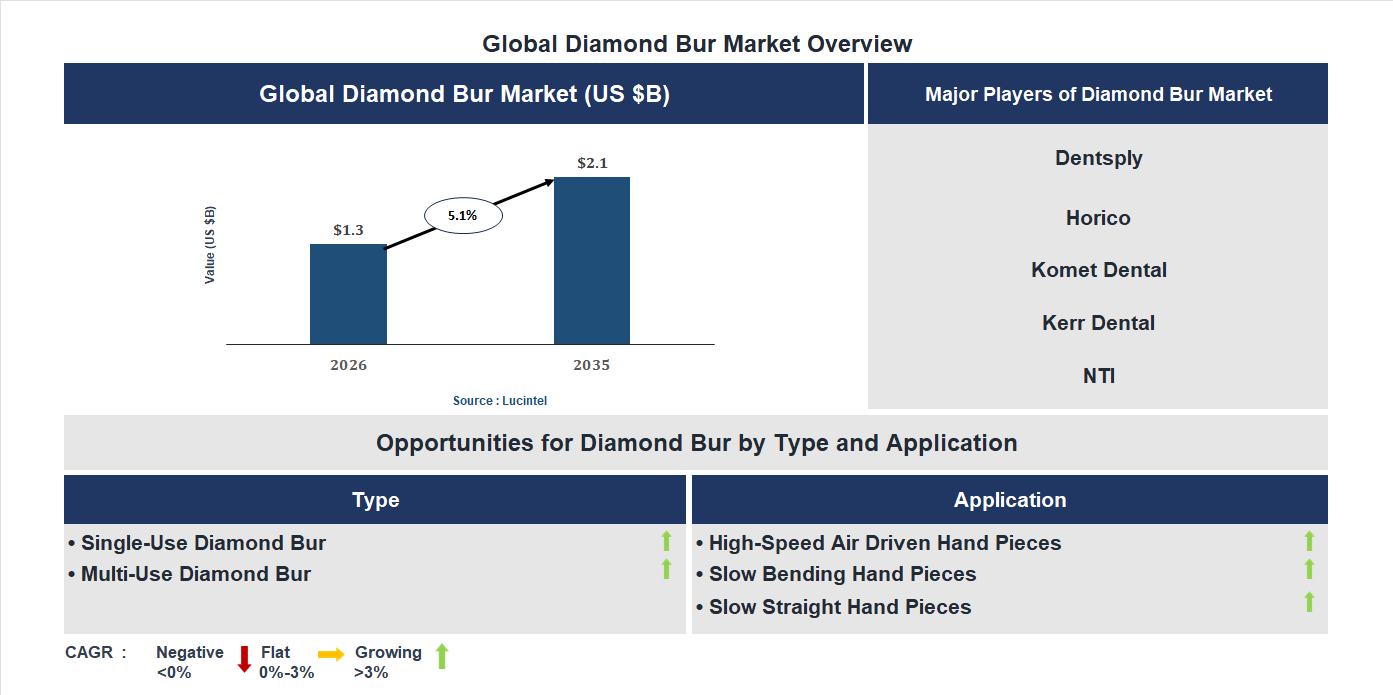
Key data points: The market size in 2035 = $2.1 billion, growth forecast = 5.1% annually for the next 8 years. Scroll below to get more insights. This market report covers trends, opportunities and forecasts in diamond bur market to 2035 by type (single-use diamond bur and multi-use diamond bur), application (high-speed air driven hand pieces, slow bending hand pieces, and slow straight hand pieces), and region (North America, Europe, Asia Pacific, and the Rest of the World)
We'll send your sample report shortly.
• Lucintel forecasts that, within the type category, single-use diamond bur is expected to witness higher growth over the forecast period.
• Within the application category, high-speed air driven hand piece is expected to witness the highest growth.
• In terms of region, APAC is expected to witness the highest growth over the forecast period. Gain valuable insights for your business decisions with our comprehensive 150+ page report. Sample figures with some insights are shown below.
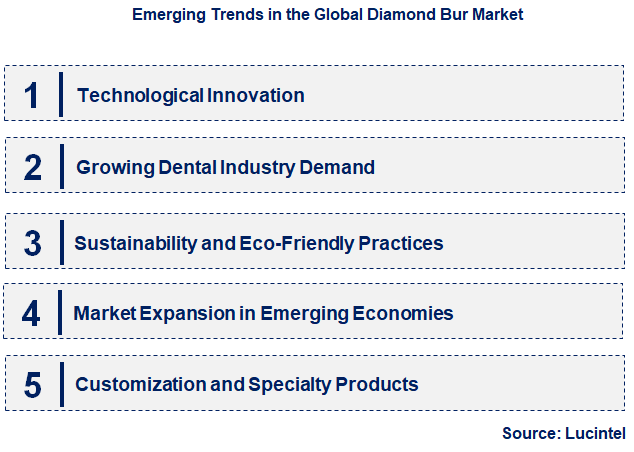
• Technological Innovation: Integration of advanced manufacturing techniques such as laser technology and CAD/CAM systems is enhancing product precision and efficiency. These innovations allow for more complex designs, improved durability, and better performance, meeting the increasing demand for high-quality dental and industrial tools. As a result, manufacturers are investing heavily in R&D to develop cutting-edge diamond burs that cater to specialized applications, thereby driving market growth and customer satisfaction.
• Growing Dental Industry Demand: The expanding global dental industry, driven by rising oral health awareness and cosmetic dentistry trends, is significantly boosting the demand for diamond burs. These tools are essential for procedures requiring high precision, such as cavity preparation and crown fabrication. The increasing adoption of minimally invasive techniques further amplifies the need for advanced diamond burs, encouraging manufacturers to innovate and diversify their product offerings to meet this rising demand.
• Sustainability and Eco-Friendly Practices: Environmental concerns are prompting market players to adopt sustainable manufacturing processes and eco-friendly materials. Companies are exploring biodegradable coatings and reducing waste during production. This shift not only aligns with global sustainability goals but also appeals to environmentally conscious consumers and dental practitioners. The focus on eco-friendly practices is expected to influence product development, packaging, and corporate strategies within the diamond bur market.
• Market Expansion in Emerging Economies: Rapid economic growth and increasing healthcare infrastructure in regions such as Asia-Pacific and Latin America are opening new avenues for market expansion. Rising disposable incomes and improved access to dental care services are fueling demand for high-quality diamond burs. Companies are establishing local manufacturing units and distribution channels to tap into these emerging markets, which are projected to contribute significantly to overall market growth in the coming years.
• Customization and Specialty Products: There is a growing trend toward customized diamond burs tailored to specific procedures and user preferences. Manufacturers are offering a wider range of shapes, sizes, and grit levels to meet diverse clinical needs. This trend enhances treatment outcomes and operational efficiency, providing a competitive edge to companies that can deliver personalized solutions. The demand for specialty products is expected to increase as practitioners seek tools that optimize performance for particular applications. In summary, these trends are collectively reshaping the diamond bur market by fostering innovation, expanding geographical reach, emphasizing sustainability, and enhancing product customization. They are driving increased competition, improving product quality, and opening new growth opportunities, ultimately transforming how the industry operates and meets evolving customer needs.
• Growth in Dental Industry: Increasing demand for cosmetic dentistry and restorative procedures is fueling the need for high-precision diamond burs. Dental professionals prefer durable, efficient tools to improve patient outcomes, leading to a surge in sales. Technological innovations such as coated and laser-graded burs are enhancing performance, reducing procedure time, and improving safety. This growth is expanding market reach, encouraging new product development, and attracting investments, ultimately strengthening the market position of key players.
• Advancements in Manufacturing Technology: The adoption of CNC machining and laser technology has revolutionized diamond bur production, ensuring higher precision and consistency. These innovations reduce manufacturing costs and waste, enabling companies to offer more competitive prices. Improved quality control and customization options are meeting specific industry needs, boosting customer satisfaction. As manufacturing processes become more sophisticated, the market benefits from increased product reliability, wider application scope, and accelerated innovation cycles, fostering overall industry growth.
• Rising Industrial Applications: Beyond dental use, diamond burs are increasingly employed in industrial sectors such as electronics, aerospace, and jewelry. Their superior cutting and grinding capabilities make them ideal for precision tasks. The expanding industrial application base is driving demand for specialized diamond burs, prompting manufacturers to develop tailored solutions. This diversification reduces market dependency on a single sector, enhances revenue streams, and encourages technological innovation, positioning the market for sustained growth across multiple industries.
• Increasing Focus on Sustainability: Environmental concerns are prompting manufacturers to adopt eco-friendly practices, such as using sustainable materials and reducing waste. Innovations in coating technologies extend the lifespan of diamond burs, decreasing the frequency of replacements and waste generation. Regulatory pressures and consumer preferences for green products are influencing market strategies. Emphasizing sustainability not only improves brand reputation but also opens new market segments, fostering long-term growth and aligning industry practices with global environmental standards.
• Expansion in Emerging Markets: Rapid industrialization and increasing healthcare infrastructure in emerging economies are creating new opportunities for diamond burs. Market players are expanding distribution channels and establishing local manufacturing units to cater to rising demand. These regions offer cost advantages and a growing customer base, accelerating market penetration. The expansion supports economic development, enhances access to advanced dental and industrial tools, and diversifies revenue sources, positioning the market for robust future growth. The overall impact of these developments is a more innovative, sustainable, and diversified diamond bur market. Enhanced technological capabilities, expanding applications, and strategic market expansion are driving growth, improving product quality, and increasing competitiveness. These factors collectively contribute to a resilient market poised for continued evolution and global influence.
• Market Expansion in Dental Applications: The increasing adoption of diamond burs in dental procedures is driven by their superior cutting efficiency, durability, and ability to provide precise results. Rising dental care awareness and technological advancements in dental equipment are expanding the use of diamond burs in restorative, cosmetic, and surgical procedures. Additionally, the growing geriatric population requiring dental treatments further boosts demand. Manufacturers are developing specialized burs to meet specific clinical needs, thereby opening new revenue streams and expanding market reach.
• Growing Industrial Use in Cutting and Grinding: Diamond burs are increasingly used in industrial applications such as cutting, grinding, and polishing of hard materials like ceramics, glass, and composites. The demand from manufacturing sectors, including aerospace, automotive, and electronics, is rising due to the need for high-precision tools. Innovations in diamond coating technologies and the development of customized burs are enhancing performance and lifespan. This growth is driven by the need for efficient, durable tools capable of handling tough materials, creating substantial market opportunities.
• Technological Innovations Enhancing Product Performance: Continuous R&D efforts are leading to the development of advanced diamond burs with improved cutting efficiency, reduced heat generation, and longer lifespan. Innovations such as laser-graded diamonds and enhanced bonding techniques are making burs more effective and reliable. These technological improvements are attracting new customers and enabling existing users to upgrade their tools, thereby expanding the market. The focus on product innovation is expected to sustain growth and meet evolving industry demands.
• Strategic Partnerships and Collaborations for Market Penetration: Companies are forming strategic alliances with dental and industrial equipment manufacturers to expand their distribution channels and product offerings. Collaborations with research institutions are fostering innovation in diamond burs. These partnerships facilitate market penetration in emerging regions and help in customizing products for specific applications. Such strategic moves are crucial for gaining a competitive advantage, increasing brand visibility, and accelerating growth in both mature and developing markets.
• Increasing Focus on Sustainable and Eco-Friendly Products: The market is witnessing a shift towards environmentally sustainable diamond burs, with manufacturers adopting eco-friendly production processes and recyclable materials. There is a rising demand for products that reduce waste and energy consumption. Companies investing in sustainable manufacturing practices are gaining a competitive edge and appealing to environmentally conscious consumers. This focus on sustainability is expected to drive innovation, improve brand reputation, and open new market segments aligned with global environmental standards. The overall impact of these growth opportunities is set to significantly enhance the market landscape, fostering innovation, expanding applications, and increasing competitiveness. Stakeholders who capitalize on these trends will be well-positioned to achieve sustained growth and market leadership in the evolving diamond bur market.
• Technological Innovation: The continuous development of advanced manufacturing techniques, such as laser sintering and computer-aided design, has resulted in diamond burs that are more precise, durable, and efficient. These innovations improve patient outcomes in dental procedures and enhance industrial cutting applications, thereby increasing demand. As technology evolves, manufacturers can offer specialized burs tailored to specific needs, expanding market reach. The integration of digital dentistry and automation further accelerates adoption, making technological progress a key driver for market growth.
• Rising Dental Care Awareness: Increasing awareness about oral health and cosmetic dentistry has led to a surge in dental procedures worldwide. Patients and practitioners prefer minimally invasive and efficient tools, boosting demand for high-quality diamond burs. The expansion of dental clinics and the adoption of advanced dental equipment in emerging economies contribute significantly to this trend. As oral health awareness continues to grow, so does the need for reliable, efficient burs, fueling market expansion across regions.
• Industrial Applications Growth: Diamond burs are extensively used in industrial sectors such as electronics, aerospace, and jewelry manufacturing for precision cutting and grinding. The expansion of these industries, driven by technological advancements and increased manufacturing activities, directly impacts demand. The need for high-performance tools capable of handling tough materials encourages innovation and investment in diamond burs, supporting overall market growth.
• Economic Development and Urbanization: Rapid economic growth in emerging markets has increased disposable income and infrastructure development, leading to higher investments in healthcare and industrial sectors. Urbanization fosters better access to dental and industrial services, thereby expanding the customer base for diamond burs. This economic momentum encourages manufacturers to increase production and diversify product offerings, further propelling market growth.
• Regulatory and Quality Standards: Stringent safety, quality, and environmental regulations influence the development and marketing of diamond burs. Compliance with international standards such as ISO and FDA approvals ensures product reliability and safety, boosting consumer confidence. Regulatory frameworks also encourage innovation to meet evolving standards, which can open new markets and improve competitiveness. However, navigating these regulations requires significant investment, impacting market dynamics. The challenges facing the diamond bur market include:
• High Manufacturing Costs: Producing diamond burs involves expensive raw materials, advanced machinery, and skilled labor, leading to high manufacturing costs. These costs can limit profit margins and make it difficult for new entrants to compete with established players. Additionally, fluctuations in raw material prices, such as industrial diamonds, can impact overall production expenses. To remain competitive, manufacturers must optimize processes and manage costs effectively, which can be challenging in a highly specialized industry.
• Intense Market Competition: The diamond bur market is highly competitive, with numerous local and international players vying for market share. Differentiating products through innovation, quality, and pricing becomes crucial but challenging. Price wars and aggressive marketing strategies can erode profit margins, while maintaining consistent quality standards is essential for customer retention. Competition also pressures companies to continuously invest in R&D, which can strain resources, especially for smaller firms.
• Regulatory and Environmental Challenges: Compliance with strict safety, environmental, and quality regulations can be complex and costly. Regulations concerning the disposal of industrial waste, the environmental impact of manufacturing processes, and product safety standards require ongoing investment and adaptation. Non-compliance can lead to legal penalties, product recalls, and damage to brand reputation. As regulations evolve, companies must stay updated and invest in sustainable practices, which can pose significant operational challenges. In summary, the diamond bur market is shaped by technological advancements, increasing demand driven by rising oral health awareness and industrial growth, and supportive regulatory standards. However, high manufacturing costs, intense competition, and regulatory complexities pose significant challenges. These drivers and challenges collectively influence market dynamics, requiring stakeholders to innovate continuously, optimize costs, and adapt to regulatory changes. Overall, the markets future depends on balancing technological progress and regulatory compliance with cost management and competitive strategies, ensuring sustainable growth amid evolving global demands.
• Dentsply
• Horico
• Komet Dental
• Kerr Dental
• NTI
• Mani
• Johnson Promident
• Microcopy
• Hu Friedy
• Strauss
• Single-Use Diamond Bur
• Multi-Use Diamond Bur
• High-Speed Air Driven Hand Pieces
• Slow Bending Hand Pieces
• Slow Straight Hand Pieces
• North America
• Europe
• Asia Pacific
• The Rest of the World
• United States: The US market for diamond burs has seen steady growth due to technological innovations and increased adoption in dental practices. The focus on minimally invasive procedures has driven demand for high-precision burs. The presence of major manufacturers and a well-established healthcare infrastructure supports market expansion. Additionally, rising awareness about oral health and cosmetic dentistry has contributed to increased usage. Regulatory standards ensure product safety and quality, fostering consumer confidence. The integration of digital dentistry and CAD/CAM technologies further boosts demand for specialized diamond burs, making the US a key player in the global market.
• China: Chinas diamond bur market is rapidly expanding, driven by a booming dental industry and increasing healthcare investments. The country has seen a rise in dental clinics and hospitals, which fuels demand for advanced dental tools. Local manufacturers are gaining ground by offering cost-effective products, while international brands continue to hold a significant share through quality and innovation. Government initiatives to improve healthcare infrastructure and promote dental tourism also contribute to market growth. The adoption of new manufacturing techniques and the focus on export opportunities are shaping Chinas role as a major supplier in the global diamond bur market.
• Germany: Germany remains a leading market for diamond burs, characterized by high-quality standards and technological innovation. The countrys strong dental and industrial sectors demand precision tools, fostering continuous product development. German manufacturers emphasize durability, safety, and compliance with stringent European regulations. The integration of digital dentistry and CAD/CAM systems has increased the need for specialized diamond burs. Additionally, Germanys focus on sustainable manufacturing practices and eco-friendly products aligns with global trends. The countrys reputation for engineering excellence and innovation sustains its competitive edge in the global market.
• India: The Indian diamond bur market is witnessing rapid growth due to expanding dental clinics, increasing awareness of oral health, and rising disposable incomes. The affordability of locally manufactured products is attracting a broad customer base. The government’s initiatives to improve healthcare infrastructure and promote medical tourism further support market expansion. The adoption of advanced dental technologies and increasing demand for cosmetic dentistry are driving the need for high-quality diamond burs. Local manufacturers are investing in R&D to improve product offerings, while international brands are expanding their presence through strategic partnerships. Overall, India presents a significant growth opportunity in this sector.
• Japan: Japans diamond bur market is characterized by high technological standards and a focus on innovation. The country’s advanced healthcare system and high adoption of digital dentistry drive demand for precision tools. Japanese manufacturers prioritize product quality, safety, and compliance with strict regulations, maintaining a competitive edge. The growing trend toward minimally invasive procedures and aesthetic dentistry further boosts market growth. Investments in research and development enable the introduction of cutting-edge products. Additionally, Japan’s emphasis on sustainable manufacturing practices aligns with global environmental standards, supporting the countrys position as a key player in the global diamond bur market.


• Dentsply
• Horico
• Komet Dental
• Kerr Dental
• NTI
• Mani
• Johnson Promident
• Microcopy
• Hu Friedy
• Strauss Q5. Which diamond bur market segment will be the largest in future? Answer: Lucintel forecasts that, within the type category, single-use diamond bur is expected to witness higher growth over the forecast period. Q6. In diamond bur market, which region is expected to be the largest in next 5 years? Answer: In terms of region, APAC is expected to witness the highest growth over the forecast period. Q7. Do we receive customization in this report? Answer: Yes, Lucintel provides 10% customization without any additional cost.


Choose a license that fits your team. Instant PDF delivery.
Prices exclude taxes. Instant delivery. Custom licensing available on request.
Market Report · July 31, 2026
Market Report · July 31, 2026
Market Report · July 31, 2026
Trusted partner for strategic intelligence and business growth


Receive a complimentary market analysis tailored to your industry. Our analysts will identify key growth opportunities and competitive dynamics specific to your business.

Market size, growth rate, and key trend analysis for your specific sector.

Top competitor positioning and market share analysis.

Strategic recommendations backed by data-driven insights.
Get curated market intelligence and competitive moves straight to your inbox.
By subscribing, you agree to receive our monthly insights. Unsubscribe anytime.
Receive a complimentary market analysis tailored to your industry. Our analysts will identify key growth opportunities and competitive dynamics specific to your business.
Market size, growth rate, and key trend analysis for your specific sector.
Top competitor positioning and market share analysis.
Strategic recommendations backed by data-driven insights.
Get curated market intelligence, emerging trends, and competitive moves straight to your inbox each month.
By subscribing, you agree to receive our monthly insights. Unsubscribe anytime.
We'll send your sample report shortly.