
Market Report · July 22, 2026

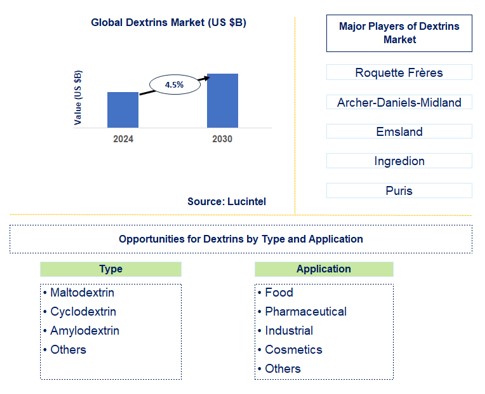
Key data points: The growth forecast = 4.5% annually for the next 6 years. Scroll below to get more insights. This market report covers trends, opportunities, and forecasts in the global dextrins market to 2030 by type (maltodextrin, cyclodextrin, amylodextrin, and others), application (food, pharmaceutical, industrial, cosmetics, and others), and region (North America, Europe, Asia Pacific, and the Rest of the World)
We'll send your sample report shortly.
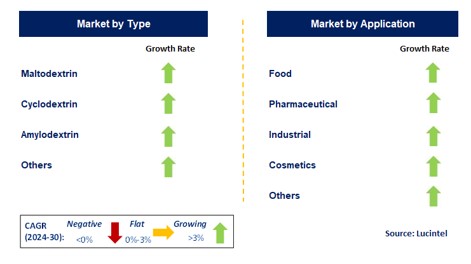
• Lucintel forecasts that, within the type category, maltodextrin will remain the largest segment over the forecast period due to its easily digestible nature, rapid absorption, and mildly sweet properties.
• Within the application category, food will remain the largest segment due to the increasing consumption of ready-to-eat foods globally.
• In terms of regions, APAC is expected to witness the highest growth over the forecast period due to the rapidly growing food industry and rising demand for packaged food products in the region. Gain valuable insights for your business decisions with our comprehensive 150+ page report.
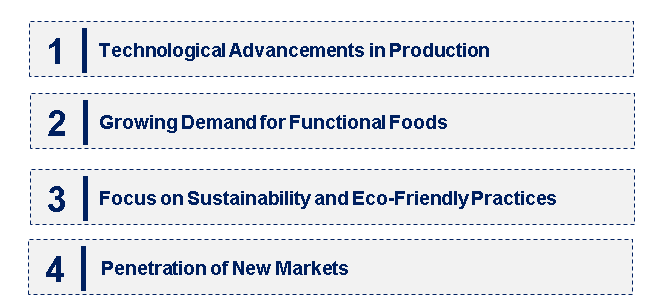
• Technological Advancements in Production: Technological improvements in dextrin production, such as the use of advanced enzyme processes and better manufacturing techniques, are increasing efficiency and quality. These innovations result in higher yields, reduced production costs, and the capability to produce customized dextrins with properties that meet specific needs. The implementation of emerging technologies is driving growth and enhancing the competitiveness of the dextrin market.
• Growing Demand for Functional Foods: The growth of the dextrin market is being driven by increased demand for functional foods. Due to their beneficial qualities, such as fiber content and digestive health benefits, dextrins have become key ingredients in various food products. The demand for dextrins in functional foods has increased as consumers seek healthier food alternatives, thereby creating new avenues for market expansion.
• Focus on Sustainability and Eco-Friendly Practices: Sustainability has become a major trend in the dextrin market, where manufacturers are adopting eco-friendly approaches to production using renewable raw materials. This shift reflects a broader, industry-wide transition towards lower environmental footprints aimed at improving sustainability. Environmentally friendly practices are not only fulfilling statutory requirements but also appealing to eco-conscious consumers, who influence market trends.
• Penetration of New Markets: Dextrin companies can no longer afford to ignore emerging markets. As economies expand and industrialization increases, the demand for dextrins in various end-use applications, such as food and beverages, pharmaceuticals, and cosmetics, is growing. Therefore, diverse economic regions present manufacturers with opportunities for market expansion. Technological advancements, growing demand for functional foods, focus on sustainability, expansion into emerging markets, and innovations in specialty dextrins are among the trends transforming the dextrin market. These movements are fostering growth by influencing manufacturing processes and creating new opportunities for business development. To remain competitive and capitalize on the opportunities arising from this market’s transformation, stakeholders must be responsive to these developments as the market continues to evolve.
• Progress in Production Techniques: Technological innovations applied during dextrin production have facilitated highly effective and economical manufacturing processes. The quality and functionality of dextrins are being improved through innovations in enzymatic approaches and different starch sources. Consequently, such technological advancements reduce production costs, enabling producers to meet the increasing demand for high-quality dextrins across various sectors, such as food and pharmaceuticals.
• Rising Demand in the Food Sector: Dextrins have become increasingly popular within the food industry due to their multiple uses, especially as fat substitutes and fiber enhancers. This trend has been fueled by consumer preference for healthier foods with reduced fat content but high fiber content. As a result, more carbohydrate-based products are being incorporated by food manufacturers, thus boosting the uptake of dextrins in future markets.
• Impacts of Regulatory Changes on the Market: Recent regulatory changes have impacted the dextrin market, especially concerning food additives and labeling requirements. Manufacturers are under pressure to comply with stricter regulations regarding health claims and ingredient transparency, which are driving their focus toward producing high-quality and safe dextrins. Furthermore, these regulations encourage the development of innovative products that meet the needs of customers who prefer clean-label products.
• Expansion in Pharmaceutical Applications: Dextrins, which possess biocompatible characteristics and versatile functionalities, are increasingly being used by pharmaceutical companies as excipients in drug formulations. This is due to the need for safer and more efficient drug delivery technologies. The rise in specialized dextrin applications within the pharmaceutical industry has also driven market growth. The dynamic landscape of recent developments in the dextrin market is influenced by advancements in technology, regulatory changes, and shifts in consumer preferences. These factors collectively generate growth and diversification across different industries. Stakeholders must remain agile as the market develops, adapting to these changes to leverage emerging opportunities and maintain a competitive advantage.
• Food and Beverages: Clean-Label Ingredients: Increasing consumer demand for clean-label products offers dextrins in the food and beverage industry a tremendous growth prospect. Dextrins are being increasingly used as natural and functional ingredients that conform to clean-label standards, providing advantages like enhanced texture, firmness, and fiber content. In this area of application, there is a significant trend toward developing low-fat, high-fiber foods, where dextrins play an indispensable role.
• Pharmaceuticals: Drug Delivery Systems: Dextrins are progressively becoming important components of drug delivery systems within the pharmaceutical industry. Due to their ability to increase the solubility and bioavailability of active pharmaceutical ingredients, dextrins are considered valuable excipients. This opportunity arises from the need for more efficient and selective drug formulations that depend on dextrin’s unique attributes to manipulate therapeutic outcomes.
• Packaging: Biodegradable Adhesives: The packaging sector is exploring dextrins as biodegradable adhesives in response to demands for sustainable, eco-friendly packaging solutions. While dextrins have excellent bonding characteristics, their bonds are environmentally friendly, making them suitable for use in biodegradable materials for packaging. This opportunity aligns with global sustainability trends, thereby driving market growth in this segment.
• Textile Sector: In the textile sector, dextrins are used as sizing agents and finishing agents that enhance fabric properties and improve process efficiency. The increasing demand for high-performance textiles that require effective bonding and finishing solutions is driving growth opportunities in this application. With continued innovation in the textile industry, the demand for specialized dextrins is anticipated to increase, thus supporting market development. Versatile applications across key industries are driving strategic growth opportunities within the dextrin market. These opportunities drive market dynamics, foster innovation, and broaden market access. The expectation is that as these sectors continue to evolve, so will the need for dextrins, presenting substantial prospects for market expansion and development.
• Technological Innovations: Technology changes associated with production processes prove that technological improvements play a key role in driving growth within the dextrin market. The development of enzyme-based processes, as well as the utilization of alternative forms of starch, have increased efficiency and quality in producing dextrins. These innovations not only help suppliers satisfy growing demands for modernized functional attributes but also help develop markets through competitive advantages.
• Growing Interest in Food and Beverages: One of the key drivers of the dextrin market is the growing demand for healthy and functional food products. In the food and beverage industry, fat substitutes, dietary supplements, and texturing agents are some of the ways dextrins are increasingly being used. This is due to the continued growth in consumer preference for healthier diets, especially within developed countries.
• Expanding Use in Pharmaceuticals: Another reason behind the increased utilization of dextrins as excipients by the pharmaceutical industry is their ability to improve the solubility of active pharmaceutical ingredients, enhancing their value in drug formulations. This will also lead to an increase in demand for specialized dextrins aimed at ensuring more effective drug delivery systems, further driving market growth. Challenges in the dextrin market are:
• Competition from Alternative Products: Modified starches and synthetic polymers are some of the alternative products that compete against dextrins in the market. These substitutes often have similar functional attributes, which can decrease the demand for dextrin. To maintain competitiveness, producers of dextrin should focus on differentiation through quality, sustainability, and innovation.
• Regulatory Challenges: Stringent regulatory requirements, particularly in the food and pharmaceutical industries, pose a stumbling block to the dextrin market. Adhering to safety guidelines regarding nutrition, prescribing information, and source disclosure can be expensive for manufacturers. This also necessitates ongoing innovation to adapt to shifting criteria, further complicating matters. The development of the dextrin market is influenced by drivers and challenges that vary. These include technological developments, increased demand from major sectors of the economy, and sustainability trends—all contributing to expanding markets. Nevertheless, challenges such as fluctuating raw material prices, competition from alternatives, and stringent regulations must be overcome before any company can prosper in this industry. Therefore, market players need to recognize these factors so that they may effectively navigate the complex maze of their respective markets and gain a competitive advantage through growth opportunities.
• Roquette Frères
• Archer-Daniels-Midland
• Emsland
• Ingredion
• Puris
• Tate & Lyle
• Cargill
• Maltodextrin
• Cyclodextrin
• Amylodextrin
• Others
• Food
• Pharmaceutical
• Industrial
• Cosmetics
• Others
• North America
• Europe
• Asia Pacific
• The Rest of the World
• United States: The dextrin market in the U.S. has seen an increase due to improvements in production techniques and greater demand from the food and beverage sectors. Technological advancements leading to enzymatic processes have also played a key role in enhancing dextrin production efficiency, while the growing popularity of functional foods has further increased demand. Furthermore, manufacturers are taking regulatory standards, which are difficult to fully comply with, seriously, leading them to invest in quality control and compliance.
• China: China’s dextrin market is booming due to the country’s expanding food and beverage industry and its industrial applications. New techniques for manufacturing this product and the employment of improved enzyme methods are stimulating growth. Consistency and quality improvements in dextrins have become important to meet both domestic and international needs. Additionally, China’s pursuit of better food safety regulations has shaped the market dynamics.
• Germany: In Germany, the glycogen market is particularly notable for its strong emphasis on innovation and sustainability. Advanced technology is helping German producers raise production efficiency and reduce their environmental impact. This trend is reflected in eco-friendly manufacturing methods and bio-based dextrins. Furthermore, dextrins are now used as ingredients in drug delivery devices, thereby increasing demand in pharmaceutical companies.
• India: India’s glycogen market has been growing due to its increased use in the food and beverage industry as well as a greater number of industrial applications. Technological advancements have improved the cost structure associated with dextrins, making them more accessible for various applications. Additionally, regulations concerning food safety have raised the bar for manufacturers, who now must invest in compliance and quality assurance.
• Japan: Technological innovations enable Japanese companies to enhance manufacturing processes and improve dextrin quality through cutting-edge technologies. Some special types of dextrins are now available in the pharmaceutical and cosmetic industries. Additionally, Japan’s adherence to international standards shapes market trends and promotes innovations in the processing industry.


• Roquette Frères
• Archer-Daniels-Midland
• Emsland
• Ingredion
• Puris
• Tate & Lyle
• Cargill Q5. Which dextrins market segment will be the largest in future? Answer: Lucintel forecasts that maltodextrin will remain the largest segment over the forecast period due to its easily digestible nature, rapid absorption, and mildly sweet properties. Q6. In dextrins market, which region is expected to be the largest in next 5 years? Answer: APAC is expected to witness the highest growth over the forecast period due to the rapidly growing food industry and rising demand for packaged food products in the region. Q.7. Do we receive customization in this report? Answer: Yes, Lucintel provides 10% customization without any additional cost.


Choose a license that fits your team. Instant PDF delivery.
Prices exclude taxes. Instant delivery. Custom licensing available on request.
Market Report · July 22, 2026
Market Report · July 22, 2026
Market Report · July 22, 2026
Trusted partner for strategic intelligence and business growth


Receive a complimentary market analysis tailored to your industry. Our analysts will identify key growth opportunities and competitive dynamics specific to your business.

Market size, growth rate, and key trend analysis for your specific sector.

Top competitor positioning and market share analysis.

Strategic recommendations backed by data-driven insights.
Get curated market intelligence and competitive moves straight to your inbox.
By subscribing, you agree to receive our monthly insights. Unsubscribe anytime.
Receive a complimentary market analysis tailored to your industry. Our analysts will identify key growth opportunities and competitive dynamics specific to your business.
Market size, growth rate, and key trend analysis for your specific sector.
Top competitor positioning and market share analysis.
Strategic recommendations backed by data-driven insights.
Get curated market intelligence, emerging trends, and competitive moves straight to your inbox each month.
By subscribing, you agree to receive our monthly insights. Unsubscribe anytime.
We'll send your sample report shortly.