
Market Report · July 31, 2026

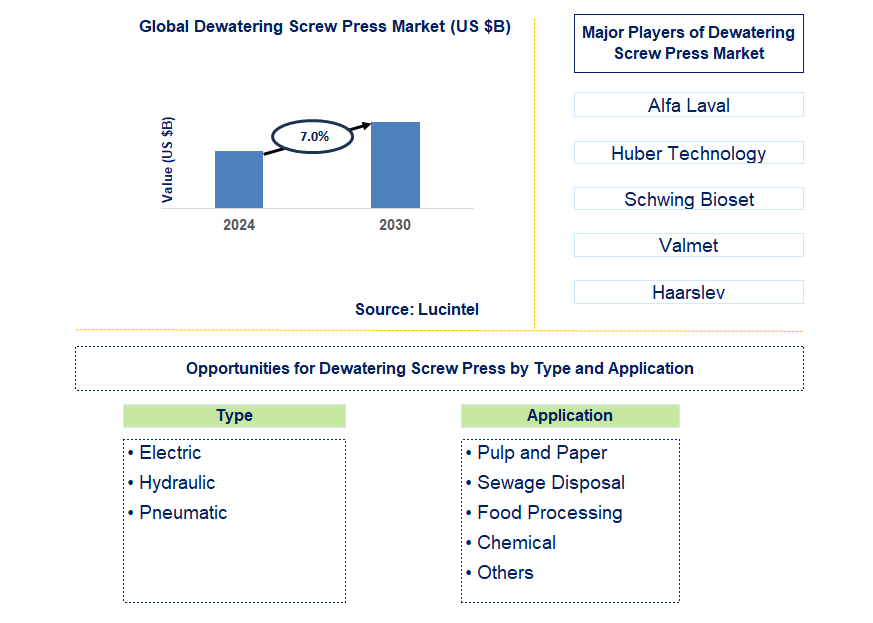
Key data points: The growth forecast = 7.0% annually for the next 6 years. Scroll below to get more insights. This market report covers trends, opportunities, and forecasts in the global dewatering screw press market to 2030 by type (electric, hydraulic, and pneumatic), application (pulp and paper, sewage disposal, food processing, chemical, and others), and region (North America, Europe, Asia Pacific, and the Rest of the World)
We'll send your sample report shortly.
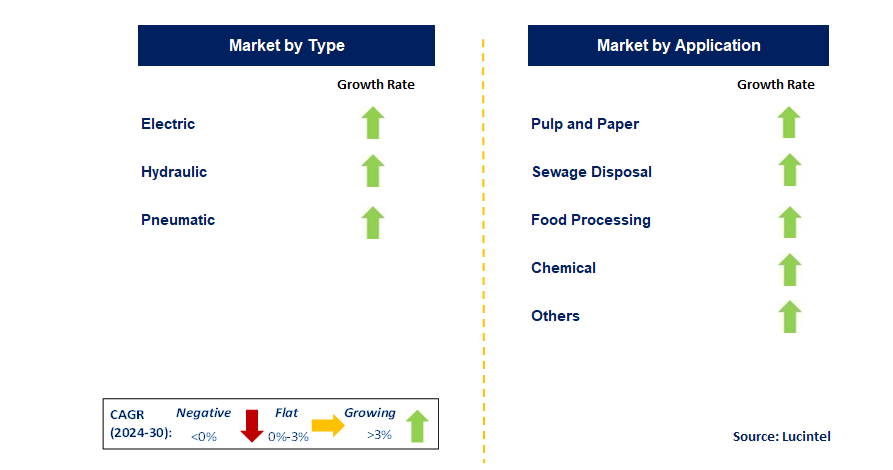
• Lucintel forecasts that, within the XYZ category,, within the type category, electric is expected to witness the highest growth over the forecast period.
• Within the application category, pulp and paper is expected to witness the highest growth over the forecast period.
• In terms of regions, Europe is expected to witness highest growth over the forecast period. Gain valuable insights for your business decisions with our comprehensive 150+ page report.
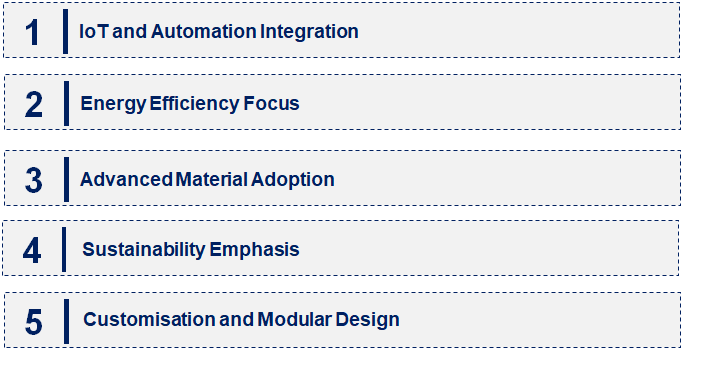
• IoT and Automation Integration: The integration of IoT and automation is transforming how dewatering screw presses operate. With smart sensors and real-time monitoring systems, there is precise control over the drying process, thereby improving operational efficiency and allowing predictive maintenance. Consequently, this has considerably improved system performance and reliability.
• Energy Efficiency Focus: Energy efficiency has become a major concern for many players in the dewatering screw press sector. Motor advancements coupled with process optimization have saved energy, thus reducing operating costs and supporting sustainability plans. Consequently, industries are increasingly looking for energy-efficient models that help them minimize their environmental impacts.
• Advanced Material Adoption: The use of advanced materials in dewatering screw presses improves their longevity and performance. Notably, these include corrosion-resistant types and high-strength composites, which lengthen equipment life cycles and enhance efficiency. By applying such materials, maintenance requirements can be reduced while increasing the overall lifespan of each drying roller.
• Sustainability Emphasis: Sustainability is among the major concerns prevailing in today’s dewatering screw press market. Manufacturers are designing systems that will reduce waste, enhance sludge management, and support recycling efforts through eco-friendly processes and designs that comply with global environmental regulations.
• Customization and Modular Design: In the field of screw dehydration, customization and modular design have become increasingly popular. Modularity makes it easy to resize the system and adapt it to different sludge types and volumes, thus providing flexibility for various applications. Customized products are now being designed to suit specific industrial needs and operating conditions. The market for dewatering screw presses is undergoing a radical change due to emerging trends such as IoT integration, energy efficiency, advanced materials, sustainability, and modular design. These trends increase performance while decreasing environmental impacts and provide adaptable solutions for a wide range of uses, resulting in innovation growth within the industry.
• Advanced Automation: Advanced automation systems are being integrated into newer models of dewatering screw presses. Among these innovations is the integration with IoT real-time monitoring, which optimizes processes during operation, leading to predictive maintenance. This means that automation enhances profitability while minimizing labor costs.
• Energy-Efficient Designs: New dewatering screw presses are designed with energy efficiency in mind. Improvements in motor technology and process control have led to lower energy consumption, thus reducing operational costs and supporting sustainable objectives related to energy use without the need for resource optimization or retooling. Over time, such efficient models will become more common.
• Durable Materials: Dewatering screw presses last longer and perform better because they are made from advanced materials, including anti-corrosive metals and strong composites. This results in extended service life because these materials promote reduced maintenance requirements, thereby improving dependability, which is critical for smooth operations.
• Regulatory Compliance: Tighter environmental regulations dictate the design and operation of dewatering screw presses. Various companies are developing designs with improved waste management systems that enhance sludge handling capabilities and cleaner emissions.
• Modular and Customizable Solutions: Modular and customizable dewatering screw presses are a growing trend. Such systems enable users to manage different types and quantities of sludge more effectively by scaling them within specific operations. Dewatering processes can be made more versatile and efficient through modular designs. To enhance performance and address environmental concerns, recent developments in dewatering screw presses incorporate advanced automation, energy-efficient designs, durable materials, regulatory compliance, and modular solutions. These developments will shape the future of dewatering technologies and affirm sustainable operations.
• Municipal Wastewater Treatment: Significant opportunities for expansion exist for dewatering screw presses in the municipal sewage treatment sector. The need for effective sludge management in urban areas has led to increased demand for advanced dewatering products that simplify processing and reduce operational costs.
• Industrial Applications: Unlike other sectors such as food and beverages, pulp and paper, or mining, industrial segments provide attractive growth opportunities for dewatering screw presses. This industry requires tailored solutions capable of treating variable sludges, significantly increasing the adoption rates of personalized high-performance dehydration systems.
• Agricultural Sector: In agricultural applications such as organic waste management or manure disposal, drying screws find usage. Improved drying technologies can enhance waste processing efficiency, reduce odors, and enable nutrient recycling, creating opportunities for agricultural waste disposal.
• Environmental Compliance: To meet increasingly stringent regulatory requirements regarding waste management and environmental protection, industries are turning to dewatering screw presses. Consequently, compliance with high environmental standards has led to the emergence of advanced systems that meet higher performance and sustainability thresholds.
• Emerging Markets: The rising use of dewatering screw presses in Southeast Asia and Latin America is driven by growth in these emerging markets. These regions are becoming more industrialized and urbanized, hence demanding more efficient waste treatment solutions. The strategic growth opportunities for dewatering screw presses encompass wastewater treatment at the municipal level, agriculture, industry, environmental compliance, and emerging markets. Technological advancement has been a key factor increasing the demand for these opportunities, alongside strict legal requirements necessitating this trend toward dewatering techniques.
• Technological Advancements: Innovations such as automation, IoT integration, and energy-saving designs enable faster growth within the dewatering screw press market. These advances increase operational efficiency while reducing operating expenses, encouraging larger-scale adoption.
• Regulatory Compliance: Increasingly stringent regulations governing environmental issues encourage industries to adopt environmentally friendly dewatering methods. Such rules have driven demand for advanced equipment that can handle severe environmental conditions without negatively impacting performance.
• Energy Efficiency: The emphasis on energy efficiency has led to the development of dewatering screw presses that consume less energy. By reducing operational costs, energy-saving designs support sustainability goals, making them preferred in industries seeking to minimize their carbon footprints.
• Customization and Flexibility: There is growing demand for flexible and customizable dewatering screw presses because different sludge types and volumes must be managed by companies in industries generating such wastes. This addresses customers’ unique operational needs and provides room for future growth and market expansion by scaling operations based on individual preferences.
• Emerging Markets: As industrialization and urbanization increase, there is a rising demand for dewatering screw presses in emerging economies. Consequently, these markets present opportunities for expanding dewatering solutions and bridging the gap in efficient waste management within developing countries. Challenges in the dewatering screw press market include:
• High Costs: Advanced dewatering screw presses require considerable investments during their development and implementation. This often leads to high initial outlays that could hamper adoption, especially among small organizations or regions with budget constraints.
• Environmental Regulations: Stringent environmental regulations may complicate or increase compliance costs. Achieving high levels of environmental sustainability through product differentiation typically requires significant investments that can affect productivity and profitability.
• Technical Complexity: Complexities associated with installing, operating, and maintaining sophisticated dewatering screw presses can pose challenges. Ensuring proper training for staff handling this equipment will help improve overall performance and reduce downtime. These factors include technological advancements, regulatory compliance issues, energy efficiency considerations, and customization aspects that drive this market segment. Market dynamics are affected by challenges such as high costs, technical complexity, and environmental regulations. Consequently, understanding these factors is critical for navigating this market to maximize growth prospects.
• Alfa Laval
• Huber Technology
• Schwing Bioset
• Valmet
• Haarslev
• Mitsubishi Kakoki Kaisha
• ANDRITZ
• Yemmak
• FICEP
• Ecologix
• Electric
• Hydraulic
• Pneumatic
• Pulp and Paper
• Sewage Disposal
• Food Processing
• Chemical
• Others
• North America
• Europe
• Asia Pacific
• The Rest of the World
• United States: In America, dewatering screw presses are incorporating advanced automation and IoT features to optimize performance and maintenance. Modern models come with energy-saving motors and enhanced dewatering capabilities to lower operational costs and facilitate sludge management. Moreover, regulatory pressures necessitate better systems that comply with stricter environmental standards.
• China: China is improving its dewatering screw press technology for greater efficiency and reduced environmental impact. Recent advancements include using stronger and more durable materials for processing difficult sludges and incorporating real-time monitoring systems for improved process control. Additionally, the government promotes advanced dewatering technologies to support wastewater treatment infrastructure.
• Germany: The development of high-efficiency dewatering screw presses characterized by advanced designs that enhance sludge dewatering performance remains a hallmark of Germany. Other innovations include improved screw designs and sophisticated filtrate management systems. It is also noteworthy that German companies are adopting energy-saving features, allowing them to recycle some of these materials.
• India: Dewatering screw presses in India are growing, targeting affordability and scalability. Recent improvements have led to the creation of low-cost models designed specifically for small and medium-sized firms, capable of handling various types of sludge while providing modular options for easy extension or repair.
• Japan: Japan leads in integrating control systems and automation into its dewatering screw presses. The newly released models feature improved sensors with data analytical capabilities, optimizing processes during drying. High-tech solutions such as these enable Japanese manufacturers to prioritize efficiency in minimizing waste in the industry.


• Alfa Laval
• Huber Technology
• Schwing Bioset
• Valmet
• Haarslev
• Mitsubishi Kakoki Kaisha
• ANDRITZ
• Yemmak
• FICEP
• Ecologix Q5. Which dewatering screw press market segment will be the largest in future? Answer: Lucintel forecasts that electric is expected to witness the highest growth over the forecast period. Q6. In dewatering screw press market, which region is expected to be the largest in next 5 years? Answer: Europe is expected to witness highest growth over the forecast period. Q7. Do we receive customization in this report? Answer: Yes, Lucintel provides 10% customization without any additional cost.


Choose a license that fits your team. Instant PDF delivery.
Prices exclude taxes. Instant delivery. Custom licensing available on request.
Market Report · July 31, 2026
Market Report · July 22, 2026
Market Report · July 20, 2026
Trusted partner for strategic intelligence and business growth


Receive a complimentary market analysis tailored to your industry. Our analysts will identify key growth opportunities and competitive dynamics specific to your business.

Market size, growth rate, and key trend analysis for your specific sector.

Top competitor positioning and market share analysis.

Strategic recommendations backed by data-driven insights.
Get curated market intelligence and competitive moves straight to your inbox.
By subscribing, you agree to receive our monthly insights. Unsubscribe anytime.
Receive a complimentary market analysis tailored to your industry. Our analysts will identify key growth opportunities and competitive dynamics specific to your business.
Market size, growth rate, and key trend analysis for your specific sector.
Top competitor positioning and market share analysis.
Strategic recommendations backed by data-driven insights.
Get curated market intelligence, emerging trends, and competitive moves straight to your inbox each month.
By subscribing, you agree to receive our monthly insights. Unsubscribe anytime.
We'll send your sample report shortly.