
Market Report · July 31, 2026

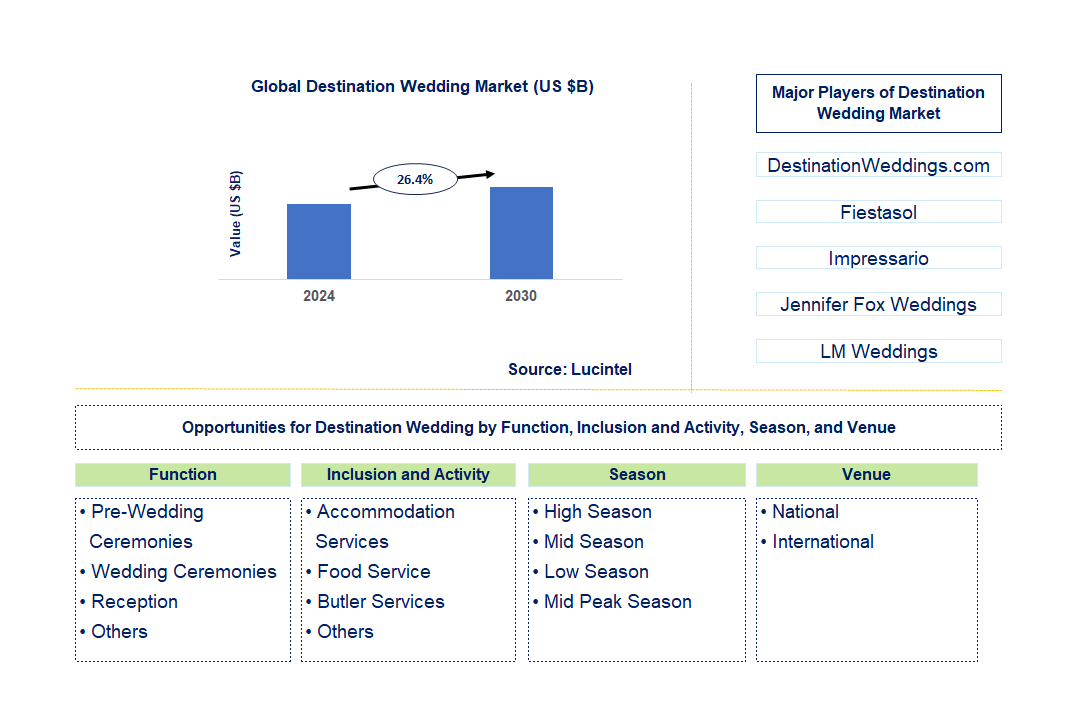
Key data points: The growth forecast = 26.4% annually next 6 years. Scroll below to get more insights. This market report covers trends, opportunities, and forecast in the global destination wedding market to 2030 by function (pre-wedding ceremonies, wedding ceremonies, reception, and others), inclusion and activity (accommodation services, food service, butler services, and others), season (high season, mid season, low season, and mid peak season), venue (national and international), and region (North America, Europe, Asia Pacific, and the Rest of the World)
We'll send your sample report shortly.
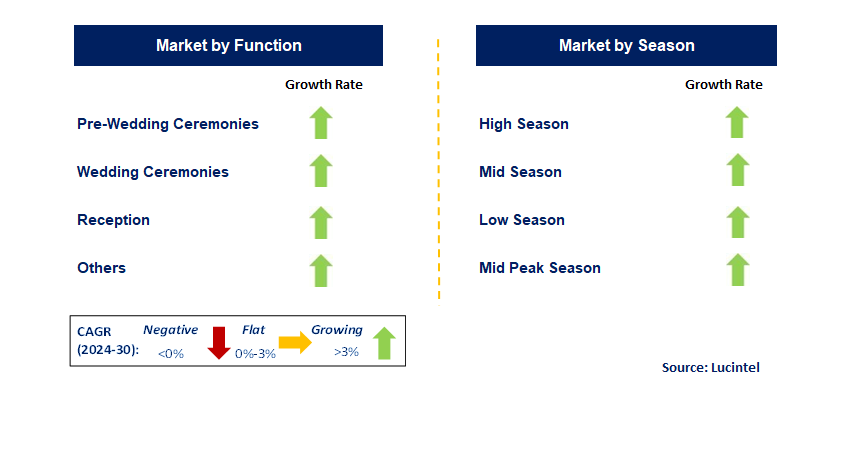
• Lucintel forecasts that wedding ceremony will remain the largest segment over the forecast period due to blend of social, economic, and logistical factors that resonate with contemporary preferences and lifestyles.
• Within this market, mid season will remain the largest segment due to provides more temperate weather conditions.
• North America will remain the largest region over the forecast period due to provides a diverse range of picturesque settings. A more than 150-page report is developed to help in your business decisions.
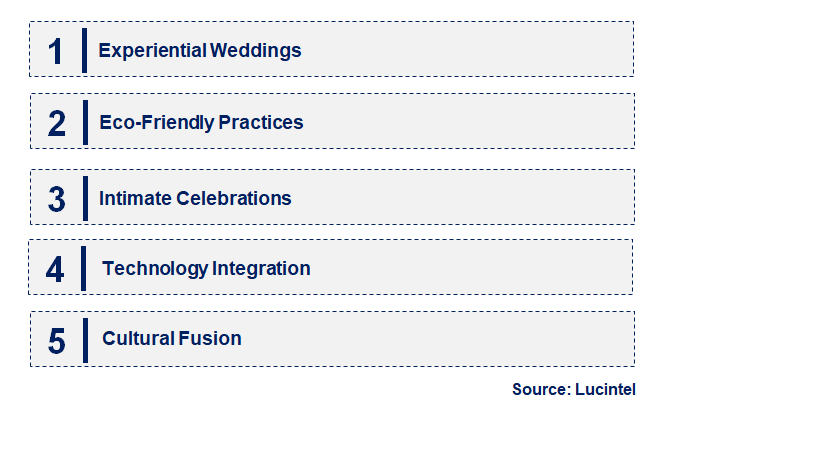
• Experiential Weddings: Couples are increasingly opting for experiential weddings that go beyond traditional ceremonies. These weddings incorporate activities and adventures for guests, such as local tours, cultural experiences, and interactive elements. This trend emphasizes creating memorable moments for both the couple and their guests, enhancing the overall wedding experience. Vendors are adapting to this demand by offering tailored packages that include not only the wedding ceremony but also curated experiences, thereby elevating the significance of the celebration.
• Eco-Friendly Practices: Sustainability is becoming a major focus in the destination wedding market. Couples are seeking eco-friendly venues and services that minimize environmental impact. This trend includes choosing local vendors, sustainable catering options, and zero-waste practices. Many venues are implementing green initiatives, appealing to environmentally conscious couples. As the demand for sustainable weddings grows, suppliers and planners who prioritize eco-friendly practices can differentiate themselves in a competitive market, aligning with the values of a new generation of couples.
• Intimate Celebrations: The trend of intimate weddings, often referred to as micro-weddings or elopements, is gaining popularity. Couples are choosing smaller guest lists to create a more personal and meaningful experience. This shift has been accelerated by the pandemic, as many couples preferred private ceremonies. Intimate weddings allow for greater focus on personalization and unique details, fostering deeper connections among attendees. Vendors are responding by offering specialized services for smaller events, creating tailored experiences that reflect the couple's vision.
• Technology Integration: Technology is playing a vital role in shaping the destination wedding landscape. From virtual planning tools to live streaming ceremonies for guests unable to attend, technology enhances the planning and experience of destination weddings. Couples are utilizing social media platforms for inspiration and engagement, making it easier to share their journey. As technology continues to evolve, vendors who embrace these innovations can improve customer experiences and streamline planning processes, catering to tech-savvy couples.
• Cultural Fusion: Cultural fusion is becoming increasingly common in destination weddings, as couples blend traditions from different backgrounds. This trend allows for unique and diverse ceremonies that reflect the couple's heritage. Wedding planners are tasked with creatively incorporating various cultural elements while ensuring a cohesive aesthetic. This approach not only enriches the wedding experience but also celebrates diversity, appealing to couples seeking to honor their backgrounds. As cultural fusion gains traction, vendors who specialize in this area can provide invaluable expertise and services. The destination wedding market is evolving rapidly, influenced by diverse consumer preferences and societal trends. By embracing experiential weddings, eco-friendly practices, intimate celebrations, technology integration, and cultural fusion, stakeholders can position themselves to meet the changing needs of couples. Understanding these emerging trends will enable wedding planners and vendors to create memorable experiences that resonate with modern couples, ensuring continued growth in this dynamic market.
• Rise of Micro-Weddings: The trend of micro-weddings has surged, characterized by smaller guest lists and more intimate settings. Couples are opting for these celebrations to create meaningful experiences with close family and friends, often at scenic destinations. This shift is partly driven by the pandemic, which made larger gatherings less feasible. Micro-weddings allow for greater personalization, as couples can focus on unique details and customized services that reflect their personalities. Vendors are adapting by offering tailored packages that cater specifically to smaller events, ensuring a memorable experience while maintaining safety and intimacy.
• Increased Demand for Sustainable Practices: Sustainability has become a significant focus within the destination wedding market, with couples seeking eco-friendly options. This includes choosing venues that prioritize green practices, local vendors, and sustainable catering solutions. Couples are more aware of their environmental impact and are actively looking to minimize waste, leading to an increased demand for zero-waste weddings. Vendors are responding by implementing eco-friendly initiatives and promoting sustainable products. This trend not only appeals to environmentally conscious couples but also enhances brand reputation for vendors committed to responsible practices.
• Integration of Technology: Technology is playing a vital role in the evolution of destination weddings, facilitating planning and enhancing guest experiences. Virtual planning tools, live streaming services, and social media engagement have become essential for couples, especially those organizing weddings from afar. Couples are utilizing apps for guest management, creating wedding websites, and incorporating live feeds to include absent friends and family. This technological integration simplifies logistics and expands the reach of destination weddings, making it easier for couples to create a shared experience, regardless of geographical barriers.
• Cultural Fusion in Celebrations: Cultural fusion is increasingly common in destination weddings, as couples blend traditions from diverse backgrounds. This trend allows for unique ceremonies that reflect the couple’s heritage while introducing new elements, creating a richer experience. Wedding planners are tasked with creatively incorporating various cultural aspects, from rituals to aesthetics, ensuring that the celebration honors both cultures. This blending not only enriches the wedding experience but also resonates with couples seeking to celebrate their diverse identities, appealing to a broader audience and fostering inclusivity.
• Focus on Experiential Elements: Experiential weddings are becoming a hallmark of the destination wedding market, where couples prioritize memorable activities and immersive experiences for their guests. This trend includes planning pre-wedding events like excursions, local tours, and cultural experiences that engage attendees. Couples aim to create lasting memories beyond the ceremony itself, enhancing the overall celebration. Vendors are adapting by offering comprehensive packages that include activities, allowing couples to craft a unique narrative for their wedding. This focus on experiences elevates destination weddings, transforming them into unforgettable events that go beyond traditional expectations. The destination wedding market is evolving rapidly, influenced by trends that prioritize intimacy, sustainability, technology, cultural diversity, and experiential elements. As couples continue to seek personalized and meaningful celebrations, vendors and planners must adapt to these developments, ensuring they provide unique experiences that resonate with modern couples. By embracing these trends, the destination wedding industry can thrive in a competitive landscape and meet the changing demands of today's couples.
• Technology Integration: The integration of technology in destination weddings presents a substantial growth opportunity. Couples increasingly rely on digital tools for planning, from virtual venue tours to online RSVP management. Live streaming services allow for remote participation, making it possible for friends and family unable to travel to still be part of the celebration. Vendors can capitalize on this trend by offering tech-savvy packages that include digital planning resources, personalized wedding websites, and enhanced guest experiences through apps. By embracing technology, planners can streamline logistics and expand their reach, catering to tech-savvy couples.
• Sustainable Practices: Sustainability is a key concern for modern couples, making eco-friendly practices a significant growth area. The demand for sustainable venues, local sourcing, and zero-waste options is on the rise, as couples seek to minimize their environmental impact. Wedding planners can differentiate themselves by providing sustainable packages, such as biodegradable decorations, eco-friendly catering options, and partnerships with green vendors. This focus not only appeals to environmentally conscious couples but also enhances brand loyalty for those committed to responsible practices, creating a competitive edge in the market.
• Cultural Fusion Experiences: As couples from diverse backgrounds seek to celebrate their heritages, cultural fusion in destination weddings is becoming increasingly popular. This trend offers vendors the chance to create unique ceremonies that incorporate various traditions and rituals. By collaborating with local experts, planners can craft personalized experiences that reflect the couple's cultural identities while introducing guests to new customs. This growth opportunity allows for innovative event designs and programming, making weddings more inclusive and memorable. By offering tailored cultural experiences, planners can attract a broader audience and enhance client satisfaction.
• Experiential Offerings: Experiential elements are becoming a hallmark of destination weddings, as couples look to create unforgettable memories for their guests. This includes pre-wedding activities such as guided tours, cooking classes, and local cultural experiences. Vendors can capitalize on this trend by developing comprehensive packages that encompass not only the wedding day but also a series of activities for guests. By focusing on experiential offerings, planners can enhance the overall wedding experience and foster stronger connections among attendees, leading to higher satisfaction and referrals.
• Wellness and Retreat Focus: The rise of wellness tourism provides a unique growth opportunity for destination weddings. Couples are increasingly seeking venues that offer wellness-focused amenities, such as spas, yoga classes, and healthy catering options. By incorporating wellness elements into wedding packages, planners can attract health-conscious couples looking to create a holistic experience for themselves and their guests. This focus not only differentiates offerings but also aligns with broader trends in self-care and mindfulness, appealing to couples who wish to prioritize relaxation and rejuvenation during their celebration. The destination wedding market is evolving, presenting various strategic growth opportunities across applications. By embracing technology, sustainability, cultural fusion, experiential offerings, and wellness initiatives, vendors can meet the needs of modern couples seeking unique and memorable celebrations. Understanding and leveraging these opportunities will be key for businesses aiming to thrive in this competitive and dynamic market.
• DestinationWeddings.com
• Fiestasol
• Impressario
• Jennifer Fox Weddings
• LM Weddings
• Peach Perfect Weddings
• Planned For Perfection
• The Wedding Travel Company
• Vivaah Weddings
• Wedding Planner Roma
• Pre-Wedding Ceremonies
• Wedding Ceremonies
• Reception
• Others
• Accommodation Services
• Food Service
• Butler Services
• Others
• High Season
• Mid Season
• Low Season
• Mid Peak Season
• National
• International
• North America
• Europe
• Asia Pacific
• The Rest of the World
• United States: In the United States, the destination wedding market is thriving, particularly in picturesque locations such as Hawaii, Florida, and various national parks. The pandemic prompted couples to seek more intimate and outdoor settings, leading to an increase in micro-weddings and elopements. Additionally, technology has played a role, with virtual planning tools and live streaming services gaining popularity to accommodate guests unable to attend in person. The rise of eco-friendly venues and sustainable practices also reflects a growing awareness of environmental issues, influencing couples’ choices and enhancing the overall experience.
• China: In China, the destination wedding market is rapidly expanding, with couples increasingly choosing locations both domestically and internationally. Popular destinations include tropical locales in Southeast Asia and historical sites in Europe. Cultural traditions are also influencing these weddings, as couples incorporate traditional elements alongside modern aesthetics. The influence of social media platforms, particularly WeChat and Douyin, has made sharing and showcasing destination weddings easier, driving interest and engagement. Luxury services and tailored packages are on the rise, catering to the affluent segment seeking unique experiences for their weddings.
• Germany: Germany destination wedding market is characterized by a blend of historic charm and modern elegance. Couples are increasingly attracted to romantic castles, scenic vineyards, and beautiful coastal regions. The trend of personalized wedding experiences is gaining traction, with many planners offering bespoke services tailored to individual preferences. Additionally, sustainable practices are becoming more important, with venues focusing on eco-friendly options and responsible tourism. Germany's well-established wedding industry infrastructure supports these developments, enabling couples to access a range of services and venues that enhance their destination wedding experience.
• India: India destination wedding market is booming, with a growing number of couples choosing lavish celebrations in exotic locations. Popular destinations include Goa, Udaipur, and international locales like Bali and Dubai. The trend towards experiential weddings has led to an increase in multi-day celebrations, incorporating traditional ceremonies and modern festivities. Wedding planners are leveraging technology to offer virtual tours and detailed online planning tools, making the process more accessible. Additionally, there is a rising emphasis on customization, as couples seek to reflect their unique stories and cultural heritage in their wedding celebrations.
• Japan: In Japan, the destination wedding market is evolving, with couples looking for serene and picturesque locations such as Kyoto's temples and Okinawa's beaches. The integration of traditional Japanese elements, like Shinto ceremonies, alongside Western influences is becoming more common. Destination weddings in Japan are often characterized by a focus on minimalism and elegance, appealing to couples who appreciate aesthetic beauty. The growing trend of intimate weddings, paired with personalized services, reflects a shift towards creating meaningful experiences. The rise of social media platforms is also influencing wedding trends, with couples keen to showcase their unique celebrations.


• DestinationWeddings.com
• Fiestasol
• Impressario
• Jennifer Fox Weddings
• LM Weddings
• Peach Perfect Weddings
• Planned For Perfection
• The Wedding Travel Company
• Vivaah Weddings
• Wedding Planner Roma Q5. Which destination wedding market segment will be the largest in future? Answer: Lucintel forecasts that wedding ceremony will remain the largest segment over the forecast period due to blend of social, economic, and logistical factors that resonate with contemporary preferences and lifestyles. Q6. In destination wedding market, which region is expected to be the largest in next 5 years? Answer: North America will remain the largest region over the forecast period due to provides a diverse range of picturesque settings. Q.7 Do we receive customization in this report? Answer: Yes, Lucintel provides 10% customization without any additional cost.


Choose a license that fits your team. Instant PDF delivery.
Prices exclude taxes. Instant delivery. Custom licensing available on request.
Market Report · July 31, 2026
Market Report · July 31, 2026
Market Report · July 31, 2026
Trusted partner for strategic intelligence and business growth


Receive a complimentary market analysis tailored to your industry. Our analysts will identify key growth opportunities and competitive dynamics specific to your business.

Market size, growth rate, and key trend analysis for your specific sector.

Top competitor positioning and market share analysis.

Strategic recommendations backed by data-driven insights.
Get curated market intelligence and competitive moves straight to your inbox.
By subscribing, you agree to receive our monthly insights. Unsubscribe anytime.
Receive a complimentary market analysis tailored to your industry. Our analysts will identify key growth opportunities and competitive dynamics specific to your business.
Market size, growth rate, and key trend analysis for your specific sector.
Top competitor positioning and market share analysis.
Strategic recommendations backed by data-driven insights.
Get curated market intelligence, emerging trends, and competitive moves straight to your inbox each month.
By subscribing, you agree to receive our monthly insights. Unsubscribe anytime.
We'll send your sample report shortly.