
Market Report · May 18, 2026

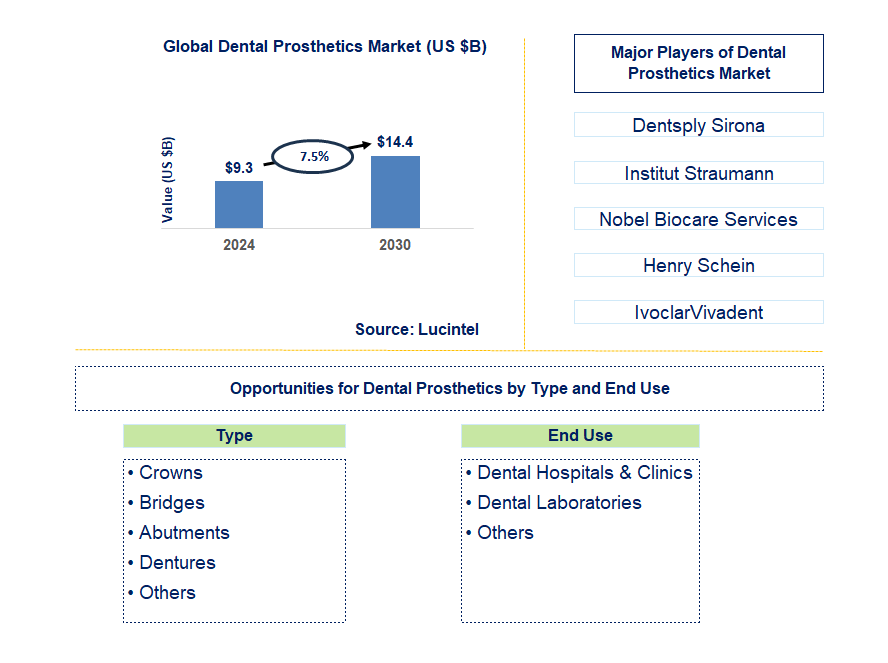
Key data points: The market size in 2030 = $14.4 billion, growth forecast = 7.5% annually for the next 6 years. Scroll below to get more insights. This market report covers trends, opportunities, and forecasts in the global dental prosthetics market to 2030 by type (crowns, bridges, abutments, dentures, and others), end use (dental hospitals & clinics, dental laboratories, and others), and region (North America, Europe, Asia Pacific, and the Rest of the World)
We'll send your sample report shortly.
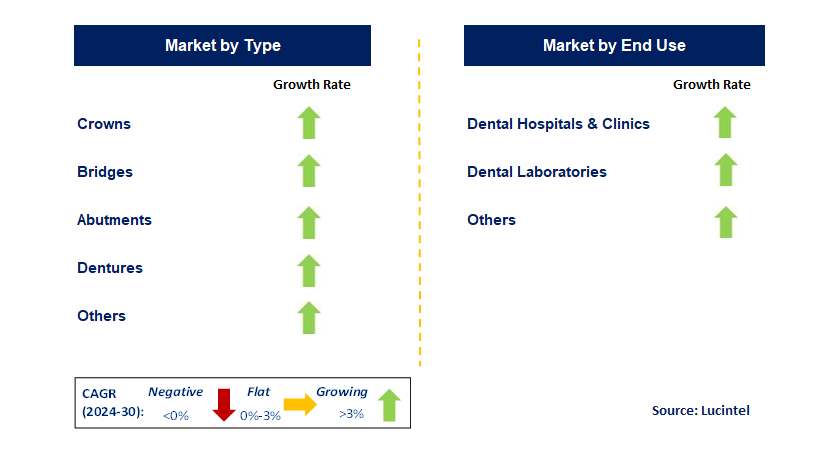
• Lucintel forecasts that, within the type category, crowns will remain the largest segment over the forecast period due to adoption of cutting-edge technologies.
• Within the end use category, dental hospitals & clinics will remain the largest segment due to a substantial number of patients primarily seek their treatment at dental hospitals and clinics.
• In terms of regions, APAC is expected to witness highest growth over the forecast period due to rise in geriatric population and growing government initiatives to promote awareness in the region. Gain valuable insight for your business decisions with our comprehensive 150+ page report
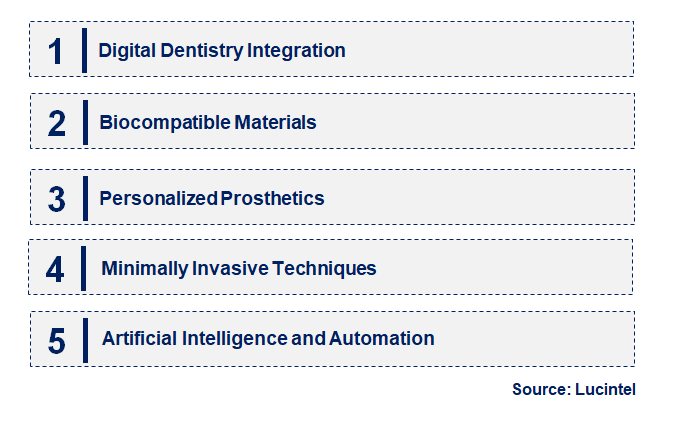
• Digital Dentistry Integration: Digital tools like CAD/CAM and 3D printing are transforming prosthetic design and manufacturing, allowing for rapid prototyping and highly personalized solutions. This integration enhances precision, reduces production times, and improves patient outcomes.
• Biocompatible Materials: There is a growing use of advanced, biocompatible materials such as zirconia and hybrid ceramics. These materials offer better durability, aesthetic appeal, and compatibility with human tissue, leading to improved long-term performance of prosthetics.
• Personalized Prosthetics: Customization through digital technology enables the creation of prosthetics tailored to individual patient anatomy and preferences. This trend enhances comfort, fit, and functionality, addressing specific patient needs more effectively.
• Minimally Invasive Techniques: Advances in prosthetic technology support less invasive procedures, reducing recovery times and improving patient comfort. Techniques such as computer-guided implant placement and precise fit adjustments contribute to more efficient treatments.
• Artificial Intelligence and Automation: AI and automation are increasingly used to enhance diagnostic accuracy and streamline the production process. These technologies improve the efficiency of designing and manufacturing prosthetics, leading to faster and more accurate results. These trends are reshaping the Dental Prosthetics market by improving precision, customization, and overall patient experience. The integration of digital technologies and advanced materials is driving innovation and setting new standards in prosthetic care.
• 3D Printing Technology: The adoption of 3D printing technology allows for rapid and precise production of dental prosthetics. This advancement reduces manufacturing time, lowers costs, and offers highly customized solutions, improving patient satisfaction.
• CAD/CAM Systems: The integration of CAD/CAM systems in prosthetic design and manufacturing streamlines the workflow, enhances accuracy, and enables the creation of detailed and personalized prosthetics. This technology improves both the efficiency and quality of dental treatments.
• Advanced Materials: Innovations in materials, such as high-strength ceramics and composite resins, are improving the durability and aesthetics of dental prosthetics. These materials offer better performance and longevity, contributing to higher patient satisfaction.
• Digital Workflow Integration: The shift towards digital workflows, including digital impressions and virtual planning, is revolutionizing prosthetic design and fabrication. This integration enhances precision, reduces errors, and accelerates the overall process.
• AI and Machine Learning: The use of AI and machine learning in dental prosthetics is enhancing diagnostic accuracy and streamlining the manufacturing process. These technologies support better treatment planning and improve the overall efficiency of prosthetic production. These developments are driving significant improvements in the Dental Prosthetics market by enhancing accuracy, efficiency, and patient outcomes. The integration of new technologies and materials is setting higher standards for prosthetic care.
• Digital Impressions: The adoption of digital impression technology presents opportunities for improving accuracy and convenience in prosthetic design. This technology reduces the need for traditional molds, enhances patient comfort, and speeds up the treatment process.
• Customized Prosthetics: There is significant growth potential in offering personalized prosthetic solutions through advanced CAD/CAM systems. Customization allows for better fit and function, meeting individual patient needs more effectively and improving overall satisfaction.
• Biocompatible Materials: The development and use of biocompatible materials, such as zirconia and hybrid ceramics, offer opportunities to enhance the durability and aesthetic appeal of prosthetics. These materials are in high demand for their superior performance and patient compatibility.
• Minimally Invasive Techniques: Growth opportunities exist in promoting minimally invasive techniques for prosthetic placements, such as guided implant surgery. These techniques reduce recovery times, improve patient comfort, and offer more precise results.
• AI and Automation: Leveraging AI and automation in prosthetic design and manufacturing can drive growth by improving accuracy and efficiency. These technologies support faster production, better treatment planning, and enhanced overall outcomes. These growth opportunities are reshaping the Dental Prosthetics market by introducing advanced technologies and customized solutions. They are driving innovation and improving patient care, leading to significant market expansion.
• Technological Advancements: Innovations in 3D printing, CAD/CAM systems, and digital workflows are driving growth by improving the precision and efficiency of prosthetic design and manufacturing.
• Growing Dental Awareness: Increased awareness about dental health and aesthetics is driving demand for high-quality prosthetics. Patients are seeking advanced solutions to improve both functionality and appearance.
• Rising Disposable Incomes: Higher disposable incomes enable patients to afford advanced prosthetic solutions. This economic factor is expanding the market for premium and customized prosthetics.
• Aging Population: An aging population with higher dental care needs is fueling demand for dental prosthetics. Older adults require prosthetic solutions for improved oral health and quality of life.
• Expanding Healthcare Infrastructure: Growth in healthcare infrastructure, particularly in emerging markets, is improving access to dental care and prosthetic treatments, driving market expansion. Challenges in the dental prosthetics market are:
• High Costs: The cost of advanced prosthetic technologies and materials can be prohibitive for some patients, limiting market growth and accessibility.
• Regulatory Hurdles: Strict regulations and approval processes can delay the introduction of new prosthetic technologies and materials, impacting market dynamics.
• Competition and Market Saturation: Intense competition and market saturation can drive down prices and affect profit margins for manufacturers, challenging their growth prospects. The major drivers are accelerating growth and innovation in the Dental Prosthetics market, while the challenges pose barriers to market expansion and accessibility. Balancing these factors is crucial for sustained market development.
• Dentsply Sirona
• Institut Straumann
• Nobel Biocare Services
• Henry Schein
• IvoclarVivadent
• 3M
• Planmeca OY
• Dentium
• Zimmer Biomet
• BioHorizons
• Crowns
• Bridges
• Abutments
• Dentures
• Others
• Dental Hospitals & Clinics
• Dental Laboratories
• Others
• North America
• Europe
• Asia Pacific
• The Rest of the World
• United States: Recent developments in the U.S. dental prosthetics market include the rise of 3D printing technology and advanced CAD/CAM systems. These innovations are enhancing customization, precision, and turnaround times for dental prosthetics. Additionally, there is an increased focus on integrating digital workflows, which is improving overall patient outcomes and streamlining clinic operations.
• China: In China, the dental prosthetics market is expanding rapidly due to increasing disposable incomes and a growing awareness of dental health. Recent advancements include the adoption of advanced materials such as zirconia and the growth of local manufacturing capabilities. This is making high-quality prosthetics more accessible and affordable for a larger segment of the population.
• Germany: Germany continues to lead in dental prosthetics innovation, particularly in the development of high-precision materials and digital technologies. Recent advancements include improved ceramic materials and the integration of artificial intelligence for designing and manufacturing prosthetics. These innovations are driving higher standards of care and precision in dental procedures.
• India: In India, the dental prosthetics market is witnessing growth driven by increasing dental awareness and expanding healthcare infrastructure. Recent developments include the introduction of cost-effective prosthetic solutions and the growth of local manufacturing capabilities. This trend is making dental prosthetics more affordable and accessible to a broader population segment.
• Japan: Japan is focusing on integrating cutting-edge technology in dental prosthetics, such as advanced imaging and robotics. Recent developments include enhancements in 3D imaging and the use of biomaterials for improved functionality and aesthetics. These advancements are contributing to higher precision and better outcomes for dental prosthetic treatments.


• Dentsply Sirona
• Institut Straumann
• Nobel Biocare Services
• Henry Schein
• IvoclarVivadent
• 3M
• Planmeca OY
• Dentium
• Zimmer Biomet
• BioHorizons Q6. Which dental prosthetics market segment will be the largest in future? Answer: Lucintel forecasts that crowns will remain the largest segment over the forecast period due to adoption of cutting-edge technologies. Q7. In dental prosthetics market, which region is expected to be the largest in next 5 years? Answer: In terms of regions, APAC is expected to witness highest growth over the forecast period due to rise in geriatric population and growing government initiatives to promote awareness in the region. Q.8 Do we receive customization in this report? Answer: Yes, Lucintel provides 10% customization without any additional cost.


Choose a license that fits your team. Instant PDF delivery.
Prices exclude taxes. Instant delivery. Custom licensing available on request.
Market Report · May 18, 2026
Market Report · May 18, 2026
Market Report · May 18, 2026
Trusted partner for strategic intelligence and business growth


Receive a complimentary market analysis tailored to your industry. Our analysts will identify key growth opportunities and competitive dynamics specific to your business.

Market size, growth rate, and key trend analysis for your specific sector.

Top competitor positioning and market share analysis.

Strategic recommendations backed by data-driven insights.
Get curated market intelligence and competitive moves straight to your inbox.
By subscribing, you agree to receive our monthly insights. Unsubscribe anytime.
Receive a complimentary market analysis tailored to your industry. Our analysts will identify key growth opportunities and competitive dynamics specific to your business.
Market size, growth rate, and key trend analysis for your specific sector.
Top competitor positioning and market share analysis.
Strategic recommendations backed by data-driven insights.
Get curated market intelligence, emerging trends, and competitive moves straight to your inbox each month.
By subscribing, you agree to receive our monthly insights. Unsubscribe anytime.
We'll send your sample report shortly.