
Report Feature
Dental Digital Treatment Software Market Trends and Forecast
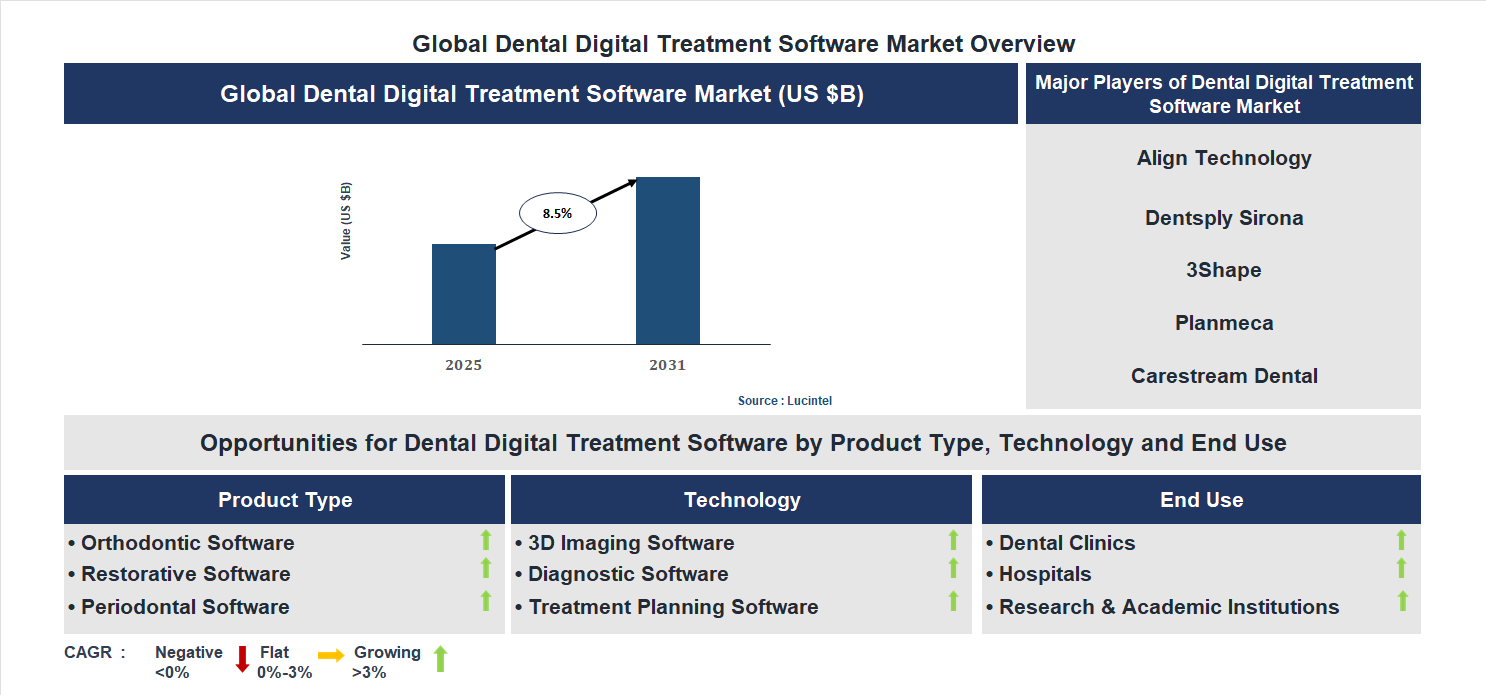
The future of the global dental digital treatment software market looks promising with opportunities in the dental clinic, hospital, and research & academic institution markets. The global dental digital treatment software market is expected to grow with a CAGR of 8.5% from 2025 to 2031. The major drivers for this market are the increasing adoption of digital dentistry, the rising demand for precise treatment planning, and the growing integration of ai powered software.• Lucintel forecasts that, within the product type category, orthodontic software is expected to witness the highest growth over the forecast period.
• Within the end use category, dental clinic is expected to witness the highest growth.
• In terms of region, North America is expected to witness the highest growth over the forecast period. Gain valuable insights for your business decisions with our comprehensive 150+ page report. Sample figures with some insights are shown below.
Emerging Trends in the Dental Digital Treatment Software Market
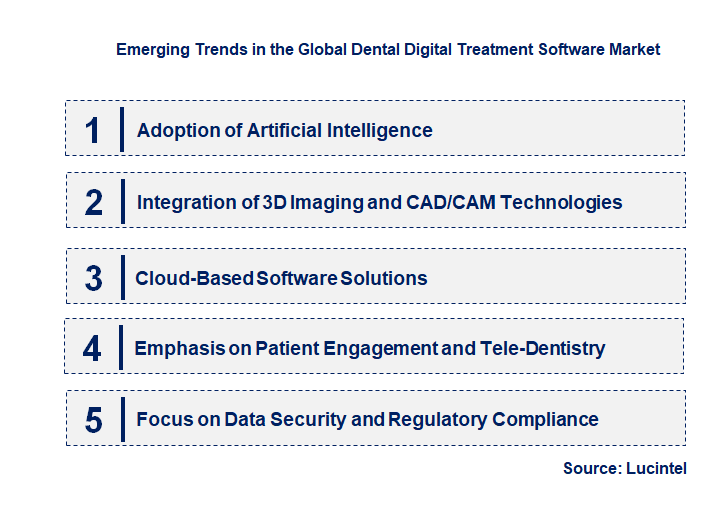
The dental digital treatment software market is experiencing rapid growth driven by technological advancements, increasing demand for efficient dental care, and the integration of digital solutions into everyday practice. As dental practices seek to improve patient outcomes and streamline operations, innovative software solutions are becoming essential. These developments are transforming how dental professionals diagnose, plan, and execute treatments, leading to more personalized and precise care. The market is also influenced by rising patient awareness and the need for minimally invasive procedures. The following key trends highlight the major shifts shaping this evolving landscape.• Adoption of Artificial Intelligence: AI is increasingly integrated into dental software to enhance diagnostic accuracy and treatment planning. Machine learning algorithms analyze large datasets to identify patterns, predict outcomes, and assist in complex procedures. This improves efficiency, reduces human error, and enables personalized treatment plans. AI-driven tools also facilitate virtual consultations and automate administrative tasks, freeing up time for clinicians. As AI technology advances, its adoption is expected to become standard, significantly impacting clinical workflows and patient care quality.
• Integration of 3D Imaging and CAD/CAM Technologies: The use of 3D imaging and computer-aided design/computer-aided manufacturing (CAD/CAM) is revolutionizing dental treatment planning and prosthetic fabrication. These technologies enable precise visualization of dental structures, allowing for accurate diagnosis and customized restorations. Digital workflows reduce turnaround times and improve fit and aesthetics of dental prostheses. As these tools become more affordable and user-friendly, their adoption is expanding across dental practices, leading to more predictable outcomes and enhanced patient satisfaction.
• Cloud-Based Software Solutions: Cloud technology is transforming data management in the dental industry by offering secure, accessible, and scalable solutions. Cloud-based dental software allows practitioners to access patient records, treatment plans, and imaging data from any location, facilitating remote consultations and collaborative care. This flexibility improves practice efficiency and data security while reducing IT infrastructure costs. The trend toward cloud adoption is driven by increasing concerns over data security and the need for seamless integration with other digital tools, ultimately enhancing workflow and patient management.
• Emphasis on Patient Engagement and Tele-dentistry: Digital treatment software is increasingly incorporating features that promote patient engagement, such as virtual consultations, appointment scheduling, and educational resources. Tele-dentistry has gained prominence, especially during the COVID-19 pandemic, enabling remote diagnosis and follow-up care. These tools improve patient communication, adherence to treatment plans, and overall satisfaction. As patients demand more convenience and transparency, dental practices are adopting these technologies to expand their reach and provide comprehensive, patient-centered care.
• Focus on Data Security and Regulatory Compliance: With the increasing digitization of dental records and treatment data, ensuring data security and compliance with regulations like HIPAA is critical. Software providers are investing in advanced encryption, access controls, and audit trails to protect sensitive information. Regulatory compliance not only prevents legal issues but also builds patient trust. As data breaches and cyber threats become more sophisticated, the market is witnessing a surge in security-focused solutions, emphasizing the importance of safeguarding patient data in digital dental practices. In summary, these emerging trends are reshaping the dental digital treatment software market by enhancing precision, efficiency, and patient engagement. The integration of AI, advanced imaging, cloud solutions, tele-dentistry, and robust security measures is driving innovation and transforming traditional dental practices into more modern, patient-centric entities. This evolution promises improved clinical outcomes, greater operational efficiency, and a more connected, responsive dental care environment.
Recent Development in the Dental Digital Treatment Software Market
The dental digital treatment software market is experiencing rapid growth driven by technological advancements and increasing demand for efficient dental care solutions. Innovations in software integration, patient management, and treatment planning are transforming dental practices worldwide. As clinics seek to improve accuracy and patient outcomes, the market is expanding with new opportunities for developers and providers. This evolution is reshaping how dental professionals deliver services, making treatments more precise, streamlined, and accessible.• Growing Adoption of AI and Machine Learning: The integration of AI and machine learning into dental software enhances diagnostic accuracy and treatment planning. These technologies enable predictive analytics, automate routine tasks, and improve patient outcomes. As a result, dental practices can operate more efficiently, reduce errors, and offer personalized care. The market benefits from increased demand for intelligent solutions, fostering innovation and competitive growth among software providers.
• Increasing Use of Cloud-Based Solutions: Cloud-based dental software offers scalability, remote access, and real-time data sharing, transforming practice management. This development reduces infrastructure costs and enhances collaboration among dental teams. Cloud solutions also facilitate seamless updates and data security, attracting small to large practices. The shift towards cloud technology is driving market expansion, enabling practices to adopt more flexible, efficient, and integrated digital treatment workflows.
• Rising Demand for Patient-Centric Features: Modern dental software emphasizes patient engagement through features like online appointment scheduling, digital records, and virtual consultations. These tools improve patient experience, satisfaction, and retention. As patients seek more transparency and convenience, dental practices are adopting software that enhances communication and accessibility. This trend boosts market growth by aligning technological solutions with evolving patient expectations and practice needs.
• Advancements in 3D Imaging and Treatment Planning: The integration of 3D imaging with digital treatment software allows for precise diagnostics and customized treatment plans. This technology improves accuracy in procedures like implants and orthodontics, reducing errors and enhancing outcomes. The market benefits from increased adoption of advanced imaging tools, which attract practitioners seeking to improve treatment precision and patient satisfaction, thereby expanding the scope of digital solutions in dental care.
• Growing Focus on Data Security and Compliance: As digital solutions handle sensitive patient data, there is a rising emphasis on cybersecurity and regulatory compliance. Software providers are investing in robust security measures and adhering to standards like HIPAA. This focus ensures data integrity and builds trust among users, encouraging wider adoption. The market is driven by the need for secure, compliant solutions that protect patient information while enabling efficient digital workflows. Overall, these developments are significantly impacting the dental digital treatment software market by fostering innovation, improving practice efficiency, and enhancing patient care. The market is poised for continued growth as technological integration and user-centric features become standard, driving competitive advantages and expanding global adoption.
Strategic Growth Opportunities in the Dental Digital Treatment Software Market
The dental digital treatment software market is experiencing rapid expansion driven by technological advancements, increasing adoption of digital dentistry, and the need for efficient patient management. Innovations in software solutions are transforming dental practices by improving treatment planning, diagnostics, and workflow automation. Market players are focusing on developing integrated, user-friendly platforms to meet rising demand. This growth presents significant opportunities for vendors to capture market share, enhance patient outcomes, and streamline operations across dental clinics worldwide.• Integration of AI and Machine Learning for Enhanced Diagnostics: Incorporating AI and machine learning into dental software enables more accurate diagnostics, personalized treatment plans, and predictive analytics. These technologies help identify dental issues early, improve treatment precision, and reduce errors. As AI-driven tools become more accessible, dental practices can offer better patient care, increase efficiency, and differentiate themselves in a competitive market. This integration is expected to be a key driver of growth in the coming years.
• Adoption of Cloud-Based Dental Software for Remote Access and Collaboration: Cloud-based solutions facilitate real-time data sharing, remote access, and seamless collaboration among dental professionals. They enable practices to operate more flexibly, improve data security, and reduce IT infrastructure costs. The COVID-19 pandemic accelerated cloud adoption, highlighting its importance for continuity of care. As practices seek scalable, secure, and accessible software, cloud platforms are poised to dominate the market, offering significant growth opportunities for vendors.
• Increasing Demand for Patient Engagement and Digital Workflow Automation: Digital tools that enhance patient engagement—such as online appointment scheduling, digital records, and virtual consultations—are gaining popularity. Workflow automation features streamline administrative tasks, reduce manual errors, and improve overall practice efficiency. Growing patient expectations for digital interaction and operational efficiency are driving demand. Vendors focusing on user-friendly, integrated platforms that improve patient experience and practice productivity will benefit from this expanding market segment.
• Expansion of 3D Imaging and Digital Smile Design Technologies: Advanced 3D imaging and digital smile design software are revolutionizing cosmetic and restorative dentistry. These technologies enable precise treatment planning, visualization, and communication with patients, leading to higher satisfaction and better outcomes. As these tools become more affordable and accessible, their adoption is increasing across dental practices. This trend offers substantial growth potential for software providers offering innovative, high-quality imaging and design solutions tailored to diverse dental procedures.
• Growing Focus on Data Security and Compliance in Dental Software Solutions: With increasing digitalization, protecting patient data and ensuring regulatory compliance are critical. Vendors are investing in robust cybersecurity measures, encryption, and compliance frameworks to meet standards like HIPAA. As data breaches and privacy concerns rise, the demand for secure, compliant software solutions intensifies. Companies that prioritize data security and demonstrate compliance will gain trust, expand their customer base, and capitalize on the market’s need for reliable, secure digital dental solutions. The overall market growth is driven by technological innovation, increasing digital adoption, and the need for efficient, patient-centric dental care. These opportunities will shape the future landscape, encouraging vendors to develop advanced, secure, and user-friendly solutions. As a result, the market is poised for sustained expansion, benefiting dental practices, patients, and technology providers alike.
Dental Digital Treatment Software Market Driver and Challenges
The dental digital treatment software market is influenced by a variety of technological, economic, and regulatory factors that shape its growth and development. Advances in digital technology, increasing demand for efficient dental care, and evolving regulatory standards are key drivers. However, the market also faces challenges such as high implementation costs, data security concerns, and regulatory compliance issues. Understanding these drivers and challenges is essential for stakeholders to navigate the dynamic landscape effectively and capitalize on emerging opportunities while mitigating risks. The factors responsible for driving the dental digital treatment software market include:-• Technological Innovation: The rapid development of digital tools such as 3D imaging, AI, and cloud-based platforms enhances treatment planning, diagnostics, and patient management. These innovations improve accuracy, reduce treatment time, and increase patient satisfaction, fueling market growth. As technology becomes more accessible and affordable, dental practices of all sizes adopt digital solutions, expanding the market. Continuous R&D investments further drive innovation, making digital treatment software indispensable for modern dentistry.
• Rising Dental Care Demand: Increasing awareness about oral health, cosmetic dentistry trends, and a growing aging population contribute to higher demand for advanced dental treatments. Patients seek minimally invasive procedures with faster recovery times, which digital treatment software facilitates. Dental clinics are adopting these solutions to meet patient expectations, improve treatment outcomes, and stay competitive, thereby expanding the market.
• Regulatory Support and Reimbursement Policies: Governments and regulatory bodies are promoting digital health initiatives through supportive policies, standards, and reimbursement schemes. These policies encourage dental practices to integrate digital solutions, ensuring compliance and improving patient care quality. Such regulatory support reduces barriers to adoption and accelerates market penetration, fostering growth.
• Economic Growth and Healthcare Spending: Increasing disposable incomes and expanding healthcare budgets in emerging economies boost investments in dental infrastructure and digital solutions. As dental practices upgrade their technology, the demand for digital treatment software rises. Economic stability and healthcare reforms further incentivize adoption, making digital solutions a strategic priority for dental providers aiming to enhance service quality and operational efficiency. The challenges facing this dental digital treatment software market include:-
• High Implementation and Maintenance Costs: The initial investment for digital treatment software, hardware, and staff training can be substantial, especially for small and mid-sized dental practices. Ongoing maintenance, updates, and technical support add to operational expenses, potentially limiting adoption among budget-constrained providers. These costs can hinder widespread implementation, particularly in developing regions, slowing overall market growth.
• Data Security and Privacy Concerns: Digital treatment software involves the collection and storage of sensitive patient data, making it vulnerable to cyber threats and breaches. Ensuring compliance with data protection regulations such as HIPAA is complex and costly. Data security concerns can deter dental practices from fully adopting digital solutions, impacting market expansion and trust.
• Regulatory and Legal Challenges: Navigating complex regulatory frameworks across different regions poses significant hurdles. Variations in standards, approval processes, and legal requirements can delay product launches and increase compliance costs. Uncertainty regarding future regulations may also inhibit innovation and investment, creating a cautious environment for market players. In summary, the dental digital treatment software market is driven by technological advancements, increasing demand for modern dental care, supportive regulatory policies, and economic growth. However, high costs, data security issues, and regulatory complexities present notable challenges. These factors collectively influence the pace and scope of market development. While growth opportunities are substantial, stakeholders must address these challenges proactively to ensure sustainable expansion and maximize the benefits of digital transformation in dentistry.
List of Dental Digital Treatment Software Companies
Companies in the market compete on the basis of product quality offered. Major players in this market focus on expanding their manufacturing facilities, R&D investments, infrastructural development, and leverage integration opportunities across the value chain. With these strategies dental digital treatment software companies cater increasing demand, ensure competitive effectiveness, develop innovative products & technologies, reduce production costs, and expand their customer base. Some of the dental digital treatment software companies profiled in this report include-• Align Technology
• Dentsply Sirona
• 3Shape
• Planmeca
• Carestream Dental
• Straumann Group
• Nobel Biocare
• KaVo Kerr
• Mediware
• Zimmer Biomet
Dental Digital Treatment Software Market by Segment
The study includes a forecast for the global dental digital treatment software market by product type, technology, end use, and region.Dental Digital Treatment Software Market by Product Type [Value from 2019 to 2031]:
• Orthodontic Software
• Restorative Software
• Periodontal Software
Dental Digital Treatment Software Market by Technology [Value from 2019 to 2031]:
• 3D Imaging Software
• Diagnostic Software
• Treatment Planning Software
Dental Digital Treatment Software Market by End Use [Value from 2019 to 2031]:
• Dental Clinics
• Hospitals
• Research & Academic Institutions
Dental Digital Treatment Software Market by Region [Value from 2019 to 2031]:
• North America
• Europe
• Asia Pacific
• The Rest of the World
Country Wise Outlook for the Dental Digital Treatment Software Market
The dental digital treatment software market has experienced significant growth driven by technological advancements, increasing adoption of digital dentistry, and the rising demand for efficient, accurate, and patient-centric dental care. Countries are investing in innovative solutions to improve treatment outcomes and streamline dental practices. The markets evolution reflects a shift towards integrated digital workflows, including 3D imaging, CAD/CAM systems, and AI-powered diagnostics. As healthcare systems modernize, regulatory support and technological integration are crucial factors influencing market expansion across different regions. The following summaries highlight recent developments in the United States, China, Germany, India, and Japan, emphasizing key advancements and trends.• United States: The US market has seen rapid adoption of AI-driven dental software, with increased integration of 3D imaging and CAD/CAM technologies. Major players are focusing on cloud-based solutions to enhance remote diagnostics and tele-dentistry services. Regulatory approvals and reimbursement policies are supporting market growth, alongside rising investments in digital infrastructure by dental practices. The emphasis on minimally invasive procedures and patient comfort has further propelled technological innovations.
• China: China is experiencing a surge in digital dentistry adoption, driven by government initiatives to modernize healthcare infrastructure. The market is characterized by rapid technological adoption, including 3D printing and AI diagnostics, with local companies expanding their product portfolios. Increasing awareness among consumers and dental practitioners about digital solutions is fueling demand. Additionally, collaborations between domestic and international firms are accelerating innovation and market penetration.
• Germany: Germanys market is marked by a focus on high-quality, precision dental software solutions, supported by stringent regulatory standards. The country emphasizes integration of digital workflows in dental clinics, with a growing trend towards comprehensive treatment planning software. Investments in research and development are fostering advancements in AI and machine learning applications. The adoption of digital solutions is also driven by a strong emphasis on patient safety and data security.
• India: India is witnessing a rapid increase in the adoption of digital dental software, driven by a large, underserved population and rising awareness of advanced dental treatments. The market is characterized by affordability and accessibility, with many small and mid-sized clinics adopting cost-effective digital solutions. Government initiatives to promote healthcare digitization and increasing dental tourism are further boosting market growth. Local startups are innovating with affordable, user-friendly software tailored to regional needs.
• Japan: Japans market is focused on integrating advanced technologies such as AI, robotics, and 3D imaging into dental practices. The country emphasizes precision and efficiency, with a strong presence of technologically sophisticated dental clinics. Regulatory support for innovative medical devices and software is facilitating market expansion. Additionally, aging population trends are increasing demand for advanced dental treatments, encouraging the adoption of digital solutions to improve treatment outcomes and patient comfort.

Features of the Global Dental Digital Treatment Software Market
Market Size Estimates: Dental digital treatment software market size estimation in terms of value ($B). Trend and Forecast Analysis: Market trends (2019 to 2024) and forecast (2025 to 2031) by various segments and regions. Segmentation Analysis: Dental digital treatment software market size by product type, technology, end use, and region in terms of value ($B). Regional Analysis: Dental digital treatment software market breakdown by North America, Europe, Asia Pacific, and Rest of the World. Growth Opportunities: Analysis of growth opportunities in different product types, technologies, end uses, and regions for the dental digital treatment software market. Strategic Analysis: This includes M&A, new product development, and competitive landscape of the dental digital treatment software market. Analysis of competitive intensity of the industry based on Porter’s Five Forces model.
FAQ
Q1. What is the growth forecast for dental digital treatment software market? Answer: The global dental digital treatment software market is expected to grow with a CAGR of 8.5% from 2025 to 2031. Q2. What are the major drivers influencing the growth of the dental digital treatment software market? Answer: The major drivers for this market are the increasing adoption of digital dentistry, the rising demand for precise treatment planning, and the growing integration of ai powered software. Q3. What are the major segments for dental digital treatment software market? Answer: The future of the dental digital treatment software market looks promising with opportunities in the dental clinic, hospital, and research & academic institution markets. Q4. Who are the key dental digital treatment software market companies? Answer: Some of the key dental digital treatment software companies are as follows:• Align Technology
• Dentsply Sirona
• 3Shape
• Planmeca
• Carestream Dental
• Straumann Group
• Nobel Biocare
• KaVo Kerr
• Mediware
• Zimmer Biomet Q5. Which dental digital treatment software market segment will be the largest in future? Answer: Lucintel forecasts that, within the product type category, orthodontic software is expected to witness the highest growth over the forecast period. Q6. In dental digital treatment software market, which region is expected to be the largest in next 5 years? Answer: In terms of region, North America is expected to witness the highest growth over the forecast period. Q7. Do we receive customization in this report? Answer: Yes, Lucintel provides 10% customization without any additional cost.
Table of Contents
List of Figures
List of Tables
Methodology
- In-depth interviews of the major players in this market
- Detailed secondary research from competitors’ financial statements and published data
- Extensive searches of published works, market, and database information pertaining to industry news, company press releases, and customer intentions
- A compilation of the experiences, judgments, and insights of Lucintel’s professionals, who have analyzed and tracked this market over the years.


Buy Now
Choose a license that fits your team. Instant PDF delivery.
Prices exclude taxes. Instant delivery. Custom licensing available on request.
Key Questions
- • What are some of the most promising, high-growth opportunities for the dental digital treatment software market by product type (orthodontic software, restorative software, and periodontal software), technology (3d imaging software, diagnostic software, and treatment planning software), end use (dental clinics, hospitals, and research & academic institutions), and region (North America, Europe, Asia Pacific, and the Rest of the World)?
- • Which segments will grow at a faster pace and why?
- • Which region will grow at a faster pace and why?
- • What are the key factors affecting market dynamics? What are the key challenges and business risks in this market?
- • What are the business risks and competitive threats in this market?
- • What are the emerging trends in this market and the reasons behind them?
- • What are some of the changing demands of customers in the market?
- • What are the new developments in the market? Which companies are leading these developments?
- • Who are the major players in this market? What strategic initiatives are key players pursuing for business growth?
- • What are some of the competing products in this market and how big of a threat do they pose for loss of market share by material or product substitution?
- • What M&A activity has occurred in the last 6 years and what has its impact been on the industry? For any questions related to Dental Digital Treatment Software Market, Dental Digital Treatment Software Market Size, Dental Digital Treatment Software Market Growth, Dental Digital Treatment Software Market Analysis, Dental Digital Treatment Software Market Report, Dental Digital Treatment Software Market Share, Dental Digital Treatment Software Market Trends, Dental Digital Treatment Software Market Forecast, Dental Digital Treatment Software Companies, write Lucintel analyst at email: helpdesk@lucintel.com. We will be glad to get back to you soon.


