
Market Report · July 22, 2026

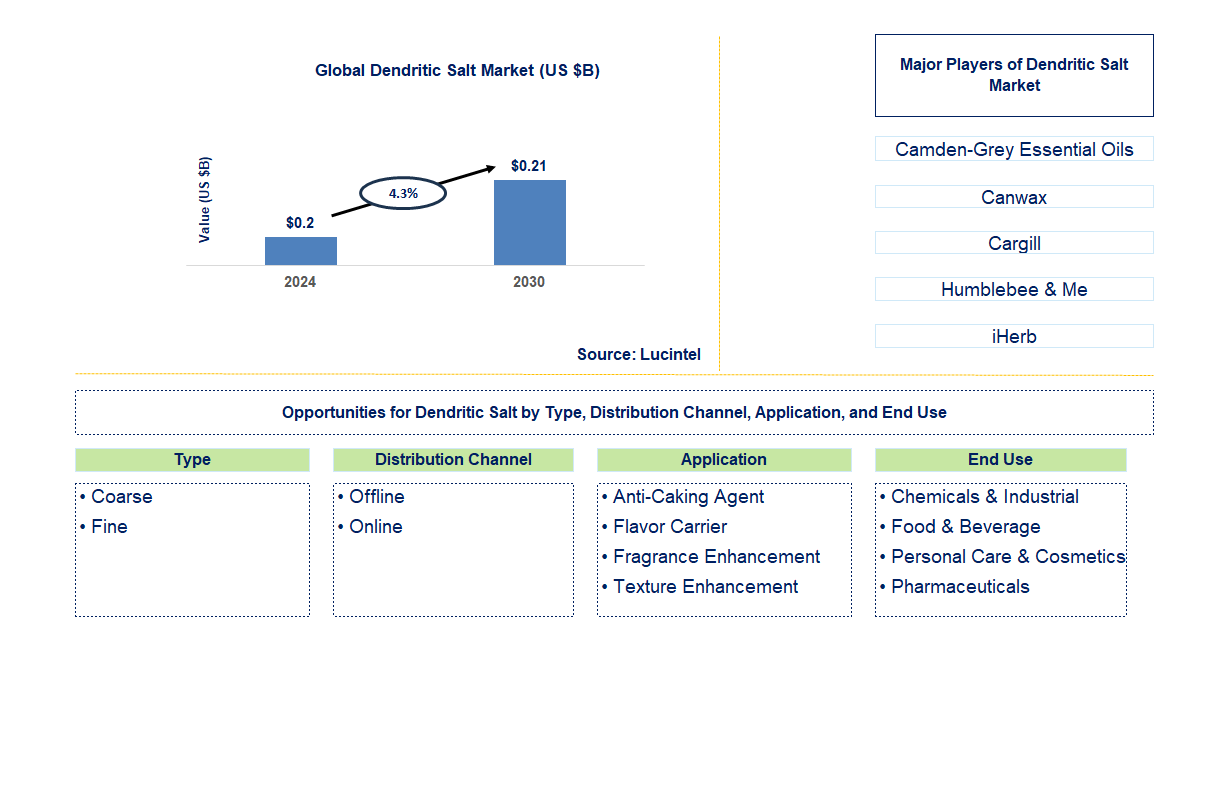
Key data points: The market size in 2030 = $0.21 billion, growth forecasts = 4.3% annually for the next 6 years. Scroll below to get more insights. This market report covers trends, opportunities, and forecastss in the global dendritic salt market to 2030 by type (coarse and fine), distribution channel (offline and online), application (anti-caking agent, flavor carrier, fragrance enhancement, and texture enhancement), end use (chemicals & industrial, food & beverage, personal care & cosmetics, and pharmaceuticals), and region (North America, Europe, Asia Pacific, and the Rest of the World)
We'll send your sample report shortly.
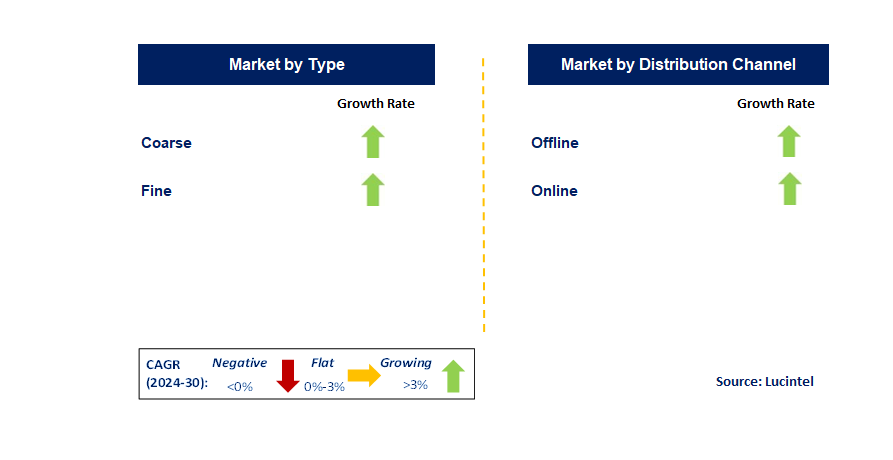
• Lucintel forecasts that, within the XYZ category,, within the type category, coarse is expected to witness the higher growth over the forecast period due to growing adoption in food processing and baking and confectionery markets.
• Within the application category, texture enhancement will remain the largest segment due to increasing utilization of dendritic salt in the food industry.
• In terms of regions,APAC is expected to witness highest growth over the forecast period due to increasing demand for personal care products. Gain valuable insights for your business decisions with our comprehensive 150+ page report.
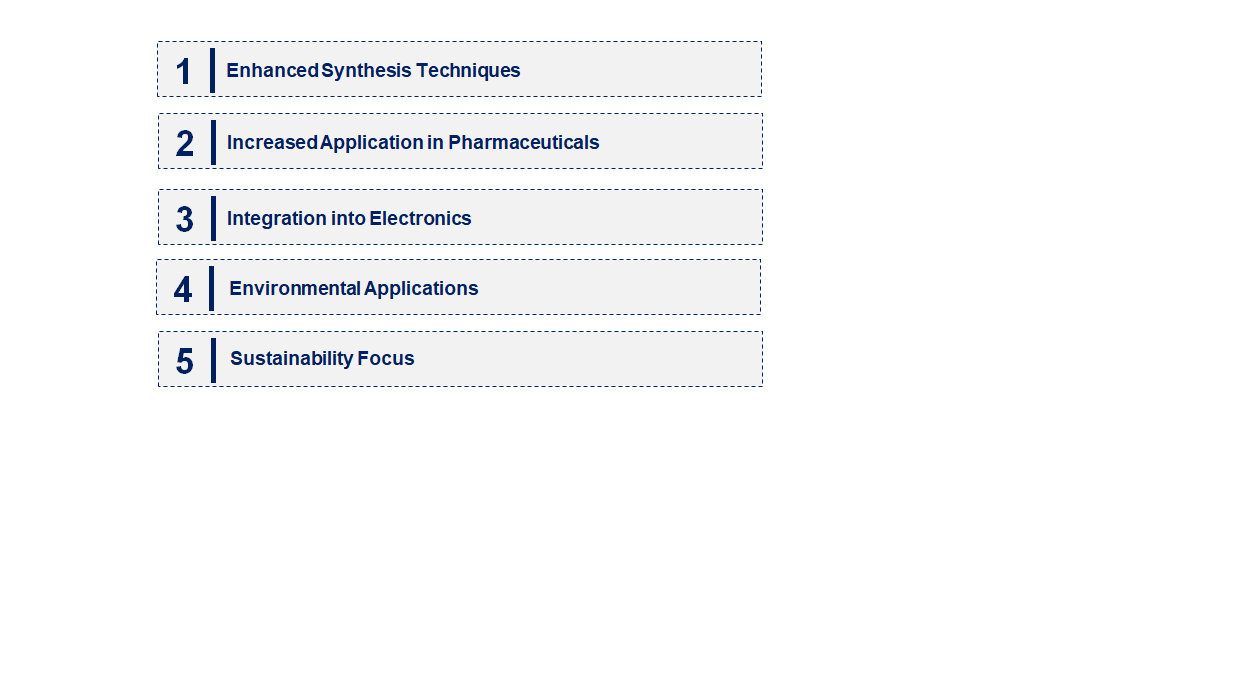
• Enhanced Synthesis Techniques: Improved synthesis methods have discovered new approaches to making higher purity and large-scale dendritic salts, enabling their greater applicability across different uses.
• Increased Application in Pharmaceuticals: The increased use of drugs administered through controlled release systems has made these substances common carriers compared to previous times.
• Integration into Electronics: The electronic industry, specifically the semiconductor and advanced coatings sectors, is adopting this form of salt.
• Environmental Applications: Research now includes using dendritic salts for water treatment and pollution control purposes.
• Sustainability Focus: Efforts are underway to reduce environmental footprints and production costs by developing greener processes for manufacturing these compounds. These trends help determine how drug synthesis and growth perspectives will change, as well as alternatives that would be better suited to economic and ecological requirements. Innovations encompass evolving a synthetic strategy that allows obtaining target products rapidly and at low cost; de novo discovery of therapeutically valuable scaffolds; creation of target-based libraries consisting mainly of natural products; and changing screening paradigms from competition assays to activity-directed isolation procedures centered on affinity chromatography. These trends can help researchers connect better with potential customers while allowing physicians access to high-quality medicines. They underscore the changing demands of different industries and the potential for dendritic salts to address current problems.
• Pharmaceutical Applications: The use of dendritic salts is rising in drug delivery systems due to their slow release properties and ability to trap active ingredients.
• Electronics and Nanotechnology: The integration of semiconductor materials with advanced coatings incorporating dendritic salts is promoting developments in electronics and nanotechnology.
• Environmental Research: Increasing research has been conducted into the usage of dendritic salts in environmental remediation, water purification, and pollution control.
• Sustainability Initiatives: Efforts are being made to develop more eco-friendly production methods for dendritic salts that reduce their environmental impact and lower costs. These developments have increased production efficiency, expanded applications in pharmaceuticals and electronics, explored environmental uses, and focused on sustainability. These advances have positioned dendritic salt as a versatile material useful in various high-tech industrial applications.
• Pharmaceuticals: The use of dendritic salts offers significant growth potential within this subsector, especially in controlled-release and targeted delivery applications.
• Electronics: Incorporating dendritic salts into electronic coatings and semiconductor materials opens avenues for high-performance electronic devices and advanced manufacturing industries.
• Environmental Technologies: In this era of green technology, the utilization of dendritic salts can address issues such as water purification, creating investment opportunities.
• Nanotechnology: The unique properties of these types of salts make them suitable for nanotechnology, including advanced materials and coatings with enhanced performance.
• Advanced Materials: Dendritic salt is widely used in the manufacture of high-performing materials found in aerospace and automotive sectors, where specialized components are required. These highlights present opportunities for growth potential from four different areas where dendritic salts can be applied: pharmaceuticals, electronics, microfabrication, and nanotechnology. Seizing these opportunities will enable companies to expand their market presence and drive innovation in high-tech and industrial applications.
• Technological Advancements: The growth of the dendritic salt market has witnessed technological innovations in synthesis techniques and applications, allowing for wider use and better enhancement.
• Increased Demand for High-Tech Materials: There is a growing demand for advanced materials in emerging electronics, pharmaceuticals, and nanotechnology, increasing the need for dendritic salts.
• Environmental Awareness: Attention has shifted toward environmental concerns, promoting "green" manufacturing approaches, especially for producing dendritic salts.
• Research and Development: Ongoing investigations into new applications and properties of dendritic salts present new business opportunities across different sectors.
• Pharmaceutical Innovation: The pharmaceutical adoption of dendritic salts has been driven by advances in drug delivery systems and targeted therapies. Challenges in the dendritic salt market include:
• Production Costs: High production costs, especially when used for low-cost applications like large-scale soil remediation, may discourage widespread use and slow expansion.
• Regulatory Compliance: Entering markets with legal compliance issues, such as pharmaceuticals and environmental markets, may be difficult due to varying regulatory requirements.
• Market Competition: Competition from alternative materials and technologies could influence demand for dendritic salts and affect market share. Sustainability Concerns: Maintaining a positive public image is critical, particularly by addressing any environmental concerns related to the production or disposal of dendritic salts.
• Technological Complexity: The complexity of the synthesis process and the high skill required during the application of dendritic salts in manufacturing can make scaling production and ensuring quality control challenging. The drivers and challenges in the dendritic salt market reveal a need for technological advancement, cost control, adherence to regulations, and sustainability. By addressing these hurdles and capitalizing on key drivers, the industry can navigate the changing market environment and seize opportunities for growth.
• Camden-Grey Essential Oils
• Canwax
• Cargill
• Humblebee & Me
• iHerb
• Ingredi
• Kneipp
• Coarse
• Fine
• Offline
• Online
• Anti-Caking Agent
• Flavor Carrier
• Fragrance Enhancement
• Texture Enhancement
• Chemicals & Industrial
• Food & Beverage
• Personal Care & Cosmetics
• Pharmaceuticals
• North America
• Europe
• Asia Pacific
• The Rest of the World
• United States: The U.S. has seen progress in the synthesis and application of dendritic salt in drugs and material technologies. This includes enhancing production efficiency and purity concerning drug delivery systems and their use as catalysts in chemical reactions. Furthermore, there is increasing interest in employing dendritic salts for advanced manufacturing processes.
• China: In China, industrial production of dendritic salt has increased significantly. Innovations include the development of scalable synthesis methods that can be applied across various industrial applications, such as electronics and coatings. Additionally, China is investing in research aimed at examining the performance of dendritic salts in environmental technologies associated with energy.
• Germany: Dendritic salt is important to Germany’s sophisticated industries, such as nanotechnology and advanced materials, as it constitutes basic components necessary for these sectors to flourish. Recent developments have focused on improving precision through better synthesis techniques, resulting in high-performance coatings and catalysts made from dendritic materials. German research institutions are also exploring the use of dendritic salts as potential water treatment solutions.
• India: Advancements in India’s production techniques concerning dendritic salts aim to improve usage within the pharmaceutical sector and agriculture. These studies involve experiments designed to fine-tune synthetic methods while exploring new areas, such as controlled-release fertilizers and medicinal formulations. Attention is also shifting toward making dendritic salt production more cost-effective.
• Japan: Japan’s expertise in materials science is driving the use of dendritic salt in nanotechnology and electronics. Key developments include the incorporation of dendritic salts into semiconductor materials and their application in advanced imaging techniques. Moreover, Japan focuses on environmentally friendly manufacturing methods for dendritic salts.


• Camden-Grey Essential Oils
• Canwax
• Cargill
• Humblebee & Me
• iHerb
• Ingredi
• Kneipp Q6. Which dendritic salt market segment will be the largest in future? Answer: Lucintel forecasts that, within the type category, coarse is expected to witness the higher growth over the forecast period due to growing adoption in food processing and baking and confectionery markets. Q7. In dendritic salt market, which region is expected to be the largest in next 5 years? Answer: In terms of regions,APAC is expected to witness highest growth over the forecast period due to increasing demand for personal care products. Q.8 Do we receive customization in this report? Answer: Yes, Lucintel provides 10% customization without any additional cost.


Choose a license that fits your team. Instant PDF delivery.
Prices exclude taxes. Instant delivery. Custom licensing available on request.
Market Report · July 22, 2026
Market Report · July 22, 2026
Market Report · July 22, 2026
Trusted partner for strategic intelligence and business growth


Receive a complimentary market analysis tailored to your industry. Our analysts will identify key growth opportunities and competitive dynamics specific to your business.

Market size, growth rate, and key trend analysis for your specific sector.

Top competitor positioning and market share analysis.

Strategic recommendations backed by data-driven insights.
Get curated market intelligence and competitive moves straight to your inbox.
By subscribing, you agree to receive our monthly insights. Unsubscribe anytime.
Receive a complimentary market analysis tailored to your industry. Our analysts will identify key growth opportunities and competitive dynamics specific to your business.
Market size, growth rate, and key trend analysis for your specific sector.
Top competitor positioning and market share analysis.
Strategic recommendations backed by data-driven insights.
Get curated market intelligence, emerging trends, and competitive moves straight to your inbox each month.
By subscribing, you agree to receive our monthly insights. Unsubscribe anytime.
We'll send your sample report shortly.