
Market Report · September 3, 2026

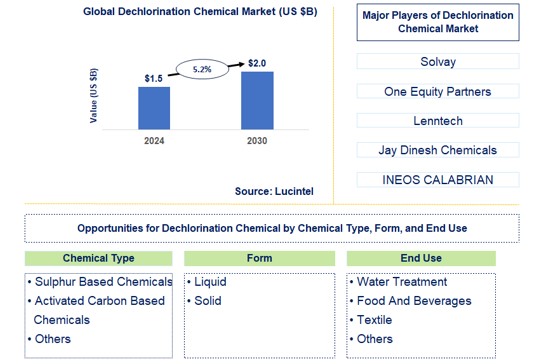
Key data points: The market size in 2030 = $2.0 billion, growth forecast = 5.2% annually for the next 6 years. Scroll below to get more insights. This market report covers trends, opportunities, and forecasts in the global dechlorination chemical market to 2030 by chemical type (Sulphur based chemicals, activated carbon based chemicals, and others), form (liquid and solid), end use (water treatment, food and beverages, textile, and others), and region (North America, Europe, Asia Pacific, and the Rest of the World)
We'll send your sample report shortly.
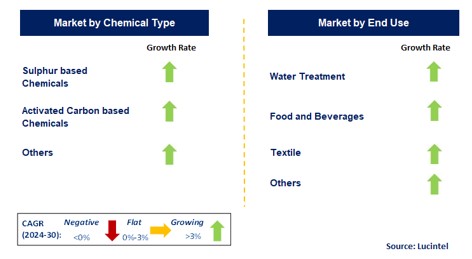
• Lucintel forecasts that, within the chemical type category, Sulphur based chemical will remain the larger segment over the forecast period because of their reducing characteristics enable them to neutralize chlorine and chloramine chemicals in water.
• Within the end use category, water treatment will remain the largest segment.
• In terms of regions, North America will remain the largest region over the forecast period due to strict environmental laws and a solid infrastructure for water treatment in the region. Gain Valuable insights for your business decisions with our comprehensive 150+ page report.
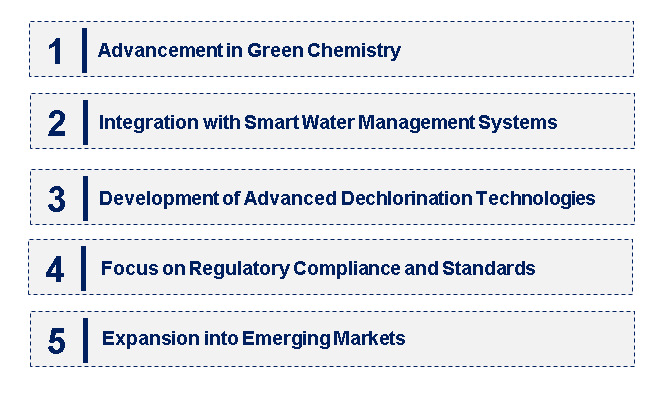
• Advancement in Green Chemistry: Green chemistry aims to create eco-friendly dechlorinators that can be sustainably used for industrial processes. For example, biodegradable substances have been developed that act as chlorine removal agents while eliminating harmful byproducts. This approach strives to reduce the impact of chlorinators on the environment, thus aligning with global sustainability goals. This trend has been driven by various factors, including regulatory pressures and heightened environmental awareness, leading to the adoption of eco-friendly chemicals and processes.
• Integration with Smart Water Management Systems: Another current trend involves the integration of intelligent water management systems with components such as dechlorinator refineries. These systems use real-time data to optimize chemical dosing rates and treatment efficiency. This improves the overall effectiveness of dechlorination processes and ensures compliance with regulations. Smart systems reduce operational costs while enhancing performance through accurate control of chemical applications. Thus, this trend is part of a broader movement towards digitalization and automation in various industrial processes.
• Development of Advanced Dechlorination Technologies: New technologies are emerging in the market, including advanced oxidation processes (AOPs) and membrane-based systems. These technologies are more efficient at removing chlorine gas and its derivatives, making them ideal for complex industries or large water treatment plants. They are designed to handle variable concentrations and conditions, offering reliable solutions for dechlorination across various levels.
• Focus on Regulatory Compliance and Standards: The need to meet stricter regulatory requirements is another significant trend in the dechlorination chemical market. Companies are now producing substances that conform to increasingly stringent environmental protection measures, including those related to safety. A focus on compliance ensures that products meet legal and industry standards, reducing the risk of penalties and enhancing market legitimacy. Regulations also shape innovative trends toward improved dechlorination techniques.
• Expansion into Emerging Markets: This trend is driven by industrial growth and increased environmental awareness, prompting the expansion of chlorine neutralizer markets into emerging economies. Countries like India and China, where urbanization rates are high, must adopt effective dechlorination solutions. Companies are designing customized products for these regions, considering local demands, which may differ from those in other places due to statutory needs. This approach allows them to better serve these customers while addressing local regulatory requirements. Targeting such markets presents opportunities for diversification and potential growth within this sector. In conclusion, the emerging trends in the dechlorination chemical market point towards sustainable development, technological improvements, and conformity with government regulations. The industry is evolving through green chemistry, smart systems, and recent technological breakthroughs, along with compliance with stringent standards and penetration into new markets. Consequently, we can expect a rise in efficient and environmentally friendly dechlorination products that will further grow this market.
• Introduction of Eco-Friendly Dechlorinators: Advances have led to the production of environmentally safe dechlorinators, such as biodegradable sodium thiosulfate and calcium thiosulfate. These products minimize pollution generated during chlorine removal, promoting sustainable management practices. They align with global environmental objectives and regulations, supporting the growth of green chemistry initiatives in the sector.
• Advancements in Dechlorination Technology: Significant advancements in dechlorination processes include technologies such as advanced oxidation processes (AOPs) and membrane filtration systems. These methods provide better chlorine removal efficiency compared to previous techniques, including those that remove chlorine byproducts like THMs. They are essential for large-scale industrial applications, such as municipal water treatment facilities, where reliability is critical.
• Integration of Automation and Smart Systems: A major highlight of recent developments is the incorporation of automation into dechlorination processes. Real-time information enables systems to optimize chemical dosing rates and treatment processes. Automation improves operational efficiency, reduces human error, and ensures consistent regulatory compliance. The adoption of smart systems has transformed the dechlorination market by enhancing performance at lower costs.
• Expansion into Emerging Markets: The dechlorination chemical market is expanding in emerging nations like India and China, driven by rapid industrialization and urbanization. This growth necessitates effective water treatment solutions tailored to local requirements and ecological standards. Companies are introducing affordable, region-specific dechlorinators to capture this market segment.
• Increased Research and Development Efforts: Research and development (R&D) have gained prominence in the dechlorination chemical industry. Companies are investing heavily in R&D to improve environmental impacts while enhancing product performance through new formulations and technologies. Innovations are aimed at creating efficient, sustainable dechlorinators that adapt to changing market needs and regulatory concerns. Recent developments in the dechlorination chemical market reflect advancements in technology, sustainability, and market expansion. Eco-friendly products, technological innovations, and the introduction of smart systems profoundly impact this sector's future. Growth is driven by expansion into new markets and intensified R&D efforts. These changes position the dechlorination industry to continue evolving in response to global environmental and industrial challenges.
• Municipal Water Treatment: Municipal water treatment plants are increasingly adopting advanced dechlorinating chemicals to meet strict quality standards for drinking water. The need for clean drinking water that complies with regulatory guidelines drives companies to seek efficient methods for chlorine removal. There are opportunities to produce affordable, high-performance chemicals that enhance treatment processes and minimize operational costs. Customized products that address specific municipal system requirements will promote growth in this industry.
• Industrial Water Treatment: The industrial sector, including manufacturing, pharmaceuticals, and food and beverage, presents significant opportunities for dechlorination chemicals. These industries require effective dechlorination methods to maintain product quality and meet environmental standards. Developing specialized dechlorination chemicals tailored to diverse industry needs can increase market niche. Companies should focus on innovations that enhance the efficiency and reliability of industrial water treatment.
• Emerging Markets: Rapid urbanization and industrialization in emerging markets like India and China have created substantial demand for dechlorination chemicals. Investments in infrastructure development and environmental preservation necessitate effective techniques for purifying water bodies in these regions. Affordable, locally tailored products can help companies build their customer base, allowing them to capture this growing market segment. Strategic alliances and local manufacturing plants can further enhance market presence.
• Green Chemistry Initiatives: The trend toward green chemistry and sustainable development has spurred the production of environmentally friendly dechlorinating chemicals. Regulatory pressures and consumer preferences for eco-friendly products are creating opportunities for biodegradable and low-impact agents used in dechlorination. Companies investing in R&D to manufacture sustainable chemicals can differentiate themselves in the market, aligning with global environmental objectives and appealing to an eco-conscious clientele.
• Integration with Smart Water Management Systems: The integration of smart water management systems into dechlorination chemicals represents a strategic growth area. Automated chemical dosing and treatment optimization systems are gaining traction in the market. Companies can develop dechlorination solutions compatible with these sophisticated systems, enhancing product offerings and improving efficiency and monitoring standards. This trend leads to increased use of such products in complex water treatment applications. Strategic growth opportunities exist across municipal water treatment, industrial applications, emerging markets, green chemistry initiatives, and smart system integration in the dechlorination chemical market. Companies willing to exploit these opportunities will develop targeted solutions that meet specific needs, venture into new markets, and adopt sustainable strategies, ultimately fostering growth.
• Solvay
• One Equity Partners
• Lenntech
• Jay Dinesh Chemicals
• INEOS CALABRIAN
• Hydrite Chemical
• Hawkins
• Guangdong Hanyan Activated Carbon Technology
• Grasim
• ESSECO
• Sulphur Based Chemicals
• Activated Carbon Based Chemicals
• Others
• Liquid
• Solid
• Water Treatment
• Food And Beverages
• Textile
• Others
• North America
• Europe
• Asia Pacific
• The Rest of the World
• United States: In the United States, recent developments in the dechlorination chemical market focus on enhancing ecological compliance and operational effectiveness. The Environmental Protection Agency (EPA) has imposed stricter water treatment regulations, leading to high demand for advanced dechlorination chemicals. Innovations include improved versions of existing products like sodium bisulfite and calcium thiosulfate, which perform better and have less environmental impact. Additionally, the increased use of automated water treatment systems incorporates dechlorination agents to reduce operational costs while optimizing performance. Companies are also investing heavily in R&D to develop more environmentally friendly alternatives that will enhance dechlorination practices.
• China: China's growth as an industrial powerhouse, coupled with stricter environmental laws, drives its expanding dechlorination chemical market. Recent developments include the adoption of technologies like advanced oxidation processes (AOPs), which improve treatment efficiencies and minimize byproduct formation. Companies are also working on affordable solutions for small-scale industries and municipalities that require rapid results. German producers are improving process engineering capabilities to develop greener products, reducing production costs, and maximizing environmental compatibility.
• Germany: Sustainability and regulatory compliance are central to Germany’s dechlorination chemical market. New, more environmentally friendly products have been developed to meet European Union environmental directives. Technological advancements in dechlorination methods and biodegradable chemicals are also notable. Dechlorination chemicals are increasingly applied alongside smart water management systems, enhancing efficiency and monitoring capabilities. German companies focus on high-performance chemicals that comply with strict EU standards while minimizing environmental damage. Research into alternative dechlorinators, including bio-based solutions, has also contributed to growth in this segment.
• India: The Indian market for dechlorination chemicals is expanding due to industrialization and increased awareness of water treatment standards. Recent advancements, such as the use of sodium thiosulfate and hydrogen peroxide, have proven effective for large-scale water treatment facilities, replacing traditional chlorine removal compounds. Companies are investing in facility upgrades and broadening their product ranges to meet rising customer demand across various industries, addressing the need for cost-competitive solutions.
• Japan: In Japan, the dechlorination chemical market is innovating to enhance efficiency and environmental sustainability. Advanced dechlorination agents with higher performance and reduced environmental impact are being introduced. Japanese companies are focusing on incorporating these chemicals into advanced water treatment systems, where automation and real-time monitoring are key drivers. Compliance with Japan’s strict environmental codes is increasingly demanded, prompting research into alternative chlorine removal methods and sustainable engineering solutions to catalyze growth. The primary goal is to improve the overall effectiveness of dechlorination processes while reducing ecological footprints.
• Solvay
• One Equity Partners
• Lenntech
• Jay Dinesh Chemicals
• INEOS CALABRIAN
• Hydrite Chemical
• Hawkins
• Guangdong Hanyan Activated Carbon Technology
• Grasim
• ESSECO Q6. Which dechlorination chemical market segment will be the largest in future? Answer: Lucintel forecasts that, within the chemical type category, Sulphur based chemical will remain the larger segment over the forecast period because of their reducing characteristics enable them to neutralize chlorine and chloramine chemicals in water. Q7. In dechlorination chemical market, which region is expected to be the largest in next 5 years? Answer: In terms of regions, North America will remain the largest region over the forecast period due to strict environmental laws and a solid infrastructure for water treatment in the region. Q.8 Do we receive customization in this report? Answer: Yes, Lucintel provides 10% customization without any additional cost.


Choose a license that fits your team. Instant PDF delivery.
Prices exclude taxes. Instant delivery. Custom licensing available on request.
Market Report · September 3, 2026
Market Report · July 22, 2026
Market Report · July 22, 2026
Trusted partner for strategic intelligence and business growth


Receive a complimentary market analysis tailored to your industry. Our analysts will identify key growth opportunities and competitive dynamics specific to your business.

Market size, growth rate, and key trend analysis for your specific sector.

Top competitor positioning and market share analysis.

Strategic recommendations backed by data-driven insights.
Get curated market intelligence and competitive moves straight to your inbox.
By subscribing, you agree to receive our monthly insights. Unsubscribe anytime.
Receive a complimentary market analysis tailored to your industry. Our analysts will identify key growth opportunities and competitive dynamics specific to your business.
Market size, growth rate, and key trend analysis for your specific sector.
Top competitor positioning and market share analysis.
Strategic recommendations backed by data-driven insights.
Get curated market intelligence, emerging trends, and competitive moves straight to your inbox each month.
By subscribing, you agree to receive our monthly insights. Unsubscribe anytime.
We'll send your sample report shortly.