
Market Report · July 16, 2026

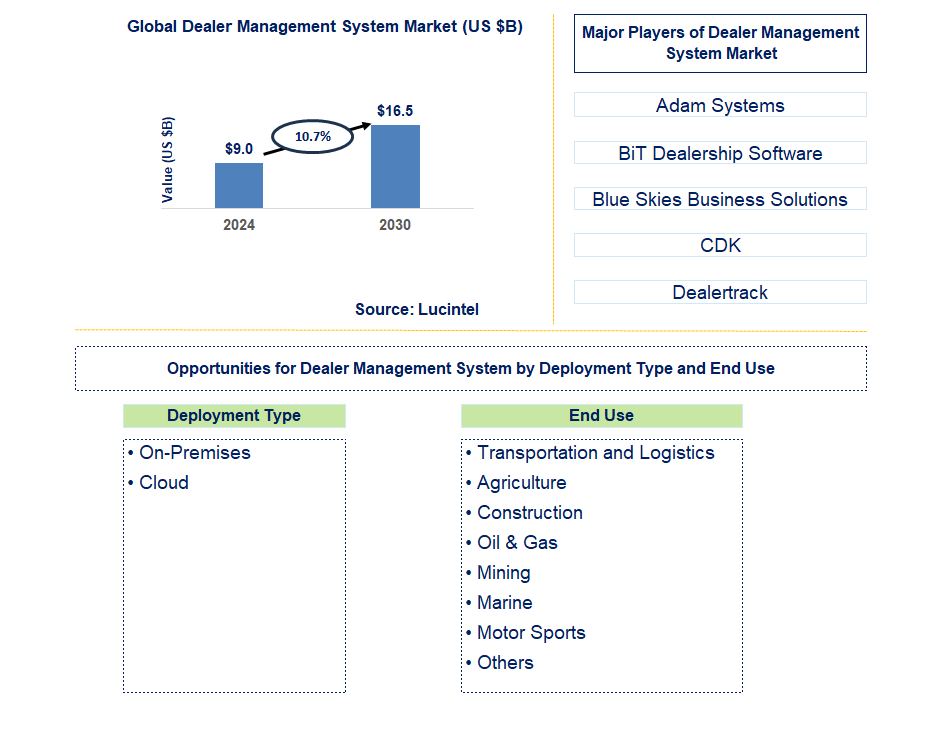
Key data points: The market size in 2030 = $16.50 billion, growth forecast = 10.7% annually for the next 6 years. Scroll below to get more insights. This market report covers trends, opportunities, and forecasts in the global dealer management system market to 2030 by deployment type (on-premises and cloud), end use (transportation and logistics, agriculture, construction, oil & gas, mining, marine, motor sports, and others), and region (North America, Europe, Asia Pacific, and the Rest of the World)
We'll send your sample report shortly.
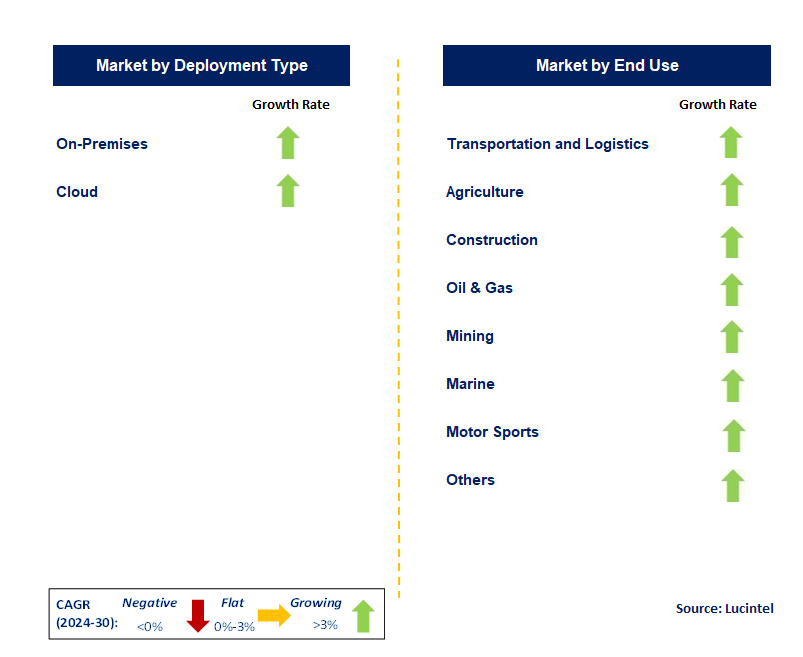
• Lucintel forecasts that, within the deployment type category, cloud is expected to witness higher growth over the forecast period as it delivers enhanced flexibility, scalability, and security to its users.
• Within the end use category, transportation and logistic will remain the largest segment due to increase in demand for cloud-based dealer management systems.
• In terms of regions, APAC is expected to witness the highest growth over the forecast period due to significantly growing automotive industry and rising demand for technologically advanced solutions. Gain valuable insight for your business decision with our comprehensive 150+ page report.
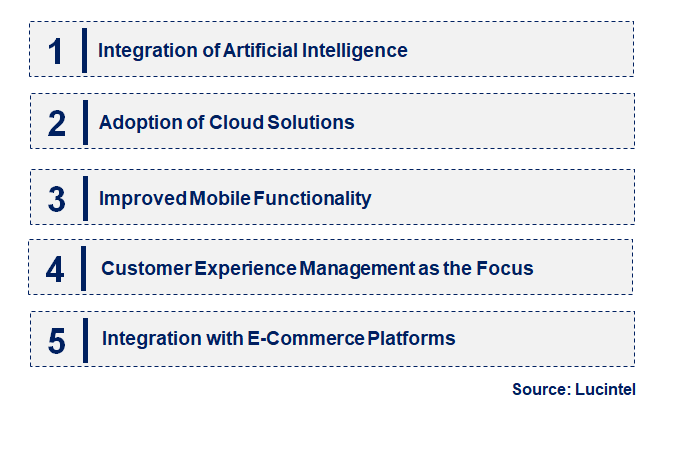
• Integration of Artificial Intelligence: One of the mainstream trends in dealer management systems is the incorporation of AI technology, which improves predictive analytics functionality, inventory management, and customer personalization. Such tools help automotive dealers evaluate strategies, measure market effects, and determine best practices in marketing. This trend supports better operational efficiency and customer relations.
• Adoption of Cloud Solutions: Cloud-based solutions are among the most disruptive technologies, characterized by advanced inventory management within dealer management systems through improved performance and lower costs. The cloud enables dealers to obtain various data simultaneously from multiple sources, reducing the IT costs associated with their systems. This trend encourages remote operations and increases ease of use.
• Improved Mobile Functionality: The incorporation of mobile capabilities in dealer management systems is enhancing the efficiency of dealership employees. Inventory, customer, and sales management functions are no longer limited to office spaces, thanks to mobile applications. This trend is improving productivity and allowing dealers to meet customer demands more quickly.
• Customer Experience Management as the Focus: The strategy of customer experience management is gaining popularity within dealer management systems. Active CRM features and analytical data are utilized to customize every touchpoint, enhance customer service, and foster customer loyalty. This trend is crucial for achieving customer satisfaction and retention.
• Integration with E-Commerce Platforms: This integration enhances the efficiency of dealer management systems and is motivating more players in the industry as the popularity of online shopping continues to grow. DMS eases the process by incorporating e-commerce systems and managing digital processes, bridging online and offline transactions for an efficient customer experience. This supports omnichannel strategies and increases productivity. The integration of new technologies into dealer management systems, such as AI, mobile technologies, internet-based systems, customer relationship strategies, and a focus on e-commerce, has positively impacted the industry. These strategies improve the efficiency of dealership processes, enhance customer reach, and cater to the demands of the rapidly changing dealership landscape.
• AI and Predictive Analytics Integration: The integration of AI and predictive analytics into dealer management systems is changing inventory management processes and customer interactions for the better. By analyzing past data, such as marketing based on demand and optimum stock levels, AI algorithms can enhance decision-making. This advancement clarifies the decision-making process, reduces inventory costs, and enhances customer satisfaction.
• Cloud-Based Platforms: The growth of cloud-based platforms has redefined dealer management systems by offering adaptable and scalable options. With the use of cloud technology, dealerships can access information in real time, employ different business areas, and reduce reliance on physical hardware. This development provides backup support for off-site delivery and boosts productivity.
• Mobile and Remote Access: The improvement of mobile and remote access to dealer management systems enables dealership employees to perform day-to-day operations regardless of location. Mobile applications allow for inventory management, transaction execution, and customer relations even when the user is away from their desk. This development boosts productivity and quick response, especially in active dealership settings.
• Advanced CRM Functionalities: Modifications to dealer management systems have also been observed in advanced CRM functionalities, which focus on enhancing customer relations and service. Automated follow-ups, tailored correspondence, and comprehensive customer databases are features that dealerships can use to better understand customer needs. This development improves customer loyalty and satisfaction.
• Integration with Third-Party Platforms: A notable trend in dealer management systems is their connection to third-party platforms, such as e-commerce or financial systems. Such integration reduces the time taken for various transactions, makes data more accurate, and improves the efficiency of day-to-day operations. By utilizing these connections, dealerships can better manage online selling, report on finances, and maintain stock levels. The recent trends and evolution of dealer management systems regarding the integration of AI, cloud-based platforms, mobile technologies, advanced CRM functionalities, and third-party vendors are changing the dynamics of the business. Such innovations help streamline business processes, enhance customer connectivity, and respond to the current shifts and demands of today's dealerships.
• Expansion of AI-Driven Solutions: The expansion of AI-driven solutions is the most notable market opportunity for dealer management systems. For example, AI applications include predictive analytics and chatbots, which can assist in inventory control, resource management, customer relations, and decision-making quality. This growth opportunity improves operational efficiency and facilitates the implementation of data-driven strategies.
• Growth in Cloud-Based Services: The increase in cloud-based services allows for the provision of on-demand dealer management systems that are both responsive and flexible. It enables working off-premises, brings together different aspects, and saves on IT costs related to infrastructure. This possibility also caters to the changing needs and requirements of dealerships and enhances the efficacy of the overall system.
• Development of Omnichannel Solutions: The development of omnichannel solutions is a key growth opportunity in dealer management systems. By adopting various methods and channels, such as the internet and physical stores, dealerships can provide comprehensive services to their customers. This fosters improved customer relations and enhances the effectiveness of sales processes.
• Focus on Enhanced Data Analytics: The focus on enhanced data analytics is likely to ensure that dealer management systems pave the way for improvements. Analysis of customer behavior, sales performance, and operational levels can be achieved through advanced assessments. The use of these insights helps dealerships make informed decisions, streamline processes, and enhance service provision.
• Integration with Emerging Technologies: Numerous opportunities exist for dealer management systems to integrate with emerging technologies, including but not limited to IoT and robotics. Stock management and activities like surveillance can be performed in real-time due to the application of IoT technologies, while tasks such as cleaning can be handled by robotics. Productivity, accuracy, and overall dealership performance are enhanced through these integrations. Strategic growth avenues in dealer management systems, such as digital marketing, omnichannel systems, advanced analytics technologies, cloud services, and mobile computing, will transform the industry. These opportunities spur creativity, increase efficiency, and help meet the challenges of modern dealerships.
• Technological Advancements: The advancement of technologies is a key growth factor for DMS, as there are always opportunities to provide more efficient and integrated systems. Improvements in AI, cloud computing, and data analytics technologies augment the system’s capabilities, facilitate business activities, and enhance customer relationships. These developments address the increasing need for advanced and versatile dealership management systems.
• Cost Efficiency: Cost efficiency is one of the key factors fueling the uptake of dealer management systems by reducing the operating costs of dealerships. This process aids dealers in cutting down start-up costs and billing rates by utilizing outsourced IT systems and cloud-based solutions. This focus on cost efficiency supports the widespread embrace of DMS solutions.
• Enhanced Customer Experience Management: Improved customer experience has also stimulated the development of more advanced dealer management systems. These systems increasingly incorporate functions such as personalized communication with customers, the ability to provide assistance at any time, and internal CRM systems. This is essential for dealerships looking to stay competitive in the market.
• Regulatory Compliance: Regulatory compliance challenges are among the top reasons for implementing dealer management systems, especially concerning data handling and reporting. Systems that ensure regulatory compliance help dealerships avoid legal issues and ensure smooth operations. Risk management policies include advanced features that have become standard in most compliance-based technology businesses.
• Globalization of Business Operations: The globalization of business operations is reflected in the geographical expansion of dealer management systems across different regions or multiple sites. As dealerships expand their operations, DMS solutions must adapt to different markets, languages, and legal requirements. This driver necessitates investment in flexible and wide-ranging systems. Challenges in the dealer management system market are:
• Integration Difficulties: Integration difficulties can arise with dealer management systems, especially with the introduction of advanced technologies or when merging with other systems. Compatibility between different systems is imperative to enhance productivity and accuracy of information. Integration challenges require tactical expertise and design capabilities.
• Overreliance on Technology: Overreliance on technology poses challenges for dealer management systems, as operational efficiency can be compromised by technical faults or system crashes. It is important to have strong IT support and system reliability to reduce interruptions and maintain service levels.
• Global and Regional Regulatory Compliance Issues: Regulatory compliance challenges, such as differing requirements in various regions, can hinder the implementation of dealer management systems. Compliance with emerging data protection laws and other standards is costly but essential for avoiding legal issues. Moreover, technological improvements, the continuous pursuit of cost reduction, and growing customer expectations are the most important factors in deploying dealer management systems. Difficulties include implementation challenges, dependency on technology, and legal compliance issues. Successfully addressing these aspects is crucial for competing effectively in the DMS industry and achieving operational efficiency.
• Adam Systems
• BiT Dealership Software
• Blue Skies Business Solutions
• CDK
• Dealertrack
• On-Premises
• Cloud
• Transportation and Logistics
• Agriculture
• Construction
• Oil & Gas
• Mining
• Marine
• Motor Sports
• Others
• North America
• Europe
• Asia Pacific
• The Rest of the World
• United States: Dealer management systems in the United States have recently advanced through the integration of AI and data analytics. Utilizing Artificial Intelligence enables predictive analytics for dealers to manage inventory and target customers effectively. Cloud-based solutions are also in demand, allowing dealerships to access scalable systems. Enhanced mobile functionality, as well as improved graphics and design, are increasing dealership employees' efficiency and effectiveness.
• China: Rapid growth in e-commerce and ongoing digitalization are driving changes in existing DMS in China. There is increased integration of big data and AI to manage large volumes of customer data and provide personalization. Additionally, partnerships with e-commerce platforms are becoming more common to enable easier shopping for clients.
• Germany: In Germany, dealer management systems are being developed with a focus on compliance integration alongside DMS functionality. Systems used by German dealers prioritize compliance, addressing privacy regulations and ensuring accurate financial reporting. There is also a growing focus on integrating DMS with other enterprise systems, such as ERP and CRM, to create a holistic dealership management system.
• India: The DMS market in India, especially for medium-term investments, is focused on affordable and user-friendly applications. New and emerging dealerships are moving towards internet-based systems that do not require large initial investments. Mobile integration is also on the rise, enabling dealers to operate seamlessly even while on the move. The number of functions aimed at enhancing customer satisfaction and interaction is also increasing.
• Japan: In Japan, dealer management systems are adopting innovative elements like robotics and IoT to improve performance. Systems used by Japanese dealers utilize IoT devices to monitor stock levels in real time and employ robots for repetitive tasks. There is also a trend toward extended CRM features focused on the customer, offering a more personalized service.


• Adam Systems
• BiT Dealership Software
• Blue Skies Business Solutions
• CDK
• Dealertrack Q6. Which dealer management system market segment will be the largest in future? Answer: Lucintel forecasts that cloud is expected to witness higher growth over the forecast period as it delivers enhanced flexibility, scalability, and security to its users. Q7. In dealer management system market, which region is expected to be the largest in next 5 years? Answer: APAC is expected to witness the highest growth over the forecast period due to significantly growing automotive industry and rising demand for technologically advanced solutions. Q.8 Do we receive customization in this report? Answer: Yes, Lucintel provides 10% customization without any additional cost.


Choose a license that fits your team. Instant PDF delivery.
Prices exclude taxes. Instant delivery. Custom licensing available on request.
Market Report · July 16, 2026
Market Report · May 18, 2026
Market Report · May 18, 2026
Trusted partner for strategic intelligence and business growth


Receive a complimentary market analysis tailored to your industry. Our analysts will identify key growth opportunities and competitive dynamics specific to your business.

Market size, growth rate, and key trend analysis for your specific sector.

Top competitor positioning and market share analysis.

Strategic recommendations backed by data-driven insights.
Get curated market intelligence and competitive moves straight to your inbox.
By subscribing, you agree to receive our monthly insights. Unsubscribe anytime.
Receive a complimentary market analysis tailored to your industry. Our analysts will identify key growth opportunities and competitive dynamics specific to your business.
Market size, growth rate, and key trend analysis for your specific sector.
Top competitor positioning and market share analysis.
Strategic recommendations backed by data-driven insights.
Get curated market intelligence, emerging trends, and competitive moves straight to your inbox each month.
By subscribing, you agree to receive our monthly insights. Unsubscribe anytime.
We'll send your sample report shortly.