
Report Feature
Wool Innerwear Market Trends and Forecast
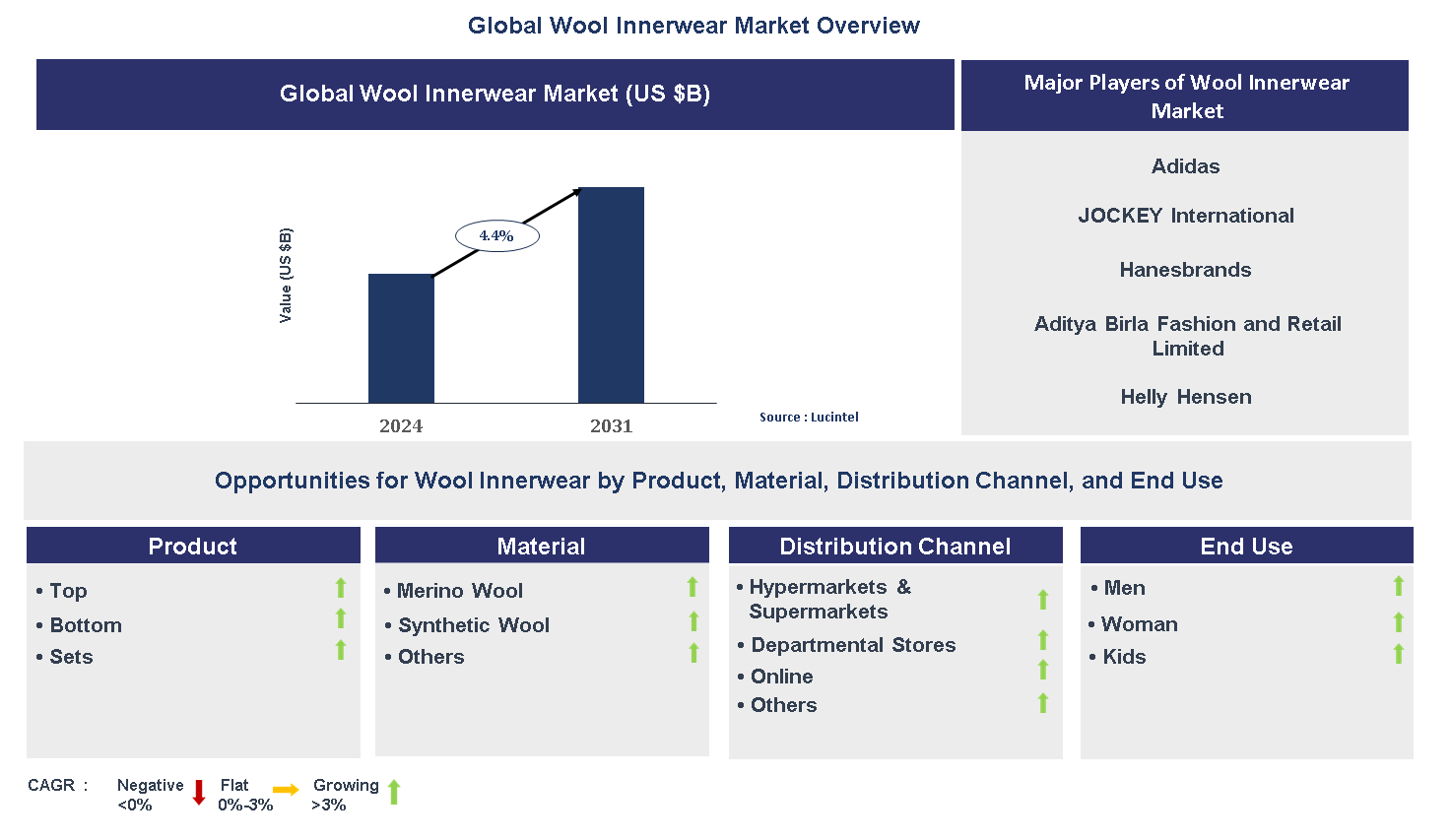
The future of the global wool innerwear market looks promising with opportunities in the merino wool and synthetic wool markets. The global wool innerwear market is expected to grow with a CAGR of 4.4% from 2025 to 2031. The major drivers for this market are the increasing preference for sustainable & natural fabrics, the rising demand for year-round comfort & warmth, and the growing awareness of wools health benefits.• Lucintel forecasts that, within the product category, set is expected to witness the highest growth over the forecast period.
• Within the material category, merino wool is expected to witness the highest growth.
• In terms of region, APAC is expected to witness the highest growth over the forecast period. Gain valuable insights for your business decisions with our comprehensive 150+ page report. Sample figures with some insights are shown below.
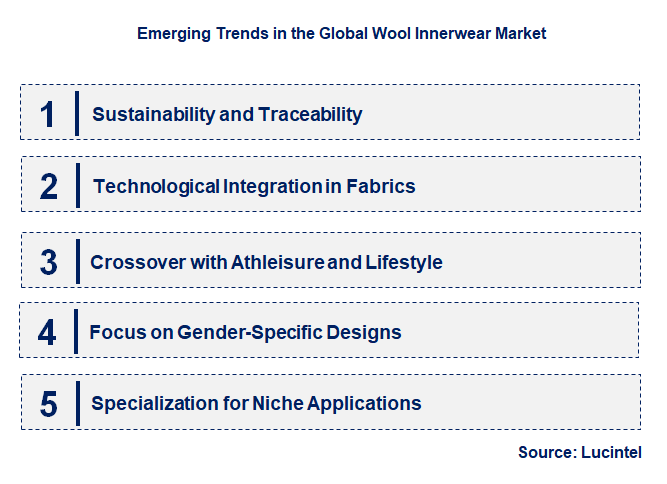
Emerging Trends in the Wool Innerwear Market
The wool innerwear market is being reshaped by a series of emerging trends that reflect a fundamental shift in consumer values. These trends are moving the industry beyond a simple cold-weather product to a versatile garment that emphasizes sustainability, technical performance, and a seamless integration of technology and lifestyle.• Sustainability and Traceability: This trend is driven by growing environmental awareness. Consumers are demanding products that are not only natural and biodegradable but also ethically sourced. This shift impacts product development by pushing brands to adopt certifications like RWS and ZQ, and to provide transparent information about their supply chain from farm to finished product.
• Technological Integration in Fabrics: New technologies are being incorporated into wool innerwear. This includes advanced knitting techniques to create lighter, more breathable fabrics, as well as blends with other performance fibers. Innovations like dynamic breathability and moisture-wicking properties are redefining wool as a high-tech performance fiber for a variety of activities.
• Crossover with Athleisure and Lifestyle: Wool innerwear is increasingly being designed to be fashionable and versatile, blurring the lines between sportswear and casual wear. Brands are offering a variety of styles and colors that can be worn for outdoor activities, travel, or everyday comfort. This trend expands the markets reach and appeals to a fashion-conscious consumer base.
• Focus on Gender-Specific Designs: While the market has traditionally been male-dominated, a significant trend is the increasing focus on women-specific designs. Brands are developing apparel with tailored fits, better support systems, and a wider range of sizes to meet the unique needs of female athletes and everyday consumers. This trend is driven by the growing participation of women in outdoor and winter sports.
• Specialization for Niche Applications: The market is seeing a trend of specialized wool innerwear for specific applications. This includes ultra-lightweight designs for runners, heavyweight baselayers for extreme cold, and seamless styles for yoga and other low-impact activities. This specialization allows brands to tap into new consumer segments and offer a more personalized and effective product for diverse needs. These emerging trends are collectively reshaping the wool innerwear market by expanding its applications, enhancing its fashion appeal, and aligning it with modern consumer values. The focus on sustainability, comfort, and personalization is pushing brands to innovate, creating a more dynamic and diverse product landscape.
Recent Development in the Wool Innerwear Market
The wool innerwear market is experiencing significant evolution, driven by shifts in consumer preferences, technological advancements, and a growing emphasis on ethical consumption. These recent developments are transforming a once-simple product category into a diverse and innovative segment of the global apparel industry, impacting everything from product design to distribution strategies.• Advanced Material Innovation: Recent developments include the use of advanced, performance-driven materials. Manufacturers are utilizing cutting-edge knitting techniques to create lighter, finer, and more comfortable merino wool fabrics. This innovation meets the dual demand for superior comfort and performance, attracting a broader and more discerning customer base who seek both luxury and functionality.
• Focus on Circular and Sustainable Models: A key development is the industry-wide shift towards more circular business models. Brands are not only using sustainable materials but are also launching product take-back and recycling programs for their wool innerwear. This development directly addresses consumer demand for eco-friendly products and helps brands to reduce their environmental footprint.
• Rise of the D2C Model: The proliferation of e-commerce has led many wool innerwear brands to adopt a direct-to-consumer (D2C) model. This development allows companies to bypass traditional retail channels, gain full control over their brand messaging, and establish a direct relationship with their customers. This strategy can lead to higher profit margins and more personalized marketing efforts.
• Strategic Collaborations and Partnerships: A notable development is the increase in collaborations between wool innerwear brands and professional athletes, fashion designers, and outdoor influencers. These partnerships generate significant media buzz and brand visibility, and they help brands reach new consumer demographics by blending high fashion with functional performance apparel.
• Smart Textile Integration: A key development is the initial foray into smart textiles. While still nascent, brands are exploring the use of embedded sensors in wool innerwear to track biometric data like heart rate and body temperature. This innovation has the potential to create a new premium segment and position wool as a high-tech material for the future. These developments are collectively impacting the wool innerwear market by expanding its potential applications and consumer segments. By focusing on innovation in materials, technology, and distribution, brands are successfully transforming the product from a simple commodity into a dynamic and highly differentiated footwear category.
Strategic Growth Opportunities in the Wool Innerwear Market
The wool innerwear market, once defined by functionality, now presents significant strategic growth opportunities driven by evolving consumer lifestyles and technological integration. These opportunities extend beyond traditional applications, allowing companies to innovate and capture new market segments by focusing on specific consumer needs and behaviors.• Targeting the Urban and Casual Market: A major growth opportunity exists in expanding beyond the traditional outdoor and sports markets. By creating wool innerwear that is not just for performance but also for everyday comfort and travel, brands can capture a wider urban consumer base. This strategy promotes wool as a versatile, year-round fiber for a modern, active lifestyle.
• Expansion into Emerging Markets: Countries like India and China, with their growing affluent populations and colder climates in key regions, represent a major growth opportunity. By establishing a strong presence in these markets and localizing their marketing, brands can tap into a new generation of consumers. Strategic partnerships with local distributors and sports organizations can enhance their success.
• Developing a Sustainable Business Model: A major growth opportunity lies in creating a business model that is built on sustainability and circularity. This involves using recycled wool, offering recycling programs, and even launching product take-back services. Brands that transparently communicate their eco-friendly practices can build a strong brand image and attract a growing segment of environmentally conscious consumers.
• Focus on Niche Communities: Instead of targeting the mass market, a strategic opportunity is to focus on niche communities like skiers, long-distance runners, or hikers. By designing specialized wool innerwear for these groups, companies can create a loyal customer base and become a trusted authority in that specific category, which allows for premium pricing and brand loyalty.
• Leveraging Technology for a Personalized Experience: A strategic opportunity exists in using technology to offer a highly personalized shopping experience. This could include AI-powered sizing recommendations, virtual try-on features, and personalized product suggestions based on a users activity and climate. This approach enhances customer satisfaction and reduces the number of product returns. These strategic growth opportunities are impacting the wool innerwear market by encouraging diversification and innovation. By moving beyond a single-use product, companies can build more robust and resilient business models that cater to a wider range of consumer needs and market conditions, leading to sustainable long-term growth.
Wool Innerwear Market Driver and Challenges
The wool innerwear market is a dynamic industry shaped by a combination of major drivers and challenges that influence its growth trajectory. The major drivers include various technological, economic, and cultural factors, such as the rising demand for sustainable products and the expansion of e-commerce. Conversely, key challenges such as high product cost and intense competition can hinder market growth. The factors responsible for driving the wool innerwear market include: 1. Rising Consumer Demand for Natural Fibers: A primary driver is the growing consumer awareness of the environmental and health benefits of natural fibers over synthetics. Wool innerwear, being biodegradable and renewable, appeals to a new generation of consumers who prioritize sustainable and eco-friendly products. This trend is shifting market preference towards wool. 2. Technological Advancements in Wool Processing: Product innovation is a key driver. Manufacturers are constantly developing new ways to process wool to make it softer, less itchy, and more comfortable for next-to-skin wear. These advancements, such as finer merino wool and advanced knitting techniques, are expanding the appeal of wool innerwear beyond traditional outdoor enthusiasts. 3. Increased Participation in Outdoor Activities: The global increase in outdoor activities like hiking, skiing, and camping is a significant driver for the wool innerwear market. Wools natural thermoregulation and moisture-wicking properties make it an ideal choice for these activities, directly fueling demand for high-performance base layers and innerwear. 4. Growth of E-commerce and Digital Marketing: The rapid growth of online retail has been a major market driver. E-commerce platforms offer a vast selection of products and convenience, while social media and influencer collaborations have become powerful marketing tools for brands to educate consumers on wool’s benefits and build brand loyalty. 5. Rising Disposable Incomes: In key markets, particularly in Asia-Pacific, rising disposable incomes are enabling consumers to spend more on premium, innovative apparel. This economic driver is particularly important for the wool innerwear market, as high-quality, specialized products often come with a significant price tag. Challenges in the wool innerwear market are: 1. High Initial Product Cost: The premium pricing of high-quality wool innerwear is a significant challenge. The specialized materials and complex manufacturing processes drive up costs, which can be a deterrent for many potential customers, especially in developing regions. This limits the markets accessibility to a broader consumer base. 2. Intense Market Competition from Synthetics: The wool innerwear market faces stiff competition from cheaper, mass-produced synthetic alternatives like polyester and nylon. While wool offers superior natural benefits, synthetics are often more affordable and require less specialized care, which can make them more appealing to a broader, price-sensitive consumer base. 3. Perception of Wool as Itchy: A significant challenge is the lingering consumer perception of wool as an itchy and bulky fabric. This outdated stereotype, a remnant of older wool processing methods, can deter potential customers. Brands must invest heavily in marketing and education to overcome this perception and highlight the softness of modern merino wool. The wool innerwear markets growth is propelled by powerful drivers like sustainability and the rise of e-commerce, which are expanding its market appeal and accessibility. However, it must contend with significant challenges, including consumer skepticism and high product costs. Navigating these forces requires strategic innovation in product development and marketing to ensure sustained growth and market relevance.List of Wool Innerwear Companies
Companies in the market compete on the basis of product quality offered. Major players in this market focus on expanding their manufacturing facilities, R&D investments, infrastructural development, and leverage integration opportunities across the value chain. With these strategies wool innerwear companies cater increasing demand, ensure competitive effectiveness, develop innovative products & technologies, reduce production costs, and expand their customer base. Some of the wool innerwear companies profiled in this report include-• Adidas
• JOCKEY International
• Hanesbrands
• Aditya Birla Fashion and Retail Limited
• Helly Hensen
• Decathlon
• Merino Tech
• VF Corporation
• The Woolmark Company
• Monte Carlo
Wool Innerwear Market by Segment
The study includes a forecast for the global wool innerwear market by product, material, distribution channel, end use, and region.Wool Innerwear Market by Product [Value from 2019 to 2031]:
• Top
• Bottom
• Sets
Wool Innerwear Market by Material [Value from 2019 to 2031]:
• Merino Wool
• Synthetic Wool
• Others
Wool Innerwear Market by Distribution Channel [Value from 2019 to 2031]:
• Hypermarkets & Supermarkets
• Departmental Stores
• Online
• Others
Wool Innerwear Market by End Use [Value from 2019 to 2031]:
• Men
• Woman
• Kids
Wool Innerwear Market by Region [Value from 2019 to 2031]:
• North America
• Europe
• Asia Pacific
• The Rest of the World
Country Wise Outlook for the Wool Innerwear Market
The global wool innerwear market is experiencing a significant revival, moving beyond its traditional role as a cold-weather staple to a year-round performance and luxury item. This transformation is fueled by a growing consumer preference for natural, sustainable materials and an increased focus on comfort and functionality. Brands are innovating with finer merino wool blends and advanced knitting techniques to create lightweight, breathable, and versatile garments.• United States: The U.S. market is driven by the growing popularity of outdoor activities and a strong consumer demand for high-performance, moisture-wicking innerwear. Brands are investing in research to highlight wool’s thermoregulation benefits, positioning it against synthetics. The focus is on a premium segment, with consumers willing to pay for quality, durability, and a transparent supply chain.
• China: China’s wool innerwear market is expanding rapidly, fueled by a rising middle class with greater disposable income and a growing interest in western fashion. Local brands are competing with international players, leveraging e-commerce and social media platforms to educate consumers on wool’s benefits. The market sees a strong demand for products that blend comfort, style, and warmth.
• Germany: The German market is characterized by a strong emphasis on sustainability and product quality. Consumers are willing to invest in ethically sourced, long-lasting innerwear. Recent developments include a preference for traceable wool, with certifications like the Responsible Wool Standard (RWS) being a key purchasing factor. This reflects a deep-seated eco-conscious consumer base.
• India: India’s wool innerwear market is experiencing significant growth, driven by a combination of colder winters in northern states and a rising fashion consciousness. The market is seeing an increased demand for high-quality, fashionable woolen innerwear. E-commerce platforms are playing a crucial role in making these products accessible to a wider consumer base across different regions.
• Japan: Japans market is mature but continues to evolve with a focus on both performance and design. There is a strong demand for high-quality, technologically advanced innerwear that offers superior warmth without bulk. The market also sees a growing interest in lightweight merino wool blends for year-round wear and a preference for aesthetically pleasing, minimalist designs.

Features of the Global Wool Innerwear Market
Market Size Estimates: Wool innerwear market size estimation in terms of value ($B). Trend and Forecast Analysis: Market trends (2019 to 2024) and forecast (2025 to 2031) by various segments and regions. Segmentation Analysis: Wool innerwear market size by various segments, such as by product, material, distribution channel, end use, and region in terms of value ($B). Regional Analysis: Wool innerwear market breakdown by North America, Europe, Asia Pacific, and Rest of the World. Growth Opportunities: Analysis of growth opportunities in different product, material, distribution channel, end use, and regions for the wool innerwear market. Strategic Analysis: This includes M&A, new product development, and competitive landscape of the wool innerwear market. Analysis of competitive intensity of the industry based on Porter’s Five Forces model.
FAQ
Q1. What is the growth forecast for wool innerwear market? Answer: The global wool innerwear market is expected to grow with a CAGR of 4.4% from 2025 to 2031. Q2. What are the major drivers influencing the growth of the wool innerwear market? Answer: The major drivers for this market are the increasing preference for sustainable & natural fabrics, the rising demand for year-round comfort & warmth, and the growing awareness of wools health benefits. Q3. What are the major segments for wool innerwear market? Answer: The future of the wool innerwear market looks promising with opportunities in the merino wool and synthetic wool markets. Q4. Who are the key wool innerwear market companies? Answer: Some of the key wool innerwear companies are as follows:• Adidas
• JOCKEY International
• Hanesbrands
• Aditya Birla Fashion and Retail Limited
• Helly Hensen
• Decathlon
• Merino Tech
• VF Corporation
• The Woolmark Company
• Monte Carlo Q5. Which wool innerwear market segment will be the largest in future? Answer: Lucintel forecasts that, within the product category, set is expected to witness the highest growth over the forecast period. Q6. In wool innerwear market, which region is expected to be the largest in next 5 years? Answer: In terms of region, APAC is expected to witness the highest growth over the forecast period. Q7. Do we receive customization in this report? Answer: Yes, Lucintel provides 10% customization without any additional cost.
Table of Contents
List of Figures
List of Tables
Methodology
- In-depth interviews of the major players in this market
- Detailed secondary research from competitors’ financial statements and published data
- Extensive searches of published works, market, and database information pertaining to industry news, company press releases, and customer intentions
- A compilation of the experiences, judgments, and insights of Lucintel’s professionals, who have analyzed and tracked this market over the years.


Buy Now
Choose a license that fits your team. Instant PDF delivery.
Prices exclude taxes. Instant delivery. Custom licensing available on request.
Key Questions
- • What are some of the most promising, high-growth opportunities for the wool innerwear market by product (top, bottom, and sets), material (merino wool, synthetic wool, and others), distribution channel (hypermarkets & supermarkets, departmental stores, online, and others), end use (men, woman, and kids), and region (North America, Europe, Asia Pacific, and the Rest of the World)?
- • Which segments will grow at a faster pace and why?
- • Which region will grow at a faster pace and why?
- • What are the key factors affecting market dynamics? What are the key challenges and business risks in this market?
- • What are the business risks and competitive threats in this market?
- • What are the emerging trends in this market and the reasons behind them?
- • What are some of the changing demands of customers in the market?
- • What are the new developments in the market? Which companies are leading these developments?
- • Who are the major players in this market? What strategic initiatives are key players pursuing for business growth?
- • What are some of the competing products in this market and how big of a threat do they pose for loss of market share by material or product substitution?
- • What M&A activity has occurred in the last 5 years and what has its impact been on the industry? For any questions related to Wool Innerwear Market, Wool Innerwear Market Size, Wool Innerwear Market Growth, Wool Innerwear Market Analysis, Wool Innerwear Market Report, Wool Innerwear Market Share, Wool Innerwear Market Trends, Wool Innerwear Market Forecast, Wool Innerwear Companies, write Lucintel analyst at email: helpdesk@lucintel.com. We will be glad to get back to you soon.


