
Report Feature
Tempo Oxidized Cellulose Nanofiber Trends and Forecast
The future of the global tempo oxidized cellulose nanofiber market looks promising with opportunities in the automotive industry, electronic, packaging industry, and coating industry markets. The global tempo oxidized cellulose nanofiber market is expected to grow with a CAGR of 14.8% from 2024 to 2030. The major drivers for this market are an increasing demand for sustainable and eco-friendly materials in various industries, ongoing advancements in nanotechnology and nanomaterials research, and growing research and development initiatives that explore novel applications and improve product performance.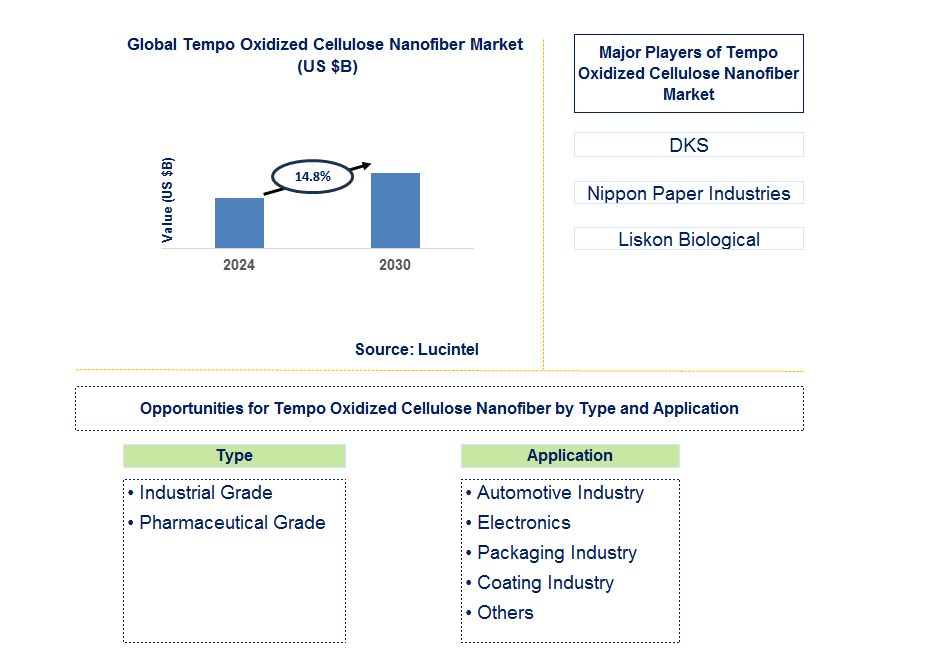
Country Wise Outlook for the Tempo Oxidized Cellulose Nanofiber Market
Major players in the market are expanding their operations and forming strategic partnerships to strengthen their positions. Below is an overview of recent developments by major TOCN producers in key regions: the USA, China, India, Japan, and Germany.• United States: Recent research in the USA has focused on enhancing the mechanical properties of TOCN for use in biodegradable composites. Innovative methods in nanofiber production are gaining traction, increasing material strength and thermal stability, making TOCN more viable for applications in packaging and automotive sectors.
• China: Chinese investment in nanotechnology has led to significant advancements in TOCN production processes. Companies are utilizing new green chemistry methods that reduce waste and energy consumption. This aligns with Chinese commitments to sustainable development and is expected to boost the availability of eco-friendly materials in various industries.
• Germany: Germany is leveraging TOCN in biomedical applications, particularly in drug delivery systems and tissue engineering. Recent collaborations between universities and industry leaders have resulted in breakthroughs that enhance the biocompatibility and functionality of TOCN, positioning it as a leading material in the medical field.
• India: In India, research initiatives are focusing on using TOCN for water purification and environmental applications. New studies are exploring its potential to create cost-effective and efficient filtration systems, addressing the pressing need for clean water solutions in many regions across the country.
• Japan: Japan's advanced manufacturing sector is exploring TOCN's application in electronics. Recent developments highlight its use as a substrate for flexible electronic devices, enhancing their performance and sustainability. This trend reflects Japanese efforts to integrate eco-friendly materials in high-tech industries.
Emerging Trends in the Tempo Oxidized Cellulose Nanofiber Market
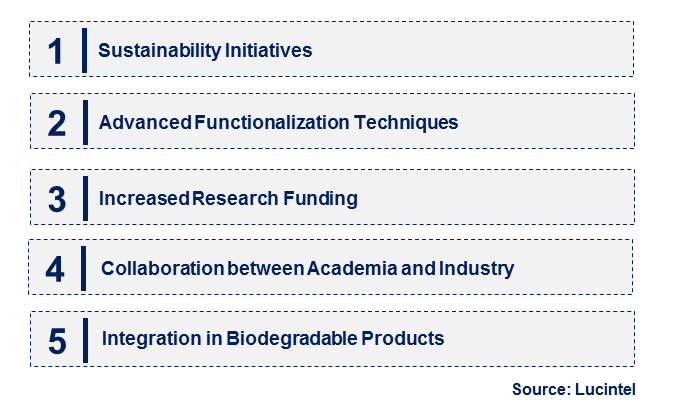
The tempo oxidized cellulose nanofiber (TOCN) market is witnessing several emerging trends driven by advancements in technology and increasing environmental awareness. These trends are shaping the market landscape and opening new avenues for applications across industries.• Sustainability Initiatives: Growing environmental concerns are pushing manufacturers to adopt sustainable practices in TOCN production, leading to eco-friendly alternatives to traditional materials. This trend is reshaping product offerings and appealing to environmentally conscious consumers.
• Advanced Functionalization Techniques: Innovations in functionalizing TOCN are enhancing its properties for various applications, including antimicrobial coatings and bioactive composites. This advancement increases the marketability of TOCN in healthcare, packaging, and other sectors.
• Increased Research Funding: A surge in research funding from both public and private sectors is accelerating TOCN development. This influx of resources supports innovative projects aimed at unlocking new applications, thereby expanding the market.
• Collaboration between Academia and Industry: Partnerships between universities and industry leaders are fostering the development of TOCN applications. These collaborations encourage knowledge sharing and innovation, resulting in advanced solutions and products for various sectors.
• Integration in Biodegradable Products: The trend of integrating TOCN into biodegradable products is gaining momentum. This shift addresses consumer demand for sustainable packaging and materials, making TOCN a popular choice for eco-conscious companies. The emergence of these trends is reshaping the tempo oxidized cellulose nanofiber market, fostering a shift toward sustainable, innovative applications across various industries.
Recent Developments in the Tempo Oxidized Cellulose Nanofiber Market
Recent developments in the tempo oxidized cellulose nanofiber market are paving the way for innovative applications and improved manufacturing processes. These advancements are enhancing the material's properties and expanding its utility across multiple sectors.• Novel Production Techniques: The introduction of efficient production techniques for TOCN has reduced costs and environmental impact. These methods improve yield and minimize waste, facilitating wider adoption in various industries.
• Biocompatibility Research: Research focused on enhancing the biocompatibility of TOCN for biomedical applications has yielded promising results. This progress positions TOCN as a viable material for drug delivery and tissue engineering.
• Expansion in Packaging Applications: Companies are increasingly exploring TOCN's potential in sustainable packaging. Recent developments showcase its ability to provide effective barriers against moisture and gases, appealing to eco-conscious consumers and manufacturers.
• Collaborative Innovations: Strategic partnerships between research institutions and industry players are driving innovations in TOCN applications. These collaborations are yielding new products and enhancing the material's functionality in various sectors.
• Global Market Expansion: The TOCN market is witnessing significant growth internationally. Enhanced awareness of its benefits and versatile applications is driving demand in regions like Asia-Pacific and North America, fostering market expansion. These developments are impacting the tempo oxidized cellulose nanofiber market by increasing its viability in diverse applications and attracting investments in research and development.
Strategic Growth Opportunities for Tempo Oxidized Cellulose Nanofiber Market
The tempo oxidized cellulose nanofiber market presents several strategic growth opportunities across various applications. Capitalizing on these opportunities can lead to significant advancements and commercial success in multiple sectors.• Biomedical Applications: The growing demand for biocompatible materials in healthcare presents opportunities for TOCN in drug delivery and tissue engineering. Innovations in these areas can enhance patient outcomes and reduce costs in medical treatments.
• Sustainable Packaging Solutions: As sustainability becomes a priority, TOCN's application in biodegradable packaging offers a lucrative growth opportunity. Companies focusing on eco-friendly products can leverage TOCN to meet consumer demand for sustainable alternatives.
• Water Filtration Technologies: TOCN's potential in water purification and filtration systems provides a promising growth avenue. Developing cost-effective filtration solutions can address global water scarcity issues and promote public health.
• Electronics and Conductive Materials: The increasing demand for flexible electronics opens doors for TOCN as a substrate material. Innovations in electronics can benefit from TOCN's unique properties, leading to enhanced device performance.
• Composite Materials Development: TOCN can be integrated into various composite materials to improve strength and reduce weight. This application is particularly relevant in automotive and aerospace industries, where lightweight materials are essential for efficiency. These growth opportunities are shaping the tempo oxidized cellulose nanofiber market, encouraging innovation and investment across sectors.
Tempo Oxidized Cellulose Nanofiber Market Driver and Challenges
The tempo oxidized cellulose nanofiber market is influenced by various drivers and challenges, including technological advancements, economic factors, and regulatory conditions. Understanding these factors is crucial for navigating the market effectively. The factors responsible for driving the tempo oxidized cellulose nanofiber market include:• Increased Demand for Sustainable Materials: The shift toward eco-friendly products drives the demand for TOCN as a sustainable alternative in various applications. Companies are increasingly prioritizing sustainability in their product offerings.
• Technological Advancements in Production: Innovations in TOCN production techniques are enhancing efficiency and reducing costs. These advancements facilitate broader adoption across industries, supporting market growth.
• Growing Applications in Biomedical Fields: The expanding use of TOCN in biomedical applications, such as drug delivery and tissue engineering, is creating new opportunities. Increased investment in healthcare research further fuels this growth.
• Supportive Regulatory Frameworks: Governments are implementing regulations promoting sustainable materials, positively impacting the TOCN market. This support encourages manufacturers to invest in eco-friendly alternatives.
• Global Awareness of Environmental Issues: Rising awareness of environmental challenges is driving consumer demand for sustainable products. TOCN aligns with this trend, enhancing its appeal across markets. Challenges in the tempo oxidized cellulose nanofiber market are:
• High Production Costs: The initial costs of producing TOCN can be high, posing a barrier to entry for some companies. Finding cost-effective methods is crucial for broader adoption.
• Competition from Established Materials: Traditional materials like plastics and metals dominate many applications, creating competition for TOCN. Overcoming consumer inertia is necessary for market penetration.
• Limited Awareness of TOCN Benefits: Despite its advantages, limited awareness among end-users can hinder market growth. Increased education and marketing efforts are needed to highlight TOCN's benefits.
• Regulatory Compliance Issues: Navigating complex regulations regarding material safety and environmental impact can be challenging. Ensuring compliance is essential for manufacturers to avoid penalties.
• Supply Chain Disruptions: Global supply chain disruptions can impact the availability of raw materials needed for TOCN production. Addressing these vulnerabilities is essential for consistent market supply. In conclusion, the tempo oxidized cellulose nanofiber market is influenced by a mix of drivers and challenges that shape its landscape. Understanding these factors can provide insights into market dynamics and future growth potential.
List of Tempo Oxidized Cellulose Nanofiber Companies
Companies in the market compete on the basis of product quality offered. Major players in this market focus on expanding their manufacturing facilities, R&D investments, infrastructural development, and leverage integration opportunities across the value chain. Through these strategies tempo oxidized cellulose nanofiber companies cater increasing demand, ensure competitive effectiveness, develop innovative products & technologies, reduce production costs, and expand their customer base. Some of the tempo oxidized cellulose nanofiber companies profiled in this report include-• DKS
• Nippon Paper Industries
• Liskon Biological
Tempo Oxidized Cellulose Nanofiber by Segment
The study includes a forecast for the global tempo oxidized cellulose nanofiber by type, application, and region.Tempo Oxidized Cellulose Nanofiber Market by Type [Analysis by Value from 2018 to 2030]:
• Industrial Grade
• Pharmaceutical Grade
Tempo Oxidized Cellulose Nanofiber Market by Application [Analysis by Value from 2018 to 2030]:
• Automotive Industry
• Electronics
• Packaging Industry
• Coating Industry
• Others
Tempo Oxidized Cellulose Nanofiber Market by Region [Analysis by Value from 2018 to 2030]:
• North America
• Europe
• Asia Pacific
• The Rest of the World
Tempo Oxidized Cellulose Nanofiber Market Insights
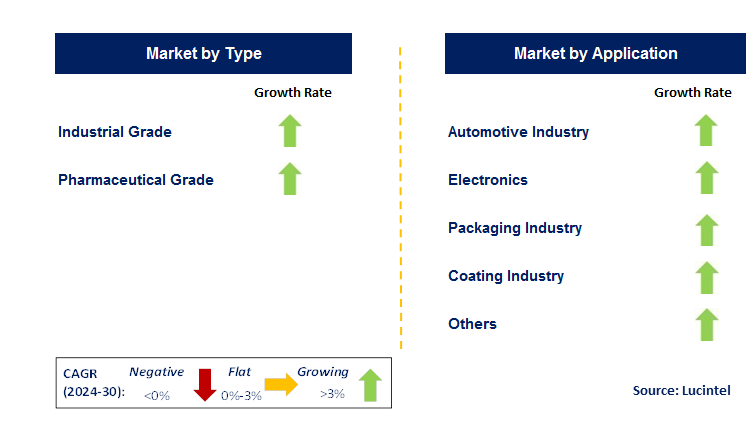
• Lucintel forecasts that, within the type category, industrial grade is expected to witness a higher growth over the forecast period.
• Within the application category, packaging is expected to witness the highest growth.
• In terms of regions, APAC is expected to witness the highest growth over the forecast period.
Features of the Global Tempo Oxidized Cellulose Nanofiber Market
Market Size Estimates: Tempo oxidized cellulose nanofiber market size estimation in terms of value ($B). Trend and Forecast Analysis: Market trends (2018 to 2023) and forecast (2024 to 2030) by various segments and regions. Segmentation Analysis: Tempo oxidized cellulose nanofiber market size by type, application, and region in terms of value ($B). Regional Analysis: Tempo oxidized cellulose nanofiber market breakdown by North America, Europe, Asia Pacific, and Rest of the World. Growth Opportunities: Analysis of growth opportunities in different type, application, and regions for the tempo oxidized cellulose nanofiber market. Strategic Analysis: This includes M&A, new product development, and competitive landscape of the tempo oxidized cellulose nanofiber market. Analysis of competitive intensity of the industry based on Porter’s Five Forces model.If you are looking to expand your business in this or adjacent markets, then contact us. We have done hundreds of strategic consulting projects in market entry, opportunity screening, due diligence, supply chain analysis, M & A, and more.

FAQ
Q1. What is the growth forecast for tempo oxidized cellulose nanofiber market? Answer: The global tempo oxidized cellulose nanofiber market is expected to grow with a CAGR of 14.8% from 2024 to 2030. Q2. What are the major drivers influencing the growth of the tempo oxidized cellulose nanofiber market? Answer: The major drivers for this market are an increasing demand for sustainable and eco-friendly materials in various industries, ongoing advancements in nanotechnology and nanomaterials research, and growing research and development initiatives that explore novel applications and improve product performance. Q3. What are the major segments for tempo oxidized cellulose nanofiber market? Answer: The future of the global tempo oxidized cellulose nanofiber market looks promising with opportunities in the automotive industry, electronic, packaging industry, and coating industry markets. Q4. Who are the key tempo oxidized cellulose nanofiber market companies? Answer: Some of the key tempo oxidized cellulose nanofiber companies are as follows:• DKS
• Nippon Paper Industries
• Liskon Biological Q5. Which tempo oxidized cellulose nanofiber market segment will be the largest in future? Answer: Lucintel forecasts that, within the type category, industrial grade is expected to witness a higher growth over the forecast period. Q6. In tempo oxidized cellulose nanofiber market, which region is expected to be the largest in next 5 years? Answer: In terms of regions, APAC is expected to witness the highest growth over the forecast period. Q.7 Do we receive customization in this report? Answer: Yes, Lucintel provides 10% customization without any additional cost.
Table of Contents
Methodology
- In-depth interviews of the major players in this market
- Detailed secondary research from competitors’ financial statements and published data
- Extensive searches of published works, market, and database information pertaining to industry news, company press releases, and customer intentions
- A compilation of the experiences, judgments, and insights of Lucintel’s professionals, who have analyzed and tracked this market over the years.


Buy Now
Choose a license that fits your team. Instant PDF delivery.
Prices exclude taxes. Instant delivery. Custom licensing available on request.
Key Questions
- • What are some of the most promising, high-growth opportunities for the tempo oxidized cellulose nanofiber market by type (industrial grade and pharmaceutical grade), application (automotive industry, electronics, packaging industry, coating industry, and others), and region (North America, Europe, Asia Pacific, and the Rest of the World)?
- • Which segments will grow at a faster pace and why?
- • Which region will grow at a faster pace and why?
- • What are the key factors affecting market dynamics? What are the key challenges and business risks in this market?
- • What are the business risks and competitive threats in this market?
- • What are the emerging trends in this market and the reasons behind them?
- • What are some of the changing demands of customers in the market?
- • What are the new developments in the market? Which companies are leading these developments?
- • Who are the major players in this market? What strategic initiatives are key players pursuing for business growth?
- • What are some of the competing products in this market and how big of a threat do they pose for loss of market share by material or product substitution?
- • What M&A activity has occurred in the last 5 years and what has its impact been on the industry? For any questions related to Tempo Oxidized Cellulose Nanofiber Market, Tempo Oxidized Cellulose Nanofiber Market Size, Tempo Oxidized Cellulose Nanofiber Market Growth, Tempo Oxidized Cellulose Nanofiber Market Analysis, Tempo Oxidized Cellulose Nanofiber Market Report, Tempo Oxidized Cellulose Nanofiber Market Share, Tempo Oxidized Cellulose Nanofiber Market Trends, Tempo Oxidized Cellulose Nanofiber Market Forecast, Tempo Oxidized Cellulose Nanofiber Companies, write Lucintel analyst at email: helpdesk@lucintel.com. We will be glad to get back to you soon.


