
Report Feature
The technologies in smart thermostats system market have undergone significant change in recent years, from analog thermostats to smart thermostats. The rising wave of new technologies, such as ZigBee and Bluetooth are creating significant potentialin residential and retail application, and driving the demand for smart thermostats systems.
In smart thermostat market, various technologies, such as Wi-Fi, Bluetooth, and ZigBee are used to control HVAC System. Stringent government regulation towards energy saving and increasing adoption of smart home technology are creating new opportunities for various smart thermostat technologies.
This report analyzes technology maturity, degree of disruption, competitive intensity, market potential, and other parameters of various technologies in the smart thermostat market. Some insights are depicted below by a sample figure. For more details on figures, the companies researched, and other objectives/benefits on this research report, please download the report brochure.
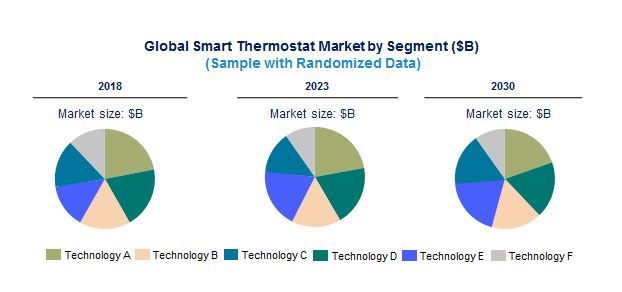
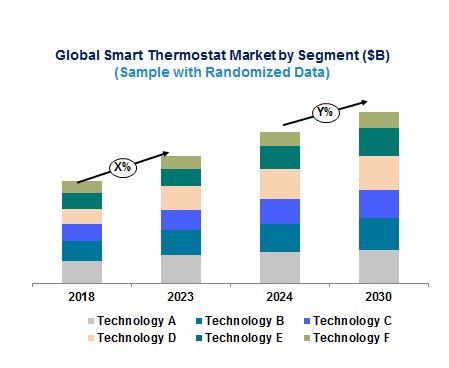
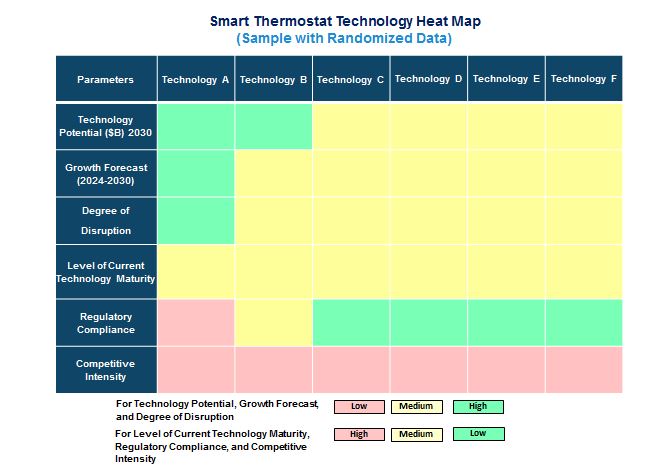
The study includes technology readiness, competitive intensity, regulatory compliance, disruption potential, trends, forecasts and strategic implications for the global smart thermostat market by application, technology, and region as follows:
Technology Readiness by Technology Type
Competitive Intensity and Regulatory Compliance
Disruption Potential by Technology Type
Trends and Forecasts by Technology Type [$M shipment analysis from 2018 to 2030]:
Technology Trends and Forecasts by Application [$M shipment analysis from 2018 to 2030]:
Companies / Ecosystems
Strategic Opportunities by Technology Type
Some of the smart thermostat companies profiled in this report include Nest labs, Honeywell International, Ecobee, Emerson Electric, Schneider Electric, Tada, Control4, Ingersoll Rand, Carrier Corporation, and Nortek.
This report answers following 9 key questions:
Q.1 What are some of the most promising and high-growth technology opportunities for the smart thermostat market?
Q.2 Which technology will grow at a faster pace and why?
Q.3 What are the key factors affecting dynamics of different technologies? What are the drivers and challenges of these technologies in smart thermostat market?
Q.4 What are the levels of technology readiness, competitive intensity and regulatory compliance in this technology space?
Q.5 What are the business risks and threats to these technologies in smart thermostat market?
Q.6 What are the latest developments in smart thermostat technologies? Which companies are leading these developments?
Q.7 Which technologies have potential of disruption in this market?
Q.8 Who are the major players in this smart thermostat market? What strategic initiatives are being implemented by key players for business growth?
Q.9 What are strategic growth opportunities in this smart thermostat technology space?
In smart thermostat market, various technologies, such as Wi-Fi, Bluetooth, and ZigBee are used to control HVAC System. Stringent government regulation towards energy saving and increasing adoption of smart home technology are creating new opportunities for various smart thermostat technologies.
This report analyzes technology maturity, degree of disruption, competitive intensity, market potential, and other parameters of various technologies in the smart thermostat market. Some insights are depicted below by a sample figure. For more details on figures, the companies researched, and other objectives/benefits on this research report, please download the report brochure.
The study includes technology readiness, competitive intensity, regulatory compliance, disruption potential, trends, forecasts and strategic implications for the global smart thermostat market by application, technology, and region as follows:
Technology Readiness by Technology Type
Competitive Intensity and Regulatory Compliance
Disruption Potential by Technology Type
Trends and Forecasts by Technology Type [$M shipment analysis from 2018 to 2030]:
- Wi-Fi
- ZigBee
- Blutooth
- Others
Technology Trends and Forecasts by Application [$M shipment analysis from 2018 to 2030]:
-
Office and Industrial Building
- Wi-Fi
- ZigBee
- Bluetooth
- Others
-
Residential
- Wi-Fi
- ZigBee
- Bluetooth
- Others
-
Educational
- Wi-Fi
- ZigBee
- Bluetooth
- Others
-
Retail
- Wi-Fi
- ZigBee
- Bluetooth
- Others
-
Hospital and Healthcare
- Wi-Fi
- ZigBee
- Bluetooth
- Others
- Others
-
North America
- United States
- Canada
- Mexico
-
Europe
- United Kingdom
- Germany
- France
-
Asia Pacific
- Japan
- China
- South Korea
- India
- The Rest of the World
Companies / Ecosystems
Strategic Opportunities by Technology Type
Some of the smart thermostat companies profiled in this report include Nest labs, Honeywell International, Ecobee, Emerson Electric, Schneider Electric, Tada, Control4, Ingersoll Rand, Carrier Corporation, and Nortek.
This report answers following 9 key questions:
Q.1 What are some of the most promising and high-growth technology opportunities for the smart thermostat market?
Q.2 Which technology will grow at a faster pace and why?
Q.3 What are the key factors affecting dynamics of different technologies? What are the drivers and challenges of these technologies in smart thermostat market?
Q.4 What are the levels of technology readiness, competitive intensity and regulatory compliance in this technology space?
Q.5 What are the business risks and threats to these technologies in smart thermostat market?
Q.6 What are the latest developments in smart thermostat technologies? Which companies are leading these developments?
Q.7 Which technologies have potential of disruption in this market?
Q.8 Who are the major players in this smart thermostat market? What strategic initiatives are being implemented by key players for business growth?
Q.9 What are strategic growth opportunities in this smart thermostat technology space?
Table of Contents
1. Executive Summary 2. Technology Landscape 2.1. Technology Background and Evolution 2.2. Technology and Application Mapping 2.3. Supply Chain
3. Technology Readiness 3.1. Technology Commercialization and Readiness 3.2. Drivers and Challenges in Smart thermostat Technologies 3.3. Competitive Intensity 3.4. Regulatory Compliance
4. Technology Trends and Forecasts Analysis from 2018-2030 4.1. Smart thermostat Opportunity 4.2. Technology Trends (2018-2023) and Forecasts (2024-2030)
5. Technology Opportunities (2018-2030) by Region 5.1. Smart thermostat Market by Region 5.2. North American Smart thermostat Technology Market
8. Strategic Implications 8.1. Implications 8.2. Growth Opportunity Analysis
9. Company Profiles of Leading Players 9.1. Nest labs 9.2. Honeywell International 9.3. Ecobee 9.4. Emerson Electric 9.5. Schneider Electric 9.6. Tada 9.7. Control4 9.8. Ingersoll Rand 9.9. Carrier Corporation 9.10. Nortek
Methodology
Lucintel has been in the business of market research and management consulting since 2000 and has published over 1000 market intelligence reports in various markets / applications and served over 1,000 clients worldwide. This study is a culmination of four months of full-time effort performed by Lucintel's analyst team. The analysts used the following sources for the creation and completion of this valuable report:
- In-depth interviews of the major players in this market
- Detailed secondary research from competitors’ financial statements and published data
- Extensive searches of published works, market, and database information pertaining to industry news, company press releases, and customer intentions
- A compilation of the experiences, judgments, and insights of Lucintel’s professionals, who have analyzed and tracked this market over the years.
Extensive research and interviews are conducted across the supply chain of this market to estimate market share, market size, trends, drivers, challenges, and forecasts. Below is a brief summary of the primary interviews that were conducted by job function for this report.

Thus, Lucintel compiles vast amounts of data from numerous sources, validates the integrity of that data, and performs a comprehensive analysis. Lucintel then organizes the data, its findings, and insights into a concise report designed to support the strategic decision-making process. The figure below is a graphical representation of Lucintel’s research process.

Buy Now
Choose a license that fits your team. Instant PDF delivery.
Prices exclude taxes. Instant delivery. Custom licensing available on request.


