
Report Feature
Super High Frequency Communication Market Trends and Forecast
The technologies in super high frequency communication technology have changed a lot in the last few years, from traditional analog communication systems to advanced digital and software-defined radio (SDR) technologies. This shift has allowed for higher data throughput, improved signal processing, and greater flexibility. Further, the shift from fixed infrastructure to more adaptive, networked systems has expanded capabilities to support emerging applications in 5G, IoT, and satellite communications while reducing costs and improving efficiency.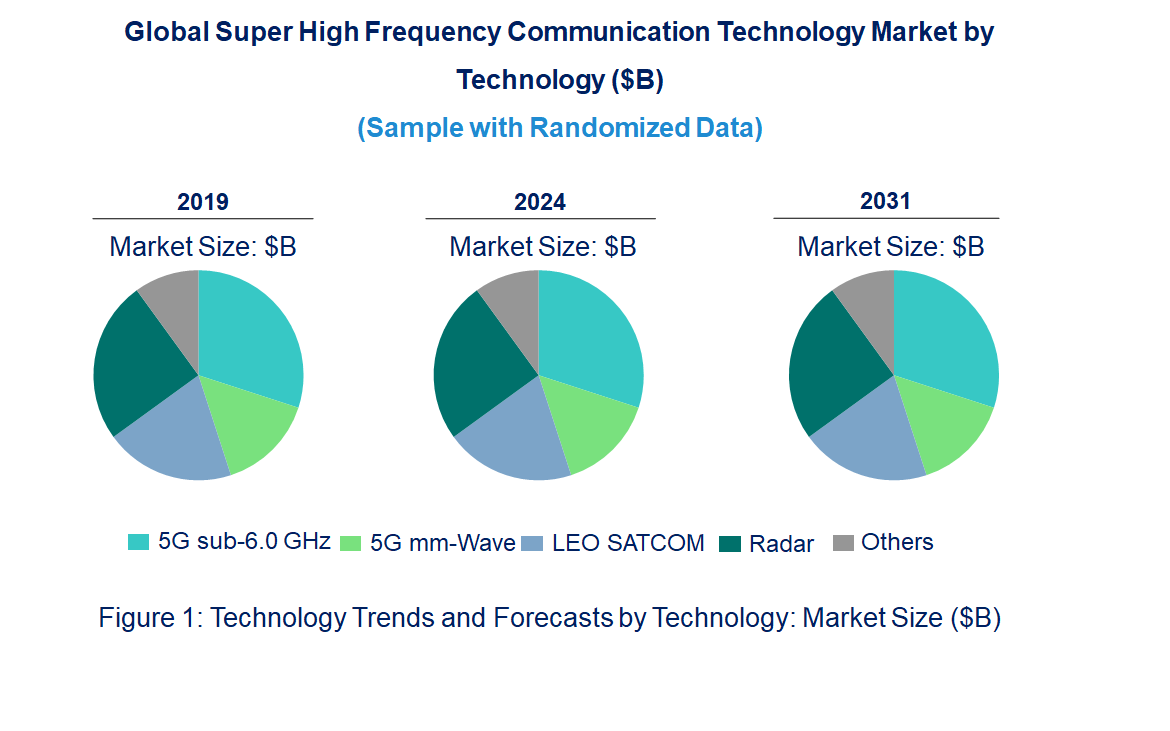
![Super High Frequency Communication Market Trend and Forecast by Application [Value from 2019 to 2031]:](https://lucintel.com/images/Super-High-Frequency-Communication-Technology-Market-Segment.png "Super High Frequency Communication Market Trend and Forecast by Application [Value from 2019 to 2031]:")
Emerging Trends in the Super High Frequency Communication Market
Super high frequency (SHF) communication, typically used in satellite communications, radar systems, and advanced wireless networks, is evolving rapidly. As the demand for faster data transmission, low latency, and broader coverage increases, several key trends are shaping the future of SHF technology. These trends reflect advancements in digital communication, network flexibility, and integration with next-generation technologies.• Transition toward SDR: SDR introduces greater flexibility and adaptability into SHF communication systems. Transition to SDR systems affords the possibility of instantaneous reconfiguration of communication protocols and frequency bands, optimizing system performance and supporting multi-band and multi-service operations. 5G and Beyond Integration: SHF bands play a key role in facilitating the high-speed, low-latency requirements of a 5G network. As 5G rolls out, SHF technology continues to be deployed extensively with mobile backhaul and small-cell networks to meet the needs of high-capacity wireless communications.
• High Use of Millimeter-Wave Frequencies: The call for greater bandwidth and higher data transfer rates has promoted the use of millimeter-wave frequencies in SHF systems. It holds the potential to provide greater data throughput, which is critical for 5G, autonomous vehicles, and high-definition video streaming. Satellite Convergence with Terrestrial Networks: The convergence of satellite and terrestrial communication networks is fast becoming a big trend. SHF communication enables connectivity at all ends of the globe, bridging gaps in the areas that have poor terrestrial coverage, supporting expansion in the internet services through satellite.
• New antenna designs, such as phased arrays, improve the performance and efficiency of SHF communication systems by providing faster beam steering, reduced signal loss, and higher coverage, which is indispensable for both terrestrial and satellite applications. These trends are transforming SHF communication technology into systems that are more flexible, scalable, and integrated with emerging network infrastructure. With the increasing prominence of 5G, satellite communications, and advanced radar technologies, SHF communications will continue to evolve and eventually provide faster, more reliable, and broadly accessible services.
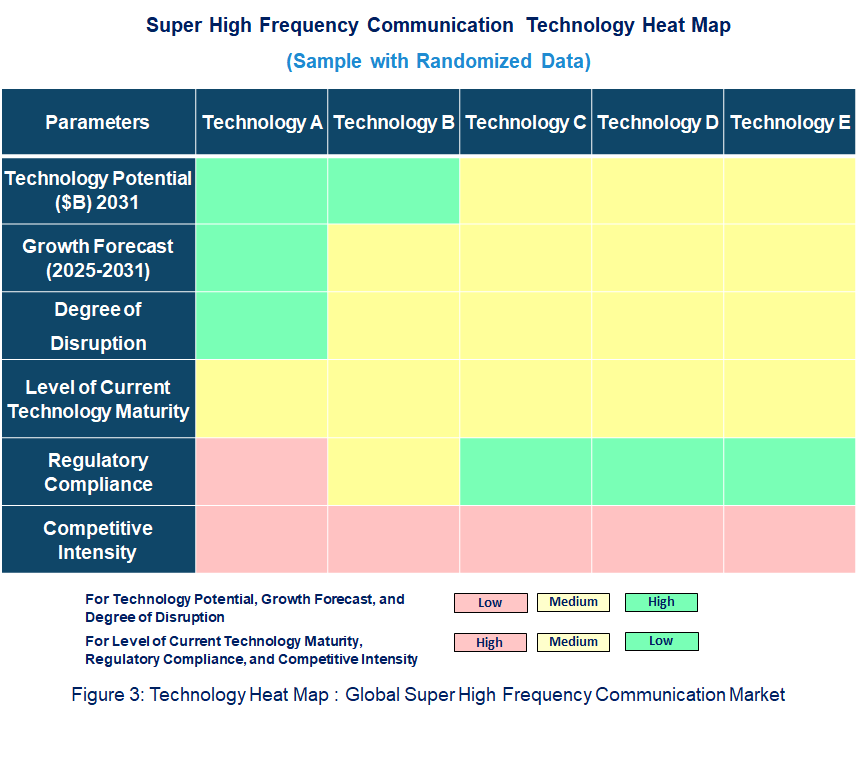
Super High Frequency Communication Market : Industry Potential, Technological Development, and Compliance Considerations
• Technology Potential: Super High Frequency (SHF) communication technology, operating in the frequency band of 3 to 30 GHz, has tremendous potential for the advancement of communication systems, especially satellite communications, radar systems, and 5G networks. Future developments in the technology shall fulfill the increasing demand for high-capacity, low-latency communication, and thus, it is considered a crucial enabler for next-generation applications.
• Degree of Disruption: SHF communication is to revolutionize many industries through enhanced data transfer rates, speed, and reliability in communication. Its use in 5G and beyond, satellite internet, and millimeter-wave technologies is an advantage in fulfilling the connectivity demand around the world. Advancements toward SDRs and increased millimeter-wave frequency utilization improve the prospects of SHF. More flexible, dynamic, and efficient communication systems can be realized by such improvements, thus providing for seamless global connectivity.
• Current Technology Maturity Level: SHF technology is relatively mature in particular areas, such as satellite communications and radar. However, application in high-frequency 5G networks is still an evolving issue.
• Regulatory Compliance: Regulatory compliance is therefore a critical consideration since the SHF bands involve coordination with other frequency bands to prevent interference. Thus, the FCC and ITU are progressively responding to the concerns about the deployment of SHF technologies in controlled, standardized manners to meet international needs for communication.
Recent Technological development in Super High Frequency Communication Market by Key Players
The platforms, embedding SHF technology for the upgrade of satellite communication systems. Solutions offered help to increase data throughput with high reliability in challenging environments, supporting the military and commercial aviation markets.• Cobham: Cobham released customized SHF communication systems, targeting defense and aerospace markets, including mobile satellite communication and communication relay systems. Innovations have helped achieve secure, high-bandwidth transmission to critical missions in remote mobile environments.
• Raycap: With its focus on SHF technology, Raycap has been able to develop rugged, durable communications solutions for harsh environments. Their products integrate SHF communication with power distribution, ensuring continuous connectivity in telecommunications and defense applications.
• General Dynamics Corporation: General Dynamics has done a lot in the use of SHF technology to enhance secure communication systems for military use. They have integrated SHF technology into tactical communication networks, allowing seamless, high-speed data transfer in battlefield settings.
• Hensoldt: In SHF communication technology, Hensoldt's progress has been made in radar and surveillance systems. SHF technology is implemented by Hensoldt in their system for better precision and reliability in military and defense systems. It is based on real-time data processing with improved situational awareness.
• JENOPTIK: JENOPTIK has leveraged SHF technology to develop sophisticated radar and communication systems for defense and aerospace. Their SHF communication systems are optimized for high-resolution radar imaging and high-capacity data transmission, significantly improving operational efficiency.
• L3Harris Technologies L3Harris is adding to the SHF communication portfolio, integrating software-defined radios and advanced antenna systems. Solutions are optimized for secure satellite and military communication systems, in support of real-time data exchange over long distances.
• Northrop Grumman: Northrop Grumman has applied SHF technology to their satellite communication systems and defense applications. Their advanced SHF systems support secure and reliable communication over long distances, allowing for global defense networks and high-throughput connectivity.
• Saint-Gobain: Saint-Gobain is using SHF technology to develop materials that improve the efficiency of communication systems. They focus on developing shielding materials to minimize interference and optimize signal quality in high-frequency applications.
• The NORDAM: The NORDAM has developed high-performance components for aerospace and defense communication systems by using SHF technology to ensure improved signal strength and stability. The products support real-time military and aviation operations in difficult environments. These innovations are driving the growth of SHF communication systems, offering improved capabilities in military, satellite, and commercial areas. With an increasing need for high-capacity, secure communication networks, SHF technology is going to play a central role in shaping the future of global communication.
Super High Frequency Communication Market Driver and Challenges
Super high frequency (SHF) communication technology is revolutionizing industries that require high-speed, secure communication, such as defense, aerospace, telecommunications, and satellite systems. The market is driven by the need for faster data transfer speed, improved reliability, and secure communication in critical environments. However, there are many opportunities, but challenges in terms of cost, complexity, and regulatory compliance affect the market. The following are the major drivers and challenges for the SHF communication technology market: The factors responsible for driving the super high frequency communication market include:• 5G and Beyond: The worldwide rollout of 5G networks is significantly boosting the demand for SHF communication systems. These systems enable high-speed, low-latency data transfer, making them ideal for 5G applications and future 6G infrastructure, enhancing connectivity and enabling smart cities, IoT, and autonomous vehicles.
• Military and Defense Applications: Secure high-capacity communication systems in the defense sector require a major driver in the use of SHF technology. The SHF band is utilized in secure communications, surveillance, and reconnaissance systems. The military is allowed the opportunity to be in real-time positions in distant, hostile areas with improved awareness of situations.
• Aerospace Developments: The SHF technology allows for satellite communication systems to process vast amounts of data, ensuring high-capacity communication channels in aerospace applications. Increasing reliance on satellite-based data transmission makes the SHF systems crucial for aircraft, space exploration, and global connectivity.
• Technological Innovation in Materials: The advances in materials science allow for more efficient SHF communication systems. New materials help to improve signal clarity, reduce interference, and enhance the overall performance of SHF systems, making them more viable for commercial and defense applications.
• Internet of Things (IoT): As the IoT ecosystem grows, SHF communication technology becomes integral for high-bandwidth, low-latency communication between connected devices. The expansion of IoT applications in industries such as manufacturing, healthcare, and agriculture relies on SHF systems for seamless data exchange. Challenges
• Limited Spectrum Availability The demand for Super High Frequency (SHF) communication technology competes with other wireless communication technologies for limited spectrum, causing congestion and reduced capacity. Regulatory bodies must manage spectrum allocation efficiently to prevent interference and ensure optimal performance.
• High Infrastructure and Operational Costs The deployment of SHF communication networks requires significant investment in infrastructure, such as antennas and transceivers, which can be expensive. The operational costs associated with maintaining these advanced systems, including power consumption and network upkeep, can be prohibitive for smaller companies. Advances in SHF technology are providing critical infrastructure for driving global digital transformation in several sectors. As the need for high-speed, reliable communication is on the rise in 5G, defense, aerospace, and IoT, these growth opportunities are revolutionizing the SHF communication market. Challenges notwithstanding, it is the continuous technological advancements and the demand for better connectivity that are propelling the evolution of the market.
List of Super High Frequency Communication Companies
Companies in the market compete based on product quality offered. Major players in this market focus on expanding their manufacturing facilities, R&D investments, infrastructural development, and leverage integration opportunities across the value chain. With these strategies super high frequency communication companies cater to increasing demand, ensure competitive effectiveness, develop innovative products & technologies, reduce production costs, and expand their customer base. Some of the super high frequency communication companies profiled in this report include.• Astronics Corporation
• Cobham
• Raycap
• General Dynamics Corporation
• Hensoldt
• Jenoptik
Super High Frequency Communication Market by Technology
• Technology Readiness: 5G sub-6.0 GHz technology is the most mature, with its core application in mobile broadband, industrial IoT, and smart cities that achieve widespread coverage. While the 5G mm-Wave is more at an early stage of its application, it has found its way into the cities with ultra-fast internet and low latency for applications such as augmented reality, virtual reality, and autonomous driving. LEO SATCOM is also moving fast, with just a few big players launching satellites for full broadband coverage around the world and affecting communications, agriculture, and remote sensing applications. Radar technology is fully mature and is commonly applied in defense, weather forecasting, autonomous vehicles, and aviation. Other technologies that are continuously improving and being adopted are Wi-Fi 6 and optical communication in dense urban settings and data centers. Each of these technologies is also of key importance in determining future connectivity and navigation, and communication systems across industries.
• Competitive Intensity and Regulatory Compliance: The competitive intensity and regulatory compliance landscape for 5G sub-6.0 GHz, 5G mm-Wave, LEO SATCOM, Radar, and the like are in a race. 5G sub-6.0 GHz faces stiff competition from its peers in the telecom industry, fighting for spectrum rights, while mm-wave technology is limited by regulation in terms of frequency allocation and the range of signal. LEO SATCOM has immense competition, as there are many satellite operators, whereas the use of Radar technology in defense is strictly regulated, with strict compliance with governmental policies. Generally, the challenges associated with spectrum licensing, frequency allocation, and ensuring interoperability add layers of competitive and regulatory hurdles across all these technologies.
• Disruption Potential: It represents disruption potential, such as 5G sub-6.0 GHz, 5G mm-Wave, LEO SATCOM, Radar, and others, because these technologies bring faster, more reliable, and more diverse communication channels. 5G sub-6.0 GHz focuses on broad coverage and reliability, with 5G mm-Wave offering higher capacity and ultra-low latency that will fuel innovation in the development of autonomous vehicles and IoT. LEO SATCOM is revolutionizing satellite communications by offering global coverage with low latency. This impacts the commercial and defense sectors. Radar technology is important for precision sensing and detection, and it brings innovation in autonomous navigation, defense, and weather forecasting. Other technologies like Wi-Fi 6 and optical communication improve wireless data transfer. These innovations will redefine industries such as telecommunications, defense, aerospace, and autonomous systems.
Super High Frequency Communication Market Trend and Forecast by Technology [Value from 2019 to 2031]:
• 5G sub-6.0 GHz
• 5G mm-Wave
• LEO SATCOM
• Radar
• Others
Super High Frequency Communication Market Trend and Forecast by Application [Value from 2019 to 2031]:
• Manufacturing
• Healthcare
• Retail
• Automotive And Transportation
• Public Safety
• Others
Super High Frequency Communication Market by Region [Value from 2019 to 2031]:
• North America
• Europe
• Asia Pacific
• The Rest of the World
• Latest Developments and Innovations in the Super High Frequency Communication Technologies
• Companies / Ecosystems
• Strategic Opportunities by Technology Type
Features of the Global Super High Frequency Communication Market
Market Size Estimates: Super high frequency communication market size estimation in terms of ($B). Trend and Forecast Analysis: Market trends (2019 to 2024) and forecast (2025 to 2031) by various segments and regions. Segmentation Analysis: Technology trends in the global super high frequency communication market size by various segments, such as application and technology in terms of value and volume shipments. Regional Analysis: Technology trends in the global super high frequency communication market breakdown by North America, Europe, Asia Pacific, and the Rest of the World. Growth Opportunities: Analysis of growth opportunities in different end use industries, technologies, and regions for technology trends in the global super high frequency communication market. Strategic Analysis: This includes M&A, new product development, and competitive landscape for technology trends in the global super high frequency communication market. Analysis of competitive intensity of the industry based on Porter’s Five Forces model.Table of Contents
Methodology
- In-depth interviews of the major players in this market
- Detailed secondary research from competitors’ financial statements and published data
- Extensive searches of published works, market, and database information pertaining to industry news, company press releases, and customer intentions
- A compilation of the experiences, judgments, and insights of Lucintel’s professionals, who have analyzed and tracked this market over the years.


Buy Now
Choose a license that fits your team. Instant PDF delivery.
Prices exclude taxes. Instant delivery. Custom licensing available on request.
Key Questions
- • What are some of the most promising potential, high-growth opportunities for the technology trends in the global super high frequency communication market by technology (5g sub-6.0 ghz, 5g mm-wave, leo satcom, radar, and others), application (manufacturing, healthcare, retail, automotive and transportation, public safety, and others), and region (North America, Europe, Asia Pacific, and the Rest of the World)?
- • Which technology segments will grow at a faster pace and why?
- • Which regions will grow at a faster pace and why?
- • What are the key factors affecting dynamics of different technology? What are the drivers and challenges of these technologies in the global super high frequency communication market?
- • What are the business risks and threats to the technology trends in the global super high frequency communication market?
- • What are the emerging trends in these technologies in the global super high frequency communication market and the reasons behind them?
- • Which technologies have potential of disruption in this market?
- • What are the new developments in the technology trends in the global super high frequency communication market? Which companies are leading these developments?
- • Who are the major players in technology trends in the global super high frequency communication market? What strategic initiatives are being implemented by key players for business growth?
- • What are strategic growth opportunities in this super high frequency communication technology space?
- • What M & A activities did take place in the last five years in technology trends in the global super high frequency communication market?


