Specialty Enzyme Market Report: Trends, Forecast and Competitive Analysis to 2035

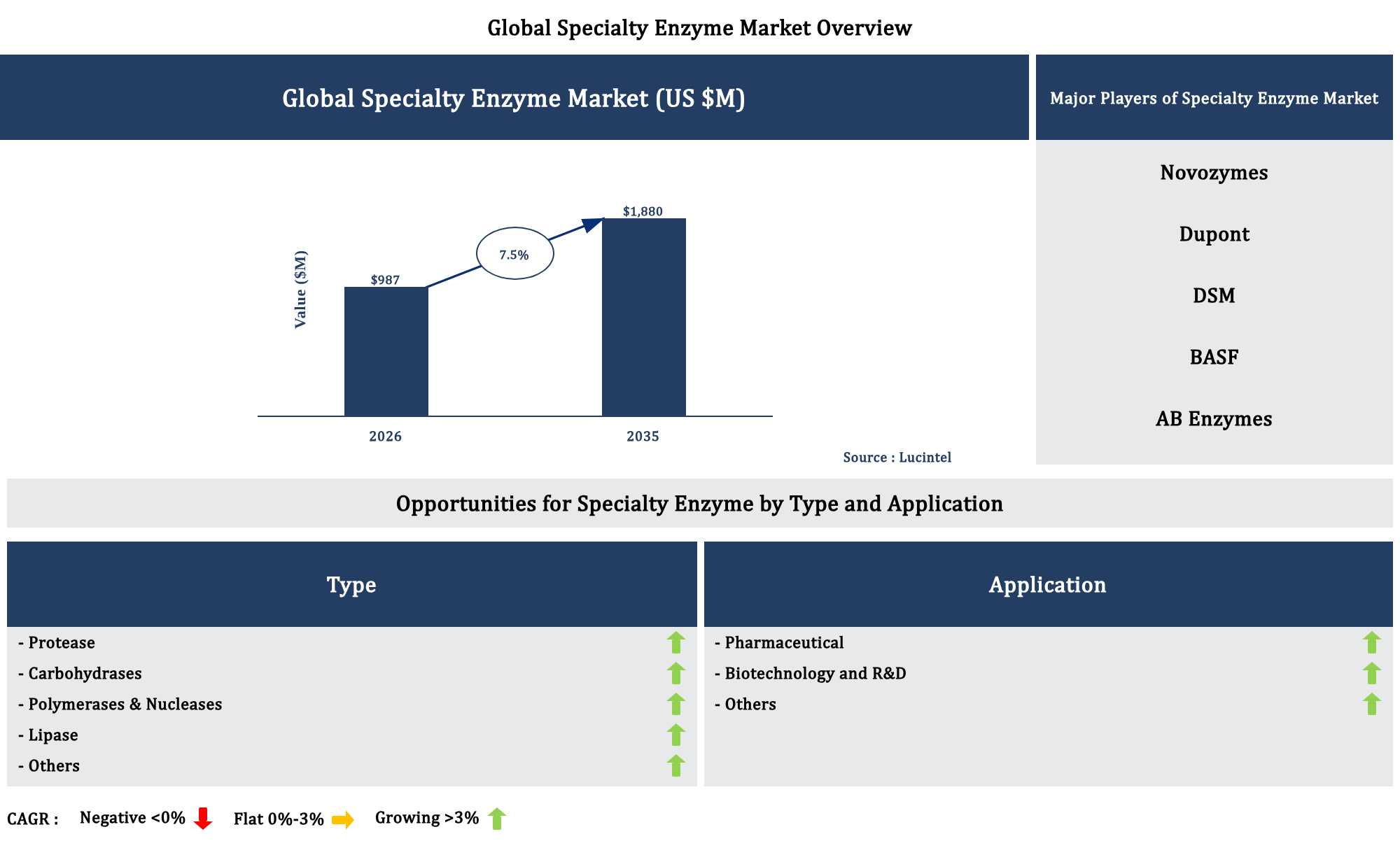
Key data points: The market size in 2035 = $1,880 million, growth forecast = 7.5% annually for the next 8 years. Scroll below to get more insights. This market report covers trends, opportunities and forecasts in specialty enzyme market to 2035 by type (protease, carbohydrases, polymerases & nucleases, lipase, and others), application (pharmaceutical, biotechnology and R&D, and others), and region (North America, Europe, Asia Pacific, and the Rest of the World)

Publisher: Lucintel Last Updated: July 2026
See Pricing

Download Sample Report

| ✨ New Download Sample report — Get instant insights! | ✨ New Download Sample report — Get instant insights!

Specialty Enzyme Market Report: Trends, Forecast and Competitive Analysis to 2035

Specialty Enzyme Market

The future of the global specialty enzyme market looks promising with opportunities in the pharmaceutical and biotechnology and R&D markets. The global specialty enzyme market is expected to reach an estimated $1,880 million by 2035 with a CAGR of 7.5% from 2026 to 2035. The major drivers for this market are the increasing demand in food processing industry, the rising use in pharmaceutical products, and the growing adoption in biofuel applications.

  • Lucintel forecasts that, within the type category, protease is expected to witness the highest growth over the forecast period due to broad industrial applications and high catalytic efficiency.
  • Within the application category, pharmaceutical is expected to witness higher growth due to increasing biopharmaceutical production and growing enzyme-based therapeutic demand.
  • In terms of regions, APAC is expected to witness the highest growth over the forecast period due to expanding pharmaceutical manufacturing and rising biotechnology investments.

Gain valuable insights for your business decisions with our comprehensive 150+ page report. Sample figures with some insights are shown below.
Specialty Enzyme Market

Emerging Trends in the Specialty Enzyme Market

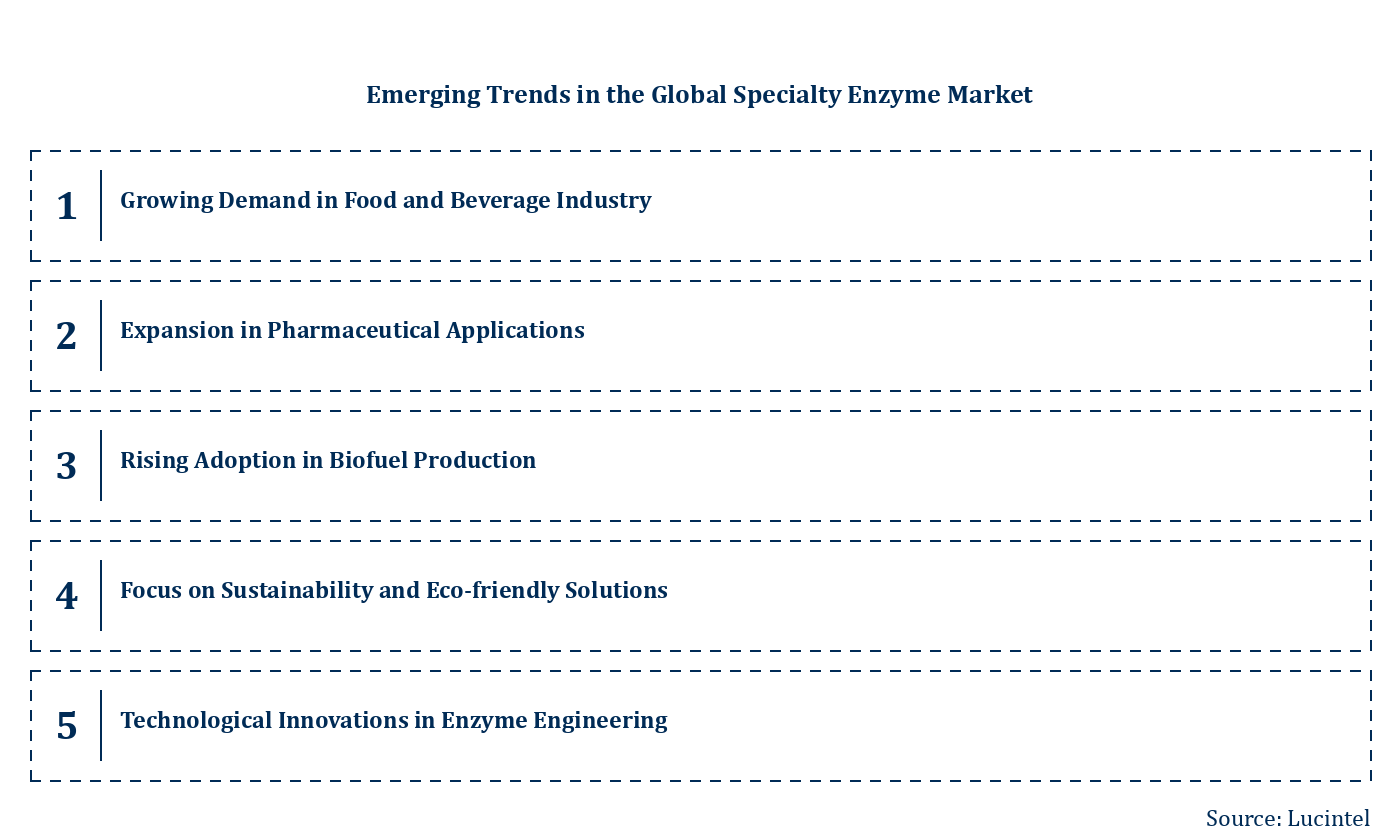
The specialty enzyme market is experiencing rapid evolution driven by technological advancements, increasing demand across various industries, and a focus on sustainable solutions. As industries such as food and beverage, pharmaceuticals, and biofuels seek more efficient and eco-friendly processes, the market is witnessing significant shifts. These developments are not only expanding the application scope of specialty enzymes but also enhancing their performance and affordability. The following key trends highlight the major forces shaping this dynamic market, reflecting its trajectory towards greater innovation, sustainability, and integration with emerging industrial needs.

  • Growing Demand in Food and Beverage Industry: The food and beverage sector is increasingly adopting specialty enzymes to improve product quality, shelf life, and processing efficiency. Enzymes like amylases, proteases, and lipases are used to enhance texture, flavor, and nutritional content while reducing processing time and costs. This trend is driven by consumer preferences for natural and clean-label products, prompting manufacturers to replace chemical additives with enzyme-based solutions. The rising demand for functional foods and beverages further accelerates this adoption, making enzymes a critical component in modern food processing.
  • Expansion in Pharmaceutical Applications: The pharmaceutical industry is leveraging specialty enzymes for drug development, diagnostics, and biocatalysis. Enzymes such as proteases and lipases are used in the synthesis of active pharmaceutical ingredients (APIs), offering higher specificity and milder reaction conditions compared to traditional chemical methods. This trend enhances the efficiency, safety, and environmental sustainability of pharmaceutical manufacturing. Additionally, enzymes are increasingly employed in diagnostic tools and personalized medicine, broadening their role in healthcare. The growing focus on biopharmaceuticals and enzyme-based therapies is expected to propel this segment further.
  • Rising Adoption in Biofuel Production: Specialty enzymes play a vital role in biofuel production, particularly in the breakdown of lignocellulosic biomass into fermentable sugars. Enzymes like cellulases and hemicelluloses are crucial for converting renewable feedstocks into bioethanol and biodiesel, supporting the shift towards sustainable energy sources. The trend is driven by government policies promoting renewable energy, decreasing enzyme costs, and technological improvements that enhance enzyme efficiency. As biofuel demand increases globally, the reliance on specialized enzymes will become more prominent, making them a cornerstone of the bioenergy industry.
  • Focus on Sustainability and Eco-Friendly Solutions: The market is witnessing a significant shift towards environmentally sustainable processes, with specialty enzymes offering biodegradable and non-toxic alternatives to chemical catalysts. Industries are adopting enzymes to reduce energy consumption, minimize waste, and lower carbon footprints. This trend aligns with global efforts to promote green chemistry and sustainable manufacturing practices. The development of enzymes that operate efficiently under mild conditions and in diverse environments further supports this movement. As sustainability becomes a key business priority, the demand for eco-friendly enzyme solutions is expected to grow substantially across multiple sectors.
  • Technological Innovations in Enzyme Engineering: Advances in enzyme engineering, including protein modification and directed evolution, are creating highly specialized enzymes tailored for specific industrial needs. These innovations improve enzyme stability, activity, and substrate specificity, enabling their use in harsher processing conditions. The ability to customize enzymes accelerates their application in niche markets and complex processes, expanding their utility. This trend is supported by increased investment in research and development, fostering the creation of next-generation enzymes that can withstand extreme pH, temperature, and solvent conditions. Such technological progress is pivotal in unlocking new applications and enhancing market competitiveness.

These trends are collectively transforming the specialty enzyme market by broadening application horizons, improving process efficiencies, and emphasizing sustainability. They are fostering innovation, reducing environmental impact, and enabling industries to meet evolving consumer and regulatory demands. As these developments continue, the market is poised for sustained growth and increased integration into diverse industrial processes.
Specialty Enzyme Market by country

Recent Developments in the Specialty Enzyme Market

The specialty enzyme market is experiencing rapid growth driven by technological advancements, increasing demand across various industries, and a shift towards sustainable solutions. Innovations in enzyme engineering and expanding applications in healthcare, food, and industrial sectors are fueling market expansion. Companies are investing heavily in research and development to create more efficient, eco-friendly enzymes. This evolving landscape presents significant opportunities for stakeholders to capitalize on emerging trends, improve product offerings, and meet the rising global demand for specialty enzymes.

  • Growing Demand in Healthcare Sector: The increasing use of specialty enzymes in diagnostics, therapeutics, and biopharmaceuticals is expanding market opportunities. Enzymes like proteases and lipases are crucial in drug formulation and disease treatment, driving innovation and investment. This demand is supported by rising healthcare needs, aging populations, and advancements in personalized medicine. As a result, companies are focusing on developing enzyme-based solutions that improve treatment efficacy and patient outcomes, significantly impacting market growth.
  • Expansion in Food and Beverage Industry: The food industry’s shift towards natural, clean-label ingredients is boosting demand for specialty enzymes such as amylases, proteases, and pectinases. These enzymes improve food processing, enhance flavors, and extend shelf life, aligning with consumer preferences for healthier products. The increasing adoption of enzyme technology in baking, dairy, and beverage sectors is creating new revenue streams. This trend encourages innovation and investment, making enzymes integral to modern food manufacturing, thereby expanding market scope.
  • Industrial Applications and Sustainability Initiatives: The push for sustainable manufacturing practices is driving the adoption of specialty enzymes in industries like textiles, paper, and biofuels. Enzymes reduce reliance on harsh chemicals, lower energy consumption, and minimize waste. This eco-friendly approach aligns with global environmental goals, prompting industries to incorporate enzyme solutions. The development of robust, cost-effective enzymes tailored for industrial processes is fostering market growth and encouraging companies to adopt greener technologies.
  • Technological Advancements in Enzyme Engineering: Innovations in enzyme modification and engineering are creating highly specific, efficient enzymes for diverse applications. Techniques like protein engineering and directed evolution enable the development of enzymes with enhanced stability and activity under extreme conditions. These advancements open new avenues in pharmaceuticals, diagnostics, and industrial processes, boosting market competitiveness. Continuous R&D efforts are expected to lead to novel enzyme products, further expanding the market’s reach and application scope.
  • Rising Investment and Strategic Collaborations: Increased funding from venture capital, private equity, and industry players is accelerating enzyme research and commercialization. Strategic partnerships between biotech firms and end-user industries facilitate technology transfer and product development. These collaborations enhance innovation, reduce time-to-market, and expand global reach. The influx of investment and partnerships is strengthening the market’s infrastructure, fostering a competitive environment, and enabling rapid growth of specialty enzyme applications worldwide.

The overall impact of these developments is a dynamic, expanding market characterized by innovation, sustainability, and diverse application opportunities. Increased investment, technological progress, and industry adoption are driving growth, positioning the specialty enzyme market as a vital component of various sectors. This evolution promises enhanced product offerings, improved efficiencies, and sustainable solutions, ultimately shaping a robust future for the industry.

Strategic Growth Opportunities in the Specialty Enzyme Market

The specialty enzyme market is experiencing rapid growth driven by increasing demand across various industries such as healthcare, food and beverage, and biofuels. Innovations in enzyme technology and rising awareness of sustainable solutions are fueling market expansion. Companies are investing in research to develop more efficient and targeted enzymes, creating new opportunities for application diversification. The integration of enzymes into eco-friendly processes further enhances market potential, making it a promising sector for strategic growth and investment.

  • Expanding Applications in Healthcare and Diagnostics: The increasing use of specialty enzymes in diagnostics, biopharmaceuticals, and personalized medicine presents significant growth opportunities. Enzymes like proteases and polymerases are essential for molecular biology techniques, drug development, and disease detection. Advances in enzyme engineering enable more precise and efficient applications, driving demand. The rising prevalence of chronic diseases and the need for rapid, accurate diagnostic tools further boost this sector’s growth potential, encouraging innovation and investment.
  • Growing Adoption in Food and Beverage Industry: Specialty enzymes are increasingly used to improve food processing, enhance flavors, and extend shelf life. Enzymes such as amylases, proteases, and lipases facilitate efficient production of baked goods, dairy products, and beverages. Consumer demand for clean-label and natural ingredients is encouraging food manufacturers to adopt enzyme-based solutions. Additionally, enzyme technology helps reduce processing time and energy consumption, making food production more sustainable and cost-effective, thereby expanding market opportunities.
  • Rising Use in Biofuel Production and Industrial Processes: The shift towards renewable energy sources is boosting enzyme applications in biofuel production, particularly in converting biomass into ethanol and biodiesel. Enzymes like cellulases and hemicelluloses enable efficient breakdown of complex carbohydrates, reducing costs and increasing yields. Their eco-friendly nature aligns with sustainability goals, attracting investments. The development of more robust and versatile enzymes tailored for industrial conditions is expected to further accelerate adoption, supporting the growth of bio-based industries.
  • Innovation in Enzyme Engineering and Customization: Advances in enzyme engineering, including protein modification and directed evolution, are creating highly specific and efficient enzymes for niche applications. Custom enzyme solutions are increasingly tailored to meet industry-specific needs, improving process efficiency and product quality. This innovation drives market growth by opening new avenues in pharmaceuticals, agriculture, and environmental management. The ability to design enzymes with enhanced stability and activity under diverse conditions is a key factor fueling ongoing research and commercialization.
  • Increasing Focus on Sustainable and Eco-Friendly Solutions: The global emphasis on sustainability is propelling demand for environmentally friendly enzymes that replace chemical catalysts. Specialty enzymes enable greener manufacturing processes, waste reduction, and energy savings across industries. Governments and organizations are incentivizing eco-conscious practices, encouraging companies to adopt enzyme-based solutions. This trend supports market expansion by aligning with regulatory standards and consumer preferences for sustainable products, fostering innovation and broadening application scopes in various sectors.

The overall impact of these opportunities is a robust, innovative, and sustainable specialty enzyme market poised for significant growth. Strategic investments and technological advancements will further unlock new applications, enhance product efficiency, and promote eco-friendly solutions, ultimately transforming multiple industries and contributing to global sustainability goals.

Specialty Enzyme Market Drivers and Challenges

The specialty enzyme market is influenced by a variety of technological, economic, and regulatory factors that shape its growth trajectory. Advances in biotechnology and enzyme engineering have enabled the development of highly specific and efficient enzymes, fueling innovation and expanding applications across industries such as pharmaceuticals, food and beverages, and biofuels. Economic factors like increasing demand for sustainable and eco-friendly solutions drive market expansion, while regulatory frameworks ensure safety and quality standards. However, challenges such as high R&D costs, stringent regulations, and market competition pose hurdles. Understanding these drivers and challenges is essential for stakeholders to navigate the evolving landscape effectively.

The factors responsible for driving the specialty enzyme market include:

  • Technological Innovation: The rapid advancement in enzyme engineering and biotechnological processes has led to the development of highly specific, efficient, and stable enzymes. These innovations enable applications in diverse sectors, including healthcare, food processing, and bioenergy, thereby expanding market opportunities. Continuous R&D investments foster product diversification and improved performance, attracting new customers and increasing market penetration. The ability to tailor enzymes for specific industrial needs enhances their utility, making technological progress a key driver of market growth.
  • Growing Demand for Sustainable Solutions: Increasing environmental awareness and regulatory pressures are pushing industries toward eco-friendly alternatives. Specialty enzymes facilitate sustainable practices by enabling cleaner production processes, reducing waste, and lowering energy consumption. For example, in the food industry, enzymes improve processing efficiency and reduce chemical usage. The shift toward green chemistry and sustainable manufacturing practices significantly boosts demand for specialty enzymes, supporting market expansion and aligning with global sustainability goals.
  • Expanding Applications Across Industries: The versatility of specialty enzymes allows their use in multiple sectors such as pharmaceuticals, food and beverages, textiles, and biofuels. In healthcare, enzymes are crucial for diagnostics and therapeutics. In food processing, they improve texture, flavor, and shelf life. The increasing adoption of enzymes in biofuel production enhances renewable energy sources. This broad application spectrum drives market growth by opening new revenue streams and increasing overall demand, making industry expansion highly dependent on the diversification of enzyme applications.
  • Rising Investment in R&D: Significant investments by biotech firms, academic institutions, and government agencies are fueling innovation in enzyme technology. These investments lead to the discovery of novel enzymes with enhanced functionalities, stability, and specificity. R&D efforts also focus on cost-effective production methods, making enzymes more accessible and affordable. The continuous pipeline of innovative products sustains market growth, attracts new players, and helps meet evolving industry needs, reinforcing the importance of ongoing research and development.
  • Increasing Regulatory Support and Standards: Governments and regulatory bodies worldwide are establishing guidelines to ensure the safety, efficacy, and environmental impact of enzymes. Regulatory approval processes, while rigorous, provide credibility and facilitate market acceptance. Supportive policies and incentives for sustainable practices further encourage industry adoption. Compliance with these standards not only ensures market legitimacy but also opens opportunities for international trade and expansion, making regulatory frameworks a vital driver for market stability and growth.

The challenges facing the specialty enzyme market include:

  • High R&D and Production Costs: Developing novel specialty enzymes involves substantial investment in research, testing, and scaling up production processes. These costs can be prohibitive, especially for small and medium-sized enterprises, limiting innovation and market entry. Additionally, maintaining consistent enzyme quality and activity at an industrial scale adds to operational expenses. High costs can hinder competitiveness and slow down the pace of technological advancements, impacting overall market growth and accessibility.
  • Stringent Regulatory Environment: While regulations ensure safety and efficacy, they also pose significant hurdles. Lengthy approval processes, complex compliance requirements, and evolving standards can delay product launches and increase costs. Navigating diverse regulatory landscapes across regions complicates international expansion. Non-compliance risks, including penalties and market bans, further challenge market players. These regulatory complexities can restrain innovation and market agility, impacting overall industry development.
  • Market Competition and Patent Expirations: The increasing number of players entering the specialty enzyme sector intensifies competition. Companies often rely on patents to protect their innovations, but patent expirations can lead to generic competition, reducing profitability. Price wars and commoditization threaten profit margins and market stability. Additionally, rapid technological changes require continuous innovation, which can be resource-intensive. Managing competitive pressures and intellectual property rights is crucial for sustaining growth and market share in this dynamic environment.

The specialty enzyme market is driven by technological advancements, sustainability trends, diverse applications, R&D investments, and supportive regulations. However, high costs, regulatory hurdles, and intense competition pose significant challenges. These factors collectively influence market dynamics, requiring stakeholders to innovate strategically, navigate regulatory landscapes carefully, and manage costs effectively. The interplay of these drivers and challenges will determine the future growth trajectory, with opportunities for expansion balanced by the need for resilience and adaptability in a competitive landscape.

List of Specialty Enzyme Market Companies

Companies in the market compete on the basis of product quality offered. Major players in this market focus on expanding their manufacturing facilities, R&D investments, infrastructural development, and leverage integration opportunities across the value chain. Through these strategies specialty enzyme market companies cater increasing demand, ensure competitive effectiveness, develop innovative products & technologies, reduce production costs, and expand their customer base. Some of the specialty enzyme market companies profiled in this report include-

  • Novozymes
  • Dupont
  • DSM
  • BASF
  • AB Enzymes
  • CHR.Hansen
  • Soufflet Group
  • Longda Bio-products
  • Biocatalysts
  • ORBA

Specialty Enzyme Market by Segment

The study includes a forecast for the global specialty enzyme market by type, application, and region.

  • Specialty Enzyme Market by Type [Value from 2019 to 2035]:
    • Protease
    • Carbohydrases
    • Polymerases & Nucleases
    • Lipase
    • Others
  • Specialty Enzyme Market by Application [Value from 2019 to 2035]:
    • Pharmaceutical
    • Biotechnology and R&D
    • Others
  • Specialty Enzyme Market by Region [Value ($M) from 2019 to 2035]:
    • North America
    • Europe
    • Asia Pacific
    • The Rest of the World

Country Wise Outlook for the Specialty Enzyme Market

The specialty enzyme market has experienced significant growth driven by advancements in biotechnology, increasing demand for sustainable solutions, and expanding applications across industries such as healthcare, food processing, and environmental management. Innovations in enzyme engineering and increased investment in research have accelerated product development and market expansion. Countries are adopting new regulations and fostering collaborations to enhance enzyme applications, reflecting a global shift towards more eco-friendly and efficient processes. These developments are shaping the competitive landscape and opening new opportunities for market players worldwide.

  • United States: The US market has seen rapid innovation with the launch of enzyme products tailored for personalized medicine and biopharmaceuticals. Investment in biotech startups and research institutions has increased, fostering advancements in enzyme engineering. Regulatory agencies are streamlining approval processes, boosting market growth. The food industry is adopting specialty enzymes for clean-label products, while environmental applications like waste management are expanding. Overall, the US remains a leader in enzyme research and commercialization, with a focus on sustainable and health-oriented solutions.
  • China: China’s specialty enzyme market is experiencing robust growth due to government initiatives supporting biotech innovation and industrial upgrades. Local companies are investing heavily in R&D to develop enzymes for agriculture, food, and textiles. The country is also expanding its enzyme production capacity to meet domestic demand and reduce reliance on imports. Regulatory frameworks are improving, encouraging foreign investment. The integration of enzyme technology in traditional industries is driving market expansion, with a focus on cost-effective solutions and sustainable practices. China is positioning itself as a key player in the global enzyme industry.
  • Germany: Germany continues to lead in enzyme research and industrial applications, especially in pharmaceuticals and diagnostics. The country’s strong emphasis on quality and innovation has resulted in advanced enzyme formulations for medical and biotechnological uses. Collaborations between academia and industry are fostering new enzyme technologies. The bioeconomy strategy promotes sustainable enzyme solutions for environmental and industrial processes. Germany’s focus on regulatory compliance and high standards ensures market stability and growth. The country also invests in developing enzymes for renewable energy and waste treatment, reinforcing its position as a technological hub in Europe.
  • India: The Indian specialty enzyme market is rapidly expanding, driven by increasing demand in food processing, textiles, and pharmaceuticals. The government’s initiatives to promote biotech startups and R&D are fueling innovation. Local manufacturers are focusing on cost-effective enzyme production to serve domestic markets and export opportunities. The adoption of enzymes in traditional industries is increasing due to the push for cleaner and more efficient processes. Additionally, collaborations with international firms are enhancing technological capabilities. Overall, India is emerging as a significant player in the global enzyme landscape, with a focus on affordability and sustainability.
  • Japan: Japan’s market is characterized by advanced enzyme research, particularly in healthcare, diagnostics, and environmental applications. The country’s focus on aging populations has spurred innovations in enzyme-based therapies and diagnostics. Japan is also investing in enzyme applications for renewable energy and waste management. The integration of enzyme technology with digital tools is enhancing product efficacy and market reach. Regulatory support and a strong biotech infrastructure underpin growth. Japanese companies are actively developing eco-friendly enzymes for industrial use, aligning with global sustainability goals. The country remains a key innovator in the specialty enzyme sector, emphasizing high-quality and cutting-edge solutions.

Features of the Specialty Enzyme Market

  • Market Size Estimates: Specialty enzyme market size estimation in terms of value ($M).
  • Trend and Forecast Analysis: Market trends (2019 to 2025) and forecast (2026 to 2035) by various segments and regions.
  • Segmentation Analysis: Specialty enzyme market size by type, application, and region in terms of value ($M).
  • Regional Analysis: Specialty enzyme market breakdown by North America, Europe, Asia Pacific, and Rest of the World.
  • Growth Opportunities: Analysis of growth opportunities in different types, applications, and regions for the specialty enzyme market.
  • Strategic Analysis: This includes M&A, new product development, and competitive landscape of the specialty enzyme market.
  • Analysis of competitive intensity of the industry based on Porter’s Five Forces model.

Top 5 Companies

  • Novozymes
  • Dupont
  • DSM
  • BASF
  • AB Enzymes

Table of Contents

1. Executive Summary
13.1 Competitive Analysis Overview

List of Figures

List of Tables

Methodology

Lucintel has been in the business of market research and management consulting since 2000 and has published over 1000 market intelligence reports in various markets / applications and served over 1,000 clients worldwide. This study is a culmination of four months of full-time effort performed by Lucintel's analyst team. The analysts used the following sources for the creation and completion of this valuable report:

  • In-depth interviews of the major players in this market
  • Detailed secondary research from competitors' financial statements and published data
  • Extensive searches of published works, market, and database information pertaining to industry news, company press releases, and customer intentions
  • A compilation of the experiences, judgments, and insights of Lucintel's professionals, who have analyzed and tracked this market over the years.

Extensive research and interviews are conducted across the supply chain of this market to estimate market share, market size, trends, drivers, challenges, and forecasts. Below is a brief summary of the primary interviews that were conducted by job function for this report.

Lucintel's methodology for market research

Thus, Lucintel compiles vast amounts of data from numerous sources, validates the integrity of that data, and performs a comprehensive analysis. Lucintel then organizes the data, its findings, and insights into a concise report designed to support the strategic decision-making process. The figure below is a graphical representation of Lucintel's research process.

Primary interviews by job function

Buy Now

Choose a license that fits your team. Instant PDF delivery.

Market Report

1 User PDF

$4,850
Buy Now

Market Report

2-5 Users PDF

$6,700
Buy Now

Market Report

Corporate PDF

$8,850
Buy Now

Market Report

Global PDF

$10,000
Buy Now

Prices exclude taxes. Instant delivery. Custom licensing available on request.

Frequently Asked Questions

What is the specialty enzyme market size?
The global specialty enzyme market is expected to reach an estimated $1,880 million by 2035.
What is the growth forecast for specialty enzyme market?
The global specialty enzyme market is expected to grow with a CAGR of 7.5% from 2026 to 2035.
What are the major drivers influencing the growth of the specialty enzyme market?
The major drivers for this market are the increasing demand in food processing industry, the rising use in pharmaceutical products, and the growing adoption in biofuel applications.
What are the major segments for specialty enzyme market?
The future of the specialty enzyme market looks promising with opportunities in the pharmaceutical and biotechnology and R&D markets.
Who are the key specialty enzyme market companies?

Some of the key specialty enzyme companies are as follows:

  • Novozymes
  • Dupont
  • DSM
  • BASF
  • AB Enzymes
  • CHR.Hansen
  • Soufflet Group
  • Longda Bio-products
  • Biocatalysts
  • ORBA
Which specialty enzyme market segment will be the largest in future?
Lucintel forecasts that, within the type category, protease is expected to witness the highest growth over the forecast period.
In specialty enzyme market, which region is expected to be the largest in next 8 years?
In terms of region, APAC is expected to witness the highest growth over the forecast period.
Do we receive customization in this report?
Yes, Lucintel provides 10% customization without any additional cost.

Key Questions

  • What are some of the most promising, high-growth opportunities for the specialty enzyme market by type (protease, carbohydrases, polymerases & nucleases, lipase, and others), application (pharmaceutical, biotechnology and R&D, and others), and region (North America, Europe, Asia Pacific, and the Rest of the World)?
  • Which segments will grow at a faster pace and why?
  • Which region will grow at a faster pace and why?
  • What are the key factors affecting market dynamics? What are the key challenges and business risks in this market?
  • What are the business risks and competitive threats in this market?
  • What are the emerging trends in this market and the reasons behind them?
  • What are some of the changing demands of customers in the market?
  • What are the new developments in the market? Which companies are leading these developments?
  • Who are the major players in this market? What strategic initiatives are key players pursuing for business growth?
  • What are some of the competing products in this market and how big of a threat do they pose for loss of market share by material or product substitution?
  • What M&A activity has occurred in the last 5 years and what has its impact been on the industry?
Why Choose Us

The Lucintel Advantage

Trusted partner for strategic intelligence and business growth

25+ Years Excellence

25+ Years Excellence

Quarter century of proven expertise in management consulting and market research across global markets.
Game-Changer Ideas

Game-Changer Ideas

Innovative strategies and actionable insights that help clients become the smartest in their industry.
Global Reach

Global Reach

Extensive coverage across 50+ industries and markets worldwide with localized expertise.
Start Your Growth Journey

Get Your Free
Market Intelligence
Briefing

Receive a complimentary market analysis tailored to your industry. Our analysts will identify key growth opportunities and competitive dynamics specific to your business.

Custom Market Snapshot

Market size, growth rate, and key trend analysis for your specific sector.

Competitive Landscape Overview

Top competitor positioning and market share analysis.

Growth Opportunity Identification

Strategic recommendations backed by data-driven insights.

Subscribe

Subscribe to our Newsletter

Get curated market intelligence and competitive moves straight to your inbox.

By subscribing, you agree to receive our monthly insights. Unsubscribe anytime.

Industry Trends Market Signals Opportunities Competitor Moves