
Report Feature
Smart Carbon Monoxide Alarm Market
The technologies in the smart carbon monoxide alarm market have seen significant changes in recent years, shifting from traditional wired alarm systems to wireless connectivity technologies such as Wi-Fi, Bluetooth, and Zigbee. This change enables more integration into smart home ecosystems, allowing users to receive immediate alerts on their smartphones, tablets, and other devices. These developments have enhanced the comfort, responsiveness, and automation of carbon monoxide alarm systems. With the growth of home automation and other IoT-enabled devices, smart alarms that can communicate with other interconnected devices, like thermostats and smart lighting systems, are gaining popularity. This trend will further help develop more intelligent, responsive, and efficient safety solutions for both homes and businesses.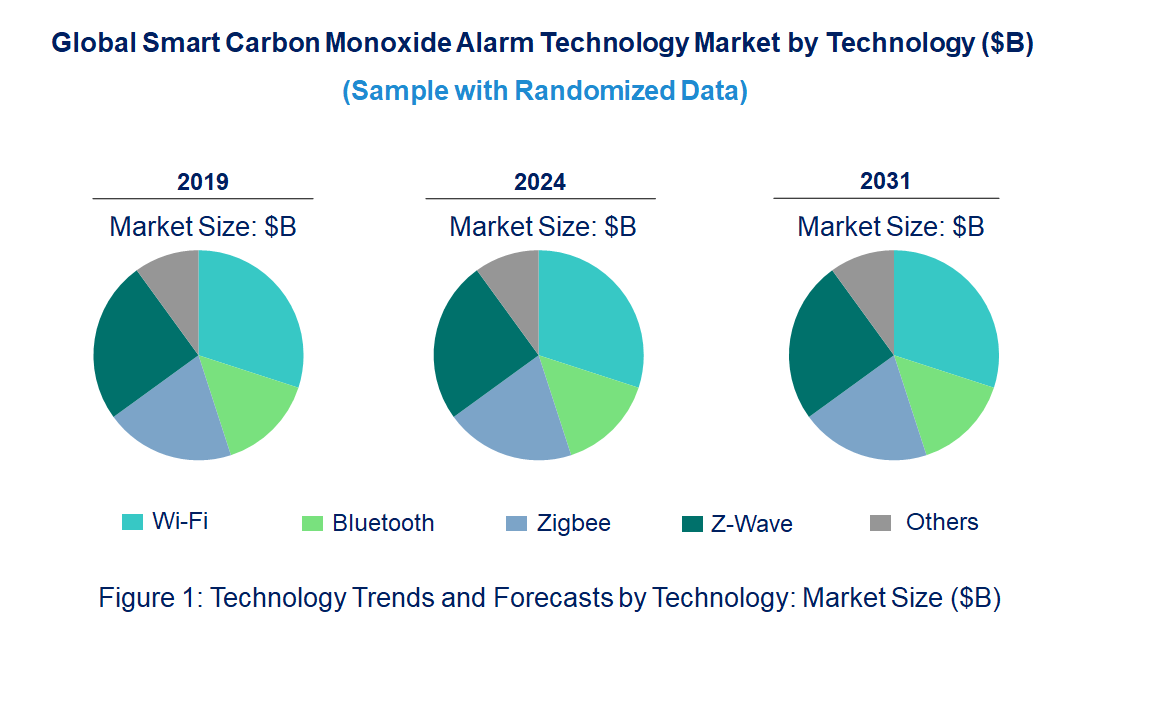
Emerging Trends in the Smart Carbon Monoxide Alarm Market
The smart carbon monoxide alarm market is rapidly growing with several key trends emerging, driven by technological advancements, consumer demand for convenience, and regulatory changes. Below are five key trends:• Integration into Smart Home Ecosystems: More and more, carbon monoxide alarms are being integrated into popular smart home platforms, including Amazon Alexa, Google Assistant, and Apple HomeKit. The integration allows users to monitor and control alarms remotely, increasing convenience and safety.
• Wireless Connectivity: Smart carbon monoxide alarms are increasingly incorporating Wi-Fi, Bluetooth, and Zigbee, allowing for easier installation and communication with other smart devices. This trend is transforming alarms into central parts of more comprehensive home automation and IoT ecosystems.
• Latest Advanced Alerts and Notifications: Smart carbon monoxide alarms now have advanced alert systems that send notifications directly to smartphones or other connected devices to inform the user of carbon monoxide levels, even when they are not at home.
• Voice and App Control: Smart carbon monoxide alarms are often accompanied by voice control as well as control through dedicated smartphone applications. This reflects the increasing interest of consumers in convenient, hands-free operation in the context of connected homes.
• Enhanced Sensors and Accuracy: Advanced sensors lead to better accuracy and responsiveness for smart carbon monoxide alarms. With newer sensors, traces of carbon monoxide are easier to detect, providing much earlier warnings and greater reliability. These trends redefine the smart carbon monoxide alarm market, making it more sophisticated, user-friendly, and integrated into safety solutions that enhance the overall experience in smart homes.
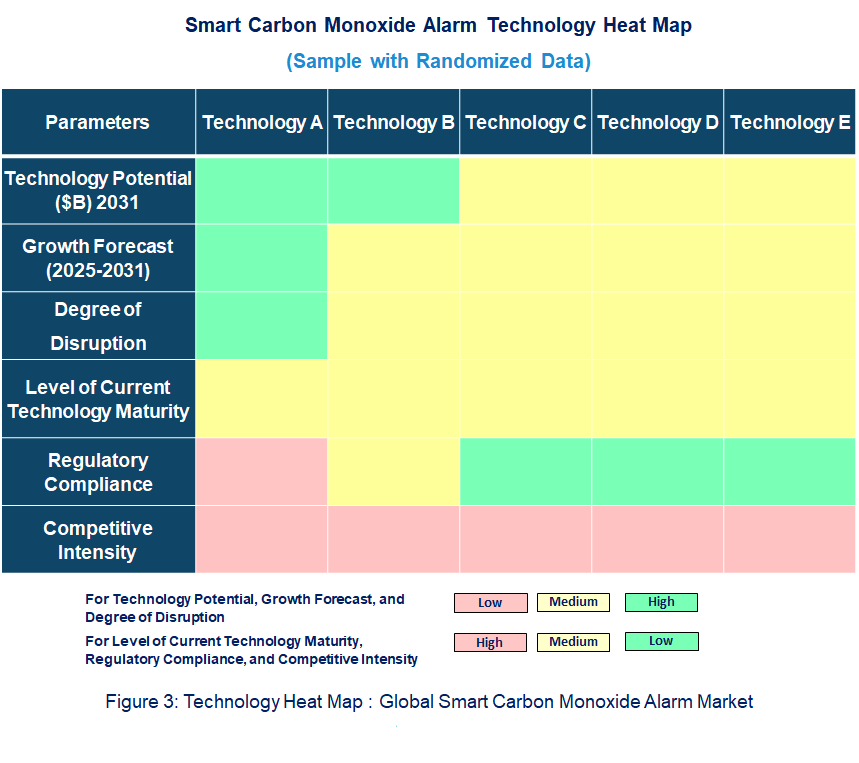
Smart Carbon Monoxide Alarm Market : Industry Potential, Technological Development, and Compliance Considerations
A smart CO alarm is designed to have superior qualities compared to older traditional devices. While traditional alarms may alert users about carbon monoxide levels, they do not integrate with smart home systems and offer real-time alerts, remote monitoring, or data analytics. As awareness of air quality and safety grows, the demand for smart carbon monoxide alarms is increasing rapidly in residential, commercial, and industrial sectors.• Technology Potential: Smart CO alarm technology has enormous potential, especially since it connects to the internet of things (IoT) ecosystems. Coupling them with mobile apps, smart home platforms, or building management systems makes it possible to send remote alerts in real time. Innovative voice alarms and enhanced sensors with the capability to link to other environmental sensors, like temperature and humidity, would further boost performance. Additionally, the market also recognizes the potential of AI-driven diagnostics to predict potential malfunctions or environmental conditions that could set off false alarms.
• Level of Disruption: Smart CO alarms have moderate disruptive potential in the home safety market. Although traditional CO alarms have been on the market for decades, there is a growing shift toward more connected, intelligent systems that change the way consumers approach home safety. Integrating these systems into broader smart home ecosystems makes home safety more convenient and possibly easier to manage.
• Current Technology Maturity: Smart CO alarm technology is mature and continues to evolve. Many such products are already available, including mobile app integration and voice notifications. Improvements in sensor accuracy, battery life, and integration with other home automation systems continue to drive innovation.
• Regulatory Compliance: Proper smart CO alarms must pass UL 2034 for U.S. safety or EN 50291 for European safety standards, ensuring reliability in responding to dangerous levels of CO. Regulations on response times, accuracy, and battery performance are maintained, ensuring consumer safety and reliable products.
Recent Technological development in Smart Carbon Monoxide Alarm Market by Key Players
Several key players operating in the smart carbon monoxide alarm market are pushing boundaries with innovations that further enhance the functionality, user experience, and reliability of their products. Here are a few of them:• Google Nest is integrating its smart carbon monoxide alarms with Google Assistant and other smart home ecosystems so that users can control the alarm via voice commands and get real-time updates on their smartphones. Its focus on a seamless user experience continues to drive adoption in residential homes.
• First Alert has offered Wi-Fi-enabled carbon monoxide alarms, enabling customers to remotely monitor their levels and get alerts in real-time using a smartphone app. This helps homeowners stay informed about what is happening at home even when they are not there, contributing to better safety.
• Kidde has expanded its lineup of Zigbee-enabled carbon monoxide alarms to integrate into consumers’ home automation systems. Their solutions are both battery-operated and hardwired for consumers’ convenience.
• Honeywell has produced Bluetooth-enabled alarms that can communicate directly with smartphones, providing alerts and safety notifications even when the user is away. This feature is helping expand Honeywell’s presence in the growing smart home market.
• BRK Brands has developed voice-enabled smart alarms, which report carbon monoxide detection to the user and also provide verbal directions for what to do next. This update enhances the user experience, especially in emergencies.
• Universal Security Instruments has developed Wi-Fi-enabled smart alarms with more advanced sensor technologies, improving carbon monoxide detection accuracy. These alarms can be used in conjunction with broader smart home ecosystems, providing real-time updates and remote monitoring.
• Siemens has developed an integrated smart safety solution, incorporating carbon monoxide detection alongside other smart sensors for fire and gas detection. The focus on multi-sensor solutions is providing a more holistic approach to safety in commercial and industrial settings.
• System Sensor has launched cloud-connected smart alarms that capture real-time data for analysis. The alarms are mainly aimed at commercial and industrial usage, where large-scale monitoring and data logging are required.
• Schneider Electric has extended its range of IoT-enabled alarm solutions, integrated with building management systems, to enhance energy efficiency and safety in commercial environments. These smart alarms feature carbon monoxide and gas leak detection.
• The Gentex Corporation offers Z-Wave-enabled alarms to enable control over home automation systems—a feature ideal for modern homes with connected devices. Their alarms are commended for working reliably and efficiently with other smart home systems. These innovations highlight the increasing sophistication of smart carbon monoxide alarms, which are striving to create more integrated, responsive, and accurate safety solutions.
Smart Carbon Monoxide Alarm Market Driver and Challenges
The smart carbon monoxide alarm market faces numerous influences, both driving its development and acting as challenges to further uptake. Here are the key drivers and challenges: The factors responsible for driving the smart carbon monoxide alarm market include:• Increasing Demand for Smart Home Devices: More people are adopting smart home technologies, driving demand for smart carbon monoxide alarms. Remote monitoring, convenience, and increased safety are some of the integrated solutions that make connected alarms highly appealing.
• Increased Awareness of Carbon Monoxide Danger: The dangers of carbon monoxide poisoning are becoming better known, and homeowners and businesses are investing in smart alarms that can alert them immediately by sending real-time alerts and continuous monitoring, even when absent.
• Advancements in Wireless Technologies: Advances in Wi-Fi, Bluetooth, and Zigbee technologies have achieved much more reliable and cost-effective communication between smart alarms and connected devices, making it easier for consumers to install and integrate alarms in their homes or businesses.
• Stringent Safety Regulations: Building safety codes in most regions have tightened, making the inclusion of carbon monoxide alarms in residential and commercial properties more important. Smart alarms, with better features and connectivity, are becoming the norm to meet these regulations. Challenges in the smart carbon monoxide alarm market include:
• High Initial Cost of Smart Alarms: The higher initial price of smart carbon monoxide alarms compared to traditional alarms may discourage some consumers from switching, especially in markets sensitive to price or larger installations in commercial and industrial applications.
• Technical Integration Barriers: Although wireless technologies continue to advance, smart carbon monoxide alarms can still pose challenges in integration with existing home or business systems. Incompatibility with legacy infrastructure or other smart devices can hinder their adoption.
• Consumer Concerns About Privacy and Security: As smart devices collect data and integrate with home automation systems, privacy and cybersecurity concerns may arise. Consumers may hesitate to adopt connected alarms due to concerns about potential data breaches or hacking incidents. Rapid growth in the smart carbon monoxide alarm market is occurring as smart home technologies are increasingly in demand, carbon monoxide risks are becoming better known, and wireless connectivity is continually improving. However, challenges such as the higher cost of smart alarms, technical integration difficulties, and privacy issues remain.
List of Smart Carbon Monoxide Alarm Companies
Companies in the market compete based on product quality offered. Major players in this market focus on expanding their manufacturing facilities, R&D investments, infrastructural development, and leverage integration opportunities across the value chain. With these strategies smart carbon monoxide alarm companies cater to increasing demand, ensure competitive effectiveness, develop innovative products & technologies, reduce production costs, and expand their customer base. Some of the smart carbon monoxide alarm companies profiled in this report include.• Google Nest
• First Alert
• Kidde
• Honeywell
• BRK Brands
• Universal Security Instruments
Smart Carbon Monoxide Alarm Market by Technology
• Technology Readiness by Technology Type: Wi-Fi is one of the most mature wireless technologies used in the smart carbon monoxide alarm market for high-speed connectivity, particularly when high-speed data transmission is involved. Bluetooth is also established for local applications, but does not offer the scalability of Wi-Fi. Zigbee and Z-Wave are optimized for low-power, low-data-rate applications and are widely used in home automation and IoT networks; Zigbee offers stronger interoperability with a range of devices, while Z-Wave is easy to install and reliable for larger networks. Other technologies, such as Thread and LoRa, are still developing but show promise for low-power, long-range applications. The competition is highest between Wi-Fi, Zigbee, and Z-Wave, balancing power consumption, range, and scalability. In terms of overall integration with smart home systems, Wi-Fi leads the chart. Each technology requires compliance with safety standards for carbon monoxide alarm functionality as well as communication-specific regulations. Key applications include residential homes, smart buildings, and potentially large-scale commercial installations, all with a focus on user safety and IoT connectivity.
• Competitive Intensity and Compliance: The competitive intensity is high, with each wireless technology striving to dominate due to factors such as range of operation, power consumption, and ease of integration. This is most competitive for home networks and compatibility with smart home hubs, but faces competition from Bluetooth for local, low-power applications, and Zigbee and Z-Wave for mesh networking in mature smart-home ecosystems. Safety standards are a key consideration, especially for wireless smart alarms. For local wireless communication, regulatory compliance is a concern, such as the FCC in the United States regulating the use of radio frequencies. For international manufacturers, CE marking is important. Additionally, all technologies must comply with data privacy laws and cybersecurity requirements as smart devices store and manage personal data.
• Disruption Potential of different Technologies: Each of these technologies has varying disruption potential within the smart carbon monoxide alarm market: Wi-Fi will have the highest speed and range, making it ideal for integration into home automation, providing alarms with real-time and remote monitoring capabilities. Bluetooth works well for local connections or low-power applications and will be used for personal devices rather than full-home networks. Zigbee and Z-Wave are excellent for home automation and IoT applications, offering low-power, mesh-network capabilities that ensure reliable, long-distance communication without significant network traffic. Technologies like Thread and LoRa also provide opportunities for disruption, with benefits such as low power and long-range communications. As smart homes and IoT integration expand, Zigbee and Wi-Fi are expected to lead the market, with more specific applications represented by Bluetooth and Z-Wave.
Smart Carbon Monoxide Alarm Market Trend and Forecast by Technology [Value from 2019 to 2031]:
• Wi-Fi
• Bluetooth
• Zigbee
• Z-Wave
• Others
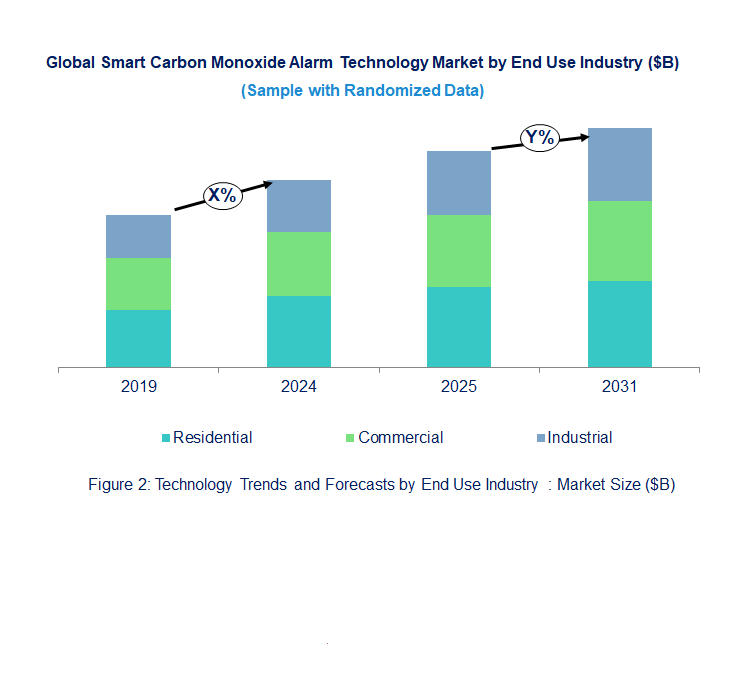
Smart Carbon Monoxide Alarm Market Trend and Forecast by End Use [Value from 2019 to 2031]:
• Residential
• Commercial
• Industrial
Smart Carbon Monoxide Alarm Market by Region [Value from 2019 to 2031]:
• North America
• Europe
• Asia Pacific
• The Rest of the World
• Latest Developments and Innovations in the Smart Carbon Monoxide Alarm Technologies
• Companies / Ecosystems
• Strategic Opportunities by Technology Type
Features of the Global Smart Carbon Monoxide Alarm Market
Market Size Estimates: Smart carbon monoxide alarm market size estimation in terms of ($B). Trend and Forecast Analysis: Market trends (2019 to 2024) and forecast (2025 to 2031) by various segments and regions. Segmentation Analysis: Technology trends in the global smart carbon monoxide alarm market size by various segments, such as end use and technology in terms of value and volume shipments. Regional Analysis: Technology trends in the global smart carbon monoxide alarm market breakdown by North America, Europe, Asia Pacific, and the Rest of the World. Growth Opportunities: Analysis of growth opportunities in different end uses, technologies, and regions for technology trends in the global smart carbon monoxide alarm market. Strategic Analysis: This includes M&A, new product development, and competitive landscape for technology trends in the global smart carbon monoxide alarm market. Analysis of competitive intensity of the industry based on Porter’s Five Forces model.Table of Contents
Methodology
- In-depth interviews of the major players in this market
- Detailed secondary research from competitors’ financial statements and published data
- Extensive searches of published works, market, and database information pertaining to industry news, company press releases, and customer intentions
- A compilation of the experiences, judgments, and insights of Lucintel’s professionals, who have analyzed and tracked this market over the years.


Buy Now
Choose a license that fits your team. Instant PDF delivery.
Prices exclude taxes. Instant delivery. Custom licensing available on request.
Key Questions
- • What are some of the most promising potential, high-growth opportunities for the technology trends in the global smart carbon monoxide alarm market by technology (wi-fi, bluetooth, zigbee, z-wave, and others), end use (residential, commercial, and industrial), and region (North America, Europe, Asia Pacific, and the Rest of the World)?
- • Which technology segments will grow at a faster pace and why?
- • Which regions will grow at a faster pace and why?
- • What are the key factors affecting dynamics of different technology? What are the drivers and challenges of these technologies in the global smart carbon monoxide alarm market?
- • What are the business risks and threats to the technology trends in the global smart carbon monoxide alarm market?
- • What are the emerging trends in these technologies in the global smart carbon monoxide alarm market and the reasons behind them?
- • Which technologies have potential of disruption in this market?
- • What are the new developments in the technology trends in the global smart carbon monoxide alarm market? Which companies are leading these developments?
- • Who are the major players in technology trends in the global smart carbon monoxide alarm market? What strategic initiatives are being implemented by key players for business growth?
- • What are strategic growth opportunities in this smart carbon monoxide alarm technology space?
- • What M & A activities did take place in the last five years in technology trends in the global smart carbon monoxide alarm market?


