
Report Feature
Short-Acting Anesthetic Market Trends and Forecast
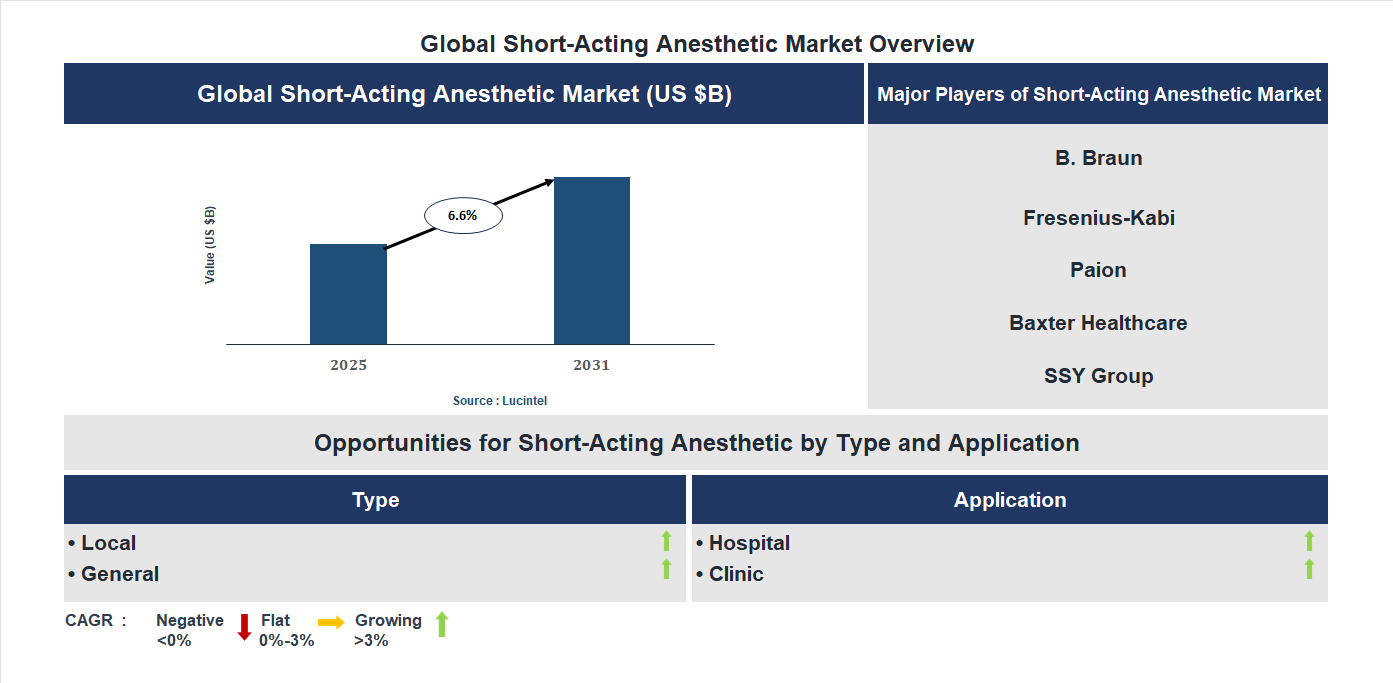
The future of the global short-acting anesthetic market looks promising with opportunities in the hospital and clinic markets. The global short-acting anesthetic market is expected to grow with a CAGR of 6.6% from 2025 to 2031. The major drivers for this market are the increasing number of surgical procedures, the rising preference for rapid onset anesthetics, and the growing adoption of advanced anesthesia techniques.• Lucintel forecasts that, within the type category, general is expected to witness higher growth over the forecast period.
• Within the application category, hospital is expected to witness higher growth.
• In terms of region, APAC is expected to witness the highest growth over the forecast period. Gain valuable insights for your business decisions with our comprehensive 150+ page report. Sample figures with some insights are shown below.
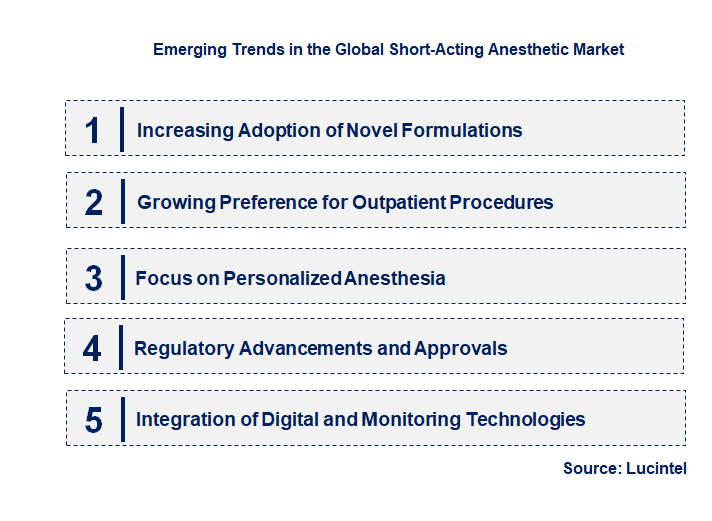
Emerging Trends in the Short-Acting Anesthetic Market
The short-acting anesthetic market is experiencing rapid evolution driven by technological advancements, changing healthcare needs, and a focus on patient safety and comfort. As medical procedures become more sophisticated and outpatient surgeries increase, demand for fast-acting anesthetics that minimize recovery time and side effects is rising. Innovations in drug formulations, personalized medicine, and regulatory approvals are shaping the landscape. These developments are not only improving clinical outcomes but also influencing market dynamics, competitive strategies, and healthcare provider preferences. Understanding these emerging trends is crucial for stakeholders aiming to capitalize on opportunities and address challenges in this dynamic sector.• Increasing adoption of novel formulations: New formulations of short-acting anesthetics, such as liposomal or nanoparticle-based drugs, are enhancing drug efficacy and safety. These innovations allow for more precise dosing, reduced side effects, and faster recovery times, which are highly valued in outpatient and ambulatory surgeries. The market is witnessing a shift from traditional agents to these advanced options, driven by clinical benefits and patient demand. This trend is expected to expand as research continues to optimize drug delivery systems, ultimately improving patient outcomes and expanding market share for innovative products.
• Growing preference for outpatient procedures: The rise in outpatient and minimally invasive surgeries is fueling demand for short-acting anesthetics that enable quick recovery and discharge. Healthcare providers prefer these agents to reduce hospital stays, lower costs, and improve patient throughput. This trend is supported by technological advances that allow for safer, more predictable anesthesia management. As outpatient procedures become more prevalent across various medical fields, the market for fast-acting anesthetics is projected to grow significantly, prompting manufacturers to develop tailored solutions for these settings.
• Focus on personalized anesthesia: The trend toward personalized medicine is influencing anesthetic choices, with a focus on tailoring drugs to individual patient profiles based on genetics, age, and health status. This approach aims to optimize efficacy and minimize adverse effects. Advances in pharmacogenomics and diagnostic tools are enabling anesthesiologists to select the most appropriate short-acting agents for each patient. This personalized approach is expected to improve safety, enhance patient satisfaction, and reduce complications, thereby reshaping product development and clinical practices within the market.
• Regulatory advancements and approvals: Regulatory agencies are increasingly approving new short-acting anesthetic agents and formulations, driven by robust clinical data demonstrating safety and efficacy. These approvals facilitate market entry for innovative drugs and expand options for clinicians. Additionally, regulatory frameworks are evolving to accommodate personalized and targeted anesthetic therapies. This trend accelerates market growth, encourages investment in research and development, and fosters competition among pharmaceutical companies, ultimately benefiting patients through access to safer and more effective anesthetic options.
• Integration of digital and monitoring technologies: The incorporation of digital tools, such as real-time monitoring systems and AI-driven analytics, is transforming anesthetic management. These technologies enable precise dosing, early detection of adverse reactions, and improved patient safety. The integration of digital solutions with short-acting anesthetics enhances clinical decision-making and operational efficiency. As hospitals and clinics adopt these innovations, the market is witnessing a convergence of pharmacology and digital health, leading to smarter, safer anesthesia practices and opening new avenues for product development and market expansion. In summary, these emerging trends are collectively reshaping the short-acting anesthetic market by promoting safer, more effective, and personalized anesthesia care. They are driving innovation, expanding market opportunities, and improving patient outcomes, ultimately transforming how anesthesia is administered across diverse healthcare settings.
Recent Development in the Short-Acting Anesthetic Market
The short-acting anesthetic market has experienced significant evolution driven by technological advancements, changing healthcare needs, and regulatory updates. As hospitals and clinics seek safer, more efficient anesthesia options, key developments are shaping the future landscape of this market. These innovations aim to improve patient outcomes, reduce recovery times, and enhance procedural efficiency. The markets growth is also influenced by increasing surgical procedures worldwide and a rising focus on outpatient surgeries. Understanding these recent developments provides insight into the markets trajectory and the opportunities for stakeholders to innovate and adapt to emerging trends.• Introduction of New Pharmacological Agents: New short-acting anesthetics like remimazolam have been introduced, offering rapid onset and quick recovery times. These agents improve patient safety by reducing adverse effects and allowing for better control during procedures. Their increased adoption is driven by clinical trials demonstrating superior efficacy and safety profiles, which are encouraging healthcare providers to switch from traditional agents. This development enhances procedural efficiency and patient throughput, positively impacting market growth.
• Advances in Delivery Technologies: Innovations such as automated infusion pumps and targeted delivery systems have improved precision in anesthetic administration. These technologies minimize drug wastage and reduce the risk of overdose or underdose, leading to safer procedures. They also enable anesthesiologists to maintain optimal drug levels, improving patient stability. The adoption of these advanced delivery systems is expanding, especially in high-volume surgical centers, thereby boosting market demand and supporting better clinical outcomes.
• Regulatory Approvals and Guidelines: Recent approvals by regulatory bodies like the FDA for new anesthetic agents have accelerated market growth. Updated guidelines emphasizing safety and efficacy have encouraged hospitals to adopt newer, short-acting anesthetics. These regulatory changes also facilitate the entry of innovative products into the market, fostering competition and driving further research. As a result, healthcare providers are more confident in utilizing these agents, which enhances market expansion and product development.
• Growing Preference for Outpatient Surgeries: The shift towards outpatient and minimally invasive procedures has increased demand for short-acting anesthetics that enable quick recovery. This trend is driven by cost-effectiveness, patient convenience, and reduced hospital stays. The market benefits from this shift as providers seek anesthetic options that align with outpatient protocols. Consequently, manufacturers are focusing on developing formulations suitable for outpatient settings, which further propels market growth and diversification.
• Impact of COVID-19 Pandemic: The pandemic has influenced the market by increasing the demand for safe, rapid-onset anesthetics suitable for urgent and outpatient procedures. It has also accelerated the adoption of minimally invasive techniques, requiring short-acting agents. Additionally, supply chain disruptions prompted companies to innovate in manufacturing and distribution. The pandemic underscored the need for anesthetics that facilitate quick patient turnover and reduce hospital stay durations, thereby reinforcing the importance of short-acting anesthetic solutions in current healthcare settings. In summary, these developments are collectively transforming the short-acting anesthetic market by enhancing safety, efficiency, and accessibility. The introduction of new drugs, technological innovations, regulatory support, changing surgical preferences, and pandemic-driven adaptations are driving growth and expanding market opportunities. As these trends continue, the market is poised for sustained innovation and increased adoption of advanced anesthetic solutions, ultimately improving patient care and procedural outcomes.
Strategic Growth Opportunities in the Short-Acting Anesthetic Market
The short-acting anesthetic market is experiencing rapid growth driven by advancements in medical procedures, increasing demand for quick recovery times, and expanding applications across various healthcare settings. As hospitals and clinics seek more efficient anesthesia options, key applications are emerging as significant growth drivers. These opportunities are transforming the market landscape by enhancing patient outcomes, reducing procedure times, and improving operational efficiency. Stakeholders are focusing on innovation and strategic expansion to capitalize on these trends, making the market highly dynamic and competitive. Understanding these growth opportunities is essential for industry players aiming to strengthen their market position and meet evolving healthcare needs.• Surgical Procedures: Increasing demand for short-acting anesthetics in outpatient and minimally invasive surgeries enhances patient turnover and reduces recovery times, leading to improved hospital efficiency and patient satisfaction.
• Emergency Medicine: The need for rapid anesthesia in emergency settings is driving the adoption of short-acting agents, which enable quick patient stabilization and facilitate faster treatment, ultimately improving emergency care outcomes.
• Obstetrics and Gynecology: Short-acting anesthetics are increasingly used in labor and delivery procedures, providing effective pain management with minimal residual effects, thus improving maternal and neonatal safety.
• Dental and Cosmetic Procedures: The rising popularity of outpatient dental and cosmetic surgeries benefits from short-acting anesthetics, offering quick onset and recovery, which enhances patient comfort and clinic throughput.
• Critical Care and Intensive Care Units: The use of short-acting anesthetics in ICU settings for sedation and pain management allows for better control of patient sedation levels, facilitating timely interventions and faster patient recovery. In summary, these key growth opportunities across various applications are significantly impacting the short-acting anesthetic market by driving innovation, improving patient outcomes, and increasing operational efficiency. As demand continues to rise, market players are focusing on developing targeted solutions to meet the specific needs of each application, fostering a competitive and rapidly evolving industry landscape.
Short-Acting Anesthetic Market Driver and Challenges
The short-acting anesthetic market is influenced by a variety of technological, economic, and regulatory factors that shape its growth and development. Advances in medical technology and drug formulation have improved the efficacy and safety profiles of anesthetics, encouraging their adoption. Economic factors such as increasing healthcare expenditure and rising prevalence of surgical procedures further drive market expansion. Regulatory frameworks ensure safety and efficacy, impacting product development and approval processes. However, challenges such as stringent regulations, high R&D costs, and competition from alternative anesthetic options pose hurdles. Understanding these drivers and challenges is essential for stakeholders to navigate the evolving landscape effectively. The factors responsible for driving the short-acting anesthetic market include:-• Technological Advancements: The development of new formulations and delivery systems has significantly improved the precision, safety, and efficacy of short-acting anesthetics. Innovations like inhalation devices and targeted drug delivery enable faster onset and recovery times, making procedures more efficient. These technological improvements also reduce side effects, increasing clinician confidence and patient safety. As research continues, the pipeline of novel anesthetic agents promises further enhancements, fueling market growth. The integration of digital monitoring and automation in anesthesia delivery is also streamlining procedures, reducing human error, and improving outcomes, thus expanding the market scope.
• Increasing Surgical Procedures: The rising number of surgeries worldwide, driven by aging populations and the prevalence of chronic diseases, directly boosts demand for short-acting anesthetics. Minimally invasive and outpatient surgeries require anesthetics that allow quick recovery, making short-acting agents preferable. Healthcare infrastructure development in emerging economies further contributes to this trend. As surgical volumes grow, the need for safe, effective, and fast-acting anesthetic options becomes more critical, supporting market expansion. Additionally, the increasing adoption of outpatient procedures in developed countries emphasizes the importance of short-acting anesthetics, reinforcing their market position.
• Growing Healthcare Expenditure: Rising healthcare spending globally enables hospitals and clinics to invest in advanced anesthetic agents and related technologies. Governments and the private sector are allocating more funds toward improving surgical care, which includes the procurement of modern anesthetic drugs. This financial support facilitates research, development, and distribution of new products, broadening market offerings. Moreover, increased insurance coverage and patient awareness about surgical options contribute to higher procedure rates, indirectly boosting demand for short-acting anesthetics. The economic capacity to adopt innovative solutions ensures sustained market growth and diversification.
• Regulatory Approvals and Guidelines: Stringent regulatory standards by agencies such as the FDA and EMA ensure the safety, efficacy, and quality of anesthetic agents. These regulations influence product development timelines and approval processes, often requiring extensive clinical trials. While this can pose challenges, it also enhances market credibility and trust among healthcare providers and patients. Evolving guidelines promoting the use of short-acting anesthetics for specific procedures further shape market dynamics. Compliance with regulatory standards ensures market players can introduce innovative products confidently, fostering growth while maintaining safety standards.
• Rising Awareness and Preference for Fast Recovery: Increasing awareness among healthcare professionals and patients about the benefits of short-acting anesthetics, such as rapid recovery and reduced side effects, drives their preference. This shift is supported by clinical evidence and improved patient outcomes, leading to higher adoption rates. Hospitals aim to optimize throughput and patient satisfaction, favoring agents that facilitate quick post-operative recovery. The trend towards outpatient surgeries and minimally invasive procedures also amplifies this demand. As awareness continues to grow, the market for short-acting anesthetics is expected to expand further, driven by the need for safer, more efficient anesthesia options. The challenges facing this short-acting anesthetic market include:-
• Stringent Regulatory Environment: The approval process for new anesthetic agents is complex and time-consuming, involving rigorous clinical trials and compliance with safety standards. This regulatory landscape increases R&D costs and delays product launches, impacting market growth. Additionally, post-market surveillance and evolving regulations require continuous compliance efforts, which can be resource-intensive. Smaller companies may find it difficult to navigate these hurdles, limiting innovation and competition. While regulations ensure safety, they also pose significant barriers that can slow down the introduction of novel short-acting anesthetics, affecting overall market dynamics.
• High R&D and Manufacturing Costs: Developing new short-acting anesthetic agents involves substantial investment in research, clinical testing, and manufacturing infrastructure. These costs can be prohibitive, especially for smaller firms, limiting innovation. The need for advanced technology and quality control measures further escalates expenses. Consequently, companies may face challenges in maintaining profitability while bringing new products to market. High costs also impact pricing strategies, potentially limiting accessibility in cost-sensitive regions. This financial barrier can slow market growth and reduce the pace of introducing next-generation anesthetic agents.
• Competition from Alternative Anesthetic Options: The presence of multiple anesthetic agents and techniques, including regional anesthesia and sedation, creates a competitive environment. Clinicians may prefer established drugs with proven safety profiles over newer, less familiar options, especially in regions with limited regulatory approval. Additionally, the rise of non-pharmacological anesthesia techniques and technological innovations like nerve blocks can reduce reliance on traditional short-acting agents. This competitive landscape necessitates continuous innovation and marketing efforts to maintain market share, posing ongoing challenges for companies operating in this space. In summary, the short-acting anesthetic market is shaped by technological innovations, increasing surgical procedures, economic growth, regulatory standards, and rising awareness of benefits. However, it faces challenges such as regulatory hurdles, high R&D costs, and intense competition. These factors collectively influence market growth, requiring stakeholders to adapt strategies that leverage opportunities while addressing barriers. The overall impact is a dynamic environment with significant potential for innovation and expansion, provided that companies can navigate regulatory complexities and cost pressures effectively.
List of Short-Acting Anesthetic Companies
Companies in the market compete on the basis of product quality offered. Major players in this market focus on expanding their manufacturing facilities, R&D investments, infrastructural development, and leverage integration opportunities across the value chain. With these strategies short-acting anesthetic companies cater increasing demand, ensure competitive effectiveness, develop innovative products & technologies, reduce production costs, and expand their customer base. Some of the short-acting anesthetic companies profiled in this report include-• B. Braun
• Fresenius-Kabi
• Paion
• Baxter Healthcare
• SSY Group
• Eisai
• Baili-Pharm
• Cisen Pharmaceutical
• Yingke Biopharmaceutical
• Septodont
Short-Acting Anesthetic Market by Segment
The study includes a forecast for the global short-acting anesthetic market by type, application, and region.Short-Acting Anesthetic Market by Type [Value from 2019 to 2031]:
• Local
• General
Short-Acting Anesthetic Market by Application [Value from 2019 to 2031]:
• Hospital
• Clinic
Short-Acting Anesthetic Market by Region [Value from 2019 to 2031]:
• North America
• Europe
• Asia Pacific
• The Rest of the World
Country Wise Outlook for the Short-Acting Anesthetic Market
The short-acting anesthetic market has experienced significant shifts driven by technological advancements, regulatory changes, and evolving healthcare needs across the globe. As hospitals and clinics seek more efficient and safer anesthetic options, countries are investing in research and development to improve drug formulations and delivery methods. The markets growth is also influenced by increasing surgical procedures and a focus on patient safety. Different regions are adopting innovative strategies to enhance their market share, reflecting diverse healthcare priorities and economic conditions. These developments indicate a dynamic landscape aimed at optimizing anesthesia practices worldwide.• United States: The US market has seen a surge in the approval of new short-acting anesthetics, driven by technological innovations and a focus on patient safety. Major pharmaceutical companies are investing heavily in R&D to develop faster-acting and safer drugs, with regulatory agencies streamlining approval processes. The adoption of minimally invasive surgeries has increased demand for short-acting anesthetics, and there is a growing trend toward personalized anesthesia protocols. Additionally, the integration of digital monitoring tools enhances safety and efficacy, further propelling market growth.
• China: China’s market for short-acting anesthetics is expanding rapidly due to increasing healthcare infrastructure and a rising number of surgical procedures. Local pharmaceutical companies are investing in developing cost-effective alternatives to imported drugs, boosting domestic production. Government initiatives aimed at healthcare modernization and expanding access to surgical care are also contributing to market growth. Moreover, the adoption of advanced anesthesia techniques and training programs is improving clinical outcomes, making China a significant emerging market for short-acting anesthetics.
• Germany: Germany’s market is characterized by a focus on high-quality, innovative anesthetic agents, supported by stringent regulatory standards. The country emphasizes research collaborations between academia and industry to develop novel formulations with improved safety profiles. The aging population and the rise in outpatient surgeries are driving demand for short-acting anesthetics that facilitate quick recovery. Germany also leads in integrating digital health solutions for anesthesia management, enhancing precision and safety during surgical procedures.
• India: India’s short-acting anesthetic market is witnessing rapid growth due to increasing surgical volumes, expanding healthcare infrastructure, and rising awareness about anesthesia safety. Local manufacturers are introducing affordable, high-quality anesthetic options to meet domestic demand. The government’s initiatives to improve healthcare access and the surge in medical tourism further boost market prospects. Additionally, the adoption of advanced anesthesia techniques and training programs is improving clinical practices, making India a key emerging market in this sector.
• Japan: Japan’s market is driven by technological innovation and a focus on minimally invasive surgeries, which require short-acting anesthetics for quick recovery. The aging population has increased demand for safe and effective anesthetic agents suitable for elderly patients. Japan emphasizes research into new formulations with fewer side effects and enhanced safety features. The integration of digital health technologies and adherence to strict regulatory standards ensure high-quality products, supporting steady market growth and innovation in anesthesia practices.

Features of the Global Short-Acting Anesthetic Market
Market Size Estimates: Short-acting anesthetic market size estimation in terms of value ($B). Trend and Forecast Analysis: Market trends (2019 to 2024) and forecast (2025 to 2031) by various segments and regions. Segmentation Analysis: Short-acting anesthetic market size by type, application, and region in terms of value ($B). Regional Analysis: Short-acting anesthetic market breakdown by North America, Europe, Asia Pacific, and Rest of the World. Growth Opportunities: Analysis of growth opportunities in different types, applications, and regions for the short-acting anesthetic market. Strategic Analysis: This includes M&A, new product development, and competitive landscape of the short-acting anesthetic market. Analysis of competitive intensity of the industry based on Porter’s Five Forces model.
FAQ
Q1. What is the growth forecast for short-acting anesthetic market? Answer: The global short-acting anesthetic market is expected to grow with a CAGR of 6.6% from 2025 to 2031. Q2. What are the major drivers influencing the growth of the short-acting anesthetic market? Answer: The major drivers for this market are the increasing number of surgical procedures, the rising preference for rapid onset anesthetics, and the growing adoption of advanced anesthesia techniques. Q3. What are the major segments for short-acting anesthetic market? Answer: The future of the short-acting anesthetic market looks promising with opportunities in the hospital and clinic markets. Q4. Who are the key short-acting anesthetic market companies? Answer: Some of the key short-acting anesthetic companies are as follows:• B. Braun
• Fresenius-Kabi
• Paion
• Baxter Healthcare
• SSY Group
• Eisai
• Baili-Pharm
• Cisen Pharmaceutical
• Yingke Biopharmaceutical
• Septodont Q5. Which short-acting anesthetic market segment will be the largest in future? Answer: Lucintel forecasts that, within the type category, general is expected to witness higher growth over the forecast period. Q6. In short-acting anesthetic market, which region is expected to be the largest in next 5 years? Answer: In terms of region, APAC is expected to witness the highest growth over the forecast period. Q7. Do we receive customization in this report? Answer: Yes, Lucintel provides 10% customization without any additional cost.
Table of Contents
List of Figures
List of Tables
Methodology
- In-depth interviews of the major players in this market
- Detailed secondary research from competitors’ financial statements and published data
- Extensive searches of published works, market, and database information pertaining to industry news, company press releases, and customer intentions
- A compilation of the experiences, judgments, and insights of Lucintel’s professionals, who have analyzed and tracked this market over the years.


Buy Now
Choose a license that fits your team. Instant PDF delivery.
Prices exclude taxes. Instant delivery. Custom licensing available on request.
Key Questions
- • What are some of the most promising, high-growth opportunities for the short-acting anesthetic market by type (local and general), application (hospital and clinic), and region (North America, Europe, Asia Pacific, and the Rest of the World)?
- • Which segments will grow at a faster pace and why?
- • Which region will grow at a faster pace and why?
- • What are the key factors affecting market dynamics? What are the key challenges and business risks in this market?
- • What are the business risks and competitive threats in this market?
- • What are the emerging trends in this market and the reasons behind them?
- • What are some of the changing demands of customers in the market?
- • What are the new developments in the market? Which companies are leading these developments?
- • Who are the major players in this market? What strategic initiatives are key players pursuing for business growth?
- • What are some of the competing products in this market and how big of a threat do they pose for loss of market share by material or product substitution?
- • What M&A activity has occurred in the last 5 years and what has its impact been on the industry? For any questions related to Short-Acting Anesthetic Market, Short-Acting Anesthetic Market Size, Short-Acting Anesthetic Market Growth, Short-Acting Anesthetic Market Analysis, Short-Acting Anesthetic Market Report, Short-Acting Anesthetic Market Share, Short-Acting Anesthetic Market Trends, Short-Acting Anesthetic Market Forecast, Short-Acting Anesthetic Companies, write Lucintel analyst at email: helpdesk@lucintel.com. We will be glad to get back to you soon.


