
Report Feature
Septic Shock Therapy Market Trends and Forecast
• Lucintel forecasts that, within the type category, vasopressor is expected to witness higher growth over the forecast period.
• Within the application category, general hospital is expected to witness higher growth.
• In terms of region, APAC is expected to witness the highest growth over the forecast period.
Gain valuable insights for your business decisions with our comprehensive 150+ page report. Sample figures with some insights are shown below.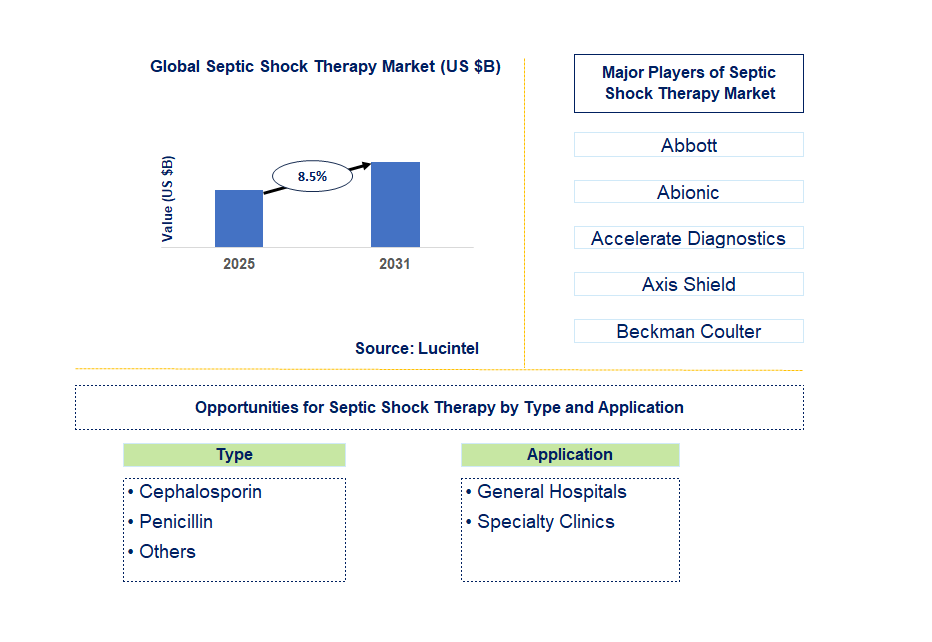
Emerging Trends in the Septic Shock Therapy Market
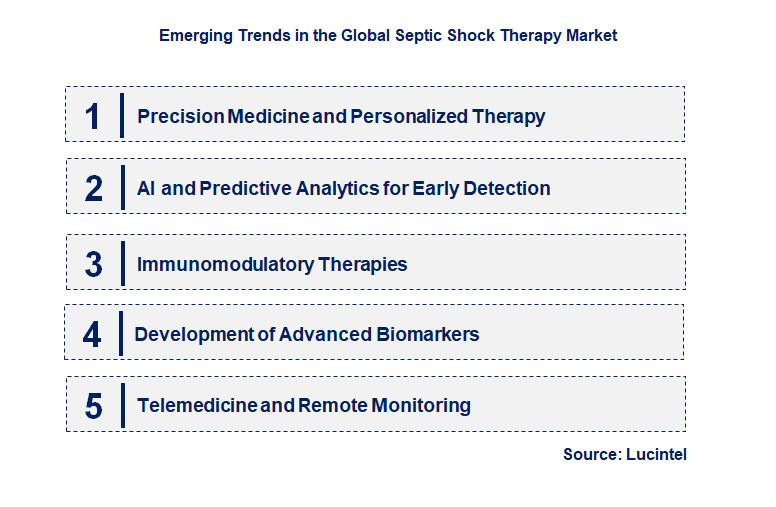
The septic shock therapy market is experiencing rapid evolution driven by advancements in medical technology, increasing awareness of sepsis management, and the rising prevalence of infections worldwide. As healthcare systems adapt to these challenges, several emerging trends are shaping the future landscape of septic shock diagnosis, treatment, and management. These trends are not only improving patient outcomes but also influencing market dynamics, investment strategies, and research priorities. Understanding these developments is crucial for stakeholders aiming to stay ahead in this competitive and vital sector of healthcare.• Growing Adoption of Advanced Diagnostic Tools: The market is witnessing increased use of rapid diagnostic technologies such as biomarker assays and point-of-care testing. These tools enable early detection of sepsis, facilitating prompt intervention and improving survival rates. The integration of artificial intelligence and machine learning algorithms further enhances diagnostic accuracy, reducing time to treatment. This trend is expected to drive market growth by enabling more precise and timely diagnosis, ultimately leading to better patient outcomes and reduced healthcare costs.
• Expansion of Targeted Therapies and Personalized Medicine: There is a shift towards developing targeted therapies that address specific pathways involved in septic shock. Personalized medicine approaches, including genomics and proteomics, are being employed to tailor treatments to individual patient profiles. This trend improves treatment efficacy and minimizes adverse effects, leading to better management of septic shock. The market is witnessing increased investment in research and development of such therapies, which are poised to transform treatment paradigms and expand market opportunities.
• Rising Focus on Sepsis Awareness and Prevention Programs: Governments and healthcare organizations are intensifying efforts to raise awareness about sepsis and implement preventive strategies. Educational campaigns, screening programs, and early intervention protocols are being adopted widely. This trend aims to reduce the incidence of septic shock through early recognition and management of infections. As awareness grows, demand for diagnostic and therapeutic solutions increases, fueling market expansion and encouraging innovation in sepsis prevention.
• Integration of Digital Health and Telemedicine: Digital health platforms and telemedicine are becoming integral to septic shock management, especially in remote or resource-limited settings. These technologies facilitate remote monitoring, early warning systems, and timely intervention, improving access to care. The adoption of electronic health records and data analytics enhances patient management and outcome tracking. This trend is expanding market reach, reducing hospitalization times, and enabling more efficient resource utilization, thereby transforming traditional care models.
• Increasing Investment in Research and Development: The market is witnessing heightened investment from pharmaceutical companies, biotech firms, and academic institutions focused on discovering novel treatments and diagnostic methods. Funding is directed toward understanding sepsis pathophysiology, developing innovative drugs, and improving existing therapies. This trend accelerates the pace of innovation, leading to the introduction of new products and solutions. It also attracts strategic partnerships and collaborations, further fueling market growth and ensuring the availability of cutting-edge options for septic shock management.
In summary, these emerging trends are collectively reshaping the septic shock therapy market by enhancing diagnostic accuracy, personalizing treatment, increasing awareness, leveraging digital technologies, and fostering innovation. These developments are expected to improve patient outcomes, reduce healthcare costs, and create new opportunities for market players, ultimately driving the evolution of septic shock management in the healthcare landscape.
Recent Development in the Septic Shock Therapy Market
The septic shock therapy market has experienced significant evolution driven by advancements in medical technology, increasing awareness, and the rising prevalence of sepsis worldwide. As healthcare systems strive to improve patient outcomes, various innovations and strategic initiatives are shaping the landscape. These developments are crucial for addressing the high mortality rates associated with septic shock and for enhancing treatment protocols. The market‘s growth is also influenced by regulatory changes, increased research funding, and the adoption of personalized medicine approaches. Understanding these key developments provides insight into future trends and opportunities within this critical healthcare segment.• Technological Advancements: The integration of AI and machine learning in diagnostics has improved early detection and personalized treatment plans, leading to better patient outcomes and reducing mortality rates.
• Increased Research Funding: Governments and private organizations are investing more in sepsis research, resulting in the development of novel therapeutics and diagnostic tools, which expand market options and improve treatment efficacy.
• Regulatory Approvals: New approvals for innovative drugs and devices targeting septic shock have accelerated market growth, providing clinicians with more effective treatment options and fostering industry innovation.
• Rising Prevalence and Awareness: The increasing incidence of sepsis globally, coupled with heightened awareness campaigns, has led to higher diagnosis rates and demand for advanced treatment solutions, expanding market size.
• Strategic Collaborations and Mergers: Industry players are forming alliances and acquiring smaller firms to enhance R&D capabilities, diversify product portfolios, and accelerate market penetration, fostering overall industry growth.
The recent developments in the septic shock therapy market are significantly impacting its growth trajectory by improving diagnostic accuracy, expanding therapeutic options, and increasing market competitiveness. These advancements are leading to better patient management, reduced mortality rates, and a more dynamic industry landscape, ultimately driving sustained market expansion and innovation.
Strategic Growth Opportunities in the Septic Shock Therapy Market
The septic shock therapy market is experiencing significant growth driven by increasing prevalence of sepsis worldwide, advancements in diagnostic and treatment options, and rising awareness among healthcare providers. As healthcare systems evolve, there are numerous opportunities to improve patient outcomes through innovative therapies and targeted interventions. These growth opportunities span various applications, each offering unique potential to transform the management of septic shock. By focusing on these key areas, stakeholders can capitalize on emerging trends, enhance treatment efficacy, and address unmet clinical needs, ultimately driving market expansion and improving patient care.• Early Detection Technologies: Improving diagnostic tools for rapid identification of septic shock can lead to timely interventions, reducing mortality rates and hospital stays. Enhanced biomarkers and point-of-care testing enable quicker decision-making, which is critical in sepsis management. This growth opportunity impacts the market by increasing demand for advanced diagnostic devices and fostering innovation in early detection solutions.
• Personalized Medicine Approaches: Tailoring treatments based on individual patient profiles, including genetic and biomarker data, can optimize therapy effectiveness. Personalized strategies reduce adverse effects and improve survival rates. This application drives market growth by encouraging the development of targeted therapies and diagnostic tests, fostering a shift toward precision medicine in septic shock care.
• Advanced Therapeutics Development: The introduction of novel drugs, immunomodulators, and supportive therapies offers new avenues for treatment. These innovations aim to improve hemodynamic stability and immune response management. The market benefits from increased R&D investments and the potential for improved patient outcomes, expanding therapeutic options available to clinicians.
• Critical Care Monitoring Systems: Implementing sophisticated monitoring solutions enhances real-time assessment of patient status, enabling prompt adjustments in treatment. These systems improve clinical decision-making and patient safety. The growth in this area boosts demand for integrated monitoring devices and software, transforming intensive care practices.
• Healthcare Infrastructure Expansion: Increasing investments in healthcare facilities, especially in emerging markets, facilitate better management of septic shock cases. Upgraded infrastructure supports advanced diagnostics and treatment delivery. This opportunity impacts the market by broadening access to septic shock management and fostering global market penetration.
In summary, these key growth opportunities are significantly shaping the septic shock therapy market by promoting innovation, improving patient outcomes, and expanding access to advanced care. As these developments progress, they are expected to drive sustained market growth and transform clinical practices worldwide.
Septic Shock Therapy Market Driver and Challenges
The septic shock therapy market is influenced by a variety of technological, economic, and regulatory factors that shape its growth and development. Advances in medical technology, increasing healthcare expenditure, and evolving regulatory standards are key drivers. However, the market also faces challenges such as high treatment costs, regulatory hurdles, and the need for early diagnosis. These factors collectively impact market dynamics, influencing innovation, accessibility, and patient outcomes. Understanding these drivers and challenges is essential for stakeholders aiming to navigate the complex landscape of septic shock management and improve treatment options.The factors responsible for driving the septic shock therapy market include:-
• Technological Advancements: The development of innovative diagnostic tools and treatment modalities, such as rapid biomarker testing and advanced ICU equipment, has significantly improved early detection and management of septic shock. These innovations enable healthcare providers to deliver targeted therapies more efficiently, reducing mortality rates. As technology continues to evolve, the market is expected to expand further, driven by increased adoption of cutting-edge solutions that enhance patient outcomes and streamline clinical workflows.
• Rising Incidence of Sepsis and Septic Shock: The increasing prevalence of sepsis worldwide, fueled by aging populations, rising chronic diseases, and hospital-acquired infections, directly impacts the septic shock therapy market. This growing burden necessitates more effective treatment options and drives demand for advanced therapies. Healthcare systems are prioritizing early diagnosis and intervention, which further propels market growth as new products and services are developed to meet this urgent need.
• Increasing Healthcare Expenditure: Governments and private sectors are investing more in healthcare infrastructure, research, and development. This increased expenditure facilitates the adoption of new technologies and therapies for septic shock management. Additionally, higher healthcare spending supports the development of specialized treatment centers and training programs, which improve patient care and expand market opportunities for pharmaceutical companies and medical device manufacturers.
• Regulatory Support and Guidelines: Evolving regulatory frameworks and clinical guidelines promote the development and approval of new treatments for septic shock. Regulatory agencies are emphasizing the importance of rapid diagnosis and personalized medicine, encouraging innovation. This supportive environment accelerates product development, approval processes, and market entry, ultimately benefiting patients through access to improved therapies and expanding the market landscape.
The challenges facing this septic shock therapy market include:-
• High Treatment Costs: Managing septic shock involves expensive diagnostics, intensive care, and advanced therapeutics, which can be prohibitively costly for many healthcare systems and patients. These high costs limit access to optimal care, especially in low- and middle-income countries, and pose financial challenges for hospitals and insurers. Consequently, cost containment pressures may hinder the adoption of new technologies and therapies, impacting overall market growth.
• Regulatory Hurdles: Despite supportive policies, the approval process for new septic shock treatments remains complex and time-consuming. Stringent regulatory requirements for safety and efficacy can delay product launches and increase development costs. Navigating these hurdles requires significant investment and expertise, which can be a barrier for smaller companies and slow down innovation within the market.
• Need for Early Diagnosis and Personalized Treatment: Septic shock‘s rapid progression necessitates early detection and tailored therapies for optimal outcomes. However, current diagnostic tools may lack sensitivity or specificity, leading to delayed treatment. Developing reliable, rapid diagnostic methods and personalized treatment protocols remains a challenge, limiting the ability to improve survival rates and complicating market expansion efforts.
In summary, the septic shock therapy market is driven by technological innovations, rising disease prevalence, increased healthcare spending, and supportive regulatory environments. However, high treatment costs, regulatory complexities, and diagnostic challenges pose significant hurdles. These factors collectively influence market growth, requiring stakeholders to focus on cost-effective solutions, regulatory navigation, and improved diagnostic tools to enhance patient outcomes and sustain market development.
List of septic shock therapy Companies
Companies in the market compete on the basis of product quality offered. Major players in this market focus on expanding their manufacturing facilities, R&D investments, infrastructural development, and leverage integration opportunities across the value chain. With these strategies septic shock therapy companies cater increasing demand, ensure competitive effectiveness, develop innovative products & technologies, reduce production costs, and expand their customer base. Some of the septic shock therapy companies profiled in this report include-• Inotrem
• Adrenomed
• Articline
• Fresenius Kabi
• Pfizer
• Merck
• Sandoz
• GSK
• Baxter
• Hikma
Septic Shock Therapy Market by Segment
The study includes a forecast for the global septic shock therapy market by type, application, and region.Septic Shock Therapy Market by Type [Value from 2020 to 2032]:
• Antibiotics
• Vasopressors
• Others
Septic Shock Therapy Market by Application [Value from 2020 to 2032]:
• General Hospitals
• Specialty Clinics
Septic Shock Therapy Market by Region [Value from 2020 to 2032]:
• North America
- United States
- Canada
- Mexico
• Europe
- German
- French
- Spanish
- Italian
- United Kingdom
• Asia Pacific
- Japanese
- Indian
- Chinese
- South Korean
- Indonesian
• The Rest of the World
- Brazilian
Country Wise Outlook for the Septic Shock Therapy Market
The septic shock therapy market has experienced significant shifts driven by technological advancements, increasing awareness, and evolving healthcare policies across the globe. Countries are focusing on improving diagnostic tools, expanding treatment options, and enhancing patient outcomes. The United States, China, Germany, India, and Japan are leading these developments, each contributing uniquely to the global landscape. These changes reflect broader trends in healthcare innovation, regulatory support, and growing demand for effective septic shock management. As the market continues to evolve, understanding regional advancements is crucial for stakeholders aiming to capitalize on emerging opportunities and address unmet medical needs.• United States: The US market has seen rapid adoption of advanced diagnostic technologies such as biomarker testing and AI-driven predictive models. There is increased investment in research for novel therapeutics and personalized treatment approaches. Regulatory agencies are supporting faster approval processes for innovative drugs and devices, boosting market growth. Hospitals are adopting comprehensive sepsis protocols, leading to improved patient outcomes. Additionally, government initiatives aim to raise awareness and improve early detection, further expanding the market.
• China: China is experiencing rapid growth in septic shock management due to rising healthcare infrastructure and government initiatives to improve critical care. The country is investing heavily in developing advanced diagnostic tools and expanding ICU capacities. Local pharmaceutical companies are increasingly involved in producing affordable antibiotics and supportive therapies. The government’s focus on healthcare reform and increasing awareness about sepsis are driving market expansion. Moreover, collaborations with international firms are facilitating technology transfer and innovation.
• Germany: Germany’s market is characterized by high adoption of advanced medical technologies and stringent regulatory standards. The country emphasizes early diagnosis and personalized treatment strategies, supported by robust healthcare infrastructure. There is a growing focus on research and development of new therapeutics, including immunomodulatory agents. Germany’s strong healthcare system and emphasis on quality care are fostering innovation in septic shock management. Additionally, participation in European Union research initiatives enhances access to cutting-edge solutions.
• India: India’s septic shock therapy market is expanding rapidly due to increasing prevalence of sepsis, rising healthcare expenditure, and improved awareness. The country is witnessing growth in the adoption of point-of-care diagnostics and affordable treatment options. Government programs aimed at strengthening critical care infrastructure and training healthcare professionals are contributing to market growth. Local pharmaceutical companies are developing cost-effective antibiotics and supportive therapies. The increasing number of private hospitals and expanding ICU facilities further support market development.
• Japan: Japan’s market is driven by technological innovation and a focus on aging populations, which are more susceptible to septic shock. The country is investing in advanced diagnostic tools, including molecular diagnostics and AI-based systems. There is a strong emphasis on research for new therapeutics and improving existing treatment protocols. Japan’s healthcare system supports early detection and personalized medicine, fostering market growth. Additionally, collaborations between academia and industry are accelerating the development of innovative solutions for septic shock management.

Features of the Global Septic Shock Therapy Market
Market Size Estimates: septic shock therapy market size estimation in terms of value ($B).Trend and Forecast Analysis: Market trends (2020 to 2024) and forecast (2026 to 2032) by various segments and regions.
Segmentation Analysis: septic shock therapy market size by type, application, and region in terms of value ($B).
Regional Analysis: septic shock therapy market breakdown by North America, Europe, Asia Pacific, and Rest of the World.
Growth Opportunities: Analysis of growth opportunities in different type, application, and regions for the septic shock therapy market.
Strategic Analysis: This includes M&A, new product development, and competitive landscape of the septic shock therapy market.
Analysis of competitive intensity of the industry based on Porter’s Five Forces model.

FAQ
Q1. What is the growth forecast for septic shock therapy market?Answer: The global septic shock therapy market is expected to grow with a CAGR of 7.4% from 2026 to 2032.
Q2. What are the major drivers influencing the growth of the septic shock therapy market?
Answer: The major drivers for this market are the increasing incidence of severe bacterial infections, the rising need for rapid sepsis diagnosis, and the growing demand for advanced critical care therapies.
Q3. What are the major segments for septic shock therapy market?
Answer: The future of the septic shock therapy market looks promising with opportunities in the general hospital and specialty clinic markets.
Q4. Who are the key septic shock therapy market companies?
Answer: Some of the key septic shock therapy companies are as follows:
• Inotrem
• Adrenomed
• Articline
• Fresenius Kabi
• Pfizer
• Merck
• Sandoz
• GSK
• Baxter
• Hikma
Q5. Which septic shock therapy market segment will be the largest in future?Answer: Lucintel forecasts that, within the type category, vasopressor is expected to witness higher growth over the forecast period.
Q6. In septic shock therapy market, which region is expected to be the largest in next 5 years?
Answer: In terms of region, APAC is expected to witness the highest growth over the forecast period.
Q7. Do we receive customization in this report?
Answer: Yes, Lucintel provides 10% customization without any additional cost.


