
Report Feature
Semiconductor Wet Benches Market Trends and Forecast
The technologies within the semiconductor wet benches market have seen a significant shift lately, from manual wet benches to semi-automated and fully-automated systems. This is due to the increased demand for precision, throughput, and reduced human error in semiconductor manufacturing processes. Fully automatic wet benches, particularly in high-volume environments, become more popular now since these are where efficiency, consistency, and high speed take precedence. Further semiconductor processing complexity and further fine controls require manufacturers to be helped by these advancing technologies for even greater process optimisation as well as ensuring safer wet bench working conditions.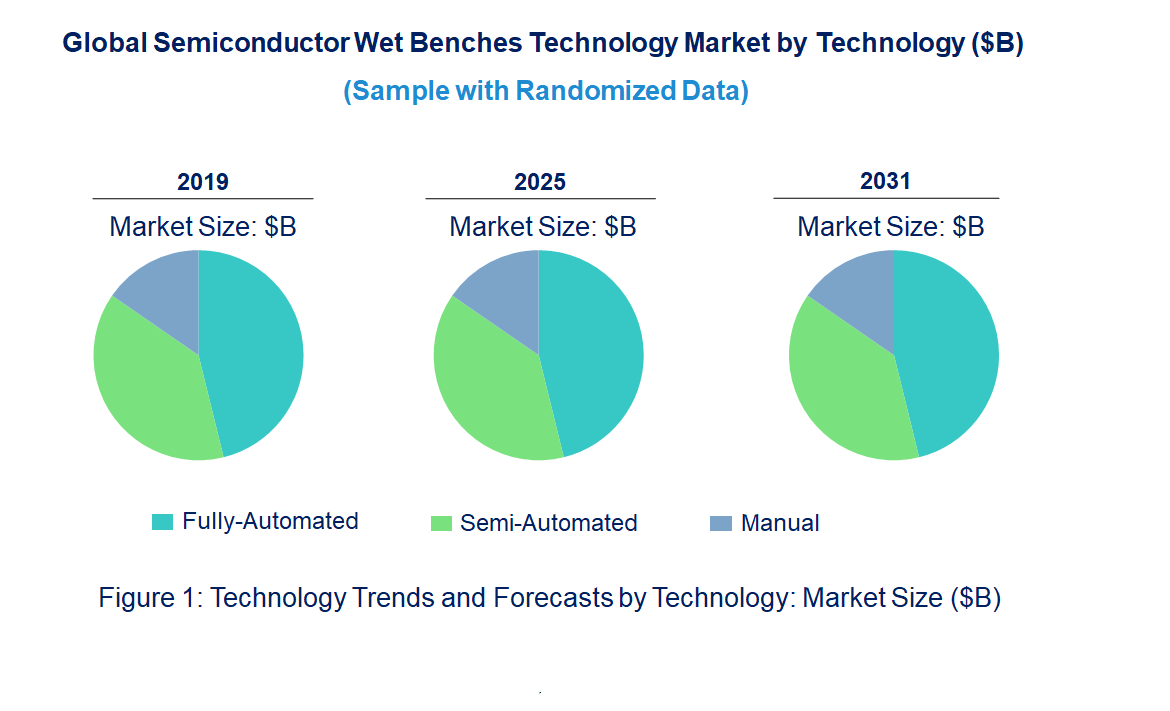
Emerging Trends in the Semiconductor Wet Benches Market
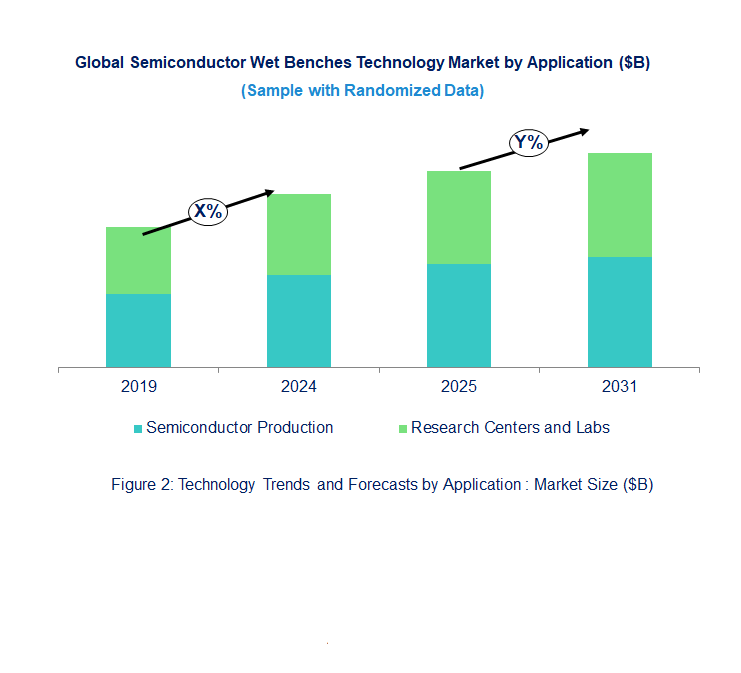
Advancing technologies and growing demand for highly efficient and precise equipment in semiconductor production wet benches continue to evolve the market in this direction. Companies focus on faster, more effective, and sustainable production by using these trends. Five key trends are redefining the market today:• Trend Toward Fully Automated Wet Benches: Fully automated wet benches are sought after in the industry as a trend toward higher precision, repeatability, and lower labor costs. These systems automate the cleaning, etching, and deposition processes to ensure consistency and reduce human error, thereby increasing throughput, an important aspect of high-volume semiconductor production.
• More Demand for Cleanroom-Ready Systems. With semiconductor devices becoming smaller and more complex, cleanroom-compliant wet bench systems are in high demand. Manufacturers are now emphasizing the development of wet benches that will meet the highly stringent cleanliness requirements for advanced semiconductor production, including 3D IC and nanoscale devices
• Miniaturization and High-Precision Control: Because of the relentless miniaturization of semiconductor components, wet benches with high precision control have become more in demand. Precise chemical treatments and handling at the miniaturized end of wafer sizes allow wet benches to produce increasingly complex devices with reduced feature sizes.
• IoT and Smart Integration: IoT and smart technologies integration into wet bench systems is an emerging trend. It enables real-time monitoring, predictive maintenance, and remote control to make semiconductor production facilities operate with higher efficiency and reduce the time spent on downtime.
• Sustainable System: This is based on the sustainability and environmental compliance aspect because, with an increase in environmental regulations for the semiconductor industry, manufacturers of wet benches are emphasizing on developing sustainable systems with minimal chemical waste, use of minimal water, and stringent environmental compliance. These trends depict an emerging demand for higher automation, accuracy, and sustainability in the semiconductor wet benches market as part of the industry's ongoing shift toward advanced semiconductor manufacturing technologies.
Semiconductor Wet Benches Market : Industry Potential, Technological Development, and Compliance Considerations
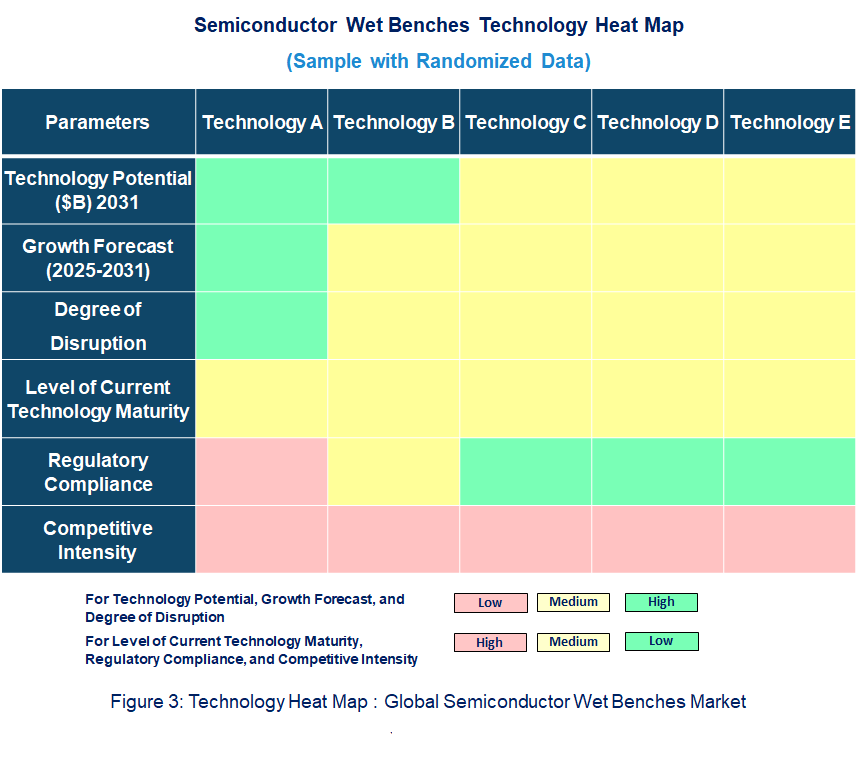
The semiconductor wet benches are used in the process of semiconductor manufacturing, cleaning, etching, and chemical treatment of wafers. The precise application of chemicals in processes such as oxidation, etching, and metal deposition is critical in attaining high standards for semiconductor production.• Technology Potential: Innovation in semiconductor wet benches lies in improving the precision, efficiency, and safety of wafer processing. Key developments focus on chemical delivery automation, process uniformity improvements, and chemical waste minimization. Advanced materials and coatings for wet benches are also seen in the development of corrosion resistance and the reduction of contamination risk. Integration of real-time monitoring and process control utilizing sensors and AI-driven analytics will also enhance the optimization of wafer treatment and yield.
• Degree of Disruption: The degree of disruption in the semiconductor wet bench market is moderate. Wet benches are well-established, but demand for miniaturization, precision, and environmental sustainability is forcing the market toward more advanced solutions. New technologies such as closed-loop recycling systems for chemicals and advanced automation could make a significant difference in terms of efficiency and the environmental footprint of wet bench operations. The maturity of technology is high since wet benches have been in use for decades, though new innovations, especially automation and sustainability, are still under development.
• Regulatory Compliance: Wet benches in semiconductor manufacturing are subject to strict safety and environmental regulations. Compliance with standards such as ISO, SEMI, and local environmental guidelines ensures safe chemical handling, waste disposal, and operational efficiency. like copy
Recent Technological development in Semiconductor Wet Benches Market by Key Players
Leading companies in the semiconductor wet benches market are continually innovating in an attempt to answer the demands of growing precision, automation, and high-volume production. Following are the latest developments reported from some of the major companies involved in the market:• Wafer Process Systems: Wafer Process Systems developed advanced fully automated wet benches for high-precision semiconductor applications. Their systems offer superior chemical processing control, thus bettering process efficiency and yield. This would be of high value for 3D IC manufacturers as well as makers of other sophisticated semiconductor devices.
• Modutek: Modutek has developed semi-automated and fully automated wet benches for semiconductor fabrication and MEMS applications. Its systems feature the latest in chemical handling technologies, enabling precise and safe processing of wafers. This innovation is driving growth in MEMS applications and high-precision wafer cleaning.
• SPM: The latest wet bench systems from SPM are fitted with advanced cleaning and etching technologies that ensure superior performance in advanced wafer processing. The systems are designed to meet the stringent requirements of nanotechnology and high-tech manufacturing processes, thus providing an increase in yield and improved process uniformity.
• JST Manufacturing: JST has enriched its portfolio of wet bench systems with more automated versions, which help to make semiconductor production more efficient and safe. Such systems are designed for high-volume lines and ensure real-time monitoring and control to deliver a constant process outcome.
• TAKADA: Recently, TAKADA introduced fully integrated wet bench systems for precise semiconductor production. The systems offered include automation in wafer handling, chemical mixing, and treatment cycles to avoid human intervention and enhance throughput while maintaining high safety levels.
• PCT Systems: PCT Systems focuses on developing cleanroom-compatible wet bench solutions for advanced semiconductor processing. Their systems minimize contamination and maximize chemical safety so that manufacturers can produce next-generation semiconductor devices in compliant environments.
• Ramgraber: Ramgraber has introduced innovative manual and semi-automated wet benches, which are ideal for research centers and labs where flexibility and precision are paramount. These systems provide users with enhanced control over processing parameters, making them suitable for both semiconductor production and material research applications.
• AP&S: AP&S offers high-end automated wet benches that can be used for high-precision etching and cleaning in semiconductor production. Its systems use IoT technologies for real-time monitoring and predictive maintenance, enhancing the efficiency of operations and reducing downtime.
• Tokyo Electron Limited: The company, Tokyo Electron, has unveiled wet bench next-generation solutions focusing on precise handling and cleaning. These systems are applied in highly advanced environments in semiconductor manufacturing and respond to the high-tech needs of faster processing speed and higher yields.
• Atp GmbH: Atp GmbH has focused on developing fully automated wet benches for the semiconductor and MEMS industries. The company's systems are characterized by in-line chemical mixing and temperature control, giving manufacturers increased flexibility and precision in their semiconductor fabrication processes. These recent developments show that key players in the semiconductor wet benches market focus on automation, precision, cleanroom compatibility, and sustainability to address the changing needs of the semiconductor and advanced manufacturing sectors.
Semiconductor Wet Benches Market Driver and Challenges
The market of semiconductor wet benches is growing rapidly due to semiconductor technology advancement and high demand for precise and efficient equipment for manufacturing. However, challenges may hinder growth and innovation in the market. Some of the key drivers and challenges in the market are as follows: The factors responsible for driving the semiconductor wet benches market include:• Demand for Advanced Semiconductor Devices: As semiconductor devices become more complex and smaller, the demand for high-precision wet benches that can handle advanced etching, cleaning, and deposition processes is increasing. This is driving the growth of the market, especially in 3D ICs and MEMS applications.
• Rise of Fully-Automated and Semi-Automated Systems: The increasing demand for automation in semiconductor production is propelling the growth of automated wet bench systems. These systems improve efficiency, throughput, and consistency, while minimizing human error, leading to greater yield and productivity.
• Sustainable Wet Bench Focus and Environmental Compliance: As environmental regulations tighten, manufacturers are now designing sustainable wet bench solutions to minimize the amount of wastewater and chemicals. Thus, it is driving the companies towards adopting more environmentally friendly technologies which will lead to a more sustainable solution for the long-term.
• Growth in Semiconductor Manufacturing for Consumer Electronics: The consumer electronics industry continues to grow due to the demand for smartphones, wearables, and other devices. This is creating a need for advanced semiconductor wet bench systems that can meet the high-performance and high-volume demands of the sector. Challenges in the semiconductor wet benches market are:
• High Initial Cost of Automated Wet Benches: One of the biggest problems in the market is the high capital expenditure of a fully automated and semi-automated wet bench. It acts as a hindrance to smaller manufacturers or research centers investing in such systems, although long-term benefits are offered.
• Complexity in Material Handling of New Materials: New materials and advanced semiconductor technologies often require different chemical process adaption in wet bench systems. The increased complexity of new material processing offers challenges concerning their efficiency and effectiveness.
• Integration of IoT and Automation Technologies: With the benefits of improved efficiency and predictive maintenance offered by IoT integration and automation, the complexity of integrating such systems into existing manufacturing setups remains a challenge. Compatibility of the new systems with legacy systems must be ensured by companies and that the implementation of these new systems does not disrupt production. In conclusion, the growth in the semiconductor wet benches market is very robust, which is due to advances in automation, precision control, and sustainability. However, it has to face challenges like high initial costs, new material handling complexity, and smart technologies integration for further expansion of the market.
List of Semiconductor Wet Benches Companies
Companies in the market compete based on product quality offered. Major players in this market focus on expanding their manufacturing facilities, R&D investments, infrastructural development, and leverage integration opportunities across the value chain. With these strategies semiconductor wet benches companies cater to increasing demand, ensure competitive effectiveness, develop innovative products & technologies, reduce production costs, and expand their customer base. Some of the semiconductor wet benches companies profiled in this report include.• Wafer Process Systems
• Modutek
• SPM
• JST Manufacturing
• TAKADA
• PCT Systems
Semiconductor Wet Benches Market by Technology
• Technology Readiness by Technology Type for the Semiconductor Wet Benches Market: Fully automated wet benches are highly advanced and match the precision and throughput requirements for large-scale semiconductor manufacturing. Semi-automated systems are established but in transition; they are appropriate for medium-scale production. Manual systems are mature but are being increasingly displaced by automation. Fully automated systems are the most mature and drive efficiency and innovation, while manual systems are for low-volume applications. Full automation is the most critical for regulatory compliance, as they face the most complex standards for integrating into cleanroom environments.
• Competitive Intensity and Regulatory Compliance of Various Technologies for Semiconductor Wet Benches Market: The market is competitive, with fully-automated systems dominating the volume productions due to efficiency and scalability. Semi-automated systems compete in medium-scale production, and there's still a need for fully manual systems for low-volume and research purposes. Regulations are very strict across the three systems, especially as regards chemical handling and waste disposal. Fully automated and semi-automated systems must also pass critical standards on contamination control and reliability in semiconductor fabrication.
• Disruption Potential of various technologies in the semiconductor wet benches market: Fully automated wet benches offer the greatest disruption potential for high-volume semiconductor manufacturing, which increases throughput, reduces errors, and improves consistency. Semi-automated systems are cost-effective for medium-scale production, and manual wet benches are less disruptive, focusing on small-scale or research applications. With the trend toward smaller nodes in semiconductor manufacturing, fully automated systems will be the driving force for innovation, especially in advanced applications like memory and 5G chips.
Semiconductor Wet Benches Market Trend and Forecast by Technology [Value from 2019 to 2031]:
• Fully-Automated
• Semi-Automated
• Manual
Semiconductor Wet Benches Market Trend and Forecast by Application [Value from 2019 to 2031]:
• Semiconductor Production
• Research Centers and Labs
Semiconductor Wet Benches Market by Region [Value from 2019 to 2031]:
• North America
• Europe
• Asia Pacific
• The Rest of the World
• Latest Developments and Innovations in the Semiconductor Wet Benches Technologies
• Companies / Ecosystems
• Strategic Opportunities by Technology Type
Features of the Global Semiconductor Wet Benches Market
Market Size Estimates: Semiconductor wet benches market size estimation in terms of ($B). Trend and Forecast Analysis: Market trends (2019 to 2024) and forecast (2025 to 2031) by various segments and regions. Segmentation Analysis: Technology trends in the global semiconductor wet benches market size by various segments, such as application and technology in terms of value and volume shipments. Regional Analysis: Technology trends in the global semiconductor wet benches market breakdown by North America, Europe, Asia Pacific, and the Rest of the World. Growth Opportunities: Analysis of growth opportunities in different applications, technologies, and regions for technology trends in the global semiconductor wet benches market. Strategic Analysis: This includes M&A, new product development, and competitive landscape for technology trends in the global semiconductor wet benches market. Analysis of competitive intensity of the industry based on Porter’s Five Forces model.Table of Contents
Methodology
- In-depth interviews of the major players in this market
- Detailed secondary research from competitors’ financial statements and published data
- Extensive searches of published works, market, and database information pertaining to industry news, company press releases, and customer intentions
- A compilation of the experiences, judgments, and insights of Lucintel’s professionals, who have analyzed and tracked this market over the years.


Buy Now
Choose a license that fits your team. Instant PDF delivery.
Prices exclude taxes. Instant delivery. Custom licensing available on request.
Key Questions
- • What are some of the most promising potential, high-growth opportunities for the technology trends in the global semiconductor wet benches market by technology (fully-automated, semi-automated, and manual), application (semiconductor production and research centers and labs), and region (North America, Europe, Asia Pacific, and the Rest of the World)?
- • Which technology segments will grow at a faster pace and why?
- • Which regions will grow at a faster pace and why?
- • What are the key factors affecting dynamics of different technology? What are the drivers and challenges of these technologies in the global semiconductor wet benches market?
- • What are the business risks and threats to the technology trends in the global semiconductor wet benches market?
- • What are the emerging trends in these technologies in the global semiconductor wet benches market and the reasons behind them?
- • Which technologies have potential of disruption in this market?
- • What are the new developments in the technology trends in the global semiconductor wet benches market? Which companies are leading these developments?
- • Who are the major players in technology trends in the global semiconductor wet benches market? What strategic initiatives are being implemented by key players for business growth?
- • What are strategic growth opportunities in this semiconductor wet benches technology space?
- • What M & A activities did take place in the last five years in technology trends in the global semiconductor wet benches market?


