
Report Feature
Rubber Non-Black Filler Trends and Forecast
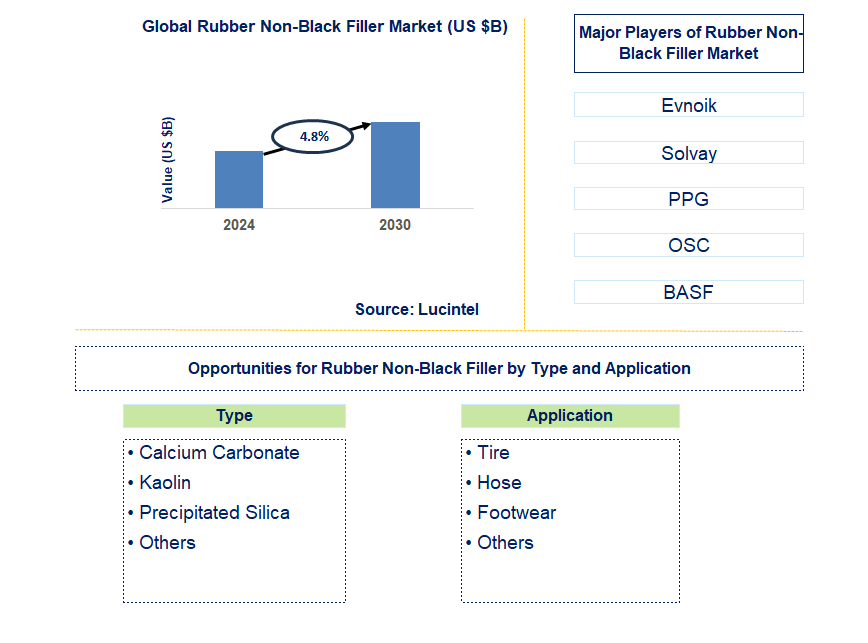
The future of the global rubber non-black filler market looks promising with opportunities in the tire, hose, and footwear markets. The global rubber non-black filler market is expected to grow with a CAGR of 4.8% from 2024 to 2030. The major drivers for this market are the rising demand for colored rubber products and the growing emphasis on specialized rubber compounds.• Lucintel forecasts that, within the type category, the calcium carbonate is expected to witness the highest growth over the forecast period.
• Within the application category, the tire is expected to witness the highest growth.
• In terms of region, North America is expected to witness the highest growth over the forecast period. A more than 150-page report is developed to help in your business decisions.

Emerging Trends in the Rubber Non-Black Filler Market
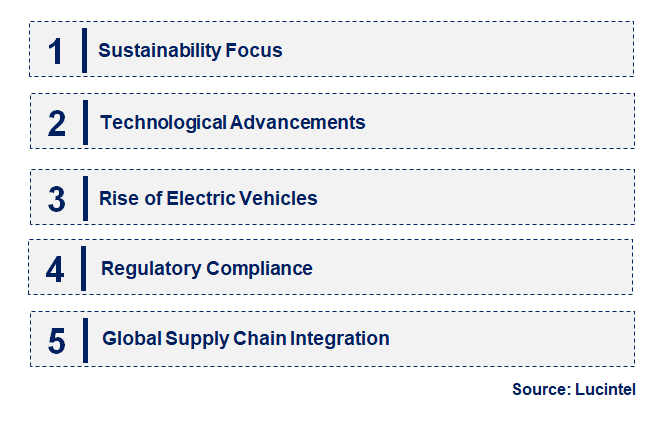
The Rubber Non-Black Filler market is undergoing transformative changes, influenced by several emerging trends. These trends are reshaping product development, manufacturing processes, and market strategies. Key drivers include the increasing demand for sustainable materials, advancements in technology, and evolving consumer preferences. As industries focus on reducing environmental impact and enhancing product performance, these trends are expected to have lasting implications for the market.• Sustainability Focus: The growing emphasis on sustainability is a pivotal trend in the rubber non-black filler market. Companies are prioritizing eco-friendly materials and production processes to reduce their carbon footprints. This shift is driven by regulatory requirements and consumer demand for environmentally responsible products. The adoption of bio-based fillers and recycled materials is on the rise, allowing manufacturers to meet sustainability goals without compromising performance. As awareness of environmental issues continues to rise, companies that embrace sustainable practices are likely to gain a competitive advantage, attracting eco-conscious consumers and investors.
• Technological Advancements: Technological innovations are significantly shaping the rubber non-black filler market. Advances in material science and engineering are leading to the development of high-performance fillers with enhanced properties, such as improved durability and heat resistance. Innovative processing techniques, including nanotechnology and 3D printing, are enabling manufacturers to produce more effective and efficient products. As technology continues to evolve, companies that invest in R&D and adopt cutting-edge practices will enhance their product offerings, positioning themselves favorably in a competitive landscape.
• Rise of Electric Vehicles: The shift towards electric vehicles (EVs) is creating new opportunities in the rubber non-black filler market. Lightweight materials are crucial for improving the efficiency and performance of EVs, leading to increased demand for non-black fillers such as silica and clay. As automakers seek to reduce weight and enhance battery performance, innovative fillers are becoming essential components in vehicle design. This trend is not only driving growth in the automotive sector but is also prompting collaborations between filler manufacturers and automotive companies, fostering a more integrated supply chain.
• Regulatory Compliance: Regulatory compliance is a significant driver of change in the rubber non-black filler market. Governments worldwide are implementing stringent environmental regulations that compel manufacturers to adopt safer and more sustainable materials. Compliance with these regulations is pushing companies to innovate and explore alternative fillers that align with new standards. This trend is particularly pronounced in industries such as automotive and construction, where non-black fillers are increasingly utilized to meet emission and safety requirements. As compliance becomes a necessity, manufacturers that proactively adapt will enhance their market positioning.
• Global Supply Chain Integration: The integration of global supply chains is reshaping the rubber non-black filler market, driven by increasing international trade and collaboration. Manufacturers are sourcing materials from various regions to optimize costs and enhance product offerings. This trend is fostering partnerships between suppliers and producers, enabling the sharing of best practices and technological advancements. As global competition intensifies, companies that effectively manage their supply chains and leverage international resources will gain a competitive edge, ensuring the availability of high-quality non-black fillers to meet diverse market demands. The trends reshaping the rubber non-black filler market are driving significant changes in production processes, product development, and market dynamics. The increasing demand for eco-friendly materials and sustainable manufacturing practices is prompting manufacturers to explore innovative alternatives that minimize environmental impact. Advances in technology are enabling the development of high-performance non-black fillers, enhancing the properties of rubber products, such as strength, durability, and heat resistance.
Recent Developments in the Rubber Non-Black Filler Market
Recent developments in the Rubber Non-Black Filler market reflect a shift towards innovation, sustainability, and regulatory compliance. These changes are driven by evolving industry needs and technological advancements, positioning non-black fillers as essential components across various applications. The focus on eco-friendly materials and improved performance characteristics is shaping the future of this market.• Innovations in Silica Production: Advancements in silica production technology have significantly improved the quality and performance of non-black fillers. Manufacturers are developing enhanced silica grades that offer superior reinforcement and lower hysteresis, leading to better fuel efficiency and performance in tires. These innovations are helping companies meet both consumer expectations and regulatory requirements for sustainability. The push for higher-performance materials is driving investment in R&D, ensuring that silica remains a competitive choice in the rubber industry.
• Development of Bio-Based Fillers: The increasing demand for sustainable materials has spurred the development of bio-based fillers. Manufacturers are exploring natural sources, such as plant fibers and starches, to create eco-friendly alternatives to traditional fillers. These bio-based options offer comparable performance characteristics while reducing the environmental impact associated with production. As industries seek to align with sustainability goals, the integration of bio-based fillers is becoming more prominent, leading to a more sustainable rubber manufacturing landscape.
• Expansion in Automotive Applications: The rubber non-black filler market is experiencing significant growth in automotive applications, driven by the rise of electric vehicles and the need for lightweight materials. Non-black fillers are increasingly used in tire manufacturing and other automotive components to enhance performance and reduce weight. As automakers prioritize efficiency and sustainability, the demand for advanced filler technologies is expected to rise. This expansion reflects the industry's shift towards more innovative materials that meet stringent performance standards.
• Increased Focus on Recycling: The recycling of rubber products is gaining traction, leading to increased demand for non-black fillers that can enhance the performance of recycled materials. Companies are investing in technologies that enable the effective incorporation of non-black fillers into recycled rubber compounds, improving their functionality and usability. This trend not only supports sustainability efforts but also helps manufacturers reduce waste and optimize resource utilization. As recycling practices advance, the integration of non-black fillers is expected to play a crucial role in the circular economy.
• Strategic Collaborations and Partnerships: Strategic collaborations between manufacturers, suppliers, and research institutions are emerging as a key development in the rubber non-black filler market. These partnerships aim to accelerate innovation and improve product offerings by combining expertise and resources. Collaborative efforts are particularly focused on developing advanced fillers that meet the evolving needs of various industries, including automotive, construction, and consumer goods. As these alliances strengthen, they will enhance the overall competitiveness of the non-black filler market and drive future growth. These developments and trends indicate a dynamic evolution in the rubber non-black filler market, emphasizing sustainability, innovation, and regulatory compliance. As companies adapt to these changes, they are likely to reshape their strategies and product offerings, positioning themselves for success in a competitive landscape.
Strategic Growth Opportunities for Rubber Non-Black Filler Market
The Rubber Non-Black Filler market is poised for significant growth, driven by evolving consumer demands, regulatory pressures, and advancements in material technology. Key applications across various industries, such as automotive, construction, and consumer goods, are presenting numerous strategic growth opportunities. By focusing on innovative filler solutions that enhance performance, sustainability, and compliance, companies can leverage these opportunities to strengthen their market positions. This overview highlights five key growth opportunities within specific applications, showcasing their potential to reshape the landscape of the rubber non-black filler market.• Automotive Industry: The automotive sector represents a substantial growth opportunity for rubber non-black fillers, particularly with the rising demand for lightweight materials in electric vehicles (EVs). Non-black fillers, such as silica and organic fillers, help reduce weight and improve fuel efficiency. As automakers increasingly focus on sustainability and regulatory compliance, incorporating advanced fillers can enhance performance while meeting environmental standards. This trend not only addresses consumer preferences for greener vehicles but also positions manufacturers to gain a competitive edge in an evolving market.
• Construction Sector: In the construction industry, the demand for rubber non-black fillers is growing, driven by the need for high-performance materials in applications like sealants and adhesives. Fillers such as calcium carbonate and kaolin provide essential properties like enhanced durability and weather resistance. As infrastructure projects expand globally, the use of these fillers in construction materials is expected to rise. Companies that innovate and develop specialized fillers tailored to construction needs can capture significant market share, driving growth in this application area.
• Consumer Goods: The consumer goods sector offers a promising avenue for growth in rubber non-black fillers, particularly in products like footwear, sports equipment, and household items. The demand for lightweight, flexible, and durable materials is rising, leading manufacturers to seek non-black fillers that enhance product performance. Innovations in bio-based fillers are particularly appealing as consumers become more environmentally conscious. Companies that leverage these opportunities can tap into new markets and meet consumer demands for high-quality, sustainable products.
• Tire Manufacturing: The tire manufacturing sector is undergoing transformation as manufacturers prioritize sustainability and performance. Non-black fillers, especially silica, are increasingly used to enhance fuel efficiency and tread performance in tires. As regulatory pressures for lower emissions intensify, the demand for advanced fillers that improve tire longevity and reduce rolling resistance will grow. Companies that focus on R&D to develop high-performance, sustainable fillers can gain significant advantages in a highly competitive market.
• Industrial Applications: Industrial applications, including conveyor belts and hoses, are another key growth opportunity for rubber non-black fillers. The need for enhanced durability, chemical resistance, and flexibility in industrial products is driving demand for specialized fillers. Innovations in filler formulations can lead to improved performance in harsh operating environments. Companies that invest in developing tailored solutions for specific industrial applications can strengthen their market presence and capture a larger share of this growing segment. The growing automotive and construction industries are fueling the need for specialized fillers that meet stringent regulatory standards and performance requirements. As industries increasingly prioritize lightweight materials to improve fuel efficiency and reduce emissions, non-black fillers are gaining traction due to their ability to contribute to these objectives. Additionally, the rise of end-user awareness regarding health and safety has led to a preference for non-toxic and safer filler options, further expanding the market.
Rubber Non-Black Filler Market Driver and Challenges
The Rubber Non-Black Filler market is influenced by various technological, economic, and regulatory factors, which present both opportunities and challenges. As industries evolve, understanding these drivers and challenges is essential for market participants to navigate the changing landscape. This analysis highlights the primary drivers fueling growth and the challenges that may hinder market progress. Drivers:• Sustainability Initiatives: The increasing emphasis on sustainability is a significant driver for the rubber non-black filler market. Regulatory bodies are implementing stricter environmental standards, pushing manufacturers to adopt eco-friendly materials. Non-black fillers, particularly bio-based and recycled options, align with sustainability goals. As industries prioritize green practices, demand for these fillers is expected to rise, providing companies with a competitive edge while contributing to environmental preservation.
• Technological Advancements: Ongoing advancements in material science and engineering are enhancing the performance of rubber non-black fillers. Innovations such as nanotechnology and improved processing techniques enable the development of fillers with superior properties. These advancements help manufacturers meet the growing demands for high-performance materials across various applications, driving market growth. Companies that invest in R&D and leverage new technologies will be better positioned to capture emerging opportunities.
• Rising Demand in Electric Vehicles: The growing electric vehicle market is significantly influencing the rubber non-black filler sector. EV manufacturers require lightweight and high-performance materials to improve efficiency and range. Non-black fillers, such as silica and specialized composites, play a crucial role in achieving these goals. As the adoption of electric vehicles accelerates, the demand for innovative fillers that enhance vehicle performance will continue to grow, presenting lucrative opportunities for manufacturers.
• Global Infrastructure Development: Significant investments in infrastructure projects worldwide are driving demand for rubber non-black fillers in construction applications. The need for durable and high-performance materials in sealants, adhesives, and other construction products is increasing. As countries prioritize infrastructure development to boost economic growth, the demand for non-black fillers tailored for construction applications is expected to rise, contributing to market expansion.
• Consumer Preferences for Quality: Evolving consumer preferences are shifting towards high-quality, sustainable products across various industries, including footwear and consumer goods. This trend is driving manufacturers to explore non-black fillers that enhance product performance and sustainability. As consumers become more aware of environmental issues, the demand for eco-friendly fillers is expected to grow, prompting manufacturers to innovate and adapt their product offerings accordingly. Challenges:
• Cost of Raw Materials: The fluctuating costs of raw materials, including non-black fillers, pose a challenge for manufacturers. Price volatility can impact production costs and profit margins, making it difficult for companies to maintain competitive pricing. As the market shifts towards higher-performance and sustainable fillers, managing raw material costs while ensuring quality will be crucial for manufacturers to remain profitable and competitive.
• Regulatory Compliance: Compliance with stringent environmental regulations can be challenging for manufacturers in the rubber non-black filler market. Adapting to changing regulations requires investment in new technologies and processes, which can be resource-intensive. Companies must navigate complex regulatory landscapes to ensure their products meet safety and environmental standards, impacting their operational efficiency and market positioning.
• Competition from Alternatives: The increasing availability of alternative materials can pose a challenge for the rubber non-black filler market. Manufacturers may face competition from other filler options, such as carbon black or natural fibers, which can offer similar properties at lower costs. To mitigate this challenge, companies need to continuously innovate and demonstrate the unique advantages of non-black fillers to maintain their market share. The Rubber Non-Black Filler market is significantly influenced by various drivers and challenges. Sustainability initiatives, technological advancements, and the rising demand for electric vehicles present compelling growth opportunities. However, challenges such as raw material costs, regulatory compliance, and competition from alternatives must be addressed.
List of Rubber Non-Black Filler Companies
Companies in the market compete on the basis of product quality offered. Major players in this market focus on expanding their manufacturing facilities, R&D investments, infrastructural development, and leverage integration opportunities across the value chain. Through these strategies rubber non-black filler companies cater increasing demand, ensure competitive effectiveness, develop innovative products & technologies, reduce production costs, and expand their customer base. Some of the rubber non-black filler companies profiled in this report include-• Evnoik
• Solvay
• PPG
• OSC
• BASF
• Tosoh Silica
• Quechen Silicon
• Zhuzhou Xinglong
• Fujian Zhengsheng
• Shandong Link
Rubber Non-Black Filler by Segment
The study includes a forecast for the global rubber non-black filler by type, application, and region.Rubber Non-Black Filler Market by Type [Analysis by Value from 2018 to 2030]:
• Calcium Carbonate
• Kaolin
• Precipitated Silica
• Others
Rubber Non-Black Filler Market by Application [Analysis by Value from 2018 to 2030]:
• Tire
• Hose
• Footwear
• Others
Rubber Non-Black Filler Market by Region [Analysis by Value from 2018 to 2030]:
• North America
• Europe
• Asia Pacific
• The Rest of the World
Country Wise Outlook for the Rubber Non-Black Filler Market
The global Rubber Non-Black Filler market is growing rapidly, driven by increasing environmental awareness, demand for lightweight materials, and technological advancements. Non-black fillers such as silica, calcium carbonate, and various organic fillers are gaining traction for their performance benefits and sustainability. As industries in key regions like the United States, China, Germany, India, and Japan adapt to changing regulations and consumer preferences, the market is undergoing significant transformations. This overview highlights key developments in these regions, reflecting their unique approaches and market dynamics.• United States: In the U.S., the rubber non-black filler market is experiencing strong growth, driven by regulatory pressures and the automotive sector's shift toward eco-friendly materials. Innovations in silica and bio-based fillers are enhancing product performance while meeting sustainability standards. Major manufacturers are investing heavily in R&D to improve the efficiency and functionality of these fillers. Furthermore, the rise of electric vehicles (EVs) is increasing demand for lightweight materials, which is further fueling the market. Collaborative efforts between industries and research institutions are driving advancements, positioning the U.S. as a leader in this evolving market.
• China: The Chinese rubber non-black filler market is expanding rapidly, fueled by government initiatives focused on environmental sustainability and pollution control. The country is investing in advanced filler technologies, particularly silica and organic fillers, to meet stringent emission standards in the automotive and construction sectors. Local manufacturers are adopting eco-friendly production methods to enhance their competitive edge. Additionally, the growth of the electric vehicle market is driving the demand for lightweight rubber compounds. With increasing capabilities in manufacturing, China is poised for substantial growth, focusing on innovation and compliance with global standards.
• Germany: Germany is a leader in the rubber non-black filler market, thanks to its strong automotive and industrial sectors. The demand for high-performance materials, especially in tire manufacturing, is pushing companies to adopt advanced fillers like silica and clay. Innovations in polymer technology and additive manufacturing are opening new opportunities for enhanced product functionality. Germany’s commitment to sustainability has also led to greater investment in bio-based fillers and recycling technologies. These trends align with environmental regulations while strengthening Germany's position as a global market leader, fostering collaboration between academia and industry.
• India: India is seeing rapid growth in its rubber non-black filler market, driven by the expanding automotive and construction industries. The shift toward environmentally friendly materials is prompting manufacturers to explore alternatives to traditional fillers. Bio-based and natural fillers are becoming more popular due to their sustainability benefits. Government initiatives, such as the Make in India campaign, are supporting local manufacturing and boosting investments in this sector. As domestic players innovate and improve product quality, India is positioning itself as a key player in the global rubber non-black filler market.
• Japan: The Japanese rubber non-black filler market is known for its technological advancements and focus on high-quality materials. The country is increasingly utilizing silica and clay-based fillers to enhance the performance of rubber products, particularly in the automotive and electronics sectors. Recent innovations include improved processing techniques and the development of functional fillers with enhanced durability and heat resistance. Japanese commitment to sustainability is also driving the adoption of eco-friendly fillers. As Japanese manufacturers continue to prioritize innovation, the market is expected to see significant advancements, positioning Japan as a leader in this sector.

Features of the Global Rubber Non-Black Filler Market
Market Size Estimates: Rubber non-black filler market size estimation in terms of value ($B). Trend and Forecast Analysis: Market trends (2018 to 2023) and forecast (2024 to 2030) by various segments and regions. Segmentation Analysis: Rubber non-black filler market size by type, application, and region in terms of value ($B). Regional Analysis: Rubber non-black filler market breakdown by North America, Europe, Asia Pacific, and Rest of the World. Growth Opportunities: Analysis of growth opportunities in different type, application, and regions for the rubber non-black filler market. Strategic Analysis: This includes M&A, new product development, and competitive landscape of the rubber non-black filler market. Analysis of competitive intensity of the industry based on Porter’s Five Forces model.If you are looking to expand your business in this market or adjacent markets, then contact us. We have done hundreds of strategic consulting projects in market entry, opportunity screening, due diligence, supply chain analysis, M & A, and more.

FAQ
Q1. What is the growth forecast for the rubber non-black filler market? Answer: The global rubber non-black filler market is expected to grow with a CAGR of 4.8% from 2024 to 2030. Q2. What are the major drivers influencing the growth of the rubber non-black filler market? Answer: The major drivers for this market are the rising demand for colored rubber products and the growing emphasis on specialized rubber compounds. Q3. What are the major segments for the rubber non-black filler market? Answer: The future of the rubber non-black filler market looks promising with opportunities in the tire, hose, and footwear markets. Q4. Who are the key rubber non-black filler market companies? Answer: Some of the key rubber non-black filler companies are as follows:• Evnoik
• Solvay
• PPG
• OSC
• BASF
• Tosoh Silica
• Quechen Silicon
• Zhuzhou Xinglong
• Fujian Zhengsheng
• Shandong Link Q5. Which rubber non-black filler market segment will be the largest in the future? Answer: Lucintel forecasts that calcium carbonate is expected to witness the highest growth over the forecast period. Q6. In the rubber non-black filler market, which region is expected to be the largest in the next 5 years? Answer: North America is expected to witness the highest growth over the forecast period. Q.7 Do we receive customization in this report? Answer: Yes, Lucintel provides 10% customization without any additional cost.
Table of Contents
Methodology
- In-depth interviews of the major players in this market
- Detailed secondary research from competitors’ financial statements and published data
- Extensive searches of published works, market, and database information pertaining to industry news, company press releases, and customer intentions
- A compilation of the experiences, judgments, and insights of Lucintel’s professionals, who have analyzed and tracked this market over the years.


Buy Now
Choose a license that fits your team. Instant PDF delivery.
Prices exclude taxes. Instant delivery. Custom licensing available on request.
Key Questions
- • What are some of the most promising, high-growth opportunities for the rubber non-black filler market by type (calcium carbonate, kaolin, precipitated silica, and others), application (tire, hose, footwear, and others), and region (North America, Europe, Asia Pacific, and the Rest of the World)?
- • Which segments will grow at a faster pace and why?
- • Which region will grow at a faster pace and why?
- • What are the key factors affecting market dynamics? What are the key challenges and business risks in this market?
- • What are the business risks and competitive threats in this market?
- • What are the emerging trends in this market and the reasons behind them?
- • What are some of the changing demands of customers in the market?
- • What are the new developments in the market? Which companies are leading these developments?
- • Who are the major players in this market? What strategic initiatives are key players pursuing for business growth?
- • What are some of the competing products in this market and how big of a threat do they pose for loss of market share by material or product substitution?
- • What M&A activity has occurred in the last 5 years and what has its impact been on the industry? For any questions related to Rubber Non-Black Filler Market, Rubber Non-Black Filler Market Size, Rubber Non-Black Filler Market Growth, Rubber Non-Black Filler Market Analysis, Rubber Non-Black Filler Market Report, Rubber Non-Black Filler Market Share, Rubber Non-Black Filler Market Trends, Rubber Non-Black Filler Market Forecast, Rubber Non-Black Filler Companies, write Lucintel analyst at email: helpdesk@lucintel.com. We will be glad to get back to you soon.


