
Report Feature
Robotaxi Market Trends and Forecast
The technologies in the robotaxi market have undergone significant changes in recent years, with a shift from traditional internal combustion engine (ICE) vehicles to electric-powered propulsion systems. This transition from fuel-based engines to electric motors is driven by the need for cleaner, more sustainable transportation options. Additionally, hybrid propulsion systems are gaining traction as an intermediate solution, combining both electric and fuel technologies to provide flexibility and extended range. This shift is transforming the Robotaxi industry by enhancing efficiency, reducing emissions, and aligning with the global push toward zero-emission vehicles.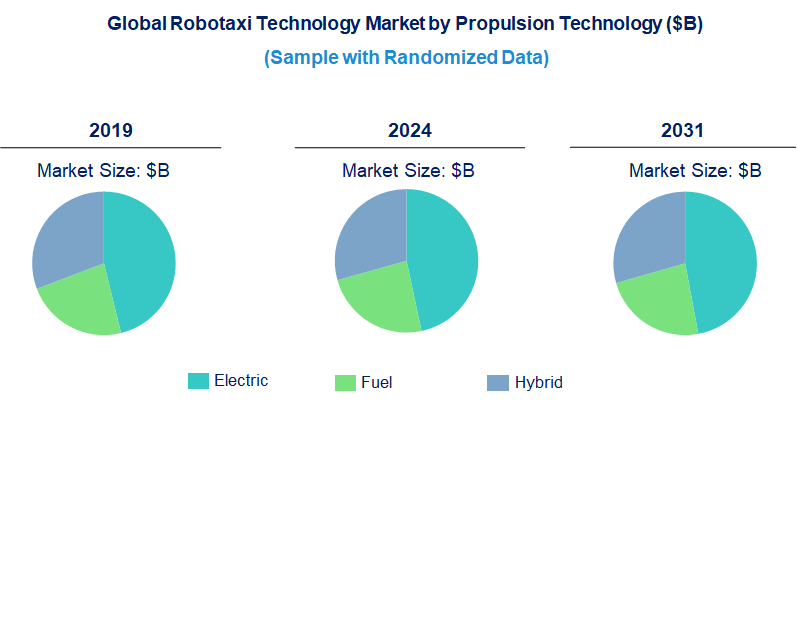
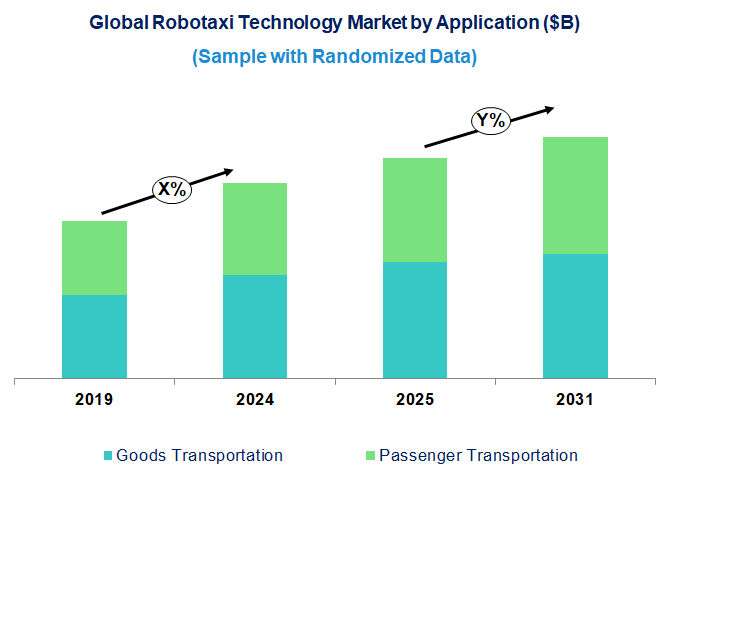
Emerging Trends in the Robotaxi Market
The robotaxi market is rapidly evolving, with advancements in technology, regulatory changes, and shifting consumer expectations. These trends are paving the way for a more sustainable, efficient, and customer-centric transportation system.• Electric Propulsion Systems: The increasing adoption of electric vehicles (EVs) in the robotaxi market is reducing dependency on fossil fuels. The shift to electric propulsion improves energy efficiency and supports environmental sustainability by lowering emissions, making it the preferred choice for future urban mobility solutions.
• Hybrid Systems Integration: Hybrid propulsion technology, combining electric motors with internal combustion engines, is emerging as a solution for overcoming range limitations of fully electric vehicles. This allows Robotaxi services to operate over long distances without relying solely on electric charging infrastructure, expanding their operational capacity.
• Autonomous Driving Technology: The integration of self-driving technology is a critical trend, with companies investing heavily in AI, machine learning, and sensor systems to enable fully autonomous robotaxis. This trend is expected to reduce the need for human drivers, lower operational costs, and enhance safety and efficiency in urban transportation.
• Shared Mobility and Connectivity: The rise of shared mobility platforms and connectivity solutions is transforming the way passengers use robotaxis. By enabling real-time ride-hailing, efficient route planning, and multi-passenger services, these platforms are improving the convenience and affordability of urban transportation, increasing the adoption of robotaxi services.
• Regulatory and Infrastructure Development: Governments worldwide are introducing policies and infrastructure investments to support autonomous and electric vehicles. The development of dedicated EV charging stations, regulatory frameworks for autonomous vehicle testing, and safety standards is accelerating the deployment of robotaxis, facilitating their integration into public transportation systems. These emerging trends are reshaping the robotaxi market by pushing the industry towards cleaner, more efficient, and autonomous transport solutions. Electric and hybrid propulsion technologies, coupled with the rise of autonomous driving and connected mobility services, are set to redefine urban transportation. As regulatory and infrastructure support continues to grow, the Robotaxi market will likely experience rapid expansion, offering a glimpse into the future of shared, sustainable, and automated urban mobility.
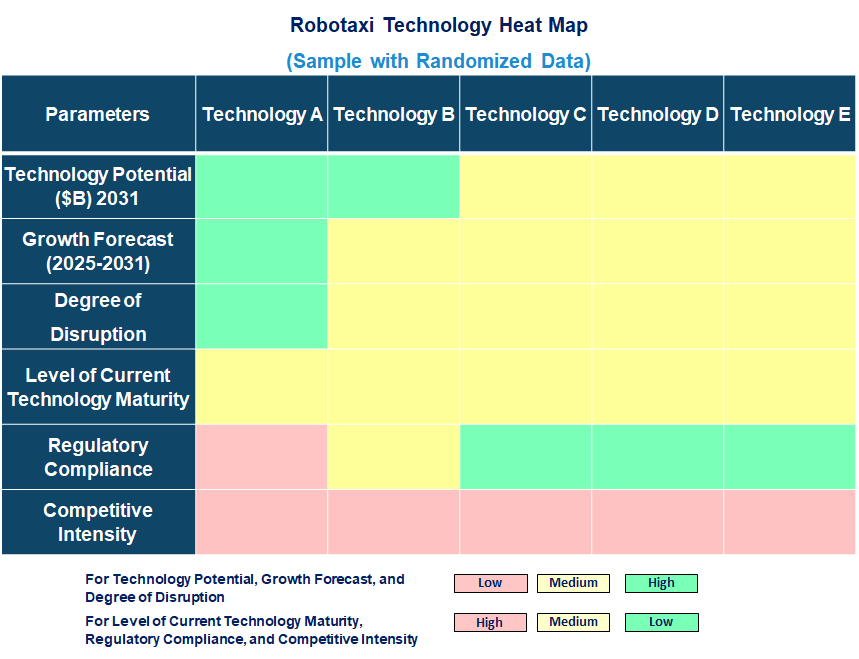
Robotaxi Market : Industry Potential, Technological Development, and Compliance Considerations
The robotaxi market represents a transformative shift in transportation, leveraging advancements in autonomous driving and diverse vehicle technologies such as electric, fuel, and hybrid.• Technology Potential: Electric robotaxis offer the highest potential due to zero emissions, integration with renewable energy, and alignment with urban sustainability goals. Hybrid vehicles provide operational flexibility in areas with limited charging infrastructure, while fuel-based robotaxis remain relevant for long-distance routes but face sustainability challenges.
• Degree of Disruption: Robotaxis disrupt traditional taxi services by introducing cost-efficient, safer, and more convenient alternatives. Electric vehicles (EVs) drive this disruption by reducing operating costs and emissions. Hybrid vehicles serve as a transitional technology, bridging gaps in infrastructure, while fuel-powered robotaxis face diminishing relevance in eco-conscious markets.
• Level of Current Technology Maturity: EVs lead in maturity, with advanced battery systems, widespread infrastructure in urban areas, and proven autonomous capabilities. Hybrid robotaxis are moderately mature, leveraging existing vehicle technologies. Fuel-based robotaxis, though reliable, lag in autonomous integration and face declining innovation due to environmental pressures.
• Regulatory Compliance: Stringent regulations shape the market. EVs must meet battery safety and recycling standards, hybrids must comply with dual fuel and emissions norms, and fuel-based vehicles face increasingly restrictive emissions regulations. All robotaxi technologies must adhere to global autonomous vehicle safety standards, ensuring consumer trust and market growth.
Recent Technological development in Robotaxi Market by Key Players
Key players in the robotaxi market are making notable strides in the development and deployment of autonomous and electric vehicle fleets.• Tesla: Tesla is advancing its Full Self-Driving (FSD) technology, which will be integral to its robotaxi fleet. The company’s electric vehicles, paired with autonomous capabilities, have the potential to lead the market, offering sustainability and reduced operational costs.
• Easy Ride (Nissan + DeNa): This joint venture focuses on launching autonomous electric vehicles for urban mobility. Easy Ride aims to expand its robotaxi services in Japan, leveraging Nissan’s EV platform and DeNa’s expertise in mobility.
• Ford: Ford is working on autonomous vehicle prototypes for its self-driving robotaxi service. The company plans to leverage its electric vehicle platform to integrate autonomous technologies for public transportation solutions.
• Volkswagen: Volkswagen’s autonomous mobility services focus on electric vehicles, with the ID. Buzz is planned as the robotaxi of the future, aiming for a fully connected and autonomous transportation system.
• Volvo: Volvo is enhancing its EV technology and autonomous systems, with partnerships aimed at bringing robotaxis to urban centers, focusing on safety and scalability in autonomous driving.
• Waymo: Waymo, a leader in autonomous driving technology, has launched robotaxi services in Arizona using electric vehicles, setting the stage for future growth in autonomous urban transportation.
• General Motors: GM is investing heavily in autonomous driving technologies with its Cruise division, aiming to deploy an all-electric, self-driving robotaxi fleet for urban mobility.
• LYFT: LYFT is partnering with Waymo and other autonomous vehicle developers to integrate robotaxis into its rideshare network, aiming to reduce the need for human drivers.
• Uber: Uber is investing in autonomous vehicles, particularly in collaboration with companies like Volvo, to enhance its rideshare offerings and eventually incorporate robotaxi services into its platform.
• Daimler: Daimler is testing autonomous electric vehicles as part of its ambitions to launch a fleet of fully self-driving taxis, emphasizing its focus on luxury and efficiency.
Robotaxi Market Driver and Challenges
The robotaxi market is driven by technological advancements, regulatory changes, and shifting consumer preferences towards sustainable and autonomous mobility solutions. Major Drivers and Challenges Impacting the Robotaxi Market:• Technological Advancements: Advancements in autonomous driving technology, AI, and electric propulsion are major drivers. These technologies enable the efficient deployment of robotaxis, lowering operational costs and improving safety and convenience for passengers.
• Regulatory Support: Governments worldwide are introducing policies to support autonomous vehicle testing and electric vehicle adoption. This regulatory push ensures that robotaxi services meet safety standards and are integrated into public transportation systems.
• Cost Efficiency: As the cost of electric vehicle batteries and autonomous technology decreases, robotaxis become more economically viable, creating growth opportunities for operators and manufacturers to scale their services.
• Consumer Demand for Sustainable Transport: There is a growing preference for eco-friendly, sustainable transportation options. This demand is propelling the adoption of electric robotaxis, especially in urban areas where environmental concerns are a priority.
• Infrastructure Development: The growth of EV charging networks and advancements in autonomous vehicle infrastructure are essential for the expansion of robotaxi services, ensuring reliable operations and widespread adoption. Challenges Impacting the Robotaxi Market:
• Regulatory and Legal Hurdles: The lack of unified global regulations for autonomous vehicles presents a significant challenge. Each country or region has its own set of safety standards, which can delay the deployment of Robotaxis and increase operational complexities for companies.
• Safety and Liability Concerns: Ensuring the safety of autonomous vehicles in diverse traffic conditions is a major challenge. Additionally, determining liability in the event of accidents involving robotaxis remains a legal grey area, complicating insurance models and risk management. In conclusion, the robotaxi market is driven by significant advancements in technology, regulatory support, and growing consumer demand for sustainable, autonomous transportation. Technological innovations, such as AI, electric propulsion, and autonomous driving systems, are transforming urban mobility, while regulatory frameworks and infrastructure development are essential for scaling services. However, challenges like regulatory uncertainties, safety concerns, technological limitations, public trust, infrastructure gaps, high development costs, and cybersecurity risks pose substantial hurdles.
List of Robotaxi Companies
Companies in the market compete on the basis of product quality offered. Major players in this market focus on expanding their manufacturing facilities, R&D investments, infrastructural development, and leverage integration opportunities across the value chain. With these strategies robotaxi companies cater increasing demand, ensure competitive effectiveness, develop innovative products & technologies, reduce production costs, and expand their customer base. Some of the robotaxi companies profiled in this report includes.• Tesla
• Easy Ride (Nissan + Dena)
• Ford
• Volkswagen
• Volvo
• Waymo
Robotaxi Market by Technology
• Technology Readiness by Technology Type for Robotaxi Market: Electric propulsion demonstrates the highest readiness, supported by mature battery technologies, widespread charging networks, and compatibility with autonomous driving. Its competitive level is intense, as it dominates urban passenger and goods transport markets. Regulatory compliance is robust, aligning with global emissions standards and sustainability goals. Fuel propulsion lags in readiness, facing declining demand due to high emissions and regulatory challenges, though it remains relevant in regions with existing fuel infrastructure. Hybrid technology occupies a middle ground, offering extended range and reliability in areas with limited charging infrastructure, but its higher complexity reduces its competitiveness. While electric Robotaxis lead in urban settings, hybrid systems may serve transitional roles, and fuel propulsion continues to shrink in relevance due to environmental and policy constraints.
• Competitive Intensity and Regulatory Compliance: The competitive intensity in the robotaxi market is highest for electric propulsion, with players like Tesla and Waymo investing heavily in fully autonomous electric fleets. Fuel technologies are under pressure due to strict global emissions standards and diminishing long-term viability. Hybrids, while providing flexibility and range, face challenges in balancing cost and efficiency against electrics. Regulatory compliance plays a pivotal role, as governments increasingly favor low-emission technologies, providing incentives for electrics and creating hurdles for fuel-based systems. The growing focus on environmental policies and operational sustainability further intensifies competition, driving innovation and investment in electric propulsion systems over hybrids and traditional fuel technologies.
• Disruption Potential: Electric propulsion is the most disruptive technology in the robotaxi market, driven by advancements in battery efficiency, falling production costs, and alignment with global sustainability goals. It offers zero emissions, reduced operational costs, and seamless integration with autonomous systems. Fuel-based Robotaxis face disruption due to increasing regulatory restrictions and environmental concerns, while hybrid technology serves as a transitional option, combining the strengths of both electric and fuel technologies. However, as charging infrastructure expands and battery technologies improve, electric vehicles are set to dominate, outpacing hybrids and fuel-powered options. This shift is transforming the market, pushing towards a cleaner, cost-effective transportation model that aligns with urban mobility trends.
Robotaxi Market Trend and Forecast by Propulsion Technology [Value from 2019 to 2031]:
• Electric
• Fuel
• Hybrid
Robotaxi Market Trend and Forecast by Application [Value from 2019 to 2031]:
• Goods Transportation
• Passenger Transportation
Robotaxi Market by Region [Value from 2019 to 2031]:
• North America
• Europe
• Asia Pacific
• The Rest of the World
• Latest Developments and Innovations in the Robotaxi Technologies
• Companies / Ecosystems
• Strategic Opportunities by Technology Type
Features of the Global Robotaxi Market
Market Size Estimates: Robotaxi market size estimation in terms of ($B). Trend and Forecast Analysis: Market trends (2019 to 2024) and forecast (2025 to 2031) by various segments and regions. Segmentation Analysis: Technology trends in the global robotaxi market size by various segments, such as application and propulsion technology in terms of value and volume shipments. Regional Analysis: Technology trends in the global robotaxi market breakdown by North America, Europe, Asia Pacific, and the Rest of the World. Growth Opportunities: Analysis of growth opportunities in different Propulsion Technologies and applications and regions for technology trends in the global robotaxi market. Strategic Analysis: This includes M&A, new product development, and competitive landscape for technology trends in the global robotaxi market. Analysis of competitive intensity of the industry based on Porter’s Five Forces model.Table of Contents
Methodology
- In-depth interviews of the major players in this market
- Detailed secondary research from competitors’ financial statements and published data
- Extensive searches of published works, market, and database information pertaining to industry news, company press releases, and customer intentions
- A compilation of the experiences, judgments, and insights of Lucintel’s professionals, who have analyzed and tracked this market over the years.


Buy Now
Choose a license that fits your team. Instant PDF delivery.
Prices exclude taxes. Instant delivery. Custom licensing available on request.
Key Questions
- • What are some of the most promising potential, high-growth opportunities for the technology trends in the global robotaxi market by propulsion technology (electric, fuel, and hybrid), application (goods transportation and passenger transportation), and region (North America, Europe, Asia Pacific, and the Rest of the World)?
- • Which technology segments will grow at a faster pace and why?
- • Which regions will grow at a faster pace and why?
- • What are the key factors affecting dynamics of different propulsion technology? What are the drivers and challenges of these technologies in the global robotaxi market?
- • What are the business risks and threats to the technology trends in the global robotaxi market?
- • What are the emerging trends in these material technologies in the global robotaxi market and the reasons behind them?
- • Which technologies have potential of disruption in this market?
- • What are the new developments in the technology trends in the global robotaxi market? Which companies are leading these developments?
- • Who are the major players in technology trends in the global robotaxi market? What strategic initiatives are being implemented by key players for business growth?
- • What are strategic growth opportunities in this robotaxi technology space?
- • What M & A activities did take place in the last five years in technology trends in the global robotaxi market?


