
Report Feature
Real-Time Clock Module Trends and Forecast
The future of the global real-time clock module market looks promising with opportunities in the consumer electronic, automotive, and industrial markets. The global real-time clock module market is expected to grow with a CAGR of 4.8% from 2024 to 2030. The major drivers for this market are growing adoption of automation & smart technologies and increasing demand for accurate timekeeping in various electronic devices.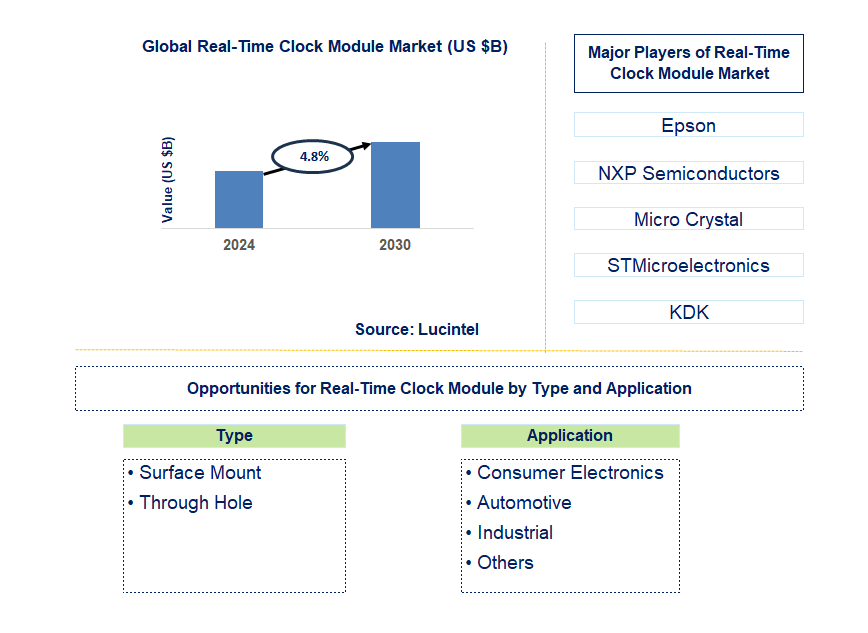
Country Wise Outlook for the Real-Time Clock Module Market
The market for the RTC module is dramatically changing, with developments influenced by both technological and demand conditions based on different sectors; integration of RTC modules is necessary for timekeeping accuracy in electronic devices, such as co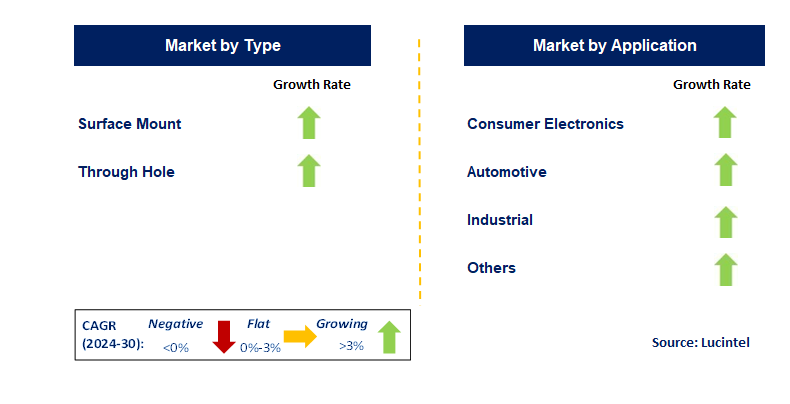
Emerging Trends in the Real-Time Clock Module Market
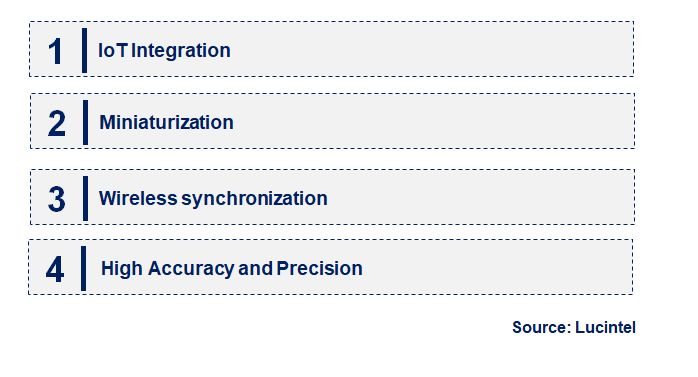
Emerging trends in the real-time clock (RTC) module market stem from technological changes and shifts in the market. This piece aims to outline the development of the landscape, including the direction taken by industry trends. Understanding these trends will enable stakeholders to better navigate this emerging market and quickly seize new opportunities.• IoT Integration: In the IoT sector, RTC modules are increasingly adopted in devices to offer precise timekeeping and synchronization capabilities. This integration ensures that data logging and communication maintain accurate timestamps. From smart home appliances to industrial sensor applications, RTC modules enhance system integrity and operational efficiency.
• Miniaturization: Miniaturization primarily occurs due to the demand for compact and space-efficient components in modern electronic devices. The miniaturization of RTC modules allows integration into thin or limited-area devices, such as smartphones and compact sensors. This trend increases design flexibility and opens opportunities for innovative designs.
• Wireless Synchronization: The design of RTC modules featuring wireless time synchronization implies less cable usage and greater flexibility. This trend is particularly beneficial for applications where traditional wired synchronization methods are impractical. Overall, user experience improves with this form of synchronization, along with integration into networked systems.
• High Accuracy and Precision: With the rising need for accurate timekeeping across various applications, these modules are now designed for high accuracy. They find critical applications in areas requiring precise time synchronization, such as telecommunications, automotive systems, and data centers. Improved accuracy enhances system performance and reliability in these sectors. The trends in the RTC module market, as recognized by industry professionals, redefine how the market is understood. They bring technological advancements coupled with multifaceted application uses. This includes concepts such as IoT integration, low power consumption, miniaturization, high precision, and wireless synchronization, which usher in more complex and diversified timekeeping solutions.
Recent Developments in the Real-Time Clock Module Market
The RTC module market has witnessed several significant trends that have impacted its direction. Emerging technologies, novel applications, and industry practices are some of the trends influencing the market. Understanding these major trends provides insight into the future of the market and the eventual emergence of these trends.• Advanced Semiconductor Technology: Advances in semiconductor technology enable the manufacture of high-precision and reliable RTC modules. New materials and improved manufacturing techniques enhance module longevity and accuracy, while durability is essential for applications demanding such reliability.
• Better Power Efficiency: The latest RTC modules are designed with a low consumption profile that extends the battery life in portable and wearable devices. Low power design innovations allow RTC modules to operate at minimal consumption levels, increasingly important in consumer electronics and IoT battery-operated devices.
• Integration with Smart Devices: RTC modules are now being integrated into a wide range of smart devices, from home automation systems to wearable technology. This integration is driven by the need for precise timekeeping and synchronization in connected devices, facilitating improved functionality and user experience.
• Development of Wireless RTC Modules: The development of wireless RTC modules allows for easy synchronization without the need for wired connections. This development enhances the flexibility and convenience of using RTC modules, particularly where traditional synchronization methods are considered impractical.
• Regulatory Compliance and Standards: Regulatory compliance and standards for RTC modules have become increasingly important. New regulations and standards regarding the quality and performance of RTC modules ensure safety, compelling manufacturers to produce products that meet stricter standards. These key trends significantly impact the RTC module market by advancing technologies, achieving efficiency, and expanding applications. Furthermore, advancements in semiconductor technology related to power efficiency, smart device integration, wireless capabilities, and regulatory compliance are revolutionizing RTC modules and driving innovation in the industry.
Strategic Growth Opportunities for Real-Time Clock Module Market
The RTC module market offers potential for strategic growth across various applications. This potential is nurtured through emerging technological requirements and expanding market segments. Identifying and exploiting these opportunities can help stakeholders capitalize on the emerging trends in the RTC module market.• Consumer Electronics: Smart devices, including smartphones, tablets, and wearables, are among the fastest-growing markets for RTC modules. The increasing dependence of new-generation devices on accurate timekeeping and synchronization implies a growing need for advanced RTC solutions, making these units more valuable and user-friendly for end users.
• Automotive Industry: In the automotive sector, RTC modules are crucial for applications such as advanced driver-assistance systems (ADAS) and infotainment systems. The demand for connected and autonomous vehicles will increase the need for high-precision RTC modules with accurate timekeeping and synchronization capabilities in automotive electronics.
• Industrial Automation: RTC modules will play a fundamental role in industrial automation by providing precise timekeeping in various processes. As implementations based on Industry 4.0 and smart manufacturing emerge, the use of RTC modules for real-time data logging, equipment monitoring, and system synchronization is set to enhance overall operational efficiency.
• Medical Devices: New medical equipment and devices are being developed that use RTC modules for accurate time-stamping and data logging. Telemedicine and connected health devices represent the next wave of growth that requires RTC modules to support patient monitoring, diagnostic tools, and wearable health technology.
• Smart Home Systems: Smart home technology is creating significant demand for RTC modules in home automation systems. Key applications include scheduling, automation routines, and synchronization activities involving multiple smart devices to enhance their functionality and convenience in smart homes. Strategic growth opportunities in the RTC module market are expanding across consumer electronics, automotive, industrial automation, healthcare, and smart home systems. These applications can be leveraged to meet the growing needs for advanced timekeeping solutions, driving growth within the RTC module industry.
Real-Time Clock Module Market Driver and Challenges
Factors influencing the growth of the real-time clock (RTC) module market are diverse, encompassing technological developments, economic factors, and regulatory requirements. The drivers include technological advancements and growing demand across various industries, which influence the market's growth profile. Challenges arise from competition and supply chain constraints. Therefore, it is imperative to understand these dynamics so stakeholders can position themselves effectively to navigate the market and make strategic decisions based on growth opportunities while mitigating potential risks. The factors responsible for driving the RTC module market include:• Technological Advancements: Advances in semiconductor technology and miniaturization continue to propel the RTC module market. Advanced materials and manufacturing processes are enhancing precision, reliability, and power efficiency in RTC modules. For instance, low-power designs in RTC modules allow portable or wearable devices to achieve longer battery life. This technological progress supports the growing need for accurate and durable timekeeping solutions across various applications.
• Proliferation of Consumer Electronics: The increasing use of smartphones, tablets, and wearables drives demand for RTC modules. The adoption of these devices creates an insatiable need for accurate timekeeping to ensure proper functioning, leading to market growth for RTC modules. Enhanced synchronization and user experience contribute to value creation in consumer electronics, accelerating sector growth.
• Automotive Electronics Expansion: Changes in the automotive industry related to ADAS and connected vehicles require RTC modules. Such systems demand high-accuracy timekeeping to ensure functionality and safety. Consequently, the development of reliable and precise RTC modules is critical as automotive technology continues to advance.
• Regulatory Standards: The rise in regulatory requirements and standards for electronic components shapes RTC module market demand. Compliance with these standards ensures that safety, quality, and performance benchmarks are met in RTC modules. Regulatory bodies are implementing stricter guidelines, fostering innovation and enhancing product quality, thus providing a strategic advantage in response to new regulations. Challenges in the RTC module market include:
• High Competition: The RTC module market is highly competitive, with numerous players vying for market share. This competitive landscape often leads to price pressures, necessitating continuous innovation to differentiate products. Companies must invest in research and development to stay ahead of competitors, which can affect profitability and market dynamics.
• Supply Chain Disruptions: Global supply chain disruptions, raw material shortages, and production delays significantly impact the RTC module market. Rising product costs due to increased production expenses and delays in product availability are notable consequences of these disruptions. Companies must refine supply chain management and adopt alternative sourcing strategies to mitigate these risks.
• Technological Complexity: The modular nature of RTCs adds complexity to supporting technologies. This complexity poses challenges in development, manufacturing, and integration into other systems. Manufacturers must commit to sophisticated technologies and expertise to produce reliable and functional RTC modules. A combination of drivers and challenges shapes the RTC module market. Market drivers include technological innovations, growth in consumer electronics, advancements in automotive electronics, and evolving regulatory standards. Major challenges consist of high competition, supply chain disruptions, and technical complexities. Balancing these drivers and challenges enables stakeholders to identify growth opportunities and navigate the market effectively. By focusing on these factors, companies can enhance their strategies and position themselves favorably in the emerging RTC module sector.
List of Real-Time Clock Module Companies
Companies in the market compete on the basis of product quality offered. Major players in this market focus on expanding their manufacturing facilities, R&D investments, infrastructural development, and leverage integration opportunities across the value chain. Through these strategies real-time clock module companies cater increasing demand, ensure competitive effectiveness, develop innovative products & technologies, reduce production costs, and expand their customer base. Some of the real-time clock module companies profiled in this report include-• Epson
• NXP Semiconductors
• Micro Crystal
• STMicroelectronics
• KDK
• Shenzhen Wave Electronic
• DAPU
Real-Time Clock Module by Segment
The study includes a forecast for the global real-time clock module by type, application, and region.Real-Time Clock Module Market by Type [Analysis by Value from 2018 to 2030]:
• Surface Mount
• Through Hole
Real-Time Clock Module Market by Application [Analysis by Value from 2018 to 2030]:
• Consumer Electronics
• Automotive
• Industrial
• Others
Real-Time Clock Module Market by Region [Analysis by Value from 2018 to 2030]:
• North America
• Europe
• Asia Pacific
• The Rest of the World
Real-Time Clock Module Market Insights
• Lucintel forecasts that surface mount technology is expected to witness the highest growth over the forecast period.
• Within this market, consumer electronics are expected to witness the highest growth over the forecast period.
• APAC is expected to experience the highest growth over the forecast period.

Features of the Global Real-Time Clock Module Market
Market Size Estimates: Real-time clock module market size estimation in terms of value ($B). Trend and Forecast Analysis: Market trends (2018 to 2023) and forecast (2024 to 2030) by various segments and regions. Segmentation Analysis: Real-time clock module market size by type, application, and region in terms of value ($B). Regional Analysis: Real-time clock module market breakdown by North America, Europe, Asia Pacific, and Rest of the World. Growth Opportunities: Analysis of growth opportunities in different types, applications, and regions for the real-time clock module market. Strategic Analysis: This includes M&A, new product development, and competitive landscape of the real-time clock module market. Analysis of competitive intensity of the industry based on Porter’s Five Forces model.
FAQ
Q1. What is the growth forecast for real-time clock module market? Answer: The global real-time clock module market is expected to grow with a CAGR of 4.8% from 2024 to 2030. Q2. What are the major drivers influencing the growth of the real-time clock module market? Answer: The major drivers for this market are growing adoption of automation & smart technologies and increasing demand for accurate timekeeping in various electronic devices. Q3. What are the major segments for real-time clock module market? Answer: The future of the real-time clock module market looks promising with opportunities in the consumer electronic, automotive, and industrial markets. Q4. Who are the key real-time clock module market companies? Answer: Some of the key real-time clock module companies are as follows:• Epson
• NXP Semiconductors
• Micro Crystal
• STMicroelectronics
• KDK
• Shenzhen Wave Electronic
• DAPU Q5. Which real-time clock module market segment will be the largest in future? Answer: Lucintel forecasts that surface mount is expected to witness the higher growth over the forecast period. Q6. In real-time clock module market, which region is expected to be the largest in next 5 years? Answer: APAC is expected to witness highest growth over the forecast period. Q.7 Do we receive customization in this report? Answer: Yes, Lucintel provides 10% customization without any additional cost.
Table of Contents
Methodology
- In-depth interviews of the major players in this market
- Detailed secondary research from competitors’ financial statements and published data
- Extensive searches of published works, market, and database information pertaining to industry news, company press releases, and customer intentions
- A compilation of the experiences, judgments, and insights of Lucintel’s professionals, who have analyzed and tracked this market over the years.


Buy Now
Choose a license that fits your team. Instant PDF delivery.
Prices exclude taxes. Instant delivery. Custom licensing available on request.
Key Questions
- • What are some of the most promising, high-growth opportunities for the real-time clock module market by type (surface mount and through hole), application (consumer electronics, automotive, industrial, and others), and region (North America, Europe, Asia Pacific, and the Rest of the World)?
- • Which segments will grow at a faster pace and why?
- • Which region will grow at a faster pace and why?
- • What are the key factors affecting market dynamics? What are the key challenges and business risks in this market?
- • What are the business risks and competitive threats in this market?
- • What are the emerging trends in this market and the reasons behind them?
- • What are some of the changing demands of customers in the market?
- • What are the new developments in the market? Which companies are leading these developments?
- • Who are the major players in this market? What strategic initiatives are key players pursuing for business growth?
- • What are some of the competing products in this market and how big of a threat do they pose for loss of market share by material or product substitution?
- • What M&A activity has occurred in the last 5 years and what has its impact been on the industry? For any questions related to Real-Time Clock Module Market, Real-Time Clock Module Market Size, Real-Time Clock Module Market Growth, Real-Time Clock Module Market Analysis, Real-Time Clock Module Market Report, Real-Time Clock Module Market Share, Real-Time Clock Module Market Trends, Real-Time Clock Module Market Forecast, Real-Time Clock Module Companies, write Lucintel analyst at email: helpdesk@lucintel.com. We will be glad to get back to you soon.


