
Report Feature
Procurement as a Service Market Trends and Forecast
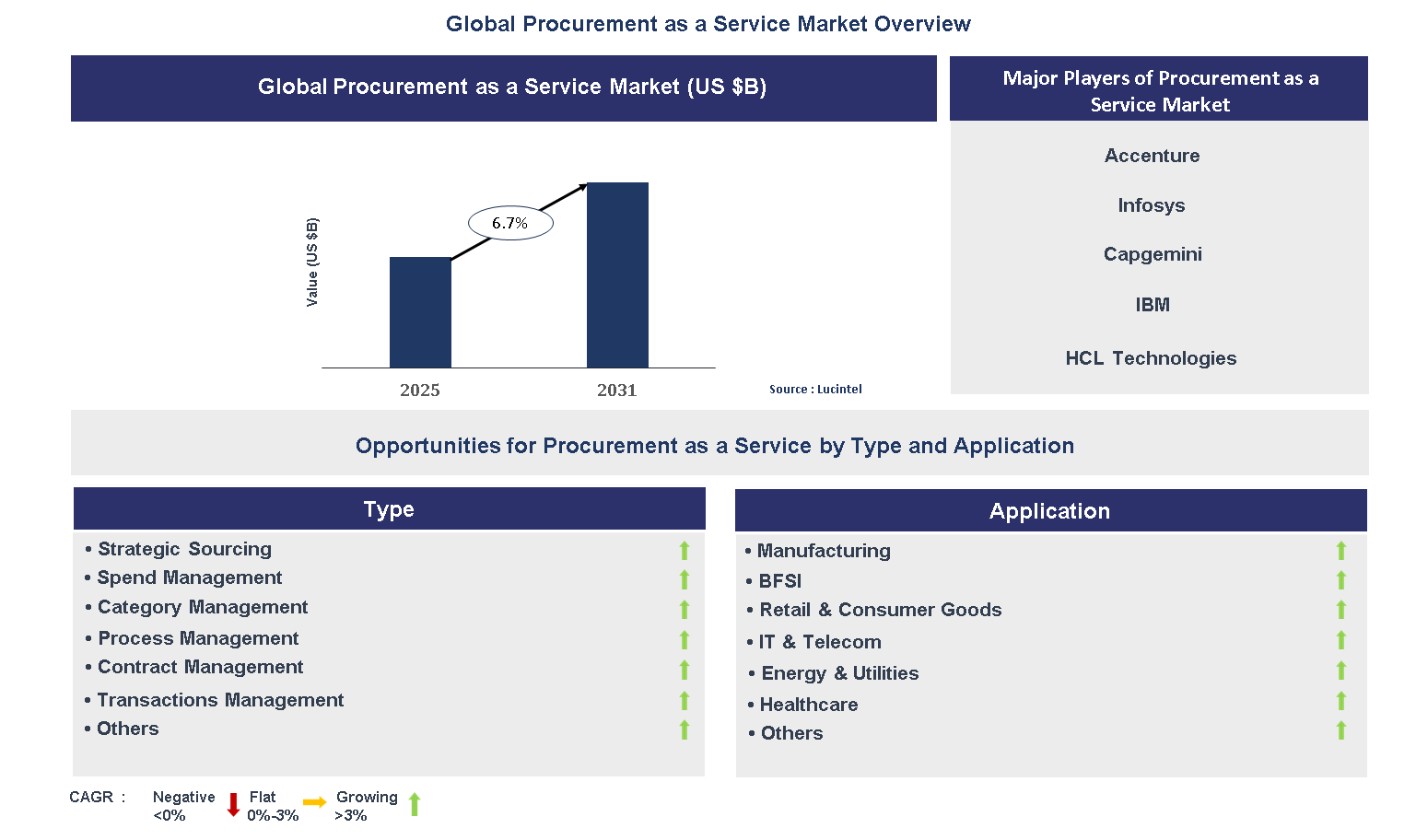
The future of the global procurement as a service market looks promising with opportunities in the manufacturing, BFSI, retail & consumer good, IT & telecom, energy & utility, and healthcare markets. The global procurement as a service market is expected to grow with a CAGR of 6.7% from 2025 to 2031. The major drivers for this market are the increasing demand for cost-efficient procurement solutions, the rising adoption of cloud-based procurement platforms, and the growing focus on streamlining supply chain operations.• Lucintel forecasts that, within the type category, strategic sourcing is expected to witness higher growth over the forecast period.
• Within the application category, healthcare is expected to witness the highest growth.
• In terms of region, APAC is expected to witness the highest growth over the forecast period. Gain valuable insights for your business decisions with our comprehensive 150+ page report. Sample figures with some insights are shown below.
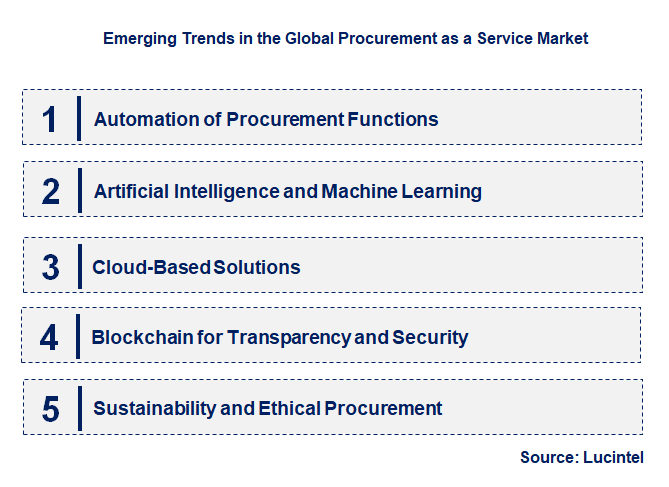
Emerging Trends in the Procurement as a Service Market
The procurement as a service market is being reshaped by emerging trends, as companies increasingly turn to digital solutions to optimize their procurement functions. From automation to AI and blockchain, these trends are helping businesses improve efficiency, transparency, and cost-effectiveness in their procurement processes. Below are five key trends driving these changes.• Automation of Procurement Functions: The widespread adoption of automation tools is reducing manual efforts in procurement processes. By automating tasks like purchase order creation, vendor management, and invoice processing, businesses can focus on strategic decision-making, improving efficiency and reducing human error. Automation is essential for scaling procurement functions and driving cost savings.
• Artificial Intelligence and Machine Learning: AI and ML are transforming procurement strategies by enabling data-driven decision-making. These technologies help businesses analyze vast amounts of procurement data to forecast demand, optimize supplier selection, and predict supply chain disruptions. As these technologies advance, they are becoming more integrated into PaaS solutions, offering a competitive edge.
• Cloud-Based Solutions: Cloud computing continues to be a dominant trend in the PaaS market. With cloud platforms, companies can centralize procurement data, streamline collaboration with suppliers, and reduce infrastructure costs. The scalability, flexibility, and remote access provided by cloud-based solutions are making them essential for modern procurement operations.
• Blockchain for Transparency and Security: Blockchain technology is increasingly being used to ensure transparency, traceability, and security in procurement processes. It allows businesses to securely track transactions, verify supplier credentials, and ensure the integrity of supply chains. As transparency becomes more critical, blockchain adoption within PaaS is expected to grow.
• Sustainability and Ethical Procurement: Sustainability is a growing priority in procurement practices. Companies are integrating sustainability metrics into their procurement decisions, using PaaS solutions to track environmental and social criteria when selecting suppliers. This shift is reshaping the market, as businesses look to align procurement with their broader sustainability goals. These emerging trends are reshaping the procurement as a service market by enhancing efficiency, transparency, and sustainability. The integration of automation, AI, blockchain, and cloud technologies is enabling businesses to streamline operations and stay competitive in a rapidly evolving market. As these trends continue to grow, they will redefine the future of procurement.
Recent Development in the Procurement as a Service Market
The procurement as a service market is undergoing rapid transformation, with key developments influencing how organizations manage procurement. New technologies and evolving business demands are reshaping procurement strategies across industries. The following highlights five key developments driving changes in the PaaS market.• Digital Procurement Transformation: Digital procurement solutions are gaining popularity as businesses move away from manual, paper-based processes. This transition to digital platforms enables faster decision-making, improved supplier collaboration, and better data insights. Companies adopting digital tools are witnessing improved procurement efficiency and cost reduction, leading to more agile operations.
• Advanced Analytics and Data-Driven Decisions: The use of advanced analytics in procurement is enabling businesses to make data-driven decisions that improve supply chain performance. By leveraging predictive analytics and real-time data, organizations can anticipate market shifts, identify cost-saving opportunities, and optimize supplier relationships. This development enhances the strategic value of procurement functions.
• AI-Powered Procurement Solutions: AI is becoming central to procurement as a service, offering predictive insights, automated processes, and enhanced supplier selection. Machine learning algorithms help analyze vast datasets to forecast trends, optimize procurement strategies, and automate repetitive tasks. AI integration leads to more accurate, efficient, and cost-effective procurement decisions.
• Integration with Other Business Functions: PaaS solutions are increasingly being integrated with other business functions such as finance, supply chain, and HR systems. This holistic approach ensures seamless data flow and cross-functional collaboration, enabling organizations to gain a comprehensive view of their operations and make more informed procurement decisions.
• Supplier Collaboration and Relationship Management: Supplier collaboration is a critical focus in the PaaS market. Businesses are shifting toward long-term partnerships with suppliers, utilizing collaborative platforms to manage supplier performance, communicate more effectively, and improve the overall procurement process. Strengthening supplier relationships enhances reliability, reduces costs, and drives innovation. Conclusion: These key developments are driving the transformation of the PaaS market, making procurement functions more efficient, transparent, and aligned with broader business strategies. As digitalization, AI, and advanced analytics continue to shape the industry, businesses will increasingly rely on PaaS solutions to gain competitive advantages and optimize procurement outcomes.
Strategic Growth Opportunities in the Procurement as a Service Market
The procurement as a service market is witnessing significant growth across various applications. As businesses seek to improve procurement efficiency, new opportunities are emerging for providers to innovate and cater to evolving customer needs. Below are five key strategic growth opportunities within the PaaS market.• Small and Medium-Sized Enterprises: SMEs are increasingly adopting PaaS to optimize their procurement functions. Cloud-based and scalable solutions offer cost-effective options for smaller businesses to streamline operations without hefty infrastructure investments. With the rise of SMEs in emerging markets, PaaS providers can target this segment to drive growth and expand their customer base.
• E-Commerce and Retail Sectors: The e-commerce sector presents a massive growth opportunity for PaaS providers. With rapid supply chain shifts, increased demand for faster deliveries, and evolving consumer behavior, retail companies are looking for ways to streamline procurement. PaaS solutions that offer real-time data analytics, supplier management, and demand forecasting are essential for e-commerce growth.
• Healthcare and Life Sciences: In healthcare, procurement efficiency is critical due to regulatory challenges, rising costs, and a need for robust supplier management. PaaS can help healthcare organizations optimize sourcing, reduce inventory costs, and improve compliance with industry standards. This sector represents a strong growth opportunity as healthcare systems worldwide continue to modernize.
• Manufacturing and Industrial Sectors: The manufacturing industry, with its complex supply chains, is increasingly turning to PaaS to improve procurement efficiency and reduce costs. Cloud-based solutions help manufacturers optimize sourcing, manage supplier relationships, and streamline production processes. PaaS providers can tap into this sector by offering tailored solutions that address industry-specific challenges.
• Sustainability and Green Procurement: Sustainability is becoming a top priority for many organizations. PaaS providers offering solutions that help companies integrate sustainability goals into their procurement processes can capitalize on this trend. As businesses strive for greener supply chains and responsible sourcing, PaaS solutions focused on sustainability are expected to see significant demand. These growth opportunities are reshaping the procurement as a service market, with businesses from SMEs to large enterprises increasingly seeking efficient, digital solutions to streamline procurement. Providers that tap into these sectors and address emerging needs like sustainability and efficiency will be well-positioned for long-term growth.
Procurement as a Service Market Driver and Challenges
The procurement as a service market is influenced by a variety of drivers and challenges, including technological advancements, regulatory changes, and evolving economic conditions. Below are the major drivers and challenges that are shaping the future of the PaaS market, with insights into their implications for businesses and stakeholders. The factors responsible for driving the procurement as a service market include: 1. Technological Advancements in Automation: The growing adoption of automation tools is a major driver in the PaaS market. Automation reduces operational costs, enhances speed, and minimizes human error. As companies increasingly look to scale their procurement operations, automation allows for smoother, more efficient processes, driving the adoption of PaaS solutions. 2. Cloud Adoption and Scalability: The shift to cloud-based platforms is another key driver. Cloud technologies offer scalability, flexibility, and cost-efficiency, allowing businesses to centralize their procurement operations and reduce infrastructure costs. The demand for agile, cloud-based solutions is pushing organizations to adopt PaaS models as a way to streamline procurement across regions. 3. Focus on Cost Optimization: Businesses are under constant pressure to reduce operational costs, and procurement functions are no exception. PaaS solutions that offer real-time data, supplier insights, and cost-cutting opportunities are helping companies optimize procurement expenses. Cost reduction remains a primary motivator for companies to adopt PaaS. 4. Regulatory Compliance and Risk Management: Companies are facing stricter regulatory requirements and increased scrutiny over supply chain management. PaaS solutions are helping businesses meet these compliance standards by offering greater transparency, traceability, and documentation throughout the procurement process. This is crucial in industries like healthcare, manufacturing, and finance. 5. Global Supply Chain Management: With businesses increasingly operating in a globalized environment, managing complex supply chains has become a major driver for PaaS adoption. Companies need real-time insights, collaborative platforms, and data analytics to navigate global supply chains efficiently. PaaS offers the tools needed to streamline this complexity and improve global procurement strategies. Challenges in the procurement as a service market are: 1. Data Privacy and Security Concerns: As organizations increasingly adopt digital solutions, data security remains a significant challenge. Protecting sensitive procurement data from cyberattacks and unauthorized access is crucial for the adoption of PaaS solutions. Providers must ensure robust security features to build trust and reduce data privacy risks. 2. Integration with Legacy Systems: Many organizations still rely on legacy procurement systems that may not easily integrate with modern PaaS platforms. This poses a challenge for businesses looking to transition to PaaS while maintaining compatibility with existing infrastructure. The complexity of integration can delay adoption and increase implementation costs. 3. Resistance to Change and Adoption Challenges: Traditional procurement functions and long-standing corporate cultures may resist the adoption of PaaS solutions. Businesses may struggle to shift from manual to digital processes, leading to slower adoption rates. Overcoming internal resistance and training staff are key challenges for successful PaaS implementation. The major drivers and challenges in the PaaS market reveal a complex landscape. While technological advancements, cost optimization, and global supply chain management drive growth, data security, system integration, and resistance to change pose challenges. Overcoming these hurdles will determine the success of PaaS adoption across industries.List of Procurement as a Service Companies
Companies in the market compete on the basis of product quality offered. Major players in this market focus on expanding their manufacturing facilities, R&D investments, infrastructural development, and leverage integration opportunities across the value chain. With these strategies procurement as a service companies cater increasing demand, ensure competitive effectiveness, develop innovative products & technologies, reduce production costs, and expand their customer base. Some of the procurement as a service companies profiled in this report include-• Accenture
• Infosys
• Capgemini
• IBM
• HCL Technologies
• Wipro
• GEP
• Proxima
• Genpact
• WNS
Procurement as a Service Market by Segment
The study includes a forecast for the global procurement as a service market by type, application, and region.Procurement as a Service Market by Type [Value from 2019 to 2031]:
• Strategic Sourcing
• Spend Management
• Category Management
• Process Management
• Contract Management
• Transactions Management
• Others
Procurement as a Service Market by Application [Value from 2019 to 2031]:
• Manufacturing
• BFSI
• Retail & Consumer Goods
• IT & Telecom
• Energy & Utilities
• Healthcare
• Others
Procurement as a Service Market by Region [Value from 2019 to 2031]:
• North America
• Europe
• Asia Pacific
• The Rest of the World
Country Wise Outlook for the Procurement as a Service Market
Procurement as a Service is growing rapidly across the globe, driven by advancements in digital technologies and shifting business demands. As companies focus on cost optimization, efficiency, and global supply chain management, the PaaS market is evolving to meet these needs. Key countries like the U.S., China, Germany, India, and Japan are leading these developments.• United States: Procurement as a Service in the U.S. is evolving with increased automation and artificial intelligence (AI) integration. Leading firms are adopting cloud-based PaaS solutions to streamline procurement processes, reduce costs, and enhance procurement visibility. This trend is supported by a robust tech ecosystem and the need for more efficient supply chain management post-pandemic.
• China: China’s PaaS market is driven by government initiatives aimed at improving digital infrastructure and enhancing supply chain resilience. The focus is on integrating AI and machine learning to optimize sourcing decisions. Companies are also leveraging blockchain technology for better transparency and security in procurement processes. The growing e-commerce sector is a key factor in PaaS adoption.
• Germany: Germany is seeing rapid PaaS adoption, driven by the countrys industrial and manufacturing sectors. The demand for cost-effective, scalable procurement solutions is pushing businesses toward cloud-based platforms. Moreover, the integration of advanced analytics and AI is enhancing decision-making, fostering greater supply chain efficiency. Sustainability and compliance are key concerns in the German market.
• India: In India, PaaS is increasingly seen as a solution to improve procurement efficiency in diverse sectors, including IT, manufacturing, and retail. The market is growing due to a rising number of startups and SMEs adopting digital procurement solutions. India’s growing digitalization and favorable government policies are accelerating the adoption of PaaS, along with cloud and AI-based tools.
• Japan: Japan is focusing on enhancing procurement efficiency through digital transformation, with a strong emphasis on automation and AI tools. The Japanese PaaS market is growing within the manufacturing sector, where companies are adopting intelligent sourcing solutions. With an aging workforce, automation and efficiency gains are driving significant interest in PaaS, especially in the technology and automotive industries.

Features of the Global Procurement as a Service Market
Market Size Estimates: Procurement as a service market size estimation in terms of value ($B). Trend and Forecast Analysis: Market trends (2019 to 2024) and forecast (2025 to 2031) by various segments and regions. Segmentation Analysis: Procurement as a service market size by type, application, and region in terms of value ($B). Regional Analysis: Procurement as a service market breakdown by North America, Europe, Asia Pacific, and Rest of the World. Growth Opportunities: Analysis of growth opportunities in different types, applications, and regions for the procurement as a service market. Strategic Analysis: This includes M&A, new product development, and competitive landscape of the procurement as a service market. Analysis of competitive intensity of the industry based on Porter’s Five Forces model.
FAQ
Q1. What is the growth forecast for procurement as a service market? Answer: The global procurement as a service market is expected to grow with a CAGR of 6.7% from 2025 to 2031. Q2. What are the major drivers influencing the growth of the procurement as a service market? Answer: The major drivers for this market are the increasing demand for cost-efficient procurement solutions, the rising adoption of cloud-based procurement platforms, and the growing focus on streamlining supply chain operations. Q3. What are the major segments for procurement as a service market? Answer: The future of the procurement as a service market looks promising with opportunities in the manufacturing, BFSI, retail & consumer good, IT & telecom, energy & utility, and healthcare markets. Q4. Who are the key procurement as a service market companies? Answer: Some of the key procurement as a service companies are as follows:• Accenture
• Infosys
• Capgemini
• IBM
• HCL Technologies
• Wipro
• GEP
• Proxima
• Genpact
• WNS Q5. Which procurement as a service market segment will be the largest in future? Answer: Lucintel forecasts that, within the type category, strategic sourcing is expected to witness higher growth over the forecast period. Q6. In procurement as a service market, which region is expected to be the largest in next 5 years? Answer: In terms of region, APAC is expected to witness the highest growth over the forecast period. Q7. Do we receive customization in this report? Answer: Yes, Lucintel provides 10% customization without any additional cost.
Table of Contents
List of Figures
List of Tables
Methodology
- In-depth interviews of the major players in this market
- Detailed secondary research from competitors’ financial statements and published data
- Extensive searches of published works, market, and database information pertaining to industry news, company press releases, and customer intentions
- A compilation of the experiences, judgments, and insights of Lucintel’s professionals, who have analyzed and tracked this market over the years.


Buy Now
Choose a license that fits your team. Instant PDF delivery.
Prices exclude taxes. Instant delivery. Custom licensing available on request.
Key Questions
- • What are some of the most promising, high-growth opportunities for the procurement as a service market by type (strategic sourcing, spend management, category management, process management, contract management, transactions management, and others), application (manufacturing, BFSI, retail & consumer goods, IT & telecom, energy & utilities, healthcare, and others), and region (North America, Europe, Asia Pacific, and the Rest of the World)?
- • Which segments will grow at a faster pace and why?
- • Which region will grow at a faster pace and why?
- • What are the key factors affecting market dynamics? What are the key challenges and business risks in this market?
- • What are the business risks and competitive threats in this market?
- • What are the emerging trends in this market and the reasons behind them?
- • What are some of the changing demands of customers in the market?
- • What are the new developments in the market? Which companies are leading these developments?
- • Who are the major players in this market? What strategic initiatives are key players pursuing for business growth?
- • What are some of the competing products in this market and how big of a threat do they pose for loss of market share by material or product substitution?
- • What M&A activity has occurred in the last 5 years and what has its impact been on the industry? For any questions related to Procurement as a Service Market, Procurement as a Service Market Size, Procurement as a Service Market Growth, Procurement as a Service Market Analysis, Procurement as a Service Market Report, Procurement as a Service Market Share, Procurement as a Service Market Trends, Procurement as a Service Market Forecast, Procurement as a Service Companies, write Lucintel analyst at email: helpdesk@lucintel.com. We will be glad to get back to you soon.


