
Report Feature
Phobia Treatment Market Trends and Forecast
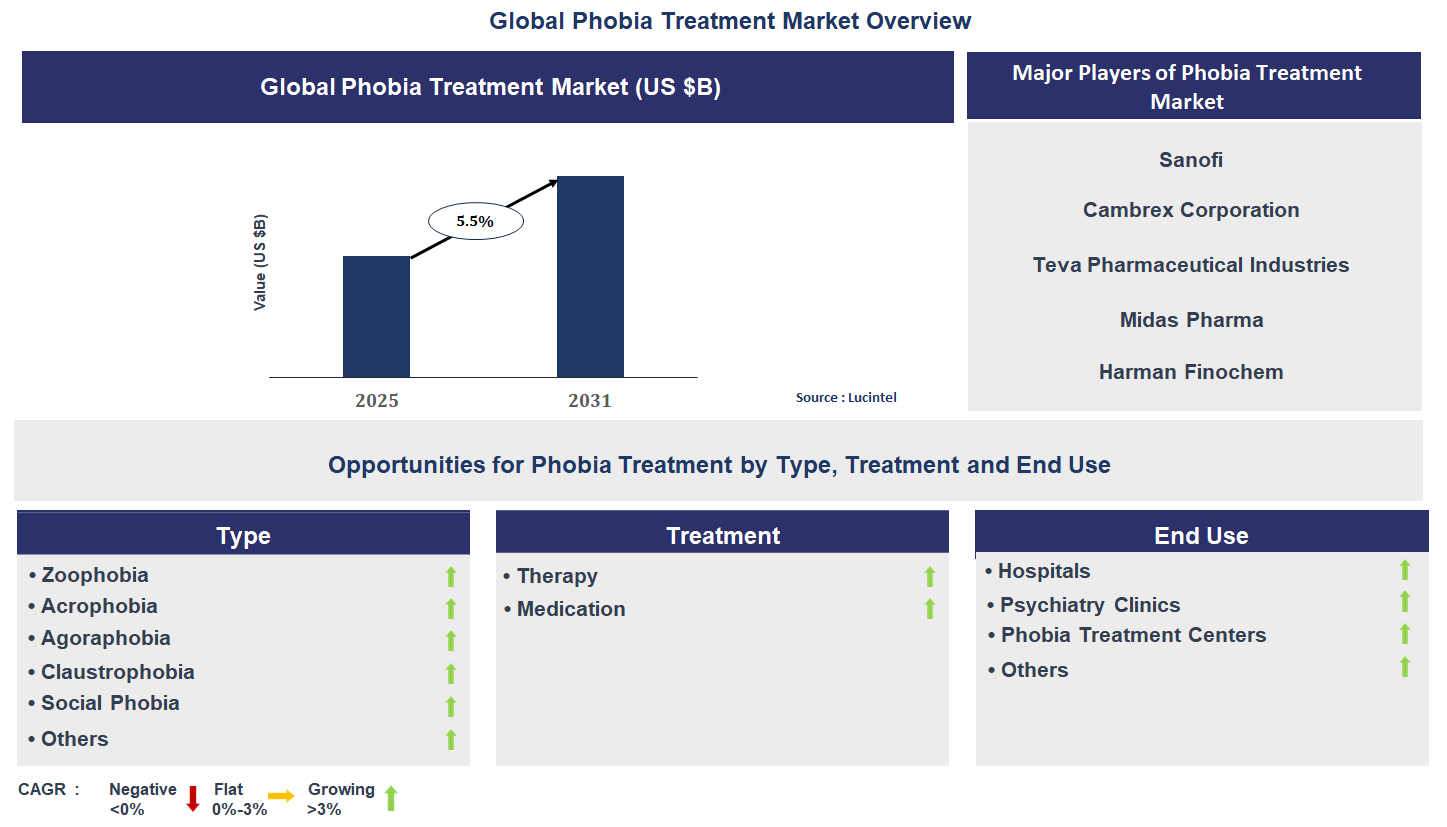
The future of the global phobia treatment market looks promising with opportunities in the hospital, psychiatry clinic, and phobia treatment center markets. The global phobia treatment market is expected to grow with a CAGR of 5.5% from 2025 to 2031. The major drivers for this market are the increasing prevalence of phobic disorders, the rising adoption of teletherapy & virtual counseling, and the growing integration of mindfulness.• Lucintel forecasts that, within the type category, social phobia is expected to witness the highest growth over the forecast period.
• Within the end use category, psychiatry clinic is expected to witness the highest growth.
• In terms of region, APAC is expected to witness the highest growth over the forecast period. Gain valuable insights for your business decisions with our comprehensive 150+ page report. Sample figures with some insights are shown below.
Emerging Trends in the Phobia Treatment Market
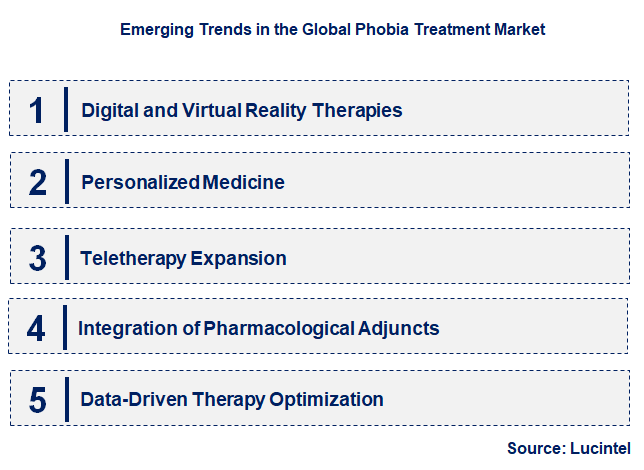
The market for phobia treatment changes with the force of technological, therapeutic, and societal developments, redefining the diagnosis and treatment of disorders. Greater digitalization, individualized medicine, and model care integration are becoming the norm. Developments in virtual reality and mobile health technology, combined with better pharmacological interventions, offer various, accessible, and efficient treatment options. These trends describe a patient-oriented care shift, lowering barriers, and improving therapy outcomes worldwide, thereby determining the future of phobia management.• Digital and Virtual Reality Therapies: Controlled exposure environments via immersive VR treatments enhance therapy tolerability and efficacy, thus expanding patient acceptance and engagement.
• Personalized Medicine: Individualized treatment plans based on psychological profiles and genetic markers maximize therapeutic benefit and patient compliance.
• Teletherapy Expansion: Remote treatment choices enhance accessibility for disadvantaged groups, particularly in geographically remote locations, reducing stigma and logistical obstacles.
• Integration of Pharmacological Adjuncts: New drugs add to behavior therapies to amplify fear extinction, providing supplemental relief for extreme phobia situations.
• Data-Driven Therapy Optimization: Utilization of AI and data analysis assists in tracking progress and dynamically adjusting therapy, optimizing long-term outcomes and cost-effectiveness. These trends collectively optimize treatment accessibility, effectiveness, and patient satisfaction, radically redefining phobia care delivery.
Recent Development in the Phobia Treatment Market
Recent developments in the phobia treatment industry are characterized by technological advancements, new therapeutics, and more efficient service delivery models. These developments evidence a better comprehension of phobia pathology and patient requirements, which has resulted in more efficient and scalable treatments. Industry players emphasize embracing digital health tools, deepening pharmacological advancements, and increased accessibility via telehealth. These advancements are critical to managing the global phobia burden by opening up treatment to become more accessible, tailored, and evidence-based and thus enhancing outcomes and quality of life.• VR and AR Therapy Embrace: The broad clinical acceptance of VR and augmented reality has transformed exposure therapy by enabling secure, replicable, and customizable fear encounter sessions.
• Advances in Pharmacotherapy: Investigation into adjuncts such as glucocorticoids and propranolol seeks to further exposure therapy effectiveness, albeit with inconclusive and ongoing results.
• Teletherapy Expansion: Expanded use of telehealth platforms enables the remote administration of evidence-based treatments, increasing reach.
• AI and Machine Learning: Complex algorithms assist with diagnosis, tracking of progress, and tailoring of treatment, enhancing accuracy.
• Government Mental Health Programs: Expanded funding and policy to counteract stigma fuel broader acceptance and assimilation of phobia treatments across the world. These advances facilitate expanding markets and tailoring treatment approaches worldwide.
Strategic Growth Opportunities in the Phobia Treatment Market
The market for phobia treatment offers several strategic opportunities in applications with respect to patient needs and means of service delivery. The innovations target the extension of therapy modalities, combining technology, and adaptation to phobia types and levels of severity. Opportunities for growth are in improving treatment accessibility, individualized therapy, and cost-effectiveness, allowing players in the market to tap into untapped needs and increasing demand worldwide. Application-based opportunities for growth address diversified patient populations and shifting healthcare environments.• Teletherapy Platforms: Increasing virtual care services enhances accessibility, particularly in distant and underserved areas.
• VR-Assisted Exposure Therapy: Providing scalable and adaptable treatment options increases patient engagement and effectiveness.
• Pharmacological Adjuncts for Severe Cases: Creating new drugs supplements the behavioral therapies in treating complicated cases.
• Mobile Health Apps for Self-Management: Digital applications empower patients with regular support and anxiety management skills.
• Integrated Care Models: Coordination of psychotherapy, pharmacology, and digital intervention enables end-to-end and tailored treatment pathways. These opportunities ride healthcare trends and innovation to expand market reach and enhance patient outcomes.
Phobia Treatment Market Driver and Challenges
The phobia treatment market is driven by several drivers and challenges across technological, economic, and regulatory fronts. Drivers are increased awareness of mental health, developments in digital therapeutics, and increased healthcare investments. Challenges are treatment accessibility gaps, elevated costs, and regulatory intricacies impacting new therapy approvals. Awareness of these factors is needed for stakeholders to navigate market dynamics well and leverage growth potential while overcoming obstacles for maximum impact. The factors responsible for driving the phobia treatment market include: 1. Increasing Mental Health Awareness: Increased public awareness boosts demand for phobia treatment services and decreases stigma. 2. Technological Innovation: Breakthroughs such as VR and telehealth increase treatment availability and accessibility. 3. Government and Private Sector Investment: Investment programs spur research, infrastructure, and service availability. 4. Growing Prevalence of Phobias: Rising rates of diagnosis accelerate the demand for varied and efficient therapies. 5. Growing Digital Therapeutics: Mobile apps and AI-based tools offer low-cost and personalized treatment. Challenges in the phobia treatment market are: 1. Limited Access in Low-Income Areas: Inadequate mental health facilities hinder treatment provision. 2. High Treatment Prices: Economic obstacles limit patient access to cutting-edge treatments. 3. Regulatory Bottlenecks: Overly complicated approval procedures slow new therapy launches. The combination of technological advances and increased awareness is widening the market for treating phobia. Yet challenges like affordability and regulatory complexity need strategic solutions to deliver equitable access and assure long-term innovation. Resolution of these will be essential to optimize the growth of the market and its therapeutic impact.List of Phobia Treatment Companies
Companies in the market compete on the basis of product quality offered. Major players in this market focus on expanding their manufacturing facilities, R&D investments, infrastructural development, and leverage integration opportunities across the value chain. With these strategies phobia treatment companies cater increasing demand, ensure competitive effectiveness, develop innovative products & technologies, reduce production costs, and expand their customer base. Some of the phobia treatment companies profiled in this report include-• Sanofi
• Cambrex Corporation
• Teva Pharmaceutical Industries
• Midas Pharma
• Harman Finochem
• Pfizer
• AstraZeneca
• Eli Lily and Company
• Lupin Limited
• GlaxoSmithKline
Phobia Treatment Market by Segment
The study includes a forecast for the global phobia treatment market by type, treatment, end use, and region.Phobia Treatment Market by Type [Value from 2019 to 2031]:
• Zoophobia
• Acrophobia
• Agoraphobia
• Claustrophobia
• Social Phobia
• Others
Phobia Treatment Market by Treatment [Value from 2019 to 2031]:
• Therapy
• Medication
Phobia Treatment Market by End Use [Value from 2019 to 2031]:
• Hospitals
• Psychiatry Clinics
• Phobia Treatment Centers
• Others
Phobia Treatment Market by Region [Value from 2019 to 2031]:
• North America
• Europe
• Asia Pacific
• The Rest of the World
Country Wise Outlook for the Phobia Treatment Market
The phobia treatment market is witnessing significant growth owing to heightened awareness globally about mental disorders, evolving treatment approaches, and novel technologies. The growth in the market is fueled by widening treatment access to interventions such as cognitive-behavioral therapy (CBT), exposure therapy, virtual reality therapy, and new pharmaceutical adjuncts. Government initiatives, destigmatization of mental illness, and regional healthcare investments further drive the need for successful phobia treatments. These elements are revolutionizing the dynamics of phobia management in nations such as the United States, China, Germany, India, and Japan, resulting in targeted treatment methods and greater adoption of sophisticated technologies in treatment.• United States: The US is leading the way in embracing state-of-the-art treatments like virtual reality exposure therapy (VRET) and teletherapy platforms, which enable easier access and greater patient participation. Increased insurance coverage and government support have made mental healthcare more accessible, allowing for extensive use of CBT and pharmacotherapy. The market is also supported by significant R&D spending targeting new drug adjuncts and technology-based therapies. Notable trends towards customized treatment plans and incorporation of artificial intelligence for diagnosis and therapy tailoring characterize recent developments.
• China: China is fast becoming a significant innovator in leading-edge phobia treatment technology as a result of improved funding for research in mental health and growing healthcare infrastructure. Technology integration, such as mobile health applications and virtual reality therapy, is growing the availability of treatment in urban and rural regions. Government programs promoting mental health education and the de-stigmatization of mental health issues play an important role in market growth. However, the market is challenged in terms of regional inequality in healthcare services.
• Germany: The phobia treatment market in Germany is supported by a well-developed healthcare system prioritizing psychotherapy and evidence-based therapies such as CBT. Germany is developing digital health solutions including VR-assisted therapies approved for clinical use based on stringent regulatory requirements. Early diagnosis and intervention are at the center of public health programs, and multidisciplinary intervention including pharmacological care is becoming increasingly prevalent. The market growth in Germany is consistent due to extensive insurance coverage and continued investments in mental health infrastructure.
• India: Indias market is growing rapidly amidst growing mental health consciousness and rising healthcare spending. Telemedicine and mobile health platforms are the key to bridging treatment access gaps, particularly in rural geographies. Still, affordability and stigma are key constraints. Low-cost treatment models and government-supported mental health initiatives are bridging the gap. Growth is also driven by an increasing prevalence of phobia disorders and demand for CBT and exposure therapies coupled with culturally appropriate modalities.
• Japan: Japan adopts an integrated strategy involving psychotherapy, pharmacotherapy, and newer digital interventions. Growing awareness of the social contribution of mental health has precipitated increased government support for mental health services. Adoption of VR therapy as an adjunctive treatment to standard exposure therapy is becoming popular. Japan is also keen on the creation of fewer side effect pharmacological agents specific to phobic populations. In spite of a very aging population that poses special mental health needs, the market expands steadily with innovation and greater patient outreach.

Features of the Global Phobia Treatment Market
Market Size Estimates: Phobia treatment market size estimation in terms of value ($B). Trend and Forecast Analysis: Market trends (2019 to 2024) and forecast (2025 to 2031) by various segments and regions. Segmentation Analysis: Phobia treatment market size by type, treatment, end use, and region in terms of value ($B). Regional Analysis: Phobia treatment market breakdown by North America, Europe, Asia Pacific, and Rest of the World. Growth Opportunities: Analysis of growth opportunities in different types, treatments, end uses, and regions for the phobia treatment market. Strategic Analysis: This includes M&A, new product development, and competitive landscape of the phobia treatment market. Analysis of competitive intensity of the industry based on Porter’s Five Forces model.
FAQ
Q1. What is the growth forecast for phobia treatment market? Answer: The global phobia treatment market is expected to grow with a CAGR of 5.5% from 2025 to 2031. Q2. What are the major drivers influencing the growth of the phobia treatment market? Answer: The major drivers for this market are the increasing prevalence of phobic disorders, the rising adoption of teletherapy & virtual counseling, and the growing integration of mindfulness. Q3. What are the major segments for phobia treatment market? Answer: The future of the phobia treatment market looks promising with opportunities in the hospital, psychiatry clinic, and phobia treatment center markets. Q4. Who are the key phobia treatment market companies? Answer: Some of the key phobia treatment companies are as follows:• Sanofi
• Cambrex Corporation
• Teva Pharmaceutical Industries
• Midas Pharma
• Harman Finochem
• Pfizer
• AstraZeneca
• Eli Lily and Company
• Lupin Limited
• GlaxoSmithKline Q5. Which phobia treatment market segment will be the largest in future? Answer: Lucintel forecasts that, within the type category, social phobia is expected to witness the highest growth over the forecast period. Q6. In phobia treatment market, which region is expected to be the largest in next 5 years? Answer: In terms of region, APAC is expected to witness the highest growth over the forecast period. Q7. Do we receive customization in this report? Answer: Yes, Lucintel provides 10% customization without any additional cost.
Table of Contents
List of Figures
List of Tables
Methodology
- In-depth interviews of the major players in this market
- Detailed secondary research from competitors’ financial statements and published data
- Extensive searches of published works, market, and database information pertaining to industry news, company press releases, and customer intentions
- A compilation of the experiences, judgments, and insights of Lucintel’s professionals, who have analyzed and tracked this market over the years.


Buy Now
Choose a license that fits your team. Instant PDF delivery.
Prices exclude taxes. Instant delivery. Custom licensing available on request.
Key Questions
- • What are some of the most promising, high-growth opportunities for the phobia treatment market by type (zoophobia, acrophobia, agoraphobia, claustrophobia, social phobia, and others), treatment (therapy and medication), end use (hospitals, psychiatry clinics, phobia treatment centers, and others), and region (North America, Europe, Asia Pacific, and the Rest of the World)?
- • Which segments will grow at a faster pace and why?
- • Which region will grow at a faster pace and why?
- • What are the key factors affecting market dynamics? What are the key challenges and business risks in this market?
- • What are the business risks and competitive threats in this market?
- • What are the emerging trends in this market and the reasons behind them?
- • What are some of the changing demands of customers in the market?
- • What are the new developments in the market? Which companies are leading these developments?
- • Who are the major players in this market? What strategic initiatives are key players pursuing for business growth?
- • What are some of the competing products in this market and how big of a threat do they pose for loss of market share by material or product substitution?
- • What M&A activity has occurred in the last 5 years and what has its impact been on the industry? For any questions related to Phobia Treatment Market, Phobia Treatment Market Size, Phobia Treatment Market Growth, Phobia Treatment Market Analysis, Phobia Treatment Market Report, Phobia Treatment Market Share, Phobia Treatment Market Trends, Phobia Treatment Market Forecast, Phobia Treatment Companies, write Lucintel analyst at email: helpdesk@lucintel.com. We will be glad to get back to you soon.


