
Report Feature
Phenylalanine Market Trends and Forecast
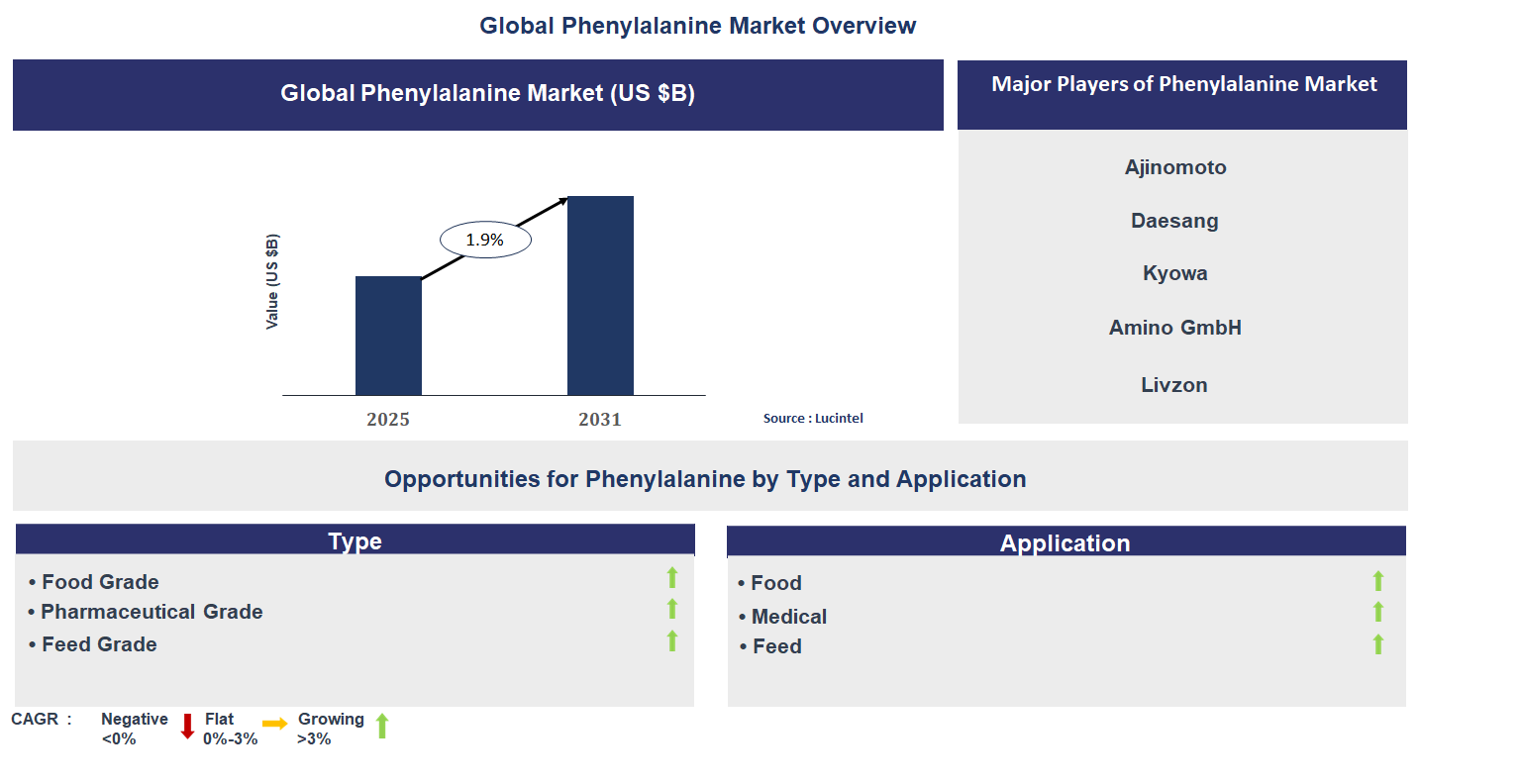
The future of the global phenylalanine market looks promising with opportunities in the food, medical, and feed markets. The global phenylalanine market is expected to grow with a CAGR of 1.9% from 2025 to 2031. The major drivers for this market are the increasing demand for low-calorie & sugar-free products, the rising use of phenylalanine in pharmaceuticals, and the growing consumer awareness of amino acid health benefits.• Lucintel forecasts that, within the type category, pharmaceutical grade is expected to witness the highest growth over the forecast period.
• Within the application category, food is expected to witness the highest growth.
• In terms of region, APAC is expected to witness the highest growth over the forecast period. Gain valuable insights for your business decisions with our comprehensive 150+ page report. Sample figures with some insights are shown below.
Emerging Trends in the Phenylalanine Market
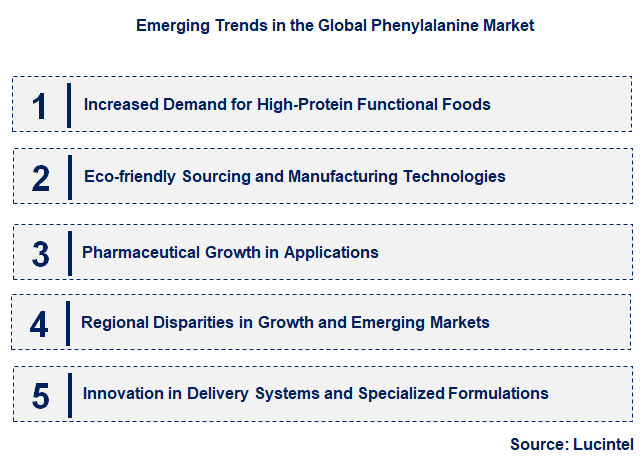
The market for phenylalanine is changing with a number of major trends transforming its profile. Growing consumer interest in health and wellness supports demand for low-calorie, high-protein functional foods with phenylalanine content. Sustainability programs encourage producers to implement environmentally friendly sourcing and manufacturing. Growth in pharmaceutical and nutraceutical applications prioritizes high purity and improved bioavailability of phenylalanine.• Increased Demand for High-Protein Functional Foods: Phenylalanine application in aspartame and protein-fortified products addresses consumer need for more nutritious food choices, dramatically widening market potential.
• Eco-friendly Sourcing and Manufacturing Technologies: Emphasis on reducing environmental footprint compels companies to invest in more environmentally friendly fermentation processes and sustainable procurement of raw materials, enhancing brand value and regulatory acceptance.
• Pharmaceutical Growth in Applications: Growing application in therapeutic peptides and nutraceuticals propels growth in pharmaceutical-grade phenylalanine with enhanced purity and bioavailability, increasing market value.
• Regional Disparities in Growth and Emerging Markets: Rapid growth in Asia-Pacific markets is fueled by economic advancement and health consciousness, which offers huge-scale opportunities for manufacturers and suppliers.
• Innovation in Delivery Systems and Specialized Formulations: Innovation in new phenylalanine formulation optimized for absorption and crafted to each persons nutritional requirements evidences the market trend toward personalization. These trends together heighten global market competition and innovation, paving the way for sustainable expansion and diversification of applications around the world.
Recent Development in the Phenylalanine Market
The phenylalanine market, propelled by its critical position as an amino acid in drug products, dietary supplements, and as a precursor for the artificial sweetener aspartame, is experiencing dynamic expansion. Recent trends are aimed at improving production efficiency, broadening application scope, and strategic consolidation amongst major players. The increasing demand in the global market for wellness and health products, such as sports nutrition and cognitive health supplements, strongly drives this market growth.• Strategic Joint Ventures and Partnerships: The creation of joint ventures, like the one between BASF SE and Daesung Corporation in April 2024 to enhance production and distribution, reflects the trend toward market consolidation and supply chain optimization. The partnership seeks to maximize the strengths of the established players, providing a secure and increased supply of high-quality phenylalanine. The effect is a robust global supply chain, enhanced capacity for production, and improved competitive efficiency, ultimately contributing to fulfilling the rising demand of end-use industries such as food and pharmaceuticals.
• Introduction of Novel Enzyme-Based Production Technology: Evonik Industries AGs launch in March 2024 of a new enzyme-based technology for phenylalanine manufacturing represents a huge technology leap. The new technology is said to create a more sustainable, cost-efficient, and eco-friendly production process than conventional chemical synthesis or fermentation. The result is a possible cost reduction for manufacturing, a cleaner environmental profile, and the potential to manufacture high-purity phenylalanine on a cost-effective basis, which is important for the pharmaceutical and premium nutraceutical industries.
• Expansion in Dietary Supplements and Nutraceuticals: The market has experienced a significant growth of phenylalanine, especially L-phenylalanine, in dietary supplements for mental wellness, mood improvement, and brain function. This is precipitated by increasing world consciousness regarding mental health and the widespread nature of anxiety and depression. The effect is a huge diversification of the use base outside aspartame manufacturing, producing a high-value, rapidly expanding segment.
• Increasing Dominance of High-Purity Grade Phenylalanine: The High Purity Phenylalanine (99%+) segment holds more than 53% of market share, reflecting robust demand shift towards pharmaceutical and specialized nutritional uses. This is a result of stricter regulatory standards and the necessity of accuracy in drug development and medical food specialization, like that for the control of Phenylketonuria (PKU). The result is emphasis on quality control and high-technology purification methods by manufacturers, leading to higher profitability in the high-end segment and requiring ongoing research and development investment in purity and uniformity.
• Integration into Animal Feed Formulations: The increased global demand for quality animal protein has hastened the application of phenylalanine in animal feed, especially for cattle, swine, and poultry, to maximize growth, muscle strength, and general livestock well-being. Phenylalanines status as an essential amino acid in animal nutrition is now better understood. The effect is a volume-driven and stable use in the agricultural business, providing resistance to the entire market. This tool is essential for producers with an emphasis on bulk-level, commodity-quality manufacturing. These advances are collectively reshaping the phenylalanine market from a predominantly aspartame-led commodity to a diversified, value-added ingredient market. The technological transition to enzymatic manufacturing and partnership strategies are boosting supply and cost-efficiency. At the same time, emphasis on high-purity grades and growth into high-growth applications such as mental health supplements and specialized animal nutrition are generating higher revenue, encouraging innovation, and promoting the markets strong sustainable growth across various end-use industries.
Strategic Growth Opportunities in the Phenylalanine Market
The future growth of the phenylalanine market depends on leveraging strategic opportunities across its wide range of applications, expanding beyond generic usage to satisfy niche, high-growth requirements. The central strategy is value-addition, product differentiation, and geographic expansion. As consumer trends worldwide shift toward health-oriented decisions, functional foods, and medical treatments, the future for phenylalanine as a multi-functional, essential amino acid looks particularly promising for profound market penetration.• Functional Foods and Beverages: The potential is in incorporating L-phenylalanine into functional foods and health-oriented beverages promoting mood-enhancing and cognitive function benefits. With more consumers looking for natural means of stress relief and focus improvement, phenylalanine-enhanced products such as energy drinks, protein bars, and smart snacks are coveted items. This capitalizes on the amino acids status as a precursor to neurotransmitters such as dopamine and norepinephrine, leading to the production of high-end, differentiated product lines with higher pricing points and a substantial increase in the markets revenue potential in the mainstream consumer segment.
• Specialty Medical Foods for Phenylketonuria: There is an urgent, albeit specialty, opportunity to develop and market low-phenylalanine medical foods and dietary supplements for the expanding patient population managing PKU. This inborn error of metabolism necessitates a lifelong diet of precisely controlled low-phenylalanine intake. Advances in formula formulation, taste appeal, and convenience (such as ready-to-drink formulations or low-phi protein substitutes) are crucial.
• Advanced Pharmaceutical Formulations: Strategic development is attainable through research and development of D-phenylalanine (DPA) and DL-phenylalanine (DLPA) for pharmaceutical use to counteract chronic pain and certain neurological disorders (such as ADHD or depression). DPA, for example, has shown promise in inhibiting the enzyme that degrades natural pain-suppressing substances (endorphins). This segment has potential for high margins and is powered by the increase in global incidence of chronic pain and mental disorders, requiring focused investment in clinical trials and regulatory approvals.
• Focused Sports and Muscle Recovery Nutrition: Riding the sports nutrition bubble entails formulating L-phenylalanine as a main ingredient in pre- and post-exercise nutritional supplements for muscle protein recovery and synthesis. Being a conditionally essential amino acid, it promotes direct support of muscle repair and growth, which is attracting a broadening demographic of fitness-seekers and professional athletes. The approach involves developing synergistic mixes of other amino acids (BCAAs) and proteins, boosting volume demand for food-grade L-phenylalanine and offering a stable market base, particularly in developed economies with high fitness participation.
• Sustainable, Clean-Label Food Sweeteners: Although aspartame is an established application, one opportunity is to meet the market need for clean-label and sustainable sweeteners by refining the production of aspartames precursor. Improving the fermentation of L-phenylalanine to be non-GMO, organic, or more environmentally friendly can distinguish the end sweetener product. This emphasis secures the long-term relevance and expansion of the largest current application sector by harmonizing with worldwide consumer demand for natural and sustainably produced food ingredients, preserving market share over rival sweeteners. These growth prospects will re-calibrate the value proposition of the phenylalanine market. By concentrating on specialist medical requirements (PKU), high-margin drugs, and high-end consumer markets (functional food, sports nutrition), the market departs from sole dependence on the commodity cost of aspartame. Through this focused strategy, growth will be accelerated in demand for high-purity L- and D-forms, drive innovation in manufacturing and formulation, and ultimately towards a more diversified, robust, and much larger market size with greater profitability.
Phenylalanine Market Driver and Challenges
The global phenylalanine market is at a turning point, its direction influenced by an intersection of technology, economy, and policy factors. Key drivers, namely driven by surging consumer health consciousness and broadening fields of application, are propelling the market towards aggressive expansion. On the other hand, key challenges such as supply chain weakness and regulatory oversight of its derivatives risk dampening this growth. In-depth insight into the dynamics is necessary for market players to develop successful strategies in order to leverage demand while minimizing risks from production, cost, and safety issues. The factors responsible for driving the phenylalanine market include: 1. Rising Demand for Low-Calorie Sweeteners: The single strongest force is the enormous and consistent demand for aspartame, of which phenylalanine is a primary precursor. The worldwide trend of governments and consumers combating diabetes and obesity creates a preference for low-calorie and sugar-free food and beverages. This ongoing high-volume demand from the huge food and beverage sector represents a basic and stable floor demand for commodity-grade L-phenylalanine, equating market growth to the performance of the global artificial sweetener industry. 2. Expansion in the Global Dietary Supplements Market: The wellness and health trend is driving demand for L-phenylalanine in dietary supplements directly. Its status as a precursor to essential neurotransmitters gives it demand in supplements that address cognitive function, mood management, and energy levels. The rising consumer trend in developed economies toward preventive medicine and self-medication for mental wellness creates a high-margin, high-growth niche, causing firms to go the extra mile in terms of product quality and purity. 3. Technological Developments in Bioproduction: The growth of biotechnological production techniques, specifically enzymatic synthesis and optimized fermentation, is pushing the market significantly. Such developments bring with them the promise of increased yield, lower energy requirements, and cheaper manufacturing compared to traditional chemical synthesis pathways. Improved, more sustainable, and efficient production processes have a direct impact on the competitiveness and profitability of the market, making phenylalanine increasingly economically feasible for large-scale, varied industrial application. 4. Growing Use in Animal Feed: The worldwide expansion of meat consumption and interest in livestock health and performance has made phenylalanine a key additive ingredient in animal feed formulations. Being an essential amino acid, it plays a vital role in ensuring maximum growth, muscle development, and general health in poultry and pigs. This use is a keen volume driver tied to worldwide agricultural trends. It represents a stable market for lower-cost, high-volume production, spreading market risk away from exclusive human consumption uses. 5. Growing Incidence and Diagnosis of PKU: Growing awareness, more effective newborn screening programs, and enhanced diagnostic for Phenylketonuria (PKU) worldwide are creating increased demand for specialized, low-phenylalanine medical foods. As a niche market, the need for permanent dietary control for PKU patients guarantees an absolute, consistent demand for specialty, high-purity amino acid materials and derivatives. This segment fuels innovation in specialty nutrition and keeps emphasis on pharmaceutical-grade quality. Challenges in the phenylalanine market are: 1. Regulatory Oversight and Safety Issues with Aspartame: Its greatest challenge comes from repeated regulatory examination and consumer perception problems with aspartame, which represents the majority of L-phenylalanines demand. Though large health organizations tend to confirm its safety, adverse press and precautionary categorizations (such as the WHOs IARC designation as "possibly carcinogenic to humans") have the potential to cause consumer outrage and demands for more stringent labeling. This volatility creates uncertainty in the largest end-user sectors market and puts pressure on the overall market revenue. 2. Unstable Raw Material Prices and Supply Chain Risks: Phenylalanine production tends to be dependent on materials whose price can be unstable, especially in bioproduction processes. Additionally, the market is highly dependent on a handful of large-scale manufacturers, mostly in Asia, with possible concentration risks in supply chains. Geopolitical tensions, trade wars, or extensive disruptions (such as the COVID-19 pandemic) can seriously affect supply continuity and raise operating costs, posing a significant risk to stable pricing and global distribution. 3. Competition from other sweeteners and ingredients: The phenylalanine market is under constant pressure from alternative products in its primary application segments. Within the sweetener space, it is challenged by natural and intense alternatives such as stevia, monk fruit, and sucralose. Within the nutraceutical and functional food sector, other amino acids or natural extracts could gain favor for cognitive or performance advantage. This fierce competition compels manufacturers to keep prices competitive and constantly prove the functional advantage and cost-savings of phenylalanine-containing products. The total impact of these drivers and challenges creates a market with robust underlying growth potential but significant risks. The drivers, especially in health and nutrition, are propelling the market toward greater value, specialist applications and encouraging technological innovation. The challenges, however, led by the regulatory cloud over aspartame and inherent supply chain weaknesses, require market players to focus on diversification, uncompromising quality control, and strategic collaborations.List of Phenylalanine Companies
Companies in the market compete on the basis of product quality offered. Major players in this market focus on expanding their manufacturing facilities, R&D investments, infrastructural development, and leverage integration opportunities across the value chain. With these strategies phenylalanine companies cater increasing demand, ensure competitive effectiveness, develop innovative products & technologies, reduce production costs, and expand their customer base. Some of the phenylalanine companies profiled in this report include-• Ajinomoto
• Daesang
• Kyowa
• Amino GmbH
• Livzon
• Bafeng Pharmaceutical & Chemical Share
• Amino Acid
• Shijiazhuang Jirong Pharmaceutical
• Jiahe Biotech
• Changzhou Guanghui Food Ingredients
Phenylalanine Market by Segment
The study includes a forecast for the global phenylalanine market by type, application, and region.Phenylalanine Market by Type [Value from 2019 to 2031]:
• Food Grade
• Pharmaceutical Grade
• Feed Grade
Phenylalanine Market by Application [Value from 2019 to 2031]:
• Food
• Medical
• Feed
Phenylalanine Market by Region [Value from 2019 to 2031]:
• North America
• Europe
• Asia Pacific
• The Rest of the World
Country Wise Outlook for the Phenylalanine Market
The market for phenylalanine is experiencing strong growth across the world due to increased demand from food and beverage, pharmaceutical, and dietary supplement industries. The demand is being spurred by increased health awareness and the expanded application of phenylalanine as an ingredient in artificial sweeteners such as aspartame. Advances in production technology such as fermentation and bio-production are improving supply efficiency and quality. Regulatory systems across countries are influencing market dynamics by promoting natural and sustainable sources of ingredients.• United States: The United States market is characterized by intense innovation of high-purity pharmaceutical-grade phenylalanine and functional food ingredients. The nation has well-established regulatory frameworks that ensure the application of phenylalanine in cognitive health supplements and low-calorie sweeteners. Manufacturing processes that are cost-effective and environmentally sustainable are the major emphases among producers. The market grows steadily with the rise in consumer awareness of health issues and enhanced demand in therapeutic peptides.
• China: China is a leading manufacturer of phenylalanine through the use of sophisticated fermentation technology and large volumes of manufacturing capacity. Spurred by fast industrialization and increasing middle-class consumption, domestic demand is fueled by dietary supplements and functional foods. More Chinese companies are investing in research for novel derivatives and diversified uses, further solidifying domestic and export markets.
• Germany: Germanys market development focuses heavily on pharmaceutical and nutraceutical uses, emphasizing high-quality and regulatory compliance. German companies prioritize sustainable production technologies and functional food innovations. The country benefits from strong European Union regulations, supporting steady industry growth and investment in biotechnological advancements.
• India: India is witnessing significant market growth because of increased health awareness and growth in the capacity for producing pharmaceuticals. Phenylalanine is being used more extensively in infant nutrition, dietary supplements, and therapeutic applications. Improvements in production efficiency and supply chain infrastructure, along with competitive pricing, make India a major emerging market.
• Japan: Japan is strategically positioned for the production of pharmaceutical-grade phenylalanine, fueled by regulatory standards and consumer demand for health supplements. Growth in the market is fueled by end-use applications in pet foods, antiperspirants, and nutritional supplements. There is a focus on research into bioavailability and targeted formulations by Japanese firms that suit changing trends in health.

Features of the Global Phenylalanine Market
Market Size Estimates: Phenylalanine market size estimation in terms of value ($B). Trend and Forecast Analysis: Market trends (2019 to 2024) and forecast (2025 to 2031) by various segments and regions. Segmentation Analysis: Phenylalanine market size by type, application, and region in terms of value ($B). Regional Analysis: Phenylalanine market breakdown by North America, Europe, Asia Pacific, and Rest of the World. Growth Opportunities: Analysis of growth opportunities in different types, applications, and regions for the phenylalanine market. Strategic Analysis: This includes M&A, new product development, and competitive landscape of the phenylalanine market. Analysis of competitive intensity of the industry based on Porter’s Five Forces model.
FAQ
Q1. What is the growth forecast for phenylalanine market? Answer: The global phenylalanine market is expected to grow with a CAGR of 1.9% from 2025 to 2031. Q2. What are the major drivers influencing the growth of the phenylalanine market? Answer: The major drivers for this market are the increasing demand for low-calorie & sugar-free products, the rising use of phenylalanine in pharmaceuticals, and the growing consumer awareness of amino acid health benefits. Q3. What are the major segments for phenylalanine market? Answer: The future of the phenylalanine market looks promising with opportunities in the food, medical, and feed markets. Q4. Who are the key phenylalanine market companies? Answer: Some of the key phenylalanine companies are as follows:• Ajinomoto
• Daesang
• Kyowa
• Amino GmbH
• Livzon
• Bafeng Pharmaceutical & Chemical Share
• Amino Acid
• Shijiazhuang Jirong Pharmaceutical
• Jiahe Biotech
• Changzhou Guanghui Food Ingredients Q5. Which phenylalanine market segment will be the largest in future? Answer: Lucintel forecasts that, within the type category, pharmaceutical grade is expected to witness the highest growth over the forecast period. Q6. In phenylalanine market, which region is expected to be the largest in next 5 years? Answer: In terms of region, APAC is expected to witness the highest growth over the forecast period. Q7. Do we receive customization in this report? Answer: Yes, Lucintel provides 10% customization without any additional cost.
Table of Contents
List of Figures
List of Tables
Methodology
- In-depth interviews of the major players in this market
- Detailed secondary research from competitors’ financial statements and published data
- Extensive searches of published works, market, and database information pertaining to industry news, company press releases, and customer intentions
- A compilation of the experiences, judgments, and insights of Lucintel’s professionals, who have analyzed and tracked this market over the years.


Buy Now
Choose a license that fits your team. Instant PDF delivery.
Prices exclude taxes. Instant delivery. Custom licensing available on request.
Key Questions
- • What are some of the most promising, high-growth opportunities for the phenylalanine market by type (food grade, pharmaceutical grade, and feed grade), application (food, medical, and feed), and region (North America, Europe, Asia Pacific, and the Rest of the World)?
- • Which segments will grow at a faster pace and why?
- • Which region will grow at a faster pace and why?
- • What are the key factors affecting market dynamics? What are the key challenges and business risks in this market?
- • What are the business risks and competitive threats in this market?
- • What are the emerging trends in this market and the reasons behind them?
- • What are some of the changing demands of customers in the market?
- • What are the new developments in the market? Which companies are leading these developments?
- • Who are the major players in this market? What strategic initiatives are key players pursuing for business growth?
- • What are some of the competing products in this market and how big of a threat do they pose for loss of market share by material or product substitution?
- • What M&A activity has occurred in the last 5 years and what has its impact been on the industry? For any questions related to Phenylalanine Market, Phenylalanine Market Size, Phenylalanine Market Growth, Phenylalanine Market Analysis, Phenylalanine Market Report, Phenylalanine Market Share, Phenylalanine Market Trends, Phenylalanine Market Forecast, Phenylalanine Companies, write Lucintel analyst at email: helpdesk@lucintel.com. We will be glad to get back to you soon.


