
Report Feature
Personalized Nutrition and Supplement Market Trends and Forecast
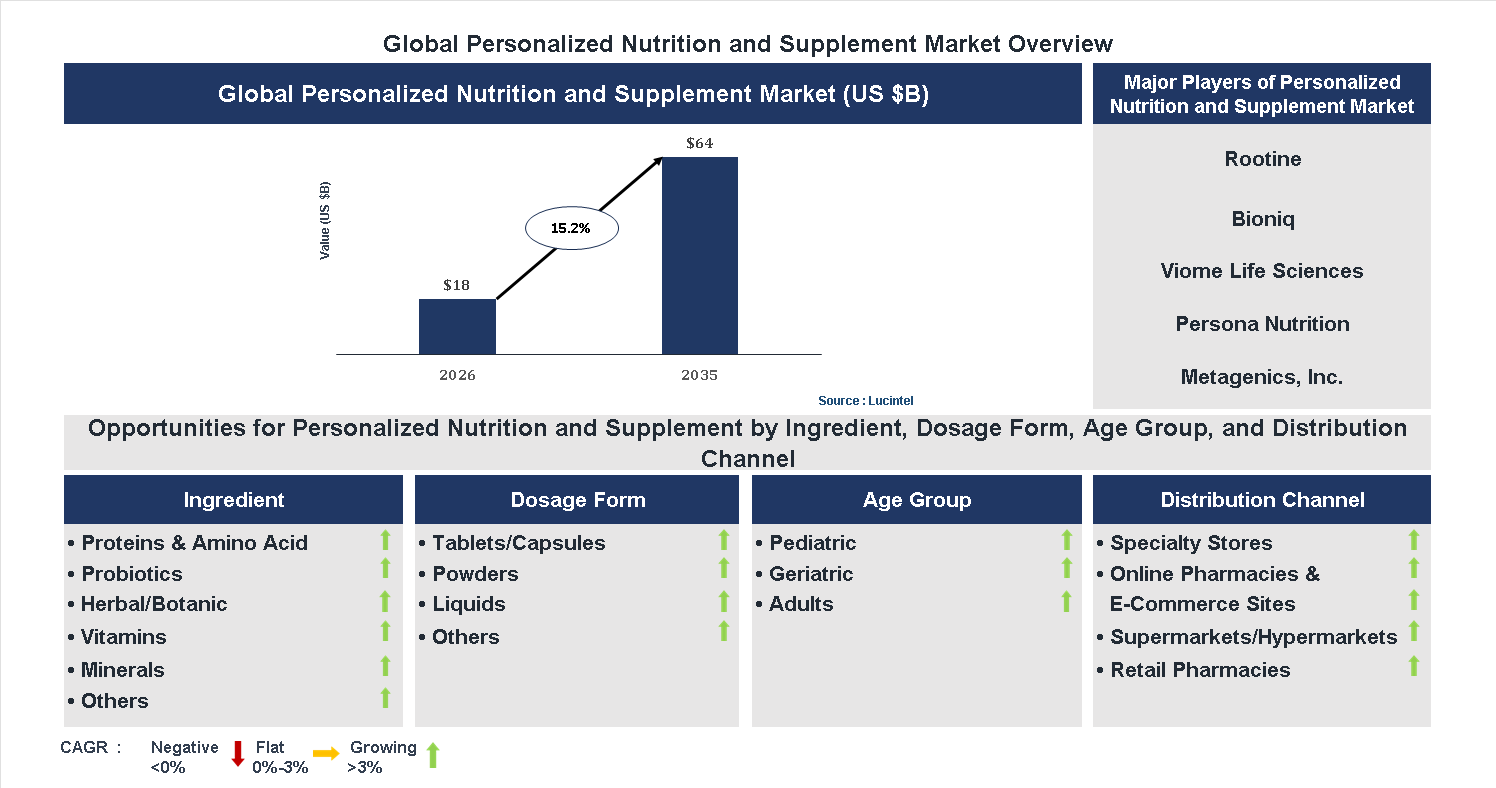
The future of the global personalized nutrition and supplement market looks promising with opportunities in the specialty store, online pharmacy & e-commerce site, supermarket/hypermarket, and retail pharmacy markets. The global personalized nutrition and supplement market is expected to reach an estimated $64 billion by 2035 with a CAGR of 15.2% from 2026 to 2035. The major drivers for this market are the rising preference for personalized diet & nutrition solutions, the increasing demand for immunity boosting nutrition products, and the growing use of health tracking apps & wearable devices.• Lucintel forecasts that, within the ingredient category, vitamin is expected to witness the highest growth over the forecast period.
• Within the distribution channel category, online pharmacy & e-commerce site is expected to witness the highest growth.
• In terms of region, APAC is expected to witness the highest growth over the forecast period. Gain valuable insights for your business decisions with our comprehensive 150+ page report. Sample figures with some insights are shown below.
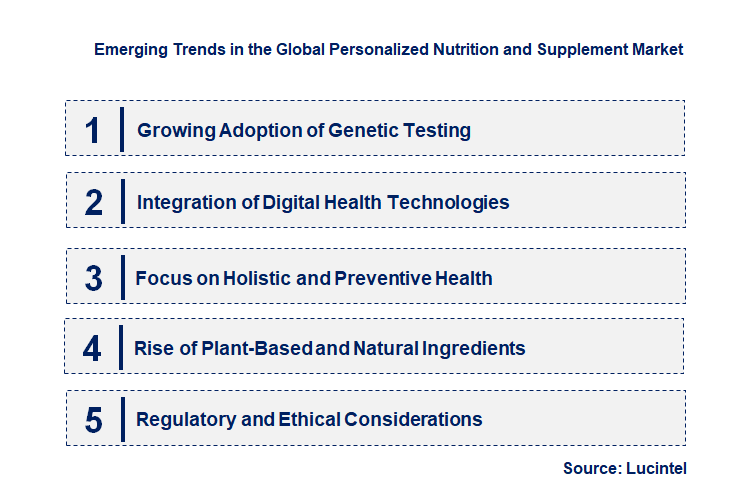
Emerging Trends in the Personalized Nutrition and Supplement Market
The personalized nutrition and supplement market is experiencing rapid growth driven by technological advancements, increasing consumer awareness, and a shift towards health-centric lifestyles. Consumers now seek tailored solutions that address their unique health needs, preferences, and genetic profiles. This shift is transforming traditional supplement offerings into highly individualized products, fostering innovation and competition within the industry. As digital health tools become more accessible, the market is poised for significant expansion, with new players entering and existing companies adapting to meet personalized demands. These developments are fundamentally reshaping how consumers approach health and wellness, emphasizing customization, technology integration, and data-driven insights.• Growing Adoption of Genetic Testing: Increased availability of affordable genetic testing enables consumers to understand their unique health profiles, leading to personalized supplement recommendations. This trend enhances efficacy and consumer trust, fostering a more targeted approach to nutrition. Companies are investing in genetic data analysis to develop tailored products, which improves customer satisfaction and loyalty. The integration of genetic insights into product development is expected to revolutionize the market by making personalized nutrition more precise and accessible.
• Integration of Digital Health Technologies: The rise of mobile apps, wearable devices, and AI-driven platforms allows consumers to monitor their health metrics continuously. These technologies facilitate real-time data collection and analysis, enabling personalized supplement plans that adapt to changing health conditions. Digital tools also improve consumer engagement and adherence to nutrition regimens. As technology becomes more sophisticated, the market will see increased innovation in personalized health management, making tailored nutrition more effective and user-friendly.
• Focus on Holistic and Preventive Health: Consumers are shifting from reactive to proactive health management, emphasizing prevention and overall wellness. Personalized supplements now target specific health concerns such as immunity, gut health, and mental well-being. This trend encourages companies to develop comprehensive solutions that integrate diet, lifestyle, and supplementation. The emphasis on holistic health is expanding market opportunities and driving demand for multifunctional, personalized products that support long-term health goals.
• Rise of Plant-Based and Natural Ingredients: There is a growing preference for plant-based, organic, and natural ingredients in personalized supplements. Consumers seek clean-label products that align with their ethical and health values. This trend influences product formulation, with companies focusing on sustainable sourcing and transparency. The demand for natural personalization options is expanding the market, catering to health-conscious and environmentally aware consumers, and fostering innovation in ingredient sourcing and product development.
• Regulatory and Ethical Considerations: As personalization becomes more sophisticated, regulatory frameworks are evolving to ensure safety, efficacy, and transparency. Ethical concerns around data privacy and genetic information are prompting stricter guidelines and industry standards. Companies are investing in secure data management systems and transparent communication to build consumer trust. Navigating regulatory landscapes will be crucial for market growth, ensuring that personalized nutrition solutions are both innovative and compliant with legal and ethical standards. These trends are reshaping the personalized nutrition and supplement market by making it more consumer-centric, technologically advanced, and ethically responsible. The focus on customization, digital integration, holistic health, natural ingredients, and regulatory compliance is driving innovation and expanding market opportunities. As these developments continue, the industry is poised for sustained growth, transforming how individuals approach health and wellness through personalized solutions.
Recent Development in the Personalized Nutrition and Supplement Market
The personalized nutrition and supplement market is experiencing rapid growth driven by technological advancements, increasing health awareness, and a shift towards individualized healthcare solutions. Consumers now seek tailored products that meet their specific dietary needs, preferences, and health goals. This trend is supported by innovations in data analytics, genetic testing, and digital health platforms, transforming how nutrition is approached. As awareness and accessibility grow, the market is poised for significant expansion, offering new opportunities for companies to develop customized products and services that cater to diverse consumer demands.• Growth in Genetic Testing and Data Analytics: The integration of genetic testing and data analytics enables precise customization of nutrition plans, improving health outcomes and consumer satisfaction. This technological advancement allows companies to analyze individual genetic profiles, dietary habits, and health data to create personalized supplement regimens. As a result, consumers experience more effective health management, fostering loyalty and increasing market demand. The trend also encourages innovation in product development, expanding market reach and competitiveness.
• Rising Consumer Awareness and Demand for Tailored Solutions: Increasing awareness of personalized health benefits is driving consumers to seek customized nutrition options. Consumers are more informed about the importance of individualized diets and supplements for optimal health, wellness, and disease prevention. This demand encourages brands to develop targeted products that address specific health concerns, such as allergies, intolerances, or chronic conditions. The shift towards personalized solutions enhances customer engagement, boosts sales, and accelerates market growth.
• Technological Innovations in Digital Health Platforms: The emergence of digital health platforms and mobile apps facilitates personalized nutrition management. These platforms enable real-time tracking of health metrics, dietary intake, and supplement usage, providing tailored recommendations. They also foster direct consumer engagement and data collection, which further refines product offerings. The integration of AI and machine learning enhances predictive analytics, making personalized nutrition more accessible and effective, thereby expanding market opportunities and consumer trust.
• Expansion of E-commerce and Direct-to-Consumer Channels: The growth of e-commerce and DTC channels has made personalized supplements more accessible to a broader audience. Consumers can now easily purchase customized products online, often with subscription options for convenience. This distribution model reduces costs, increases reach, and allows brands to gather valuable consumer data for further personalization. The ease of access and convenience significantly contribute to market expansion, especially among younger, tech-savvy demographics.
• Regulatory Developments and Standardization Efforts: Evolving regulations and standardization initiatives are shaping the personalized nutrition landscape. Governments and industry bodies are establishing guidelines to ensure product safety, efficacy, and transparency. These developments build consumer confidence and facilitate market entry for new players. Clear regulatory frameworks also promote innovation by providing a structured environment for research and development, ultimately fostering sustainable growth and credibility within the market. The recent developments in genetic testing, consumer awareness, digital platforms, distribution channels, and regulatory standards are collectively transforming the personalized nutrition and supplement market. These advancements are driving innovation, expanding consumer base, and increasing market size, making personalized health solutions more mainstream. As these trends continue, the market is expected to experience sustained growth, offering significant opportunities for industry stakeholders and improving health outcomes globally.
Strategic Growth Opportunities in the Personalized Nutrition and Supplement Market
The personalized nutrition and supplement market is experiencing rapid expansion driven by increasing consumer demand for tailored health solutions. Advances in genomics, data analytics, and wearable technology enable precise customization of dietary plans and supplements. Growing awareness of individual health needs, chronic disease management, and preventive healthcare further fuel this growth. Companies are investing heavily in research and development to offer innovative, personalized products. This evolving landscape presents significant opportunities for market players to capture new customer segments and enhance health outcomes through targeted nutrition strategies.• Customized Nutritional Plans Based on Genetic Data: Personalized nutrition leveraging genetic testing allows consumers to optimize their diets for better health. By analyzing DNA, companies can recommend specific nutrients, food choices, and supplement regimens tailored to individual genetic predispositions. This approach enhances efficacy, reduces adverse reactions, and promotes long-term health management. As genetic testing becomes more accessible, demand for personalized plans is expected to surge, creating a lucrative growth avenue for providers.
• Development of AI-Driven Supplement Formulations: Artificial intelligence enables precise formulation of supplements based on individual health profiles, lifestyle, and biometric data. AI algorithms analyze vast datasets to identify optimal nutrient combinations, dosages, and delivery methods. This technology accelerates product innovation, improves personalization accuracy, and enhances consumer trust. As AI integration deepens, companies can offer highly targeted supplements, expanding market share and addressing unmet needs in personalized health management.
• Expansion of Wearable Devices for Real-Time Health Monitoring: Wearable technology tracks vital signs, activity levels, and biometric data continuously, providing real-time insights into individual health status. This data supports dynamic adjustments to personalized nutrition plans and supplement intake, improving effectiveness. The proliferation of smart devices fosters a more proactive approach to health, enabling consumers to manage their nutrition proactively. Market growth is driven by increasing adoption of wearables and the integration of health data into personalized nutrition strategies.
• Growing Focus on Preventive Healthcare and Chronic Disease Management: Personalized nutrition plays a crucial role in preventing and managing chronic conditions such as diabetes, cardiovascular diseases, and obesity. Tailored dietary interventions can mitigate risk factors and improve health outcomes. Healthcare providers and insurers are increasingly endorsing personalized nutrition as part of preventive care programs. This trend opens new revenue streams for supplement companies and healthcare providers, emphasizing the importance of individualized approaches to long-term health maintenance.
• Integration of Microbiome Analysis for Gut Health Optimization: Microbiome testing offers insights into gut bacteria composition, enabling personalized dietary recommendations to improve digestion and immunity. Customized probiotics and prebiotics are developed based on microbiome profiles, enhancing efficacy. As awareness of gut health’s impact on overall wellness grows, demand for microbiome-based personalized nutrition solutions is expanding. This niche presents significant growth potential, fostering innovation in targeted supplements and dietary strategies tailored to individual microbiota profiles. The overall impact of these opportunities is set to significantly accelerate market growth, foster innovation, and improve health outcomes through highly personalized, data-driven nutrition solutions. Companies that leverage these trends can gain competitive advantages, expand their customer base, and contribute to a more proactive, health-focused society.
Personalized Nutrition and Supplement Market Driver and Challenges
The personalized nutrition and supplement market is influenced by a variety of technological, economic, and regulatory factors. Advances in genomics, data analytics, and wearable technology have enabled tailored health solutions, driving consumer demand for personalized products. Economic factors such as rising healthcare costs and increasing health awareness contribute to market growth. Regulatory frameworks around supplement safety and data privacy also shape industry practices. However, challenges like regulatory uncertainties, high product development costs, and consumer skepticism pose hurdles. Understanding these drivers and challenges is essential for stakeholders to navigate the evolving landscape and capitalize on emerging opportunities effectively. The factors responsible for driving the personalized nutrition and supplement market include:-• Technological Advancements: The integration of genomics, AI, and wearable devices has revolutionized personalized nutrition. These innovations enable precise dietary recommendations based on individual genetic makeup, lifestyle, and health data. As technology becomes more accessible and affordable, consumers increasingly seek tailored solutions, fueling market expansion. Companies investing in R&D to develop sophisticated algorithms and testing methods are gaining competitive advantages. This technological progress not only enhances product efficacy but also fosters consumer trust and engagement, ultimately accelerating market growth.
• Rising Health Awareness and Preventive Care: Consumers are becoming more health-conscious, prioritizing preventive measures over reactive treatments. The desire to optimize health, manage chronic conditions, and improve overall wellness drives demand for personalized supplements. This trend is supported by increased awareness of the role of nutrition in disease prevention and longevity. As individuals seek customized health plans, the market for personalized nutrition products expands, with consumers willing to invest in tailored solutions that align with their unique health goals.
• Demographic Shifts and Aging Population: An aging global population increases the need for specialized nutritional support to manage age-related health issues. Older adults are more prone to chronic diseases and nutritional deficiencies, prompting demand for personalized supplements that address specific health concerns. Additionally, younger generations are more open to adopting innovative health solutions, further expanding the market. These demographic trends create a sustained demand for customized nutrition products, encouraging companies to develop age-specific formulations and targeted marketing strategies.
• Growing E-commerce and Digital Platforms: The proliferation of online retail channels and digital health platforms has made personalized nutrition products more accessible. Consumers can now easily access tailored supplements through direct-to-consumer models, subscription services, and mobile apps. Digital platforms facilitate personalized assessments, product recommendations, and ongoing engagement, enhancing customer experience. This shift not only broadens market reach but also enables companies to gather valuable consumer data, refine offerings, and foster brand loyalty, thereby accelerating market growth. The challenges facing the personalized nutrition and supplement market include:-
• Regulatory Uncertainties: The lack of standardized regulations for personalized supplements and genetic testing creates ambiguity regarding product safety, efficacy, and data privacy. Regulatory bodies are still developing frameworks, which can delay product approvals and market entry. Companies face compliance risks and potential legal liabilities, hindering innovation and investment. Navigating diverse international regulations adds complexity, increasing costs and time-to-market. This uncertainty can dampen consumer confidence and slow overall market growth.
• High Product Development Costs: Developing personalized nutrition products requires significant investment in research, clinical testing, and technology infrastructure. Custom formulations and genetic testing add layers of complexity and expense. Small and medium-sized enterprises may struggle to bear these costs, limiting innovation and market competition. Additionally, ongoing R&D is necessary to stay ahead of scientific advancements, further increasing financial burdens. These high costs can restrict product availability and affordability, impacting consumer access and market expansion.
• Consumer Skepticism and Data Privacy Concerns: Despite growing interest, some consumers remain skeptical about the effectiveness of personalized nutrition and concerned about data security. Trust issues related to genetic data handling and privacy breaches can deter adoption. Misinformation and lack of scientific consensus may also influence consumer perceptions negatively. Overcoming these barriers requires transparent communication, robust data protection measures, and evidence-based claims, which can be resource-intensive. Addressing skepticism is crucial for broader acceptance and sustained market growth. Technological innovations, increasing health consciousness, demographic shifts, and digital accessibility are key drivers propelling the personalized nutrition and supplement market forward. However, regulatory ambiguities, high development costs, and consumer trust issues pose significant challenges. These factors collectively shape the market landscape, requiring stakeholders to balance innovation with compliance and consumer engagement. Navigating these dynamics will determine the pace and sustainability of growth in this evolving industry.
List of Personalized Nutrition and Supplement Companies
Companies in the market compete on the basis of product quality offered. Major players in this market focus on expanding their manufacturing facilities, R&D investments, infrastructural development, and leverage integration opportunities across the value chain. With these strategies personalized nutrition and supplement companies cater increasing demand, ensure competitive effectiveness, develop innovative products & technologies, reduce production costs, and expand their customer base. Some of the personalized nutrition and supplement companies profiled in this report include-• Rootine
• Bioniq
• Viome Life Sciences
• Persona Nutrition
• Metagenics, Inc.
• Fagron Genomics S.L.U.
• DNAfit
• GenoPalate
• Nutrigenomix
• LifeNome
Personalized Nutrition and Supplement Market by Segment
The study includes a forecast for the global personalized nutrition and supplement market by ingredient, dosage form, age group, distribution channel, and region.Personalized Nutrition and Supplement Market by Ingredient [Value from 2019 to 2035]:
• Proteins & Amino Acid
• Probiotics
• Herbal/Botanic
• Vitamins
• Minerals
• Others
Personalized Nutrition and Supplement Market by Dosage Form [Value from 2019 to 2035]:
• Tablets/Capsules
• Powders
• Liquids
• Others
Personalized Nutrition and Supplement Market by Age Group [Value from 2019 to 2035]:
• Pediatric
• Geriatric
• Adults
Personalized Nutrition and Supplement Market by Distribution Channel [Value from 2019 to 2035]:
• Specialty Stores
• Online Pharmacies & E-Commerce Sites
• Supermarkets/Hypermarkets
• Retail Pharmacies
Personalized Nutrition and Supplement Market by Region [Value from 2019 to 2035]:
• North America
• Europe
• Asia Pacific
• The Rest of the World
Country Wise Outlook for the Personalized Nutrition and Supplement Market
The personalized nutrition and supplement market has experienced rapid growth driven by increasing consumer awareness, technological advancements, and a shift towards health-conscious lifestyles globally. As individuals seek tailored health solutions, countries are innovating and adapting to meet these demands through new products, regulations, and research initiatives. The markets evolution reflects a broader trend towards personalized healthcare, integrating data analytics, genetics, and digital health tools. This dynamic landscape varies across regions, influenced by cultural, economic, and regulatory factors, shaping the future of personalized nutrition and supplements worldwide.• United States: The US market has seen significant innovation with the integration of AI and genetic testing to develop personalized supplement plans. Major companies are investing in research to create targeted products based on individual DNA profiles. Regulatory agencies are also updating guidelines to ensure safety and efficacy. The rise of direct-to-consumer testing kits has made personalized nutrition more accessible, fueling market growth. Additionally, there is a growing trend towards plant-based and clean-label supplements, aligning with consumer preferences for transparency and sustainability.
• China: China’s personalized nutrition market is rapidly expanding, driven by a large, health-conscious population and increasing disposable income. Local companies are leveraging advanced biotech and big data analytics to develop customized supplements. Government initiatives support innovation in health tech, fostering collaborations between startups and research institutions. The market is also witnessing a surge in e-commerce platforms offering personalized products, making access easier. Traditional Chinese medicine is increasingly integrated with modern personalized nutrition approaches, creating a unique blend of ancient and modern health solutions.
• Germany: Germany’s market emphasizes scientific validation and regulatory compliance, with a focus on high-quality, evidence-based products. The country is witnessing growth in personalized supplements tailored for specific health conditions such as gut health and immune support. German companies are investing in clinical research to substantiate claims, enhancing consumer trust. The market also benefits from a strong wellness culture and a preference for organic and natural ingredients. Regulatory frameworks are evolving to accommodate personalized nutrition, ensuring safety while encouraging innovation within the industry.
• India: The Indian personalized nutrition market is emerging, driven by rising awareness of health and wellness among urban populations. Local startups are developing affordable, personalized supplement solutions using traditional ingredients combined with modern science. The increasing penetration of smartphones and internet access facilitates direct consumer engagement and e-commerce sales. Government initiatives promoting health and nutrition are supporting market growth. There is also a growing demand for Ayurvedic and herbal supplements, which are being integrated into personalized health plans, reflecting India’s rich traditional medicine heritage.
• Japan: Japan’s market is characterized by a focus on aging populations and preventive health. Companies are developing personalized supplements aimed at improving longevity, cognitive health, and immune function. Advanced technologies such as biomarker analysis and genetic testing are being utilized to customize products. The market benefits from a high level of consumer awareness and a preference for scientifically backed, high-quality products. Regulatory standards are strict, ensuring product safety and efficacy. The integration of traditional Japanese ingredients with modern science is also a notable trend, appealing to health-conscious consumers.

Features of the Global Personalized Nutrition and Supplement Market
Market Size Estimates: Personalized nutrition and supplement market size estimation in terms of value ($B). Trend and Forecast Analysis: Market trends (2019 to 2025) and forecast (2026 to 2035) by various segments and regions. Segmentation Analysis: Personalized nutrition and supplement market size by various segments, such as by ingredient, dosage form, age group, distribution channel, and region in terms of value ($B). Regional Analysis: Personalized nutrition and supplement market breakdown by North America, Europe, Asia Pacific, and Rest of the World. Growth Opportunities: Analysis of growth opportunities in different ingredients, dosage form, age groups, distribution channels, and regions for the personalized nutrition and supplement market. Strategic Analysis: This includes M&A, new product development, and competitive landscape of the personalized nutrition and supplement market. Analysis of competitive intensity of the industry based on Porter’s Five Forces model.
FAQ
Q1. What is the personalized nutrition and supplement market size? Answer: The global personalized nutrition and supplement market is expected to reach an estimated $64 billion by 2035. Q2. What is the growth forecast for personalized nutrition and supplement market? Answer: The global personalized nutrition and supplement market is expected to grow with a CAGR of 15.2% from 2026 to 2035. Q3. What are the major drivers influencing the growth of the personalized nutrition and supplement market? Answer: The major drivers for this market are the rising preference for personalized diet & nutrition solutions, the increasing demand for immunity boosting nutrition products, and the growing use of health tracking apps & wearable devices. Q4. What are the major segments for personalized nutrition and supplement market? Answer: The future of the personalized nutrition and supplement market looks promising with opportunities in the specialty store, online pharmacy & e-commerce site, supermarket/hypermarket, and retail pharmacy markets. Q5. Who are the key personalized nutrition and supplement market companies? Answer: Some of the key personalized nutrition and supplement companies are as follows:• Rootine
• Bioniq
• Viome Life Sciences
• Persona Nutrition
• Metagenics, Inc.
• Fagron Genomics S.L.U.
• DNAfit
• GenoPalate
• Nutrigenomix
• LifeNome Q6. Which personalized nutrition and supplement market segment will be the largest in future? Answer: Lucintel forecasts that, within the ingredient category, vitamin is expected to witness the highest growth over the forecast period. Q7. In personalized nutrition and supplement market, which region is expected to be the largest in next 5 years? Answer: In terms of region, APAC is expected to witness the highest growth over the forecast period. Q8. Do we receive customization in this report? Answer: Yes, Lucintel provides 10% customization without any additional cost.
Table of Contents
List of Figures
List of Tables
Methodology
- In-depth interviews of the major players in this market
- Detailed secondary research from competitors’ financial statements and published data
- Extensive searches of published works, market, and database information pertaining to industry news, company press releases, and customer intentions
- A compilation of the experiences, judgments, and insights of Lucintel’s professionals, who have analyzed and tracked this market over the years.


Buy Now
Choose a license that fits your team. Instant PDF delivery.
Prices exclude taxes. Instant delivery. Custom licensing available on request.
Key Questions
- • What are some of the most promising, high-growth opportunities for the personalized nutrition and supplement market by ingredient (proteins & amino acid, probiotics, herbal/botanic, vitamins, minerals, and others), dosage form (tablets/capsules, powders, liquids, and others), age group (pediatric, geriatric, and adults), distribution channel (specialty stores, online pharmacies & e-commerce sites, supermarkets/hypermarkets, and retail pharmacies), and region (North America, Europe, Asia Pacific, and the Rest of the World)?
- • Which segments will grow at a faster pace and why?
- • Which region will grow at a faster pace and why?
- • What are the key factors affecting market dynamics? What are the key challenges and business risks in this market?
- • What are the business risks and competitive threats in this market?
- • What are the emerging trends in this market and the reasons behind them?
- • What are some of the changing demands of customers in the market?
- • What are the new developments in the market? Which companies are leading these developments?
- • Who are the major players in this market? What strategic initiatives are key players pursuing for business growth?
- • What are some of the competing products in this market and how big of a threat do they pose for loss of market share by material or product substitution?
- • What M&A activity has occurred in the last 7 years and what has its impact been on the industry? For any questions related to Personalized Nutrition and Supplement Market, Personalized Nutrition and Supplement Market Size, Personalized Nutrition and Supplement Market Growth, Personalized Nutrition and Supplement Market Analysis, Personalized Nutrition and Supplement Market Report, Personalized Nutrition and Supplement Market Share, Personalized Nutrition and Supplement Market Trends, Personalized Nutrition and Supplement Market Forecast, Personalized Nutrition and Supplement Companies, write Lucintel analyst at email: helpdesk@lucintel.com. We will be glad to get back to you soon.


