
Report Feature
Payer Services Market Trends and Forecast
The technologies in payer services technology have dramatically changed over the past few years, shifting from on-premise traditional systems to cloud-based platforms, from manual claim processing to AI-driven automation, and from siloed data systems to integrated analytics and interoperability solutions. Furthermore, the adoption of blockchain for secure transactions and digital identities, as well as advanced machine learning for predictive analytics and personalized member experiences, has revolutionized the industry, providing efficiency, cost savings, and better decision-making capabilities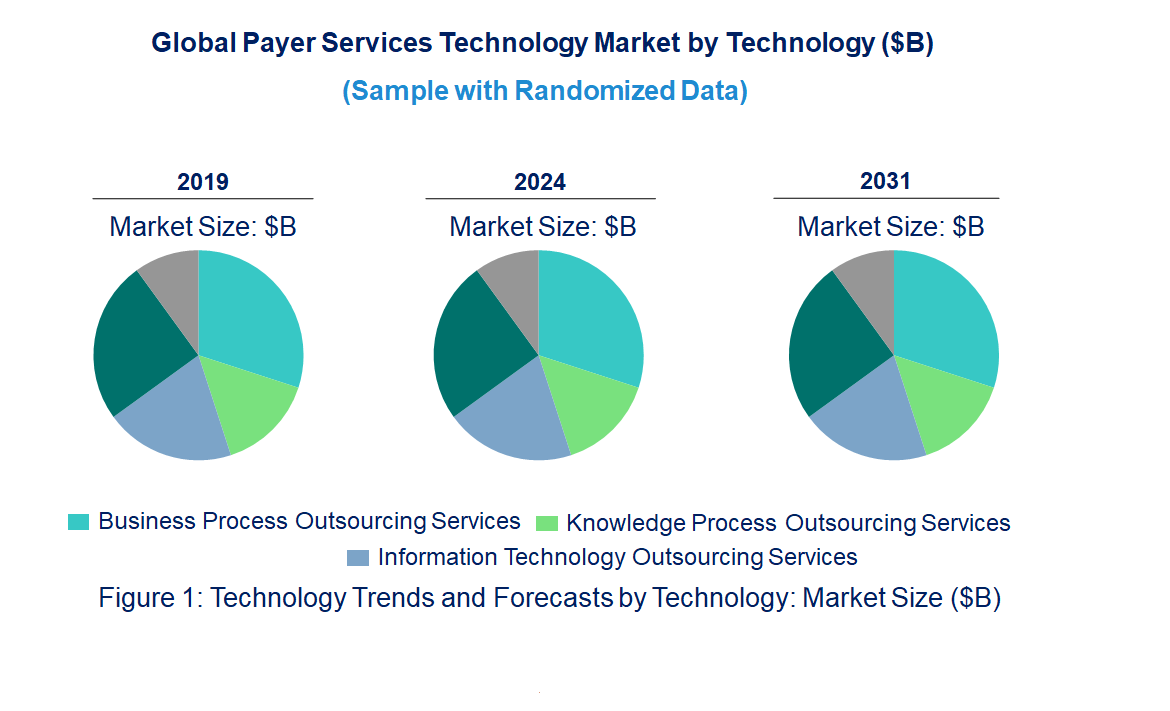
![Payer Services Market Trend and Forecast by End Use Industry [Value from 2019 to 2031]:](https://lucintel.com/images/Payer-Services-Technology-Market-Segment.png "Payer Services Market Trend and Forecast by End Use Industry [Value from 2019 to 2031]:")
Emerging Trends in the Payer Services Market
As the healthcare and financial sectors converge, payer services, those that manage healthcare plans, insurance, and related services, are embracing these innovations to enhance efficiency, customer experience, and compliance. Below are five key emerging trends that are reshaping this industry.• Artificial Intelligence and Machine Learning for Personalization and Automation: AI and machine learning (ML) algorithms are increasingly being utilized to analyze vast amounts of data, enabling personalized healthcare plans for customers.
• Blockchain for Secure and Transparent Transactions: Blockchain technology is being implemented to ensure secure, transparent, and traceable transactions in payer services.
• Cloud Computing and Data Integration: Cloud-based solutions are enabling payer services to scale operations, reduce costs, and improve flexibility in managing healthcare data.
• Digital Health and Telemedicine Integration: The integration of digital health tools and telemedicine platforms is enhancing the delivery of healthcare services, making them more accessible and efficient.
• Robotic Process Automation (RPA) for Claims and Billing Efficiency: Robotic process automation (RPA) is being deployed to automate repetitive, rule-based tasks in claims processing and billing, drastically reducing human errors and operational bottlenecks. The emerging trends in payer services technology are fundamentally transforming the way healthcare insurance and financial services are delivered. AI and machine learning are driving personalized experiences, while blockchain ensures greater security and transparency.
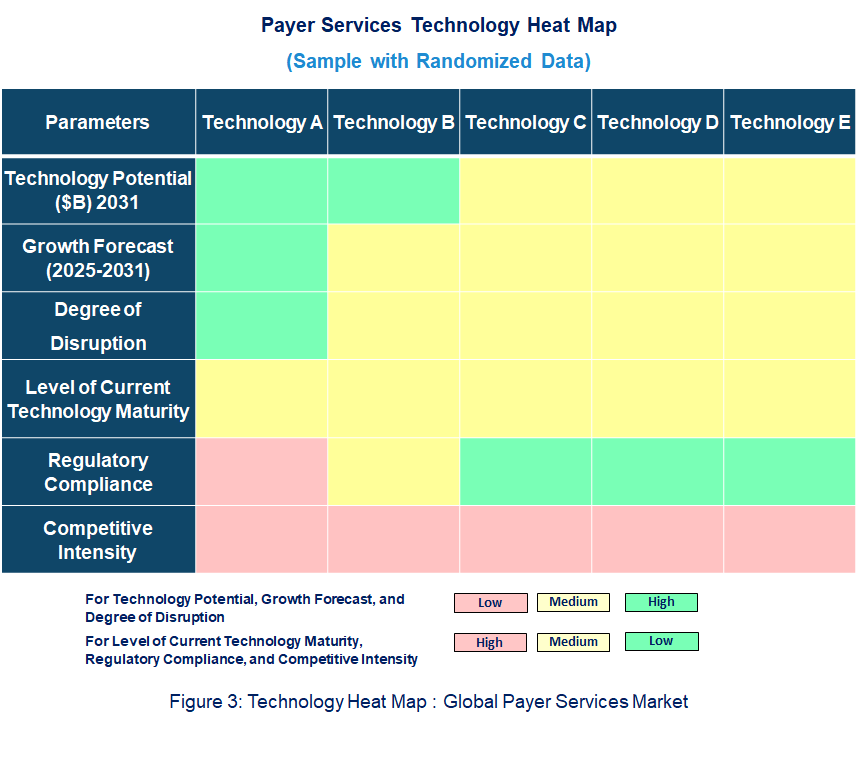
Payer Services Market : Industry Potential, Technological Development, and Compliance Considerations
Payer services technology refers to solutions that enable streamlined payment processing, claims management, billing, and underwriting of insurance within health and financial ecosystems. As health and financial sectors digitize, integrating innovative payer services technology presents the opportunity to achieve cost efficiency, transparency, and better service delivery.• Technological Potential: Payer services technology has immense potential, driven by AI, blockchain, and big data analytics. These technologies enable faster claims processing, fraud detection, and personalized insurance plans. AI-driven analytics can enhance decision-making, while blockchain ensures data integrity and transparency.
• Degree of Disruption: The technology is intended to revolutionize the traditional payer services with automation of processes, low human error, and increased operational efficiency. Cloud-based solutions and AI-driven tools are transforming legacy systems into real-time claims management and billing transparency. Such advancements ensure cost savings and scalability but require significant upgrades to the existing infrastructure.
• Current Technology Maturity Level: Current technology in payer services is now mature enough to support scalable solutions, with many established software platforms already in place. However, the need to continually innovate in AI, machine learning, and cybersecurity is necessary to remain competitive with emerging market demands.
• Regulatory Compliance: Payer services technology must be developed with strict regulatory frameworks, such as HIPAA (Healthcare) and GDPR (Data Protection). Compliance with these regulations ensures data privacy, interoperability, and secure transactions, thereby protecting patient and customer information while avoiding legal pitfalls.
Recent Technological development in Payer Services Market by Key Players
The payer services technology market has been developing at a rapid pace as a result of technological innovations, regulatory forces, and the need for better patient experience. This article gives an overview of some of the recent activities from UnitedHealth, Anthem, Concentrix, Aetna, Cigna, HealthPartners, and Blue Cross Blue Shield of Massachusetts.• UnitedHealth: UnitedHealth's subsidiary, Optum, focused on integrating behavioral health and home health services through the use of new virtual programs. They also acquired EMIS Group to improve digital health offerings, showing its thrust toward more advanced technological solutions for health delivery.
• Anthem (Elevance Health): Anthem renamed Elevance Health to focus on holistic health services. They are launching advanced analytics to support value-based care models and population health management, which leads to better predictive healthcare solutions.
• Concentrix: Concentrix has used AI-powered platforms to optimize customer engagement in health services. Their focus on automation in claims processing and customer interactions has improved operational efficiency and decreased costs.
• Aetna (CVS Health): Aetna has expanded its digital health portfolio through collaborations with CVS Health, emphasizing telehealth, remote monitoring, and integrated pharmacy services, creating a seamless care continuum.
• Cigna: Cigna is investing in predictive analytics to identify high-risk patients early and offering tailored interventions. Their approach combines machine learning with patient outreach strategies to improve health outcomes.
• HealthPartners: This company has invested in integrated care management technology that facilitates easy exchange and coordination of data, complying with regulatory standards. Among its recent work has been the improvement of interoperability toward enhancing coordinated care.
• BCBS of Massachusetts: BCBS is using Oracle ERP Cloud to enable a modernized billing system and administrative process that cuts operational costs and brings efficiencies; these are member-centric, digitally enabled services for all BCBS members. These developments point toward a larger trend toward digital transformation, one that's more focused on integration, automation, and advanced analytics. By embracing new technologies, these companies are streamlining operations, making care more satisfying for patients, and establishing leadership positions in this ever-changing health landscape. Not only does this transition help improve the delivery of care, but it also serves to address the payer services industry's key regulatory and financial challenges.
Payer Services Market Driver and Challenges
Technological advancements, increasing regulatory pressures, and shifting healthcare dynamics are highly impacting the Payer Services Technology market. Payors are increasingly turning to digital tools, automation, and analytics to gain better efficiency, reduce costs, and deliver personalized healthcare solutions. However, this change also brings with it numerous growth opportunities and challenges that reshape the landscape of payer services. The factors responsible for driving the payer services market include:• Adoption of Cloud-Based Platforms: Cloud solutions offer scalability, cost-effectiveness, and flexibility. Organizations such as Oracle demonstrate cloud technologies for managing millions of policies concurrently.
• AI/Machine Learning: AI-driven automated and machine learning provide an opportunity to the payers so that claims processing, fraud detection, and predictive analysis can be made easier . Improved decision-making and operational efficiency reduce costs and administrative burdens while ensuring faster and more accurate claims resolution.
• Blockchain for Enhanced Security: Blockchain technology ensures transparency and security in healthcare transactions. It enables payers to securely share data and manage claims with immutable records, enhancing trust and compliance with HIPAA and GDPR .
• Interoperability and Data Integration: Solutions such as Oracle's integrated healthcare tools and HealthEdge's GuidingCare platform are driving interoperability forward
• These tools will allow for the sharing of data across disparate systems to ensure better coordination of care and more accurate decision-making across healthcare networks.
• Telehealth solutions, such as those by Aetna with CVS Health, provide virtual consultations and remote monitoring. Expanding virtual care access improves patient engagement, reduces costs, and enables continuous healthcare monitoring without geographical constraints. These growth opportunities in cloud technology, AI integration, blockchain, interoperability, and telehealth are driving significant transformation in the payer services technology market. Organizations are now positioned to reduce costs, enhance operational efficiency, and improve patient care coordination. While opportunities abound, aligning these technologies with stringent regulations and keeping robust security protocols in place remain ongoing challenges. Nonetheless, these advancements are reshaping payer services into a much more integrated, agile, and patient-centric ecosystem, which ensures scalable and cost-effective healthcare delivery solutions.
List of Payer Services Companies
Companies in the market compete based on product quality offered. Major players in this market focus on expanding their manufacturing facilities, R&D investments, infrastructural development, and leverage integration opportunities across the value chain. With these strategies payer services companies cater to increasing demand, ensure competitive effectiveness, develop innovative products & technologies, reduce production costs, and expand their customer base. Some of the payer services companies profiled in this report include.• United Health
• Anthem
• Concentrix
• Aetna
• Cigna
• Healthpartners
Payer Services Market by Technology
• Technology Readiness by Technology Type: Payer services technology readiness is advancing across several areas. AI and machine learning enable automation, personalization, and predictive analytics. Blockchain ensures secure, transparent transactions. Cloud computing provides scalable data integration and real-time access. Digital health tools and telemedicine enhance remote care, while robotic process automation streamlines claims and billing processes.
• Competitive Intensity and Regulatory Compliance: Business process outsourcing (BPO) services are a highly competitive industry, with the demand being for cost-effective solutions with global scalability and operational efficiency. Knowledge process outsourcing (KPO) services are highly competitive because they involve sophisticated analytics and research, and insights that a company can offer to inform strategic decision-making. Meanwhile, Information technology outsourcing (ITO) services are in high competition due to a demand for rapid innovation in infrastructure and cybersecurity solutions. Regulatory compliance remains a key factor across all three, with healthcare payers requiring adherence to HIPAA, GDPR, and international data protection standards. Data privacy and interoperability pose significant compliance challenges, particularly in the context of tight healthcare regulations. BPO service companies focus on cost-structure optimization, aligning with GDPR and local regulations.
• Disruption Potential of Various Technologies: The disruption potential of business process outsourcing (BPO) services lies in automating routine tasks and leveraging global talent to reduce costs and improve efficiency. In knowledge process outsourcing (KPO) Services, the disruption comes from advanced analytics, AI, and data-driven decision-making, which replace manual insights with more accurate, real-time intelligence. Information technology outsourcing (ITO) Services drive disruption by enabling cloud-based infrastructure and scalable IT solutions, which replace outdated legacy systems. Artificial Intelligence and machine learning further enhance these technologies by automating processes and optimizing workflows. Integration across these outsourcing services ensures better collaboration and operational agility. Innovations in cybersecurity also disrupt these technologies by enhancing data protection across borders. Digital tools enable the decentralization of operations. Flexibility in cloud integration and scalability of services is unmatched. With disruptive technologies, payers can scale operations without any geographical boundaries. Automation and integrated AI improve the efficiency of business functions. Altogether, these technologies drive cost efficiency, scalability, and operational excellence across the payer services landscape.
Payer Services Market Trend and Forecast by Technology [Value from 2019 to 2031]:
• Business Process Outsourcing Services
• Knowledge Process Outsourcing Services
• Information Technology Outsourcing Services
Payer Services Market Trend and Forecast by End Use Industry [Value from 2019 to 2031]:
• Public Payers
• Private Payers
Payer Services Market by Region [Value from 2019 to 2031]:
• North America
• Europe
• Asia Pacific
• The Rest of the World
• Latest Developments and Innovations in the Payer Services Technologies
• Companies / Ecosystems
• Strategic Opportunities by Technology Type
Features of the Global Payer Services Market
Market Size Estimates: Payer services market size estimation in terms of ($B). Trend and Forecast Analysis: Market trends (2019 to 2024) and forecast (2025 to 2031) by various segments and regions. Segmentation Analysis: Technology trends in the global payer services market size by various segments, such as end use industry and technology in terms of value and volume shipments. Regional Analysis: Technology trends in the global payer services market breakdown by North America, Europe, Asia Pacific, and the Rest of the World. Growth Opportunities: Analysis of growth opportunities in different end use industries, technologies, and regions for technology trends in the global payer services market. Strategic Analysis: This includes M&A, new product development, and competitive landscape for technology trends in the global payer services market. Analysis of competitive intensity of the industry based on Porter’s Five Forces model.Table of Contents
Methodology
- In-depth interviews of the major players in this market
- Detailed secondary research from competitors’ financial statements and published data
- Extensive searches of published works, market, and database information pertaining to industry news, company press releases, and customer intentions
- A compilation of the experiences, judgments, and insights of Lucintel’s professionals, who have analyzed and tracked this market over the years.


Buy Now
Choose a license that fits your team. Instant PDF delivery.
Prices exclude taxes. Instant delivery. Custom licensing available on request.
Key Questions
- • What are some of the most promising potential, high-growth opportunities for the technology trends in the global payer services market by technology (business process outsourcing services, knowledge process outsourcing services, and information technology outsourcing services), end use industry (public payers and private payers), and region (North America, Europe, Asia Pacific, and the Rest of the World)?
- • Which technology segments will grow at a faster pace and why?
- • Which regions will grow at a faster pace and why?
- • What are the key factors affecting dynamics of different technology? What are the drivers and challenges of these technologies in the global payer services market?
- • What are the business risks and threats to the technology trends in the global payer services market?
- • What are the emerging trends in these technologies in the global payer services market and the reasons behind them?
- • Which technologies have potential of disruption in this market?
- • What are the new developments in the technology trends in the global payer services market? Which companies are leading these developments?
- • Who are the major players in technology trends in the global payer services market? What strategic initiatives are being implemented by key players for business growth?
- • What are strategic growth opportunities in this payer services technology space?
- • What M & A activities did take place in the last five years in technology trends in the global payer services market?


