
Report Feature
Organic Snack Market Trends and Forecast
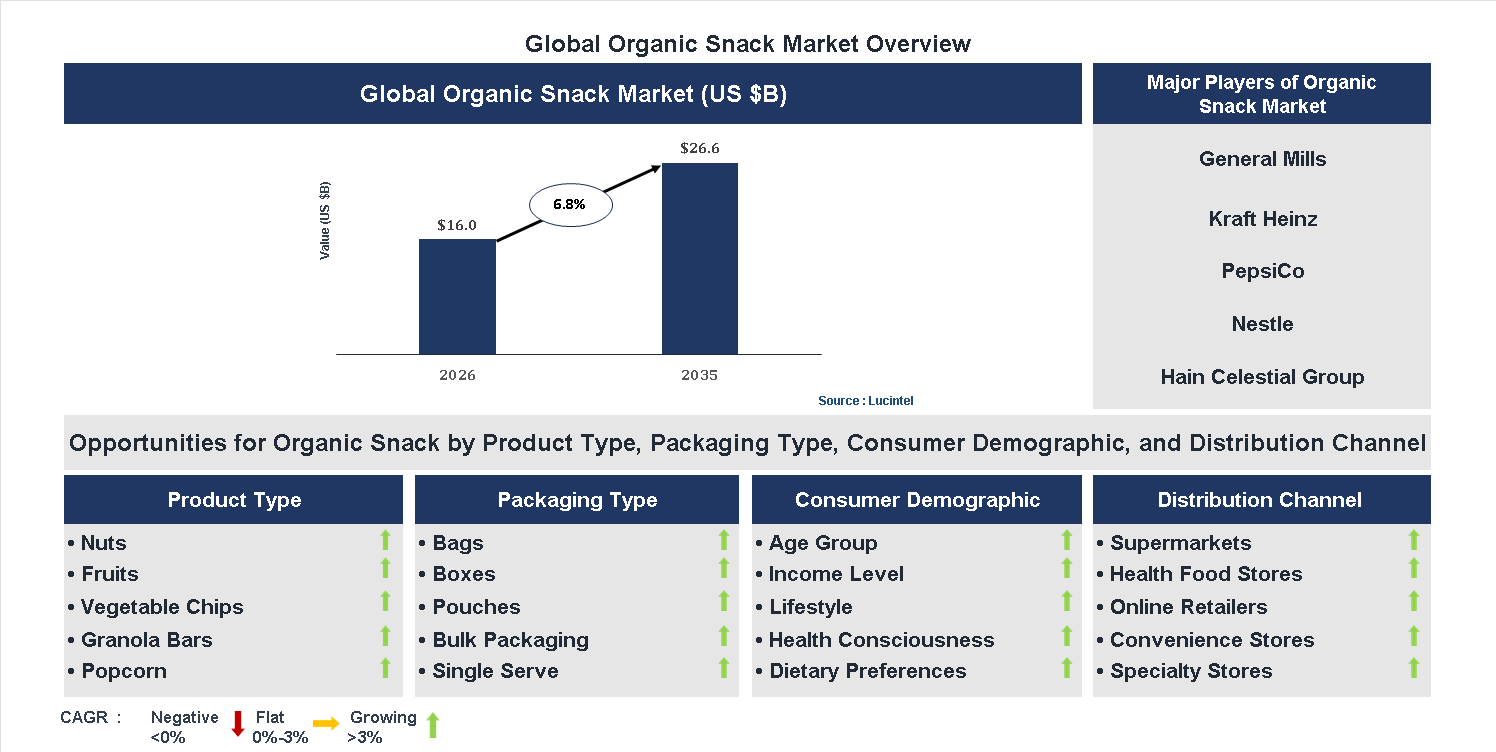
The future of the global organic snack market looks promising with opportunities in the supermarket, health food store, online retailer, convenience store, and specialty store markets. The global organic snack market is expected to reach an estimated $26.6 billion by 2035 with a CAGR of 6.8% from 2026 to 2035. The major drivers for this market are the increasing demand for clean label snacks, the rising awareness of healthy eating, and the growing preference for organic ingredients.• Lucintel forecasts that, within the product type category, nut is expected to witness the highest growth over the forecast period.
• Within the distribution channel category, supermarket is expected to witness the highest growth.
• In terms of region, APAC is expected to witness the highest growth over the forecast period. Gain valuable insights for your business decisions with our comprehensive 150+ page report. Sample figures with some insights are shown below.
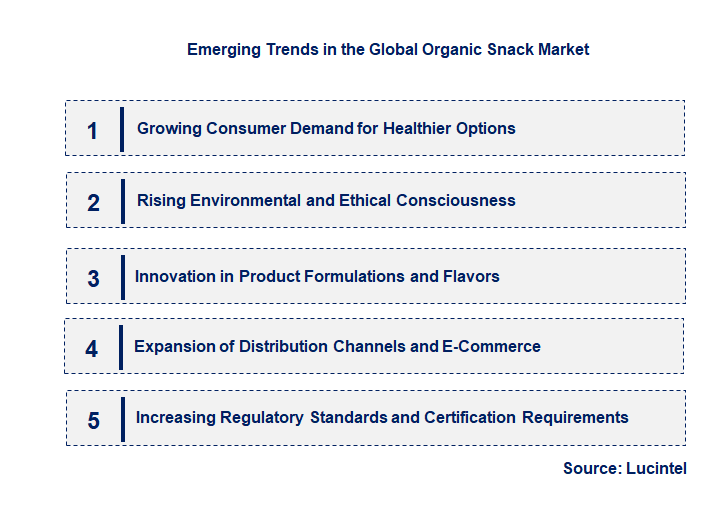
Emerging Trends in the Organic Snack Market
The organic snack market is experiencing rapid growth driven by increasing consumer awareness of health and wellness, environmental sustainability, and a desire for cleaner, natural food options. As consumers become more conscious of their dietary choices, the demand for organic snacks is expanding across various demographics and regions. Innovations in product formulations, packaging, and marketing strategies are further fueling this trend. Companies are focusing on transparency, quality, and sustainability to differentiate themselves in a competitive landscape. These developments are not only shaping consumer preferences but also influencing supply chains, retail strategies, and regulatory standards, leading to a dynamic and evolving market environment.• Growing Consumer Demand for Healthier Options: Consumers are increasingly seeking snacks made from natural, organic ingredients that promote health and wellness. This trend is driven by rising awareness of the links between diet and health, as well as concerns over artificial additives and preservatives. Organic snacks are perceived as safer and more nutritious, leading to higher sales and market penetration. Brands are responding by expanding product lines with functional benefits such as added vitamins, superfoods, and allergen-free options. This shift is encouraging manufacturers to innovate and prioritize ingredient transparency, ultimately reshaping product development and marketing strategies.
• Rising Environmental and Ethical Consciousness: Consumers are prioritizing sustainability and ethical sourcing in their purchasing decisions. Organic snack brands are emphasizing eco-friendly packaging, sustainable farming practices, and fair trade sourcing to appeal to environmentally conscious buyers. This trend is influencing supply chain practices, with companies investing in sustainable agriculture and reducing carbon footprints. Additionally, eco-labeling and certifications are becoming key differentiators. As environmental concerns grow, brands that demonstrate genuine commitment to sustainability are gaining consumer trust and loyalty, thereby influencing market standards and encouraging industry-wide adoption of greener practices.
• Innovation in Product Formulations and Flavors: The market is witnessing a surge in innovative product offerings, including unique flavors, textures, and functional ingredients. Consumers are seeking novel taste experiences and added health benefits, prompting brands to experiment with superfoods, adaptogenic herbs, and plant-based ingredients. This trend is expanding the variety of organic snacks available, from savory to sweet options, catering to diverse preferences. Innovation not only attracts new customers but also encourages repeat purchases. Companies investing in R&D are gaining competitive advantages by differentiating their products through unique formulations, thus driving market growth and consumer engagement.
• Expansion of Distribution Channels and E-commerce: The growth of online retail platforms and direct-to-consumer channels is significantly impacting the organic snack market. E-commerce offers wider reach, convenience, and access to niche products, enabling brands to connect directly with consumers. Additionally, health food stores, specialty supermarkets, and convenience stores are increasing their organic snack offerings. The integration of digital marketing, subscription services, and online promotions is further boosting sales. This expansion of distribution channels is making organic snacks more accessible, fostering market penetration in new regions, and supporting smaller brands to compete with established players.
• Increasing Regulatory Standards and Certification Requirements: As the market grows, regulatory bodies are implementing stricter standards for organic labeling and product safety. Certifications such as USDA Organic and Non-GMO Project are becoming essential for market credibility. These standards ensure transparency and build consumer trust, but also pose challenges for manufacturers to meet compliance. Companies are investing in quality assurance, traceability, and certification processes to maintain market access and avoid legal issues. The evolving regulatory landscape is encouraging industry players to adopt higher standards, which ultimately enhances product integrity and consumer confidence in the organic snack market. These trends are collectively transforming the organic snack market into a more innovative, sustainable, and consumer-centric industry. They are driving product development, shaping supply chain practices, and expanding market reach, ultimately leading to sustained growth and increased consumer loyalty.
Recent Development in the Organic Snack Market
The organic snack market is experiencing rapid growth driven by increasing consumer awareness of health and wellness, rising demand for natural products, and expanding availability through online and retail channels. Innovations in product formulations and packaging are also contributing to market expansion. As consumers prioritize healthier lifestyles, companies are investing in sustainable sourcing and marketing strategies to capture this lucrative segment. These developments are reshaping the industry landscape, creating new opportunities for brands to differentiate and meet evolving consumer preferences.• Growing Consumer Demand For Healthy Snacks: The increasing focus on health and wellness has led consumers to seek organic snacks free from artificial ingredients, preservatives, and additives. This shift is driving brands to develop innovative, nutrient-rich products that cater to dietary preferences such as gluten-free, vegan, and non-GMO options. As a result, market penetration is expanding across demographics, boosting sales and encouraging new product launches. Companies investing in clean-label formulations are gaining a competitive advantage, fostering sustained growth in the organic snack segment.
• Expansion Of E-Commerce Channels: The rise of online shopping platforms has significantly enhanced access to organic snacks, especially among younger consumers and urban populations. E-commerce offers convenience, wider product variety, and targeted marketing, which are crucial for market growth. Retailers are partnering with online marketplaces to increase visibility and reach. This digital shift has also enabled brands to gather consumer data for personalized marketing strategies. As a result, online sales are surging, contributing substantially to overall market expansion and providing new avenues for brand growth.
• Innovation in Product Formulations and Packaging: Companies are investing in innovative formulations that enhance flavor, texture, and nutritional value, appealing to diverse consumer tastes. Sustainable and eco-friendly packaging solutions are also gaining popularity, aligning with consumer values of environmental responsibility. These innovations improve product appeal, shelf life, and convenience, encouraging repeat purchases. The focus on functional ingredients, such as superfoods and probiotics, is further differentiating products. Such advancements are driving consumer engagement and expanding market share within the organic snack industry.
• Increasing Focus On Sustainable Sourcing And Ethical Practices: Consumers are increasingly prioritizing brands that demonstrate transparency, ethical sourcing, and sustainability. Companies are adopting eco-friendly farming practices, reducing carbon footprints, and obtaining certifications to build trust. This focus enhances brand reputation and appeals to environmentally conscious buyers. Sustainable sourcing also ensures product quality and supports local communities. As a result, brands that emphasize ethical practices are gaining loyalty, which positively impacts sales and market growth, fostering a more responsible industry landscape.
• Rising Investment In Marketing And Brand Positioning: Strategic marketing campaigns and brand positioning are crucial for capturing consumer attention in a competitive market. Companies are leveraging social media, influencer collaborations, and storytelling to communicate health benefits and sustainability efforts. Effective branding helps differentiate products and build emotional connections with consumers. Increased marketing investments are also driving awareness and trial among new customers. This focus on branding is accelerating market penetration, expanding consumer base, and fueling overall growth in the organic snack industry. These developments are significantly transforming the organic snack market by enhancing product innovation, expanding distribution channels, and aligning with consumer values of health and sustainability. Increased marketing efforts and technological advancements are further boosting brand visibility and consumer engagement. Collectively, these trends are driving robust market growth, attracting new entrants, and fostering a more competitive, dynamic industry landscape that meets evolving consumer demands for healthier, sustainable snack options.
Strategic Growth Opportunities in the Organic Snack Market
The organic snack market is experiencing rapid expansion driven by increasing consumer health awareness, demand for clean-label products, and a shift towards sustainable eating habits. Innovations in product formulations, packaging, and distribution channels are creating new growth avenues. Market players are focusing on product differentiation and regional expansion to capture a larger customer base. The evolving preferences for plant-based and allergen-free snacks further fuel this growth, making it a dynamic landscape with significant opportunities for brands willing to innovate and adapt to changing consumer needs.• Growing Consumer Demand for Healthy and Organic Snacks: Increasing health consciousness among consumers is driving demand for organic snacks that are free from artificial ingredients, preservatives, and GMOs. Consumers are seeking convenient, nutritious options that align with their wellness goals, leading to a surge in organic snack product launches. This trend is supported by rising awareness of the benefits of organic foods, including better digestion, improved immunity, and reduced exposure to harmful chemicals, creating substantial growth opportunities for brands that prioritize health and transparency.
• Expansion of Product Offerings in Plant-Based and Allergen-Free Snacks: The rising popularity of plant-based diets and the prevalence of food allergies are prompting manufacturers to develop innovative organic snack options that cater to these needs. Products such as vegan chips, nut-based bars, and gluten-free crackers are gaining traction. This segment appeals to a broader consumer base, including vegetarians, vegans, and those with dietary restrictions. The focus on allergen-free and functional ingredients enhances product appeal, opening avenues for differentiation and market penetration.
• Innovation in Packaging and Sustainability Practices: Eco-friendly packaging solutions are becoming a key differentiator in the organic snack market. Consumers increasingly prefer brands that demonstrate environmental responsibility through biodegradable, recyclable, or minimal packaging. Innovations such as compostable wrappers and reusable containers not only reduce environmental impact but also enhance brand image. Companies investing in sustainable practices can attract environmentally conscious consumers, foster brand loyalty, and meet regulatory standards, thereby supporting long-term growth and market competitiveness.
• Growth of E-commerce and Direct-to-Consumer Sales Channels: The digital shift has significantly impacted the distribution of organic snacks, with e-commerce platforms providing wider reach and convenience. Online sales enable brands to target niche markets, offer personalized experiences, and gather consumer data for tailored marketing. Subscription models and direct-to-consumer channels foster brand loyalty and higher margins. As consumers increasingly prefer online shopping for organic products, companies leveraging digital channels can accelerate growth, expand their customer base, and adapt swiftly to market trends.
• Regional Market Expansion and Localization Strategies: Emerging markets in Asia, Latin America, and Africa present substantial growth opportunities due to rising disposable incomes and increasing health awareness. Localized product offerings, tailored marketing campaigns, and strategic partnerships are essential for market entry and expansion. Understanding regional preferences, dietary habits, and cultural nuances allows brands to customize their products effectively. Expanding into these regions can diversify revenue streams, reduce dependence on mature markets, and capitalize on the growing global demand for organic snacks. These growth opportunities collectively shape a vibrant and expanding organic snack market. By focusing on health-driven product innovation, sustainability, digital channels, and regional expansion, companies can enhance their market share and meet evolving consumer preferences. Embracing these strategies will enable brands to sustain competitive advantage, foster consumer loyalty, and unlock new revenue streams in a rapidly growing industry landscape.
Organic Snack Market Driver and Challenges
The organic snack market is influenced by a variety of technological, economic, and regulatory factors that shape its growth trajectory. Advances in food processing technology and increasing consumer awareness about health benefits are driving demand. Economic factors such as rising disposable incomes and changing lifestyles contribute to the market expansion. Regulatory frameworks promoting organic farming and labeling standards ensure product authenticity and consumer trust. However, challenges like high production costs, supply chain complexities, and stringent regulations pose hurdles. Understanding these drivers and challenges is essential for stakeholders to navigate the evolving landscape and capitalize on emerging opportunities within the organic snack industry. The factors responsible for driving the organic snack market include:-• Increasing Health Consciousness: Consumers are becoming more aware of the health benefits associated with organic foods, including snacks. This shift is driven by rising awareness of the adverse effects of artificial ingredients and preservatives found in conventional snacks. As a result, there is a growing preference for organic snacks that are perceived as healthier, natural, and free from chemicals. This trend is further supported by the proliferation of health and wellness platforms, influencing purchasing decisions and boosting market growth.
• Growing Urbanization and Changing Lifestyles: Rapid urbanization has led to busier lifestyles, prompting consumers to seek convenient, on-the-go snack options. Organic snacks fit this demand perfectly, offering healthy alternatives that are easy to consume. The increasing number of working professionals and students opting for quick, nutritious snacks has significantly contributed to market expansion. Additionally, urban consumers are more exposed to global health trends, further fueling demand for organic snack options.
• Rising Disposable Income and Consumer Spending: As disposable incomes rise globally, consumers are willing to spend more on premium, organic products. This economic factor has led to increased sales of organic snacks, especially in developed regions. Consumers are prioritizing quality and health over cost, which encourages brands to innovate and offer a wider range of organic snack options. This trend is expected to continue as economic conditions improve, supporting sustained market growth.
• Technological Innovations in Food Processing: Advances in food technology have enabled manufacturers to develop innovative organic snack products with improved taste, texture, and shelf life. Techniques such as natural flavor enhancement and eco-friendly packaging have enhanced product appeal. These innovations help meet consumer expectations for high-quality, organic snacks and facilitate product differentiation in a competitive market, thereby driving sales and market expansion. The challenges in the organic snack market are:
• High Production and Certification Costs: Producing organic snacks involves strict adherence to organic farming practices and certification processes, which are costly and time-consuming. These expenses increase the overall product cost, making organic snacks more expensive than conventional alternatives. This price premium can limit accessibility for price-sensitive consumers and hinder market penetration, especially in emerging economies where affordability is crucial.
• Supply Chain Complexities: Sourcing organic raw materials requires a well-established supply chain that ensures authenticity and quality. Maintaining organic integrity throughout the supply chain is challenging due to factors like contamination risks and limited supplier networks. These complexities can lead to supply shortages, increased logistics costs, and delays, impacting product availability and market growth.
• Stringent Regulatory Frameworks: The organic snack industry is subject to strict regulations regarding labeling, certification, and ingredient sourcing. Navigating these regulatory requirements can be complex and costly for manufacturers, especially small and medium enterprises. Non-compliance risks legal penalties and damage to brand reputation, which can hamper innovation and market expansion efforts. The organic snack market is driven by increasing health awareness, urbanization, rising disposable incomes, and technological advancements. However, high production costs, supply chain issues, and regulatory hurdles pose significant challenges. These factors collectively influence market dynamics, requiring stakeholders to innovate and adapt to sustain growth. The interplay of these drivers and challenges will shape the future landscape, with opportunities for growth balanced by the need to address operational and regulatory complexities. Overall, the markets success hinges on strategic responses to these evolving factors, ensuring long-term sustainability and consumer trust.
List of Organic Snack Companies
Companies in the market compete on the basis of product quality offered. Major players in this market focus on expanding their manufacturing facilities, R&D investments, infrastructural development, and leverage integration opportunities across the value chain. With these strategies organic snack companies cater increasing demand, ensure competitive effectiveness, develop innovative products & technologies, reduce production costs, and expand their customer base. Some of the organic snack companies profiled in this report include-• General Mills
• Kraft Heinz
• PepsiCo
• Nestle
• Hain Celestial Group
• Boulder Canyon
• Annies Homegrown
• Nature Valley
• KIND Snacks
• Clif Bar
Organic Snack Market by Segment
The study includes a forecast for the global organic snack market by product type, packaging type, consumer demographic, distribution channel, and region.Organic Snack Market by Product Type [Value from 2019 to 2035]:
• Nuts
• Fruits
• Vegetable Chips
• Granola Bars
• Popcorn
Organic Snack Market by Packaging Type [Value from 2019 to 2035]:
• Bags
• Boxes
• Pouches
• Bulk Packaging
• Single Serve
Organic Snack Market by Consumer Demographic [Value from 2019 to 2035]:
• Age Group
• Income Level
• Lifestyle
• Health Consciousness
• Dietary Preferences
Organic Snack Market by distribution channel [Value from 2019 to 2035]:
• Supermarkets
• Health Food Stores
• Online Retailers
• Convenience Stores
• Specialty Stores
Organic Snack Market by Region [Value from 2019 to 2035]:
• North America
• Europe
• Asia Pacific
• The Rest of the World
Country Wise Outlook for the Organic Snack Market
The organic snack market has experienced significant growth globally, driven by increasing consumer awareness of health and wellness, environmental sustainability, and demand for natural products. Innovations in product offerings, expansion into new retail channels, and rising investments in organic food production have contributed to this upward trend. Countries are adopting different strategies to capitalize on this market potential, reflecting diverse consumer preferences and regulatory environments. As the market evolves, key developments include product diversification, technological advancements in organic farming, and stronger marketing efforts to promote health benefits. These trends are shaping the future landscape of organic snacks across major economies.• United States: The US organic snack market has seen rapid expansion, with major brands launching new product lines focused on clean labels and functional ingredients. Retailers are increasing shelf space for organic options, and e-commerce sales are booming. Innovations include plant-based snacks and protein-rich options catering to health-conscious consumers. Regulatory agencies are tightening standards to ensure product authenticity, boosting consumer confidence. Additionally, collaborations between organic farmers and snack manufacturers are enhancing supply chain transparency. The market is also witnessing increased investment in sustainable packaging solutions, aligning with environmental goals.
• China: Chinas organic snack market is growing swiftly, driven by rising middle-class incomes and health awareness. Domestic brands are gaining popularity by offering affordable, locally produced organic snacks. E-commerce platforms like Alibaba and JD.com are pivotal in expanding reach, especially among younger consumers. The government’s support for organic farming and food safety regulations is fostering market confidence. Innovations include traditional flavors with organic ingredients and functional snacks targeting specific health concerns. Retail chains are increasingly dedicating space to organic products, and international brands are entering the market, further stimulating competition.
• Germany: Germanys organic snack market benefits from strong consumer demand for organic and sustainable products. Retailers are expanding organic snack sections, and organic certifications are highly valued. Companies are focusing on organic, gluten-free, and vegan options to meet diverse dietary preferences. Technological advancements in organic farming are improving product quality and supply stability. Marketing efforts emphasize environmental benefits and health advantages, resonating with eco-conscious consumers. The market also sees collaborations with local farmers to promote transparency and traceability. Overall, Germanys market is characterized by high standards and a focus on quality and sustainability.
• India: The Indian organic snack market is emerging rapidly, fueled by increasing awareness of health and wellness among urban populations. Local startups and established brands are launching innovative organic snack products, including traditional Indian flavors. E-commerce platforms are playing a crucial role in reaching rural and semi-urban consumers. Government initiatives promoting organic farming are supporting supply chain development. The market is witnessing a shift towards organic, gluten-free, and low-calorie snacks. Consumer preferences are evolving towards natural ingredients and clean labels. Retail outlets and online channels are expanding their organic snack offerings, indicating strong future growth potential.
• Japan: Japans organic snack market is characterized by a focus on premium, high-quality products with natural ingredients. Consumers prioritize health, safety, and environmental sustainability, leading to increased demand for organic snacks. Local brands are innovating with traditional Japanese flavors and organic ingredients to appeal to domestic tastes. Technological advancements in organic farming and food processing are enhancing product quality. Retailers are emphasizing transparency and certification to build consumer trust. The market also benefits from government support for organic agriculture and food safety standards. Overall, Japans market is mature, with a focus on innovation, quality, and sustainability.

Features of the Global Organic Snack Market
Market Size Estimates: Organic snack market size estimation in terms of value ($B). Trend and Forecast Analysis: Market trends (2019 to 2025) and forecast (2026 to 2035) by various segments and regions. Segmentation Analysis: Organic snack market size by various segments, such as by product type, packaging type, consumer demographic, distribution channel, and region in terms of value ($B). Regional Analysis: Organic snack market breakdown by North America, Europe, Asia Pacific, and Rest of the World. Growth Opportunities: Analysis of growth opportunities in different product types, packaging types, consumer demographics, distribution channels, and regions for the organic snack market. Strategic Analysis: This includes M&A, new product development, and competitive landscape of the organic snack market. Analysis of competitive intensity of the industry based on Porter’s Five Forces model.
FAQ
Q1. What is the organic snack market size? Answer: The global organic snack market is expected to reach an estimated $26.6 billion by 2035. Q2. What is the growth forecast for organic snack market? Answer: The global organic snack market is expected to grow with a CAGR of 6.8% from 2026 to 2035. Q3. What are the major drivers influencing the growth of the organic snack market? Answer: The major drivers for this market are the increasing demand for clean label snacks, the rising awareness of healthy eating, and the growing preference for organic ingredients. Q4. What are the major segments for organic snack market? Answer: The future of the organic snack market looks promising with opportunities in the supermarket, health food store, online retailer, convenience store, and specialty store markets. Q5. Who are the key organic snack market companies? Answer: Some of the key organic snack companies are as follows:• General Mills
• Kraft Heinz
• PepsiCo
• Nestle
• Hain Celestial Group
• Boulder Canyon
• Annies Homegrown
• Nature Valley
• KIND Snacks
• Clif Bar Q6. Which organic snack market segment will be the largest in future? Answer: Lucintel forecasts that, within the product type category, nut is expected to witness the highest growth over the forecast period. Q7. In organic snack market, which region is expected to be the largest in next 5 years? Answer: In terms of region, APAC is expected to witness the highest growth over the forecast period. Q8. Do we receive customization in this report? Answer: Yes, Lucintel provides 10% customization without any additional cost.
Table of Contents
List of Figures
List of Tables
Methodology
- In-depth interviews of the major players in this market
- Detailed secondary research from competitors’ financial statements and published data
- Extensive searches of published works, market, and database information pertaining to industry news, company press releases, and customer intentions
- A compilation of the experiences, judgments, and insights of Lucintel’s professionals, who have analyzed and tracked this market over the years.


Buy Now
Choose a license that fits your team. Instant PDF delivery.
Prices exclude taxes. Instant delivery. Custom licensing available on request.
Key Questions
- • What are some of the most promising, high-growth opportunities for the organic snack market by product type (nuts, fruits, vegetable chips, granola bars, and popcorn), packaging type (bags, boxes, pouches, bulk packaging, and single serve), consumer demographic (age group, income level, lifestyle, health consciousness, and dietary preferences), distribution channel (supermarkets, health food stores, online retailers, convenience stores, and specialty stores), and region (North America, Europe, Asia Pacific, and the Rest of the World)?
- • Which segments will grow at a faster pace and why?
- • Which region will grow at a faster pace and why?
- • What are the key factors affecting market dynamics? What are the key challenges and business risks in this market?
- • What are the business risks and competitive threats in this market?
- • What are the emerging trends in this market and the reasons behind them?
- • What are some of the changing demands of customers in the market?
- • What are the new developments in the market? Which companies are leading these developments?
- • Who are the major players in this market? What strategic initiatives are key players pursuing for business growth?
- • What are some of the competing products in this market and how big of a threat do they pose for loss of market share by material or product substitution?
- • What M&A activity has occurred in the last 7 years and what has its impact been on the industry? For any questions related to Organic Snack Market, Organic Snack Market Size, Organic Snack Market Growth, Organic Snack Market Analysis, Organic Snack Market Report, Organic Snack Market Share, Organic Snack Market Trends, Organic Snack Market Forecast, Organic Snack Companies, write Lucintel analyst at email: helpdesk@lucintel.com. We will be glad to get back to you soon.


