
Report Feature
Naval Navigation and Communication System Market Trends and Forecast
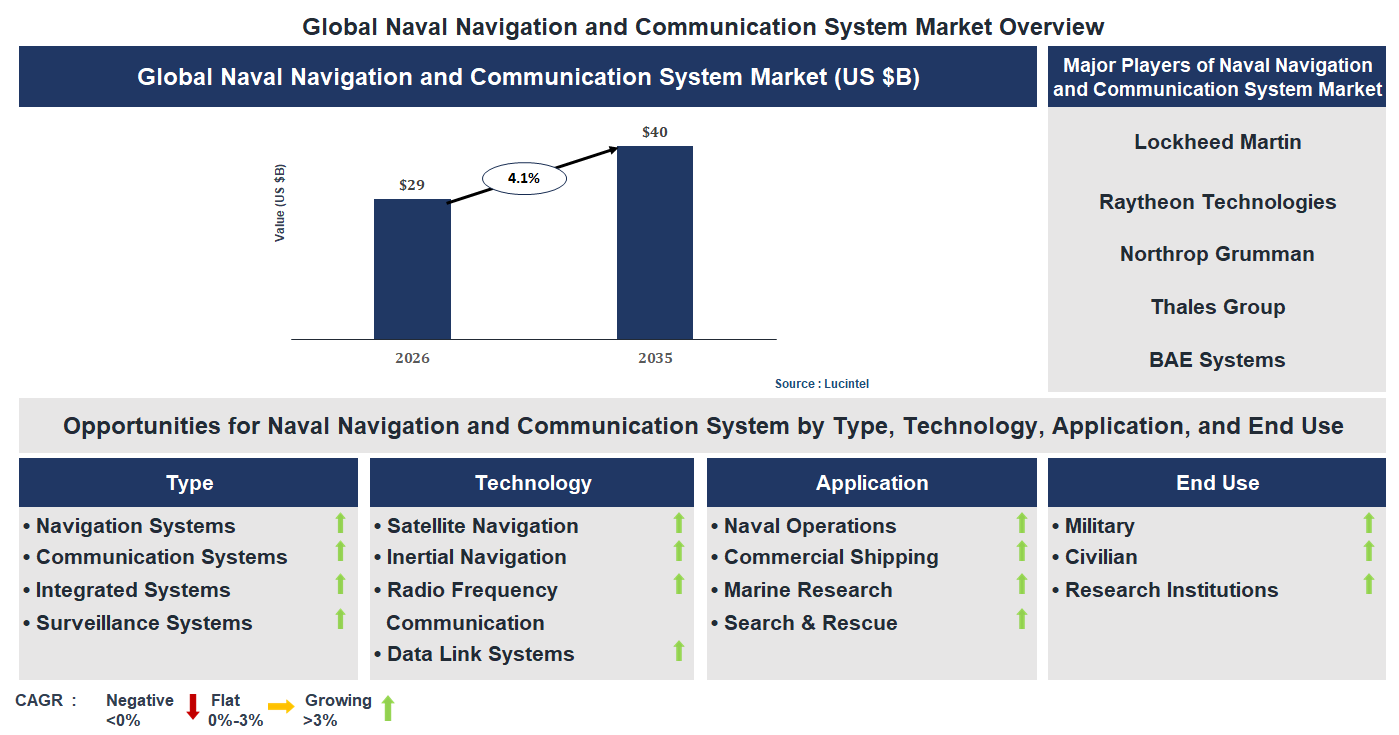
The future of the global naval navigation and communication system market looks promising with opportunities in the military, civilian, and research institution markets. The global naval navigation and communication system market is expected to reach an estimated $40 billion by 2035 with a CAGR of 4.1% from 2026 to 2035. The major drivers for this market are the increasing need for advanced defense systems, the rising demand for secure communication channels, and the growing focus on naval operational efficiency.• Lucintel forecasts that, within the type category, navigation system is expected to witness the highest growth over the forecast period.
• Within the end use category, military is expected to witness the highest growth.
• In terms of region, North America is expected to witness the highest growth over the forecast period. Gain valuable insights for your business decisions with our comprehensive 150+ page report. Sample figures with some insights are shown below.
Emerging Trends in the Naval Navigation and Communication System Market
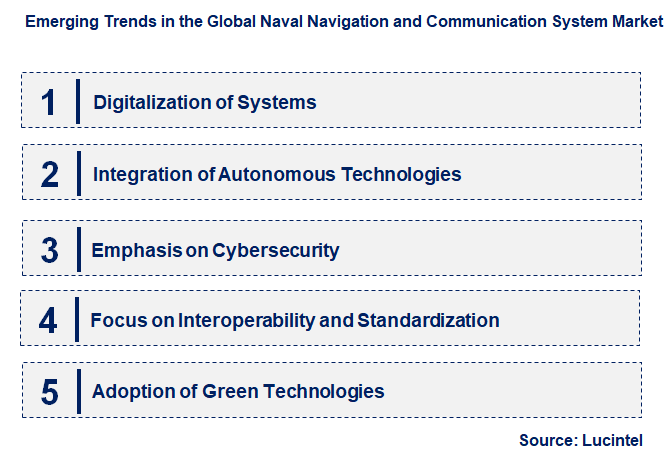
The naval navigation and communication system market is experiencing rapid evolution driven by technological advancements, geopolitical shifts, and increasing defense budgets worldwide. As navies modernize their fleets and seek enhanced security, the integration of sophisticated systems becomes crucial. These developments are not only improving operational efficiency but also transforming strategic capabilities. The market is characterized by a focus on automation, cybersecurity, and interoperability, reflecting broader trends in defense technology. Understanding these emerging trends is essential for stakeholders aiming to capitalize on new opportunities and address evolving challenges in naval navigation and communication.• Digitalization of Systems: The shift towards fully digital navigation and communication platforms enhances accuracy and real-time data sharing. Digital systems enable seamless integration with other naval assets, improving situational awareness and decision-making. They also facilitate easier updates and maintenance, reducing downtime. This trend supports the move towards network-centric warfare, where information dominance is key. As navies adopt digital solutions, they benefit from increased operational efficiency, reduced human error, and enhanced security features, making digitalization a cornerstone of modern naval systems.
• Integration of Autonomous Technologies: The incorporation of autonomous vessels and unmanned systems is transforming naval operations. These systems can perform reconnaissance, surveillance, and even combat roles, reducing risk to human personnel. Autonomous navigation systems require advanced communication links to coordinate with manned ships and command centers. This trend enhances operational flexibility, extends mission duration, and improves strategic reach. As autonomous technologies mature, navies are increasingly relying on them for complex missions, leading to a significant shift in naval tactics and system requirements.
• Emphasis on Cybersecurity: With increased connectivity comes heightened vulnerability to cyber threats. Protecting naval navigation and communication systems from cyber-attacks is a top priority. Advanced encryption, intrusion detection, and secure communication protocols are being integrated into systems to safeguard sensitive data and operational integrity. The focus on cybersecurity ensures resilience against potential disruptions, espionage, or sabotage. As cyber threats evolve, continuous innovation in security measures is essential, making cybersecurity a critical component of naval system development.
• Focus on Interoperability and Standardization: Modern naval operations demand seamless communication across different platforms and allied forces. Standardized protocols and interoperable systems facilitate joint operations, training, and logistics. This trend promotes international cooperation and enhances collective security. It also reduces costs and complexity by enabling multi-national fleets to operate cohesively. As navies increasingly participate in joint missions and alliances, interoperability becomes a strategic priority, driving the adoption of common standards and integrated communication frameworks.
• Adoption of Green Technologies: Environmental considerations are influencing naval system development. The integration of energy-efficient components, alternative power sources, and eco-friendly materials reduces the environmental footprint of naval vessels. Green technologies also support operational sustainability by decreasing fuel consumption and emissions. This trend aligns with global efforts to promote sustainability in defense practices. As environmental regulations tighten, navies are investing in greener systems, which not only benefit the environment but also enhance long-term operational resilience and cost savings. These emerging trends are fundamentally reshaping the naval navigation and communication system market by enhancing operational capabilities, security, and sustainability. They foster greater integration, autonomy, and resilience, positioning navies to meet future challenges more effectively. As these developments continue, the market is poised for significant growth and innovation, reflecting the evolving landscape of naval defense technology.
Recent Developments in the Naval Navigation and Communication System Market
The naval navigation and communication system market is experiencing rapid advancements driven by technological innovation, increasing defense budgets, and evolving maritime security needs. These developments are transforming naval operations, enhancing safety, and improving strategic capabilities worldwide. As nations invest heavily in modernizing their naval fleets, the market is poised for significant growth, driven by the integration of advanced navigation, communication, and cybersecurity solutions. This dynamic environment presents numerous opportunities for industry players to innovate and expand their market share.• Growing Adoption of Autonomous Navigation Systems: The integration of autonomous and semi-autonomous navigation technologies is revolutionizing naval operations. These systems improve safety, reduce crew workload, and enhance operational efficiency by enabling ships to navigate complex environments with minimal human intervention. The adoption of AI-powered sensors and real-time data processing is expanding, offering strategic advantages in defense and commercial sectors. This trend is expected to accelerate, creating new opportunities for system providers and boosting overall market growth.
• Enhanced Satellite Communication Technologies: Advances in satellite communication are significantly improving naval communication capabilities. High-throughput satellites and secure, encrypted channels enable real-time data sharing across vast maritime distances. These technologies support command and control, intelligence gathering, and operational coordination, especially in remote or contested areas. The deployment of next-generation satellite constellations is expected to further enhance connectivity, resilience, and security, making satellite communication a critical component of modern naval systems and expanding market opportunities.
• Integration of Cybersecurity Solutions: As naval systems become more connected, cybersecurity has become a top priority. Recent developments focus on protecting navigation and communication networks from cyber threats and electronic warfare. Advanced encryption, intrusion detection, and threat mitigation tools are being integrated into naval systems to ensure operational integrity. The growing emphasis on cybersecurity is driving demand for specialized solutions, fostering innovation, and creating a robust market segment dedicated to safeguarding maritime assets against evolving cyber risks.
• Development of Multi-Domain Communication Networks: The shift towards integrated, multi-domain communication networks is enabling seamless connectivity across air, sea, and land platforms. These networks facilitate real-time data exchange, joint operations, and coordinated responses to threats. Recent developments include the deployment of resilient, adaptive communication architectures that support high-speed, secure links in contested environments. This evolution enhances operational flexibility and situational awareness, positioning multi-domain networks as a key growth driver in naval communication systems and expanding market potential.
• Advancements in Navigation Sensors and Systems: Cutting-edge navigation sensors, including inertial measurement units (IMUs), GPS, and star trackers, are improving positional accuracy and reliability. Recent innovations focus on anti-jamming, anti-spoofing, and autonomous calibration to ensure precise navigation even in GPS-denied environments. These advancements are critical for modern naval vessels operating in complex, contested waters. The increased adoption of integrated sensor suites enhances operational safety and mission success, fueling demand for sophisticated navigation systems and expanding the market for innovative sensor technologies. The overall impact of these developments is a more secure, efficient, and technologically advanced naval navigation and communication landscape. They are driving market growth by creating new opportunities for innovation, increasing defense spending, and fostering international collaborations. As these technologies mature, the market is expected to see sustained expansion, with increased adoption across military and commercial maritime sectors.
Strategic Growth Opportunities in the Naval Navigation and Communication System Market
The naval navigation and communication system market is experiencing rapid growth driven by technological advancements, increasing maritime security concerns, and the need for enhanced operational efficiency. Governments and defense organizations worldwide are investing heavily in modernizing naval fleets, creating significant opportunities for system providers. Integration of advanced communication networks and navigation technologies is crucial for strategic dominance and safety at sea. This evolving landscape offers numerous avenues for innovation, collaboration, and market expansion, shaping the future of naval defense capabilities globally.• Enhanced Integration of Autonomous Naval Vessels: The development of autonomous ships necessitates sophisticated navigation and communication systems that ensure seamless coordination, safety, and operational efficiency. These systems must support real-time data exchange, obstacle detection, and remote control functionalities. Growing defense budgets and technological advancements are accelerating the deployment of autonomous vessels, creating a substantial market for integrated navigation and communication solutions tailored for unmanned naval operations.
• Adoption of Advanced Satellite Communication Technologies: Satellite communication (SATCOM) is vital for maintaining reliable, long-range connectivity in naval operations. The increasing deployment of high-throughput satellites and secure communication channels enhances command and control capabilities across vast maritime regions. This opportunity is driven by the need for resilient, secure, and high-speed communication links, especially in remote or contested areas, fostering growth in satellite-based naval communication systems.
• Integration of Cybersecurity Solutions for Naval Systems: As naval navigation and communication systems become more interconnected, they are increasingly vulnerable to cyber threats. Implementing robust cybersecurity measures is essential to protect sensitive data, ensure operational continuity, and prevent cyber-attacks. The rising focus on cybersecurity in defense procurement policies presents a significant opportunity for vendors to develop specialized security solutions tailored for naval systems, strengthening overall maritime security infrastructure.
• Development of Multi-Function Navigation and Communication Platforms: The demand for compact, versatile platforms that combine navigation, communication, and situational awareness functions is growing. These integrated systems reduce space, weight, and power consumption while enhancing operational capabilities. Innovations in miniaturization and multifunctional hardware are enabling naval forces to upgrade existing vessels and equip new ones with comprehensive, efficient systems suitable for diverse maritime missions.
• Expansion of Maritime Security and Surveillance Capabilities: Increasing threats such as piracy, smuggling, and territorial disputes drive the need for advanced naval surveillance and security systems. Enhanced radar, sonar, and communication networks enable real-time monitoring and rapid response. This growth opportunity is supported by government initiatives and international collaborations aimed at safeguarding maritime borders, leading to increased demand for sophisticated navigation and communication solutions that improve situational awareness and operational readiness. These strategic growth opportunities are poised to significantly influence the naval navigation and communication system market by fostering innovation, enhancing security, and expanding operational capabilities. As defense agencies prioritize modernization and technological integration, market players will benefit from increased demand for advanced, secure, and multifunctional systems. Overall, these opportunities will drive market expansion, support maritime security objectives, and shape the future landscape of naval defense technology globally.
Naval Navigation and Communication System Market Driver and Challenges
The naval navigation and communication system market is influenced by a complex interplay of technological advancements, economic factors, and regulatory frameworks. As naval forces seek enhanced security, operational efficiency, and technological superiority, the market experiences rapid growth driven by innovations in communication and navigation technologies. Economic considerations such as defense budgets and geopolitical stability also play a crucial role in shaping market dynamics. Additionally, regulatory standards related to security, interoperability, and environmental compliance impact product development and deployment. These factors collectively create a dynamic environment that presents both opportunities and challenges for stakeholders aiming to capitalize on the evolving needs of naval navigation and communication systems worldwide. The factors responsible for driving the naval navigation and communication system market include:• Technological Innovation: The continuous development of advanced navigation and communication technologies, such as satellite-based systems, AI integration, and cybersecurity measures, enhances operational capabilities. These innovations improve accuracy, reliability, and security, making naval vessels more effective in complex maritime environments. The push for modernization of existing fleets and the development of new vessels further accelerates demand for cutting-edge systems, fostering a competitive landscape that encourages R&D investments and strategic collaborations.
• Increasing Defense Budgets: Governments worldwide are increasing defense spending to modernize their naval fleets amid rising geopolitical tensions and maritime security threats. This financial commitment enables procurement of sophisticated navigation and communication systems, supporting national security objectives. Enhanced budgets also facilitate research, development, and deployment of integrated systems that improve situational awareness, command, and control, thereby driving market growth and encouraging manufacturers to innovate.
• Geopolitical Tensions and Maritime Security: Rising tensions in key maritime regions, such as the South China Sea, the Strait of Hormuz, and the Arctic, necessitate advanced naval capabilities. Countries are investing heavily in navigation and communication systems to ensure maritime security, sovereignty, and strategic dominance. These geopolitical factors create a sustained demand for reliable, secure, and interoperable systems, prompting manufacturers to develop solutions tailored to specific regional needs and security protocols.
• Integration of Autonomous and Unmanned Systems: The shift towards autonomous vessels and unmanned maritime systems is transforming naval operations. These systems require sophisticated navigation and communication infrastructure to operate effectively and safely. The integration of AI, IoT, and real-time data sharing enhances operational efficiency and reduces risks to personnel. This trend drives the market towards more intelligent, adaptable, and resilient systems capable of supporting complex autonomous operations in diverse maritime environments.
• Focus on Cybersecurity and Resilience: As naval communication systems become more digitized and interconnected, cybersecurity threats pose significant risks. Protecting sensitive data and ensuring uninterrupted communication are critical for operational success. The market is driven by the need for robust cybersecurity solutions, resilient communication networks, and secure navigation systems that can withstand cyber-attacks and electronic warfare. This focus on security enhances trust and reliability, encouraging adoption of advanced, secure systems across naval fleets. The challenges facing the naval navigation and communication system market include:
• High Development and Maintenance Costs: Developing advanced naval navigation and communication systems involves significant investment in R&D, specialized manufacturing, and ongoing maintenance. These costs can be prohibitive, especially for emerging economies or smaller navies, limiting market penetration. Additionally, the high costs associated with system upgrades and lifecycle management pose financial challenges, potentially delaying procurement and deployment, and impacting overall market growth.
• Rapid Technological Obsolescence: The fast pace of technological innovation can render existing systems obsolete quickly. Naval systems must continuously evolve to incorporate new features and counter emerging threats, leading to frequent upgrades and replacements. This rapid obsolescence increases costs and complicates procurement planning. Manufacturers face the challenge of balancing innovation with long-term reliability, while navies must manage the lifecycle of their systems amidst evolving technological landscapes.
• Regulatory and Security Standards: Stringent regulatory frameworks related to security, interoperability, and environmental compliance can delay product development and deployment. Navigating complex international standards and ensuring compliance across different jurisdictions pose significant hurdles. Additionally, concerns over data security and cyber vulnerabilities require rigorous testing and certification processes, which can extend timelines and increase costs, thereby impacting market agility and competitiveness. The naval navigation and communication system market is shaped by rapid technological advancements, increasing defense investments, geopolitical tensions, and the integration of autonomous systems. However, high costs, rapid obsolescence, and regulatory complexities present notable challenges. These drivers and challenges collectively influence market growth, pushing stakeholders towards innovation while necessitating strategic management of costs and compliance. The overall impact is a dynamic, competitive landscape that demands agility, technological excellence, and security resilience to meet evolving naval operational needs worldwide.
List of Naval Navigation and Communication System Companies
Companies in the market compete on the basis of product quality offered. Major players in this market focus on expanding their manufacturing facilities, R&D investments, infrastructural development, and leverage integration opportunities across the value chain. With these strategies naval navigation and communication system companies cater increasing demand, ensure competitive effectiveness, develop innovative products & technologies, reduce production costs, and expand their customer base. Some of the naval navigation and communication system companies profiled in this report include-• Lockheed Martin
• Raytheon Technologies
• Northrop Grumman
• Thales Group
• BAE Systems
• Leonardo S.p.A.
• General Dynamics
• Harris Corporation
• Kongsberg Gruppen
• Elbit Systems
Naval Navigation and Communication System Market by Segment
The study includes a forecast for the global naval navigation and communication system market by type, technology, application, end use, and region.Naval Navigation and Communication System Market by Type [Value from 2019 to 2035]:
• Navigation Systems
• Communication Systems
• Integrated Systems
• Surveillance Systems
Naval Navigation and Communication System Market by Technology [Value from 2019 to 2035]:
• Satellite Navigation
• Inertial Navigation
• Radio Frequency Communication
• Data Link Systems
Naval Navigation and Communication System Market by Application [Value from 2019 to 2035]:
• Naval Operations
• Commercial Shipping
• Marine Research
• Search & Rescue
Naval Navigation and Communication System Market by End Use [Value from 2019 to 2035]:
• Military
• Civilian
• Research Institutions
Naval Navigation and Communication System Market by Region [Value from 2019 to 2035]:
• North America
• Europe
• Asia Pacific
• The Rest of the World
Country Wise Outlook for the Naval Navigation and Communication System Market
The naval navigation and communication system market is experiencing rapid growth driven by technological advancements, increasing defense budgets, and evolving maritime security needs worldwide. Countries are investing heavily in modernizing their naval fleets to enhance operational efficiency, safety, and strategic dominance. Innovations in satellite communication, autonomous systems, and integrated navigation solutions are shaping the future of naval capabilities. The markets expansion reflects geopolitical tensions, rising maritime threats, and the need for secure, reliable communication channels at sea. As nations prioritize naval modernization, the market is expected to see significant technological breakthroughs and increased competition among key players.• United States: The US naval navigation and communication system market is advancing with significant investments in autonomous vessels, satellite communication, and cybersecurity. The US Navy is deploying next-generation integrated navigation systems and upgrading existing communication infrastructure to ensure secure, real-time data exchange. The focus is on enhancing fleet interoperability and operational readiness, driven by strategic competition with China and Russia. The development of AI-powered navigation aids and resilient satellite networks is also prominent, aiming to improve situational awareness and mission success.
• China: China is rapidly expanding its naval capabilities, emphasizing indigenous development of navigation and communication systems. The country is investing in satellite-based communication networks and electronic warfare systems to strengthen its maritime domain awareness. The Chinese navy is integrating advanced radar and sensor technologies into its vessels, aiming for enhanced coordination and control. The focus on building a modern, technologically sophisticated fleet aligns with China’s broader maritime strategy, including the Belt and Road Initiative, to assert regional dominance and secure maritime trade routes.
• Germany: Germanys naval navigation and communication market is characterized by a focus on modernization and interoperability within NATO frameworks. The country is adopting advanced digital communication systems and secure satellite links to improve fleet coordination. Germany is also investing in cyber defense mechanisms to protect naval communication networks from cyber threats. The emphasis on environmentally sustainable technologies and integration of AI-driven navigation solutions reflects Germany’s commitment to innovation and strategic security within European maritime operations.
• India: India is actively upgrading its naval navigation and communication systems to bolster regional security and maritime sovereignty. The Indian Navy is deploying advanced satellite communication systems and integrated bridge systems for better fleet management. Efforts are underway to develop indigenous navigation solutions and electronic warfare capabilities to reduce reliance on foreign technology. The focus on modernizing naval infrastructure and acquiring cutting-edge technology aims to enhance India’s strategic reach and operational efficiency in the Indian Ocean region.
• Japan: Japan is investing in advanced navigation and communication systems to support its maritime security and defense modernization efforts. The country is enhancing its satellite communication networks and integrating AI-based navigation aids to improve fleet safety and operational precision. Japan is also focusing on cyber security measures and secure communication channels to counter regional threats. The development of autonomous naval vessels and participation in joint international exercises highlight Japan’s commitment to maintaining technological superiority and regional stability.

Features of the Global Naval Navigation and Communication System Market
Market Size Estimates: Naval navigation and communication system market size estimation in terms of value ($B). Trend and Forecast Analysis: Market trends (2019 to 2025) and forecast (2026 to 2035) by various segments and regions. Segmentation Analysis: Naval navigation and communication system market size by various segments, such as by type, technology, application, end use, and region in terms of value ($B). Regional Analysis: Naval navigation and communication system market breakdown by North America, Europe, Asia Pacific, and Rest of the World. Growth Opportunities: Analysis of growth opportunities in different types, technology, applications, end uses, and regions for the naval navigation and communication system market. Strategic Analysis: This includes M&A, new product development, and competitive landscape of the naval navigation and communication system market. Analysis of competitive intensity of the industry based on Porter’s Five Forces model.
FAQ
Q1. What is the naval navigation and communication system market size? Answer: The global naval navigation and communication system market is expected to reach an estimated $40 billion by 2035. Q2. What is the growth forecast for naval navigation and communication system market? Answer: The global naval navigation and communication system market is expected to grow with a CAGR of 4.1% from 2026 to 2035. Q3. What are the major drivers influencing the growth of the naval navigation and communication system market? Answer: The major drivers for this market are the increasing need for advanced defense systems, the rising demand for secure communication channels, and the growing focus on naval operational efficiency. Q4. What are the major segments for naval navigation and communication system market? Answer: The future of the naval navigation and communication system market looks promising with opportunities in the military, civilian, and research institution markets. Q5. Who are the key naval navigation and communication system market companies? Answer: Some of the key naval navigation and communication system companies are as follows:• Lockheed Martin
• Raytheon Technologies
• Northrop Grumman
• Thales Group
• BAE Systems
• Leonardo S.p.A.
• General Dynamics
• Harris Corporation
• Kongsberg Gruppen
• Elbit Systems Q6. Which naval navigation and communication system market segment will be the largest in future? Answer: Lucintel forecasts that, within the type category, navigation system is expected to witness the highest growth over the forecast period. Q7. In naval navigation and communication system market, which region is expected to be the largest in next 8 years? Answer: In terms of region, North America is expected to witness the highest growth over the forecast period. Q8. Do we receive customization in this report? Answer: Yes, Lucintel provides 10% customization without any additional cost.
Table of Contents
List of Figures
List of Tables
Methodology
- In-depth interviews of the major players in this market
- Detailed secondary research from competitors’ financial statements and published data
- Extensive searches of published works, market, and database information pertaining to industry news, company press releases, and customer intentions
- A compilation of the experiences, judgments, and insights of Lucintel’s professionals, who have analyzed and tracked this market over the years.


Buy Now
Choose a license that fits your team. Instant PDF delivery.
Prices exclude taxes. Instant delivery. Custom licensing available on request.
Key Questions
- • What are some of the most promising, high-growth opportunities for the naval navigation and communication system market by type (navigation systems, communication systems, integrated systems, and surveillance systems), technology (satellite navigation, inertial navigation, radio frequency communication, and data link systems), application (naval operations, commercial shipping, marine research, and search & rescue), end use (military, civilian, and research institutions), and region (North America, Europe, Asia Pacific, and the Rest of the World)?
- • Which segments will grow at a faster pace and why?
- • Which region will grow at a faster pace and why?
- • What are the key factors affecting market dynamics? What are the key challenges and business risks in this market?
- • What are the business risks and competitive threats in this market?
- • What are the emerging trends in this market and the reasons behind them?
- • What are some of the changing demands of customers in the market?
- • What are the new developments in the market? Which companies are leading these developments?
- • Who are the major players in this market? What strategic initiatives are key players pursuing for business growth?
- • What are some of the competing products in this market and how big of a threat do they pose for loss of market share by material or product substitution?
- • What M&A activity has occurred in the last 5 years and what has its impact been on the industry? For any questions related to Naval Navigation and Communication System Market, Naval Navigation and Communication System Market Size, Naval Navigation and Communication System Market Growth, Naval Navigation and Communication System Market Analysis, Naval Navigation and Communication System Market Report, Naval Navigation and Communication System Market Share, Naval Navigation and Communication System Market Trends, Naval Navigation and Communication System Market Forecast, Naval Navigation and Communication System Companies, write Lucintel analyst at email: helpdesk@lucintel.com. We will be glad to get back to you soon.


