
Report Feature
Hydrogen Fluoride Gas Detection Market Trends and Forecast
The technologies in the hydrogen fluoride gas detection market have undergone significant changes in recent years. The market has transitioned from traditional fixed hydrogen fluoride gas detectors to more advanced and flexible portable hydrogen fluoride gas detection systems. This change has been driven by the increasing need for real-time, on-site gas monitoring in dynamic environments such as semiconductor manufacturing and chemical processing plants. Moreover, electrochemical sensor-based detectors are gradually being replaced by more accurate and fast-response photoionization detectors (PID), which can detect hydrogen fluoride gas at even low concentrations, thereby improving workplace safety.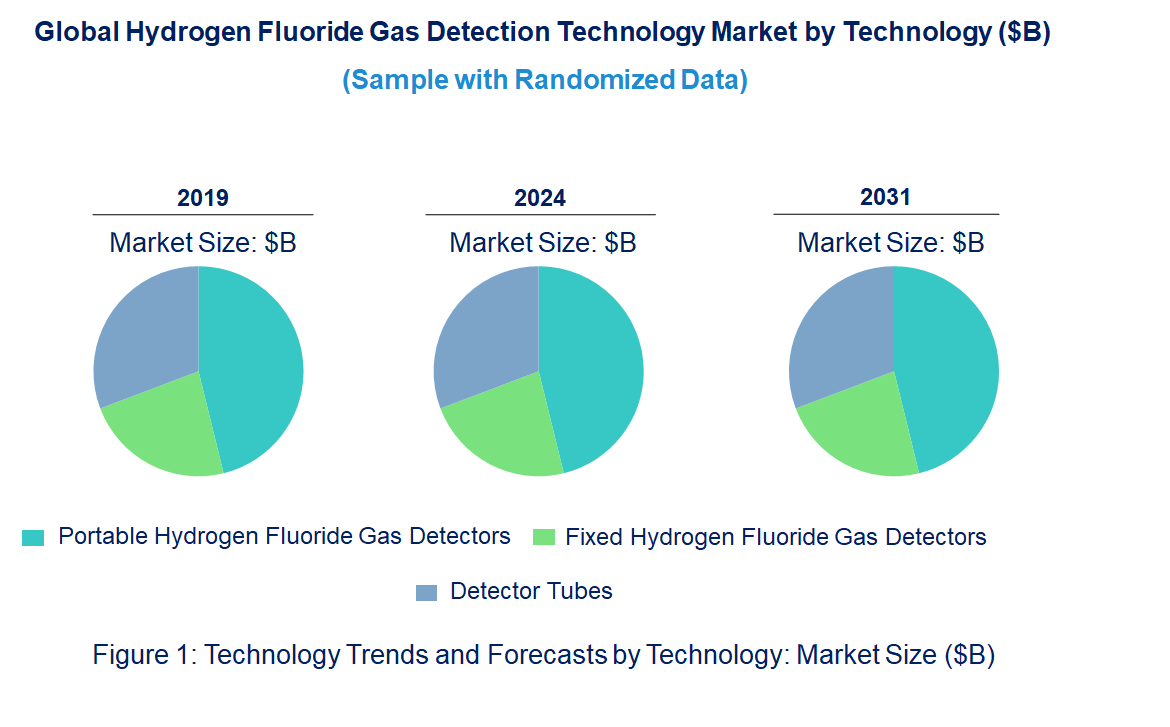
Emerging Trends in the Hydrogen Fluoride Gas Detection Market
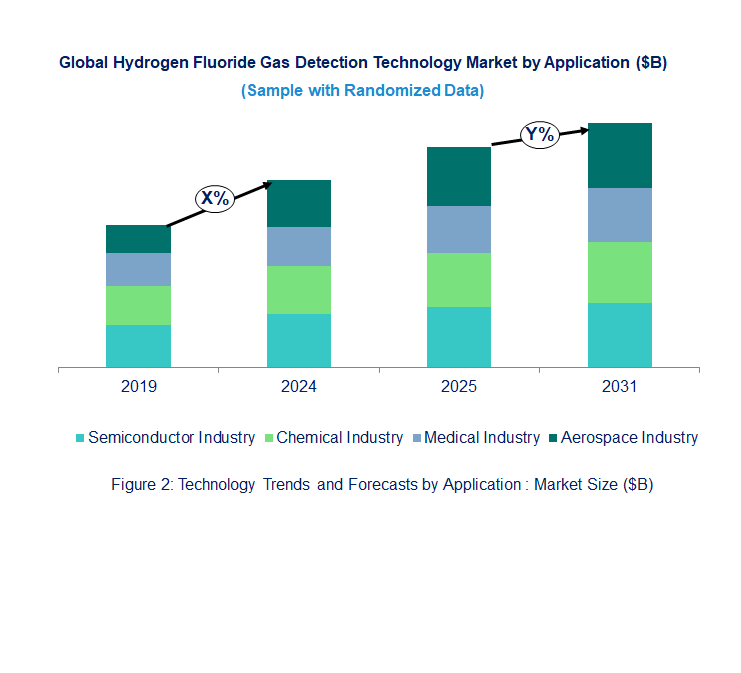
The hydrogen fluoride gas detection market is experiencing significant development, led by advances in sensor technology, regulatory requirements, and growing safety concerns in industries that handle hydrogen fluoride. Below are five key trends shaping the market:• Advancement of Portable Detectors: With portable hydrogen fluoride gas detectors, portability and real-time monitoring in different environments have become more convenient. These easy-to-use devices are highly accurate, offering instantaneous alarms. This enhances safety during field operations in industries, particularly in the semiconductor and chemical manufacturing sectors.
• Smart Technologies and IoT: This trend involves the integration of smart technologies and IoT capabilities in gas detection systems, allowing for remote monitoring, data logging, and predictive maintenance. These features enhance operational efficiency and improve safety management. Additionally, IoT-enabled detectors send real-time alerts to operators or managers, increasing response time in the event of hazardous gas leaks.
• Miniaturization and Enhanced Sensitivity in Detectors: Smaller sizes mean better sensitivity. More advanced sensors can detect hydrogen fluoride gas at lower concentrations in the air. This helps improve safety and ensure compliance with regulations at workplaces, enabling sensitive monitoring to prevent harmful exposure.
• Multi-Gas Detection Solutions: The focus is shifting to multi-gas detection solutions in industries like chemical and semiconductor manufacturing. These multi-gas detectors can detect various hazardous gases, including hydrogen fluoride, in a single device. Multi-gas detectors are cost-effective and space-saving, providing simultaneous monitoring of multiple hazardous substances.
• Growing Adoption in Semiconductor Manufacturing: As the number of semiconductor manufacturing processes involving chemicals increases, the demand for hydrogen fluoride gas detection also rises. This growth is attributed to advancements in precision, improved safety standards, and compliance with regulations in high-tech, cleanroom environments. These emerging trends reflect the movement towards more flexible, accurate, and integrated hydrogen fluoride gas detection technologies. Portable detectors, smart technologies, miniaturized sensors, and multi-gas detection systems are making the market safer and more operationally efficient, while also helping industries comply with regulations in key sectors.
Hydrogen Fluoride Gas Detection Market : Industry Potential, Technological Development, and Compliance Considerations
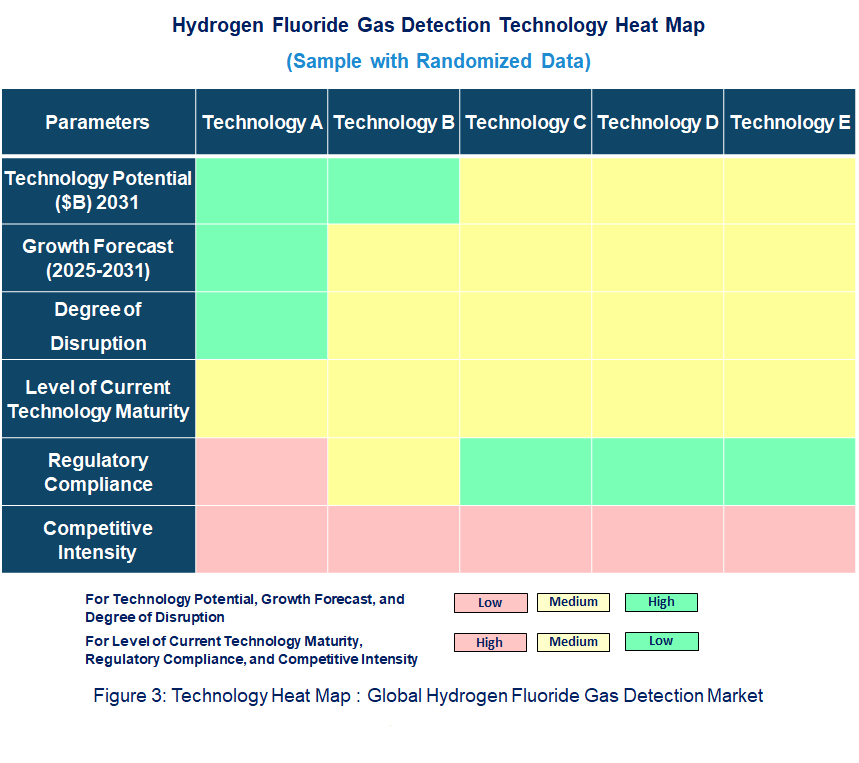
The hydrogen fluoride (HF) gas detection market is critical for industries such as chemicals, petrochemicals, semiconductors, and manufacturing, where exposure to HF can be hazardous. HF is a toxic and corrosive gas, and accurate, reliable detection technologies are essential for worker safety, regulatory compliance, and operational efficiency.• Technology Potential: The potential of HF gas detection technologies lies in their ability to detect hazardous gas leaks in real time with high sensitivity in industrial settings. With advancements in sensor technologies, such as electrochemical, photoionization, and optical sensors, these systems can provide faster readings in complex environments, reducing risks and improving safety procedures. Additionally, IoT (Internet of Things) and cloud-based monitoring systems allow for remote monitoring and analysis of gas levels, enabling predictive maintenance and immediate response.
• Level of Disruption: The disruption caused by HF gas detection technologies is significant. These systems help industries minimize human exposure to toxic gases, prevent accidents, and ensure compliance with strict environmental and safety regulations. This disruption is especially crucial in sectors where gas leaks could lead to severe health problems or environmental damage.
• Technology Maturity: Current HF gas detection technologies are mature, with well-established systems. However, there is still room for innovation, particularly in improving sensor sensitivity, durability, and connectivity, to enhance performance in harsh industrial environments.
• Regulatory Compliance: HF detection systems must meet strict safety and environmental regulations, including OSHA standards and local environmental protection laws, to minimize hazardous exposures.
Recent Technological development in Hydrogen Fluoride Gas Detection Market by Key Players
Several major players in the hydrogen fluoride gas detection market have made groundbreaking improvements in their product lines. Bruel Kjaer, Honeywell Analytics, Inficon, GfG, Jerome Instruments, Gas Sensing Solutions, Emerson Electric, Opsis System, MSA, and Alphasense Ltd. are some of the leaders who have innovated products that provide more accurate and efficient gas detection for various applications.• Bruel Kjaer: Bruel Kjaer has focused on developing its series of hydrogen fluoride gas detection systems with real-time data logging and other advanced sensor technologies. This innovation helps industries continuously monitor hazardous gases within controlled environments, particularly in semiconductor manufacturing facilities.
• Honeywell Analytics: Honeywell Analytics has developed highly sophisticated portable and fixed hydrogen fluoride gas detectors that incorporate the latest sensor technology and wireless communication features. These devices are used in industries such as petrochemicals and aerospace, where accurate monitoring of hazardous gases is essential for worker safety and regulatory compliance.
• Inficon: Inficon has introduced highly sensitive hydrogen fluoride gas detectors using photoionization technology. Their solutions are designed for both portable and fixed installations, offering precise detection with faster response times, making them ideal for industries like semiconductor production, where hydrogen fluoride is used in critical processes.
• GfG: GfG develops advanced sensor technologies for its hydrogen fluoride gas detection products, focusing on durability, accuracy, and real-time monitoring. Their portable and fixed detectors are widely used in the chemical industry to ensure workplace safety and environmental protection against exposure to hydrogen fluoride gas.
• Jerome Instruments: Jerome Instruments offers highly sensitive portable hydrogen fluoride gas detection systems with quick response capabilities. These products are used in the chemical, semiconductor, and aerospace industries to detect hydrogen fluoride leaks and provide immediate safety alerts to workers.
• Gas Sensing Solutions: Gas Sensing Solutions has developed extremely sensitive semiconductor-based sensors for both portable and fixed hydrogen fluoride gas detection systems. These sensors offer long-term stability and minimal maintenance, making them highly recommended for industrial settings with high safety standards.
• Emerson Electric: Emerson Electric has integrated advanced sensor technologies into its hydrogen fluoride detection systems, providing reliable and accurate gas monitoring solutions. Their systems are designed for a wide range of applications, from the semiconductor and chemical industries, with a focus on easy integration with existing industrial monitoring systems.
• Opsis System: Opsis System offers optical gas detection systems capable of monitoring hydrogen fluoride gas emissions remotely. Their technology provides a non-contact method of gas detection, reducing the need for on-site sensor placement and enhancing safety in hazardous areas like chemical processing plants.
• MSA: MSA has developed both portable and fixed hydrogen fluoride gas detectors with enhanced performance features, multi-sensor capabilities, and real-time data analytics. Their solutions cater to the oil and gas, chemical, and aerospace industries, where hydrogen fluoride is a known hazard.
• Alphasense Ltd.: Alphasense Ltd. offers a series of electrochemical and photoionization detectors designed to detect traces of hydrogen fluoride gas. These detectors are known for their precision, rapid response, and ease of calibration, making them suitable for industrial and laboratory applications where gas leaks need monitoring. These developments show how key players in the market are driving innovation in hydrogen fluoride gas detection. Technological advancements in sensor types, portability, and real-time data integration by these companies are enhancing safety, efficiency, and compliance in industries handling hydrogen fluoride.
Hydrogen Fluoride Gas Detection Market Driver and Challenges
The hydrogen fluoride gas detection market is influenced by several factors, including increased industrial activity in hazardous environments and growing regulatory pressure for workplace safety. However, the market also faces challenges related to sensor limitations and competition from alternative technologies. The factors responsible for driving the hydrogen fluoride gas detection market include:• Stringent Workplace Safety Regulations: Governments and industry standards are enforcing more stringent regulations for monitoring hazardous gases, prompting companies to adopt the most advanced hydrogen fluoride gas detection systems. This is especially important for semiconductor manufacturing, chemical, and aerospace industries to ensure higher safety and compliance levels.
• Increasing Demand in Semiconductor and Chemical Industries: Hydrogen fluoride is widely used in the semiconductor and chemical industries. Due to its extensive use, there is a growing demand for accurate and reliable detection systems to ensure the operational safety of facilities and protect workers from hazardous gas leaks.
• Technological Advances in Sensor Technology: Advances in sensor technologies, including miniaturization, improved sensitivity, and faster response times, continue to enhance hydrogen fluoride gas detection systems. These improvements make detection systems more effective and affordable for industries exposed to hazardous gases.
• Industrial Expansion and Automation: As industries such as chemicals, pharmaceuticals, and aerospace continue to expand, the demand for automated, real-time monitoring solutions for hydrogen fluoride gas is increasing. These solutions provide significant cost savings and enhance safety in high-risk environments. Challenges in the hydrogen fluoride gas detection market include:
• High Costs of Detection Systems: The advanced detection systems for hydrogen fluoride gas, which contain sophisticated sensors and technologies, may be too costly for industries with limited budgets. This could prevent the adoption of new detection systems in smaller, less regulated industries.
• Sensor Calibration and Maintenance Issues: Hydrogen fluoride gas sensors require regular calibration and maintenance to ensure accuracy over time. This can be a challenge for industries with limited resources or those operating in remote locations, leading to additional operational costs.
• Competition from Alternative Gas Detection Technologies: Alternative gas detection technologies, such as optical gas imaging and infrared sensors, are competing with traditional electrochemical and PID-based detectors. These alternatives may offer advantages in certain applications, but may not be as effective for detecting hydrogen fluoride specifically. The hydrogen fluoride gas detection market is driven by regulatory pressures, technological advancements, and growing demand from industries like semiconductor manufacturing. However, challenges such as high costs and maintenance requirements continue to affect market growth. These drivers and challenges shape the ongoing evolution of the market.
List of Hydrogen Fluoride Gas Detection Companies
Companies in the market compete based on product quality offered. Major players in this market focus on expanding their manufacturing facilities, R&D investments, infrastructural development, and leverage integration opportunities across the value chain. With these strategies hydrogen fluoride gas detection companies cater to increasing demand, ensure competitive effectiveness, develop innovative products & technologies, reduce production costs, and expand their customer base. Some of the hydrogen fluoride gas detection companies profiled in this report include.• Bruel Kjaer
• Honeywell Analytics
• Inficon
• GfG
• Jerome Instruments
• Gas Sensing Solutions
Hydrogen Fluoride Gas Detection Market by Technology
• Technology Readiness of Portable Hydrogen Fluoride Gas Detectors: Portable HF detectors are the most advanced, offering real-time monitoring and wide adoption in safety-critical environments. Fixed detectors are well-established, providing continuous monitoring in industrial plants. Detector tubes are less suitable for modern, high-precision needs but remain in use for niche applications. Regulatory compliance varies by technology, with portable detectors requiring certifications for field use, fixed detectors for industrial settings, and detector tubes for basic safety standards.
• Competitive Intensity and Regulatory Compliance: The HF gas detection market is highly competitive. Portable detectors are gaining popularity due to their flexibility, while fixed detectors remain essential in industrial settings. Detector tubes are low-tech and are experiencing declining demand. Regulatory compliance is critical, particularly regarding workplace health and environmental standards. Portable and fixed detectors must be certified with stringent safety requirements, while detector tubes have basic safety standards. Innovation is driven by the need for more accurate, durable, and cost-effective solutions.
• Disruption Potential of Portable Hydrogen Fluoride Gas Detectors: Portable HF gas detectors are the most flexible and mobile, making them suitable for worker safety in hazardous environments. Fixed detectors, which provide continuous monitoring, are essential for large industrial operations. Detector tubes, though low-cost and simple, are being replaced by more accurate and automated technologies. The shift towards portable and fixed detectors is driven by stricter safety regulations, with portable models disrupting the market by providing real-time, on-site monitoring, while fixed models remain crucial for industrial sites.
Hydrogen Fluoride Gas Detection Market Trend and Forecast by Technology [Value from 2019 to 2031]:
• Portable Hydrogen Fluoride Gas Detectors
• Fixed Hydrogen Fluoride Gas Detectors
• Detector Tubes
Hydrogen Fluoride Gas Detection Market Trend and Forecast by Application [Value from 2019 to 2031]:
• Semiconductor Industry
• Chemical Industry
• Medical Industry
• Aerospace Industry
Hydrogen Fluoride Gas Detection Market by Region [Value from 2019 to 2031]:
• North America
• Europe
• Asia Pacific
• The Rest of the World
• Latest Developments and Innovations in the Hydrogen Fluoride Gas Detection Technologies
• Companies / Ecosystems
• Strategic Opportunities by Technology Type
Features of the Global Hydrogen Fluoride Gas Detection Market
Market Size Estimates: Hydrogen fluoride gas detection market size estimation in terms of ($B). Trend and Forecast Analysis: Market trends (2019 to 2024) and forecast (2025 to 2031) by various segments and regions. Segmentation Analysis: Technology trends in the global hydrogen fluoride gas detection market size by various segments, such as application and technology in terms of value and volume shipments. Regional Analysis: Technology trends in the global hydrogen fluoride gas detection market breakdown by North America, Europe, Asia Pacific, and the Rest of the World. Growth Opportunities: Analysis of growth opportunities in different applications, technologies, and regions for technology trends in the global hydrogen fluoride gas detection market. Strategic Analysis: This includes M&A, new product development, and competitive landscape for technology trends in the global hydrogen fluoride gas detection market. Analysis of competitive intensity of the industry based on Porter’s Five Forces model.Table of Contents
Methodology
- In-depth interviews of the major players in this market
- Detailed secondary research from competitors’ financial statements and published data
- Extensive searches of published works, market, and database information pertaining to industry news, company press releases, and customer intentions
- A compilation of the experiences, judgments, and insights of Lucintel’s professionals, who have analyzed and tracked this market over the years.


Buy Now
Choose a license that fits your team. Instant PDF delivery.
Prices exclude taxes. Instant delivery. Custom licensing available on request.
Key Questions
- • What are some of the most promising potential, high-growth opportunities for the technology trends in the global hydrogen fluoride gas detection market by technology (portable hydrogen fluoride gas detectors, fixed hydrogen fluoride gas detectors, and detector tubes), application (semiconductor industry, chemical industry, medical industry, and aerospace industry), and region (North America, Europe, Asia Pacific, and the Rest of the World)?
- • Which technology segments will grow at a faster pace and why?
- • Which regions will grow at a faster pace and why?
- • What are the key factors affecting dynamics of different technology? What are the drivers and challenges of these technologies in the global hydrogen fluoride gas detection market?
- • What are the business risks and threats to the technology trends in the global hydrogen fluoride gas detection market?
- • What are the emerging trends in these technologies in the global hydrogen fluoride gas detection market and the reasons behind them?
- • Which technologies have potential of disruption in this market?
- • What are the new developments in the technology trends in the global hydrogen fluoride gas detection market? Which companies are leading these developments?
- • Who are the major players in technology trends in the global hydrogen fluoride gas detection market? What strategic initiatives are being implemented by key players for business growth?
- • What are strategic growth opportunities in this hydrogen fluoride gas detection technology space?
- • What M & A activities did take place in the last five years in technology trends in the global hydrogen fluoride gas detection market?


