
Report Feature
Fuel Cell Generator Trends and Forecast
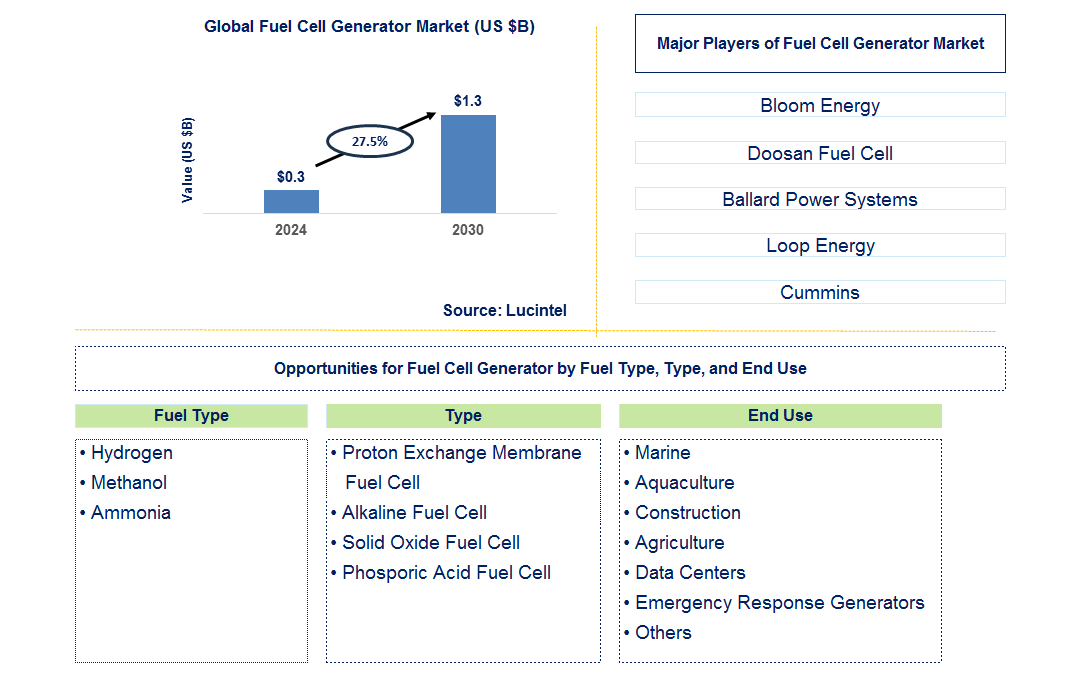
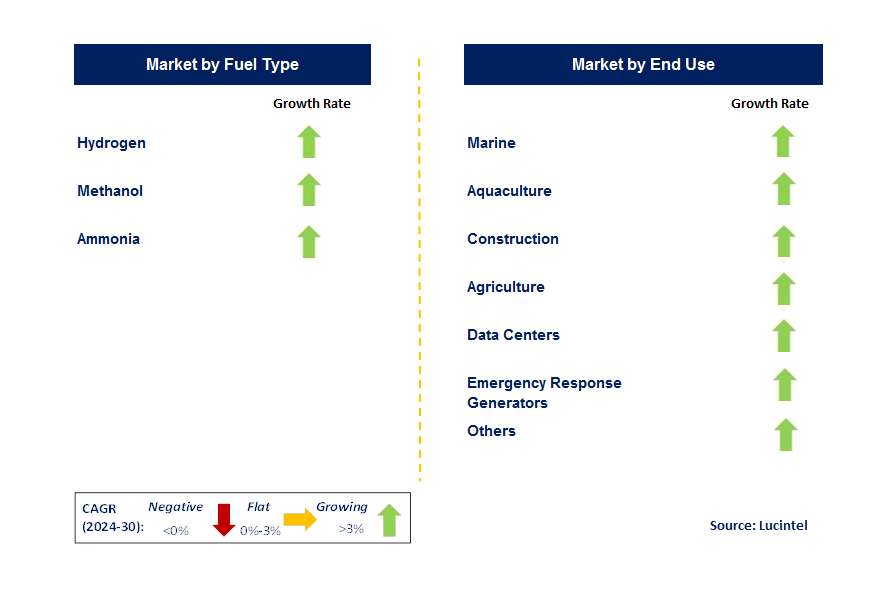
The future of the global fuel cell generator market looks promising with opportunities in the marine, aquaculture, construction, agriculture, data center, and emergency response generator markets. The global fuel cell generator market is expected to reach an estimated $1.3 billion by 2030 with a CAGR of 27.5% from 2024 to 2030. The major drivers for this market are growing demand for reliable and clean power and rising awareness of the environmental benefits of fuel cells.• Lucintel forecasts that ammonia is expected to witness the highest growth over the forecast period.
• Within this market, marine is expected to witness the highest growth.
• North America is expected to witness highest growth over the forecast period. A more than 150-page report is developed to help in your business decisions.
Emerging Trends in the Fuel Cell Generator Market
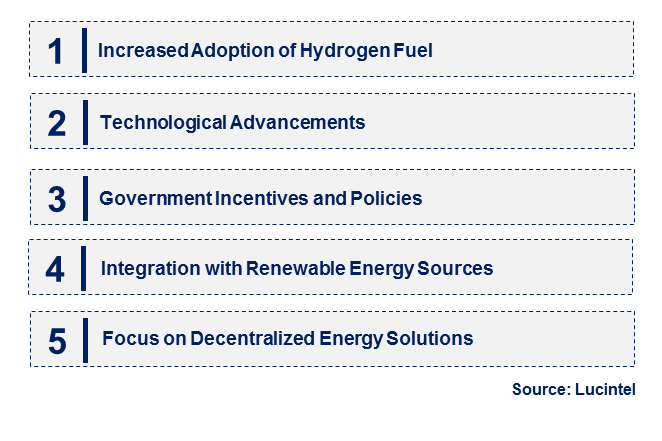
The fuel cell generator market is evolving rapidly, driven by technological advancements, policy changes, and growing environmental concerns. Below are five key emerging trends that are shaping the market.• Increased Adoption of Hydrogen Fuel: As countries aim for carbon neutrality, hydrogen is emerging as a viable alternative energy source. This shift is driving investments in hydrogen production and infrastructure, making fuel cell generators more accessible and economically feasible for various applications.
• Technological Advancements: Innovations in fuel cell technologies, such as solid oxide fuel cells (SOFC) and proton exchange membrane fuel cells (PEMFC), are enhancing efficiency and reducing costs. These advancements are crucial for expanding fuel cell applications in sectors like transportation and stationary power generation.
• Government Incentives and Policies: Governments worldwide are introducing policies and incentives to promote clean energy technologies. Subsidies for fuel cell research and infrastructure development are accelerating market growth, providing a robust framework for industry players.
• Integration with Renewable Energy Sources: The synergy between fuel cell technology and renewable energy sources, such as wind and solar, is gaining traction. This integration not only enhances energy security but also ensures a stable and sustainable energy supply.
• Focus on Decentralized Energy Solutions: There is a growing trend toward decentralized energy systems, with fuel cell generators providing reliable power in remote areas. This shift is particularly significant in developing regions, where traditional energy infrastructure may be lacking. These trends collectively highlight a significant transformation in the fuel cell generator market, moving toward more sustainable and efficient energy solutions.
Recent Developments in the Fuel Cell Generator Market
Recent advancements in the fuel cell generator market are reshaping the landscape of clean energy technology. Below are five key developments that illustrate this transformation.• Collaboration with Automotive Industry: Partnerships between fuel cell manufacturers and automotive companies are on the rise. These collaborations aim to enhance fuel cell efficiency and reduce costs, making them a viable option for commercial vehicles and public transport systems.
• Expansion of Hydrogen Infrastructure: Investment in hydrogen refueling stations is increasing, particularly in regions with ambitious hydrogen initiatives. This expansion is crucial for supporting the growth of fuel cell electric vehicles (FCEVs) and ensuring fuel availability for generators.
• Research on Next-Generation Fuel Cells: Ongoing research focuses on developing next-generation fuel cells that can operate at higher efficiencies and lower costs. These innovations aim to make fuel cells competitive with traditional energy sources, expanding their market reach.
• Enhanced Energy Storage Solutions: Advances in energy storage technology are complementing fuel cell generators. By integrating battery systems, fuel cells can provide a more stable power supply, enhancing their attractiveness for both residential and commercial applications.
• Increased Focus on Sustainability: There is a growing emphasis on sustainable practices within the fuel cell sector. Manufacturers are adopting eco-friendly production methods and materials, aligning with global sustainability goals and consumer preferences. These developments indicate a robust shift toward a cleaner energy future, positioning fuel cell generators as key players in achieving energy transition goals.
Strategic Growth Opportunities for Fuel Cell Generator Market
The fuel cell generator market presents numerous strategic growth opportunities across various applications. Here are five key areas poised for growth.• Transportation Sector: The demand for clean transportation solutions is rising. Fuel cell generators can provide zero-emission power for buses and commercial vehicles, aligning with global efforts to reduce air pollution and greenhouse gas emissions.
• Remote Power Generation: Fuel cell generators are ideal for off-grid and remote applications, offering reliable energy solutions in areas lacking traditional power infrastructure. This market segment is growing, particularly in rural and underserved regions.
• Backup Power Systems: Increasing reliance on uninterrupted power supply for critical infrastructure and commercial operations presents a significant opportunity for fuel cell generators. Their ability to provide reliable backup power enhances their appeal in sectors like healthcare and data centers.
• Residential Applications: The residential energy market is exploring fuel cell generators for home energy solutions. These generators can provide clean, efficient energy for households, particularly in regions with incentives for renewable energy adoption.
• Industrial Applications: Industries are looking to decarbonize operations. Fuel cell generators can offer a sustainable alternative to conventional power sources, supporting the shift toward greener manufacturing processes. These opportunities reflect a dynamic market landscape, with fuel cell generators positioned to play a crucial role in various applications, further driving their adoption and growth.
Fuel Cell Generator Market Driver and Challenges
The fuel cell generator market is influenced by a range of drivers and challenges, shaped by technological advancements, economic factors, and regulatory environments. Here’s an overview of the key drivers and challenges affecting the market. The factors responsible for driving the fuel cell generator market include: 1. Government Support and Incentives: National policies promoting clean energy and investments in hydrogen infrastructure significantly drive market growth. Governments are providing funding and tax incentives, fostering innovation and expansion within the fuel cell sector. 2. Growing Demand for Clean Energy: The global shift toward sustainable energy solutions is propelling the demand for fuel cell generators. As industries seek to reduce carbon footprints, fuel cells offer an attractive, zero-emission alternative. 3. Technological Innovations: Advances in fuel cell technology are improving efficiency and reducing costs. These innovations make fuel cells more competitive with traditional energy sources, encouraging adoption across various sectors. 4. Rising Energy Security Concerns: As energy demands increase, the need for reliable and independent energy sources grows. Fuel cell generators can provide stable power in regions with unstable energy supplies, addressing energy security challenges. 5. Partnerships and Collaborations: Collaborations between fuel cell manufacturers, automotive companies, and research institutions are driving technological advancements and expanding market opportunities. These alliances facilitate knowledge sharing and innovation. Challenges in the fuel cell generator market are: 1. High Initial Costs: The upfront costs associated with fuel cell generators remain a significant barrier to widespread adoption. Although prices are decreasing, high initial investments can deter potential users. 2. Limited Infrastructure: The lack of adequate hydrogen refueling infrastructure hinders the growth of fuel cell technologies, particularly in transportation applications. Investments in infrastructure development are crucial for market expansion. 3. Competition from Alternative Technologies: Fuel cells face competition from other clean energy technologies, such as batteries and solar power. This competitive landscape can affect market share and growth prospects. 4. Regulatory Uncertainty: Inconsistent regulations regarding hydrogen production and use can create challenges for fuel cell manufacturers. Clear and supportive policies are essential for fostering market growth. 5. Public Awareness and Perception: There is a general lack of awareness regarding the benefits and capabilities of fuel cell technology. Educating the public and potential users is essential for driving adoption. In conclusion, the interplay of these drivers and challenges significantly influences the fuel cell generator market. Understanding these dynamics is crucial for stakeholders aiming to navigate this evolving landscape effectively.List of Fuel Cell Generator Companies
Companies in the market compete on the basis of product quality offered. Major players in this market focus on expanding their manufacturing facilities, R&D investments, infrastructural development, and leverage integration opportunities across the value chain. Through these strategies fuel cell generator companies cater increasing demand, ensure competitive effectiveness, develop innovative products & technologies, reduce production costs, and expand their customer base. Some of the fuel cell generator companies profiled in this report include-• Bloom Energy
• Doosan Fuel Cell
• Ballard Power Systems
• Loop Energy
• Cummins
Fuel Cell Generator by Segment
The study includes a forecast for the global fuel cell generator by fuel type, type, end use, and region.Fuel Cell Generator Market by Fuel Type [Analysis by Value from 2018 to 2030]:
• Hydrogen
• Methanol
• Ammonia
Fuel Cell Generator Market by Type [Analysis by Value from 2018 to 2030]:
• Proton Exchange Membrane Fuel Cell
• Alkaline Fuel Cell
• Solid Oxide Fuel Cell
• Phosporic Acid Fuel Cell
Fuel Cell Generator Market by End Use [Analysis by Value from 2018 to 2030]:
• Marine
• Aquaculture
• Construction
• Agriculture
• Data Centers
• Emergency Response Generators
Fuel Cell Generator Market by Region [Analysis by Value from 2018 to 2030]:
• North America
• Europe
• Asia Pacific
• The Rest of the World
Country Wise Outlook for the Fuel Cell Generator Market
Major players in the market are expanding their operations and forming strategic partnerships to strengthen their positions. Below image highlights recent developments by major fuel cell generator producers in key regions: the USA, China, India, Japan, and Germany• United States: A surge in investment for hydrogen infrastructure has emerged, with states like California and New York leading the charge. Companies like Bloom Energy have rolled out fuel cell generators that cater to both stationary and portable applications, emphasizing renewable energy integration for a sustainable energy future.
• China: China continues to lead in fuel cell technology with substantial government backing. The recent unveiling of the "Hydrogen Fuel Cell Vehicle Industry Development Plan" aims to increase production capacity, reduce costs, and promote the use of fuel cell generators in public transport and commercial vehicles, contributing to national energy goals.
• Germany: Germany is advancing its hydrogen strategy, focusing on developing fuel cell generators that utilize green hydrogen. The government has announced funding for research and innovation projects aimed at enhancing efficiency and reducing production costs, positioning Germany as a leader in European fuel cell technology.
• India: India is beginning to explore fuel cell technology, particularly for powering remote areas and enhancing energy security. The Indian government is promoting research in fuel cell generators as part of its renewable energy initiatives, focusing on partnerships with private firms for technology development and infrastructure growth.
• Japan: Japan remains at the forefront of fuel cell technology with initiatives like the "Hydrogen Roadmap." Major companies, including Toshiba and Honda, are innovating fuel cell generators for residential and commercial use, aiming to achieve significant reductions in greenhouse gas emissions through increased adoption and infrastructure development.

Features of the Global Fuel Cell Generator Market
Market Size Estimates: Fuel cell generator market size estimation in terms of value ($B). Trend and Forecast Analysis: Market trends (2018 to 2023) and forecast (2024 to 2030) by various segments and regions. Segmentation Analysis: Fuel cell generator market size by fuel type, type, end use, and region in terms of value ($B). Regional Analysis: Fuel cell generator market breakdown by North America, Europe, Asia Pacific, and Rest of the World. Growth Opportunities: Analysis of growth opportunities in different fuel types, types, end uses, and regions for the fuel cell generator market. Strategic Analysis: This includes M&A, new product development, and competitive landscape of the fuel cell generator market. Analysis of competitive intensity of the industry based on Porter’s Five Forces model.If you are looking to expand your business in this or adjacent markets, then contact us. We have done hundreds of strategic consulting projects in market entry, opportunity screening, due diligence, supply chain analysis, M & A, and more.

FAQ
Q1. What is the fuel cell generator market size? Answer: The global fuel cell generator market is expected to reach an estimated $1.3 billion by 2030. Q2. What is the growth forecast for fuel cell generator market? Answer: The global fuel cell generator market is expected to grow with a CAGR of 27.5% from 2024 to 2030. Q3. What are the major drivers influencing the growth of the fuel cell generator market? Answer: The major drivers for this market are growing demand for reliable and clean power and rising awareness of the environmental benefits of fuel cells. Q4. What are the major segments for fuel cell generator market? Answer: The future of the fuel cell generator market looks promising with opportunities in the marine, aquaculture, construction, agriculture, data center, and emergency response generator markets. Q5. Who are the key fuel cell generator market companies? Answer: Some of the key fuel cell generator companies are as follows:• Bloom Energy
• Doosan Fuel Cell
• Ballard Power Systems
• Loop Energy
• Cummins Q6. Which fuel cell generator market segment will be the largest in future? Answer: Lucintel forecasts that ammonia is expected to witness the highest growth over the forecast period. Q7. In fuel cell generator market, which region is expected to be the largest in next 5 years? Answer: North America is expected to witness highest growth over the forecast period. Q.8 Do we receive customization in this report? Answer: Yes, Lucintel provides 10% customization without any additional cost.
Table of Contents
Methodology
- In-depth interviews of the major players in this market
- Detailed secondary research from competitors’ financial statements and published data
- Extensive searches of published works, market, and database information pertaining to industry news, company press releases, and customer intentions
- A compilation of the experiences, judgments, and insights of Lucintel’s professionals, who have analyzed and tracked this market over the years.


Buy Now
Choose a license that fits your team. Instant PDF delivery.
Prices exclude taxes. Instant delivery. Custom licensing available on request.
Key Questions
- • What are some of the most promising, high-growth opportunities for the fuel cell generator market by fuel type (hydrogen, methanol, and ammonia), type (proton exchange membrane fuel cell, alkaline fuel cell, solid oxide fuel cell, and phosporic acid fuel cell), end use (marine, aquaculture, construction, agriculture, data centers, emergency response generators, and others), and region (North America, Europe, Asia Pacific, and the Rest of the World)?
- • Which segments will grow at a faster pace and why?
- • Which region will grow at a faster pace and why?
- • What are the key factors affecting market dynamics? What are the key challenges and business risks in this market?
- • What are the business risks and competitive threats in this market?
- • What are the emerging trends in this market and the reasons behind them?
- • What are some of the changing demands of customers in the market?
- • What are the new developments in the market? Which companies are leading these developments?
- • Who are the major players in this market? What strategic initiatives are key players pursuing for business growth?
- • What are some of the competing products in this market and how big of a threat do they pose for loss of market share by material or product substitution?
- • What M&A activity has occurred in the last 5 years and what has its impact been on the industry? For any questions related to Fuel Cell Generator Market, Fuel Cell Generator Market Size, Fuel Cell Generator Market Growth, Fuel Cell Generator Market Analysis, Fuel Cell Generator Market Report, Fuel Cell Generator Market Share, Fuel Cell Generator Market Trends, Fuel Cell Generator Market Forecast, Fuel Cell Generator Companies, write Lucintel analyst at email: helpdesk@lucintel.com. We will be glad to get back to you soon.


