
Report Feature
Fitness Supplement Market Trends and Forecast
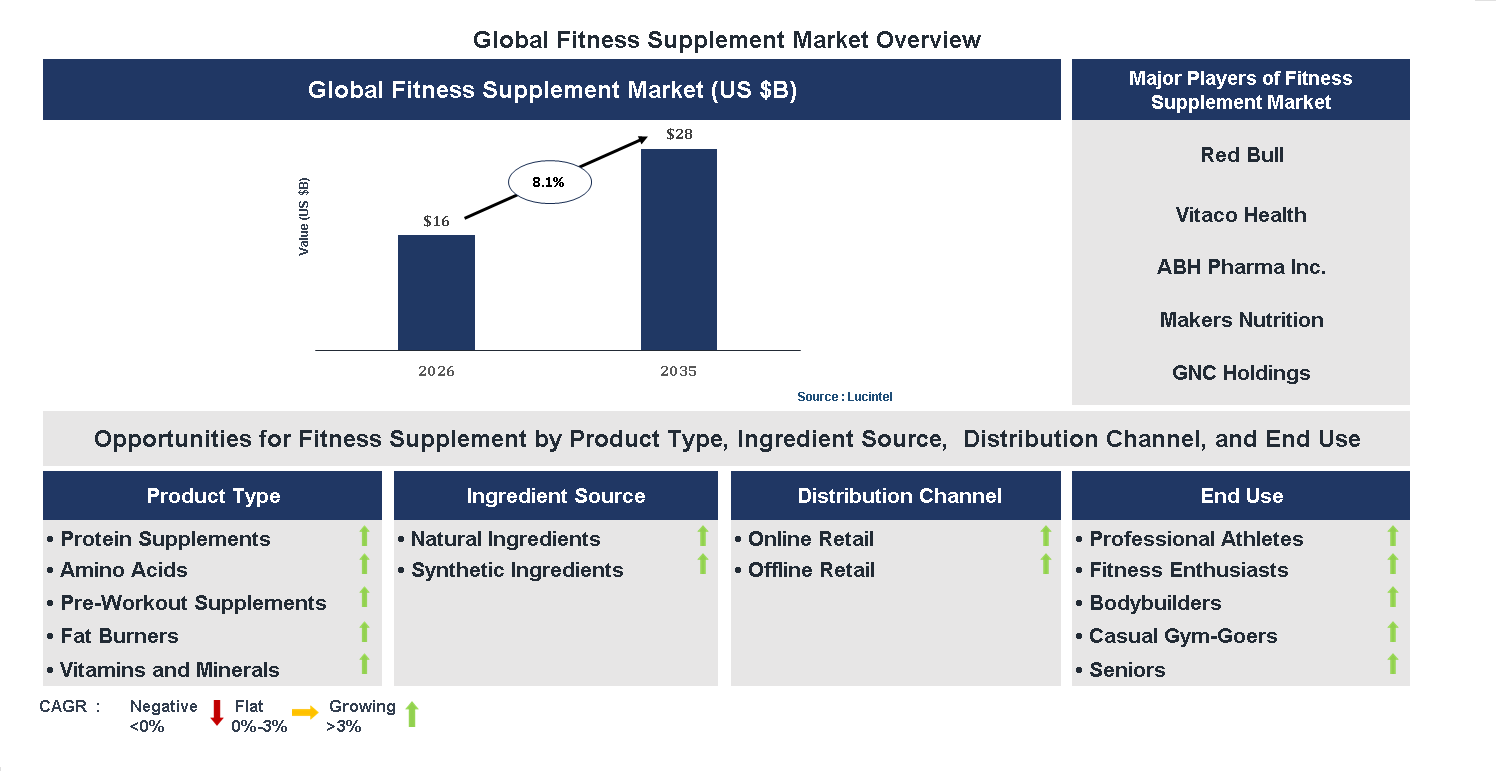
The future of the global fitness supplement market looks promising with opportunities in the professional athlete, fitness enthusiast, bodybuilder, casual gym-goer, and senior markets. The global fitness supplement market is expected to reach an estimated $28 billion by 2035 with a CAGR of 8.1% from 2026 to 2035. The major drivers for this market are the increasing demand for performance nutrition, the rising health awareness among consumers, and the growing adoption of active lifestyles.• Lucintel forecasts that, within the product type category, protein supplement is expected to witness the highest growth over the forecast period.
• Within the end use category, professional athlete is expected to witness the highest growth.
• In terms of region, North America is expected to witness the highest growth over the forecast period. Gain valuable insights for your business decisions with our comprehensive 150+ page report. Sample figures with some insights are shown below.
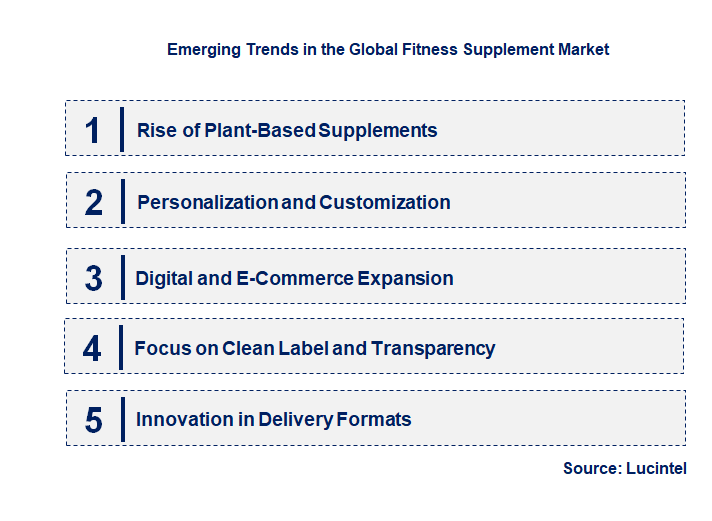
Emerging Trends in the Fitness Supplement Market
The fitness supplement market is experiencing rapid growth driven by increasing health consciousness, technological advancements, and evolving consumer preferences. As more individuals prioritize wellness and physical fitness, companies are innovating to meet these demands. The market is also influenced by regulatory changes, digital marketing, and the rise of personalized nutrition. These factors collectively shape a dynamic landscape where innovation and consumer engagement are key. Understanding the emerging trends is essential for stakeholders to capitalize on opportunities and navigate challenges effectively. The following five key trends highlight the major developments currently shaping the fitness supplement market.• Rise of Plant-Based Supplements: The demand for plant-based fitness supplements is surging as consumers seek natural, sustainable, and clean-label products. This trend is driven by increasing awareness of environmental issues and health benefits associated with plant-based ingredients. Companies are developing vegan protein powders, plant-derived amino acids, and organic superfoods to cater to this segment. The shift towards plant-based options not only broadens consumer choices but also aligns with the global movement towards sustainability, influencing product innovation and marketing strategies within the industry.
• Personalization and Customization: Consumers now prefer tailored fitness supplements that meet their specific health goals, dietary restrictions, and genetic profiles. Advances in technology, such as DNA testing and AI-driven analytics, enable brands to offer personalized nutrition plans and supplements. This trend enhances consumer engagement and satisfaction by providing targeted solutions, improving efficacy, and fostering brand loyalty. Personalization is transforming the market from generic products to bespoke formulations, creating new opportunities for brands to differentiate themselves and build deeper customer relationships.
• Digital and E-commerce Expansion: The proliferation of online platforms and digital marketing has revolutionized how fitness supplements are marketed and sold. E-commerce channels provide convenience, a wider reach, and access to detailed product information, reviews, and personalized recommendations. Social media influencers and fitness apps play a significant role in shaping consumer preferences and driving sales. This trend allows brands to directly connect with consumers, gather data for product development, and adapt quickly to market changes, making digital presence a critical component of market success.
• Focus on Clean Label and Transparency: Consumers increasingly demand transparency regarding ingredient sourcing, manufacturing processes, and health claims. The clean label movement emphasizes natural, minimally processed ingredients free from artificial additives and preservatives. Brands are responding by providing clear, honest labeling and third-party testing to build trust. This trend influences product development, marketing, and regulatory compliance, fostering a more informed and confident consumer base. Transparency not only enhances brand reputation but also aligns with the broader health and wellness ethos prevalent in the market.
• Innovation in Delivery Formats: The market is witnessing diversification in supplement formats, including powders, ready-to-drink beverages, gummies, and functional foods. These innovative formats cater to consumer preferences for convenience, taste, and portability. Advances in encapsulation and delivery technology improve the bioavailability and stability of active ingredients. This trend expands market reach by attracting new consumer segments, such as busy professionals and younger demographics. It also encourages product experimentation and differentiation, fueling growth through novel consumption experiences and improved user compliance. These trends are fundamentally reshaping the fitness supplement market by emphasizing sustainability, personalization, digital engagement, transparency, and innovation. They are driving product development, marketing strategies, and consumer interactions, ultimately creating a more dynamic, responsive, and competitive industry landscape.
Recent Development in the Fitness Supplement Market
The fitness supplement market is experiencing rapid growth driven by increasing health awareness, technological advancements, and evolving consumer preferences. As more individuals prioritize wellness and fitness, innovative products and personalized solutions are emerging. Market players are expanding their offerings to meet diverse needs, while regulatory frameworks are adapting to ensure safety and transparency. These developments are shaping a dynamic landscape, creating new opportunities for growth and competition. Understanding these key trends is essential for stakeholders aiming to capitalize on this expanding industry.• Technological Innovations in Product Development: Advancements in biotechnology and ingredient sourcing are enabling the creation of more effective, targeted supplements. These innovations improve absorption rates and efficacy, attracting health-conscious consumers seeking personalized nutrition. Companies investing in R&D are gaining competitive advantages by offering cutting-edge products that meet specific fitness goals, such as muscle gain or weight loss. This trend enhances product differentiation and accelerates market growth, fostering a more sophisticated and consumer-centric industry.
• Rising Demand for Plant-Based and Natural Supplements: Consumers are increasingly seeking plant-based, organic, and natural ingredients due to health, ethical, and environmental concerns. This shift is prompting manufacturers to develop plant-derived formulations that appeal to vegan and eco-conscious markets. The demand for clean-label products is driving innovation and expanding market share for natural supplement brands. As awareness grows, this trend is expected to significantly influence product development, marketing strategies, and consumer loyalty within the fitness supplement industry.
• Expansion of E-commerce and Direct-to-Consumer Sales: The digital shift has transformed how consumers purchase fitness supplements, with online platforms becoming primary sales channels. E-commerce offers convenience, wider product selection, and personalized shopping experiences, boosting sales volume. Brands leveraging direct-to-consumer models can gather valuable consumer data, enhance engagement, and reduce distribution costs. This development accelerates market penetration, especially in emerging regions, and fosters rapid innovation cycles, making the industry more agile and responsive to consumer preferences.
• Regulatory Changes and Quality Standards: Governments and industry bodies are implementing stricter regulations to ensure product safety, transparency, and efficacy. These measures include ingredient disclosures, quality certifications, and advertising standards. Compliance enhances consumer trust and brand credibility, encouraging companies to invest in quality assurance. Regulatory developments also create barriers to entry, fostering a more competitive environment focused on innovation and safety. Overall, these changes promote a more trustworthy market, benefiting consumers and reputable brands alike.
• Growing Focus on Personalized Nutrition and Digital Health Integration: Advances in data analytics, wearable technology, and AI are enabling personalized supplement plans tailored to individual health profiles and fitness goals. This integration enhances user engagement and effectiveness, driving demand for customized products. Companies adopting digital health tools can better track progress and adjust formulations accordingly. This trend is transforming the industry from generic solutions to highly tailored offerings, fostering loyalty and opening new revenue streams. It positions the market for sustainable growth driven by technological convergence. The overall impact of these developments is a more innovative, consumer-centric, and regulated fitness supplement market. Increased product diversity, technological integration, and e-commerce expansion are fueling rapid growth. Enhanced safety standards and personalized solutions are building consumer trust and loyalty. These trends collectively create a competitive landscape that encourages innovation, improves product quality, and broadens market reach, ensuring sustained industry expansion and increased consumer engagement.
Strategic Growth Opportunities in the Fitness Supplement Market
The fitness supplement market is experiencing rapid expansion driven by increasing health awareness, rising fitness trends, and a growing focus on personalized nutrition. Consumers are seeking effective, convenient, and scientifically backed products to enhance performance, recovery, and overall wellness. Innovations in ingredient formulations and digital marketing strategies are further fueling growth. This dynamic environment presents numerous opportunities for market players to capitalize on emerging consumer preferences and technological advancements, ensuring sustained expansion and competitive advantage.• Product Innovation and Diversification: Developing new supplement formulations tailored to specific fitness goals, such as muscle gain, endurance, or weight management, can attract diverse consumer segments. Incorporating natural, organic, and clean-label ingredients aligns with health-conscious trends. Offering innovative delivery formats like powders, ready-to-drink, or gummies enhances convenience and appeal. Continuous R&D efforts to improve efficacy and taste will differentiate brands and foster customer loyalty, driving overall market growth.
• Expansion into Emerging Markets: Increasing urbanization, rising disposable incomes, and growing health awareness in developing regions present significant opportunities. Localized marketing strategies and affordable product offerings can penetrate these markets effectively. Establishing distribution channels and partnerships with local retailers will facilitate market entry. As awareness about fitness and wellness grows, demand for supplements will surge, enabling companies to capture new customer bases and expand their global footprint.
• Digital Marketing and E-Commerce Growth: Leveraging digital platforms, social media, and influencer collaborations can significantly boost brand visibility and consumer engagement. E-commerce channels provide direct access to consumers, enabling personalized marketing and streamlined purchasing experiences. Data analytics can optimize marketing campaigns and product recommendations. The shift towards online shopping, accelerated by the pandemic, offers a cost-effective way to reach a broader audience and increase sales, fueling overall market expansion.
• Focus on Personalized Nutrition Solutions: Advances in nutrigenomics and wearable technology enable tailored supplement regimens based on individual genetic profiles, activity levels, and health data. Offering personalized products enhances efficacy and customer satisfaction. Subscription models and digital health platforms can facilitate ongoing customization and engagement. This approach addresses specific needs, fosters brand loyalty, and opens new revenue streams, positioning companies at the forefront of the evolving fitness supplement landscape.
• Strategic Partnerships and Collaborations: Collaborating with fitness centers, sports teams, and health professionals can enhance credibility and expand reach. Co-developing products with renowned athletes or experts can boost brand trust. Partnerships with technology firms can integrate supplements with fitness tracking apps for holistic health solutions. Such collaborations facilitate market penetration, innovation, and consumer trust, ultimately accelerating growth and establishing a competitive edge in the evolving fitness supplement industry. These growth opportunities collectively position the fitness supplement market for sustained expansion by addressing evolving consumer needs, leveraging technological advancements, and exploring new geographic regions. Companies that innovate, personalize, and strategically collaborate will be best placed to capitalize on the increasing demand for health and fitness products, ensuring long-term success in this competitive landscape.
Fitness Supplement Market Driver and Challenges
The fitness supplement market is influenced by a variety of technological, economic, and regulatory factors that shape its growth and development. Advances in manufacturing technologies have enabled the production of innovative and effective supplements, while increasing health consciousness among consumers drives demand. Economic factors such as rising disposable incomes and urbanization contribute to market expansion, whereas regulatory frameworks ensure product safety and quality standards. Additionally, digital marketing and e-commerce platforms facilitate wider reach and consumer engagement. However, challenges such as regulatory restrictions, market saturation, and concerns over product safety pose hurdles. Understanding these drivers and challenges is essential for stakeholders to navigate the evolving landscape effectively. The factors responsible for driving the fitness supplement market include:• Technological Innovations: The development of advanced manufacturing processes and ingredient formulations has led to more effective and diverse supplement options. Innovations such as personalized nutrition, plant-based ingredients, and clean-label products cater to evolving consumer preferences. These technological advancements improve product efficacy, safety, and appeal, thereby boosting consumer confidence and demand. Moreover, digital tools enable companies to customize supplements, enhancing customer satisfaction and loyalty. As technology continues to evolve, the market is expected to see a surge in innovative products that meet specific health and fitness goals, further fueling growth.
• Rising Health Awareness: Increasing awareness about health, fitness, and wellness among consumers is a significant driver. The growing prevalence of lifestyle-related diseases and the desire for a healthier lifestyle motivate individuals to incorporate supplements into their routines. Social media influencers, fitness communities, and health campaigns amplify this awareness, encouraging consumers to seek nutritional support. This trend is particularly prominent among millennials and Generation Z, who prioritize fitness and wellness. As health consciousness continues to rise globally, demand for fitness supplements that support muscle building, weight management, and overall wellness is expected to expand substantially.
• Urbanization and Changing Lifestyles: Rapid urbanization has led to busier lifestyles, reducing the time available for traditional meal preparation and exercise routines. Consumers increasingly turn to convenient nutritional solutions like supplements to meet their dietary needs efficiently. Urban populations tend to have higher disposable incomes, enabling them to spend on premium fitness products. Additionally, the rise of gym culture and fitness centers in urban areas promotes supplement consumption. This shift towards on-the-go nutrition and fitness-oriented lifestyles sustains the growth of the market, especially in developing regions experiencing rapid urban expansion.
• E-commerce and Digital Marketing: The proliferation of online retail platforms and digital marketing strategies has significantly expanded the reach of fitness supplements. E-commerce offers consumers easy access to a wide range of products, detailed information, and competitive pricing. Social media marketing, influencer endorsements, and targeted advertising create awareness and influence purchasing decisions. The convenience of online shopping, coupled with personalized recommendations and reviews, enhances consumer engagement. As digital channels continue to grow, they play a crucial role in driving sales, especially among younger demographics who prefer online transactions, thereby accelerating market growth.
• Demographic Shifts and Aging Population: Changing demographics, including the increasing number of health-conscious millennials and aging populations seeking wellness solutions, are key drivers. Younger consumers focus on performance enhancement and aesthetic appeal, fueling demand for sports and muscle-building supplements. Conversely, older adults seek supplements to maintain mobility, bone health, and overall vitality. This broad demographic appeal expands the market scope. Additionally, rising awareness about preventive healthcare encourages consumers across age groups to adopt supplements proactively. These demographic shifts ensure sustained demand and diversification of product offerings within the market. The challenges facing the fitness supplement market include:
• Regulatory Restrictions: Stringent regulations and approval processes for dietary supplements pose significant hurdles. Different countries have varying standards regarding ingredient safety, labeling, and claims, complicating market entry and compliance. Regulatory bodies such as the FDA or EFSA enforce strict guidelines, and non-compliance can lead to product recalls, legal penalties, or bans. This regulatory landscape increases costs for manufacturers and limits innovation. Moreover, evolving regulations require continuous monitoring and adaptation, which can delay product launches and impact profitability. Navigating these complex regulatory environments remains a critical challenge for market players aiming for global expansion.
• Market Saturation and Intense Competition: The rapid proliferation of brands and products has led to a saturated market, making it difficult for new entrants to establish a foothold. Established players benefit from brand loyalty, extensive distribution networks, and economies of scale, creating high barriers for newcomers. Intense competition often results in price wars, reducing profit margins. Additionally, product differentiation becomes challenging amid numerous similar offerings, leading to consumer confusion. Market saturation also limits growth opportunities in mature regions, compelling companies to seek emerging markets, which may involve additional regulatory and logistical challenges.
• Safety and Quality Concerns: Consumer skepticism regarding the safety and efficacy of supplements hampers market growth. Incidents of adulteration, contamination, or false health claims have raised concerns about product safety. Such issues can lead to negative publicity, loss of consumer trust, and regulatory crackdowns. Manufacturers face pressure to ensure high-quality standards, which increases production costs. The lack of standardized testing and certification across regions further complicates quality assurance. Addressing these safety concerns is vital for maintaining consumer confidence and ensuring sustainable growth in the competitive landscape. The fitness supplement market is driven by technological advancements, rising health awareness, urbanization, digital marketing, and demographic shifts. However, regulatory complexities, market saturation, and safety concerns present notable challenges. These factors collectively influence the markets trajectory, requiring stakeholders to innovate, adapt, and prioritize quality to capitalize on growth opportunities. The interplay of these drivers and challenges will shape the future landscape, determining the pace and nature of market expansion.
List of Fitness Supplement Companies
Companies in the market compete on the basis of product quality offered. Major players in this market focus on expanding their manufacturing facilities, R&D investments, infrastructural development, and leverage integration opportunities across the value chain. With these strategies fitness supplement companies cater increasing demand, ensure competitive effectiveness, develop innovative products & technologies, reduce production costs, and expand their customer base. Some of the fitness supplement companies profiled in this report include-• Red Bull
• Vitaco Health
• ABH Pharma Inc.
• Makers Nutrition
• GNC Holdings
• Monster Beverage
• Glanbia Group
• Abbott Laboratories
• GlaxoSmithKline(GSK)
• Suppleform
Fitness Supplement Market by Segment
The study includes a forecast for the global fitness supplement market by product type, ingredient source, distribution channel, end use, and region.Fitness Supplement Market by Product Type [Value from 2019 to 2035]:
• Protein Supplements
• Amino Acids
• Pre-Workout Supplements
• Fat Burners
• Vitamins and Minerals
Fitness Supplement Market by Ingredient Source [Value from 2019 to 2035]:
• Natural Ingredients
• Synthetic Ingredients
Fitness Supplement Market by Distribution Channel [Value from 2019 to 2035]:
• Online Retail
• Offline Retail
Fitness Supplement Market by End Use [Value from 2019 to 2035]:
• Professional Athletes
• Fitness Enthusiasts
• Bodybuilders
• Casual Gym-Goers
• Seniors
Fitness Supplement Market by Region [Value from 2019 to 2035]:
• North America
• Europe
• Asia Pacific
• The Rest of the World
Country Wise Outlook for the Fitness Supplement Market
The global fitness supplement market has experienced rapid growth, driven by rising health awareness, growing fitness trends, and technological innovations. Consumers are seeking personalized and effective products, prompting companies to innovate and expand their offerings. Regulatory landscapes are evolving, influencing product development and marketing strategies. The United States, China, Germany, India, and Japan are key players in this market, each showing unique trends and advancements. These countries economic, cultural, and technological factors significantly shape their respective markets, leading to diverse growth patterns and opportunities.• United States: The US fitness supplement market continues to grow with a focus on clean, organic, and plant-based products. Innovations in personalized nutrition and the rise of online retail channels have expanded consumer access. Major brands are investing in research to develop scientifically backed formulations, and fitness influencers play a significant role in marketing. The market is also witnessing increased demand for pre-workout and recovery supplements, driven by a health-conscious demographic.
• China: Chinas market is rapidly expanding due to rising disposable incomes and a growing fitness culture. Domestic brands are gaining prominence by offering affordable, innovative products tailored to local preferences. E-commerce platforms like Tmall and JD.com facilitate widespread distribution. Regulatory improvements are enhancing product safety and quality standards. The integration of traditional Chinese medicine with modern supplements is also a notable trend, appealing to health-conscious consumers seeking holistic wellness solutions.
• Germany: The German fitness supplement market emphasizes quality, safety, and sustainability. Consumers prefer products with transparent ingredient lists and organic certifications. The market is driven by an aging population seeking health-maintenance solutions and by young fitness enthusiasts. Companies are investing in research collaborations to develop scientifically validated products. There is also a growing interest in vegan and allergen-free supplements, aligning with broader European health and environmental values.
• India: Indias market is experiencing rapid growth fueled by increasing urbanization and awareness of fitness and wellness. Local brands are emerging alongside international players, offering affordable and culturally relevant products. The rise of gym culture and sports activities has boosted demand for protein powders, energy drinks, and herbal supplements. E-commerce and digital marketing are vital channels for reaching consumers. Regulatory frameworks are evolving to ensure product safety, encouraging trust and market expansion.
• Japan: Japans fitness supplement market is characterized by a focus on functional and health-specific products, such as joint health and energy boosters. Consumers prefer high-quality, scientifically supported formulations. The aging population drives demand for supplements that promote longevity and wellness. Innovative delivery formats, including gummies and drinks, are gaining popularity. Companies are also integrating traditional ingredients like ginseng and matcha into modern supplement products, blending tradition with innovation to meet consumer preferences.

Features of the Global Fitness Supplement Market
Market Size Estimates: Fitness supplement market size estimation in terms of value ($B). Trend and Forecast Analysis: Market trends (2019 to 2025) and forecast (2026 to 2035) by various segments and regions. Segmentation Analysis: Fitness supplement market size by various segments, such as by product type, ingredient source, distribution channel, end use, and region in terms of value ($B). Regional Analysis: Fitness supplement market breakdown by North America, Europe, Asia Pacific, and Rest of the World. Growth Opportunities: Analysis of growth opportunities in different product types, ingredient sources, distribution channels, end uses, and regions for the fitness supplement market. Strategic Analysis: This includes M&A, new product development, and competitive landscape of the fitness supplement market. Analysis of competitive intensity of the industry based on Porter’s Five Forces model.
FAQ
Q1. What is the fitness supplement market size? Answer: The global fitness supplement market is expected to reach an estimated $28 billion by 2035. Q2. What is the growth forecast for fitness supplement market? Answer: The global fitness supplement market is expected to grow with a CAGR of 8.1% from 2026 to 2035. Q3. What are the major drivers influencing the growth of the fitness supplement market? Answer: The major drivers for this market are the increasing demand for performance nutrition, the rising health awareness among consumers, and the growing adoption of active lifestyles. Q4. What are the major segments for fitness supplement market? Answer: The future of the fitness supplement market looks promising with opportunities in the professional athlete, fitness enthusiast, bodybuilder, casual gym-goer, and senior markets. Q5. Who are the key fitness supplement market companies? Answer: Some of the key fitness supplement companies are as follows:• Red Bull
• Vitaco Health
• ABH Pharma Inc.
• Makers Nutrition
• GNC Holdings
• Monster Beverage
• Glanbia Group
• Abbott Laboratories
• GlaxoSmithKline(GSK)
• Suppleform Q6. Which fitness supplement market segment will be the largest in future? Answer: Lucintel forecasts that, within the product type category, protein supplement is expected to witness the highest growth over the forecast period. Q7. In fitness supplement market, which region is expected to be the largest in next 5 years? Answer: In terms of region, North America is expected to witness the highest growth over the forecast period. Q8. Do we receive customization in this report? Answer: Yes, Lucintel provides 10% customization without any additional cost.
Table of Contents
List of Figures
List of Tables
Methodology
- In-depth interviews of the major players in this market
- Detailed secondary research from competitors’ financial statements and published data
- Extensive searches of published works, market, and database information pertaining to industry news, company press releases, and customer intentions
- A compilation of the experiences, judgments, and insights of Lucintel’s professionals, who have analyzed and tracked this market over the years.


Buy Now
Choose a license that fits your team. Instant PDF delivery.
Prices exclude taxes. Instant delivery. Custom licensing available on request.
Key Questions
- • What are some of the most promising, high-growth opportunities for the fitness supplement market by product type (protein supplements, amino acids, pre-workout supplements, fat burners, and vitamins and minerals), ingredient source (natural ingredients and synthetic ingredients), distribution channel (online retail and offline retail), end use (professional athletes, fitness enthusiasts, bodybuilders, casual gym-goers, and seniors), and region (North America, Europe, Asia Pacific, and the Rest of the World)?
- • Which segments will grow at a faster pace and why?
- • Which region will grow at a faster pace and why?
- • What are the key factors affecting market dynamics? What are the key challenges and business risks in this market?
- • What are the business risks and competitive threats in this market?
- • What are the emerging trends in this market and the reasons behind them?
- • What are some of the changing demands of customers in the market?
- • What are the new developments in the market? Which companies are leading these developments?
- • Who are the major players in this market? What strategic initiatives are key players pursuing for business growth?
- • What are some of the competing products in this market and how big of a threat do they pose for loss of market share by material or product substitution?
- • What M&A activity has occurred in the last 7 years and what has its impact been on the industry? For any questions related to Fitness Supplement Market, Fitness Supplement Market Size, Fitness Supplement Market Growth, Fitness Supplement Market Analysis, Fitness Supplement Market Report, Fitness Supplement Market Share, Fitness Supplement Market Trends, Fitness Supplement Market Forecast, Fitness Supplement Companies, write Lucintel analyst at email: helpdesk@lucintel.com. We will be glad to get back to you soon.


