
Report Feature
Fish Hunting Equipment Market Trends and Forecast
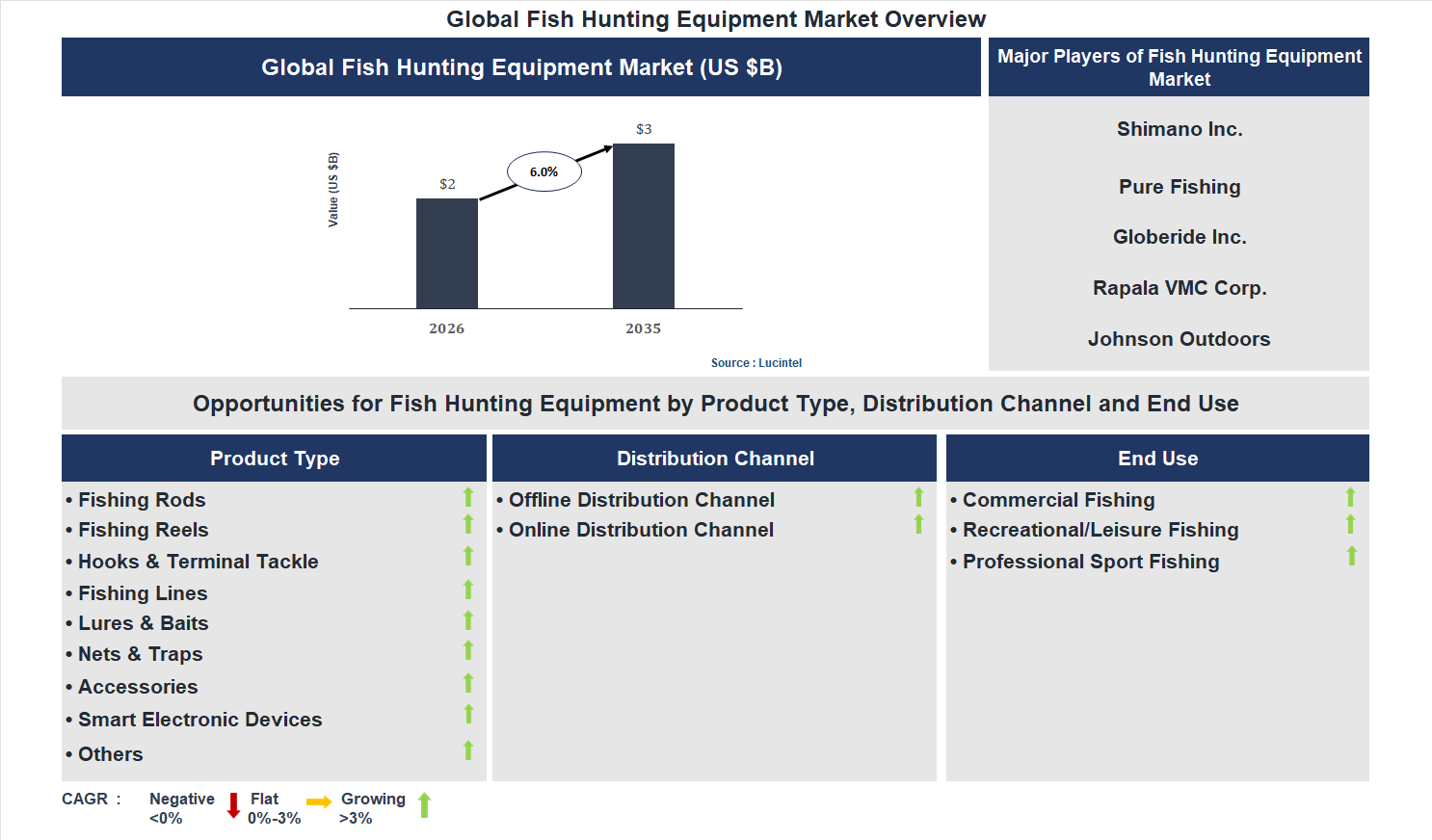
The future of the global fish hunting equipment market looks promising with opportunities in the commercial fishing, recreational/leisure fishing, and professional sport fishing markets. The global fish hunting equipment market is expected to reach an estimated $3 billion by 2035 with a CAGR of 6.1% from 2026 to 2035. The major drivers for this market are the rising demand for advanced & durable fishing gear, the growing demand for coastal & freshwater fishing activities, and the increasing awareness about leisure & hobby activities.• Lucintel forecasts that, within the product type category, fishing rod is expected to witness the highest growth over the forecast period.
• Within the end use category, recreational/leisure fishing is expected to witness the highest growth.
• In terms of region, APAC is expected to witness the highest growth over the forecast period. Gain valuable insights for your business decisions with our comprehensive 150+ page report. Sample figures with some insights are shown below.
Emerging Trends in the Fish Hunting Equipment Market
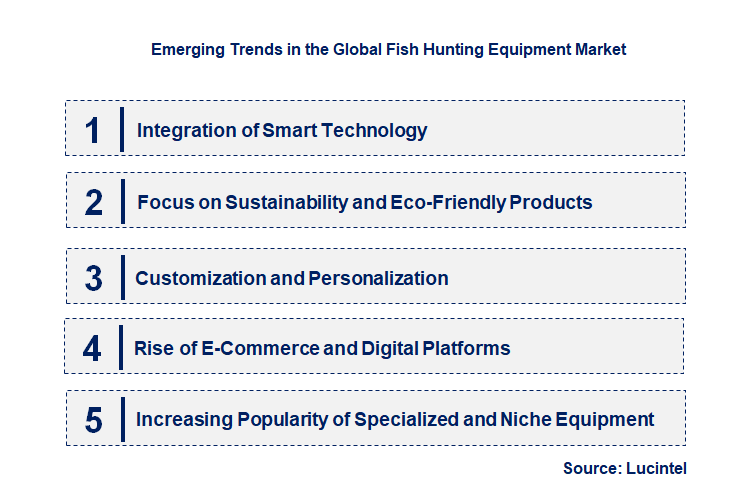
The fish hunting equipment market is experiencing rapid evolution driven by technological advancements, changing consumer preferences, and increasing awareness of sustainable fishing practices. As outdoor recreation and fishing activities grow globally, manufacturers are innovating to meet the demands for more efficient, eco-friendly, and user-friendly products. These developments are not only expanding market size but also transforming how enthusiasts engage with fishing. The following key trends highlight the major shifts shaping this industry, reflecting a move towards smarter, more sustainable, and accessible fishing solutions that cater to a diverse range of users and environments.• Integration of Smart Technology: The adoption of smart devices and IoT-enabled equipment is revolutionizing fish hunting. Fish finders, GPS-enabled boats, and mobile apps now provide real-time data, enhancing accuracy and efficiency. This trend allows anglers to locate fish more effectively, reducing time and effort while increasing success rates. The integration of technology also offers data tracking for improved fishing strategies and safety features, making the experience more convenient and engaging. As technology becomes more affordable, its adoption is expected to grow, broadening the market reach.
• Focus on Sustainability and Eco-Friendly Products: Increasing environmental awareness is driving demand for sustainable fishing gear. Manufacturers are developing eco-friendly materials, biodegradable lures, and non-toxic fishing lines to minimize ecological impact. Regulations and consumer preferences are pushing the industry toward sustainable practices, encouraging the use of renewable resources and reducing bycatch. This trend not only helps preserve aquatic ecosystems but also appeals to environmentally conscious consumers, fostering brand loyalty and opening new market segments focused on responsible fishing.
• Customization and Personalization: Consumers are seeking tailored fishing equipment that suits their specific needs and preferences. Manufacturers are offering customizable rods, reels, and accessories, allowing users to select features such as weight, length, and grip style. Personalization enhances user experience and satisfaction, fostering brand loyalty. This trend also includes modular equipment systems that can be adapted for different fishing environments or target species. As personalization becomes more accessible, it is expected to drive higher consumer engagement and differentiate brands in a competitive market.
• Rise of E-commerce and Digital Platforms: The shift towards online shopping is significantly impacting the fish hunting equipment market. E-commerce platforms provide a wider product selection, competitive pricing, and detailed customer reviews, influencing purchasing decisions. Digital marketing and social media also facilitate brand awareness and community building among fishing enthusiasts. This trend enables manufacturers to reach a global audience, reduce distribution costs, and gather valuable consumer data for targeted marketing. The convenience and accessibility of online channels are making it easier for consumers to upgrade their gear and stay informed about the latest innovations.
• Increasing Popularity of Specialized and Niche Equipment: As the market matures, there is a growing demand for specialized gear tailored to specific fishing techniques, environments, or target species. This includes ice fishing gear, deep-sea fishing equipment, and ultralight gear for freshwater fishing. Niche products cater to dedicated enthusiasts seeking high-performance, purpose-built tools. This trend encourages innovation and diversification within the market, allowing brands to target specific customer segments more effectively. It also promotes the development of advanced features and materials suited for challenging conditions, expanding the overall market scope. These trends are reshaping the fish hunting equipment market by fostering innovation, promoting sustainability, and enhancing consumer engagement. The integration of smart technology, focus on eco-friendly products, customization options, digital sales channels, and niche specialization are collectively driving growth and transforming how fishing enthusiasts access and utilize equipment. These developments are making the market more dynamic, inclusive, and environmentally responsible, ensuring its continued evolution in the coming years.
Recent Development in the Fish Hunting Equipment Market
The fish hunting equipment market is experiencing rapid innovation driven by technological advancements, increasing recreational fishing activities, and a growing global interest in sustainable fishing practices. Consumers seek more efficient, durable, and eco-friendly gear, prompting manufacturers to develop new products. Market players are also expanding their reach through online platforms and strategic partnerships. These developments are shaping a dynamic landscape, offering significant growth opportunities and transforming how enthusiasts engage with fish hunting activities worldwide.• Technological Innovations in Fish Finding Devices: The integration of GPS, sonar, and AI has revolutionized fish finding equipment, making it more accurate and user-friendly. These advancements enhance anglers success rates, reduce time spent searching for fish, and improve overall experience. As technology becomes more affordable, adoption rates are increasing across all skill levels, expanding the market. This innovation-driven growth is attracting new customers and encouraging existing users to upgrade, thereby boosting sales and market competitiveness.
• Eco-Friendly and Sustainable Equipment Development: Rising environmental awareness has prompted manufacturers to develop eco-friendly gear, such as biodegradable lures and sustainable fishing lines. These products minimize ecological impact and appeal to environmentally conscious consumers. The shift towards sustainability is also driven by regulations and consumer demand for responsible fishing practices. This trend not only enhances brand reputation but also opens new market segments, encouraging innovation and investment in green technologies within the fish hunting equipment industry.
• Expansion of Online Retail and E-Commerce Platforms: The rise of online shopping has significantly increased access to a wide range of fish hunting equipment. E-commerce platforms offer convenience, competitive pricing, and detailed product information, attracting a broader customer base. Manufacturers and retailers are leveraging digital marketing and direct-to-consumer sales strategies to expand their reach globally. This shift has led to increased sales volumes, improved customer engagement, and the emergence of niche markets, fueling overall industry growth and diversification.
• Customization and Personalization of Equipment: Consumers now seek tailored gear that suits their specific fishing styles and preferences. Manufacturers are offering customizable options, including adjustable rods, personalized lures, and modular accessories. This trend enhances user satisfaction and loyalty, driving higher sales and brand differentiation. The ability to personalize equipment also encourages innovation, as companies develop versatile products that cater to diverse needs, thereby expanding market opportunities and fostering competitive advantages.
• Integration of Smart Technology and IoT: The incorporation of smart technology and Internet of Things (IoT) features into fish hunting equipment is transforming the market. Connected devices provide real-time data, remote control, and analytics, improving efficiency and user experience. This integration attracts tech-savvy consumers and opens avenues for data-driven product development. As IoT adoption grows, the market benefits from increased product value, higher engagement, and new revenue streams, positioning the industry at the forefront of technological convergence. These developments are significantly impacting the fish hunting equipment market by driving innovation, expanding consumer base, and promoting sustainable practices. Technological advancements, eco-friendly products, and digital expansion are creating new growth avenues, increasing market competitiveness, and enhancing user experience. As these trends continue, the industry is poised for sustained growth, attracting diverse customer segments and fostering a more responsible, technologically advanced, and dynamic market environment.
Strategic Growth Opportunities in the Fish Hunting Equipment Market
The fish hunting equipment market is experiencing rapid expansion driven by increasing recreational fishing activities, technological advancements, and rising awareness of sustainable fishing practices. Consumers seek innovative, durable, and eco-friendly gear to enhance their fishing experience. Market players are focusing on product diversification, strategic partnerships, and expanding distribution channels to capitalize on emerging opportunities. This dynamic environment offers significant growth potential across various applications, catering to both amateur and professional fish hunters worldwide.• Expansion into Eco-Friendly and Sustainable fish hunting equipment: Growing environmental concerns are prompting manufacturers to develop eco-friendly gear made from sustainable materials. Innovations include biodegradable lures, non-toxic fishing lines, and energy-efficient electronic devices. This shift appeals to environmentally conscious consumers and regulatory bodies, creating new market segments. Companies investing in sustainable product lines can differentiate themselves, meet regulatory standards, and foster brand loyalty, ultimately driving market growth and supporting conservation efforts.
• Integration of Advanced Technology for Enhanced User Experience: Incorporating GPS, sonar, and smart sensors into fish hunting equipment offers precise location tracking and real-time data analysis. These technological advancements improve success rates and user satisfaction. As technology becomes more affordable, both amateurs and professionals are adopting high-tech gear. Companies that innovate with user-friendly, connected devices can capture a larger market share, enhance product value, and meet the increasing demand for sophisticated, efficient fishing tools.
• Growing Demand for Portable and Compact Equipment: Consumers favor lightweight, portable, and easy-to-carry fishing gear suitable for various environments. Compact designs enable fish hunters to access remote or difficult-to-reach locations comfortably. Manufacturers focusing on ergonomic, space-saving equipment can tap into outdoor adventure markets and urban fishing trends. This opportunity encourages product innovation in collapsible rods, multi-functional tools, and lightweight accessories, broadening appeal and increasing sales across diverse customer segments.
• Expansion into Emerging Markets with Growing Fishing Communities: Developing regions with rising disposable incomes and outdoor recreation interest present significant growth opportunities. Localized marketing, affordable pricing, and tailored product offerings can attract new customers. Establishing distribution networks and partnerships with local retailers will facilitate market entry. As fishing becomes a popular leisure activity, companies can capitalize on these markets’ potential, fostering brand loyalty and expanding global footprint.
• Development of Customizable and Specialized Equipment for Niche Markets: Catering to specific fishing styles, species, or environments, customizable gear offers tailored solutions that enhance performance. Niche markets such as deep-sea, fly fishing, or ice fishing require specialized equipment, creating opportunities for innovation. Manufacturers providing personalized options and expert guidance can build strong customer relationships, command premium pricing, and differentiate themselves in a competitive landscape, ultimately driving growth in specialized segments. The overall market outlook is positively influenced by these growth opportunities, fostering innovation, expanding consumer base, and promoting sustainable practices. Companies that strategically leverage these trends will strengthen their market position, meet evolving customer needs, and contribute to the long-term development of the fish hunting equipment industry.
Fish Hunting Equipment Market Driver and Challenges
The fish hunting equipment market is influenced by a variety of technological, economic, and regulatory factors that shape its growth and development. Advances in fishing technology, changing consumer preferences, and environmental regulations are key drivers. Economic conditions such as disposable income levels and tourism also impact market demand. Additionally, regulatory frameworks aimed at sustainable fishing practices pose both opportunities and challenges for manufacturers and users. Understanding these drivers and challenges is essential for stakeholders to navigate the evolving landscape effectively and capitalize on emerging trends while addressing potential obstacles. The factors responsible for driving the fish hunting equipment market include:• Technological Innovations: The development of advanced fishing gear, such as eco-friendly nets, sonar devices, and automated equipment, enhances efficiency and sustainability. These innovations attract both commercial and recreational fishers by improving catch rates and reducing environmental impact. As technology continues to evolve, market players are investing heavily in R&D to stay competitive, which accelerates market growth. The adoption of smart devices and IoT integration further boosts operational efficiency, making fishing safer and more productive. This ongoing technological progress is a significant driver, fostering market expansion and opening new avenues for product development.
• Growing Recreational Fishing Popularity: Increasing interest in recreational fishing among diverse demographics, including urban populations and tourists, is fueling demand for specialized equipment. This trend is driven by a rising awareness of outdoor activities and a desire for leisure pursuits that connect consumers with nature. The proliferation of fishing tournaments and outdoor events also promotes the use of advanced fishing gear. Market players are expanding their product lines to include high-quality rods, reels, and accessories tailored for recreational anglers. This surge in recreational fishing not only boosts sales but also encourages innovation, thereby expanding the overall market size.
• Environmental and Sustainability Regulations: Governments and environmental organizations are implementing stricter regulations to promote sustainable fishing practices. These include restrictions on certain fishing methods, size limits, and seasonal bans to protect fish populations. While these regulations pose compliance challenges for manufacturers, they also create opportunities for eco-friendly and sustainable equipment. Companies investing in environmentally safe gear and practices can differentiate themselves in the market. Moreover, regulatory compliance fosters consumer trust and aligns with global sustainability goals, ultimately driving demand for responsible fishing equipment and encouraging innovation in eco-conscious products.
• Economic Growth and Disposable Income: Economic stability and rising disposable incomes in key markets increase consumers ability to spend on recreational and sport fishing equipment. As middle-class populations expand, more individuals can afford high-quality gear, leading to increased market penetration. Additionally, economic growth in tourism sectors promotes fishing-related activities, further boosting demand. Manufacturers benefit from this trend by offering premium products and expanding distribution channels. The overall economic environment directly influences consumer purchasing power, making economic growth a vital driver for market expansion and product diversification.
• Expansion of Fishing Tourism: The growth of fishing tourism in various regions attracts international and domestic tourists seeking unique fishing experiences. This trend stimulates demand for specialized equipment suited for different environments and fish species. Tourism infrastructure development and marketing efforts further promote fishing as a leisure activity, increasing sales of fishing gear and accessories. Market players are capitalizing on this by offering tailored products and services to tourists. The expansion of fishing tourism not only boosts equipment sales but also encourages regional development and investment in fishing facilities, contributing significantly to market growth. The challenges facing the fish hunting equipment market include:
• Regulatory Compliance and Environmental Restrictions: Stringent regulations aimed at conserving fish populations and protecting aquatic ecosystems can limit fishing activities. Compliance costs increase as manufacturers and users must adapt to new standards, which may involve redesigning products or altering practices. Non-compliance risks legal penalties and reputational damage. These restrictions can also reduce the availability of certain equipment or fishing zones, impacting market growth. Navigating complex regulatory landscapes requires significant investment and expertise, posing a barrier for smaller players and potentially slowing innovation and expansion within the industry.
• Environmental Concerns and Sustainability Issues: Overfishing, habitat destruction, and pollution threaten fish populations and aquatic ecosystems. These environmental issues lead to increased scrutiny and calls for sustainable practices, which can restrict market activities. The need for eco-friendly equipment and responsible fishing practices adds pressure on manufacturers to innovate and adapt. Failure to address these concerns may result in consumer backlash, legal restrictions, and loss of market share. Balancing economic interests with environmental sustainability remains a critical challenge, requiring ongoing investment and strategic planning.
• Market Volatility and Economic Fluctuations: Fluctuations in global economic conditions, such as recessions or inflation, can impact consumer spending on fishing equipment. During economic downturns, discretionary spending declines, leading to reduced sales. Currency fluctuations also affect import-export dynamics, influencing pricing and profitability. Additionally, geopolitical tensions and trade restrictions can disrupt supply chains. Market volatility creates uncertainty, making it difficult for companies to plan investments and inventory management. Managing these economic risks is essential for maintaining stability and ensuring long-term growth in the fish hunting equipment market. The fish hunting equipment market is shaped by technological advancements, rising recreational fishing, regulatory frameworks, economic growth, and tourism expansion. However, it faces challenges from environmental restrictions, sustainability concerns, and economic volatility. These drivers foster innovation and market expansion, while challenges necessitate strategic adaptation and responsible practices. Overall, the markets future depends on balancing growth opportunities with sustainable and compliant operations, ensuring long-term viability and environmental stewardship.
List of Fish Hunting Equipment Companies
Companies in the market compete on the basis of product quality offered. Major players in this market focus on expanding their manufacturing facilities, R&D investments, infrastructural development, and leverage integration opportunities across the value chain. With these strategies fish hunting equipment companies cater increasing demand, ensure competitive effectiveness, develop innovative products & technologies, reduce production costs, and expand their customer base. Some of the fish hunting equipment companies profiled in this report include-• Shimano Inc.
• Pure Fishing
• Globeride Inc.
• Rapala VMC Corp.
• Johnson Outdoors
• Okuma Fishing Tackle
• St. Croix Rods
• Eagle Claw Fishing
• Pradco Outdoor Brands
• Zebco Brands
Fish Hunting Equipment Market by Segment
The study includes a forecast for the global fish hunting equipment market by product type, distribution channel, end use, and region.Fish Hunting Equipment Market by Product Type [Value from 2019 to 2035]:
• Fishing Rods
• Fishing Reels
• Hooks & Terminal Tackle
• Fishing Lines
• Lures & Baits
• Nets & Traps
• Accessories
• Smart Electronic Devices
• Others
Fish Hunting Equipment Market by Distribution Channel [Value from 2019 to 2035]:
• Offline Distribution Channel
• Online Distribution Channel
Fish Hunting Equipment Market by End Use [Value from 2019 to 2035]:
• Commercial Fishing
• Recreational/Leisure Fishing
• Professional Sport Fishing
Fish Hunting Equipment Market by Region [Value from 2019 to 2035]:
• North America
• Europe
• Asia Pacific
• The Rest of the World
Country Wise Outlook for the Fish Hunting Equipment Market
The fish hunting equipment market has experienced significant growth driven by increasing consumer interest in recreational fishing, technological innovations, and expanding outdoor activities worldwide. As countries adopt new regulations and promote sustainable practices, the market dynamics are shifting, with advancements in equipment design and digital integration. The United States, China, Germany, India, and Japan are key players, each contributing unique developments based on regional preferences, technological adoption, and environmental policies. These countries are shaping the future of fish hunting equipment through innovation, sustainability efforts, and expanding market reach, reflecting broader trends in outdoor recreation and sustainable fishing practices.• United States: The US market has seen a surge in high-tech fishing gear, including smart fish finders and eco-friendly equipment. There is increased focus on sustainable practices, with regulations promoting catch-and-release and conservation. E-commerce platforms are expanding access to advanced products, and recreational fishing remains highly popular, driving market growth.
• China: China is experiencing rapid growth in fish hunting equipment, driven by a rising middle class and increased outdoor activity participation. Local manufacturers are innovating with affordable, durable gear, and e-commerce channels are expanding rapidly. The government is also promoting sustainable fishing practices, influencing product development.
• Germany: The German market emphasizes quality and sustainability, with a focus on eco-friendly materials and innovative designs. There is a strong demand for precision equipment, such as advanced reels and rods, and a growing interest in digital accessories like GPS fish finders. Regulations favor sustainable fishing, shaping product offerings.
• India: The Indian market is expanding due to increasing interest in recreational fishing and outdoor sports. Local manufacturers are developing affordable, durable equipment suitable for diverse water bodies. The market is also witnessing a rise in organized fishing tournaments, boosting demand for specialized gear.
• Japan: Japans market is characterized by technological innovation and high-quality products. There is a focus on compact, lightweight equipment suitable for urban and rural fishing. The integration of digital technology, such as sonar and GPS, is prominent, and sustainability practices are gaining importance amid environmental concerns.

Features of the Global Fish Hunting Equipment Market
Market Size Estimates: Fish hunting equipment market size estimation in terms of value ($B). Trend and Forecast Analysis: Market trends (2019 to 2025) and forecast (2026 to 2035) by various segments and regions. Segmentation Analysis: Fish hunting equipment market size by product type, distribution channel, end use, and region in terms of value ($B). Regional Analysis: Fish hunting equipment market breakdown by North America, Europe, Asia Pacific, and Rest of the World. Growth Opportunities: Analysis of growth opportunities in different product types, distribution channels, end uses, and regions for the fish hunting equipment market. Strategic Analysis: This includes M&A, new product development, and competitive landscape of the fish hunting equipment market. Analysis of competitive intensity of the industry based on Porter’s Five Forces model.
FAQ
Q1. What is the fish hunting equipment market size? Answer: The global fish hunting equipment market is expected to reach an estimated $3 billion by 2035. Q2. What is the growth forecast for fish hunting equipment market? Answer: The global fish hunting equipment market is expected to grow with a CAGR of 6.1% from 2026 to 2035. Q3. What are the major drivers influencing the growth of the fish hunting equipment market? Answer: The major drivers for this market are the rising demand for advanced & durable fishing gear, the growing demand for coastal & freshwater fishing activities, and the increasing awareness about leisure & hobby activities. Q4. What are the major segments for fish hunting equipment market? Answer: The future of the fish hunting equipment market looks promising with opportunities in the commercial fishing, recreational/leisure fishing, and professional sport fishing markets. Q5. Who are the key fish hunting equipment market companies? Answer: Some of the key fish hunting equipment companies are as follows:• Shimano Inc.
• Pure Fishing
• Globeride Inc.
• Rapala VMC Corp.
• Johnson Outdoors
• Okuma Fishing Tackle
• St. Croix Rods
• Eagle Claw Fishing
• Pradco Outdoor Brands
• Zebco Brands Q6. Which fish hunting equipment market segment will be the largest in future? Answer: Lucintel forecasts that, within the product type category, fishing rod is expected to witness the highest growth over the forecast period. Q7. In fish hunting equipment market, which region is expected to be the largest in next 5 years? Answer: In terms of region, APAC is expected to witness the highest growth over the forecast period. Q8. Do we receive customization in this report? Answer: Yes, Lucintel provides 10% customization without any additional cost.
Table of Contents
List of Figures
List of Tables
Methodology
- In-depth interviews of the major players in this market
- Detailed secondary research from competitors’ financial statements and published data
- Extensive searches of published works, market, and database information pertaining to industry news, company press releases, and customer intentions
- A compilation of the experiences, judgments, and insights of Lucintel’s professionals, who have analyzed and tracked this market over the years.


Buy Now
Choose a license that fits your team. Instant PDF delivery.
Prices exclude taxes. Instant delivery. Custom licensing available on request.
Key Questions
- • What are some of the most promising, high-growth opportunities for the fish hunting equipment market by product type (fishing rods, fishing reels, hooks & terminal tackle, fishing lines, lures & baits, nets & traps, accessories, smart electronic devices, and others), distribution channel (offline distribution channel and online distribution channel), end use (commercial fishing, recreational/leisure fishing, and professional sport fishing), and region (North America, Europe, Asia Pacific, and the Rest of the World)?
- • Which segments will grow at a faster pace and why?
- • Which region will grow at a faster pace and why?
- • What are the key factors affecting market dynamics? What are the key challenges and business risks in this market?
- • What are the business risks and competitive threats in this market?
- • What are the emerging trends in this market and the reasons behind them?
- • What are some of the changing demands of customers in the market?
- • What are the new developments in the market? Which companies are leading these developments?
- • Who are the major players in this market? What strategic initiatives are key players pursuing for business growth?
- • What are some of the competing products in this market and how big of a threat do they pose for loss of market share by material or product substitution?
- • What M&A activity has occurred in the last 7 years and what has its impact been on the industry? For any questions related to Fish Hunting Equipment Market, Fish Hunting Equipment Market Size, Fish Hunting Equipment Market Growth, Fish Hunting Equipment Market Analysis, Fish Hunting Equipment Market Report, Fish Hunting Equipment Market Share, Fish Hunting Equipment Market Trends, Fish Hunting Equipment Market Forecast, Fish Hunting Equipment Companies, write Lucintel analyst at email: helpdesk@lucintel.com. We will be glad to get back to you soon.


