
Report Feature
Energy-efficient Electric Radiator Market Trends and Forecast
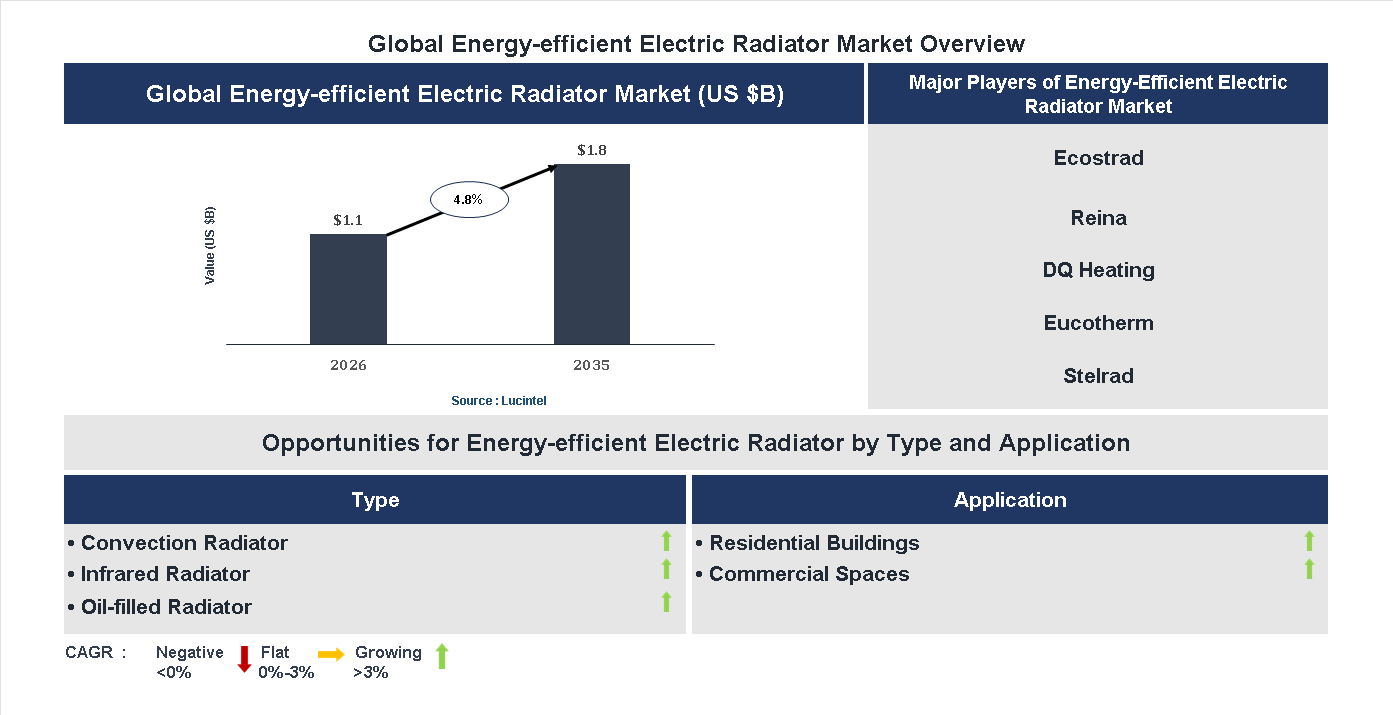
The future of the global energy-efficient electric radiator market looks promising with opportunities in the residential building and commercial space markets. The global energy-efficient electric radiator market is expected to reach an estimated $1.8 billion by 2035 with a CAGR of 4.8% from 2026 to 2035. The major drivers for this market are the increasing demand for energy efficient heating solutions, the rising adoption of electric home heating systems, and the growing focus on reducing residential energy consumption.• Lucintel forecasts that, within the type category, infrared radiator is expected to witness the highest growth over the forecast period.
• Within the application category, residential building is expected to witness higher growth.
• In terms of region, APAC is expected to witness the highest growth over the forecast period. Gain valuable insights for your business decisions with our comprehensive 150+ page report. Sample figures with some insights are shown below.
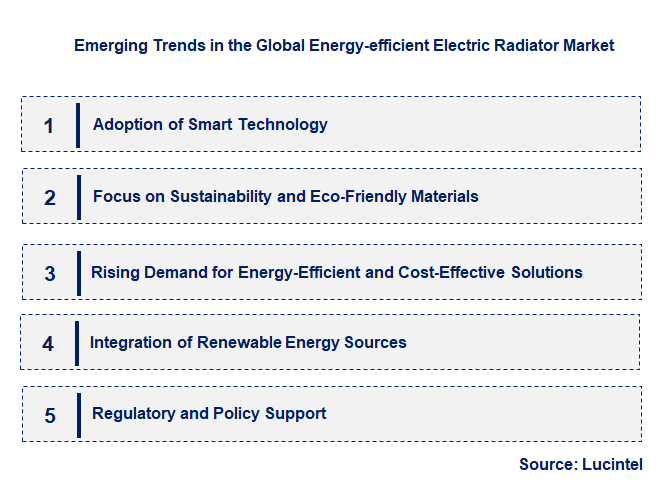
Emerging Trends in the Energy-efficient Electric Radiator Market
The energy-efficient electric radiator market is experiencing rapid growth driven by increasing environmental awareness, technological advancements, and changing consumer preferences. As governments implement stricter regulations on energy consumption and carbon emissions, consumers are seeking sustainable and cost-effective heating solutions. Innovations in smart technology and material science are further propelling this market forward. These developments are not only transforming product offerings but also influencing market dynamics, competitive strategies, and consumer behavior. Understanding these emerging trends is crucial for stakeholders aiming to capitalize on the markets growth potential and contribute to a more sustainable future.• Adoption of Smart Technology: Integration of IoT and smart controls is revolutionizing electric radiators by enabling remote operation, programmable settings, and energy monitoring. This trend enhances user convenience and optimizes energy consumption, leading to cost savings and reduced environmental impact. Smart features also facilitate data collection for manufacturers to improve product efficiency and tailor offerings to consumer needs. As smart home ecosystems expand, the demand for intelligent electric radiators is expected to surge, making this a key driver of market growth.
• Focus on Sustainability and Eco-friendly Materials: Manufacturers are increasingly using sustainable materials and eco-friendly manufacturing processes to appeal to environmentally conscious consumers. This includes the use of recyclable components and low-impact production techniques. Such initiatives reduce the carbon footprint of products and align with global sustainability goals. The emphasis on eco-friendly design not only enhances brand reputation but also meets regulatory standards, thereby expanding market opportunities and encouraging innovation in sustainable product development.
• Rising Demand for Energy-efficient and Cost-effective Solutions: Consumers and businesses are prioritizing energy efficiency to lower utility bills and minimize environmental impact. Electric radiators with high energy efficiency ratings, such as those with advanced insulation and heat retention features, are gaining popularity. Governments are also offering incentives and rebates for energy-efficient appliances, further boosting demand. This trend is prompting manufacturers to develop more efficient heating solutions, which in turn accelerates market growth and promotes sustainable energy consumption.
• Integration of Renewable Energy Sources: The shift towards renewable energy integration is influencing electric radiator design and deployment. Solar-powered electric radiators and systems that can seamlessly connect with renewable energy sources are gaining traction. This integration reduces reliance on fossil fuels, decreases operational costs, and supports energy independence. As renewable energy adoption increases globally, electric radiators that complement these sources are becoming essential, thereby opening new market segments and fostering innovation in hybrid heating systems.
• Regulatory and Policy Support: Governments worldwide are implementing policies and standards that promote energy efficiency and reduce greenhouse gas emissions. These include stricter energy labeling, incentives for eco-friendly appliances, and mandates for sustainable manufacturing practices. Such regulatory support encourages manufacturers to innovate and invest in energy-efficient electric radiators. It also reassures consumers about product reliability and environmental benefits, thereby accelerating market adoption. These policies are pivotal in shaping a sustainable and competitive market landscape. These emerging trends are collectively reshaping the energy-efficient electric radiator market by fostering innovation, promoting sustainability, and aligning with global environmental goals. They are driving increased consumer adoption, expanding market opportunities, and encouraging manufacturers to develop smarter, greener, and more cost-effective heating solutions. As these trends continue to evolve, they will significantly influence the future landscape of energy-efficient heating technologies.
Recent Development in the Energy-efficient Electric Radiator Market
The energy-efficient electric radiator market is experiencing rapid growth driven by increasing demand for sustainable heating solutions, technological advancements, and rising energy costs. Consumers and industries are seeking eco-friendly alternatives that reduce carbon footprints while maintaining comfort. Governments are also promoting energy-efficient appliances through policies and incentives. This evolving landscape presents significant opportunities for innovation, market expansion, and competitive differentiation, shaping the future of residential and commercial heating solutions worldwide.• Growing Demand for Sustainable Heating Solutions: The shift towards eco-friendly heating options is accelerating, driven by environmental concerns and energy regulations. Consumers prefer electric radiators that consume less power and emit fewer greenhouse gases. This trend is fostering innovation in radiator design, materials, and control systems, leading to increased adoption across residential, commercial, and industrial sectors. The market benefits from a broader customer base seeking cost-effective, sustainable heating options, thus expanding market size and product diversity.
• Technological Advancements in Energy Efficiency: Innovations such as smart thermostats, IoT integration, and advanced insulation materials are enhancing radiator efficiency. These developments enable precise temperature control, remote operation, and energy consumption monitoring, reducing waste and operational costs. As technology improves, manufacturers can offer more sophisticated, user-friendly products that appeal to tech-savvy consumers. This progress is driving market growth by increasing product value and encouraging upgrades from traditional heating systems.
• Government Policies and Incentives Promoting Energy Efficiency: Many governments are implementing policies that favor energy-efficient appliances through subsidies, tax credits, and stricter regulations. These initiatives incentivize consumers and businesses to adopt electric radiators with higher energy ratings. Such support accelerates market penetration and encourages manufacturers to innovate. The policy environment creates a competitive advantage for companies offering compliant, eco-friendly products, fostering market expansion and aligning industry standards with sustainability goals.
• Rising Energy Costs and Consumer Awareness: Increasing energy prices are prompting consumers to seek cost-effective heating solutions. Awareness campaigns about energy conservation and environmental impact further influence purchasing decisions. Electric radiators with high efficiency become attractive options for reducing utility bills and carbon footprints. This combination of economic and environmental considerations is boosting demand, encouraging product development focused on maximizing efficiency, and expanding the market to cost-conscious and environmentally aware customers.
• Expansion of Market Segments and Applications: The adoption of energy-efficient electric radiators is expanding beyond residential use to commercial, industrial, and institutional sectors. Applications include offices, hospitals, hotels, and manufacturing facilities seeking sustainable heating solutions. This diversification opens new revenue streams and drives innovation tailored to specific needs. As market segments grow, manufacturers develop specialized products, increasing overall market size and fostering competitive differentiation across various industries. These developments are significantly transforming the energy-efficient electric radiator market by fostering innovation, expanding applications, and aligning with sustainability goals. Increased consumer awareness, technological progress, and supportive policies are driving market growth and competitiveness. As a result, the industry is poised for continued expansion, offering more efficient, smart, and eco-friendly heating solutions that meet diverse customer needs and contribute to global energy conservation efforts.
Strategic Growth Opportunities in the Energy-efficient Electric Radiator Market
The energy-efficient electric radiator market is experiencing rapid growth driven by increasing demand for sustainable heating solutions, rising energy costs, and government initiatives promoting eco-friendly technologies. Innovations in design and materials are enhancing efficiency, while expanding applications across residential, commercial, and industrial sectors create new opportunities. Market players are focusing on smart features and integration with renewable energy sources to meet evolving consumer preferences and regulatory standards, positioning the market for significant expansion in the coming years.• Residential Heating Solutions: The adoption of energy-efficient electric radiators in homes is driven by consumer demand for cost-effective, eco-friendly heating options. Innovations such as smart thermostats and programmable settings improve user control and energy savings. Growing awareness of environmental impact and government incentives further boost adoption. Sub-segments like underfloor heating and wall-mounted units are gaining popularity, catering to diverse consumer needs and increasing market penetration.
• Commercial Building Applications: Commercial buildings are increasingly integrating energy-efficient electric radiators to reduce operational costs and meet sustainability standards. These radiators are suitable for offices, hotels, and retail spaces due to their quick installation and low maintenance. Smart control systems enable centralized management, optimizing energy use. The focus on LEED certification and green building standards drives demand, with sub-segments like HVAC retrofit projects and new constructions expanding market opportunities.
• Industrial Sector Adoption: The industrial sector is adopting energy-efficient electric radiators for process heating and space conditioning, aiming to lower energy consumption and emissions. These radiators support applications in manufacturing plants, warehouses, and data centers. Their compatibility with renewable energy sources and automation systems enhances operational efficiency. Growing emphasis on sustainable industrial practices and government regulations encourages investment, with sub-segments including temperature-sensitive environments and large-scale heating systems.
• Integration with Smart Technologies: The integration of electric radiators with IoT and smart home systems offers enhanced control, remote monitoring, and energy management. This technological advancement appeals to tech-savvy consumers and commercial operators seeking efficiency. Features like adaptive heating, usage analytics, and voice control improve user experience. The rise of smart building initiatives and automation standards accelerates adoption, creating opportunities for innovative sub-segments such as app-controlled units and AI-driven energy optimization.
• Government Policies and Incentives: Supportive government policies, subsidies, and incentives promote the adoption of energy-efficient electric radiators. Regulations aimed at reducing carbon emissions and increasing energy efficiency standards influence market growth. Funding programs for green building projects and renewable energy integration further stimulate demand. These policies encourage manufacturers to develop compliant products and expand market reach, especially in regions with aggressive sustainability targets, fostering growth across residential, commercial, and industrial segments. The overall market outlook is positively influenced by these growth opportunities, fostering innovation, expanding applications, and encouraging sustainable practices. As consumer awareness and regulatory pressures increase, the energy-efficient electric radiator market is poised for substantial expansion, contributing to global energy conservation efforts and environmental sustainability.
Energy-efficient Electric Radiator Market Driver and Challenges
The energy-efficient electric radiator market is influenced by a variety of technological, economic, and regulatory factors. As consumers and businesses seek sustainable and cost-effective heating solutions, innovations in energy efficiency and smart technology are gaining prominence. Regulatory policies aimed at reducing carbon emissions and promoting renewable energy sources further shape market dynamics. Economic considerations, such as fluctuating energy prices and increasing awareness of environmental impact, also play a crucial role. These drivers and challenges collectively determine the growth trajectory and competitive landscape of the market, requiring stakeholders to adapt to evolving technological standards and regulatory frameworks to capitalize on emerging opportunities. The factors responsible for driving the energy-efficient electric radiator market include:• Technological Innovation: The advancement of smart heating systems and energy-efficient components has significantly improved radiator performance. Modern electric radiators incorporate IoT connectivity, allowing remote control and automation, which enhances user convenience and energy savings. These innovations reduce operational costs and appeal to eco-conscious consumers, fueling market growth. Continuous R&D efforts are expected to further optimize energy consumption and integrate renewable energy sources, making these products more attractive and sustainable.
• Rising Environmental Awareness: Increasing global concern over climate change and carbon footprints has led consumers and businesses to seek greener heating options. Energy-efficient electric radiators emit fewer greenhouse gases compared to traditional heating systems, aligning with environmental policies and sustainability goals. This shift in consumer preference is driving demand for eco-friendly heating solutions, encouraging manufacturers to develop more efficient and environmentally responsible products.
• Regulatory Support and Policies: Governments worldwide are implementing stricter regulations and incentives to promote energy efficiency and reduce emissions. Subsidies, tax benefits, and standards for energy-efficient appliances incentivize consumers and builders to adopt electric radiators. These policies create a favorable environment for market expansion, encouraging innovation and investment in sustainable heating technologies.
• Economic Factors and Cost Savings: The rising cost of fossil fuels and electricity has made energy-efficient electric radiators a cost-effective alternative for heating. Reduced energy consumption translates into lower utility bills, appealing to both residential and commercial sectors. Additionally, the decreasing upfront costs due to technological advancements make these radiators more accessible, further boosting market penetration and consumer adoption. The challenges facing the energy-efficient electric radiator market include:
• High Initial Investment: Despite long-term savings, the upfront cost of energy-efficient electric radiators can be higher than traditional heating systems. This initial expense may deter price-sensitive consumers and small businesses, limiting early adoption. Overcoming this barrier requires effective financing options, incentives, and awareness campaigns to highlight long-term benefits.
• Technological Compatibility and Integration: Integrating new energy-efficient radiators with existing heating infrastructure and smart home systems can be complex. Compatibility issues may hinder seamless adoption, especially in retrofit projects. Ensuring interoperability and user-friendly interfaces is essential to facilitate widespread acceptance and reduce installation barriers.
• Regulatory Uncertainty and Policy Changes: While current policies support energy efficiency, future regulatory shifts could impact market stability. Changes in subsidy schemes, standards, or tariffs may alter the cost-benefit analysis for consumers and manufacturers. Navigating this uncertain regulatory landscape requires adaptability and proactive compliance strategies from industry players. The energy-efficient electric radiator market is driven by technological advancements, environmental consciousness, supportive policies, and economic benefits. However, high initial costs, integration challenges, and regulatory uncertainties pose significant hurdles. The overall market outlook remains positive, provided stakeholders focus on innovation, affordability, and regulatory compliance. Addressing these challenges effectively will be crucial for sustained growth and market competitiveness in the evolving landscape of energy-efficient heating solutions.
List of Energy-efficient Electric Radiator Companies
Companies in the market compete on the basis of product quality offered. Major players in this market focus on expanding their manufacturing facilities, R&D investments, infrastructural development, and leverage integration opportunities across the value chain. With these strategies energy-efficient electric radiator companies cater increasing demand, ensure competitive effectiveness, develop innovative products & technologies, reduce production costs, and expand their customer base. Some of the energy-efficient electric radiator companies profiled in this report include-• Ecostrad
• Reina
• DQ Heating
• Eucotherm
• Stelrad
• Osily Heating
• Rointe
• Haverland
• Fischer
• ELKATHERM
Energy-efficient Electric Radiator Market by Segment
The study includes a forecast for the global energy-efficient electric radiator market by type, application, and region.Energy-efficient Electric Radiator Market by Type [Value from 2019 to 2035]:
• Convection Radiator
• Infrared Radiator
• Oil-filled Radiator
Energy-efficient Electric Radiator Market by Application [Value from 2019 to 2035]:
• Residential Buildings
• Commercial Spaces
Energy-efficient Electric Radiator Market by Region [Value from 2019 to 2035]:
• North America
• Europe
• Asia Pacific
• The Rest of the World
Country Wise Outlook for the Energy-efficient Electric Radiator Market
The energy-efficient electric radiator market has experienced significant growth driven by increasing global emphasis on sustainability, rising energy costs, and technological advancements. Countries are adopting innovative solutions to reduce carbon footprints and improve energy management in residential and commercial sectors. Governments are implementing policies and incentives to promote energy-efficient heating systems, further accelerating market expansion. The integration of smart technology and renewable energy sources is also shaping the future of this market. As nations strive to meet climate goals, the development and adoption of energy-efficient electric radiators are becoming a priority worldwide, reflecting a shift toward greener heating solutions.• United States: The US market has seen rapid adoption of smart electric radiators with IoT integration, driven by consumer demand for convenience and energy savings. Major players are investing in R&D to develop more efficient, eco-friendly models. Government incentives and stricter energy efficiency standards are encouraging manufacturers to innovate. The residential sector remains the largest market segment, with commercial applications also expanding. Additionally, the US is witnessing increased adoption of renewable energy-powered radiators, aligning with national sustainability goals.
• China: China is experiencing robust growth in the energy-efficient electric radiator market, supported by government policies promoting green building practices and energy conservation. The country is focusing on technological advancements such as smart controls and improved insulation materials. Domestic manufacturers are expanding their product portfolios to meet rising demand, especially in urban residential and commercial sectors. The integration of renewable energy sources, like solar power, is gaining traction. Chinas large population and rapid urbanization are key drivers fueling market expansion and innovation.
• Germany: Germanys market is characterized by high technological standards and strict energy efficiency regulations. The focus is on developing highly efficient, environmentally friendly electric radiators with smart features. The country emphasizes sustainable manufacturing practices and the use of eco-friendly materials. The residential sector remains dominant, with increasing interest from commercial and public buildings. Germany is also investing in research to enhance the integration of electric radiators with renewable energy systems, supporting its broader climate commitments and energy transition policies.
• India: The Indian market is witnessing rapid growth due to rising disposable incomes, urbanization, and government initiatives promoting energy efficiency. Consumers are increasingly adopting electric radiators as an alternative to traditional heating methods. Manufacturers are introducing affordable, energy-efficient models tailored to local needs. The government’s focus on sustainable development and energy conservation, along with subsidies and incentives, is boosting market penetration. The expansion of smart and IoT-enabled radiators is also observed, aiming to improve energy management and user convenience across residential and commercial sectors.
• Japan: Japans market is driven by technological innovation and a strong emphasis on energy conservation. The country is adopting advanced electric radiators with smart controls, IoT connectivity, and energy-saving features. Government policies support the integration of renewable energy sources and the development of eco-friendly heating solutions. The residential sector remains the primary market, with increasing interest from commercial and public buildings. Japans focus on sustainability and energy efficiency aligns with its national climate goals, fostering continuous innovation and adoption of cutting-edge electric radiator technologies.

Features of the Global Energy-efficient Electric Radiator Market
Market Size Estimates: Energy-efficient electric radiator market size estimation in terms of value ($B). Trend and Forecast Analysis: Market trends (2019 to 2025) and forecast (2026 to 2035) by various segments and regions. Segmentation Analysis: Energy-efficient electric radiator market size by type, application, and region in terms of value ($B). Regional Analysis: Energy-efficient electric radiator market breakdown by North America, Europe, Asia Pacific, and Rest of the World. Growth Opportunities: Analysis of growth opportunities in different types, applications, and regions for the energy-efficient electric radiator market. Strategic Analysis: This includes M&A, new product development, and competitive landscape of the energy-efficient electric radiator market. Analysis of competitive intensity of the industry based on Porter’s Five Forces model.
FAQ
Q1. What is the energy-efficient electric radiator market size? Answer: The global energy-efficient electric radiator market is expected to reach an estimated $1.8 billion by 2035. Q2. What is the growth forecast for energy-efficient electric radiator market? Answer: The global energy-efficient electric radiator market is expected to grow with a CAGR of 4.8% from 2026 to 2035. Q3. What are the major drivers influencing the growth of the energy-efficient electric radiator market? Answer: The major drivers for this market are the increasing demand for energy efficient heating solutions, the rising adoption of electric home heating systems, and the growing focus on reducing residential energy consumption. Q4. What are the major segments for energy-efficient electric radiator market? Answer: The future of the energy-efficient electric radiator market looks promising with opportunities in the residential building and commercial space markets. Q5. Who are the key energy-efficient electric radiator market companies? Answer: Some of the key energy-efficient electric radiator companies are as follows:• Ecostrad
• Reina
• DQ Heating
• Eucotherm
• Stelrad
• Osily Heating
• Rointe
• Haverland
• Fischer
• ELKATHERM Q6. Which energy-efficient electric radiator market segment will be the largest in future? Answer: Lucintel forecasts that, within the type category, infrared radiator is expected to witness the highest growth over the forecast period. Q7. In energy-efficient electric radiator market, which region is expected to be the largest in next 5 years? Answer: In terms of region, APAC is expected to witness the highest growth over the forecast period. Q8. Do we receive customization in this report? Answer: Yes, Lucintel provides 10% customization without any additional cost.
Table of Contents
List of Figures
List of Tables
Methodology
- In-depth interviews of the major players in this market
- Detailed secondary research from competitors’ financial statements and published data
- Extensive searches of published works, market, and database information pertaining to industry news, company press releases, and customer intentions
- A compilation of the experiences, judgments, and insights of Lucintel’s professionals, who have analyzed and tracked this market over the years.


Buy Now
Choose a license that fits your team. Instant PDF delivery.
Prices exclude taxes. Instant delivery. Custom licensing available on request.
Key Questions
- • What are some of the most promising, high-growth opportunities for the energy-efficient electric radiator market by type (convection radiator, infrared radiator, and oil-filled radiator), application (residential buildings and commercial spaces), and region (North America, Europe, Asia Pacific, and the Rest of the World)?
- • Which segments will grow at a faster pace and why?
- • Which region will grow at a faster pace and why?
- • What are the key factors affecting market dynamics? What are the key challenges and business risks in this market?
- • What are the business risks and competitive threats in this market?
- • What are the emerging trends in this market and the reasons behind them?
- • What are some of the changing demands of customers in the market?
- • What are the new developments in the market? Which companies are leading these developments?
- • Who are the major players in this market? What strategic initiatives are key players pursuing for business growth?
- • What are some of the competing products in this market and how big of a threat do they pose for loss of market share by material or product substitution?
- • What M&A activity has occurred in the last 7 years and what has its impact been on the industry? For any questions related to Energy-efficient Electric Radiator Market, Energy-efficient Electric Radiator Market Size, Energy-efficient Electric Radiator Market Growth, Energy-efficient Electric Radiator Market Analysis, Energy-efficient Electric Radiator Market Report, Energy-efficient Electric Radiator Market Share, Energy-efficient Electric Radiator Market Trends, Energy-efficient Electric Radiator Market Forecast, Energy-efficient Electric Radiator Companies, write Lucintel analyst at email: helpdesk@lucintel.com. We will be glad to get back to you soon.


