
Report Feature
Embedded Flexible Electronic Market Trends and Forecast
Recent changes in the technologies embedded in the flexible electronic market have significantly transformed, shifting from rigid traditional electronics to more flexible and integrated solutions, including flexible hybrid electronics (FHE). FHE encompasses flexible substrates along with rigid components in one design, creating lightweight, robust, and multifunctional electronic systems. Further, the shift from traditional microelectronics to embedded flexible microsensor systems and chip-on-flex (COF) has allowed for increased miniaturization and performance in numerous applications. These developments have led to compact, efficient, and flexible electronic products that have become an area of innovation across the medical, military, and automotive markets.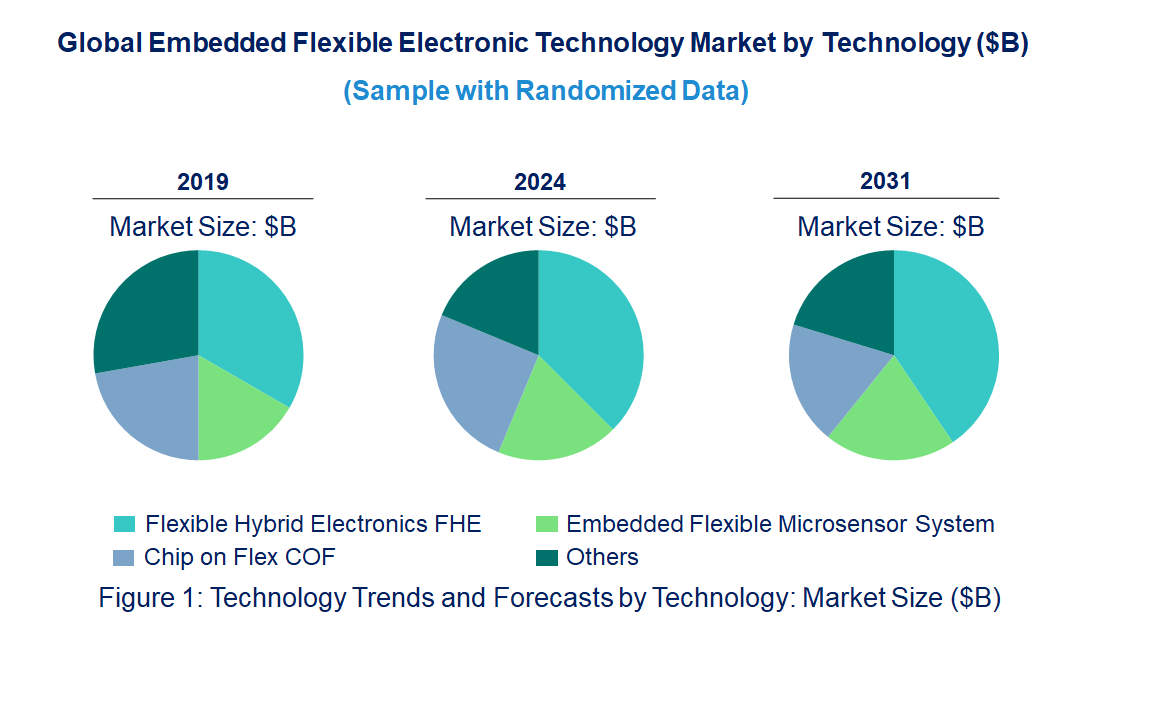
Emerging Trends in the Embedded Flexible Electronic Market
The embedded flexible electronic market is witnessing several transformative trends driven by advancements in material science, manufacturing techniques, and increasing demand for portable and wearable technology. These trends are influencing how flexible electronics are designed, manufactured, and applied across various industries.• Flexible Hybrid Electronics (FHE): FHE is growing rapidly as it integrates conventional electronics with flexible substrates. This results in the development of ultra-thin and lightweight devices, making them more stretchable for a wide range of applications, including wearables, health monitoring, and aerospace, where flexibility and durability play a significant role.
• Embedded Flexible Microsensor Systems: Embedded flexible microsensor systems are now appearing in applications that need to monitor and collect data in real time, such as health, automotive, and industrial sectors. This is done by integrating these sensors into flexible circuits to monitor temperature, pressure, and motion with a minimal form factor.
• Chip-on-Flex (COF) Technologies Development: Chip-on-Flex (COF) technology is changing the landscape of embedded flexible electronics with the direct mounting of chips on flexible substrates. It reduces size, weight, and complexity. Its ideal application is in compact devices like flexible displays, medical implants, and wearable sensors.
• Advances in Stretchable Electronics: Stretchable electronics that maintain performance while being stretched or deformed are increasingly impacting wearable devices, flexible displays, and smart textiles. The potential to stretch and conform the device to human body shapes or other surfaces adds to comfort and functionality in consumer and medical applications.
• Emerging Demand for Flexible Displays and Wearables: Wearable technology is increasing, and there is a growing interest in flexible displays. The embedded flexible electronics market is growing due to this. Flexible OLED displays and sensors integrated into textiles or skin patches are revolutionizing healthcare, fashion, and automotive industries with improved user experiences and functionality. These emerging trends in the embedded flexible electronic market are redesigning and changing the way electronics are designed and used. The improvements in flexibility, miniaturization, and functionality of these innovations open new possibilities in the healthcare, military, and automotive sectors.
Embedded Flexible Electronic Market : Industry Potential, Technological Development, and Compliance Considerations
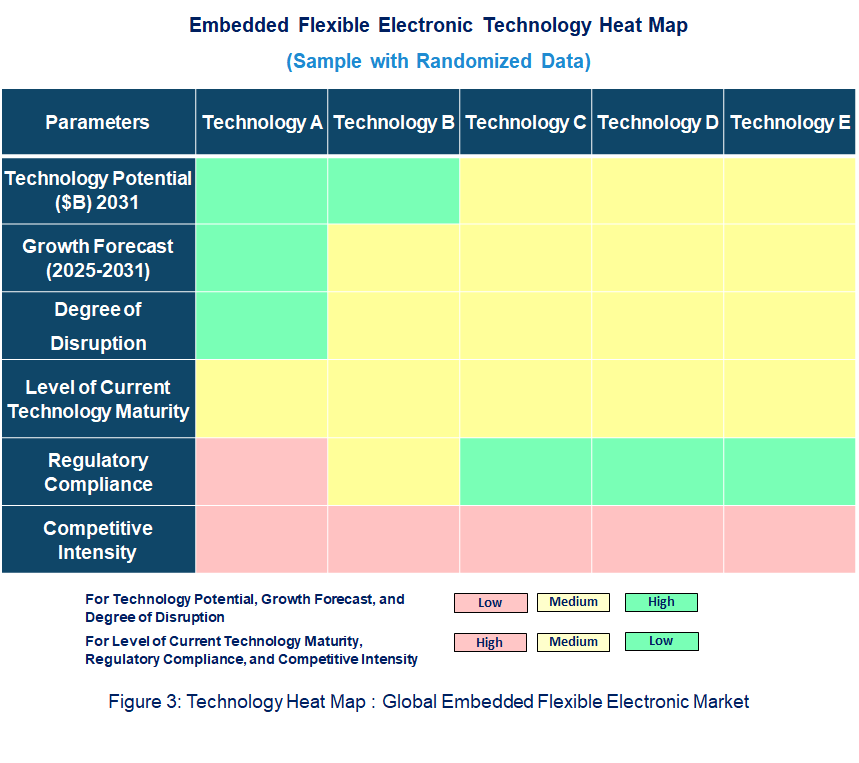
Embedded flexible electronics refer to the integration of flexible, lightweight, and stretchable electronic components into devices that do not compromise functionality when bending, folding, or stretching. They form technologies in applications like wearable devices, smart textiles, healthcare sensors, and flexible displays, creating products that can adapt to various surfaces or environments.• Technology Potential: The potential of embedded flexible electronics is vast, driven by the demand for wearable devices, health monitoring systems, and advanced consumer electronics. Advancements in materials such as organic semiconductors and graphene will revolutionize industries from healthcare (e.g., flexible sensors and patches) to automotive (e.g., flexible displays and touch panels). Lightweight, conformable, and durable devices will open new opportunities in IoT, environmental monitoring, and robotics.
• Degree of Disruption: The degree of disruption is high. Flexible electronics are transforming traditional rigid designs in consumer electronics, wearables, and healthcare. Their integration into everyday objects (e.g., clothing and surfaces) could drastically alter how electronic devices are used and interacted with, potentially replacing rigid counterparts in many applications.
• Current Technology Maturity: The technology is still in its development stage. Although flexible circuits and displays are available, there are still issues with manufacturing scalability, material durability, and power efficiency.
• Regulatory Compliance: Manufacturers must comply with electronic product safety standards, environmental regulations (e.g., RoHS), and data privacy laws, especially in healthcare applications where sensitive personal information is involved.
Recent Technological development in Embedded Flexible Electronic Market by Key Players
The key players in the embedded flexible electronics market are taking great strides in advancing materials, manufacturing processes, and applications. This is fast-tracking the adoption of flexible electronics in industries such as healthcare, aerospace, and automotive.• American Semiconductor: American Semiconductor has significantly improved the area of flexible electronics by creating high-performance, flexible ICs. Their work on flexible semiconductors is fueling innovation in medical devices, wearable tech, and IoT, where flexibility and efficiency are critical to new product designs.
• Brewer Science: Brewer Science played a pivotal role in pioneering new materials and process inventions in flexible electronics, with a strong emphasis on thin-film semiconductors. Their key work expanded the possibility for FHE to better incorporate flexible sensors, displays, and electronics into numerous applications.
• Dow: Dow has made significant contributions to the development of materials for flexible electronics, particularly in the areas of encapsulation and protective coatings. Their advancements help improve the durability and performance of flexible devices, especially for use in medical and automotive applications, where environmental resistance is critical.
• Flex: Flex is actively developing flexible circuit boards and other key components to be used in wearable and medical applications. Their experience in flexible manufacturing and integrated electronics supports the growth of industries requiring lightweight, durable, efficient electronics, such as automotive and consumer electronics.
• GE (General Electric): GE has concentrated its efforts on the development of flexible electronics for industrial and aerospace applications, focusing on ways to improve energy efficiency and transmission of data in harsh environments. Their flexible sensors and embedded systems optimize performance and reduce weight, for example, in applications such as aircraft and robotics.
• Hewlett Packard Enterprise (HPE): HPE has been interested in flexible electronics for edge computing and sensing to improve data gathering and processing in dynamic environments. Their efforts on flexible sensors and microsystems make inroads into healthcare, logistics, and smart city applications.
• Lockheed Martin: Lockheed Martin has been working on developing flexible electronics for aerospace and defense applications. It designs and manufactures lightweight, durable, and flexible systems that can be inserted into space-based hardware, satellites, or military equipment to provide increased performance with minimal weight or size penalty.
• PARC Management (Xerox): PARC has led research in flexible electronics for diverse applications, including healthcare sensors and smart textiles. Their innovations in material science and manufacturing processes help create more cost-effective and scalable solutions for medical devices and industrial sensors.
• NextFlex: NextFlex is one of the driving forces in advancing FHE, primarily focused on standardizing the production of flexible circuits and sensors. Their work in creating flexible systems for health monitoring and automotive applications has led to wide access to flexible electronics across various industries.
• LGIT (LG Innotek): LGIT has made flexible OLED displays and sensors that are already implemented in smartphones, wearables, and automotive display spaces. Their flexible components enable even more resilient, lighter, and flexible products in the consumer electronics sector. These developments indicate that key players are pushing the limits of what can be done in flexible electronics, where performance, scalability, and versatility are increasingly evident in high-demand applications.
Embedded Flexible Electronic Market Driver and Challenges
The embedded flexible electronics market is growing due to the demand for lightweight, durable, and multifunctional electronic systems across industries. However, challenges such as cost, material limitations, and manufacturing complexities need to be addressed to unlock the full potential of these technologies. The factors responsible for driving the embedded flexible electronic market include:• Increased demand for wearable and medical electronics: As the evolution of wearable devices and medical technologies continues, so does the growth in demand for flexible and lightweight electronics. This has led to the creation of flexible sensors, displays, and microsystems, integrated into clothing, skin patches, and medical implants.
• Material Science: Advances in materials such as flexible semiconductors, stretchable polymers, and conductive inks continue to enable the production of reliable and efficient flexible electronics. Some of these innovations are now impacting traditional industries like automotive, healthcare, and consumer electronics.
• Internet of Things (IoT): The demand for IoT devices is boosting the need for small, lightweight, and efficient sensors. Therefore, flexible sensors and microsystems are ideal for IoT applications where space and weight are significant constraints.
• More robust and efficient electronics: The drive to create more robust, high-performance electronics, particularly for demanding applications like aerospace and automotive, will accelerate the use of flexible electronics. These products are highly suitable for applications requiring durability in hostile environments, while their flexibility enables the components to maintain functionality under physical stress. Challenges in the embedded flexible electronic market include:
• High Manufacturing Costs: Although technology has evolved, the cost of making flexible electronics is still expensive because of the complexity of their production processes and the need for special materials. This makes widespread adoption difficult, especially for small companies and developing countries.
• Limitations due to materials: Although tremendous breakthroughs have been achieved, flexible electronics still face significant limitations regarding performance, durability, and cost. Issues such as poor heat resistance and limited conductivity should be addressed to realize extensive applications in high-performance sectors.
• Seamless Interconnection to Existing Systems: The big challenge for industries that require established manufacturing processes is integrating a flexible electronics system smoothly into traditional, rigid systems. Among other challenges, an important barrier to adoption, especially in the medical and automotive segments, is the need for interoperability and standardization across different platforms. The emerging market for embedded flexible electronics is based on fast-paced developments in material science, the increasing demand for wearable technologies, and the growing IoT ecosystem. However, rising manufacturing costs and material limitations will present challenges in integration, limiting the complete exploitation of these technologies in applications.
List of Embedded Flexible Electronic Companies
Companies in the market compete based on product quality offered. Major players in this market focus on expanding their manufacturing facilities, R&D investments, and infrastructural development, as well as leveraging integration opportunities across the value chain. With these strategies embedded flexible electronic companies cater to increasing demand, ensure competitive effectiveness, develop innovative products & technologies, reduce production costs, and expand their customer base. Some of the embedded flexible electronic companies profiled in this report include.• American Semiconductor
• Brewer Science
• Dow
• Flex
• GE
• HPE
Embedded Flexible Electronic Market by Technology
• Technology Readiness by Technology Type: Flexible Hybrid Electronics (FHE) are well-prepared for mass-market applications due to their robust industrial development across healthcare, wearable, and automotive sectors. Embedded Flexible Microsensor Systems are also nearly mature for real-time health and environmental monitoring applications, but face challenges with miniaturization. Chip-on-Flex (COF) technology is well-developed for applications requiring compactness and durability, especially in wearables and IoT devices. Other technologies, such as stretchable and printable electronics, are less mature but show promise in niche markets. Regulatory compliance is key for all these technologies, particularly for medical and consumer electronics, where safety and environmental standards are paramount. Competitive intensity is highest for FHE, followed by microsensors and COF, with emerging technologies gradually gaining traction.
• Competitive Intensity and Regulatory Compliance: FHE has the highest competitive intensity in the embedded flexible electronics market due to its wide demand in consumer electronics, healthcare, and automotive applications. Embedded Flexible Microsensor Systems are also facing keen competition because of the surging demand for real-time health monitoring and sensing of environments. Chip-on-Flex (COF) is highly competitive when space efficiency is needed, as in wearable applications. Competition is lower for other emerging technologies, such as stretchable and printable electronics, but there is also growing traction in niche areas. Regulatory compliance is important, especially for medical and consumer electronics applications. FHE and embedded microsensors must comply with strict safety and environmental standards such as RoHS and REACH.
• The Disruption Potential: FHE has the highest disruption potential in the embedded flexible electronics market because it can integrate flexible substrates with advanced semiconductor technology, opening up a wide range of applications in wearables, medical devices, and IoT. The flexible microsensor systems that are designed to be embedded will form a significant disruption, ensuring real-time on-body monitoring for medical and environmental applications. Chip-on-Flex technology provides a more compact and efficient implementation of flexible electronics, demonstrating durability and performance. Other forms of emerging technologies, such as stretchable or printable electronics, are considered promising but are still in developmental stages. These technologies have the potential to transform industries requiring lightweight, flexible, and highly integrated electronic solutions.
Embedded Flexible Electronic Market Trend and Forecast by Technology [Value from 2019 to 2031]:
• Flexible Hybrid Electronics FHE
• Embedded Flexible Microsensor System
• Chip On Flex COF
• Others
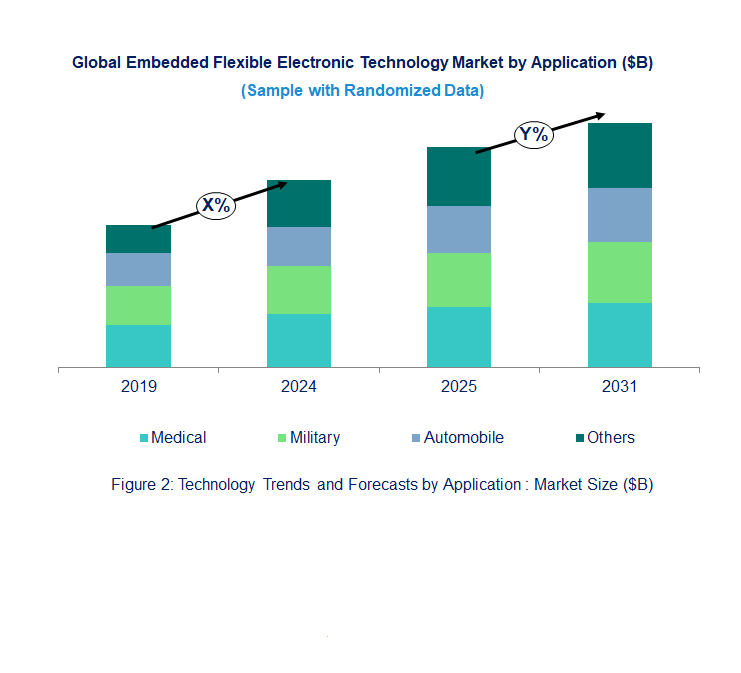
Embedded Flexible Electronic Market Trend and Forecast by Application [Value from 2019 to 2031]:
• Medical
• Military
• Automobile
• Other
Embedded Flexible Electronic Market by Region [Value from 2019 to 2031]:
• North America
• Europe
• Asia Pacific
• The Rest of the World
• Latest Developments and Innovations in the Embedded Flexible Electronic Technologies
• Companies / Ecosystems
• Strategic Opportunities by Technology Type
Features of the Global Embedded Flexible Electronic Market
Market Size Estimates: Embedded flexible electronic market size estimation in terms of ($B). Trend and Forecast Analysis: Market trends (2019 to 2024) and forecast (2025 to 2031) by various segments and regions. Segmentation Analysis: Technology trends in the global embedded flexible electronic market size by various segments, such as application and technology in terms of value and volume shipments. Regional Analysis: Technology trends in the global embedded flexible electronic market breakdown by North America, Europe, Asia Pacific, and the Rest of the World. Growth Opportunities: Analysis of growth opportunities in different applications, technologies, and regions for technology trends in the global embedded flexible electronic market. Strategic Analysis: This includes M&A, new product development, and competitive landscape for technology trends in the global embedded flexible electronic market. Analysis of competitive intensity of the industry based on Porter’s Five Forces model.Table of Contents
Methodology
- In-depth interviews of the major players in this market
- Detailed secondary research from competitors’ financial statements and published data
- Extensive searches of published works, market, and database information pertaining to industry news, company press releases, and customer intentions
- A compilation of the experiences, judgments, and insights of Lucintel’s professionals, who have analyzed and tracked this market over the years.


Buy Now
Choose a license that fits your team. Instant PDF delivery.
Prices exclude taxes. Instant delivery. Custom licensing available on request.
Key Questions
- • What are some of the most promising potential, high-growth opportunities for the technology trends in the global embedded flexible electronic market by technology (flexible hybrid electronics fhe, embedded flexible microsensor system, chip on flex cof, and others), application (medical, military, automobile, and others), and region (North America, Europe, Asia Pacific, and the Rest of the World)?
- • Which technology segments will grow at a faster pace and why?
- • Which regions will grow at a faster pace and why?
- • What are the key factors affecting dynamics of different technology? What are the drivers and challenges of these technologies in the global embedded flexible electronic market?
- • What are the business risks and threats to the technology trends in the global embedded flexible electronic market?
- • What are the emerging trends in these technologies in the global embedded flexible electronic market and the reasons behind them?
- • Which technologies have potential of disruption in this market?
- • What are the new developments in the technology trends in the global embedded flexible electronic market? Which companies are leading these developments?
- • Who are the major players in technology trends in the global embedded flexible electronic market? What strategic initiatives are being implemented by key players for business growth?
- • What are strategic growth opportunities in this embedded flexible electronic technology space?
- • What M & A activities did take place in the last five years in technology trends in the global embedded flexible electronic market?


